• Link to X
  • Link to Facebook
  • Link to Instagram
  • Link to TikTok
  • Link to Youtube
  • About
    • About Us
      • President
      • Board of Directors
      • Board of Advisors
      • Financials
      • Our Methodology
      • Success Tracker
      • Contact
  • Act Now
    • 30 Ways to Help
      • Email Congress
      • Call Congress
      • Volunteer
      • Courses & Certificates
      • Be a Donor
    • Internships
      • In-Office Internships
      • Remote Internships
    • Legislation
      • Politics 101
  • The Blog
  • The Podcast
  • Magazine
  • Donate
  • Click to open the search input field Click to open the search input field Search
  • Menu Menu

Archive for category: Human Rights

Information and stories about human rights.

Human Rights

Recompense for the Mau Mau Rebellion in Kenya

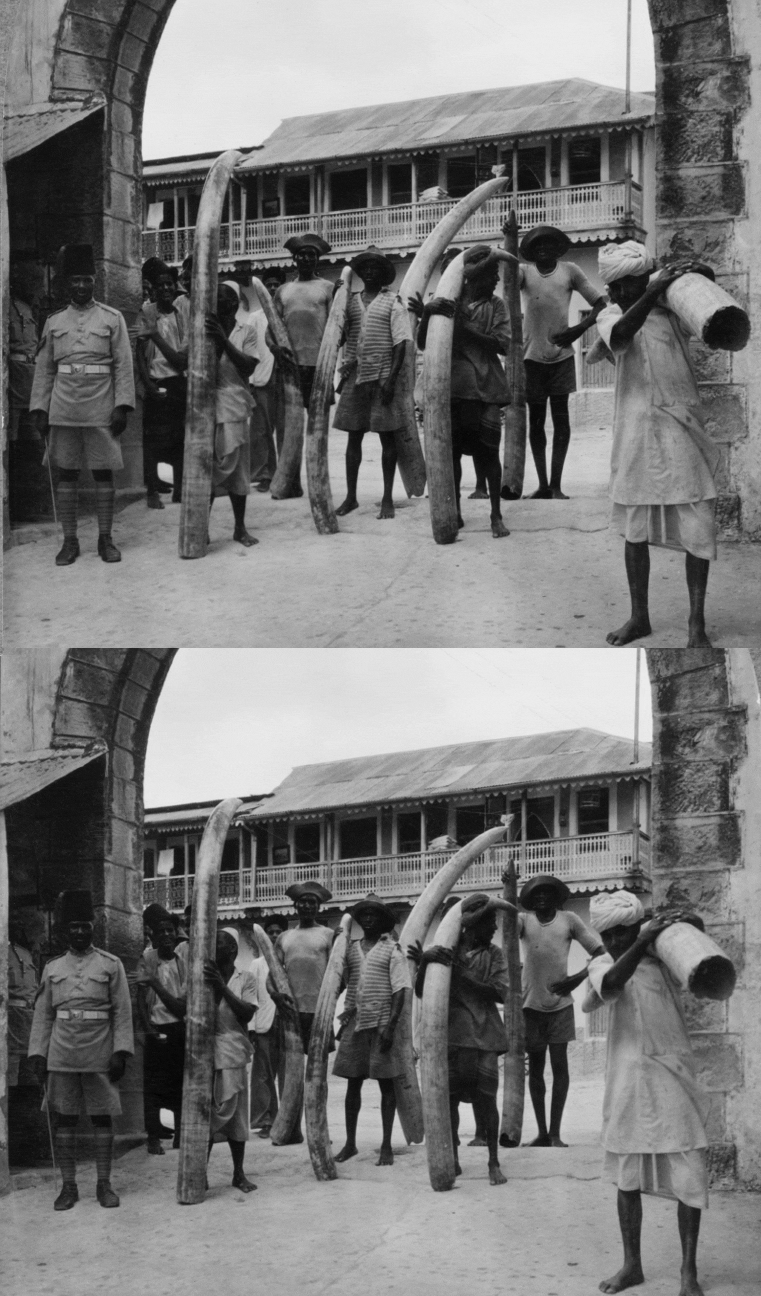
Kenya Ivory
An estimated 5,000 Kenyans will receive $4,000 in remunerations from the British government as victims of the Mau Mau Rebellion in the 1950s.

Around 90,000 Kenyans were detained and tortured during British colonial occupation. Only the living survivors of the Mau Mau rebellion are eligible for receiving the financial apology.

In addition to the British recompense, the U.K. will also construct a memorial honoring the victims in the Kenyan capital of Nairobi.

Up until 2003, Mau Mau veterans were not allowed to address grievances regarding the atrocities they underwent during the rebellion. The Kenyan Human Rights Commission organized the Mau Mau Veterans Association, which fought to gain recognition of the atrocities.

Hiring the UK-based firm, Leigh Day, five individuals of the Veterans Association won a case against the British government and settled with $21 million.

The British government initially claimed that the Veterans Association’s claims were not eligible since the aforementioned atrocities were dealt during colonial times.

Other claims will not be so successful due to legal costs and not enough insurmountable evidence — many colonial files and records were destroyed during the ending period of the British Empire.

Kenya was partitioned by European powers along with the rest of East Africa during the 1885 Berlin Conference. The British entered Kenya in the early 1900s. Without political clout and claims to their own land, a guerilla group called the Mau Mau led an uprising.

Between 1952-1960, a State of Emergency was proclaimed by the British colonists due to an increase in the attack on their people and “property.” Soon the wider Kenyan population became embroiled in the conflict and was sent to detention camps wherein general torture — the castration of two men and sexual assault against women — ensued.

An op-ed criticizes the British government for not doing more to address grievances of the Mau Mau veterans. The postcolonial administration saw the entrance of colonists’ children in high governmental positions—often well-educated in comparison to many Kenyans living in poverty. The author posits that the British government should provide scholarships and higher education opportunities to Mau Mau veteran families.

Whether the British government has or has not done enough to recognize its past atrocities, it is nevertheless a step in acknowledging that the human dignity of many individuals were wrongfully disregarded during Kenya’s colonial history.

– Miles Abadilla

Sources: BBC, Daily Mail, The Economist, The International
Photo: Giphy.com

January 12, 2014
https://borgenproject.org/wp-content/uploads/borgen-project-logo.svg 0 0 Borgen Project https://borgenproject.org/wp-content/uploads/borgen-project-logo.svg Borgen Project2014-01-12 11:33:522016-02-16 12:04:45Recompense for the Mau Mau Rebellion in Kenya
Economy, Global Poverty, Government, Human Rights

Cambodian Garment Worker Clash Turns Deadly

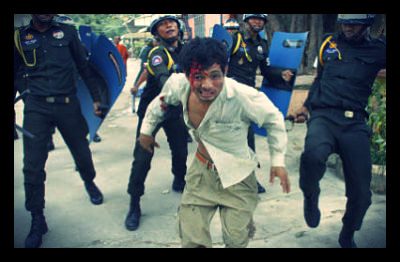
cambodia_garment_protest
One bystander was killed and 20 people were injured when police clashed with protesting garment workers in Phnom Penh, Cambodia on November 12, 2013.

Workers at the SL Garment Processing Ltd. Factory, one of the largest in Cambodia and a supplier to many western brands including Gap and H&M, marched from the factory towards Prime Minister Hun Sen’s Phnom Pehn home to protest unfair wages and poor factory conditions. They were, however, blocked by police at Stung Meanchey bridge. Reports differ on which side started the violence, which escalated to more than 100 police officers firing tear gas, rubber bullets and live ammunition into the crowd, who were armed mainly with rocks and sticks. Police arrested 37 people, including seven monks, who were later released.

The march marked the three-month anniversary of 4,000 workers walking out of the SL factory to protest the presence of armed military police, which they viewed as an intimidation tactic meant to expel unions. Company shareholder Meas Sotha incited rage among workers with his claim that police were only there to protect the factory. SL 2 joined the strike, demanding raised salaries as well as a $3 per day lunch stipend and Sotha’s ousting.

Conditions in Cambodia’s more than 500 garment factories, though better than in some areas of the nation, are dismal. Wages are low—workers at SL, for example, make just $75 monthly—and factories are unsafe, with poor ventilation, recent collapses and regular fainting masses of malnourished workers. About 500,000 Cambodians work in garment and shoe factories, supporting the industry that accounts for 80% of the country’s exports. In 2012 alone, Cambodia exported $4.45 billion in products to the United States and Europe.

The protests erupted at a time of international attention on the garment industry following several deadly incidents at factories in Bangladesh, including a factory collapse at Rana Plaza that killed over 1,100 people in April. According to the New York Times, many multinational organizations are now looking to Cambodia as an alternative to factory locations in Bangladesh. Unfortunately, in Cambodia, strikes are frequent, though factory concessions are small and rare.

Workers at Alim Cambodia Co. Ltd. blocked a road in Phnom Phen on November 13, 2013 also protesting for higher wages. The demonstration was short-lived, breaking up due to rain when protestors became concerned they would get sick.  The Alim protestors were demanding a $1 lunch stipend, and were angry that the factory was paying new workers $93 monthly to their $89.

The Cambodian government has made few efforts to back garment workers, and seems largely indifferent to workers’ rights. In fact, government-official-mediated talks about wages between unions and SL ended in a deadlock.  Although the Cambodian People’s Party raised the monthly minimum wage from $61 to $75 earlier this year, reports by the local Community Legal Education Center and United Kingdom-based organization Labour Behind the Label found that a single garment worker needs at least $150 monthly to cover basic needs.

The United Nation’s International Labor Organization (ILO) released a report calling for the compliance of the Cambodian government and garment companies in improving workplace conditions in the garment industry, specifically concerning fire safety, child labor as well as worker safety and health. The ILO also announced in September it plans to continue the practice of “naming and shaming” factories that violate the law.

– Sarah Morrison

Sources: The New York Times, NPR, The Cambodia Daily: Garment Worker Clash, The Cambodia Daily: Protest, AlJazeera, AlJazeera America

January 7, 2014
https://borgenproject.org/wp-content/uploads/borgen-project-logo.svg 0 0 Borgen Project https://borgenproject.org/wp-content/uploads/borgen-project-logo.svg Borgen Project2014-01-07 10:29:002024-06-04 01:07:58Cambodian Garment Worker Clash Turns Deadly
Human Rights

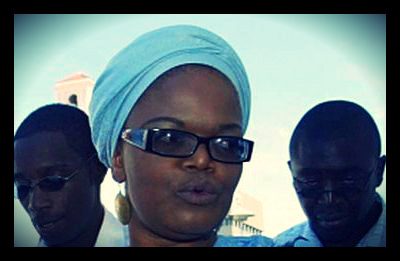
Zimbabwe Human Rights Lawyer Released

beatrice_mtetwa_release
Zimbabwe human rights lawyer, Beatrice Mtetwa, has been acquitted on charges of obstructing justice and being unruly to police.

The recipient of several international awards, Mtetwa grew up in Swaziland, the eldest daughter of 50 children. After earning her law degree, she moved to Zimbabwe after it gained its independence in the 1980’s and soon set up her own firm defending victims of the repressive government. She has spent the past three decades defending freedom of speech under President Robert Mugabe, of whom she is a strong critic.

‘Beatrice Mtetwa & the Rule of Law’ is a recent documentary project about Mtetwa’s career-long struggle. Hailed as Africa’s top human rights lawyer, her cause is to uphold the rule of law as the foundation for democracy and economic growth. She names Mugabe a dictator, calling him out for creating self-serving, harmful laws which fly in the face of human rights.

Mugabe’s long presidency has been fraught with criticisms including his violent land redistribution policy, highly questionable elections, and free speech restrictions. Mtetwa’s clients include peace activists and journalists whom she defends on constitutional grounds. Foreign correspondent Andrew Meldrum, for example, was arrested and then deported from Zimbabwe after having been found innocent in the courts. His expulsion, according to Jonathon Moyo, a member of parliament, had to do with the country’s right to stop the media from being “hostile” towards Zimbabwean government. A law enacted by Mugabe, which made insulting the president a crime, was recently declared unconstitutional by Zimbabwe’s highest courts, but the country is still hostile toward free journalism in general. Currently in Zimbabwe, a person can be sentenced to 20 years in prison for publishing a false statement, creating an obviously unfriendly atmosphere for free speech.

It is this type of corruption which Mtetwa has devoted her career to stopping. According to many, it was her influence in this respect which led to her arrest.

Mtetwa was arrested in March of this year during a raid on the offices of foreign Prime Minister Morgan Tsvangirai. The officers were searching for an official from Tsvangirai’s Movement for a Democratic Change. It was alleged that Mtetwa shouted at the officers, saying that their actions were unconstitutional, illegal, and unlawful. It was furthermore said that she insulted the officers by calling them “Mugabe’s dogs.” Her arrest was widely condemned and interpreted as an attempt to intimidate other Zimbabwean lawyers. Mtetwa herself termed it a “set-up.”

On November 25, the courts ruled that Mtetwa’s actions had not interfered with the officers doing their jobs, and she was therefore released. But the problems facing Zimbabwe’s government remain.

– Kathleen Walsh

Sources: BBC 1, 2, Rule of Law, Washington Post, The Guardian, African Spotlight

January 1, 2014
https://borgenproject.org/wp-content/uploads/borgen-project-logo.svg 0 0 Borgen Project https://borgenproject.org/wp-content/uploads/borgen-project-logo.svg Borgen Project2014-01-01 17:23:032024-12-13 17:49:48Zimbabwe Human Rights Lawyer Released
Activism, Advocacy, Human Rights

Madonna Champions Art for Freedom

Founded in September 2013, Art For Freedom is the result of a partnership between global superstar Madonna and VICE Media. The completely digital organization aims to increase awareness of human rights violations around the world through artwork.

Each month, artists are invited to submit their original creations in response to the question, “What does freedom mean to you?” The organization then chooses a winning entry, whose creator is offered a $10,000 donation to the charity of their choice.

In addition to naming monthly winners, Art For Freedom also posts daily winners on its website. The inspirational submissions are displayed on the organization’s home page and can be accessed at any time through its interactive calendar.

Recently, Madonna named illusionist David Blaine as a guest curator for the organization’s December contest. Blaine’s duties will consist of reviewing entries and choosing which pieces will be displayed on the organization’s website.


Past celebrity curators included notables such as Anthony Kiedis of the Red Hot Chili Peppers. For the month of November, Madonna herself hosted a live exhibit on Tumblr to showcase submissions.

Despite its recent start, the organization has quickly gained a following. Notable submissions for the December 2013 contest have included videos and photographs referencing numerous social problems including bullying, transgender issues, religious intolerance, racial intolerance, and other forms of prejudice.

The organization’s website currently features entries from around the world. The last two weeks have seen submissions from France, Bulgaria, Australia, Brazil, Dominican Republic, New Jersey, California, and New Hampshire.

Entries can be from a variety of mediums including film, music, photography, and poetry. Those interested in the organization’s monthly contest may upload original creations on the Art For Freedom website or by uploading the works to social media with the tag #artforfreedom.

– Jasmine D. Smith

Sources: Art for Freedom, Madonna.com
Photo: Blouin Art Info

December 31, 2013
https://borgenproject.org/wp-content/uploads/borgen-project-logo.svg 0 0 Borgen Project https://borgenproject.org/wp-content/uploads/borgen-project-logo.svg Borgen Project2013-12-31 04:00:542024-06-05 03:00:36Madonna Champions Art for Freedom
Human Rights, Women and Female Empowerment

10 Shocking Statistics on Gender-based Violence

In the words of UN Secretary-General Ban Ki moon, “Violence against women continues to persist as one of the most heinous, systematic and prevalent human rights abuses in the world. It is a threat to all women, and an obstacle to all our efforts for development, peace, and gender equality in all societies.”

In fact, violence kills more women between the ages of 15 and 44 than cancer, malaria, traffic accidents and war combined.

The recent 16 days of activism against gender-based violence, kicked off November 25 on the UN International Day for the Elimination of Violence Against Women, served to confront this global pandemic. Here are ten of countless statistics that illustrate the importance of such, and continued, efforts.

1. In the 24 developing countries studied in a recent survey, a combined total of only 7% of survivors of gender-based violence, including physical and sexual acts, formally reported their attacks to police, medical or social services.

2. In India, less than 1% of survivors reported gender-based violence to formal sources. The highest rate of reporting uncovered in the survey was in Colombia where 26% of women formally reported the violence they faced. This still means that three out of four Colombian women never report the violence they’ve faced.

3. In the same 24 developing countries, the surveyors explored whether women told their friends, family members or neighbors about their attacks and found that the rates of this “informal reporting” ranged from 15% in Honduras to 60% in Ukraine. Thus, in most of the countries, the majority of women told no one of their attacks.

4. In Papua New Guinea, 59.1% of men admit to forcing an unwilling intimate partner into having sex. Forty percent of men admit to having raped a stranger.

5. According to the UN, there were 15,654 cases of sexual violence in the Democratic Republic of the Congo in 2012. However, the country is noted to chronically underreport gender-based violence figures. A study published by the American Journal of Public Health found that more than 1,100 women were raped every day in 2006 and that more than 400,000 women and girls between the ages of 15 and 49 were raped within a 12-month time frame.

6. A third of all survivors of sexual violence in the DRC are between the ages of 12 and 17. Reports from the UN indicate that 82% of all survivors had not finished primary school.

7. A study by Johns Hopkins that surveyed women across 25 African countries found that a high proportion of women believed that wife-beating was justified in at least one of five different hypothetical scenarios. The percentage of women who adhered to this view ranged from 18 in Swaziland to 87 in Guinea.

8. A South African women is killed by an intimate partner every 6 hours.

9. An estimated 100 to 140 million girls and women throughout the world have experienced female genital mutilation. More than three million African girls face the risk of the practice every year.

10. Eighty percent of the estimated 800,000 people trafficked annually are women and girls. Seventy-nine percent of them are trafficked for sexual exploitation.

– Kelley Calkins

Sources: End Violence Against Women, UNFP, Al Jazeera, UN News Center, NCBI, Say No to Violence, Women Under Seige
Photo: Gabriela USA

December 31, 2013
https://borgenproject.org/wp-content/uploads/borgen-project-logo.svg 0 0 Borgen Project https://borgenproject.org/wp-content/uploads/borgen-project-logo.svg Borgen Project2013-12-31 04:00:462024-06-11 02:16:1610 Shocking Statistics on Gender-based Violence
Human Rights, Refugees and Displaced Persons

Iran Deporting and Mistreating Afghan Refugees

Human Rights Watch (HRW) published a report in late November accusing Iran of violating international law by deporting thousands of Afghan refugees. It is estimated that over two million Afghans currently live in Iran. Thousands more cross the border every year trying to escape their unstable home country.

Iran has been receiving Afghan refugees since conflict erupted in Afghanistan in the early 1980’s. Millions of Afghans fled the increasingly bloody civil war, and at the height of the violence, almost four million Afghanis were living in Iran. After the war, many Afghan citizens tried to return home, but were met with high unemployment and lingering instability. With no solution in sight to the problems remaining in Afghanistan, many citizens returned once again to their refugee countries.

In the HRW report, they claim that in the last few years the Iranian government has been taking steps to reduce opportunities for refugees to enter the country. Recently, Iran has been refusing to register both refugees already living in Afghanistan for some time and those that try to cross the border. HRW has also accused Iran of other violations such as physical abuse, forced labor, unsanitary conditions, and the separation of families. Joe Stork of HRW Middle East Division said, “Iran is deporting thousands of Afghans to a country where the danger is both real and serious.

Iran has an obligation to hear these people’s refugee claims rather than sweeping them up and tossing them over the border to Afghanistan. The report cites personal accounts given by refugees who were separated from their families and sent back across the border.

When they are not being deported, provinces within Iran are passing laws to refugee access to residence permits. Without access to the proper documents to show residence, this puts refugees at risk for deportation. If refugees are sent back, their options for what they can do next are severely limited and many are stuck in a country that is still experiencing violence and political instability.

– Colleen Eckvahl

Sources: BBC, Yahoo News
Photo: Payvand Iran News

December 30, 2013
https://borgenproject.org/wp-content/uploads/borgen-project-logo.svg 0 0 Borgen Project https://borgenproject.org/wp-content/uploads/borgen-project-logo.svg Borgen Project2013-12-30 04:00:542024-05-26 23:00:41Iran Deporting and Mistreating Afghan Refugees
Human Rights, Women and Female Empowerment

Ending Violence Against Women with Cartoons

Star Wars
Human rights group Breakthrough launched a surprising new campaign tackling violence against women.   Advertisements featuring an animated scenario have been playing on TV sets across the U.S.  The short scene depicts men stopping other men from acting inappropriately towards women.   In one bit, a man stops another man from slapping a female vendor’s bottom as she walks by them.  The tag “#BeThatGuy.  Stop violence against women in its tracks” flashes across the screen. The ads were first tested at Miami Speedway last month, where they were extremely well received.

The videos are based off the idea that men are a part of the problem, but also a part of the solution.  The core idea is that men can use their male privilege to speak up for women where women may be unable to have a voice.

Breakthrough plans on running more ads both online and on TV that discourage gender-based violence.  Breakthrough organizer Ishita Srivastava says she believes in “meeting people where they are,” including at sporting events with high institutionalized gender bias.

The campaign is called “Ring the Bell,” and calls on men to hold each other accountable.  Breakthrough calls violence and discrimination against women and girls “unacceptable.”  The organization has centers in India and the U.S.  that specialize in using media, pop culture, art and community mobilization to encourage people to “live up to their full potential.”

Breakthrough has also launched campaigns against early marriage and sex-selective termination, and in favor of immigration rights, racial justice and HIV/AIDS prevention.

– Stephanie Lamm

Sources: Breakthrough, WITNESS Blog, Aljazeera

December 26, 2013
https://borgenproject.org/wp-content/uploads/borgen-project-logo.svg 0 0 Borgen Project https://borgenproject.org/wp-content/uploads/borgen-project-logo.svg Borgen Project2013-12-26 12:43:222024-06-04 01:07:58Ending Violence Against Women with Cartoons
Advocacy, Children, Developing Countries, Global Health, Global Poverty, Health, Human Rights, Poverty Reduction, United Nations

Child Labor: An Overview

Child_Labor_an_Overview
“Millions of children are victims of violence and exploitation. They are physically and emotionally vulnerable and they can be scarred for life by mental or emotional abuse. That is why children should always have the first claim on our attention and resources. They must be at the heart of our thinking on challenges we are addressing on a daily basis. We know what to do, and we know how to do it. The means are at hand, it is up to us to seize the opportunity and build a world that is fit for children,” remarked Ban Ki-moon, Secretarty-General of the United Nations on November 20, 2009, on the Twentieth Anniversary of the Convention on the Rights of the Child.

Just as Ban Ki-moon mentioned, children are not physically or mentally ready to enter the labor force. With the lack of physical abilities, the safety of the workplace cannot be ensured, for both the children and other employees. In fact, children are more likely to be abused and mistreated in an environment centering around child labor.

“Few human rights abuses are so widely condemned, yet so widely practiced. Let us make (child labor) a priority. Because a child in danger is a child that cannot wait,” stated Kofi Annan, Former UN Secretary-General. Around the world, more than 211 million children between the age of 5 and 14 are being forced to work. Among these children, 120 million children are working full time.

To eradicate child labor, people should first understand what leads to such situations. For example, poverty is the first and foremost reason of child labor.  Since many parents do not have the capability to support their household, children end up working to help support the family’s daily lives. Another reason for child labor is a poor education system.

When education is expensive or not readily available, impoverished parents do not see the benefit of learning and think that working is a better alternative. In the United States, there are many laws that prohibit child labor, however, in some countries, child labor laws exist, but are not enforced. Companies can thus take advantage of the cheap labor and further exploit it.

On the other hand, many organizations have been striving to put a stop to child labor by various programs. For example, the United Nations has been running campaigns to raise the awareness of child labor across various nations and airing them in global events such as the World Cup. Moreover, in order to raise the level of education in poverty stricken areas, the Red Cross and governments of third world countries have been recruiting teachers to volunteer in remote areas.

– Phong Pham

Sources: Child Labor Public Education Project, UN: Agencies Urge Greater Action, International Labor Rights Forum, UN: Child Labor
Photo: Addicting Info


Facts about Child Labor

December 26, 2013
https://borgenproject.org/wp-content/uploads/borgen-project-logo.svg 0 0 Borgen Project https://borgenproject.org/wp-content/uploads/borgen-project-logo.svg Borgen Project2013-12-26 04:00:472024-05-25 00:32:50Child Labor: An Overview
Advocacy, Developing Countries, Development, Economy, Foreign Aid, Foreign Policy, Global Poverty, Government, Human Rights

More than Moved

cars white background
In the midst of international mourning for Nelson Mandela and in an attempt to drive home the message of International Human Rights Day, a Brazilian NGO posed a provocative question on Tuesday, December 10.

A billboard designed by Conectas Human Rights, featured an image of Nelson Mandela and the question, “Do you feel moved by his legacy?” The text then urged the Brazilian population to act upon their emotions and “Do more than be moved.”

This campaign is driven by recent public opinion polls that reveal a negative feeling toward human rights issues in Brazil and support for more stringent laws and regulations.

Respondents to surveys administered across 134 municipalities in June 2013, support the reduction of maximum crime penalties from 18 years of age to 16, based on a belief held by 60% of the sample population that criminality is the result of ‘bad character.’

Moreover, the Datafolha Research Institute released data that reveal 26% of self-identified conservative-leaning respondents believe that homosexuality must be discouraged by society as a whole, whilst 33% believe that poverty is the result of laziness.

These emerging public opinions are linked to a reduction in funding for human rights groups, namely through foreign aid.

Brazil is widely considered to be an emerging market, the country’s role as 2014 World Cup host is evidence of this image but it disguises the fact that a growing economy does not automatically address human rights issues as seen through the need of foreign aid in assisting structural development.

It is estimated that 60% of the country’s NGOs relied on foreign aid for 80% of their budgets in 2003. Between 2008 and 2009 this aid decreased by 30% and again by another 49% in 2010 alone.

Executive Director of the Brazil Human Rights Fund, Ana Araújo, reminds us that Brazil was marked by dictatorship as recently as 30 years ago, a type of legacy that differs greatly from the one being celebrated across the globe on International Human Rights Day 2013.

Araújo argues that domestic support for human rights groups is the next, though not imminent, step, suggesting that emerging powers require more support, not less, to ensure that their emergence is ‘just.’

– Zoë Dean

Sources: Global Voices Online, Universo Online: CNT, Universo Online: Rightist Leanings, Open Democracy

December 22, 2013
https://borgenproject.org/wp-content/uploads/borgen-project-logo.svg 0 0 Borgen Project https://borgenproject.org/wp-content/uploads/borgen-project-logo.svg Borgen Project2013-12-22 14:16:582024-06-04 03:01:13More than Moved
Advocacy, Children, Global Poverty, Health, Human Rights, Human Trafficking, Slavery, Women & Children

Human Trafficking in the Philippines

philippines_human_trafficking
New Jersey Congressman Chris Smith and his congressional team traveled to the Philippines earlier this week to meet with victims, aid workers and government officials in the regions hit by Super Typhoon Hayian.  The U.S. government has spent $50 million in emergency aid to the Philippines, providing much needed food, water and emergency medical care. However Smith says that rising human trafficking in the Philippines is also a major issue. The Philippines is a large source for both sex and labor human trafficking. The poor are especially vulnerable to human trafficking in the aftermath of natural disasters when they have lost their homes as well as their communities and are looking for a way out.

Congressman Ed Royce hosted a house committee on foreign affairs hearing in Fullerton California on November 27, 2013.  One of the speakers was Angela Guanzon, who traveled to the U.S. from the Philippines in 2006 in hopes of a better life. “I worked 18 hour days and had to sleep on the floor in a hallway,” Guanzon said. “My co-workers and I were threatened if we tried to escape.”

Human trafficking is what the State Department, law enforcement officials and NGOs are calling “modern day slavery.” Following narcotics, it is the second most profitable criminal enterprise worldwide and the Philippines has the second largest victim population. Many poverty stricken Filipino women leave their families in the hope supporting them from abroad.

Approximately 1 million Filipino men and women migrate each year, currently there are 10 million Filipinos living abroad. Many of these workers are subject to forced labor and harsh conditions, not just in the U.S., but in Asia and the Middle East as well.  Women who work in domestic positions often suffer violence, sexual abuse and rape. Traffickers use local recruiters in villages and urban centers who often pretend to be representatives of government sponsored employment agencies.  Furthermore, victims are required to pay “recruitment fees” that leave the workers vulnerable to forced labor, debt bondage and prostitution.

Many Filipinos live in poverty and are often swayed by recruiters who offer work and a better life. Furthermore, the vast majority of victims are also women and girls; 300,000-400,000 are women and 60,000 -100,00 are children; over 80% are females under the age of 18.

To combat this, the Philippines government created the Anti-Trafficking in Persons Act of 2003 and has made minor improvements since then. For example, it increased funding to the anti-trafficking agency from $230,000 to $1.5 million and went from eight full time staff members to 37. They were also able to repatriate 514 Filipinos from Syria in the winter of 2012, 90% of whom were trafficked. Even with an upgraded version of the Anti-Trafficking in Persons Act of 2003, much work still needs to be done in the Philippines and in the U.S. to ensure that women and the poor in the Philippines are not vulnerable to modern day slavery.

– Lisa Toole

Sources: CNN, NJ.com, ABS CBN, HumanTrafficking.org
Photo: The Guardian

December 21, 2013
https://borgenproject.org/wp-content/uploads/borgen-project-logo.svg 0 0 Borgen Project https://borgenproject.org/wp-content/uploads/borgen-project-logo.svg Borgen Project2013-12-21 04:00:182017-03-20 13:10:51Human Trafficking in the Philippines
Page 40 of 45«‹3839404142›»

Get Smarter

  • Global Poverty 101
  • Global Poverty… The Good News
  • Global Poverty & U.S. Jobs
  • Global Poverty and National Security
  • Innovative Solutions to Poverty
  • Global Poverty & Aid FAQ’s
Search Search

Take Action

  • Call Congress
  • Email Congress
  • Donate
  • 30 Ways to Help
  • Volunteer Ops
  • Internships
  • Courses & Certificates
  • The Podcast
Borgen Project

“The Borgen Project is an incredible nonprofit organization that is addressing poverty and hunger and working towards ending them.”

-The Huffington Post

Inside The Borgen Project

  • Contact
  • About
  • Financials
  • President
  • Board of Directors
  • Board of Advisors

International Links

  • UK Email Parliament
  • UK Donate
  • Canada Email Parliament

Get Smarter

  • Global Poverty 101
  • Global Poverty… The Good News
  • Global Poverty & U.S. Jobs
  • Global Poverty and National Security
  • Innovative Solutions to Poverty
  • Global Poverty & Aid FAQ’s

Ways to Help

  • Call Congress
  • Email Congress
  • Donate
  • 30 Ways to Help
  • Volunteer Ops
  • Internships
  • Courses & Certificates
  • The Podcast
Scroll to top Scroll to top Scroll to top