• Link to X
  • Link to Facebook
  • Link to Instagram
  • Link to TikTok
  • Link to Youtube
  • About
    • About Us
      • President
      • Board of Directors
      • Board of Advisors
      • Financials
      • Our Methodology
      • Success Tracker
      • Contact
  • Act Now
    • 30 Ways to Help
      • Email Congress
      • Call Congress
      • Volunteer
      • Courses & Certificates
      • Be a Donor
    • Internships
      • In-Office Internships
      • Remote Internships
    • Legislation
      • Politics 101
  • The Blog
  • The Podcast
  • Magazine
  • Donate
  • Click to open the search input field Click to open the search input field Search
  • Menu Menu

Archive for category: Human Rights

Information and stories about human rights.

Developing Countries, Disease, Global Poverty, Health, Human Rights, Nonprofit Organizations and NGOs

Is McGill University Doing “Asbestos” it Can?

mcgill_university
Asbestos, which has been mined for more than 4,000 years, was not largely distributed until the end of the 19th century. Today, armed with the knowledge about the dangers to human health that asbestos poses, production in the modern world has been brought to a halt. However, in many developing countries, particularly in Asia, many are surprised to hear that the use of asbestos has been increasing.

The world’s largest asbestos mine was the Jeffrey mine in the town of Asbestos, Quebec. Because of the preciousness of asbestos to the Quebecois economy, when results began to show the toxicity of asbestos, the Quebec Asbestos Mining Association (QAC) needed to find a solution preventing the stoppage of asbestos use. They turned to McGill University.

Professor J.C. McDonald, working for McGill’s Department of Epidemiology, was funded by a front organization set up by the QAC to research the effects of asbestos. His findings, using outdated and inaccurate techniques, demonstrated that exposure to chrysotile asbestos could give protection against cancer.

Despite the fact that no other scientist has been able to replicate McDonald’s data – even McDonald himself refuting his own findings, going so far as to admit that some of the data taken was thrown away until specific results were found – many companies continue to use his research to support the use of asbestos.

As such, every year, two million tons of asbestos are being put into homes and schools, ultimately causing a public health catastrophe to come.

Kathleen Ruff, founder of the human rights website RightonCanada.ca, and senior advisor on Human Rights of Rideau Institute was joined by Professor David Egilman of Brown University, who is the President of Global Health through Education, Training and Service (GHETS), a NGO dedicated to improving health in under-served communities around the world, at a conference on October 1st at McGill.

Here, Egilman and Ruff addressed McGill’s “internal review” on McDonald’s study, which Abraham Fuks, McGill’s research integrity officer, concluded Professor McDonald to be “a pioneer in the demonstration of health hazards of asbestos.”

Fuks states that while it is true that McDonald’s project was funded by the asbestos industry, there was no collusion between the university and the asbestos industry.

Egilman contends noting, “[McDonald’s team] threw data out because it gave them wrong results.” And when they finally had data that matched up to what they wanted to prove, Ruff points out that “the industry [then] went on a mission to developing countries to get them to use chrysotile asbestos.”

The problems associated with asbestos-related risks are manifold. The previous installation and further dismantling of asbestos abroad lacks proper regulation and legislation, with many companies not respecting safety and proper execution. Consequently, exposure increases the risk of lung cancer, mesothelioma, and nonmalignant lung and pleural disorders.

Countries with economic ties to asbestos, such as Russia, India and Brazil continue to use McDonald’s information to lobby for increased use. Without an independent review of the research conducted and a final nay-say of McDonald’s results, it will prove difficult to put a stop to these organizations.

What started as a good PR strategy back in the 1960s has now exploded into one of the main justifications of continued global asbestos use.

GHETS, founded in 2002, places emphasis on “grassroot partnerships, sustainability and the development of primary healthcare infrastructure.” In association with many major institutions, GHETS funds training of local doctors and distribution of seed grants to for local business start-ups.

RightonCanada, an advocacy campaign to put human rights back on Canada’s political agenda, believes that Canada, when refusing to recognize the human right to water, aid in sabotaging a U.N. Declaration on the Rights of Indigenous Peoples, and block action to control export to developing countries of asbestos, among other things, has consequently become “a human rights saboteur.”

– Chloe Nevitt
Feature Writer

Sources: Rabble, McGill Daily,McGill Daily, Global Labour University, CDC, Right on Canada, GHETS
Photo: Wikimedia

October 15, 2013
https://borgenproject.org/wp-content/uploads/borgen-project-logo.svg 0 0 Borgen Project https://borgenproject.org/wp-content/uploads/borgen-project-logo.svg Borgen Project2013-10-15 17:12:222024-12-13 17:49:44Is McGill University Doing “Asbestos” it Can?
Children, Human Rights, Slavery

Child Labor 101

21st Century Child Labor Global
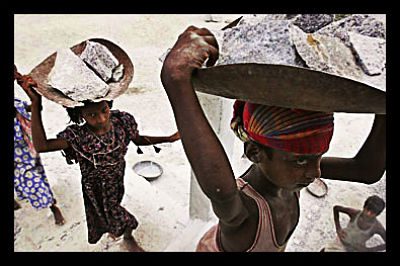
According to the International Labor Organization, approximately 211 million children are working around the world. These children range from ages five to 14, and most are working in order to provide support for their poor families. Nearly 128 products from 70 countries are made through child labor – many cases of which are forced child labor. While some children elect to start working at a young age to help support their families, many are forced into labor and treated as slaves in bondage.

In addition to poor treatment, the work environments children are forced to work in are often dangerous and harmful to their health. When children are sent to scour hazardous lakes filled with toxins in order to search for metals and jewels, the consequences are extremely damaging to their health. Much of the merchandise purchased by Americans is made in other countries, many of which are still developing and relying on labor from children. Children are often forced into labor by their government, or their government simply ignores the fact that companies and factories are forcing children to work for their own profit. Some of the products made by children include clothes, tobacco, metals, jewels, food items, pornography, holiday decorations, and electronic goods. This wide span of merchandise leaves little that child labor has not infiltrated.

In the worst cases of child labor, children are used much like slaves. In these cases, children are trafficked, often times forcing them to deal in illegal activities like drug trafficking, prostitution, and weapon conflict. Binding the children in debt is another method used by companies to ensure that the children will continue to work under their authority.

According to a report conducted by the Bureau of International Labor Affairs, India has the highest percentage of child workers. India is followed by China, which is then followed by smaller countries throughout sub-Saharan Africa. In 2008, as many as one in every four children in sub-Saharan Africa were forced into labor, and commonly sent to work in diamond mines and factories. In Ethiopia, an estimated 60 percent of children are forced into labor to help support their families, the child’s income usually amounting to a dollar a month.

In Afghanistan, an increasing number of underage girls are being sold in order to pay off debt, and more than 30 percent of children are working in major industries rather than attending school. Some of the worst forms of child labor occur in Somalia where 40 percent of children under the age of 15 are forced to engage in sex slavery and armed conflict.

Though the statistics concerning child labor may seem bleak, an increasing number of organizations and nations are rising up to help put an end to child labor. The International Labor Rights Forum (ILRF) is an advocacy organization that has been fighting for years to redesign working conditions across the world focusing on women in the workforce, sweatshops, and child labor. The U.S. Labor Department has also joined the stand against child labor: one of its recent reports says that Brazil is no longer relying on child labor for coal production, and that India and other countries have started anti-poverty programs to help end child labor.

– Chante Owens

Sources: Fox Business, International Labor Rights Forum, Business Insider
Photo: NYTimes

October 7, 2013
https://borgenproject.org/wp-content/uploads/borgen-project-logo.svg 0 0 Borgen Project https://borgenproject.org/wp-content/uploads/borgen-project-logo.svg Borgen Project2013-10-07 18:10:212018-02-26 10:35:30Child Labor 101
Economy, Global Poverty, Human Rights

Thousands of Migrant Workers Expected to Die in Qatar

Qatar FIFA 2022 World Cup Migrant Workers Exploited
The 2022 FIFA World Cup will be hosted in Qatar and the construction on hotels and stadiums has already begun. This internationally-renowned sporting event will boost Qatari infrastructure, economy, and national spirit. However, groups like the International Trade Union Confederation (ITUC) claim that thousands of migrant workers will die before construction is finished, and have called for policies that will prevent the exploitation of these workers.

Many migrant workers from countries like India, Nepal and Sri Lanka have been entering Qatar for employment, joining the already 1.2 million migrant workers present in this country. Although many migrant workers are needed to prepare Qatar for the World Cup, the current system of employment may mean that many of these workers will never return home.

Unless reforms are made, 600 migrant workers a year could die on building sites due to harsh working conditions and lack of safety protocols.

Recently, 30 migrant workers fled to the Nepalese Embassy in Doha, Qatar to escape these conditions. They reported having their passports withheld in order to prevent them from fleeing, being denied water and a salary, and being forced to work in intolerable heat. Some equated such hardships with modern-day slavery. In addition, workers have been found living in unsanitary and crowded conditions, resulting in illness.

Employees that complain are often fired, with no means of returning home or finding more work. With passports and salary withheld, most migrant workers have no choice but to continue to work in such conditions.

Nepalese migrant workers aren’t the only workers turning to their embassy for help. Thousands more have complained to the Indian embassy in Qatar. According to the Indian ambassador, more than 700 Indian workers have already lost their lives in these deleterious working conditions.

The ITUC stresses the need for significant changes in workplace sanitation and safety. Otherwise, the organization estimates that at least 4,000 migrant workers will lose their lives by the 2022 World Cup.

These working conditions come as a surprise to many, as Qatar is the world’s richest nation in regards to income per capita. The country is expected to spend over $100 billion on infrastructure, hotels, and other facilities for the World Cup alone.

The ITUC has also commented on the need for FIFA to send a strong message to the Qatari government on how this system of modern-day slavery is unacceptable.

– Rahul Shah

Sources: Middle East Online, Opposing Views, The Guardian
Photo: BBC

October 2, 2013
https://borgenproject.org/wp-content/uploads/borgen-project-logo.svg 0 0 Borgen Project https://borgenproject.org/wp-content/uploads/borgen-project-logo.svg Borgen Project2013-10-02 12:54:532024-05-25 00:22:38Thousands of Migrant Workers Expected to Die in Qatar
Children, Education, Human Rights

Child Labor in Europe Still Exists?

Rope isolated on white background
Many people today think that child labor in Europe must not exist anymore. For such a developed area of the world, dependency on children for work seems both outdated and absurd. However in reality, child labor still maintains a hold in Europe.

According to UNESCO, 29% of children from age 7 to 14 in the country Georgia are working. Similarly, in Albania, 19% of children of that age group work. Additionally, an estimated 1 million children are laborers in Russia. Even in Italy, 5.2% of children under the age of 16 are working. There are still millions of other unreported cases of child labor across the continent.

Many of these working children in Europe work highly dangerous jobs in agriculture, construction, or small factories. In Bulgaria, child labor is fairly common in the tobacco industry, some children working up to 10 hours a day. Reports from Moldova also reveal that school directors and agricultural farm cooperatives often sign contracts that require students to work for the harvest. Reports of long hours and hard work also come from children in Portugal and even the U.K.

Work in these industries often involves use of hazardous machinery and equipment, extremely heavy loads and dangerous chemicals. Moreover, like all working children across the world, such hard labor puts each of Europe’s working children in positions of abuse and exploitation. Particularly at risk are accompanied children of migrants from developing countries.

There is speculation that austerity policies in Europe have devastated living standards so much that child labor has returned in greater force. Countries badly affected by this economic downturn and austerity include Greece, Italy, and Portugal, amongst many others. A recent article in the French Newspaper Le Monde highlights the rise of child labor in Europe. The article uses an example of how thousands of children in the Italian region of Naples have quit school to find jobs in order to feed families. It cites reports from a local government that suggested that 54,000 children left education in the year between 2005 and 2009. Of these children, 38% were less than 13 years old.

The case of these Italian children leaving school points out the desperate plight of children affected by high rates of unemployment and economic difficulty. With austerity has come decreased access to welfare benefits for the poor. Thus children in poverty are required to work harder and at a younger age to support families. Moreover, child labor is not simply an Italian question. Child labor is a problem is that all of Europe must face in the advent of economic crises. Moreover, it is a cyclical problem.

The more children work at a younger age, the more unlikely that it is that they return to education systems, perpetuating the cycle of poverty. Child labor is real and it thrives even in the most unlikely places of Europe. Most importantly, it is an issue worth addressing by both governments and individuals alike.

– Grace Zhao

Sources: World Socialist Web Site, Human Rights Comment


Facts about Child Labor


August 29, 2013
https://borgenproject.org/wp-content/uploads/borgen-project-logo.svg 0 0 Borgen Project https://borgenproject.org/wp-content/uploads/borgen-project-logo.svg Borgen Project2013-08-29 19:45:502020-07-09 21:05:06Child Labor in Europe Still Exists?
Human Rights, Nonprofit Organizations and NGOs

Mobility International USA

mobility-international-usa
For the right price, most people can hop on a plane and go anywhere, anytime. College students in particular utilize this privilege and depart for couple months or a year on a study abroad program. A commonly overlooked fact is that for those with disabilities, this may seem like an impossible dream. Organizations like Mobility International USA are here to change that.

One participant in Mobility International USA described how she had wanted to study abroad during college, but was unable to find a program that could accommodate her special circumstances. After almost giving up, she discovered Mobility International and through the organization was connected to several programs that worked with the disabled. Because of Mobility International, she traveled to Peru and then eventually to 21 other countries. Her story is a common one in Mobility International.

Not only does Mobility International work with disabled college students, but also high school, professionals, Peace Corps volunteers and other groups to provide short-term exchanges all over the world. Currently, there are 2,000 people of all ages and backgrounds participating in the program worldwide.

In addition to international exchange programs, Mobility International USA partners with government and non-government disability groups around the world to ensure that people with disabilities have the same human rights as everyone else. This is particularly a concern in developing countries like Ethiopia, Albania, Jordan, Colombia, Uganda, Zambia, and Vietnam. By partnering with disability groups in these countries, Mobility International can work to ensure that the disabled receive the care they deserve.

Since its establishment in 1995, the Bureau of Educational and Cultural Affairs of the U.S. Department of State have sponsored Mobility International USA. This partnership has changed the lives of thousands of people with disabilities. Many, like the girl who was able to visit Peru, now work for the organization. Mobility International USA is an admirable organization dedicated to the pursuit of international experiences and, most importantly, a higher quality of life for the disabled.

– Mary Penn

Sources: Mobility International USA

August 20, 2013
https://borgenproject.org/wp-content/uploads/borgen-project-logo.svg 0 0 Borgen Project https://borgenproject.org/wp-content/uploads/borgen-project-logo.svg Borgen Project2013-08-20 04:38:042024-05-25 00:17:48Mobility International USA
Foreign Aid, Global Poverty, Human Rights, Inequality, Refugees and Displaced Persons

Indigenous Peoples: Poverty and Foreign Aid

Indigenous_Peoples
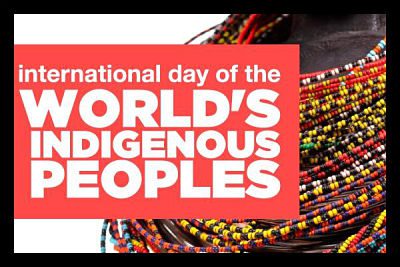
On August 9th, the world celebrated the UN’s International Day of the World’s Indigenous People, an annual event that has been held since 1995. This year’s theme, “honoring treaties, agreements and other constructive arrangements,” struck a chord with aboriginal peoples around the globe. With many suffering from poverty and marginalization at the hands of states in power, the indigenous peoples of today are finding a dead end at the intersection of state interests and modern culture. The United Nations adopted the Declaration on the Rights of Indigenous Peoples in 2007 and has been advocating for indigenous peoples’ rights ever since. In a report released in 2009, the UN Department of Economic and Social Affairs described the state of the world’s indigenous peoples, particularly the impoverishment that most have found themselves in.  The report points out that globalization has given governments a reason to take indigenous lands for use in profitable industries like mineral extraction. Either seized or heavily polluted, these lands and territories of indigenous people have increasingly become their heaviest losses. With unsettling histories marked by colonization, dispossession, and injustice, indigenous peoples have been forced into the lowest echelons of society where they often remain. Research conducted by the International Fund for Agricultural Development (IFAD) has produced statistical figures that characterize the overwhelming poverty felt by these peoples. There are about 370 million indigenous peoples around the globe today, or about 5% of the world population. They make up 15% of the world’s poor and 1/3 of the world’s “extremely poor rural people.” Disparities between countries’ indigenous and nonindigenous populations in education, healthcare, and other basic sectors are substantial. On August 9th, several indigenous populations spoke out against their marginalization.  In the Philippines, the people of Cordillera called on their government to “honor their commitments to [the people of Cordillera].” In the past three years, these people have seen the rise of the state’s mining industry, which has ultimately violated their rights. Given their circumstances, indigenous peoples’ voices are rarely heard. Where foreign aid could be the key to a better world for these peoples, countries continue to allot funds to secure state interests, often leaving aboriginal peoples behind. In a collective effort to shift the tides, indigenous peoples everywhere are calling on donors to consider sending direct donations in support of their development.
– Lina Saud
Sources: Indigenous Day, What Indigenous Peoples Need from Foreign Aid Photo: Indian Country

August 19, 2013
https://borgenproject.org/wp-content/uploads/borgen-project-logo.svg 0 0 Borgen Project https://borgenproject.org/wp-content/uploads/borgen-project-logo.svg Borgen Project2013-08-19 10:19:072024-12-13 17:53:47Indigenous Peoples: Poverty and Foreign Aid
Human Rights, Human Trafficking

3 Countries With the Most Human Trafficking

human-trafficking
Human trafficking stands out as one of the worst social crimes in today’s society, as victims are kidnapped and separated from their families to face a life as a sex slave, child soldier, or unpaid laborer, all subject to inhumane forms of abuse. Three countries stand out for their particularly poor performance in fighting human trafficking, specifically in regards to the numbers of trafficking victims and their government’s lack of action to address these problems. Below are the 3 countries with the most human trafficking.

1. China takes the stage as a country needing improvement. The U.S. State Department’s recent Trafficking In-Persons Report accused China of government-induced forced labor through their policies involving ‘re-education through labor.’ In addition to these labor problems, the sex slave trade has reportedly risen lately in China. China has garnered repeated criticism for its government programs that require migrants to work in mines or factories without pay as well as its labor camps. Demographic changes in China due to the one-child policy have affected the boy to girl ratio, which now stands at 118 boys for everyone 100 girls, and consequently resulted in an increased demand in prostitution. This demand for prostitutes has contributed to an influx of sex slaves into China, with many women forced or lured from their homes into this horrific practice.

2. Russia suffers from similar issues, with an estimated 50,000 children forced into prostitution and approximately 1 million people working without the proper documentation to receive payment. The labor conditions for these unpaid workers stand out for their equal horror. There are reports of major overcrowding, contributing to unsanitary conditions and the spread of disease in addition to inadequate nutrition, 12 hour work days, and no time off. Last year, Russia’s government faced much criticism when hundreds of workers died after being locked in employment housing. Many factor owners use intimidation and physical abuse to scare their employees into continuing their forced labor. These laborers lack citizenship, medical care, paychecks, and other basic human rights. Such inhumane labor policies take place in many different industries and markets, legitimate and underground, including narcotics, garment and textiles, manufacturing, agriculture, construction, groceries, and domestic services.

3. Uzbekistan maintains two major facets in its battle with trafficking. First, the Uzbekistan government forces many of its citizens to labor without reward. Child labor remains a major concern, with thousands of children under the age of 15 forced into factories or fields, despite the government making child labor illegal. One activist even reported a mental hospital forcing its patients into unpaid labor. In addition to this debacle with the government forcing its citizens to work without payment, Uzbekistan has developed into a source country for traffickers to recruit their victims. Most trafficked people in Uzbekistan are shipped to nearby Russia and Kazakhstan to work undocumented in unhealthy conditions.

While these three countries stand out for their need for major change to address the problems associated with human trafficking, they are just three among the hundreds of nations which maintain a need for assistance in dealing with the sex trade and forced laborers around the world. The only way to solve this problem and put an end to human trafficking, is for countries to unite and work together in a global commitment to stop tolerating this illegal trading of human lives.

– Allison Meade

Sources: World Mag , Wall Street Journal, The Atlantic, State Department
Photo: Sarajevo Times

August 19, 2013
https://borgenproject.org/wp-content/uploads/borgen-project-logo.svg 0 0 Borgen Project https://borgenproject.org/wp-content/uploads/borgen-project-logo.svg Borgen Project2013-08-19 06:33:442024-06-04 02:43:583 Countries With the Most Human Trafficking
Activism, Human Rights

Remembering Kosovo Genocide

Kosova

Ermira Babamusta, Ph.D is a guest writer and a Regional Director for The Borgen Project.

World Humanitarian Day is an opportunity to recognize those people around the world often in dangerous and difficult circumstances. This year I would like to pause and remember the tragic events in Kosovo and the humanitarian catastrophe of ethnic Albanians being killed, expelled and persecuted in their own land. The ethnic cleaning campaigns led by Slobodan Milosevic and the Yugoslav and Serb forces against Albanian civilians shall forever be recorded as dark years in the history of Albania and Kosova.

This August 19, 2013 as the world commemorates the fight against genocide, it is important to reflect on the historical aspects of genocide against ethnic Albanians. I dedicate this day to the Families of those who were harmed during the Kosovo Genocide.

As I witnessed the injustice being inflicted on the Kosovar refugees in 2007 and on the genocide survivors in 2012, I was reminded of their struggle to hang on and lead a normal life despite the horrible trauma they experienced. Today, I think about those who are still missing and their families who have no answers.

We have a great opportunity to learn from the past, become united and encourage leaders to build a better future. It is essential to peace, diplomacy and prosperity to ground our efforts on the four pillars of democracy: justice, good governance, economic development and social welfare.

I applaud America for leading the way in this effort of peace and democracy building. I had the chance to visit and meet with great leaders and US Congress members like Senator Harry Reid, Senator Tom Harkin, former US Secretary Colin Powel, UN Secretary General Kofi Annan, all of who share my commitment to peace, human rights and democracy. I applaud the brave actions and the extraordinary efforts of President Bill Clinton, former US Secretary Hillary Clinton, President Obama, Vice President Joe Biden, US Secretary of State John Kerry, Dr. Jill Biden and First Lady Michelle Obama for staying at the forefront of building and strengthening democracy in US and around the world and promoting human rights.

As J. F. Kennedy stated, “the world is very different now, for man holds in his mortal hands the power to abolish all forms of human poverty, and all forms of human life.” This is the time to start the movement for global equality, promote human rights, improve governance and deliver justice around the world. I am proud that Albania and Kosovo are great successful models of such moral and democratic principles.

Ermira Babamusta, Ph.D

August 19, 2013
https://borgenproject.org/wp-content/uploads/borgen-project-logo.svg 0 0 Borgen Project https://borgenproject.org/wp-content/uploads/borgen-project-logo.svg Borgen Project2013-08-19 04:17:082019-12-17 15:19:04Remembering Kosovo Genocide
Food & Hunger, Human Rights

5 Companies Using Fair Trade Chocolate

Ben & Jerry's Fair Trade
It’s been a long day at work and you finally have a chance to sit down with a bowl of chocolate ice cream in front of the television. While flipping through channels, you come across a news story about child slavery in the Ivory Coast, where 43% of the world’s cocoa is produced. You pause with a spoonful of creamy goodness on the way to your mouth and think, “Isn’t anything safe anymore? Can’t I just enjoy my chocolately treat in peace?”

At this point, you have two options: you can keep flipping the channels and focus on how tasty your ice cream is, or you can finish reading this post to discover where to buy fair trade, guilt-free chocolate. Although, it really isn’t much of a choice, now that images of child slaves are lugging bags of cocoa beans around inside your head.

Lucky for everyone involved, many companies are making the switch to Fair Trade cocoa. Fair Trade USA, a non-profit that certifies American products as Fair Trade, currently works with more than 800 companies to ensure that their products comply with all international Fair Trade standards. They certify a multitude of products, including tea and herbs, fresh fruit and vegetables, sugar, flowers, nuts, honey, and (thankfully) cocoa.

The following list consists of five companies that are using Fair Trade cocoa, as determined by Fair Trade USA. These are just a few of the many companies from which you buy chocolate that tastes great and makes you feel even better.

For your ice cream fix, go with Ben & Jerry’s. The Vermont-based company is in the process of converting all ingredients to Fair Trade and profiles their progress by flavor on their website. Their Chocolate Therapy flavor is currently made with 71% Fair Trade ingredients, so eat up!

If you need some dairy-free creaminess, meet NadaMoo. This delicious coconut milk ice cream is organic and Fair Trade Certified. With flavors like Java Crunch, Lotta Mint Chip, and Gotta Do Chocolate, you can enjoy pint-sized dairy-free and slavery-free yumminess.

When chocolate-covered treats catch your eye, look for a SunRidge Farms label. Their organic and Fair Trade Certified dark chocolate-coated almonds, cacao nibs, espresso beans, goji berries, and raisins are sure to satisfy your sweet tooth (or teeth).

Looking to build some muscle with chocolate-y goodness? Tera’s Whey Organic Fair Trade Certified Dark Chocolate Whey Protein is your answer. Your endorphin high combined with that warm fuzzy feeling from buying Fair Trade will leave you feeling fantastic.

For your baking needs, try SunSpire’s organic and Fair Trade chocolate chips and baking bars. When making its chocolate products, SunSpire doesn’t use refined sugars, hydrogenated oils, preservatives, or artificial colors or flavors. The company has also made a long-term commitment to its cocoa farmers through their Caring for Cocoa Communities program, which provides hands-on support for growers and helps to foster growth in their communities.

Now that you’re armed with information, it’s time to head to the store and support these companies using Fair Trade chocolate. Who knew doing the right thing could be so delicious?

– Katie Fullerton

Sources: Fair Trade USA, Ben & Jerry’s, NadaMoo, SunSpire

August 16, 2013
https://borgenproject.org/wp-content/uploads/borgen-project-logo.svg 0 0 Borgen Project https://borgenproject.org/wp-content/uploads/borgen-project-logo.svg Borgen Project2013-08-16 05:35:452024-12-13 17:49:385 Companies Using Fair Trade Chocolate
Human Rights

Tibetan Atrocities Revealed by Communist Party Official

tibet_opt
An ethnic Tibetan who grew up under the Chinese Communist regime and currently works as a high-ranking Communist Party official has decided to speak out against the Tibetan atrocities currently taking place. Choosing to remain anonymous, the government official claims that the current state of Tibet is “far worse than people in the West suspect.”

When the Chinese military invaded Tibet in 1950, many Tibetans thought the Chinese would modernize the region and bring order to the land that was previously ruled by monks and monasteries. These thoughts were quickly dashed when the Chinese began erasing any signs of Tibetan culture and forcibly removing people from their homes into communes. During the Great Proletarian Cultural Revolution from 1966 to 1976, Tibetan leaders were sent to Maoist reeducation camps and hundreds of monasteries and relics were destroyed. Many of these injustices are still occurring today.

The streets of Lhasa, Tibet’s capital city, are still patrolled by Chinese security forces that act like occupiers. The Communist official claims that the security forces often take property and beat residents at their own discretion and without cause. During another Lhasa revolt surrounding the 2008 Beijing Olympics, the military arrested 6,000 people. The practice of self-immolation, or the public death by lighting oneself on fire, has gained popularity with monks to raise awareness for their struggle. Since 2011, over 100 people have resorted to self-immolation to protest the Chinese occupation of Tibet.

Another horrifying byproduct of Chinese rule has been the destruction of the Tibetan plateau. The Communist official alleges that the increase in cultivation due to Chinese immigrants coming to Tibet has resulted in diminished grasslands and desertification. The number of rivers that feed into Qinghai Lake decreased from 108 to 8 due to extensive irrigation systems. Furthermore, the area as a whole is said to be a toxic dumping ground for Chinese industries.

Human Rights Watch recently published a 115-page report corroborating many injustices that the Communist official is claiming. Their report focuses on the re-housing project currently underway that has relocated over 2 million Tibetans since 2006. Hundreds of thousands of nomadic herders have been placed into “New Socialist Villages” destroying their livelihoods without adequate compensation.

These obvious and blatant human rights abuses are occurring all across Tibet. The Communist official hopes to publish a book in the West detailing his eyewitness accounts of the current state of Tibet and hopes that the Chinese will someday allow public debate on the matter. He says that a style of democracy tailored to the culture and people of Tibet would be the best solution if such an option were possible.

– Sarah C. Morris 

Sources: Spiegel, Human Rights Watch
Sources: New York Times

August 8, 2013
https://borgenproject.org/wp-content/uploads/borgen-project-logo.svg 0 0 Borgen Project https://borgenproject.org/wp-content/uploads/borgen-project-logo.svg Borgen Project2013-08-08 05:38:042013-12-08 19:10:19Tibetan Atrocities Revealed by Communist Party Official
Page 42 of 45«‹4041424344›»

Get Smarter

  • Global Poverty 101
  • Global Poverty… The Good News
  • Global Poverty & U.S. Jobs
  • Global Poverty and National Security
  • Innovative Solutions to Poverty
  • Global Poverty & Aid FAQ’s
Search Search

Take Action

  • Call Congress
  • Email Congress
  • Donate
  • 30 Ways to Help
  • Volunteer Ops
  • Internships
  • Courses & Certificates
  • The Podcast
Borgen Project

“The Borgen Project is an incredible nonprofit organization that is addressing poverty and hunger and working towards ending them.”

-The Huffington Post

Inside The Borgen Project

  • Contact
  • About
  • Financials
  • President
  • Board of Directors
  • Board of Advisors

International Links

  • UK Email Parliament
  • UK Donate
  • Canada Email Parliament

Get Smarter

  • Global Poverty 101
  • Global Poverty… The Good News
  • Global Poverty & U.S. Jobs
  • Global Poverty and National Security
  • Innovative Solutions to Poverty
  • Global Poverty & Aid FAQ’s

Ways to Help

  • Call Congress
  • Email Congress
  • Donate
  • 30 Ways to Help
  • Volunteer Ops
  • Internships
  • Courses & Certificates
  • The Podcast
Scroll to top Scroll to top Scroll to top