Imprisoned for Miscarrying?
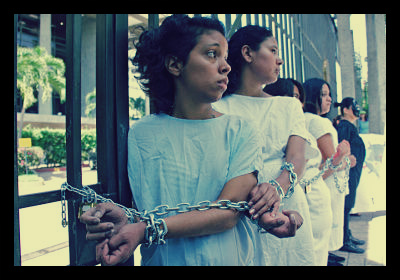
Last month in El Salvador, a judge sentenced 19 year-old Glenda Xiomara Cruz to prison for 10 years. Her crime? Miscarrying.
In October of 2012, Xiomara, experiencing excruciating abdominal pain and bleeding, sought medical treatment at a public hospital. Unaware that she was even pregnant, as she’d experienced no weight gain and a pregnancy test had come back negative, doctors told her she’d lost a baby. Four days later, the teenager had been reported by the hospital to the police for suspected abortion and charged with aggravated murder. A year later, she’s been sentenced to ten years in prison by a judge who told her “she should have saved her baby’s life.”
Xiomara’s unfortunate fate is the result of El Salvador’s strict abortion law. The law is so strict, in fact, that since 1998 abortions have been completely banned without any exception, even in cases of rape, fetal deformity, or if the mother’s life is at risk.
Twenty-eight year-old Maria Teresa Rivera’s story parallels Xiomara’s and further illustrates the tragic consequences of such a harsh law. Last year, she too sought medical treatment for bleeding and abdominal pain and was reported to authorities by the hospital after suffering a miscarriage. Teresa was sentenced to 40 years in prison for aggravated murder. A textile worker and her family’s main provider, going to jail meant leaving her eight year-old son in extreme poverty.
A study done by the Citizens’ Group for the Decriminalization of Abortion supports the statement that this law overwhelmingly affects those living in poverty. The study found that, since 2000, more than 200 women have been reported to the police on abortion charges — the vast majority of these women were poor, unmarried and with little education. Comparatively, not a single woman has been reported from the richer private healthcare sector — where abortions are believed to be performed regularly.
More than unfairly imprisoning women and tearing apart families, the law also has devastating consequences for women’s health. Bessy Ramirez of San Salvador enunciates one of the numerous harmful effects of the law: “I would be terrified to go a public hospital as there is no benefit of doubt given to young women, we are presumed guilty and jailed.” For poor women, however, public hospitals represent their only medical treatment option.
In addition to deterring women from seeking medical treatment, the law likely also has a role in boosting the occurrences of suicide. Health Ministry figures from 2011 identify suicide as the most common cause of death for 10-19 year-old girls; half of these girls were pregnant. Further, because it is illegal for women to terminate pregnancies even in cases where the mother’s health is threatened, the inability to treat pregnancy complications is the third most common cause of maternal mortality.
Amnesty International’s El Salvador expert Esther Major calls the abortion law “cruel and discriminatory” saying that “women and girls end up in prison for being unwilling, or simply tragically unable, to carry the pregnancy to term. It makes seeking hospital treatment for complications during pregnancy, including a miscarriage, a dangerous lottery.” Unfortunately, as in innumerable other instances, it’s a lottery women in poverty are most likely to lose.
– Kelley Calkins
Photo: Vice
