• Link to X
  • Link to Facebook
  • Link to Instagram
  • Link to TikTok
  • Link to Youtube
  • About
    • About Us
      • President
      • Board of Directors
      • Board of Advisors
      • Financials
      • Our Methodology
      • Success Tracker
      • Contact
  • Act Now
    • 30 Ways to Help
      • Email Congress
      • Call Congress
      • Volunteer
      • Courses & Certificates
      • Be a Donor
    • Internships
      • In-Office Internships
      • Remote Internships
    • Legislation
      • Politics 101
  • The Blog
  • The Podcast
  • Magazine
  • Donate
  • Click to open the search input field Click to open the search input field Search
  • Menu Menu

Archive for category: Food Security

Information and stories about food security news.

Food & Hunger, Food Security, Hunger

The Relationship of Hunger & Poverty

hunger
The world currently produces enough food to sustain the entire global population, yet nearly a billion people around the world still suffer every day from hunger. The U.S. alone could end global hunger with only $30 billion a year — a mere fraction of the $530 billion the U.S. spends annually on the military.

If we have the power to feed the world, it begs the question — why is hunger still such a monumental problem?

The primary and most obvious cause of hunger is poverty. While enough food exists to feed the world, a significant portion of the population still live in such abject poverty that they cannot afford even the most basic food items.

This creates an incessant poverty trap. The global poor can’t feed themselves or their families, so they become weak and malnourished which makes them unable to work. In turn, they fall deeper into poverty. This phenomenon is affecting millions of people around the world. Any solution to hunger must also be in part a solution to poverty.

Another major cause of hunger is natural disasters and climate change. Storms and droughts — both of which are on the rise — damage crops and lead to massive food shortages. Often, the poorest countries are the ones least equipped to deal with these disasters, and the greenhouse gases that lead to climate change originate from the richest countries.

One way to remedy this problem is to increase foreign investment in agriculture. By establishing adequate infrastructure, cultivating the land properly, managing water usage and ensuring storage facilities are used effectively, the fallout from natural disasters can be handled much more easily.

Unfortunately, most poor countries lack the resources and the knowledge to shore up their agricultural sector by themselves. However, foreign investment in the agricultural sector of developing countries would go a long way towards helping them becoming self-sustainable. A U.N. study found that investments in agriculture reduce hunger five times more than investments in any other sector.

Finally, war represents another major cause of hunger. The most war-torn areas in the world also tend to suffer the most from hunger. In war, food is often used as a weapon. Farms and livestock are ravaged in an effort to starve the opposition into submission. In Africa, countries with the most conflict — like Somalia and the Democratic Republic of Congo — are often the hungriest. On the other hand, in more peaceful countries — like Ghana and Rwanda — hunger is on the decline.

There are a number of insidious causes to the problem of global hunger, but the good news is that all of them are preventable. First and foremost, the problem of hunger must be tackled by facing poverty head-on. From there, we should turn our attention away from feeding impoverished peoples through aid, and towards helping them become self-sustainable.

– Samuel Hillestad

Sources: WFP, Global Concerns Classroom, DoSomething, FAO
Photo: OoCities

July 18, 2014
https://borgenproject.org/wp-content/uploads/borgen-project-logo.svg 0 0 Borgen Project https://borgenproject.org/wp-content/uploads/borgen-project-logo.svg Borgen Project2014-07-18 16:00:342024-12-13 17:50:18The Relationship of Hunger & Poverty
Food & Hunger, Food Security, Malnourishment

Hunger in Malawi

It will prove to be (and has already been) a tough year for one of the poorest countries in the world, as more than 1.5 million people in Malawi will experience the adverse effects of food insecurity. Rural and refugee households are most at risk of the hunger and malnutrition caused by the alternating periods of drought flooding that periodically sweep through this landlocked African nation. Of Malawians, 90 percent live on less than the equivalent of U.S. $2 per day; this extreme poverty compounded by other social troubles such as rampant disease and a high illiteracy rate make hunger hard a difficult problem to fight.

It’s a problem that needs to be fought, though, and many aid organizations have turned their focus to Malawi since 2002, the year the country’s maize production decreased by nearly half. Malawi’s economy is highly dependent on agriculture and its primary crop is the grain plant, whose stalks grow in fields across Malawi. In 2002, though, budgetary cuts recommended by the International Monetary Fund forced the government to eliminate their seed and fertilizer distribution programs. The maize harvest has not yet recovered.

Though the feeding programs established in Malawi have the short-term goal of reducing hunger wherever it occurs in a nation of more than 16 million people, humanitarian organizations also aim to collaborate with the Malawian government to rebuild the country’s agricultural sector in a sustainable fashion. Efforts to achieve this goal include reinstalling fertilizer and seed programs, replenishing soil that has been drained of all nutrients after seasons and seasons of overuse, and encouraging farmers to diversify their harvest to include beans and nuts.

Other efforts to reduce hunger in Malawi include global health programs targeting the prevalence of AIDS and malaria in Malawi, as well as successful microfinance initiatives to get local entrepreneurs up and running. The combination of these programs has so far been successful, reducing rates of both hunger and illness. There is much to be done yet, but that fewer people are hungry in Malawi today than they were 10 years ago is promising.

Even more promising? The drive of Malawian farmers, who are determined to bounce back from natural disasters and diversify their fields. In fact, many people in Malawi – not just farmers – are bent on eliminating hunger in their country, so much so that they’ve sparked a movement called “the right to food.” Begun in response to the 2002 fertilizer crisis and subsequent famine, proponents of the movement urge their government to commit to feeding its people. Malawi’s government has now codified its obligation to ending hunger.

If progress continues at this pace, Malawians can expect to enjoy much more food in their stomachs in the coming years.

– Elise L. Riley

Sources: Global Post, UNWFP
Photo: CRS

July 17, 2014
https://borgenproject.org/wp-content/uploads/borgen-project-logo.svg 0 0 Borgen Project https://borgenproject.org/wp-content/uploads/borgen-project-logo.svg Borgen Project2014-07-17 16:10:242024-05-27 09:18:43Hunger in Malawi
Food & Hunger, Food Security, Global Poverty

Hunger in Senegal

Summers are hungry times for the poor of Senegal, who must endure an annual “lean season,” lasting from June to September. Food insecurity caused by fluctuating food prices and unpredictable cereal harvests can leave hundreds of thousands of Senegalese malnourished and ill. Though Senegal’s economy relies mainly on the success of its agricultural sector – nearly 80 percent of the country’s people are employed in the industry, that success does not always translate to adequate nourishment for its 13 million people.

This year, underwhelming crop outputs are largely to blame for the food shortage Senegal is currently facing. Cereal harvests typically produce 20 percent more food than they have this year. As an added effect, the lean season started even earlier than usual this year, extending the period of chronic food insecurity for over half a million people.

Hunger has the power not only to kill and make ill, but also to disrupt families and throw individuals further into poverty. In Senegal, men often leave rural areas to seek food or employment in urban centers, forcing women to bear the burden of childcare at home. Many women, failing to obtain adequate food and water supplies for their families, resort to selling many of their possessions to make ends meet. Still, that is often not enough.

What’s the good news? Senegal is one of the most stable countries in Africa and has been since its independence from France in 1960. That makes it much easier for humanitarian agencies to work with the Senegalese government to implement effective aid programs. Currently, the World Food Programme of the United Nations is collaborating with Senegal to bring food to 675,000 of its people during the lean season.

The food aid strategy Senegal employs is based on a voucher system, in which households receive a monthly voucher they can use to feed their families. The program is very popular among the Senegalese people; one voucher recipient noted that, “from today forward, I will be able to feed my children, prepare rice the way I like it, and also save money to pay back my debts.”

With successful, targeted food aid programs like World Food Programme’s, the people of Senegal may be able to weather what is already the worst lean season of the last five years. Additional foreign aid aimed at Senegal would only extend that effect to even more people.

– Elise L. Riley

Sources: World Food Programme, The Hunger Project, Action Against Hunger
Photo: Global Post

July 15, 2014
https://borgenproject.org/wp-content/uploads/borgen-project-logo.svg 0 0 Borgen Project https://borgenproject.org/wp-content/uploads/borgen-project-logo.svg Borgen Project2014-07-15 11:00:152024-05-27 09:18:32Hunger in Senegal
Food & Hunger, Food Security

Distraction & Development at AU Summit

On the eve of the 23rd Session of the Assembly of Heads of State and Government of the African Union, a bomb exploded in an Abuja shopping center, killing 21 and wounding 52. Nigerian President Goodluck Jonathan returned early from the AU session–held in Equatorial Guinea–in order to address the attack, which comes at a time of great violence for Africa’s most highly populated country. Unfortunately the attack also reinforces the need to confront the security issues of AU nations, which has become the unofficial second theme of the summit.

The attack came only as the first major drama that forced delegates to stray from the official theme, “Year of Agriculture and Food Security.” Experts believe the agricultural sector in Africa could end extreme poverty on the continent within one generation, but not without modernization.

United Nations Secretary-General Ban Ki-moon reaffirmed UN support for the AU objectives, stating, “We will assist in ensuring universal education, achieving gender equality and empowering women. We will help advance respect for human rights… We are doing all of this as part of our overall efforts to achieve sustainable development.”

In spite of any such intentions, the AU summit exposed seemingly endless controversy. Beginning with the host country, Equatorial Guinea’s President Teodoro Obiang Nguema spoke to the former Spanish colony’s desire to restructure its relationship with the West in order to foster development, calling the current relationship “…a neo-colonial system which perpetuates the old colonial one… Africa should renegotiate relations with [the] developed world.” Yet having seized control over three decades ago, Nguema paid a hefty sum to host what critics have deemed an opportunity to showcase his €580 million Sipopo Conference Center whilst concealing the grave inequality in a country ruled by an oil-rich elite.

Nguema has also severely restricted freedom of speech for Equatorial Guinea’s small population, especially in terms of criticism. Furthermore, the President’s son and potential successor now holds government posts that have been investigated for money laundering abroad; the government official status protects him from prosecution.

Certain summit guests have triggered debate. The International Criminal Court’s indictment of Sudanese President Omar al-Bashir limits potential summit locations to non-signatory countries. Equatorial Guinea also invited Spanish Prime Minister Mariano Rajoy, whose visit has reignited old tensions.

Even more awkward was the early exit of an invited group of American Jews who left the meeting after certain African delegations refused to proceed with their presence. Palestinian Foreign Minister Riyad al-Maliki then spoke at the inaugural session with harsh words for the state of Israel.

Amid the turmoil, delegates were able to adopt a budget for the 2015 year of over $520 million–still far less than the cost of the building in which they negotiated their draft. The body tabled the popular version of Agenda 2063, a plan to gear Africa toward sustainable development over the next 50 years. The AU seeks increased grass-root participation in the creation of the Agenda, and has urged national governments to raise awareness among their citizens.

The leaders will meet again for the 24th Session in Addis Ababa, Ethiopia in January 2015. Perhaps next year the AU will be better prepared to focus on the theme “Year of Women’s Empowerment and Development towards Africa’s Agenda 2063.”

– Erica Lignell

Sources: All Africa, All Africa 2, BBC, Reuters, Human Rights Watch, UN, EIN News Desk, African Union Commission Facebook
Photo: African Union

July 11, 2014
https://borgenproject.org/wp-content/uploads/borgen-project-logo.svg 0 0 Borgen Project https://borgenproject.org/wp-content/uploads/borgen-project-logo.svg Borgen Project2014-07-11 04:00:112024-12-13 17:50:22Distraction & Development at AU Summit
Food & Hunger, Food Aid, Food Security, Global Poverty, Hunger

How Many People Go Hungry?

how many people go hungry?
Hunger and malnutrition plague millions of people globally, but just how many people go hungry?

Statistics show that 842 million people in the world do not have enough to eat. The vast majority of these hungry people, about 827 million, live in developing countries, where 14 percent of the population is undernourished. Asia currently has the largest number of hungry people, over 500 million, but it is Sub-Saharan Africa that has the highest prevalence of hunger and malnutrition. One out of six children, 100 million children in developing countries, is underweight. Throughout the world, one in four children’s growth is stunted from malnutrition, particularly in these developing countries. Poor nutrition causes nearly half of deaths under the age of five, totaling 3.1 million children a year.

Since 1990, global hunger has been reduced by more than 34 percent, but roughly one billion men, women, and children are still food-insecure. Since the federal government began Food for Peace in 1954, more than three billion people in over 150 countries have benefited directly from U.S. food aid. An increase in this assistance would make substantial changes throughout the world. WFP calculates that $3.2 billion is needed per year to reach all 66 million hungry school-age children.

The world produces enough calories for every person on earth to eat around 2700 per day for each human. Millions of people go hungry not because food is lacking. Rather, many of these calories are not used to feed humans. One-third is used to feed animals, 5 percent is used in the production of biofuels, and up to a third is simply wasted. The current system in place allows the wealthy half of the planet to eat well while the rest of the world struggles to eat at all.

Many organizations and programs aim to reduce global hunger. Supporting peasant farming is one key factor in this goal, but it is equally important to rein in Western-style culture and the standard the American diet creates.

-Elizabeth Malfaro

Sources: World Food Programme, Bread for the World
Photo: USAID

July 3, 2014
https://borgenproject.org/wp-content/uploads/borgen-project-logo.svg 0 0 Borgen Project https://borgenproject.org/wp-content/uploads/borgen-project-logo.svg Borgen Project2014-07-03 04:00:562024-12-13 17:49:34How Many People Go Hungry?
Food & Hunger, Food Aid, Food Security

5 World Hunger Solutions

World Hunger Solutions
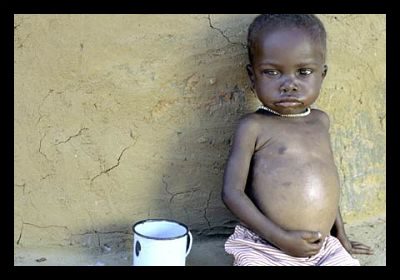
Approximately 1 billion people worldwide live in hunger, despite the fact that there is enough food on the planet to feed all 7 billion of the world’s living humans. Here are five world hunger solutions:

1. Feeding Programs and Food Aid Donations

Probably the most obvious of the five solutions, the most immediate, if not the most sustainable, way to end hunger is to put food directly in the hands of those who are hungry. Feeding programs and efficient food aid donations have proven to be an extremely effective way of doing so.

Getting food to the hungry until they are able to produce it themselves is not a matter of implementing feeding programs and donating food – it’s about making the programs that already exist more effective. For instance, the Food for Peace Reform Act of 2014 that was introduced in Congress on June 3 strives to greatly increase the economic effectiveness of U.S. food aid by ending requirements that food aid must be purchased domestically rather than locally, a requirement that significantly drives up the price of food.

By turning a careful eye to the programs that are in place today and making slight reforms to them where necessary, it is possible to feed millions more people around the world.

2. Education and School Meals

Providing all school-aged children with a proper education is one of the most effective ways of ensuring that they don’t face hunger as adults. By providing kids with the knowledge and skills to procure jobs, education prepares them to be self-sufficient in the real world.

It’s important, though, to make sure that children are fed while they’re in school. Not only does this encourage them (especially those children who do not receive enough to eat at home) to come to school, but it also increases their focus and improves their performance while they’re in the classroom.

3. Sustainable, Practical and Dependable Agriculture

Implementing sustainable, practical and dependable agriculture is a three-fold task: international aid organizations must work with farmers and communities to promote vegetarian diets, embrace GMOs and adopt urban farming practices. Only by accomplishing each of these tasks will hungry communities be able to produce enough food to sustain themselves in the immediate future.

Why vegetarian? It can be a hard sell, it’s true – especially in places where meat is already a large portion of the local cuisine or plays a role in a cultural tradition. While we certainly don’t want to interfere in local cultures, reducing the global demand for meat is an important step toward making more food available for the hungry. It is estimated that for every 100 calories fed to a cow, a human will reap only 2.5 calories from eating its beef. Calorically, raising livestock for the sole purpose of eventually consuming them is extremely expensive. By decreasing the size of the meat industry, we could simultaneously decrease worldwide hunger.

Genetically-modified organisms, or GMOs, are another controversial topic. GMOs indisputably play a large role in helping the hungry, especially in nations where meteorological events are wreaking havoc on the agricultural yield. Some GMOs are specifically modified to be more resistant to droughts or floods than are conventional organisms, making them especially hardy in tropical and arid regions of the world. Planting GMOs in nations with extreme climates makes their populations less vulnerable to hunger. Better yet, many GMOs are nutritionally-enriched.

Urban farming has also captured headlines recently, but is usually cast in a positive light. That’s because the practice makes efficient use of urban space that is often overlooked and underused. Poverty is becoming an increasingly-urbanized affliction, with over 28 percent of poverty worldwide occurring in cities. In Asia, a staggering 50 percent of the impoverished live in urban areas. In order to get food into urban areas, it’s time we start producing food in urban areas. Urban farming is the answer to increasing food security in cities. It’s already proven to be extremely effective at reducing hunger for those living in Indian slums.

These agricultural adaptations certainly won’t come easy in many parts of the world, but implementing these changes even over a period of time is sure to yield major results.

4. Women

Despite making up more than half of the world’s population, women often exercise less agency when it comes to decision-making and have less access to resources such as education than do their male counterparts. These inequalities are just part of the reason why women experience hunger at higher rates than men do. Ironically, it’s women who do most of the world’s agricultural work. In Africa, 80 percent of farm workers are women; unfortunately, though they work with food all day, many of them don’t have enough of their own to keep themselves and their families well-nourished.

Investing in these women, however, is an unexpected way of bringing world hunger to an end. Typically, food goes farther in the hands of women than in the hands of men – it is more likely to nourish more members of the family, especially children. In regards to children, pregnant women are particularly in need of adequate nutrients – healthy mothers bear healthy kids.

Giving a woman food and the power to afford and obtain her own food in the future is the best way of ensuring that she and her family do not suffer from hunger. In Brazil, children are 20 percent more likely to survive to adulthood when their mothers control the family’s income. It’s time to invest in women – investing in them is investing in ending hunger.

Another way the U.S. can invest in women is by making contraception affordable, accessible and understandable to them worldwide. Globally, we’re facing a crisis of overpopulation, and more mouths are more difficult to feed. Lowering worldwide fertility rates is a key part of solving hunger.

5. Infants

Babies are particularly vulnerable to disease and infection, and hunger and malnutrition only exaggerate that weakness. By giving babies a healthy, well-nourished start to life, we give them a greater chance at making it to adulthood.

How does this end world hunger? Healthy children can attend school, grow up to find employment and make better lives for their own children. A healthy populace begins at birth.

World hunger isn’t going to end tomorrow. But by understanding some of the tactics we can use to end it, we might sooner bring about a world where everyone is well-fed, healthy and happy.

– Elise L. Riley

Sources: The Guardian 1, The Guardian 2, Food for Life, Borgen Project, World Watch, WFP
June 13, 2014
https://borgenproject.org/wp-content/uploads/borgen-project-logo.svg 0 0 Borgen Project https://borgenproject.org/wp-content/uploads/borgen-project-logo.svg Borgen Project2014-06-13 15:44:102024-06-04 03:01:205 World Hunger Solutions
Food & Hunger, Food Aid, Food Security

UN to Provide Food Aid to Yemen

Food Aid to Yemen
Nearly 54 percent of Yemen’s population remains below the country’s poverty line. The rate of unemployment among young people in Yemen has grown to be around 60 percent of the population.

“Preliminary studies show that between March 2011 and March 2013, Yemen’s economy saw a loss of about $4.75 billion as a result of oil pipeline bombings and acts of sabotage targeting some installations,” said Yemeni Minster of Oil and Minerals, Ahmed Abdullah Daris.

Recently, the United Nations food agency has stated that they are scaling up their food aid to Yemen as nearly half of the population is going hungry. More than 10 million of Yemen’s 25 million inhabitants either require food aid due to an inability to find enough food for themselves, or are teetering on the edge.

In 1996, the World Health Organization defined food security as “when all people at all times have access to sufficient, safe, nutritious food to maintain a healthy and active life.”

Food security is built on three pillars: (1) food availability, or the opportunity to have sufficient quantities of food available on a consistent basis; (2) food access, having sufficient resources to obtain appropriate foods for a nutritious diet; (3) and food use, appropriate use based on knowledge of basic nutrition and care, as well as adequate water and sanitation.

“The country has one of the world’s highest levels of malnutrition among children,” said World Food Programme spokeswoman Elisabeth Byrs, “with nearly half of all kids under the age of 5—a full 2 million of them—stunted. A million of those kids are acutely malnourished.”

The problem is difficult to tackle. Yemen, one of the poorest countries in the world, has been going through a difficult political transition since the removal of president Ali Abdullah Saleh after a year of deadly protests against his 33-year rule.

At the same time, Yemen is also vulnerable to international hikes in food prices, since it imports around 90 percent of its main staple foods like wheat and sugar. The price hikes, according to the U.N., affect around 90 percent of Yemeni households and may be the reason why nearly 50 percent of children under the age of 5 suffer from chronic malnutrition.

Starting in July, the U.N. agency plans to launch a special two-year “Recovery Operation” aimed at addressing long-term hunger in the region. The Recovery Operation will help to ensure food stability for around 6 million people. Under the program, the U.N. will provide malnutrition prevention and treatment, give 200,000 girls in school take-home rations and will help create rural jobs, improve farms and water supplies.

The program aims to safeguard Yemeni lives and boost food security and nutrition in poverty-stricken areas. The program seeks to reach 6 million Yemeni people from mid-2014 to mid-2016, and will aim to provide solutions for long-term relief instead of short term. The U.N. has announced that their efforts would only offer temporary relief.

The U.N. warns, however, that the aid increase will be costly, with the agency estimating that the two-year program will cost around $491 million.

– Monica Newell

Sources: Gulf News, Press TV, Al-Monitor, Yemen Post
Photo: Care

June 13, 2014
https://borgenproject.org/wp-content/uploads/borgen-project-logo.svg 0 0 Borgen Project https://borgenproject.org/wp-content/uploads/borgen-project-logo.svg Borgen Project2014-06-13 13:22:372024-06-04 01:08:04UN to Provide Food Aid to Yemen
Food & Hunger, Food Security, Global Poverty, Malnourishment, Refugees and Displaced Persons

1,000 Days Campaign in Rwanda 

1,000_days_campaign
Since conflict started in the Democratic Republic of Congo, children have been fleeing the violence to Rwanda and into the hands of another challenge: malnutrition. The state of food security and proper nourishment in Rwandan refugee camps is becoming dire as nearly 44 percent of children under 5 face serious chronic malnutrition.

However, the Rwandan government is making strides to welcome its new residents with open arms and humanitarian aid. Under the command of Prime Minister Pierre Damien Habumuremyi, the Rwandan government launched the “1,000 Days in the Thousand Hills” campaign back in September of 2013 to combat malnutrition in both its refugee camps and its local population. With the help of the Ministry of Disaster Management and Refugee Affairs (MIDIMAR), the 1,000 days campaign was implemented first in the Kiziba camp in Western Rwanda, then in all five refugee camps in the country.

The mission of the campaign: combat malnutrition using programs that make populations more self-reliant and educated on proper health. The approach: provide children with the proper nutrients for the first 1,000 days from birth until the child’s second birthday and establish local community efforts to produce more nutritious food.

The 1,000 Days campaign in Rwanda is not unique. In fact, similar programs have been implemented in a variety of other locations including Ethiopia, Indonesia and Guatemala. But what makes Rwanda’s campaign special is its focus on integration. Like all of MIDIMAR’s programs, the 1,000 Days in the Thousand Hills campaign aims to connect the refugee and local populations by using their combined forces to solve mutual problems. All practices used in the local population are being used in refugee camps and vice versa.

What are these practices? As established, the campaign seeks to make populations at risk more self-sufficient while still receiving help to reduce malnutrition. Programs include setting up kitchen gardens and animal breeding programs. At the start of the campaign, 315 kitchen gardens were set up and 151 families received rabbits to breed, eat and sell. The hope is to make refugees and local populations independent with livestock and farming techniques that provide them with greater nutrients.

On top of this, the 1,000 days campaign aims to provide children with the necessary sustenance for healthy development and nutrition from day one until age 2. This allows children to escape malnutrition and stunting of growth and to have better immune systems and brighter futures. The program achieves this goal both by putting more food into the community and educating parents on what counts as fortified and healthy foods, such as vegetables, fruits and milk. In addition, the campaign seeks to spread awareness on the warning signs of malnutrition and the diseases associated with the condition.

All of this culminates in two results: first, it brings children out of risk of malnutrition by providing them with necessary protein from the start. Second, it pulls populations into a state of food security by providing sustainable ways of harvesting good food.

The program is set to end in October of 2016, but many strides towards success can be taken by then. With any luck and lots of hard work, malnutrition will cease to be an insurmountable problem facing refugees in Rwanda.

– Caitlin Thompson

Sources: All Africa, Doctors Without Borders, Ministry of Disaster Management, Relief Web, Republic of Rwanda, Republic of Rwanda Ministry of Health, World Vision International, 1000 Days
Photo: Republic of Rwanda Ministry of Health


June 5, 2014
https://borgenproject.org/wp-content/uploads/borgen-project-logo.svg 0 0 Borgen Project https://borgenproject.org/wp-content/uploads/borgen-project-logo.svg Borgen Project2014-06-05 20:39:262024-06-05 01:57:291,000 Days Campaign in Rwanda 
Food Security, Global Poverty, Malnourishment

Soybeans and Global Food Security

A recent study by NASA’s Jet Propulsion Lab in California has shown that soybeans can be re-engineered to grow in more arid environments without losing standard crop yield. If the new varieties prove durable, the cultivation of soybeans in Sub-Saharan Africa and South Asia will help address food insecurity issues in the region. Here are five reasons why soybeans are important in addressing global food security:

1. Food production must increase by 70 percent to meet the world’s food needs by 2050.

There are a number of factors that will affect global food security in the coming decades including: population increase, movement away from rural areas and toward urban centers, food production and climate change.

Today, undernourishment affects 870 million people worldwide. Between now and 2050, there will be an additional two billion people on our planet, with around 24 million children pushed into hunger due to food security issues.

2. Soybeans are one of the world’s most important protein crops.

Soybeans have a protein content of over 35 percent, as well as healthy unsaturated fats and carbohydrate fibers, making them some of the healthiest food sources around. They are also one of the least expensive sources of protein when compared to eggs, milk, beef and cow peas.

Due to the use of soybeans in both the food and animal feed industries, soybean farmers can earn a substantial amount of cash because the crop can be successfully grown at a low cost of production.

3. Modifying soybeans can address both climate challenges and food insecurity.

In a recent study led by NASA’s Jet Propulsion Lab (JPL,) computer models have been applied to look for a super soybean. The research study determined that soybean plants can be redesigned to increase crop yield by 7 percent without using more water. The study also demonstrated that soybeans can be redesigned to use either 13 percent less water, or reflect 34 percent more light back into space without reducing crop yields–good for both food security and climate change.

While other geo-engineering solutions for climate change tend to be expensive, such as spraying sulfates into the upper atmosphere in order to reduce incoming sunlight or loading the ocean with iron in order to increase plankton photosynthesis, modifying annual crops is inexpensive and can be implemented quickly.

4. Soybean cultivation is growing in Africa.

Research by the University of Agriculture Makurdi in Nigeria in collaboration with the International Institute of Agriculture (IITA), aims to help improve the lives and livelihoods of small-hold farmers in the drought-prone areas of sub-Saharan Africa and South Asia by providing more durable soybean varieties that can stand up against more arid conditions. Like the redesigned varieties in the JPL study, new varieties being promoted in Africa can help increase crop yields without using more water.

Soybean production remains relatively isolated in Africa, with Nigeria as the largest soybean producer, followed by South Africa and Uganda. However, the new, more durable varieties may allow for more countries to begin cultivating soybeans, helping improve the health of their populations as well as reducing local poverty.

5. Soybeans could have a long-term impact on poverty.

Food and water security will be a major national security focus in the coming decades as both climate change and population increases affect food production worldwide. Countries lacking basic food resources to feed their growing urban populations may become hotbeds for conflict, unrest and terrorist activities.

While many solutions for food insecurity should be addressed and considered by lawmakers, scientists and farmers alike, soybean technology is a first step in addressing the needs of poverty stricken regions by providing a modified crop that can meet multiple goals.

Re-engineered soybeans are an innovative (and healthy) way to help address local food security issues worldwide. Not only do they provide a good food source, but their wide use in products from oils to food to animal feed guarantee a lucrative market for local farmers. Reducing poverty through innovative changes in the way staple crops are traditionally grown is an economical and feasible way to bring food security, in light of climate and population challenges, to developing regions of the world.

– Andrea Blinkhorn

Sources: Daily Trust, United Nations Conference on Trade And Development, Intech, NASA, VOA News, World Food Programme, Stop Hunger Now
Photo: HD WAll IMG

June 4, 2014
https://borgenproject.org/wp-content/uploads/borgen-project-logo.svg 0 0 Borgen Project https://borgenproject.org/wp-content/uploads/borgen-project-logo.svg Borgen Project2014-06-04 04:00:512024-06-07 04:41:25Soybeans and Global Food Security
Disease, Food Security

Global Banana Disease Threatens Production

In the past few weeks we have seen the rapid spread of what could become a devastating threat to the world’s banana population – a fungus known as Panama Disease Tropical Race 4 (TR4).

TR4 is a soil-born fungus that attacks plant roots and is now known to be deadly to the Cavendish banana, which is the world’s most popular and valuable banana crop, making up 95% of banana imports.

The fungal banana disease began its devastating journey in Southeast Asia, decimating tens of thousands of crops in Indonesia, China, Malaysia and the Philippines. TR4 has most recently been discovered in Jordan and Mozambique, indicating its spread beyond Asia to Africa and the Middle East.

The UN Food and Agriculture Organization (FAO) notes that there is already a risk that the fungus has spread to the world’s most important banana-growing areas in Latin America. These countries include Ecuador, Costa Rica and Colombia, where hundreds of thousands of people rely on the banana trade to make a living each day.

Not only is the banana an essential component of more than 400 million people’s diets, it is also an essential component of their monetary livelihood. According to one estimate, TR4 could destroy up to 85% of the world’s banana crop by volume, decimating thousands of plantations across the globe and severely impacting the $8.9 billion banana trade.

One leading banana expert, Professor Rony Swennen claims, “If [TR4] is in Latin America, it is going to be a disaster, whatever the multinationals do. Teams of workers move across different countries. The risk is it is going to spread like a bush fire.”

The FAO has further warned that TR4 represents an “expanded threat to global banana production” and that virtually all export banana plantations will be vulnerable in the coming weeks unless TR4’s spread can be stopped or new resistant strains developed.

The Cavendish banana is not the first to fall prey to such a fungal epidemic. Prior to its cultivation, the Gros Michel banana had been wiped out by a similar strain of the Panama disease.

Current researchers are attempting to discover new banana varieties that are resistant to the fungus or develop disease-resistant GM strains. However, a concerted effort between the industry, research institutions, government and international organizations will be necessary to prevent the spread of the disease.

– Mollie O’Brien

Sources: Bloomberg, The Independent
Photo: Flickr

April 20, 2014
https://borgenproject.org/wp-content/uploads/borgen-project-logo.svg 0 0 Borgen Project https://borgenproject.org/wp-content/uploads/borgen-project-logo.svg Borgen Project2014-04-20 04:00:222024-05-26 23:27:05Global Banana Disease Threatens Production
Page 23 of 31«‹2122232425›»

Get Smarter

  • Global Poverty 101
  • Global Poverty… The Good News
  • Global Poverty & U.S. Jobs
  • Global Poverty and National Security
  • Innovative Solutions to Poverty
  • Global Poverty & Aid FAQ’s
Search Search

Take Action

  • Call Congress
  • Email Congress
  • Donate
  • 30 Ways to Help
  • Volunteer Ops
  • Internships
  • Courses & Certificates
  • The Podcast
Borgen Project

“The Borgen Project is an incredible nonprofit organization that is addressing poverty and hunger and working towards ending them.”

-The Huffington Post

Inside The Borgen Project

  • Contact
  • About
  • Financials
  • President
  • Board of Directors
  • Board of Advisors

International Links

  • UK Email Parliament
  • UK Donate
  • Canada Email Parliament

Get Smarter

  • Global Poverty 101
  • Global Poverty… The Good News
  • Global Poverty & U.S. Jobs
  • Global Poverty and National Security
  • Innovative Solutions to Poverty
  • Global Poverty & Aid FAQ’s

Ways to Help

  • Call Congress
  • Email Congress
  • Donate
  • 30 Ways to Help
  • Volunteer Ops
  • Internships
  • Courses & Certificates
  • The Podcast
Scroll to top Scroll to top Scroll to top