• Link to X
  • Link to Facebook
  • Link to Instagram
  • Link to TikTok
  • Link to Youtube
  • About
    • About Us
      • President
      • Board of Directors
      • Board of Advisors
      • Financials
      • Our Methodology
      • Success Tracker
      • Contact
  • Act Now
    • 30 Ways to Help
      • Email Congress
      • Call Congress
      • Volunteer
      • Courses & Certificates
      • Be a Donor
    • Internships
      • In-Office Internships
      • Remote Internships
    • Legislation
      • Politics 101
  • The Blog
  • The Podcast
  • Magazine
  • Donate
  • Click to open the search input field Click to open the search input field Search
  • Menu Menu

Archive for category: Development

Information and stories on development news.

Developing Countries, Development, Global Poverty

Models for Eldercare in Sub-Saharan Africa

Eldercare in Sub-Saharan AfricaThe world is experiencing rapid demographic aging. In sub-Saharan Africa, a population of 165 million people above the age of 65 is expected by the year 2050, a number more than three times greater than today’s demographics in the region. The care needs of the elderly are much greater in developing countries than in developed countries. However, the WHO works to create sustainable, organized, affordable and accessible long-term care infrastructure that will protect the rights and dignity of vulnerable elderly people. Implementation of universal health coverage, which will make quality eldercare feasible, is its biggest priority in this regard.

The most successful models for eldercare in sub-Saharan Africa are collaborative and meet the rights, needs and preferences of individuals while encouraging their purposeful participation in society and their independence to the greatest extent possible. Oftentimes, this effective care allows for the elderly to remain in the home of a relative but with in-home care visits and access to a variety of supportive programs that meet their basic needs and also combat loneliness and isolation. A few innovative programs in sub-Saharan Africa meet the long-term care needs of the elderly. The study of these models facilitates their recreation for greater numbers of elderly citizens.

Examples of Successful Models for Eldercare in sub-Saharan Africa

  • Ghana: Care for the Aged Foundation provides organized, in-home care visits and assistance with personal care errands. Volunteer workers receive free health care in exchange for their service. Trust has grown in the community for this type of care and there is a long waitlist to participate.
  • Kenya: Private Nursing Agency [name protected per WHO policy] is a private company also providing individualized, in-home care from professionals. This efficient model is growing in popularity, but it is inaccessabile for those without insurance due to the cost.
  • South Africa: Rand Aid is a nonprofit organization with a retirement village model. Residents have security, a high quality of life and care as needed. The returned equity for their spot in the village (as with a condo as opposed to non-returned rent or nursing home expenses) draws people in. Care focuses on freedom of choice and autonomy, translating to the best quality of life.
  • Tanzania: HelpAge International works to improve access to in-home health care services to combat symptoms of poverty and alleviate long-term illnesses. HelpAge implements the Better Health for Older People in Africa program funded through U.K. aid. The program is widespread, individualized and collaborative with families. The program assists physical, emotional, spiritual, social and even the economic wellbeing of the clients.

These programs have the following characteristics in common:

  1. Involvement of family members in plan implementation
  2. Taking into consideration the preferences of the elderly person in care
  3. Adequate training of the caregivers
  4. Integration of comprehensive healthcare services
  5. Equitable access
  6. Quality of conditions for care providers
  7. Financial sustainability of programs

Filial Piety in sub-Saharan Africa

Currently, in sub-Saharan Africa, tradition and societal norms, as well as the lack of large-scale organized infrastructure, dictates that children of the elderly carry out the majority of eldercare in their homes, known as filial piety. The overwhelming burden of long-term care falls on girls and women. Most elderly requiring long-term care (those who no longer live independently) receive that care in an unregulated manner. This strain can prolong the cycle of poverty for far too many households.

In addition, the quality of care can be highly inconsistent leaving room for neglect and lack of basic needs being met. Girls and women who care for the elderly may miss out on education or employment opportunities because of this expectation. Furthermore, their own physical and mental health may suffer.

Continued research will increase understanding of the dynamics of eldercare globally. A Health and Retirement Study in the U.S. has expanded to several international sister studies and the World Health Organization is conducting a longitudinal study collecting data on adult health and aging.

What Can Be Done?

In order to meet the needs of the elderly in sub-Saharan Africa and establish integrated long-term care systems in the decades to come, several steps are needed according to the WHO:

  1. A comprehensive understanding of how people age and what their needs are.
  2. Analysis of deficits in current care models as well as the burdens placed on others.
  3. Close mapping of successful models and how to replicate them.
  4. Sharing of information and best practices cross-culturally and cross-nationally.
  5. Nurturing cultural acceptance of effective models that may differ from current practices.
  6. Coordinating and establishing national efforts, including funding; build infrastructure. Training and monitoring of caregivers are essential to this structure.

– Susan Niz
Photo: Wikimedia

October 23, 2019
https://borgenproject.org/wp-content/uploads/borgen-project-logo.svg 0 0 Jennifer Philipp https://borgenproject.org/wp-content/uploads/borgen-project-logo.svg Jennifer Philipp2019-10-23 14:15:032024-05-29 23:13:13Models for Eldercare in Sub-Saharan Africa
Developing Countries, Development, Education, Global Poverty

Internet Access in Afghanistan Key to Development

Internet Access in Afghanistan

One of the biggest issues facing developing countries is stunted infrastructure. Many developing countries lack the funds and institutions necessary to efficiently carry out mass infrastructure revamps that would connect all parts of these countries and enable more people to get safer, better-paying jobs. Of course, for developing countries like Afghanistan, this type of development also includes internet access as well. Internet access is so critical for long-term growth that the United Nations even listed it as a key outcome under its Sustainable Development Goals (SDGs).

Importance of Internet Access to Development

A lack of internet access can be stifling for economic growth in any country. Many international businesses are unwilling or hesitant to invest in countries that have no broadband connection. In this era, the internet is the medium through which many interactions essential for economic progress take place, such as:

  • Potential higher-paying employers can contact and hire employees.
  • Students can take classes, study, and turn in assignments.
  • Workers can unionize.
  • Citizens can keep educated about international events and help keep their representatives accountable.

However, this staple of modern development is widely not available to those who live in impoverished countries. Lack of internet access is especially a problem in the Middle East, as not only does terrain stifle modern development, but extremist groups like the Taliban oppose it as well. Afghanistan is one of these countries, as only about 17.6 percent of the population has access to the internet. The broadband that the population has access to costs about $80 per month for 1 Megabit per second (Mbps), making broadband access unaffordable for much of the population that has a Gross Net Income (GNI) per capita of $570.

Progress: Internet Access in Afghanistan

The good news is that there have been significant improvements within the past 10 years in Afghanistan’s internet infrastructure. In 2013, only 5.9 percent of the population had internet access, this means Afghanistani people have seen triple inaccessibility in just six years. Afghanistan now has a rather intensive fiber optics network laid down in 25 of its provinces with assistance from its neighboring countries, mainly Pakistan, as well as some international organizations like the International Telecommunication Union (ITU).

Due to these coordinated efforts, there are more than 8.7 million people using the internet in Afghanistan today. This number is expected to increase with de-escalation of the conflict in the region and further diplomatic talks with Afghanistan’s hegemonic neighbor China with plans to coordinate infrastructure development.

Internet access in Afghanistan still has a long way to go before it is considered comparable to any developed country, due in part to political, economic, social and even geographic reasons. Even so, the Chairman of Afghan Telecom Gul Aryobee remains optimistic about the prospect of further development in the Information Technology sector since the country has already seen such rapid improvements in less than a decade. He recognizes all the challenges that the internet in Afghanistan faces, but he remains strong in his conviction to meet the SDGs set by the United Nations and fully believes Afghanistan has the potential to develop exponentially with the continued assistance of other countries and international organizations.

– Graham Gordon
Photo: Flickr


October 23, 2019
https://borgenproject.org/wp-content/uploads/borgen-project-logo.svg 0 0 Kim Thelwell https://borgenproject.org/wp-content/uploads/borgen-project-logo.svg Kim Thelwell2019-10-23 11:22:092024-06-04 01:08:36Internet Access in Afghanistan Key to Development
Children, Developing Countries, Development, Education, Global Poverty

Venezuela’s Education System

Venezuela's Education System
A number of factors are greatly affecting Venezuela‘s education system. The Venezuelan government has always believed that every citizen has the right to free education. When oil prices drove Venezuela’s economy, so too was its educational system. Venezuela used to rank as one of the highest in education in Latin America until 2010 when it became number six in the region. Now the country is undergoing one of the worst humanitarian crises and it is affecting Venezuela‘s education system.

Economic and Political Collapse

In the 20th century, modernization and urbanization in Venezuela brought many improvements to its educational system. Former President Hugo Chavez used the rise in oil prices to fund the education system, train teachers and fund laptop computers. Now that the gas prices have dramatically fallen, not only has the economy gone down with it, the corruption and mismanagement of the government have also affected the quality of Venezuela‘s education system.

High Dropout Rates and Limited Faculty Members

Several students living in Venezuela have missed more than 40 percent of class due to school cancellations, strikes, protests or vacation days. That is equal to missing more than half of their mandatory instruction school days. There has been a “massive desertion of students” in every level of education. Yearly dropout rates have doubled since 2011 and in 2017 about 50 percent of students in three public universities located in Táchira dropped out. About one-fourth of the students do not attend school at all.

Massive numbers of teachers have left their jobs because of their low-wage salary of $6-$30 a month. About 400 employees have quit one of Venezuela’s top science universities, Simon Bolivar University, in the past 2 years. Some teachers dedicate their time to attending strikes and protests in the hopes of changing the education system, which results in them only working 10 days out of the month. Teachers also miss school when they encounter long food lines to feed their families, and some fear that someone will shoot, murder or rob them on campus when they go to work. Robberies in universities have increased by 50 percent in the last three years.

Lack of Food, Water, Electricity and Supplies

“There is only one bathroom for 1,700 children, the lights are broken, there is no water and the school meals are no longer being served,” said a teacher working in one of Venezuela’s middle-class public schools. The scarcity of water, food in cafeterias and electricity has caused schools like Caracas Public High School to close down for weeks at a time. Teachers are even trading passing grades for milk and flour because of the scarcity of food. Students are passing out every day at physical education classes due to their empty stomachs and broken school kitchens.

Budget cuts on school funding are the major reason why schools lack the supplies they need. In 2019, the University of Central Venezuela received only 28 percent of its “requested annual funding.” This is less than the 40 percent it received in 2014 and estimates determine that it will decline to 18 percent next year. These budget cuts result in “broken toilets, leaking ceilings, unlit classrooms and cracked” classroom floors. The education budget now prioritizes Bolivarian Universities due to the fact that they teach 21st-century socialism.

Lack of Intellectual Freedom

About 15 years ago, during former President Hugo Chavez’s presidency, the Bolivarian University of Venezuela opened. This is a higher education institution for underprivileged and poor civilians that are suffering due to Venezuela’s situation. This developed into a new education system the government created that stands by “the ideology of its socialist revolution.” Since the government has taken control over the university’s autonomy, lack of academic thought and intellectual freedom is prevalent. Since private companies now cannot fund universities as of 2010, there have been no new majors approved.

Solutions

Caritas is a nonprofit organization inspired by the Catholic faith and established in 1997. It has a history of listening to the poor talk about what they need and giving them what is necessary to improve their lives. It has seen over 18,890 children and provided 12,000 of them with nutritional care. About 54 percent of those children have recovered from malnutrition and other medical emergencies.

Global Giving is another NGO that has started a foundation called the I Love Venezuela Foundation. This Foundation focuses on creating and channeling resources to NGOs that focus on the “wellbeing, human development, and social transformation” in Venezuela. It also works on raising money in order to buy shoes for low-income families in Venezuela so that they can safely walk to school, play with their friends and be children. Its goal is to reach $10,000 and it has raised about $630 so far.

While Venezuela’s education system has had challenges in recent years, organizations like Caritas and Global Giving should help alleviate some of the burdens that prevent children from attending school. With continued support, Venezuela’s school system should one day reach its height again.

– Isabella Gonzalez
Photo: Flickr

October 21, 2019
https://borgenproject.org/wp-content/uploads/borgen-project-logo.svg 0 0 Jennifer Philipp https://borgenproject.org/wp-content/uploads/borgen-project-logo.svg Jennifer Philipp2019-10-21 14:26:452019-12-18 13:33:14Venezuela’s Education System
Developing Countries, Development, Global Poverty, Health, Malaria

Dams and Malaria: How They are Linked

Dams and Malaria
Despite the fact that malaria transmission rates have decreased by more than 40 percent since 2000, the morbid disease still affects a large number of people on the African continent. According to WHO, an estimated 219 million cases of malaria occurred in 2017 and a disproportionate 92 percent of these cases happened in Africa. Of these numbers, people can attribute at least 1.1 million cases to dams.

The Relationship Between Dams and Malaria

Mosquitoes tend to lay eggs and reproduce in shallow pools of water or somewhere in the near vicinity. Thus, water is a key component in the spread of malaria. The erection of dams creates a multitude of shallow pools along the edges of the water base that provide ideal situations for mosquitoes to nest. This increases the prevalence of malaria and the susceptibility of individuals to malaria.

A study published in the Malaria Journal found that the slope of the shoreline was the most determining factor of a rise in malaria for areas that had dams. Since mosquitoes like to breed in shallow pools of water that do not connect to a larger, main body of water, the shoreline around a dam is a prime location that meets these requirements. The more inclined a slope is, the more water drains out. This means that static pools of water are unable to form, which in turn means that mosquitoes do not find areas of the steep slope to be habitable.

Due to factors like this, not all dams are likely to increase malaria. Reservoirs that have steeper slopes pose a smaller risk of increasing the spread of malaria. For example, the climate and geography at a dam site, temperature fluctuations, elevation and amount of rainfall, also influence the spread of malaria near reservoirs. Thus, the continual study of the relationship between dams and malaria can lead to further identification of factors that increase the risk of spreading disease.

Solutions

Similarly, development planners must carefully select dam sites so that economic growth and electricity generation do not compromise the well-being of a local population. Increasing awareness through activism could see a more informed class of development planners take more calculated and careful approaches to dam construction. Indeed, a greater exchange of knowledge between local populations, journalists, researchers and policymakers is necessary to see increasing benefits and minimization of negative impacts.

This is arguably more important now than ever. As of 2015, 18.7 million Africans reside within five kilometers of dam reservoirs. Policymakers must take measures to ensure that quality of life does not deteriorate for those living near artificially constructed reservoirs. The relationship between dams and malaria is a critical nexus that can inform the implementation of less detrimental policies by those who are in a position to make such a policy.

– Evan Williams
Photo: Flickr

October 21, 2019
https://borgenproject.org/wp-content/uploads/borgen-project-logo.svg 0 0 Lynsey Alexander https://borgenproject.org/wp-content/uploads/borgen-project-logo.svg Lynsey Alexander2019-10-21 11:30:382019-12-12 14:35:59Dams and Malaria: How They are Linked
Development, Global Poverty, Poverty, Technology

Easy Ways to Help End Global Poverty Through Tech

Technology and PovertyTechnology advancements have made it easier than ever to participate in global poverty reduction efforts. From smartphone apps to browser extensions and charitable websites, keep reading to learn the easiest ways to help fight global poverty.

Apps That Help Fight Poverty

Smartphone apps may be the easiest form of providing assistance. Most people carry a cellphone with them wherever they go, so the ability to connect and help others is literally right at their fingertips. The five apps listed below are just a few examples of how technology can help to reduce poverty.

  • OLIO – OLIO is a food-sharing app based in the U.K. that allows people and local businesses to post food items nearing their best-by or sell-by date for other people to pick up. To date, over 1 million people have joined the app and 1.8 million portions of food have been shared. To post items, download the app, add a picture and description of the item, list when and where it can be picked up and wait for someone to claim it. To request items, scroll through the local listings, request what is needed and arrange to pick up through a private message.
  • Chowberry – Chowberry is an online Nigeria-based app, similar to OLIO, that has the goal of “reach[ing] millions of food-deprived individuals with affordable nutrition through innovation and enabling technologies”. Chowberry works with orphanages and faith-based organizations, as well as everyday customers to deliver soon-expiring food products to those most in need.
  • Share the Meal – Share the Meal was created by the United Nations World Food Programme (WFP). The WFP helps 80 million people with food assistance and is the world’s largest humanitarian agency fighting against hunger. Download the app, donate 50 cents (or more) in a few seconds and feed a child for the day. You can even check the app to see where the meals will be distributed.
  • WeFarm – WeFarm is a farmer-to-farmer digital network that allows farmers to connect to other farmers in various parts of the world, without the use of the Internet. More than 1 million farmers have been helped using WeFarm and over 40,000 questions and answers are sent in each day. Farmers can text their local WeFarm number a question they have, and other connected farmers can respond with their answers and suggestions.
  • Donate a Photo – Donate a Photo is an app created by Johnson & Johnson that allows users to “donate” a photo for a cause. Simply take a picture of any subject, choose what cause to donate it to and upload it. For every photo donated, Johnson & Johnson will donate $1 to a certain charity. So far, there have been more than 4.5 million photo donations benefiting more than 200 causes including Save the Children, RED (fight for AIDS) and A Leg to Stand On.

Browser Extensions That Help Fight Poverty

Browser extensions are another easy way to help others. Unlike apps, which require a little effort to use, extensions require none other than downloading them. Although there are several extensions to choose from, Tab for a Cause is probably the most well known. As creator Alex Groth says, this is a way “where everyone can be giving to charity regardless of your monetary worth at that time.”

Tab for a Cause – Tab for a Cause is a web app/browser extension that works off of opening new tabs. Each time a new tab is opened, the page displays blogs and articles related to various issues to help raise awareness and education as well as ads to help generate revenue which is then donated to different organizations and charities. Tab for a Cause has partnered with Water.org, Room to Read, Human Rights Watch, Conservation International, International Peace Institute and Save the Children. To date, Tab for a Cause has raised $791,766 for various charities.

Websites That Help Fight Poverty

The following sites offer ways to help fight global poverty in the easiest ways possible in many cases at no additional cost to the website user.

  • FreeRice – FreeRice is a website that allows users to essentially play a game to donate food and money to those in need. Each question answered correctly refreshes the page and provides a new sponsored ad which in turn generates money donated to the World Food Programme. Although most donations go towards providing grain for vulnerable families, the company also provides other types of food assistance, “depending on where needs are greatest.” So far the organization has donated the equivalent 202 billion grains of rice to families experiencing hunger.
  • The Hunger Site – The Hunger Site is a partner of GreaterGood, an organization that raises money through online auctions for charities around the world. Although The Hunger Site works like a store with items available for purchase with proceeds being donated, they have a quick, easy and free way to help as well. At the top of their page, they have a “Click to Give” button. Clicking this button donates a specific amount of money from sponsored advertisers to provide food for areas in need, and since 1999 the organization has funded more than 714 billion cups of food. GreaterGood has several offshoots of this campaign, with similar sites for breast cancer, Alzheimer’s and diabetes research, literacy awareness, animal shelter donations and a few others. Overall, since 1999 and through the use of these websites and their online auctions, GreaterGood has raised and donated over $50 million to charities around the world.
  • Amazon Smile – Amazon Smile is a project of Amazon that works exactly the same and offers the same products. The difference is that when shopping through Amazon Smile a portion of the proceeds will be donated to a charity of the shopper’s choice, without any additional cost to the shopper. As of 2018, Amazon had announced that it had made over $100 million in charitable donations since the Amazon Smiles program was launched in 2013.

– Jessica Winarski
Photo: Flickr

October 21, 2019
https://borgenproject.org/wp-content/uploads/borgen-project-logo.svg 0 0 Kim Thelwell https://borgenproject.org/wp-content/uploads/borgen-project-logo.svg Kim Thelwell2019-10-21 01:30:192024-06-06 00:26:28Easy Ways to Help End Global Poverty Through Tech
Developing Countries, Development, Global Poverty, Health, Women, Women & Children, Women and Female Empowerment

How People Are Fighting the Rape Epidemic in India

Rape Epidemic in India
The rape epidemic in India garnered international attention in 2012, when several men brutally raped and beat a woman, Nirbhaya, on a bus. The event immediately spread across the globe and sparked massive international outrage. This pushed the government to promise new laws. However, it did not make any tangible changes. A minor positive change was a social shift resulting in more women finding the strength to report cases of sexual assault. Perhaps the most gruesome fact from this brutal event is the regularity of gang-rape in India. Nirbhaya’s case, while one of the most horrifying stories of rape, is only one among thousands.

Solutions in Bangladesh

There is a precedent for solutions to these types of problems. One solution is for the law to change in a way that punishes those who physically or sexually abuse women. Bangladesh has effectively lowered its acids attacks on women to just 75 in 2014 whereas it was previously 492 cases in 2002. It accomplished this by mandating the death penalty as the crime for acid attacks. Since Bangladeshi men now fear the severe ramifications for an acid attack, they refrain from hurting women with this method. However, if Bangladesh and India enacted rigorous laws for all types of abuse on women, then at the very least, those particular men would not be able to abuse women at as drastic of a level as they are currently.

Snehalaya Provides Aid to Abused Women and Children

Women who suffer abuse can still have hope since many NGOs are actively working to support the victims and help them get back their dignity and return to a normal life. One example is Snehalaya, which provides a safe space for women and children who are suffering abuse, and helps over 15,000 people per year. Snehalaya strives to use “grassroots outreach and education” to lower the amount of domestic abuse and violence that occurs in India. Women who are victims of sexual abuse can count on Snehalaya to provide the proper support group to push them towards a normal life, which is even more important because sometimes a woman’s parents may not accept her after she has become a victim due to social stigma.

Another solution for the rape epidemic in India is women’s empowerment through properly educating women, which is what Sayfty strives to do. It strives to provide women the tools to be safe from acts of sexual violence and to teach women how to defend themselves. While the first solution provides a legal means for female empowerment and the second provides a way to help them after they become victims, Sayfty is essential because it empowers women to stand up for themselves while suffering abuse or at least provides them with knowledge of how to get away from predators and get help.

The efforts of millions of women who are finding the bravery to call out abusers are defeating the rape epidemic in India. The laws in India are slowly changing to match modern social attitudes. NGOs are empowering women to lead their own fight. Though change is slow, it is inevitable, and more women are getting the justice they deserve every day.

– Anish Kelkar
Photo: Flickr


October 20, 2019
https://borgenproject.org/wp-content/uploads/borgen-project-logo.svg 0 0 Jennifer Philipp https://borgenproject.org/wp-content/uploads/borgen-project-logo.svg Jennifer Philipp2019-10-20 17:11:142019-11-14 12:57:01How People Are Fighting the Rape Epidemic in India
Activism, Developing Countries, Development, Global Poverty, Human Rights

Consequences of Violence in Nicaragua

Consequences of Violence in Nicaragua
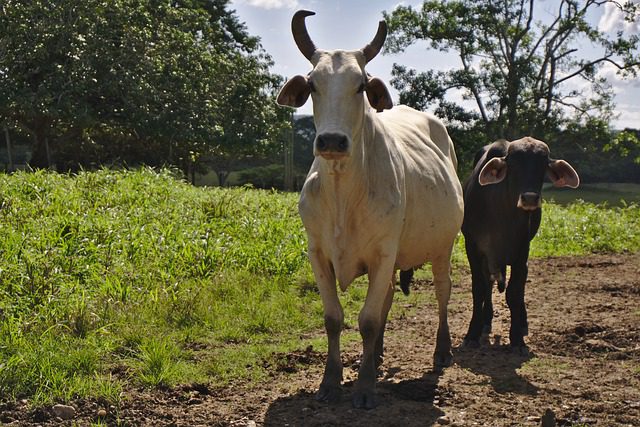
Since April 2018, the citizens of Nicaragua have been protesting against its government. What started originally as a movement against changes to the social security program quickly turned into an opposition movement demanding President Daniel Ortega and his wife’s resignations. The protests turned violent when anti-government protesters clashed with pro-government protesters and police. As a result, these protests resulted in the killings of more than 300 people and about 2,000 people becoming injured. Here are the major consequences of violence in Nicaragua.

Human Rights Concerns

One of the consequences of violence in Nicaragua has been the concerns surrounding human rights abuses by the government. According to Human Rights Watch, the Ortega administration has violated Nicaraguan citizens’ human rights by “[banning] public demonstrations by any group critical of the government, (…) [stripping] nine non-governmental organizations of their legal registration, [shutting] down media outlets, [prosecuting] journalists under the anti-terrorism law, and [expelling] international monitors from the country. The Ortega government has harassed and threatened the media, human rights defenders and other members of civil society.”

Additionally, it appears that the Nicaraguan government is not only denying its people the freedoms they are entitled to, but it is also retaliating against the reports the UN High Commissioner for Refugees (UNHCR) published. This becomes especially apparent by the government’s reactions to the release of these reports: “Following the high commissioner’s first report, the Ortega administration failed to hold perpetrators accountable for abuses and instead promoted senior officials who bear responsibility for killings and torture of demonstrators. In response to the high commissioner’s second report, the government has even defended the armed pro-government thugs that participated in repressing protests.”

Forced Migration

Additional consequences of the violence in Nicaragua is the forced displacement of 80,000 Nicaraguan citizens who are no longer able to live in their home country. Many are seeking asylum and refuge in neighboring countries like Costa Rica, Panama, Mexico and the United States. Of the 33,000 asylum requests that Costa Rica received in this past year, the country has only processed about 4,900 leaving more than 28,000 people to seek refuge elsewhere. Due to the mass displacement of these Nicaraguan citizens, many must survive on temporary employment or none at all, leaving them to suffer as a result.

Limited Access to Resources

One of the major consequences of violence in Nicaragua is the limited access to necessary resources such as food and health care as a result of the unexpected roadblocks that continually appear throughout the country and the capital, Managua. It is rather unclear whether these roadblocks are government-sponsored or a result of government opposition leaders, however, these often lead to detours and inconveniences when Nicaraguans are attempting to access grocery stores and gas stations. Additionally, government hospitals across the country have begun denying treatment to those who they suspect of being a part of the anti-government movement, which has led to people being unable to receive any kind of treatment for their injuries.

Economic Growth Concerns

In the past, Nicaragua has maintained a steady economic growth rate. In 2017, the growth rate was 4.5 percent. However, in the last year, since the outbreak of violence and political unrest, the economy has contracted about 3.8 percent and the World Bank suspects that this contraction will grow up to 5 percent in 2019. These violent protests have caused many to lose their jobs, while also causing a decrease in consumer and business confidence. As a result, some fear that the violence in Nicaragua will cost recent progress the country has made in poverty reduction efforts.

During the years of 2014 and 2016, poverty rates in Nicaragua had fallen from 29.6 percent to 24.9 percent due to the support of international organizations such as the World Bank’s International Development Association (IDA). Additionally, the extreme poverty rate also dropped from 8.3 percent to 6.9 percent in the same timeframe. It is too early to predict what the poverty rates will be for Nicaragua in 2019, but there is speculation that poverty rates will rise again.

Efforts by International Organizations

After six weeks of protests, U.N. Secretary-General Antonio Guterres addressed the situation in Nicaragua by asking the government to consider allowing the Office of the U.N. High Commissioner for Human Rights (OHCHR) to visit the country. On many occasions, the U.N. has established its willingness to resolve the situation by acting as a mediator in “national dialogue efforts to strengthen the rule of law, respect for human rights and the peaceful resolution of differences.” Additionally, there have been requests for the government to investigate allegations of human rights violations in order to hold perpetrators accountable and to bring much-needed justice and peace of mind for victims’ relatives.

Furthermore, representatives for Amnesty International have spoken out condemning the Nicaraguan governments’ repression of its people. They also suggested the creation of a committee in order to prosecute those guilty of serious human rights violations and crimes. In a report released by Amnesty International titled “Shoot to kill: Nicaragua’s strategy to suppress protest,” there appears to be evidence of Nicaraguan paramilitary forces using lethal weapons against protesters, of which many were students. This report sheds light on the situation in Nicaragua and hopes to bring international awareness in order for others to take action against the repressive forces of the Nicaraguan government.

The consequences of violence in Nicaragua range from human rights concerns to limited access to health care and even issues regarding Nicaragua’s economic growth rate. Though there appears to be no end in sight, there is hope for Nicaragua’s citizens as international organizations attempt to raise awareness and investigate the ongoing crimes committed against the Nicaraguan people. The situation is far from resolution but as it gains more international interest, there is hope that efforts will not be in vain and that the country can find a peaceful resolution.

– Laura Rogers
Photo: Flickr
October 20, 2019
https://borgenproject.org/wp-content/uploads/borgen-project-logo.svg 0 0 Jennifer Philipp https://borgenproject.org/wp-content/uploads/borgen-project-logo.svg Jennifer Philipp2019-10-20 14:00:442019-12-18 11:13:14Consequences of Violence in Nicaragua
Developing Countries, Development, Global Poverty, Health, Water Quality, Water Sanitation

Water Competition and Efficiency in Kazakhstan

Water Competition and Efficiency in Kazakhstan
Former Soviet-controlled Kazakhstan has come a long way since the end of the Cold War. Despite becoming a more stable nation in the Middle East compared to its neighbors, it still struggles with water distribution and quality to this day. This article shall discuss these chief problems through water competition and efficiency in Kazakhstan.

Competition with China

As far as competition goes, Kazakhstan has a major problem in the form of China. Kazakhstan relies heavily on the Ili River for a good portion of its water supply and both countries connect to this valuable river. At the end of the day, China receives a larger share of the river than Kazakhstan. This is partly because the Ili River begins in China, and that China has 15.7 billion cubic meters of water flow into its borders every year. On the flip side, Kazakhstan only gets around half of that with 8.4 billion cubic meters. China states that it should have a larger share due to it being larger than Kazakhstan and the fact that Kazakhstan exploited the water profusely in the 1960s. In fact, Kazakhstan still does today at a rate of 42.7 percent which is over the 40 percent limit range.

Efficiency in Water Distribution

Kazakhstan has noted that it needs to exploit these waters due to its inability to give its population enough water or water that meets sanitary standards. This is partly due to the lack of efficient water distribution to people in certain parts of Kazakhstan. Meanwhile, Central Kazakhstan only receives 3 percent of the country’s water.

Another problem is that the government has been treating its water as an unlimited resource while it is becoming clear that it is very scarce. This lead to poor management of this water while leading the citizens into believing that the problem is not as dire as it seems.

Sanitation in Kazakhstan

Another issue that Kazakhstan has is that most of its drinking water is unsafe to ingest. Due to the aforementioned poor distribution and supply of the water within the country, the amount of clean water sits at only 30 percent. A key cause of poor distribution is that the water often stops in pipes, which allows it to collect bacteria and disease. These interruptions in water flow can occur 14 days a month and last as long as 12 hours. The fact that the pipes that flow this drinking water are also in the same trenches as sewer pipes, causing cross-contamination and a possible epidemic does not help matters. This only further highlights why water competition and efficiency in Kazakhstan is so important.

Course of Action

Kazakhstan is looking to revamp its water system by not just fixing its own, but also by importing water from outside sources, namely other neighboring countries. The government is also receiving support from the E.U.; it is helping to create policies that can help Kazakhstan better preserve its water for drinking and agricultural needs. The E.U. is also going so far as to provide new technology to better equip the country in preserving this water. This is not surprising since the E.U. also provided $1.5 billion to help with water management from 2010 to 2013. With all of this support, the government of Kazakhstan is hoping to increase its people’s access to clean, sustainable drinking water by 2030.

In this article about water competition and efficiency in Kazakhstan, it is clear that the country is in a rough patch to competition outside of its borders, as well as its poor management of the water it possesses. With the proper restructuring of its water system and outside help, the country should be able to improve this issue. With the E.U.’s continued help and allocated funds and resources to fix the contamination and distribution problems, Kazakhstan should be able to see a great increase in clean water.

– Collin Williams
Photo: Flickr

October 20, 2019
https://borgenproject.org/wp-content/uploads/borgen-project-logo.svg 0 0 Kim Thelwell https://borgenproject.org/wp-content/uploads/borgen-project-logo.svg Kim Thelwell2019-10-20 13:04:472020-04-23 20:59:19Water Competition and Efficiency in Kazakhstan
Developing Countries, Development, Education, Global Poverty, Refugees

Link Between Poverty and Integration of Refugees

Poverty and Integration
When refugees flee their countries of origin in search of safety, they often end up living below the poverty line in each of the countries that they settle in. These refugees lack the financial resources for a stable livelihood with or without their families. However, there are also some refugees who seem to flawlessly integrate into the host society and become an accepted member of society. There seems to be a key factor that is causing the difference in whether a refugee can integrate successfully into the host society or not. This article will explore the link between poverty and integration.

The Link Between Poverty and Integration

Dr. Dogus Simsek, a professor who teaches sociology at University College London, has researched the matter within the context of the Syrian refugees in Turkey post-2011. She looked into the Turkish policies regarding migration and developed an argument through her sociological analysis of the literature. She looked into the concepts of market citizenship, refugee economics and the concept of methodological individualism while conducting fieldwork with around 120 Syrian refugees all throughout 2016. Upon concluding her hypothesis, she argued that poverty and integration interlink because the refugees who lack financial resources often lack the stability in their lives that they need to begin the integration process into the host society. When The Borgen Project interviewed her about what made her believe that there was a link between poverty and integration, she replied saying that the laws, rules and policies on migration were in favor of those who were investing in Turkey. The Syrian refugees themselves also backed this up when they talked about their daily life.

Integration and Market Citizenship

In everyday life, the public uses the word integration every day without settling on its definition. To fix that, Alistair Ager and Alison Strang operationalized the definition of integration and have attempted to conceptualize a framework with four domains: markers and means, social connection, facilitators and foundation. Markers and means include the key measurements of employment, housing, education and health. The social connection includes social bridges, social bonds and social links. Facilitators include language, cultural knowledge, safety and stability whereas the domain of foundation includes rights and citizenship. Ager and Strang argue that this conceptualization of integration can be the foundation of how people should define integration.

Simsek also tries to contextualize the concepts of market citizenship, refugee economics and methodological individualism while reaching her hypothesis. She defines the concept of market citizenship as an instance where access to rights and citizenship depends on the economic resources and access to the labor market, given the neoliberal globalized world, such as the case in the Burmese refugees in Michigan.

Market citizenship hindered their integration process economically, socially and linguistically. Countries start to view refugees as a possible case of investment in the economy. Additionally, refugee economics refers to when the government conducts a separate resource allocation system for the refugees that is fundamentally different from the generic model that countries use for the host society. This perpetuates the notion that refugees lead to complex economic lives. Lastly, it is important to not take the concept of methodological nationalism with a grain of salt because the concept itself argues that when one attempts to analyze the cases of refugees, the primary unit of analysis is the nation-state rather than the lives and experiences of the refugees themselves, which already establishes a power inequality between the two.

Class-Based Integration

The main argument remains that poverty and integration greatly interlink. Simsek attempts to develop the notion of class-based integration in the case of Syrian refugees in Turkey, which she has defined as when the availability of economic resources allows the refugee to relax on the domain of means and markers and the chance to start expanding on the other domains of the integration framework mentioned above. This argument also highlights that each refugee has its integration process and that people should not see them as a single unit of analysis. The concept of class-based integration also encapsulates that the allocation of rights, “especially the labor market and citizenship rights, is easier for refugees who can invest in the receiving country compared to those without.”

Simsek said that the NGOs in Turkey are aware of such policies that favor those who can invest in the country and that they try to run their organizations in line with the policies. The events or activities that they organize usually allows refugees to become aware of these policies. Simsek also said that some NGOs might not be aware of the situation if they only attempt to assist the refugees in poverty and integration is a far road for them, unlike the more well-off refugees for whom integration can be like a slide in a playground. When The Borgen Project asked Simsek if she believes that the world can apply the concept of class-based integration to refugees and migrants across the globe, she answered saying that it is a possibility since the world is globalized in a neoliberal context which leads to nation-states viewing refugees as an investment.

Overall, the idea of class-based integration acts as a missing link or bridge between poverty and integration and allows for more scholars, NGOs and governments to obtain a clearer image of what is going with the Syrian refugee crisis. Furthermore, one can possibly extrapolate this notion to other refugee waves around the world given that the policies of the country also view refugees as an investment into their societies within a neoliberal context.

– Nergis Sefer
Photo: Flickr


October 20, 2019
https://borgenproject.org/wp-content/uploads/borgen-project-logo.svg 0 0 Jennifer Philipp https://borgenproject.org/wp-content/uploads/borgen-project-logo.svg Jennifer Philipp2019-10-20 11:30:382020-01-25 06:56:22Link Between Poverty and Integration of Refugees
Development, Education, Global Poverty, Poverty, Poverty Reduction

South Africa’s Unemployment

South Africa's Unemployment
South Africa’s unemployment rate is witnessing some of its worst times since 2008. Formal jobs are seeing a major downturn and many families within the country are suffering from larger amounts of poverty as a result. Despite these trying times, there are those who are trying to create opportunities in the face of hardship and help those trying to stand on their own feet through jobs and special education. One example is the fashion designer company OneOfEach and how it is not only creating jobs but showing a blueprint on how to fight South Africa’s unemployment by providing opportunity.

Economic Ups and Downs

South Africa’s economy is actually doing quite well in comparison to many of its neighbors. It has the second largest GDP in all of Africa, as well as having a large working force that has helped the country create the second-largest economy on the continent. Despite these breakthroughs, South Africa is currently undergoing one of its worst unemployment rates since 2008. This has lead to many people questioning how one of the largest economies in Africa can have such a large unemployment rate. The answer is simply lack of jobs and wage inequality.

South Africa has extremely wealthy business owners that own large conglomerates and industries including many labor workers. The problem with this is that the number of people working in labor was and still is far outpacing the number of people creating small businesses and new jobs as a result. South Africa is suffering from a crippling problem that causes a small business to not receive the support it needs to be an accessible venture for those not willing to work in the labor force. Limited job creation stifles job growth as a result.

Strength of Small Business

This is where the company OneOfEach comes in. This is a company that fully displays the culture of South Africa through the designs of clothing and handbags. What started in 2013 as a small business between Pauline Chirume and her daughter, Tamburai Chirume, has evolved into a chain that has 17 stores across the globe. This company stands out not only because of how successful it has been as a small business, but how much it contributes back to the populace. This company has taken it upon itself to make sure others profit from their success to help fight South Africa’s unemployment by providing opportunity.

The Borgen Project interviewed the founder’s daughter to gain more insight into the organization’s operations. Pauline handles the creative side of the business while Tamburai handles the business end of things. Tamburai seeks to heavily involve female youth within the company as she wants to grant them an opportunity which is rare in South Africa. Tamburai mentioned that there are fewer opportunities for women to work in South Africa, which makes it especially difficult for single mothers. Tamburai seeks to employ women and single mothers so that they receive a stable income and job security. These women are also able to gain knowledge that can help them in the future and furthers the cause of fighting unemployment.

OneOfEach has several workshops where it teaches young girls how to manufacture items. These girls are all under the age of 35 and most of them come from poverty-stricken areas, including women’s shelters. The girls that receive training learn how to create items and the basics of the creative process. This is a great boon since most of the girls have never had any experience in retail or fashion design and thus earn a great amount of work experience. Despite all of this, what Tamburai considers one of the greatest accomplishments in her business is the fact that she can give health care to her employees, which is difficult for a small business in South Africa to grant. Tamburai feels that granting health care to her employees is a big step towards them gaining a decent lifestyle. She essentially wants to help these young ladies stand on their own two feet so that eventually they may gain enough education and experience to start small businesses of their own.

Helping the Jobless

Tamburai also notes how she feels that more opportunities like her business need to come into fruition to make a difference in South Africa. She notes that there are 6.7 million unemployed people in the country and she wants to do her part to make sure they have a chance. Tamburai also goes as far as to direct those under her wing to the American Corner, which is an opportunity hub where many can learn about different entrepreneurial possibilities in the country. The co-owner of OneOfEach feels that teaching people how to reach out and create jobs for themselves is one of the more effective ways to help deal with the unemployment rate in South Africa. She fears, however, that unless the government lends more funds and support towards small jobs, the impact will be monetary at best and stagnant at worst.

Tamburai is not incorrect about her observations regarding unemployment, nor should one fault her for trying to help women through her business. While 35 percent of men are out of a job, 43 percent of women are out of a job and having children or being single mothers may exacerbate this. With an unemployment rate of 29 percent which is currently climbing little by little, the country of South Africa has nearly 7 million people that are out of a job. The problem is not getting any better as the employment rate has only increased by 1.4 percent since the first quarter of 2019. If the job market does not include a flood of new jobs then the unemployment rate is unlikely to change in the foreseeable future. If some of these young women can make the most out of the tools, skills and experience that Tamburai and her mother have provided, however, they may be able to make a difference in the fight against South Africa’s unemployment.

– Collin Williams
Photo: Flickr

October 20, 2019
https://borgenproject.org/wp-content/uploads/borgen-project-logo.svg 0 0 Kim Thelwell https://borgenproject.org/wp-content/uploads/borgen-project-logo.svg Kim Thelwell2019-10-20 11:08:232024-05-29 23:13:08South Africa’s Unemployment
Page 72 of 163«‹7071727374›»

Get Smarter

  • Global Poverty 101
  • Global Poverty… The Good News
  • Global Poverty & U.S. Jobs
  • Global Poverty and National Security
  • Innovative Solutions to Poverty
  • Global Poverty & Aid FAQ’s
Search Search

Take Action

  • Call Congress
  • Email Congress
  • Donate
  • 30 Ways to Help
  • Volunteer Ops
  • Internships
  • Courses & Certificates
  • The Podcast
Borgen Project

“The Borgen Project is an incredible nonprofit organization that is addressing poverty and hunger and working towards ending them.”

-The Huffington Post

Inside The Borgen Project

  • Contact
  • About
  • Financials
  • President
  • Board of Directors
  • Board of Advisors

International Links

  • UK Email Parliament
  • UK Donate
  • Canada Email Parliament

Get Smarter

  • Global Poverty 101
  • Global Poverty… The Good News
  • Global Poverty & U.S. Jobs
  • Global Poverty and National Security
  • Innovative Solutions to Poverty
  • Global Poverty & Aid FAQ’s

Ways to Help

  • Call Congress
  • Email Congress
  • Donate
  • 30 Ways to Help
  • Volunteer Ops
  • Internships
  • Courses & Certificates
  • The Podcast
Scroll to top Scroll to top Scroll to top