• Link to X
  • Link to Facebook
  • Link to Instagram
  • Link to TikTok
  • Link to Youtube
  • About
    • About Us
      • President
      • Board of Directors
      • Board of Advisors
      • Financials
      • Our Methodology
      • Success Tracker
      • Contact
  • Act Now
    • 30 Ways to Help
      • Email Congress
      • Call Congress
      • Volunteer
      • Courses & Certificates
      • Be a Donor
    • Internships
      • In-Office Internships
      • Remote Internships
    • Legislation
      • Politics 101
  • The Blog
  • The Podcast
  • Magazine
  • Donate
  • Click to open the search input field Click to open the search input field Search
  • Menu Menu

Archive for category: Children

Information and stories addressing children.

Children, Global Poverty, Migration

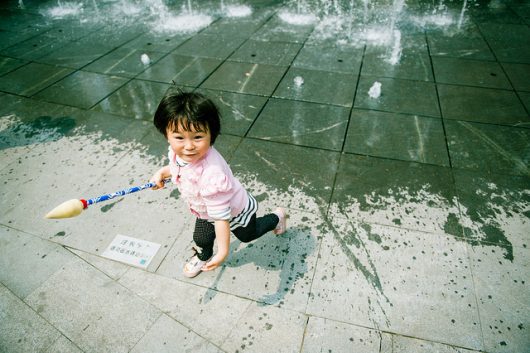
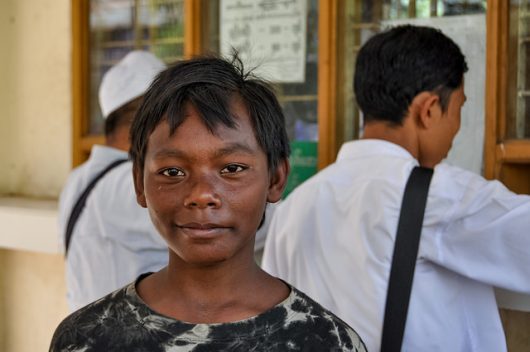
Seven Important Facts About Migrant Children in China

Seven Facts About Migrant Children in China
The world’s largest migration, known as the ‘floating population,’ has not only affected China’s economic reform, but has shaped millions of children. In 2017, a
report stated that China has an “estimated 287 million rural migrant workers” to look for greater job opportunities. UNICEF has approximated that nearly 100 million children have been affected by this change, and many put in harm. Here are seven facts about migrant children in China.

7 Facts About Migrant Children in China

  1. According to the journal, “Chinese Education and Society,” 35.81 million children of those affected by the migration migrate to the city with their parents, while around 70 million were left behind in their rural hometowns.
  2. Migrant children who move to the cities often lack the same access to social services as other children such as: education, healthcare and support. This lack occurs due to the Hukou system, a system that registers one in the hometown that he or she was born, and prohibits those outside of the city to receive the same benefits as their urban-hukou-holding counterparts.
  3. Many children are left behind in the countryside and often have little to no family support; in fact, most are raised by their grandparents and have little contact with their parents. According to a 2013 survey in Shandong, “75 percent of [left-behind children’s] parents visited home just once a year during the Spring Festival.”
  4. There are around 36 million minors who will join the next generation of migrant workers. Many included in the new generation of migrant laborers — the children of current migrant workers — have a strong desire to assimilate to the city. However, many of their urban-hukou-holding counterparts do not view these populations as “one of them.”
  5. A study conducted in 2013 showed that of 300 Beijing public and migrant schools compared to that of rural schools in Shaanxi, rural schools had twice the amount of qualified teachers than migrant schools in Beijing.
  6. The Chinese government recognized that migration brought numerous negative consequences to many migrant children. Although the State Council passed the State Council’s Decision on Reforming and Developing Elementary Education, the State Council stated, “We should pay more attention to resolve the problems of migrant children to have compulsory education…We should adopt various ways to resolve the problems and protect migrant children’s right to have compulsory education in laws.”
  7. Numerous NGOs have worked with the government to improve conditions for migrant children. For example, UNICEF has began working on a pilot project targeted at improving migrant children’s access to education and healthcare in the city.

Room to Grow

These facts about migrant children in China represent migration’s profound impact on a country and its people. Although China has made leaps and strides to recognize the issue, there is still work to be done to ensure that the next generation receive the same benefits and opportunities as any other child.  

– Emma Martin
Photo: Flickr

June 27, 2018
https://borgenproject.org/wp-content/uploads/borgen-project-logo.svg 0 0 Borgen Project https://borgenproject.org/wp-content/uploads/borgen-project-logo.svg Borgen Project2018-06-27 01:30:282024-12-13 17:58:49Seven Important Facts About Migrant Children in China
Child Soldiers

Reintegrating Child Soldiers in Iraq for a Peaceful Future

Child Soldiers in Iraq

With the war against ISIS in Iraq officially declared over by the Iraqi government in December, efforts on the ground have now begun to focus on rebuilding the lives of the Iraqi people. Of particular concern is the rehabilitation and reintegration of child soldiers in Iraq, the young “cubs of the caliphate” trained by ISIS and indoctrinated with its ultraviolent ideology.

What Has Happened to Child Soldiers in Iraq?

It is estimated that over the past four years, at least 2,000 minors underwent military training in ISIS camps, learning to use light and medium weaponry and function as effective cogs in the ISIS machine. Yet what may be most distressing is not the technical training these children received, but rather the ideological indoctrination.

The indoctrination that took place in ISIS sponsored schools and training camps instilled these children with extremist beliefs and sought to normalize acts of violence and killing. The result, ISIS hoped, would be the creation of the jihadists of the future, a group of fighters steeped in the ultraviolent ideology of ISIS and capable of waging a holy war for generations.

It is this deeply seated indoctrination into extremism, experts fear, that may pose a grave threat to the future stability of Iraq. With the end of the war and a return to normal life, many foresee the violent indoctrination of ISIS preventing these children from reintegrating into society and leading normal lives. With an intentionally violent and radical worldview, it is possible that many child soldiers will return to their towns highly radicalized, facing the discomfort of a worldview which does not match reality.

Besides being radicalized, many of these former child soldiers in Iraq also suffer from psychological trauma derived from a childhood of violence and warfare. For many, it is all they know and it is this mindset geared toward violence that has no place in normal life that could isolate them from their friends, families and peers. The resulting isolation caused by their inability to properly reintegrate may then make them more vulnerable to crime or further acts of extremism.

Why is Reintegration So Difficult?

Now that the process toward normalization has begun for many Iraqis, the question facing towns, families and NGOs is how to welcome back the former child soldiers in Iraq. There is no doubt that the task is monumental, as in many places there are no jobs available and professionals needed for psychological rehabilitation remain few and far between.

The complexity of the situation in Iraq remains a hazard to successful reintegration as well. In some territories which were held previously by ISIS, families who were sympathetic to the Caliphate gave their children up willingly and the child may continue to be indoctrinated when he or she returns home. It is also no secret that many Iraqis hold a grudge against former ISIS members and would deny them treatment and reconciliation.

What is Being Done?

Yet with peace becoming a reality, there is real promise for a brighter future for these former child soldiers in Iraq. Programs demobilizing and reintegrating child soldiers have been successful in countries such as Sierra Leone and Afghanistan. Such programs began by clearing the environment of weapons, then identifying former child soldiers who needed special care. Next, focus was placed on empowering these children with a feeling of belonging and re-establishing societal and familial links to reintegrate them.

Local citizens are also taking matters into their own hands to re-educate former child soldiers in Iraq. In Mosul, for instance, a group of Muslim law sages has begun preaching a moderate brand of Islam with the intent to promote peace and reconciliation.

What remains clear is that reintegrating child soldiers in formerly held ISIS territory will be a difficult, long term process, one which needs attention from the highest authorities inside and outside Iraq. If Iraq is ever to be war free and at peace, this challenge must be addressed and reconciliation and reintegration of child soldiers must be made a priority to end the cycle of violence.

– Taylor Pace
Photo: Flickr

June 26, 2018
https://borgenproject.org/wp-content/uploads/borgen-project-logo.svg 0 0 Kim Thelwell https://borgenproject.org/wp-content/uploads/borgen-project-logo.svg Kim Thelwell2018-06-26 07:30:572019-10-06 19:05:58Reintegrating Child Soldiers in Iraq for a Peaceful Future
Child Soldiers, Children

Child Soldiers in Syria

Child Soldiers in Syria
Since 2011, war has ravaged Syria and drastically changed the lives of millions, especially for children. An estimated 2.6 million Syrian children now live in other nations as refugees. More than one million of the refugee children do not have access to education, and an additional 1.75 million children who remain in Syria also do not attend school. Millions of Syrian children live in extreme poverty, which drives them to become soldiers in an extremely dangerous conflict.

The Recruitment of Child Soldiers in Syria

The recruitment of children under the age of 18 by armed groups has been rising in Syria as the war continues. In 2016 alone, 851 children were recruited to be child soldiers in Syria. In that same year, 652 children died and 647 were maimed, and these numbers are rapidly rising. In January and February of 2018, 1,000 children were killed or injured in the Syrian conflict.

Some of these child soldiers have been kidnapped by armed groups such as the Islamic State (ISIS). Others are young Arabs or Muslims from Europe who have been convinced by radical groups like ISIS to leave their homes and join the fight against the Syrian government. Many, however, are children in Syria or in refugee camps in neighboring countries who have volunteered to become soldiers.

Syrian children often volunteer to become soldiers because of the dire situations in which their families live, situations caused by the war. By 2015, 80 percent of Syria’s population lived below the poverty line, and the situation has continued to worsen. With the unemployment rate in the country at 57.7 percent at the beginning of 2015, millions are struggling to survive. In addition, more than 90 percent of refugee families in Lebanon are at risk of food insecurity, and 80 percent in Jordan live in poverty.

For these families that are struggling to survive, the benefits that armed groups offer child soldiers in Syria can be life-saving. Some parents believe their only option is to send their children to fight for ISIS or ISIS-affiliated groups in return for financial subsidies. Other children join the Free Syrian Army (FSA), one of the main rebel groups fighting the Syrian government. The FSA provides its fighters with monthly benefits including salaries. Additionally, the FSA offers refugees in the Zaatari refugee camp precedence in receiving food aid and cash assistance that are crucial to their survival.

Providing a Solution

Alleviating Syrian poverty could be a crucial step in reducing the number of child soldiers in Syria. This could be done by providing Syrians with humanitarian aid, like helping them get food and homes and jobs. Children will be less vulnerable to recruitment by armed groups if they and their families are living in more stable situations.

The United States is mobilizing humanitarian aid to provide food, water, education and medical services to Syrian children and their families. International aid and the acceptance of refugees are also key. However, the “humanitarian needs inside Syria continue to outpace the international response.” Increased aid from the U.S. and other nations is key to relieving poverty in Syria and surrounding nations and reducing the number of children that are recruited to be soldiers.

– Laura Turner
Photo: Flickr

June 26, 2018
https://borgenproject.org/wp-content/uploads/borgen-project-logo.svg 0 0 Borgen Project https://borgenproject.org/wp-content/uploads/borgen-project-logo.svg Borgen Project2018-06-26 01:30:532024-12-13 17:58:49Child Soldiers in Syria
Child Soldiers, United Nations

Myanmar Child Soldiers: the Tatmadaw Kyi’s Takeover

Myanmar
Children, exploitation and guerrilla warfare have become an unfortunate triad all too familiar amongst the people of Myanmar. A country rife with decades of internal armed conflict, the nation relies on the recruitment of underage Myanmar child soldiers into its national army, Tatmadaw Kyi, to help supply ethnic wars with manpower.

Who and What

The children’s purpose? According to Hope for the Nations, the youths are needed to serve and “defend the drug lords of the area at the cost of losing their parents, families, homes and even their own lives.” In fact, some children are recruited and trained at the mere age of 6.

An excerpt from a compilation of personal accounts from former Myanmar child soldiers reads: “Living under armed guard, Arkar Min received one meal a day—a bowl of rice with some oil and salt. He had no bed and slept on the concrete, using his lungi as a pillow. There were six other conscripts, most of them 15; the eldest was 17. None of them had joined voluntarily—they’d been offered work, hoodwinked, kidnapped, and sold into service.”

The Why: Political Instability

It’s near impossible to look at these human rights violations of Myanmar’s youth without looking at the country’s political climate. Following the 1948 breakaway from the United Kingdom, the nation was ignited in upheaval and political turbulence. One of the major causes of these debilitating occurrences was the ethnic minority groups who were unable to compromise on the multi-faceted dilemma of sharing political power. An overwhelming surge of battles erupted between indigenous groups, which led to the enlistment of their vulnerable youth in armies as a chance to seize power.

State armed forces eventually acquired power in 1962, and Myanmar fell under even greater distress. A corrupt and oppressive military dictatorship reigned for virtually 50 years, failing to condemn or control ethnic wars and child soldier recruitment and exploitation. Luckily, 2011 brought hope to the nation when the military handed over power to a civilian government.

A Breach In Corruption

The nation’s established civilian government has brought sought-upon relief to countless families, citizens and children. Not only has the government advanced the national armed forces to more professional levels, but it has also released hundreds of underage children who were wrongfully recruited into war.

The U.N. estimates that thousands of people have been displaced as a result of internal conflict and fighting. According to Aljazeera, in 2015 the military released 146 underage recruits; since its agreement with the U.N. to end the recruitment of children into the military, 699 have been released.

Renata Lok-Dessallien, the U.N. Resident and Humanitarian Coordinator in Myanmar stated, “I am delighted to see these children and young people returning to their homes and families. We are hopeful that institutional checks that have been put in place and continued efforts will ensure that recruitment of children will exist no more.”

Hope For the Youth

There exist many initiatives that aim to eradicate the exploitation of Myanmar child soldiers. Project AK-47, for example, reaches child soldiers and brings them from hopelessness to hopefulness and care. Planting themselves in highly regulated and classified regions of Southeast Asia, members of the Project provide the oppressed youth with basic needs like shelter, food, clothing and education, as well as deeper needs like spiritual care and love.

The utmost goal of Project AK-47 aims to mentor the children into becoming leaders within their own communities. According to Hope for the Nations, some of them will end up as teachers, government leaders, or even workers on tea plantations. It is vital that they are taught how to create a positive impact amongst their own communities and regions, and to carry the spirit of excellence with them wherever they may go.

Positive Redirection and Potential Solutions

Following in line with hopeful solutions, Myanmar’s November 2015 Parliamentary election ensued a large victory for the National League of Democracy. So much so that citizens remain hopeful that their new government will mend the country’s broken human rights situation. This is the time where advocacy will ring strong, and where advocates’ voices of concern will hold ground with developing governments.

A unified voice from the world and from native citizens to remove children from army ranks is a push in the right direction. According to Child Soldiers International, advocates “will be engaging with the national authorities and civil society to see Myanmar opt in fully to the relevant international laws and ensure that domestic laws that prohibit child recruitment are fully observed.” The ultimate goal is loud and clear: to protect the rights of Myanmar’s voiceless youth is to eradicate the recruitment and the exploitation of underage children within the military.

– Mary Miller
Photo: Flickr

June 26, 2018
https://borgenproject.org/wp-content/uploads/borgen-project-logo.svg 0 0 Kim Thelwell https://borgenproject.org/wp-content/uploads/borgen-project-logo.svg Kim Thelwell2018-06-26 01:30:032024-12-13 17:58:50Myanmar Child Soldiers: the Tatmadaw Kyi’s Takeover
Children, Homeless, Nonprofit Organizations and NGOs

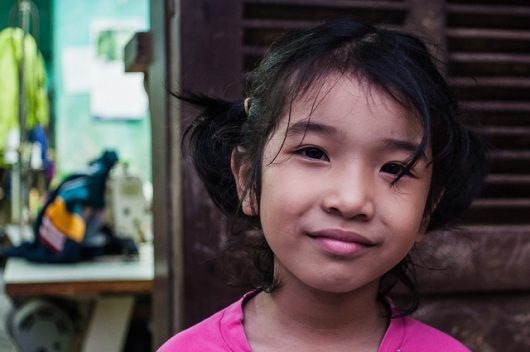
Four Organizations Helping Homeless Children in Vietnam


Vietnam’s homeless children were coined “children of the dust” or “street children” and frequently live in large, bustling cities, like Ho Chi Minh and Hanoi. However, organizations have initiated direct community engagement and support for street children by building children’s shelters.

According to the Human Rights Watch, there were approximately 23,000 homeless children in Vietnam in 2006. As impoverished families become unable to support their children, many turn to the streets in search of work.

A majority of street children are boys who find cheap labor in cities, such as Hanoi. Common jobs include shoe-shining and street vending in public spaces. Due to the difficulty of maintaining a stable income on the streets, the Human Rights Watch reported that homeless children in Vietnam often earn an estimated 20,000 dong, about $1.25 each day.

To address these growing concerns, four organizations have made progress in aiding Vietnam’s street children.

Blue Dragon Children’s Foundation

Since 2004, the foundation has reached more than 2,000 children and currently has 400 children using their programs. The Step Ahead program focuses on caring for both street and disabled children, using “social workers, lawyers, psychologists, teachers and residential care staff” to provide children’s shelters, tutoring services and legal assistance.

Additionally, the Step Ahead program promotes an outreach team to directly provide healthcare and shelters for homeless children in Vietnam. A drop-in center is also available for children to socialize and meet with social workers.

Family 4

Family 4 currently operates several children’s shelters, which serve as home to 30 children, aged 6 to 18 years. According to Family 4, the children are “orphans, or children from extremely impoverished families whose parents could no longer provide for them.”

Four social workers, called “mothers,” are responsible for establishing a familial environment to create healthy relationships with the children, paying close attention to their health and developmental needs. Education is also encouraged by the shelter, spanning from kindergarten to college.

For example, Dat, a former child at Family 4, received his university degree in Agricultural Engineering and currently works as an organic strawberry farmer. Dat became a member of Family 4 in 2004, after his single mother struggled to afford care for him and his siblings.

Children of Vietnam

The organization focuses on reaching children through education, healthcare, housing, nutrition and disaster relief. For instance, scholarships are distributed for both education supplies and hospital bills.

In 2005, a tutoring program was implemented within the Da Nang Street Children program to increase high school graduation rates. For example, in 2013 alone, the program reached 154 children. Moreover, the Bright Scholars Club formed in 2012 to aid women toward financial stability, allowing greater privileges for their children.

More recently, in 2013, the program built six “new compassion houses,” ten toilets and made housing repairs for four families. Roof repair was also completed at the Hoa Mai orphanage. Children of Vietnam also provided 248 families with disaster relief for floods.

Friends of Hue Foundation

The children’s shelter is just one of several projects supported by this foundation. Founded in 2000, after a serious flooding in Hue, the foundation originally centered its mission on disaster relief, but has since expanded to programs, such as the children’s shelter.

The shelter implements “extracurricular activities and classes such as traditional Vietnamese music, piano, dance and art classes” in addition to career counseling and an English-language program. Since its initiation, the Friends of Hue Foundation has enabled 20 children to leave the shelter and pursue “formal education” and various careers.

“Children of the dust” now have greater access to shelters offering healthcare, education and safety from the streets. As organizations recognize and employ programming for street children, their futures look more hopeful than ever.

– Christine Leung

Photo: Flickr

June 25, 2018
https://borgenproject.org/wp-content/uploads/borgen-project-logo.svg 0 0 Borgen Project https://borgenproject.org/wp-content/uploads/borgen-project-logo.svg Borgen Project2018-06-25 01:30:252024-06-05 02:12:19Four Organizations Helping Homeless Children in Vietnam
Child Soldiers

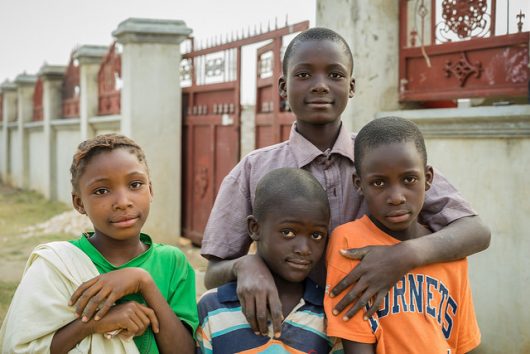
Child Soldiers in Nigeria Require Immediate Assistance

Child Soldiers in Nigeria

Violent conflicts largely incited by the militant group Boko Haram continue to ravage northeastern Nigeria and the larger Lake Chad region. Due to these conflicts, youths in the area face the unwanted yet real menace of being recruited as child soldiers in Nigeria.

Parties Recruit and Abduct Children for War

In 2016 alone, there were 2,122 cases of deployment of children for military purposes in Nigeria, according to a 2017 United Nations report on children and armed conflict. The report also stated that Boko Haram used four boys and 26 girls for suicide attacks in 2016; 13 more children were killed in November and December by the Nigerian security forces, which suspected them of carrying bombs.

Civilian Joint Task Force (CJTF), a vigilante group that opposes Boko Haram, also recruited child soldiers in Nigeria, though they were mostly used for supporting roles. The Nigerian Security Forces (NSF) was also accused of deploying children in warfare.

A United States 2017 Trafficking in Persons Report pointed out that children merely 12 years old were recruited by NSF. The report also explains that some of the child soldiers in Nigeria were originally arrested or detained for alleged connections with Boko Haram and might have been forced into military operations by the state.

“Human Bombs”

Some suicide bombers were as young as seven or eight years old. In a bombing in Maiduguri in December 2016, two young girls set off explosions in the middle of a crowded market, killing at least one and injuring 17 people.

“They got out of a rickshaw and walked right in front of me without showing the slightest sign of emotion. I tried to speak with one of them, in Hausa and in English, but she didn’t answer. I thought they were looking for their mother. She headed toward the poultry sellers, then detonated her explosives belt,” local militia member Abdulkarim Jabo told United Press International.

In only the first eight months of 2017, 83 children were made into “human bombs,” more than doubling the number of child suicide attacks in the entire year of 2016. Most of the children used were girls.

Reintegration for Child Soldiers in Nigeria

Children who were able to escape from Boko Haram often suffered further from rejection as they tried to reintegrate into civilian life, as the use of child soldiers in Nigeria aroused fear and distrust among the general public. Child soldiers also have to endure severe physical, psychological and sexual abuse. Those who return home often face discrimination and even ostracization by their families, including girls who were forced to be “wives” in captivity.

The United Nations calls for the unconditional release of children from armed forces worldwide and the increase of resources for the purpose of reintegration and education of released children. The United Nations Children’s Fund (UNICEF) estimated in 2017 that 65,000 children worldwide had been released from armed groups in the past decade.

U.S. Government (USG) Programs Support Highly Vulnerable Children

On June 7, 2018, U.S. Ambassador to Nigeria Stuart Symington announced a $112,000,000 donation to assist with humanitarian efforts in the region. USAID will manage the use of funds via Food for Peace, Foreign Disaster Assistance and the U.S. State Department’s Bureau for Population, Refugees and Migration. Ambassador Symington said that among its recipients, the donation would go toward helping child victims of the violent conflicts in the area, many of whom have been forced to separate from their families.

USAID and other USG agencies have cooperated to mediate similar humanitarian programs around the world. A USAID program based in the Democratic Republic of Congo (DRC) helped reintegrate previous child soldiers through communication campaigns that directly talk to local community leaders, psychosocial counseling, family tracing, education, financial support, etc.. In a single year, the program identified 1,905 children and provided them with health and psychological support.

More attention must be given to the children being exploited by these groups. With the continued efforts of government programs, there is still hope for child soldiers in Nigeria.

– Feng Ye

Photo: Flickr

June 24, 2018
https://borgenproject.org/wp-content/uploads/borgen-project-logo.svg 0 0 Kim Thelwell https://borgenproject.org/wp-content/uploads/borgen-project-logo.svg Kim Thelwell2018-06-24 07:30:302024-05-29 22:42:54Child Soldiers in Nigeria Require Immediate Assistance
Children, Education

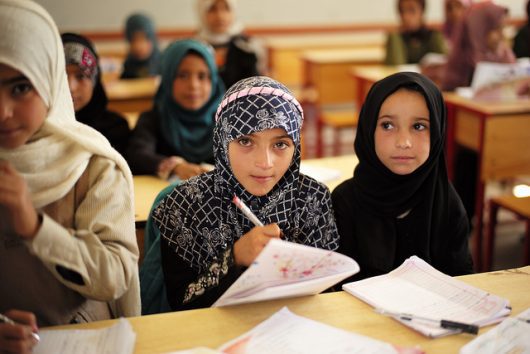
Addressing the Reasons to Encourage Literacy in Yemen

literacy in yemen
Reading and writing are creative processes in building new pathways to leadership, future college and career plans and community programming. While some nations might make this a priority, Yemen’s focus is not currently to encourage literacy among the educational system.

Issues with Education in Yemen

As of 2017, 4.5 million students did not receive schooling due to absent teachers. Teachers in Yemen are on strike for not receiving payment for their services to the community. No school in session means unproductive minds and no practice with literacy.

Due to progressing conflict in Yemen, educational access and literacy efforts are not a top priority for many. There are approximately 18.8 million people in need of humanitarian aid, which is roughly 69 percent of the population.

The priority aid in Yemen consists of protection, as three million people have been displaced from their homes and approximately 44,000 people have been severely injured or killed. Other priorities focus on basic survival such as food, shelter and healthcare. Restriction on imports, economic decline and inflation among markets is making it extremely difficult for civilians to afford anything, much less education.

Encouraging Literacy in Yemen

As of 2017, UNICEF is a major partner in developing and implementing strategic plans for the ministry of education in Yemen. UNICEF is using a systemic approach to achieve educational goals. The framework consists of support from policy and legislation, ministry leadership, funding and public demand followed by implementation within the pre-primary sector and focusing on curriculum for early learning.

It is important to develop plans for early learning that empower literacy among Yemeni children and youth, as they are the future of the nation. The top three reasons to encourage literacy in Yemen are:

  1. Personal Empowerment
  2. Employability
  3. Active Citizenship

Why Literacy is Important

Reading, writing and learning involve creative and critical thinking as well as problem solving. Literacy encourages better communication, self-management, resiliency, participation, empathy, respect for others, cooperation, decision making and negotiation—all of which are necessary life skills.

There has been a 10 percent increase in literacy over the past 20 years, jumping from 60.22 percent to 70.1 percent. However, areas with high conflict, such as Yemen, have greater potential to fall behind.

With an increasing drop out rate in the education system and high conflict causing other basic needs to take priority, it is easy for literacy to get lost in Yemen. Continued work can ensure a bright future ahead for families in Yemen, but a political focus on education and literacy in Yemen must be made a top priority.

– Ashley Cooper
Photo: Flickr

June 24, 2018
https://borgenproject.org/wp-content/uploads/borgen-project-logo.svg 0 0 Borgen Project https://borgenproject.org/wp-content/uploads/borgen-project-logo.svg Borgen Project2018-06-24 01:30:232024-05-29 22:42:47Addressing the Reasons to Encourage Literacy in Yemen
Children, Education, Nonprofit Organizations and NGOs

Liberty & Justice and Clothing for All

Liberty & Justice
Chid Liberty, an entrepreneur, created the clothing manufacturing company Liberty & Justice. Its purpose is to not only change the manufacturing industry for many but also to empower others to continue their education. Instead of just thinking about how the clothes would be made, Chid also thought about the way their formation could change a society, piece by piece.

Encouraging Education

Liberty & Justice manufactures clothing for brands while focusing on making political and economic change in Liberia. Its directors are largely female, with 90 percent of the workforce being women, and its factory is fair trade certified. With its UNIFORM brand, every purchase provides a uniform for a child in Liberia so they may attend school. For a student, a uniform is not only a confidence boost but also reduces absenteeism and improves test scores, according to an MIT study.

Liberty & Justice is headquartered in New York City, but its owner and workers originate from Liberia. Chid said his calling was to return to Africa and provide decent jobs empowering fellow Africans. Taking advantage of the Africa Growth and Opportunity Act, he began exporting to the U.S., creating interest in his products.

Setting an Example

What really began to spark interest was the treatment of Liberty & Justice workers. With the female workers being paid fair salaries and the collective workforce owning 49 percent of the shares in the company, Liberty & Justice set itself apart from companies exploiting the poor and taking advantage of necessity. Although the company owns 51 percent of the factory from which its clothing comes, Chid does not take a salary, instead focusing his earnings on his workers and incentivizing them to take pride in their business.

Liberty & Justice’s Goals

Liberty & Justice has a five-year social plan it intends to fulfill. It not only includes expanding the Liberian economy but also creating health clinics and providing scholarships for the same children it provides the uniforms. Chid himself was a privileged child, living in Europe and experiencing indulgences common in the Western world. Upon learning how people in his native country lived, he intended to provide as much as he could by giving back in the form of creating jobs.

Liberty & Justice is truly a corporation set on changing the Liberian story from one of poverty to one of growth and development. Chid created this goal with the intention of changing the story for the 70 percent of Liberians living in poverty and instead offering them a chance at a safe and fulfilling life.

– Kayleigh Mattoon
Photo: Flickr

June 23, 2018
https://borgenproject.org/wp-content/uploads/borgen-project-logo.svg 0 0 Borgen Project https://borgenproject.org/wp-content/uploads/borgen-project-logo.svg Borgen Project2018-06-23 01:30:282019-10-06 19:36:53Liberty & Justice and Clothing for All
Child Soldiers, Children, War and Violence

Congo Child Soldiers

Congo child soldiers
Since the 1990s, the Democratic Republic of the Congo (DRC) has experienced extreme violence between armed forces and diverse groups of rebels. Many armed forces have since recruited thousands of child soldiers. Today, the U.N. has declared the recruitment of Congo child soldiers an “endemic.”

The Situation

The head of the United Nations Organization Stabilization Mission in the Democratic Republic of the Congo (MONUSCO), Martin Kobler, has stated that “This situation is unacceptable and has been going on for much too long with impunity. Recruiting children into armed groups is a crime, and destroys the lives of the victims who are forced to do things that no child should be involved in.” MONUSCO reported that an estimated 8,546 children were recruited into diverse armed groups in the DRC between 2009 to 2015. By recruiting more and more Congo child soldiers, it will only create a cycle of violence passed down to further generations. Not only are children forced to leave their families, but they are used as fighters and sex slaves, often leaving them in a position deprived of all educational attainment and daily trauma. Nevertheless, when child soldiers return back to their communities, they are often shunned by their families and are unable to reintegrate into all aspects of society.

Recruitment of Girls

Many children are forced into a life of violence unwillingly, but in some cases, children believe that by joining armed groups, it will give them an escape of a life plagued by poverty. It’s often difficult to obtain accurate data on the number of girls recruited by the DRC’s armed groups however, Child Soldiers International states that almost 7 percent of child soldiers are girls. This number is seemingly disproportionate, leaving many girls unaccounted for.

A Huffington Post interview indicates that many girls cannot afford the fees of local schools and believe that joining local militia groups would ensure security, food and a life outside of poverty. Nevertheless, many parents of girls believe that their daughter’s recruitment will protect their village from plundering and attacks. However, as one past girl soldier interviewed says,  “I would wake up and find myself naked…They gave us drugs so that we would not get tired of all of them using us.” Young girls soon find out that recruitment means a life of sexual abuse and slavery.

The Future

It must be noted, that with the help of the DRC’s government and international efforts, the recruitment of Congo child soldiers is steadily declining. In 2009, the DRC adopted the “Law for the Protection of Children,” making the recruitment and use of children in armed conflict illegal. In 2012, the government also signed a “Plan of Action with the United Nations to prevent and put an end to the recruitment and use of children, as well as other serious violations of children’s rights committed by security forces.” In this way, the country has begun to take serious measures against the recruitment of child soldiers.  Furthermore, many organizations such as Child Soldiers International are working to ensure that past child soldiers receive an education and are working to integrate them back into society.

– Emma Martin
Photo: Flickr

June 23, 2018
https://borgenproject.org/wp-content/uploads/borgen-project-logo.svg 0 0 Borgen Project https://borgenproject.org/wp-content/uploads/borgen-project-logo.svg Borgen Project2018-06-23 01:30:102019-10-06 19:37:24Congo Child Soldiers
Child Soldiers, Children

What You Need to Know About South Sudan Child Soldiers

South Sudan
Child soldiers were brought to the attention of the American public in 2012 when the “KONY2012” campaign, aimed at dismantling a Ugandan warlord, soared in publicity. However, children being used in combat is not new to various regions of Africa, including South Sudan.

Children in Combat

In 1983, civil war broke out among the Sudanese people, eventually creating in 2011 the countries known today as Sudan and South Sudan. This war led to the separation of families, murders, poverty, lack of educational resources and most notably, South Sudan child soldiers.

According to the International Rescue Committee, the number of children fleeing South Sudan in 1985 to escape recruitment as soldiers in the civil war was as high as 20,000. This number is shockingly high with a 1985 population of only five million in South Sudan. Children fled to neighboring Ethiopia only to die from hunger, dehydration, crossfires and wild animals along the way.

Draws of South Sudan’s Military

Due to outcomes associated with the war, South Sudan has been unable to properly maintain nutrition among its citizens in recent years. Often, children are only guaranteed meals and housing if they enlist in the South Sudanese military, leaving them with the choice between staying unarmed, educated and hungry, or armed, fed and uneducated. Children may choose to join the military simply as a means of survival.

South Sudan child soldiers are known to be used in every way that an adult soldier would be used. Children are given and taught how to use assault rifles, engage in direct combat (as spies), and serve as cooks for troops among other activities.

The prevalence of South Sudan child soldiers seemed to dissolve throughout the early 2000s; however, over the last several years, the numbers have begun to creep up again. In 2013, South Sudan ended a several-year-long ceasefire when tensions between different ethnic groups rose.

Hope for South Sudan

When the war resumed, the children of South Sudan were again recruited for combat. This sparks a series of issues for the South Sudanese people over the next years, such as infrastructure instability, economic poverty, food shortages, violence and poor education.

Although the situation in South Sudan may seem bleak, there is very real hope. South Sudan is rich in diversity with many different religious practices and ethnic cultures. While the tensions between different ethnic groups have instigated a large amount of violent tension, the different groups each bring something unique to the cultural brand of South Sudan.

A history of aid workers present in the country assists the country’s development and recovery from its civil wars. The next few years will be a pivotal time in shaping the future of the Republic of South Sudan and its children, so time will tell if child treatment improves.

– Alexandra Ferrigno
Photo: Flickr

June 21, 2018
https://borgenproject.org/wp-content/uploads/borgen-project-logo.svg 0 0 Borgen Project https://borgenproject.org/wp-content/uploads/borgen-project-logo.svg Borgen Project2018-06-21 01:30:172024-05-29 22:42:50What You Need to Know About South Sudan Child Soldiers
Page 87 of 137«‹8586878889›»

Get Smarter

  • Global Poverty 101
  • Global Poverty… The Good News
  • Global Poverty & U.S. Jobs
  • Global Poverty and National Security
  • Innovative Solutions to Poverty
  • Global Poverty & Aid FAQ’s
Search Search

Take Action

  • Call Congress
  • Email Congress
  • Donate
  • 30 Ways to Help
  • Volunteer Ops
  • Internships
  • Courses & Certificates
  • The Podcast
Borgen Project

“The Borgen Project is an incredible nonprofit organization that is addressing poverty and hunger and working towards ending them.”

-The Huffington Post

Inside The Borgen Project

  • Contact
  • About
  • Financials
  • President
  • Board of Directors
  • Board of Advisors

International Links

  • UK Email Parliament
  • UK Donate
  • Canada Email Parliament

Get Smarter

  • Global Poverty 101
  • Global Poverty… The Good News
  • Global Poverty & U.S. Jobs
  • Global Poverty and National Security
  • Innovative Solutions to Poverty
  • Global Poverty & Aid FAQ’s

Ways to Help

  • Call Congress
  • Email Congress
  • Donate
  • 30 Ways to Help
  • Volunteer Ops
  • Internships
  • Courses & Certificates
  • The Podcast
Scroll to top Scroll to top Scroll to top