Understanding the Basics: What is a Parliamentary System?
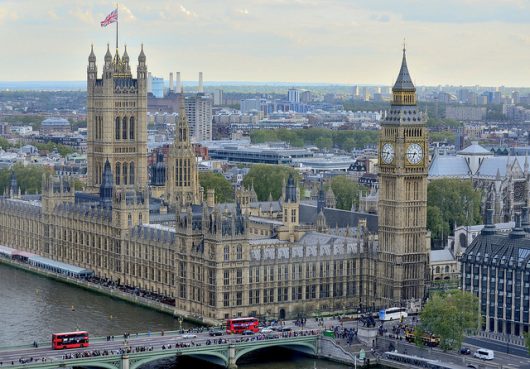
Many in the United States may be aware that most Europe governments use a parliamentary system, but the question most are probably thinking is: what is a parliamentary system? More importantly, how is it different from the system used by the United States? Here are the answers to these questions and more.
Basics of a Parliamentary System
In terms of the U.S. system, a country’s parliament would serve as both its legislative and executive branches. The most important thing to know about parliamentary systems is that the political parties hold the power and not individuals. When citizens vote, their ballots list party names and when a party wins, seat allotment is assigned to party members based on seniority (in most cases).
When a party wins the majority of seats, it then selects a leader to serve as the executive called a Prime Minister or, in some cases, a Chancellor. This person will most likely already be the party leader and they then select their cabinet which sets the government’s agenda. If one party does not win the majority of seats in the parliament, then it must form a coalition with other parties to form a majority.
This process may take time, but it will eventually allow for the smoother passage of legislation.
One House or Two?
Many parliaments are bicameral, meaning it has two houses, while others may be unicameral, having only one house. In bicameral systems, there is a lower and an upper house, but most legislating actually takes place in the lower house.
The greatest difference between the two is the number of veto points or places where legislation can be halted within the legislative process. Unicameral systems have fewer veto points than bicameral systems making it easier and faster to pass legislation but also easier to overturn. Many parliamentary systems therefore adopt the bicameral system for stability.
Parliamentary vs. Presidential
In a parliamentary system, the executive is the Prime Minister while in a presidential system, the President is the executive. There are many differences between these two positions, but most notably, the Prime Minister and his/her cabinet arises from the legislature, while Presidents are directly elected by the people.
At first glance, many would then prefer a President because citizens choose him/her directly, yet many still prefer Prime Ministers.
First of all, they are beholden to their party, so their decisions are far more predictable than a President’s and voters know exactly what values they are voting for. This applies for all members of the legislature as well, not just the Prime Minister.
Parliamentary systems also entail the possibility for a vote of “no confidence” by the legislature which can remove a Prime Minister from power at any point if they lose the vote. Presidents, however, have fixed terms and cannot so easily be removed.
Success Rate
Citizens in the United States are very fond of the presidential system, yet in reality the success rate for parliamentary systems is far greater. The system has been a part of some European countries for centuries, but that doesn’t mean it’s perfect. When deciding which system to adopt, new countries must consider what is best for its country, and that may or may not be a parliamentary system.
– Megan Burtis
Photo: Flickr
