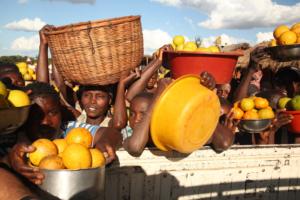
Mozambique is a vibrant and scenic country in Southeastern Africa with a population of nearly 30 million people. The nation has abundant natural resources and its coastal location provides strategic access to the maritime economy. After attaining independence in 1975, Mozambique fractured during the Mozambican Civil War, displacing nearly five million people and driving up the rate of poverty in Mozambique. Although the war ended in 1992, violence and instability greatly set back the nation’s economic development.
Despite facing tremendous adversity, Mozambique has made great progress in poverty reduction. The nation has decreased infant and maternal mortality and increased life expectancy as well as access to education, water and electricity. Over the last 15 years, the nation has reduced its multidimensional poverty rates from 92.8% to 71%, and its Human Development Index (HDI) has increased from 0.217 in 1990 to 0.446 in 2018. Mozambique has great potential, although almost 50% of its population continues to struggle with poverty. Mozambique still faces a variety of challenges as they strive to reduce poverty further, but innovative solutions provide hope for a brighter future.
Natural Disasters
Increasing disaster preparedness is central to combating poverty in Mozambique. The country is incredibly prone to natural disasters and experiences an average of one large-scale disaster every year. In 2019, two strong tropical cyclones hit Mozambique only six weeks apart from one another. The natural disasters left approximately 1.85 million people in need of urgent humanitarian assistance and had catastrophic effects on the nation’s development. In 2017, the Mozambique government established The National Disaster Risk Reduction Master Plan (PDRRD) to reduce risk, loss of lives and impact on infrastructure. Increasing funding and resources for this disaster management plan will help protect the most vulnerable from natural disasters and keep Mozambique on the development track.
Income Inequality
Combating inequality remains a key challenge to Mozambique’s development. Newfound growth has not been shared by all, as poverty continues to plague the country’s rural population. Welfare levels diverge greatly from the urban south to the rural north, largely due to increased connectedness to job markets in urban areas. Many rural Mozambicans remain stuck in a cycle of poverty because they are cut off from the larger economic landscape. The International Fund for Agricultural Development is working to fix this dilemma with its Rural Enterprise Finance Project. The initiative is dedicated to improving national and regional access for nearly 300,000 rural people involved in agriculture, fisheries and small to medium-sized enterprises.
Agriculture and Natural Resources
Investing in the agricultural and informal sectors helps support the rural poor and equalize welfare. Agriculture plays a vital role in reducing poverty, as it raises the income of farmers and lowers national food prices. Almost 80% of Mozambique’s population works in the agricultural sector, which accounts for nearly 25% of its GDP. However, low productivity has impeded farmers’ efforts to transition out of poverty.
Key inputs such as fertilizer can increase a farmer’s yield by nearly 40%, and higher connectivity links rural farmers to larger markets. The World Bank’s Agricultural Productivity Program for Southern Africa is working to increase the availability of agricultural technologies across the region and has aided more than one million Mozambicans throughout its seven-year existence.
Mozambique has an abundance of natural resources, particularly energy and minerals, and is home to the third-largest natural gas reserves in Africa. Extensive development in the extractive industry has led to economic growth in recent years, and the sector contributed 19.47% of the nation’s GDP in 2017. Although Mozambique’s economy slowed in 2019 due to a declining coal industry and infrastructure damage from cyclones, it is expected to revive by 2024 as natural gas production is established.
Tourism
Mozambique has become one of the fastest-growing travel destinations in Africa, so tourist sector growth is pivotal in reducing poverty levels. Tourists enjoy extensive safari parks, beautiful beaches and rich culture, yet specialists have concluded that Mozambique has not fully utilized its potential. The International Finance Corporation (IFC) is helping to grow Mozambique’s tourism sector to create employment opportunities for the nation’s poor. The IFC has made legal material on the country’s tourism industry free for potential investors and is working to sustainably develop Mozambique’s natural sights and biodiversity-rich areas.
Equal Opportunities
Investing in people—especially women—can transform Mozambique’s human capital and dramatically increase prosperity. Providing equal access to education, sanitation, electricity and health services helps combat inequality and creates opportunities for the rural poor and women of Mozambique. Women and girls are less likely to escape poverty and attain education and employment in comparison to their male counterparts. Reducing female drop-out-rates poses a great challenge to the educational sector. Although 94% of girls enroll in primary school, over half drop out by the fifth grade.
A USAID-funded project called Nikhalamo (translating to “I am here to stay” in the Chuabo language) is working to reduce Mozambique’s female dropout rate by improving learning opportunities for girls and young women. Nikhalamo provides education and life-skills programs, community engagement and mentoring in the Namacurra district. The project continues to expand each year.
Mozambique has made astounding accomplishments in combating poverty. Since the 1990s, infrastructure development, increased access to essential services and economic growth have contributed to poverty reduction and improved quality of life. However, the economic effects of the COVID-19 pandemic threaten progress, especially as Mozambique continues to recover from the devastating cyclones in 2019. Social safety nets during the pandemic will be key to protecting the labor force, avoiding food insecurity, maintaining school enrollment, and thereby reducing poverty in Mozambique.
– Claire Brenner
Photo: Flickr

Sterilization or Education in India?
A common thought among sociologists dealing with poverty is that “wealthier is healthier”; however, a study of subjects in India by sociologists at Cambridge University in the UK indicates that literacy, rather than money, may be more crucially linked to health and wellbeing.
This correlation suggests that health may be one important result of the opportunities and understanding that literacy opens to the literate. Illiterate citizens in India may have trouble understanding medical labeling, accessing healthcare, or engaging in public health programs. Literate citizens, by contrast, are able to access information more easily, and make more informed decisions.
This study comes on the heels of a recent increase in coerced sterilization of women in India, a increase which appears to be the result of policies targeted at the uneducated and illiterate. Government employees are hired to convince women in impoverished communities to received sterilizations, sometimes without full knowledge of the procedure’s consequences. Oftentimes the women agree to be sterilized for a payment of $10, the equivalent of one week’s pay. This money comes directly from the government, which has also given doctors monetary incentives and mandatory quotas for sterilizations. India currently performs 37% of the world’s female sterilizations (4.6 million last year alone). These are often carried out on illiterate women.
Despite this drastic measure to decrease the population, the Indian government has missed every one of its goals to curb India’s increase in population. India’s population is set to eclipse China’s by 2021.
While sterilization seems a coldly practical solution to the problem of overpopulation in India, education and literacy could empower women to make responsible preventative decisions. This knowledge could then passed down from generation to generation, creating a lasting effect on the populace.
As this recent study suggests, by educating the poor rather than sterilizing them, the Indian government could increase the wellbeing of its populace and decrease population at the same time.
– Pete Grapentien
Source: Business Standard, Bloomberg
Photo: Entrance Exams
UN Report Says MDGs are Within Reach
A new report launched by UN Secretary-General Ban Ki-moon, celebrates the success of achieving some of the Millennium Development Goals (MDGs), but acknowledges that others need to be addressed in order for them to be realized. The MDGs, established at a UN summit in 2000, identify eight areas of focus: poverty alleviation, education, gender equality, child and maternal health, environmental protection, HIV/AIDS and malaria reduction, and a global partnership for development. The report demonstrates how the combined effort of the government, civil society, and the private sector have made significant progress in meeting many of these goals.
Already, millions of lives have been improved – global poverty rates have been cut in half, access to safe water has increased and gender equality in primary schools has improved substantially. Advances in global healthcare are particularly notable; malaria fell by more than 25% globally between 2000 and 2010, saving 1.1 million lives. In addition, between 1995 and 2011, 51 million TB patients were successfully treated, saving another estimated 20 million lives.
However, the report also urges more action to be taken with regard to maternal healthcare and universal access to education. In particular, environmental sustainability is under threat, as global emissions of carbon dioxide continue to increase, with 46% more CO2 being emitted today compared to 1990. The report also notes that there has been uneven progress; there is disparity not only between regions and countries, but also among population groups within countries. In particular, people living in rural areas remain at a disadvantage – 83% of those without access to an improved drinking water source live in rural communities.
“Redoubled efforts are urgently needed, particularly in regions most behind to jump-start advancement and achieve maximum gains”, the MDG report says. While the global community should be proud of its efforts and accomplishments, the report encourages governments, organizations, and individuals to continue “building on existing momentum to reach as many goals as possible by 2015 and to realize gains for all”.
– Chloe Isacke
Source: All Africa, UNDP
Ivory Coast Youth Face Unemployment
The Ivory Coast is one of a number of countries in Africa that demonstrates a disturbing and increasingly familiar trend. As GDP grows so does inequality and the visible gap being socioeconomic statuses. GDP grew by 9.8% in 2012 in the Ivory Coast and yet almost one fourth of the country is unemployed. It is even higher for the youth between 15 and 35 years of age, almost 60% of whom are unemployed.
This is a dangerous situation as the youth population continues to grow rapidly. These volatile conditions have fueled conflict in the past and could do so in the future without major action to give the youth opportunity for a hopeful future. Many of these youth were involved in the last conflict and have no trade to go back to now that peace has been restored.
In addition, many young people who have received education are still without jobs, thus proving that high levels of education do not necessarily lead to employment. There is a mismatch between the education received and the skills required in the growing economy. The government has been making efforts at improving the sequence of education and entrance into the workforce and has enlisted the aid of several outside organizations.
The United Nations Industrial Development Organization is one such group that has been working to ease young people into the job market and support an entrepreneurial spirit in the Ivory Coast. One big stumbling block is often a lack of adequate funding. The UNIDO combines funding with education and supports efforts to give youth the tools needed to be successful in business. They have also launched a program asking for project proposals for business plans and have selected the most promising ones for training and funding.
The youth of the Ivory Coast must continue to receive education tailored to the needs of the developing economy and the tools to integrate themselves productively into business to ensure that the Ivory Coast remains conflict free and continues to develop.
– Zoë Meroney
Source: Global Post, Business Fights Poverty
Photo: BBC
Will Grenada Get its Jubilee?
Grenada, a small Caribbean island with a population of 105,000, just might be changing the world. The nation is negotiating an unprecedented debt-relief program with its creditors around the world, and their decisions could define a new standard of debt-freedom for billions of people.
Small Economy, Big Problems
After a socialist coup and U.S. invasion in the 1980’s, the island nation has struggled to sustain itself. Revenue from its current biggest export, nutmeg, hardly matches its economic struggles. A US-EU banana trade war in the 90’s eliminated its biggest source of income, hurricanes Ivan and Emily ravaged its homes and infrastructure in 2004 and 2005, and tourism has plummeted since the 2008 recession. Unemployment has reached 30%, and there is no end in sight.
To prop up its deteriorating economy, Grenada has borrowed substantial sums from private bondholders, governments, and multilateral institutions like the World Bank and International Monetary Fund. Unfortunately, the assistance failed to properly kickstart the economy, and now those creditors are calling in their debts—debts that almost exceed Grenada’s gross national income. Last March, Grenada defaulted on most of its payments, and more are due this month. But a new Grenadian organization is rethinking the nation’s approach.
The Jubilee
Grenada’s Conference of Churches (CCG) is calling for a “Jubilee”—a radical reduction of Grenada’s 1 billion dollar debt. Inspired by the biblical concept of debt forgiveness in Leviticus 25, the CCG is recommending a debt restructuring based on the World Bank’s Heavily Indebted Poor Countries Initiative, independent mediation by sympathetic nations like Norway and Germany, and budget readjustment so that debt relief funds economic development in-country.
“While the obligation to repay loans must be acknowledged,” their statement reads, “the governments of small nations are not helpless at the mercy of their creditors.” The CCG’s response has invigorated Jubilee advocacy networks across the globe, and international support for their cause is growing. Other Caribbean countries have negotiated debt restructures, such as Belize’s 10-20% debt reduction earlier this year, but Grenada’s look to be the precedent for radical debt reform. Their negotiations have implications for billions of people living in indebted countries throughout the developing world.
Whatever happens, Grenada’s creditors are looking at inevitable losses. “They may initially take a tough line, but Grenada always has the option simply to sit it out,” an anonymous source said, “Recovery through litigation is unlikely to be a serious proposition for bondholders.”
– John Mahon
Source: The Guardian, Financial Times, Now Grenada
Photo: Marsh Analytics
Michael Kors Wants to Watch Hunger Stop
Designer Michael Kors has joined the fight against global poverty with his brand’s Watch Hunger Stop campaign. The brand has joined with the United Nation’s World Food Programme in a movement to end world hunger. To do so, Michael Kors has launched two of the brand’s best selling Runway watch as a fundraiser for the fight against world poverty.
The watches, called the “100 series” are exclusively available online and at Michael Kors shops across the world. Each luxury watch specially features an etched map of the world and the phrase “watch hunger stop” and “1 watch = 100 meals” on the back. The unisex watches will be sold in special packaging that also draws attention to the Watch Hunger Stop campaign. The watches were showcased at a dinner in New York City by Michael Kors and actress Halle Berry.
For each watch sold, the brand will donate $25 dollars to the World Food Programme. While $25 may seem paltry compared to the high cost of the watch itself, even that amount of money brings food to many. According to the Michael Kors website, $25 dollars is actually equivalent to 100 nutritious meals. Therefore, the sale of one watch has the power to impact 100 people. Furthermore, this campaign has helped to deliver over 350,000 meals to people across the world already.
To further support the Watch Hunger Stop campaign, Michale Kors will be launching a video ad campaign. The 30-second video spot will feature the designer himself talking about the campaign and where these special watches can be purchased. Additionally, the microsite WatchHungerStop.com will provide a central location for information about the campaign and the merchandise. A twitter feed will provide all the latest updates through #watchhungerstop.
– Grace Zhao
Sources: Manila Standard Today, Michael Kors
Photo: Harpers Bazaar
The Cost of Hunger in Egypt
The health concerns of undernutrition are evident. But a study conducted by the Cabinet’s Information and Decision Support Center (IDSC) and the UN World Food Program (WFP), the African Union Commission, and the UN Economic Commission for Africa (UNECA) has highlighted the economic consequences of the condition. The study incorporated data from 2009 provided by the Central Agency for Public Mobilization and Statistics (CAPMAD), the Ministry of Health, and the Ministry of Education in Egypt to delve into the less obvious penalties of child undernutrition.
The results of the study were published in a report titled “The Cost of Hunger in Africa: the Social and Economic Impact of Child Undernutrition in Egypt”. The report concluded that Egypt has lost an estimated 20.3 billion pounds in 2009, or $3.7 billion, as a result of child undernutrition.
Stunting, a condition of slowed or stopped growth in height, and chronic malnutrition were found to be the primary drivers behind Egypt’s undernutrition-based economic losses. Stunting occurs when children are not supplied the necessary proteins, vitamins and minerals from conception through age five. The condition affects 40 percent of Egypt’s population. Stunted individuals are prone to poor adult health, impaired academic performance, and premature death.
The costs are incurred as a result of mounting healthcare expenses and burdens placed on the education and labor systems. In rural Egypt, where the majority of people work manual labor, it is estimated that the decreased productivity caused by the lowered physical ability of adults who had been stunted as children resulted in a $10.7 billion loss in 2009. Healthcare costs equaled $1.2 billion in economic productivity lost.
31% of Egypt’s population is under the age of 15, which places the necessity for adequate child nutrition at a top priority; to thrive tomorrow, Egypt needs to address these threats today by achieving food security. Without discovering ways to prevent child undernutrition, the costs Egypt incurs could increase 32% by 2025. The IDSC plans to disclose the study’s findings and recommendations to decision-makers in an effort to reverse this downward trend.
Egypt is not the first country to conduct the Cost of Hunger in Africa study. Uganda has already carried out their own study, and the 10 more countries following suit will be Botswana, Cameroon, Burkina Faso, Malawi, Mauritania, Ethiopia, Ghana, Kenya, Rwanda, and Swaziland.
– Dana Johnson
Sources: Bloomberg, WFP
Photo: Blogsome
5 Ways to End Famine
According to the UN, famine occurs when there is “a severe lack of food access for a large population” that causes more than 30 percent of the population to suffer from malnutrition and two people per 10,000 people to die each day. Though many organizations attempt to solve famine crises with emergency resources alone, these resources address the immediate causes of famine instead of the underlying factors that prolong and exacerbate it. Listed below are five ways to end famine that go beyond emergency relief to offer long-term solutions.
1. Promote democracy.
Harvard economist Amartya Sen remarked that “No famine has ever taken place in the history of the world in a functioning democracy.” While no country is immune to natural catastrophes that hinder agriculture, countries with stable democracies can better combat the conditions that lead to famine. People can promote democratization by stressing the importance of foreign aid and development assistance to legislators. Democracy may not fill stomachs, but it does help to manage the resources needed to do so.
2. Send funds instead of food.
Amartya Sen also pointed out that a “shortage of purchasing power” rather than a shortage of food itself causes famines. Though emergency food and water supplies can sustain populations during severe famines, such resources do not prevent future famines. By sending funds instead of food, donor countries can avoid procedural delays and ensure that starving people can afford the food they need to survive.
3. Connect farmers to markets.
Organizations such as the UN’s World Food Programme (WFP) provide smallholder farmers with the opportunity to sell their crops to reliable buyers, providing them with steady capital. The WFP also teaches farmers sustainable practices that increase the value of their crops and boost national food security over time. Connecting farmers to markets directly reduces poverty and gives farmers the income necessary to purchase their own food.
4. Empower women.
While women produce roughly half of the world’s food supply, they are often the first to go hungry in a household. Educating women lowers rates of unplanned pregnancy significantly, decreasing the average number of children a woman must feed and reducing poverty.
5. Spread awareness.
The aforementioned strategies can solve the structural problems that lead to famine, but resources are needed to implement these strategies. Ordinary people can help to end famine simply by spreading awareness and contacting their friends, families, and legislators. Such awareness can put pressure on legislators to implement programs that combat famine.
– Katie Bandera
Sources: Forbes, World Food Program, End Famine
Photo: BWG
Poverty in Mozambique: Challenges and Hope
Mozambique is a vibrant and scenic country in Southeastern Africa with a population of nearly 30 million people. The nation has abundant natural resources and its coastal location provides strategic access to the maritime economy. After attaining independence in 1975, Mozambique fractured during the Mozambican Civil War, displacing nearly five million people and driving up the rate of poverty in Mozambique. Although the war ended in 1992, violence and instability greatly set back the nation’s economic development.
Despite facing tremendous adversity, Mozambique has made great progress in poverty reduction. The nation has decreased infant and maternal mortality and increased life expectancy as well as access to education, water and electricity. Over the last 15 years, the nation has reduced its multidimensional poverty rates from 92.8% to 71%, and its Human Development Index (HDI) has increased from 0.217 in 1990 to 0.446 in 2018. Mozambique has great potential, although almost 50% of its population continues to struggle with poverty. Mozambique still faces a variety of challenges as they strive to reduce poverty further, but innovative solutions provide hope for a brighter future.
Natural Disasters
Increasing disaster preparedness is central to combating poverty in Mozambique. The country is incredibly prone to natural disasters and experiences an average of one large-scale disaster every year. In 2019, two strong tropical cyclones hit Mozambique only six weeks apart from one another. The natural disasters left approximately 1.85 million people in need of urgent humanitarian assistance and had catastrophic effects on the nation’s development. In 2017, the Mozambique government established The National Disaster Risk Reduction Master Plan (PDRRD) to reduce risk, loss of lives and impact on infrastructure. Increasing funding and resources for this disaster management plan will help protect the most vulnerable from natural disasters and keep Mozambique on the development track.
Income Inequality
Combating inequality remains a key challenge to Mozambique’s development. Newfound growth has not been shared by all, as poverty continues to plague the country’s rural population. Welfare levels diverge greatly from the urban south to the rural north, largely due to increased connectedness to job markets in urban areas. Many rural Mozambicans remain stuck in a cycle of poverty because they are cut off from the larger economic landscape. The International Fund for Agricultural Development is working to fix this dilemma with its Rural Enterprise Finance Project. The initiative is dedicated to improving national and regional access for nearly 300,000 rural people involved in agriculture, fisheries and small to medium-sized enterprises.
Agriculture and Natural Resources
Investing in the agricultural and informal sectors helps support the rural poor and equalize welfare. Agriculture plays a vital role in reducing poverty, as it raises the income of farmers and lowers national food prices. Almost 80% of Mozambique’s population works in the agricultural sector, which accounts for nearly 25% of its GDP. However, low productivity has impeded farmers’ efforts to transition out of poverty.
Key inputs such as fertilizer can increase a farmer’s yield by nearly 40%, and higher connectivity links rural farmers to larger markets. The World Bank’s Agricultural Productivity Program for Southern Africa is working to increase the availability of agricultural technologies across the region and has aided more than one million Mozambicans throughout its seven-year existence.
Mozambique has an abundance of natural resources, particularly energy and minerals, and is home to the third-largest natural gas reserves in Africa. Extensive development in the extractive industry has led to economic growth in recent years, and the sector contributed 19.47% of the nation’s GDP in 2017. Although Mozambique’s economy slowed in 2019 due to a declining coal industry and infrastructure damage from cyclones, it is expected to revive by 2024 as natural gas production is established.
Tourism
Mozambique has become one of the fastest-growing travel destinations in Africa, so tourist sector growth is pivotal in reducing poverty levels. Tourists enjoy extensive safari parks, beautiful beaches and rich culture, yet specialists have concluded that Mozambique has not fully utilized its potential. The International Finance Corporation (IFC) is helping to grow Mozambique’s tourism sector to create employment opportunities for the nation’s poor. The IFC has made legal material on the country’s tourism industry free for potential investors and is working to sustainably develop Mozambique’s natural sights and biodiversity-rich areas.
Equal Opportunities
Investing in people—especially women—can transform Mozambique’s human capital and dramatically increase prosperity. Providing equal access to education, sanitation, electricity and health services helps combat inequality and creates opportunities for the rural poor and women of Mozambique. Women and girls are less likely to escape poverty and attain education and employment in comparison to their male counterparts. Reducing female drop-out-rates poses a great challenge to the educational sector. Although 94% of girls enroll in primary school, over half drop out by the fifth grade.
A USAID-funded project called Nikhalamo (translating to “I am here to stay” in the Chuabo language) is working to reduce Mozambique’s female dropout rate by improving learning opportunities for girls and young women. Nikhalamo provides education and life-skills programs, community engagement and mentoring in the Namacurra district. The project continues to expand each year.
Mozambique has made astounding accomplishments in combating poverty. Since the 1990s, infrastructure development, increased access to essential services and economic growth have contributed to poverty reduction and improved quality of life. However, the economic effects of the COVID-19 pandemic threaten progress, especially as Mozambique continues to recover from the devastating cyclones in 2019. Social safety nets during the pandemic will be key to protecting the labor force, avoiding food insecurity, maintaining school enrollment, and thereby reducing poverty in Mozambique.
– Claire Brenner
Photo: Flickr
Poverty in Sri Lanka
Poverty in Sri Lanka has been decreasing for years, and a recent study shows that this trend is continuing. Between 1990 and 2011, overall poverty in Sri Lanka plummeted from 26.1% to 8.9%. Much of this progress has been made in recent years, with the number of Sri Lankans stuck in poverty falling by over half between 2006 and 2012.
While Sri Lanka definitely deserves recognition for the astounding progress it has made, there are still some clear areas for improvement. For example, gains in the fight against poverty have been uneven across various population groups. While poverty rates have dropped significantly in both the urban and rural populations, poverty on Sri Lankan plantations has actually risen by roughly half. Sri Lanka is also being outpaced by some of its geographical neighbors. Growth rates of per capita income are far behind those of South Korea, Malaysia, and Thailand. Studies focusing on Sri Lankan poverty also reveal a vicious cycle, in which people who cannot afford adequate nutrition are more likely to develop health problems later in life, which often drain them of any monetary resources they do have. Similarly, when people can’t afford education, they are less likely to gain access to highly profitable employment opportunities. Cycles such as this help organizations and governments understand why poor people tend to stay poor, enabling them to more effectively empower the poor to raise themselves out of poverty.
Various organizations, including the United Nations Development Program, have worked alongside the Sri Lankan government to make this progress possible. Much of their success has been with programs to improve the efficiency of agriculture and fishing businesses. These programs include an initiative to advocate for struggling plantation workers that make up an increasing percentage of the population, and the building of an ice plant so fishermen can store their catch in order to get a better market price. Another significantly effective strategy in Sri Lanka’s fight against poverty has been to encourage political stability. These efforts have included the building of a new courthouse, and improved training of Sri Lankan police officers. Efforts such as these take a holistic approach to poverty. They arise from careful consideration of the myriad factors that contribute to poverty on both individual and societal levels, and they work to address those factors. Innovative work such as this, and the encouraging results it has produced thus far, serve as an inspiration in the global effort to end extreme poverty.
– Katie Fullerton
Sources: CEPA, Journal of Competitiveness, World Bank, UNDP
Photo: Photopin
What is the Global Education First Initiative?
The necessity for global education has always been present, but what many may not know is that worldwide, 61 million primary-aged children are out of school, of which more than half are girls. United Nations Secretary-General Ban Ki-moon seeks to remedy this with the Global Education First Initiative – a program that works to raise awareness of the necessity of education as well as to provide better access to education, as well as to improve the quality of learning for every child the program puts into school.
In order to put every child in school, some major goals for development include eliminating cost barriers to attending school, identifying and aiding those that need nutrition and health support, eliminating the gender disparity, and building millions of new classrooms around the world, especially in rural and crisis-affected areas. The second focus of the initiative, to improve quality of learning, is going to be met by training of teachers and improving learning materials. These measures will insure that children are more ready for further education as well as for life outside of school – with proper education come far more opportunities for success in life.
The last major focus of the initiative is to foster global citizenship, or in other words, promote peace, community, and innovation throughout the world through education. In the words of Ban Ki-moon, “The world faces global challenges that require global solutions. Education must cultivate an active care for the world and for those with whom we share it”. Ki-moon sees education as a driving force for human development that will drive down inequalities and improve health while fostering solidarity around the globe.
This push for education has been heartily embraced by education rights activist Malala Yousafzai, who has volunteered with the UN to speak on July 12 in favor of the right to education for girls, and for all those who may desire it. As a survivor of extreme violence because of her advocacy, Malala’s message is clear: “…that all students should be given the chance to attend school with adequate safety. Obtaining education is every man and woman’s birth right and no one is allowed to take away this right from them”.
In honor of Malala’s efforts, and in part encouraged and inspired by the Global Education First Initiative, the UN will be launching a global petition called A World at School – Stand With Malala as an effort to establish universal primary education by December 2015. It is the hope of the United Nations that someday universal education will be achieved and that because of this the world will become a more stable, healthier, and happier place.
– Sarah Rybak
Sources: Global Education First, Women News Network
Photo: Global Education First