The World Health Organization (WHO) wants to draw attention to diseases that have typically been neglected and underreported. Referring to treatment for schistosomiasis, Dr. Margaret Chan, Director-General of the World Health Organization, stated, “We can blanket this part of the world [Africa] with medicines that rid every schoolchild of worms and eggs, parasites that interfere with their learning, impair cognitive development, and compromise their nutritional status.” These are ten parasitic diseases WHO classifies as neglected.
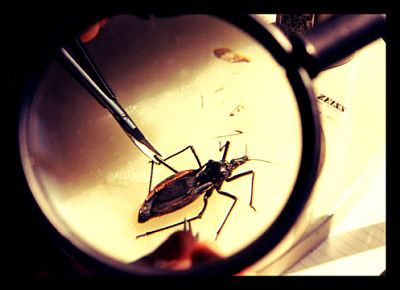
1. Chagas Disease is transmitted through a triatomine bug’s sting, or by contact between the bug’s infected feces and open wounds or mucous membranes. In its chronic phase, parasites embed in tissue such as heart or digestive muscle. Symptoms include a purplish bruise, a fever lasting several weeks, headache, abdominal pain, cough, rash, diarrhea, chest pain, heart failure, and less commonly seizures or paralysis. There is no vaccine available, but insecticide treatments, bed nets, and good hygiene practices can prevent contraction.
2. Dracunculiasis, or “Guinea-worm disease” is caused by the ingestion of contaminated water. Over about a year, the parasite painfully migrates through tissues, eventually emerging from a painful blister formed on infected persons’ feet. Often relief is sought by immersing the body in cold pond water. Unfortunately, this causes the female worm to release thousands more larvae into the water. When a person drinks the contaminated water, the larvae migrate through their intestinal wall and the process begins again. There are no drugs available to prevent or heal the disease. Patients frequently remain sick for several months, although it is rarely fatal.
3. Echinococcosis develops in humans by ingestion of Echinococcus granulosus eggs, primarily through contact with infected dogs or by consuming contaminated food or water. If left untreated, Echinococcosis has a high fatality rate in humans.
4. Foodborne Trematodiases are a group of parasitic infections caused by unsanitary food preparation or defecation of infected animals in fresh-water sources. The infections that make up Foodborne Trematodiases are Clonorchiasis, Fascioliasis, Opisthorchiasis and Paragonamiasis. Symptoms include fever, abdominal pain, chest pain, bacterial infections, nausea, skin rashes, and in some cases fatal forms of bile duct cancer.
5. Human African Trypanosomiasis, or “Sleeping Sickness” is transmitted by the bite of a tsetse fly. The disease affects mostly poor populations living in rural areas of Africa. If left untreated, Sleeping Sickness is usually fatal.
6. Lymphatic filariasis, or elephantiasis, is a painful disease that causes disability and disfigurement. Infection usually occurs in childhood, while visible symptoms don’t appear until adulthood. Filarial infection can cause fluid retention, fever, and genital disease. Nearly all infected persons suffer lymphatic damage and nearly half suffer kidney damage.
7. Onchocerciasis, or “River Blindness” is transmitted through the bites of infected blackflies. Infection leads to blindness, skin rashes, lesions, intense itching, and skin discoloration. Insecticide treatment of blackfly breeding sites can prevent the spread of onchocerciasis, and there is a drug available to treat symptoms and reduce transmission potential.
8. Schistosomiasis is transmitted through contact with larvae infested water. It affects nearly 240 million people worldwide in areas without potable water or sanitation, causing chronic sickness. Anthelminthic drugs now offer some control of schistosomiasis in marginalized communities.
9. Soil-transmitted Helminth infections are transmitted by roundworm, whipworm, or hookworm eggs present in soil where sanitation is poor. It is estimated that over 880 million children need treatment for these parasitic infections which can cause diarrhea, abdominal pain, weakness, intestinal bleeding, loss of appetite, reduction in absorption of micronutrients, intestinal obstruction, rectal prolapsed, and diarrhea.
10. Cysticercosis is an intestinal infection of adult tapeworms that can develop in a number of tissues. Those located in the central nervous system are known to be the most frequent preventable cause of epilepsy in the developing world.
– Dana Johnson
Source: WHO, WHO Speeches
Photo: ABC News

Combating Rural Poverty in Swaziland
Swaziland, a small landlocked country in Southeast Africa, is considered a lower middle-income country. However, poverty is rampant in its rural areas, where two-thirds of the population are unable to meet their basic food needs and per capita income is four times lower than in urban areas. Wealth distribution is also severely skewed. The top 10% of the population account for almost half of overall consumption, and this discrepancy is growing.
The government and aid organizations have found that supporting small-scale farmers helps combat rural poverty in Swaziland. The country’s economy is largely based in agriculture, though the nature of the industry is dichotomous. On on hand, there are TDL (Title Deed Land) farms: large-scale, privately owned commercial farms that specialize in cash crops such as sugarcane, citrus fruits, and timber. On the other hand, there are SNL (Swazi Nation Land) farms. These small-scale farms are made up of land owned by the government, which the King grants to regional Chiefs who distribute it as they see fit. They are almost all subsistence farms of about one hectare and make up the large majority of Swazi farmland.
The heavy dependence on subsistence farming renders the stability of the country and the well-being of its citizens reliant on weather conditions, which are unpredictable and recently unkind. Major droughts in 2004, 2005 and 2007 led to severe food insecurity in Swaziland. This insecurity could be minimized if small farms became more profitable by diversifying the crops they grow and farming more efficiently. Because SNL farms are largely subsistence-based, they usually grow only maize. While this provides food to the farmer’s family, it does not yield as much income for the family as perennial products or market vegetables would. Even when growing maize, more efficient techniques could be used to increase yield on these small-scale farms.
There are a few obstacles when is comes to the development of SNLs. For example, SNL farmers are hesitant to invest heavily into their farms because they do not actually own the land, and Chiefs have the right to take it from them as they see fit. Even if these farmers are willing to invest in their land, financing is difficult to come by. Formal financing programs often leave small farmers out of the equation, so they don’t have access to the necessary funds to invest in their land. Another complication concerns the way cattle are treated in Swazi culture. Cattle are given free rein of the land around them. They roam liberally and may graze anywhere without direct cost to the cattle owner. This leads to overgrazing, which create problems like soil erosion and land degradation — all of these make life difficult for farmers.
The Swazi government’s Ministry of Agriculture is working to revamp the country’s agricultural system with support from the UN’s International Fund for Agricultural Development. The commercialization of Swazi agriculture is seen as a means to decrease poverty and increase food security, especially in rural areas. Another goal of this policy is to create a more equal balance of wealth between the country’s rich and poor. They plan to complete this overhaul of the agricultural sector of the economy by writing and enforcing necessary legislation, and commercializing and diversifying smaller farms. As these smaller farms become more efficient and profitable, they would then hire more workers and be in need of transport and trading services. In these ways, the growing farms would further contribute to Swaziland’s overall economy.
While the development of SNL farms is not expected to solve Swaziland’s rural poverty problem completely, it is an excellent example of a poverty-reducing measure that empowers the people.
– Katie Fullerton
Source: IFAD Rural Poverty Portal, World Bank, IFAD Rural Poverty in Swaziland, IFPRI
Photo: The Prisma
Apne Aap: Helping Women Worldwide
22 women from Mumbai’s red light district who had a vision of a world where no woman can be bought or sold joined together to form Apne Aap. In its founding stages, Apne Aap provided women a safe place to meet, mend clothing, sleep, and receive mail. Throughout the years, it has grown into an influential organization that now provides self-empowerment programs to women and girls trapped in prostitution in Bihar, Delhi, and West Bengal.
Sadly, all of the founding members have passed away from hunger, suicide, and AIDS related complications, serving as an important reminder of the need to empower women in India. Today, Apne Aap provides women and girls safe places to access education, improve their livelihood options and receive legal rights training. The organization reaches more than 15,000 women and girls and is continuing to fight to keep women and girls from being treated as commodities.
Apne Aap is working to increase choices for at-risk girls and women. The organization follows two Ghandhian principles perpetuating resisting violence to the self and others and upliftment of prostituted girls and women.
The leader of Apne Aap, Ruchira Gupta, has led a career focused on highlighting the link between human trafficking and prostitution laws. She also lobbies policy makers to shift the blame from the victims to the perpetrators. Gupta has achieved international acclaim for her humanitarian work and was awarded the 2009 Clinton Global Citizen Award and the Abolitionist Award at the U.K. House of Lords as well as an Emmy for her documentary titled “The Selling of Innocents,” which inspired the creation of Apne Aap. Gupta has widely challenged the belief that slavery and prostitution are inevitable.
Gupta works vigorously to change Indian trafficking laws. She wants to see the Indian anti-trafficking law known as ITPA be amended and to focus more heavily on the responsibility of the perpetrators and not the girls and women. She advocates for enhanced prosecution of traffickers, procurers, pimps, brother owners, managers, and other groups responsible for the proliferation of human and sex trafficking in India. Gupta’s work and the work of Apne Aap provide meaningful and invaluable services to women and girls trapped in the prostitution industry in India.
– Caitlin Zusy
Source: Apne Aap, Ruchira Gupta
Photo: Change Her World
Brazil’s Agricultural Development Success
The greatest challenge of a generation remains as the world figures out in the decades ahead how to feed an additional two billion people. Unprecedented population growth, rising incomes in the developing world and a growing need for energy contribute to the increase in demand for agricultural products. Agricultural development is needed now more than ever to meet this demand, but if Brazil‘s success in recent decades is any indicator, development can be improved worldwide to address global poverty.
Agricultural Development or Perpetuated Hunger?
Depending on the actions of the international community, this increase in demand will lead the world down one of two paths. If agricultural production is not increased, millions of people will increasingly be left in a state of perpetual hunger. On the other hand, the increase in demand for agricultural products can be seen as an opportunity for economic development through new food markets in the developing world.
While there is a certain amount of truth to the argument that the global food security problem stems from distribution rather than production, there is also strong evidence that an increase in production is possible — and necessary. Economists predict that as incomes and population rise, the global demand for food will increase 60 percent by 2050. This means that the world will need to produce as much food in the next 40 years as they did in the last thousand.
If done properly, agricultural development can be a driving force for economic development and poverty reduction. Research conducted by the Chicago Council on Global Affairs suggests that global food security is particularly advanced with increases of the agricultural potential of smallholder farmers in Sub-Saharan Africa and South Asia. The benefits are two-fold: the increase in agricultural income for smallholder farmers can lift millions out of chronic hunger, and the increase in production can provide more food to the global market as a whole.
How can a country best facilitate agricultural development? The simple answer is through investment research and training in science-based agriculture. The success story of Brazil best illustrates this methodology.
Brazil’s Success Story
Through investments in agricultural research, Brazil has moved from a net importer of food to one of the world’s largest breadbaskets. Between 1996 and 2006, the total value of Brazil’s crops rose by 365%. The tropical country has now caught up with the “big five” grain exporters (America, Canada, Australia, Argentina and the European Union) – all of which are temperate producers.
This astounding progress has been made through the successes of the Brazilian Agricultural Research Corporation – Embrapa for short. Since its founding in 1973, Brazil has doubled its cultivated land and multiplied its agricultural output by six. Antonio Lopes, the president of Embrapa, says that the success lies in the delicate balance between agricultural expansion and land conservation.
Because no model for successful agricultural development in a tropical climate existed previously, Brazil was forced to create its own. First, they increased the amount of ploughable land by adding lime and nitrogen-fixing bacteria to soil that was previously unfit for farming. Second, they introduced a larger-leafed variety of grass and converted part of the new land into pastures so as to allow for the expansion of Brazil’s beef herd. Third, and perhaps most importantly, they converted temperate-climate soybeans into a tropical crop through genetic modification. Last, Embrapa encouraged and integrated new operation farm techniques such as “no-till” agriculture and forest, agriculture and livestock integration.
According to Lopes, Brazil will continue to invest in agriculture research and development for the foreseeable future. Brazil should serve as an example to the rest of the world for the ways in which private and public investment can transform a developing country in the tropics into an agricultural powerhouse.
– Kathryn Cassibry
Source: InterAction, The Economist
Photo: Guardian
Vinegar Used in New Cervical Cancer Screening
CHICAGO – Though most people would agree on vinegar’s extraordinary versatility in the kitchen, few would suspect that the liquid could have a powerful influence in the medical field through cervical cancer screening.
New research presented in an early June cancer conference in Chicago has revealed that testing for cancerous cells in the cervix with vinegar swabs could be the key to slashing cervical cancer-related deaths in under-developed countries.
The new screening method is called VIA (visual inspection with acetic acid) and uses sterilized vinegar made from combining acetic acid with water. Since its introduction in 2001, the low-tech visual exam has cut the cervical cancer rate in Indian women who were screened by 31 percent compared to women who did not undergo the cervical cancer screening.
Pap smears and tests that help to find and prevent HPV in women are only successful in reducing death rates in the countries that can afford them. In developing countries with little access to both preventative and treatment-related modern medical technology, a study has shown that these new low-tech cervix tests that use vinegar could save thousands of lives each year.
Whereas a Pap test would normally cost around $15 per test, the vinegar screening only costs $1. Specifically, the tests have proven beneficial in the slums of India, where cervical cancer is the leading cause of cancer-related death amongst women.
How does it work? Swabbing the cervix with vinegar causes abnormal cells in the cervix to temporarily change color while healthy tissues remains colorless, thus making cancer cells easily identifiable by medical analysts. Locals can perform the vinegar tests with merely two weeks of training and without expensive lab equipment.
Researchers have found that widespread implementation of the new vinegar screenings could prevent nearly 75,000 deaths in resource-deprived countries around the world. If the studies prove conclusive and the low-tech vinegar-based cancer screening tests become a worldwide phenomenon, vinegar may begin to replace diamonds as a girl’s best friend.
– Alexandra Bruschi
Source: The Wall Street Journal, The Daily Mail
Photo: Global Giving
Hunger Kills Every 10 Seconds: A New Campaign
The UK campaign, Enough Food for Everyone If, knows how to use statistics in a way that emphasizes their message.
The statistic they are currently using is that hunger kills every 10 seconds. This is derived from the fact that three million children died from hunger in 2011. Those three million deaths spread evenly across the year equals ten seconds a death.
Some assert that this statistic is a manipulation of the data, as the real issues surrounding those three million deaths are slightly complicated. It is not as simple as people simply starving to death.
A large portion of the deaths involved in the three million per year statistic are caused by infectious diseases or other things that poor nutrition can be related to. When children aren’t given the proper nutrition in the earliest parts of their lives, their bodies are much more susceptible to infectious diseases that a normal healthy child would simply be able to fight off.
The problem isn’t only involving malnutrition in children, but also malnutrition in mothers. In many societies, women aren’t given the best food in the household, therefore they can end up being malnourished during pregnancy and breast feeding, leading to malnutrition in their children.
Malnutrition is especially prevalent in communities that rely heavily on cereals and starches for their diets. These areas tend to neglect the importance of fruits and vegetables in their diets, and sometimes it is the case that milk or meats are avoided in these areas for cultural reasons.
Despite the complexities revolving around the statistic perpetuated by the IF campaign, the campaigners rely on the ‘hunger kills every 10 seconds’ statistic to give people a concrete way to think about the magnitude of global hunger. When people hear that three million died of hunger in 2011 they tend to block it out, as it is hard to conceptualize such a large number. The Enough Food for Everyone If campaign puts this statistic in an easy to understand way that makes people identify with individuals in poverty.
Enough Food for Everyone If uses its resources to raise awareness about world hunger in order to impact governmental decisions in favor of providing more aid to developing countries. The campaign also has put out helpful ways that people can contribute to ending hunger through their consumer choices, such as buying local, in season vegetables. The campaign is exemplifying how putting data in a certain manner and context can make all the difference in the impact is has.
– Martin Drake
Source: BBC News, Enough Food for Everyone If
Photo: BBC News Images
Neglected Parasitic Diseases
The World Health Organization (WHO) wants to draw attention to diseases that have typically been neglected and underreported. Referring to treatment for schistosomiasis, Dr. Margaret Chan, Director-General of the World Health Organization, stated, “We can blanket this part of the world [Africa] with medicines that rid every schoolchild of worms and eggs, parasites that interfere with their learning, impair cognitive development, and compromise their nutritional status.” These are ten parasitic diseases WHO classifies as neglected.
1. Chagas Disease is transmitted through a triatomine bug’s sting, or by contact between the bug’s infected feces and open wounds or mucous membranes. In its chronic phase, parasites embed in tissue such as heart or digestive muscle. Symptoms include a purplish bruise, a fever lasting several weeks, headache, abdominal pain, cough, rash, diarrhea, chest pain, heart failure, and less commonly seizures or paralysis. There is no vaccine available, but insecticide treatments, bed nets, and good hygiene practices can prevent contraction.
2. Dracunculiasis, or “Guinea-worm disease” is caused by the ingestion of contaminated water. Over about a year, the parasite painfully migrates through tissues, eventually emerging from a painful blister formed on infected persons’ feet. Often relief is sought by immersing the body in cold pond water. Unfortunately, this causes the female worm to release thousands more larvae into the water. When a person drinks the contaminated water, the larvae migrate through their intestinal wall and the process begins again. There are no drugs available to prevent or heal the disease. Patients frequently remain sick for several months, although it is rarely fatal.
3. Echinococcosis develops in humans by ingestion of Echinococcus granulosus eggs, primarily through contact with infected dogs or by consuming contaminated food or water. If left untreated, Echinococcosis has a high fatality rate in humans.
4. Foodborne Trematodiases are a group of parasitic infections caused by unsanitary food preparation or defecation of infected animals in fresh-water sources. The infections that make up Foodborne Trematodiases are Clonorchiasis, Fascioliasis, Opisthorchiasis and Paragonamiasis. Symptoms include fever, abdominal pain, chest pain, bacterial infections, nausea, skin rashes, and in some cases fatal forms of bile duct cancer.
5. Human African Trypanosomiasis, or “Sleeping Sickness” is transmitted by the bite of a tsetse fly. The disease affects mostly poor populations living in rural areas of Africa. If left untreated, Sleeping Sickness is usually fatal.
6. Lymphatic filariasis, or elephantiasis, is a painful disease that causes disability and disfigurement. Infection usually occurs in childhood, while visible symptoms don’t appear until adulthood. Filarial infection can cause fluid retention, fever, and genital disease. Nearly all infected persons suffer lymphatic damage and nearly half suffer kidney damage.
7. Onchocerciasis, or “River Blindness” is transmitted through the bites of infected blackflies. Infection leads to blindness, skin rashes, lesions, intense itching, and skin discoloration. Insecticide treatment of blackfly breeding sites can prevent the spread of onchocerciasis, and there is a drug available to treat symptoms and reduce transmission potential.
8. Schistosomiasis is transmitted through contact with larvae infested water. It affects nearly 240 million people worldwide in areas without potable water or sanitation, causing chronic sickness. Anthelminthic drugs now offer some control of schistosomiasis in marginalized communities.
9. Soil-transmitted Helminth infections are transmitted by roundworm, whipworm, or hookworm eggs present in soil where sanitation is poor. It is estimated that over 880 million children need treatment for these parasitic infections which can cause diarrhea, abdominal pain, weakness, intestinal bleeding, loss of appetite, reduction in absorption of micronutrients, intestinal obstruction, rectal prolapsed, and diarrhea.
10. Cysticercosis is an intestinal infection of adult tapeworms that can develop in a number of tissues. Those located in the central nervous system are known to be the most frequent preventable cause of epilepsy in the developing world.
– Dana Johnson
Source: WHO, WHO Speeches
Photo: ABC News
The Trickle-Up Solution to Global Poverty
The Trickle Up aid foundation is turning traditional conceptions of foreign aid on its head, saying that, “investing in individuals at the grassroots level is the most powerful antidote to extreme poverty.”
Attempts to address global poverty have typically originated in large, global corporations whose tactics have been to give foreign aid or to invest in business at the highest level of society in the assumption that benefits from newfound societal organization and prosperity would “eventually trickle down to the rest of the population.”
Glen and Mildred Robbins Leet, the founders of Trickle Up, however, rejected this model as the only way to help the world’s poor, maintaining that the foreign aid money given to developing countries often got lost in corruption at the top societal levels, never quite reaching the country’s poorest members that needed the help most.
Thus, Trickle Up sought a change. Glen and Mildred believed in individuals’ power to create lasting change for themselves, and started a program in which they gave $100 grants to ten people in developing countries, urging them to launch their own microbusinesses.
Along with the small sum of money, the Leets’ model also provided basic business ownership training to their fund recipients, The Trickle Up method relies on the idea that humans feel empowered when they feel trusted and encouraged.
Trickle Up primarily focuses on women as agents of change because they believe that if women have equitable access to and control over resources, a country’s economic development will follow
Trickle Up’s website provides ample information about understanding the program’s ideology, the grant system, and rural poverty itself in an attempt to spread awareness and invite action. By empowering the world’s poor directly, Trickle Up is building a much-needed foundation for a human-rights driven and economically stable developing world.
– Alexandra Bruschi
Source: Trickle Up
Photo: Life
Artists Fight Poverty Through the Global Citizen Ticket Drive
Music fans all over the country are constantly scrounging for those rare ticket opportunities that make the concert-going lifestyle more affordable. Especially for those still in school, ticket prices represent a significant obstacle to enjoying a favorite band or a killer night out with friends. So, whether it’s through a radio contest, ticket lottery, or sponsored corporate giveaway, free tickets are always nice. Now artists are making it possible to score those free tickets and tackle global poverty at the same time.
The Rolling Stones reports that major artists, like Pearl Jam and Bruce Springsteen, have joined Global Citizen Ticket Drive to donate two tickets from every show they play to inspire social activism. The idea is to place the tickets in a lottery where fans can use points they have gathered as the entry fee. The tickets come from the artists’ personal stash. So, there’s no worry about the shows selling out beforehand.
Fans collect points by setting up an account on Global Citizen’s webpage and posting poverty awareness videos on social media websites, signing petitions, or contacting local politicians among many other ways. Once an account holder has earned points, he or she can search local venues for their favorite artists and dump their easily-earned points into a lottery for the two available tickets. It’s that easy!
Not only are the usual suspects involved in the charity drive – Pearl Jam has a long history of donating to such drives, others were quick to answer the call: Kanye West, My Morning Jacket, and Black Sabbath have agreed to contribute two tickets a piece from their shows. Actually, the list is really impressive. Even major festivals, like Coachella and Bonnaroo, are on board.
For Black Sabbath, the move is a timely one, as they also just released a new album and are already plotting their next world tour. The album features a hit song, “God Is Dead,” which Ozzy notes is a commentary on global terrorism. In line with their general attention to global issues, it’s no wonder that the band is backing Global Citizen Ticket Drive.
The ticket donation drive is only one of Global Citizen’s means to address global poverty; they also put on a concert just last year that netted $1.3 billion for the cause. Headlining the show were Neil Young and Crazy Horse, the Foo Fighters, and the Black Keys.
– Herman Watson
Sources: The Rolling Stone, Global Citizen, Look to the Stars, CBS News, Loudwire
Heifer International: Sustainable Aid
Many foreign aid organizations and donors provide temporary aid in the form of food, supplies, or direct cash donations. Heifer International is a different kind of organization; Heifer works to provide livestock for impoverished and hungry families so that they will be able to sustain themselves rather than depending on temporary aid. In order to help these people to help themselves, cows, goats, chickens, bees, llamas, and plenty of other options are given in terms of livestock to be donated. These animals help to provide both sustenance and stability to families in need. Agricultural products that the family does not put to use, such as milk, eggs, or honey can also be sold at market for extra income.
Heifer’s goal in this is to ultimately create sustainability for families to allow them to then further their opportunities in life such as provide for education and comfortable living. One of their hopes is also that as one family or group advances in the community that they will share their gift with others around them, allowing the community as a whole to become self-sufficient. With gifts of livestock comes training from Heifer employees, ensuring that the families will make the most of their new additions.
The organization’s projects span the globe, from Cambodia to China to India and Honduras. Their goals with specific projects vary, but include empowering and education of women, environmental conservation, and natural disaster response. A major success story involves a Filipino farmer, Rogelio Abes Jr., who took advantage of Heifer’s gifts and knowledge. Not only did he expand his own farm and income, he shared his livestock and farming techniques with others in the community, and inspired others to rise above poverty through hard work and generosity.
In terms of financials and accountability, Charity Navigator gives Heifer three out of four stars. The organization is entirely transparent with their records and policies, and more than 70% of their income goes to program expenses, while 20% goes to fundraising expenses. Only 6.4% goes toward administrative expenses while the CEO earns .03% of expenses. The only financial issue that arises is the disparity between revenue and program expenses in the past few years, where revenue is significantly higher than program expenses.
On the whole, however, Heifer is working hard against hunger and poverty in many different ways, from school education programs to their Read to Feed initiative that encourages children to read in order to fundraise money for the organization. Their goals for sustainability seem to be the right direction for food aid to be headed in – while temporary aid can be helpful, it can also breed dependency, and the most important thing is to get people out of situations of poverty and hunger and allow them to be self-sufficient.
– Sarah Rybak
Sources: Heifer International, Charity Navigator
Photo: Heifer International
Poverty in Iraq
Poverty in Iraq? Many countries in the Middle East are dominated by oil production and exporting, and Iraq is no different. 95% of its exports are from oil. Like other resource-rich countries, however, this abundance of profit potential has not translated to a higher standard of living for the average Iraqi citizen. Furthermore, economic progress and social development has been hindered by ethnosectarian violence, severe setbacks in infrastructure, and poor educational quality. A number of complex challenges face Iraq today.
3 Main Causes of Poverty in Iraq
The situation in Iraq has been discussed by a number of NGOs, focusing on reform of programs already in place. For example, the Public Distribution System (PDS) is a universal ration program, but its main obstacle lies in targeting and distribution. It does not effectively target those who are at greatest risk for slipping into absolute poverty. A number of reports assert that if the Iraqi government used funds available to it from oil exports, these difficulties could be addressed. However, until ethnosectarian violence can be resolved and security restored, steps forward will be accompanied by backward steps as well.
– Naomi Doraisamy
Source: CIA World Factbook, Library of Congress, Oxfam/NCCI, World Bank,
Photo: AlTahreer News