Within Uganda, in a town called Kampala, there is a slum by the name of Kisenyi. There are many languages spoken in this region, and it is a rough place to live. There is poverty abound, and hunger in many of the people. There are piles of garbage and sewage flowing around the houses. The houses are small, wooden shacks that are inhabited by the families of Kisenyi. If a foreigner visited Kisenyi, they would be begged by the children to give them money in order to get sugarcane so they can have lunch. There are many businesses, but the businesses are hard to keep going. The children do whatever drugs they can get their hands on. Despite this, some of the children have large dreams. Indeed, there is a lot of hope in the slums, and Ugandan teen, named Eunice Namugerwa, has provided the inhabitants with even more hope. Poverty may be a thing of the past in Kisenyi in some years, due to people like Eunice.
Eunice decided to start a chicken farm in Kisenyi, out of necessity, and this led to her speaking at TEDx Kampala, which is part of the larger TED Talks. TED has the mission, “ideas worth spreading.” Many experts, or even inspiring people, are invited to talk at TED in order to have a large audience for their brilliant stories or ideas. The idea of TED is to create a dialogue among movers and shakers of the world, to fight issues like poverty, disease, and hunger. This can lead to change on a local level, through those who experience the TED talks. TEDx Kampala was an independently organized TED event, but it was a high honor for Eunice to be invited to tell her story. It occurred on March 10th, 2012. It followed TED’s idea of “Technology, Entertainment, Design,” but focused primarily, of course, on social issues.
In August 2012, Eunice started her chicken farm in the Kisenyi slum in order to support her family and raise some income. The other options she considered were a fashion boutique and a “piggery.” Although she was only 18, little did she know she would soon inspire others and spread her idea into the future. In 2004, her father died of HIV, and in 2012, her mother was suffering too much to work, so Eunice was forced to try to make income for her family. Eunice commented on the issues in Kisenyi, which includes disease, the environment, and child abuse. She did not want to have to beg for money, so she turned to the idea of a chicken farm.
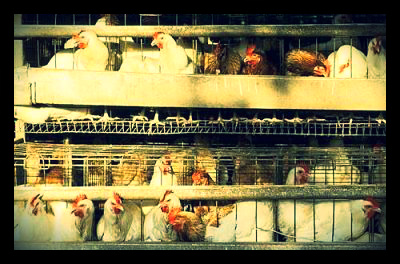
A primary school teacher named Tiarna Elmer donated about $576 so Eunice could start her farm. Eunice started the farm and began selling the eggs. The business grew quickly, and today, Eunice has 200 chickens on her farm. In addition to the farm, they have also started a DVD shop. Soon, Eunice will be earning about $385 a month or more, which is an incredible amount in the Kisenyi slums. Although it seemed like a far-fetched idea at first, with a little starter capital, Eunice now has a budding business and can inspire others with her entrepreneurial spirit. She gives hope to others stuck in poverty to start their own businesses, and hopefully, she also inspires nonprofit charities to donate money for start-up businesses, because they will help lift those in the slums out of poverty.
– Corina Balsamo
Sources: IPS News, All Africa, TED
Photo: RNW

What is the Bilderberg Group?
The Bilderberg Group is an annual conference designed to foster dialogue between Europe and North America. The group was started in 1954 when the first conference was held at the Bilderberg Hotel in Holland. The conference brings together 120-150 political leaders and experts from a variety of fields each year to discuss megatrends and major issues facing the world.
The Bilderberg conference provides an opportunity for informal, off-the-record conversation that is seldom possible in other venues. No official positions are required in the meetings. The conference provides attendees an agenda free, vote free setting where ideas are encouraged and participants have the opportunity to express their own opinions. No notes are taken, and no policy statements are issued before or after the conference.
Bilderberg is governed by a Steering Committee that elects a chairman who in turn is responsible for making suggestions and preparing the conference program with the Steering Committee.
Bilderberg grew out of the Cold War as a mechanism for European and North American communication, and today it remains a venue to discuss relevant and common problems facing the world. The group discusses matters surrounding trade, jobs, monetary policy, and international security. Dialogue between Europe and the United States is as important today as it was in the 1950’s.
The Bilderberg Group has received significant criticism over the years, however. Members of the media have labeled the conference as a “powerful global cabal” as each event is protected with heavy security and press is not allowed inside. Some conspiracy theorists have claimed the group runs the world. One prominent theory claims the group was responsible for the creation of the Euro, and that the group meets to select the winners and losers in the U.S presidential Elections, or at least the vice presidential pick.
Rumors like these persist in part because Bilderberg attendees are encouraged not to discuss the proceedings. However, to date there is no concrete evidence to suggest that the conference serves as anything more than an informal discussion of important problems and issues facing the world today.
-Caitlin Zusy
Sources Washington Post
Photo Unusual News
Ugandan Teen Fights Poverty
Within Uganda, in a town called Kampala, there is a slum by the name of Kisenyi. There are many languages spoken in this region, and it is a rough place to live. There is poverty abound, and hunger in many of the people. There are piles of garbage and sewage flowing around the houses. The houses are small, wooden shacks that are inhabited by the families of Kisenyi. If a foreigner visited Kisenyi, they would be begged by the children to give them money in order to get sugarcane so they can have lunch. There are many businesses, but the businesses are hard to keep going. The children do whatever drugs they can get their hands on. Despite this, some of the children have large dreams. Indeed, there is a lot of hope in the slums, and Ugandan teen, named Eunice Namugerwa, has provided the inhabitants with even more hope. Poverty may be a thing of the past in Kisenyi in some years, due to people like Eunice.
Eunice decided to start a chicken farm in Kisenyi, out of necessity, and this led to her speaking at TEDx Kampala, which is part of the larger TED Talks. TED has the mission, “ideas worth spreading.” Many experts, or even inspiring people, are invited to talk at TED in order to have a large audience for their brilliant stories or ideas. The idea of TED is to create a dialogue among movers and shakers of the world, to fight issues like poverty, disease, and hunger. This can lead to change on a local level, through those who experience the TED talks. TEDx Kampala was an independently organized TED event, but it was a high honor for Eunice to be invited to tell her story. It occurred on March 10th, 2012. It followed TED’s idea of “Technology, Entertainment, Design,” but focused primarily, of course, on social issues.
In August 2012, Eunice started her chicken farm in the Kisenyi slum in order to support her family and raise some income. The other options she considered were a fashion boutique and a “piggery.” Although she was only 18, little did she know she would soon inspire others and spread her idea into the future. In 2004, her father died of HIV, and in 2012, her mother was suffering too much to work, so Eunice was forced to try to make income for her family. Eunice commented on the issues in Kisenyi, which includes disease, the environment, and child abuse. She did not want to have to beg for money, so she turned to the idea of a chicken farm.
A primary school teacher named Tiarna Elmer donated about $576 so Eunice could start her farm. Eunice started the farm and began selling the eggs. The business grew quickly, and today, Eunice has 200 chickens on her farm. In addition to the farm, they have also started a DVD shop. Soon, Eunice will be earning about $385 a month or more, which is an incredible amount in the Kisenyi slums. Although it seemed like a far-fetched idea at first, with a little starter capital, Eunice now has a budding business and can inspire others with her entrepreneurial spirit. She gives hope to others stuck in poverty to start their own businesses, and hopefully, she also inspires nonprofit charities to donate money for start-up businesses, because they will help lift those in the slums out of poverty.
– Corina Balsamo
Sources: IPS News, All Africa, TED
Photo: RNW
Obama Visits Senegalese Slave Quarters
Four centuries after the first African slaves were shipped from Africa to the Americas, Barack Obama, the first African American U.S. President, visited one of the major slave shipping points of the triangular trade: Goree Island.
Obama started off his week-long trip through Senegal, South Africa and Tanzania with a private tour of the Goree Island Slave House. Built in 1776 by the Dutch on Goree Island off the Senegal coast, it is contested whether the ‘House of Slaves’ (Maison des Esclaves) was really a major slave-trading point; some historians suggest that the island was more of a merchant port, and the slave house a merchant’s home. However, despite the controversy over its effective role in the slave trade, there is no doubt that slaves walked through the “door of no return,” never to come back.
Now turned into a museum and classified by UNESCO as a World Heritage site, the House of Slaves reminds all its visitors of the brutality and cruelty inflicted upon other human beings during the slave trade.
“It’s a very powerful moment… to be able to come here and to fully appreciate the magnitude of the slave trade, to get a sense in a very intimate way of the incredible inhumanity and hardship that people faced”, stated Obama, who is believed to have at least one enslaved ancestor. First Lady Michelle Obama, a descendant of slaves, did not wish to comment on their visit to the House of Slaves.
More than just diplomatic, Obama’s visit to the Slave House is highly significant for many, both African and American. It is an acknowledgment of the dark history of slavery of the United States, a reminder of the considerable transformation that American society has undergone in the past decades.
The desegregation of American society and the election of the first African American President in the history of the U.S. has made Africans very supportive and proud, although there is some disappointment that the President seems less involved with the continent than his predecessors Georges W. Bush and Bill Clinton.
Moved by the living testimony of the slave trade evoked by the Goree Island Slave House, Obama emphasized the importance of the defense of human rights and praised the U.S. Supreme Court for the same-sex marriage ruling. He was accompanied by Senegalese President Macky Sall, who paradoxically declared that Senegal was “still not ready to decriminalize homosexuality”.
Obama’s visit to Goree Island and then to South Africa raises the question of the place of aid to Africa in American foreign policy priorities. That question has yet to be answered.
– Lauren Yeh
Source: Yahoo! News, PolicyMic, LA Times
Photo: Washington Post
Reducing Food Waste, Feeding the Hungry
World hunger is affecting a large number of people through malnourishment and general under-nutrition. Malnutrition is something that means a person lacks the elements, in a nutritional sense, that is necessary to be fully healthy. Often, this is either a lack of calories and protein or vitamin and mineral deficiency. In the world today, nearly one in eight people in the world have “chronic undernourishment,” which means they are perpetually in a state of hunger, which often means their children will face that same undernourishment, which creates a vicious cycle much like poverty.
852 million out of the 870 million that are hungry every day are in developing countries, such as in sub-Saharan Africa. Although malnourishment has decreased by 30 percent in Asia, as well as a decrease of 16 million in Latin America, there is still more work to be done to ensure that everyone can have access to the nutrition that they need. The people that are most at risk for hunger are children. Those children that are undernourished can be ill for 160 days or more each year, and it causes five million deaths every year. Diseases like malaria and measles are exemplified in children that are undernourished, and 57% of malaria cases have at least been partially caused by undernourishment.
The saving grace to these harsh facts about world hunger is that the world does, indeed, produce enough food to successfully feed everyone. The only issue is that the food does not actually travel to the developing countries, which means there is food in the world that the undernourished cannot access. Every person in the world could have 2,720 calories per day which is enough for proper nutrition. The issue, then, is the lack of funds to buy food, or the lack of land in order to grow food. Some of the main causes of world hunger are poverty, harmful economic systems, conflict, and climate change. Interestingly, poverty causes hunger, but hunger also leads to poverty, which is a vicious cycle; people stuck in this cycle need help in order to leave the cycle, which requires aid from other countries, in most cases.
So what are the solutions to world hunger? They are more simplistic than one might originally think. One of the main problems is the waste of edible, but “ugly,” vegetables. The food production systems of the world will throw away “unwanted” fruits and vegetables, which is incredibly wasteful. There is a campaign against food waste, partially led by Tristram Stuart, who wrote the book “Waste: Uncovering the Global Food Scandal.” A simple solution is to stop this waste; rather than throw out “ugly” food, give them to those that are undernourished, or charities that can then pass them along to the undernourished. Another solution is to use the leftovers. Food is thrown out every day; perfectly edible food.
Individuals can even help reduce food waste by only buying what they need and saving the leftovers to eat another day. However, this needs to be done on a wider scale, such as in grocery stores or even food production systems as a whole. Finally, preservation is an important issue in regards to world hunger. Consumers and retailers can reduce food waste by stopping impulse-buying, eating food at home, saving leftovers, and reducing trips to restaurants. Of course, never going out is not the solution. Rather, merely being more careful with food is the simplest solution of all, and can be done on all levels, from individuals to large corporations.
– Corina Balsamo
Sources: Africa Review, World Hunger, Rural Spin
Photo: Morgue File
The Brookings Institute Analyzes the Post-2015 High Level Panel Report
As the expiration date for the Millennium Development Goals nears there is much discussion and debate surrounding the post-2015 agenda. With the release of the High Level Panel Report there has been commentary galore about the nature of the new framework and the goals it encompasses. The Brookings Institution, a research institution focused on innovative policy solutions, provided a comprehensive analysis of the Report.
In brief the High Level Panel Report established the purpose of the post-2015 agenda being, “to end extreme poverty in all its forms in the context of sustainable development and to have in place the building blocks of sustained prosperity for all.” The Report concludes that the post-2015 agenda must focus on five main issues: Leave no one behind, put sustainable development at the core, transform economies for jobs and inclusive growth, build peace and effective, open and accountable institutions for all, and forge a new global partnership. The Panel believes these five elements are the key to ending poverty sustainably in the very near future.
The Brookings Institution has a cautiously positive and optimistic analysis of the High Level Panel Report. The focus on not only educational access but the substantive learning process is welcomed. Despite not directly articulating a strategy for combating inequality Brookings acknowledges the first prong “Leave no one behind” as a potentially effective method of encompassing this issue.
Brookings Institute also applauds the emphasis on data and measurement as a good lesson learned from the MDGs. Having definite goals and timelines is key to success. As the analysis says there is still a long way to go in defining the post-2015 agenda but the comprehensive and inclusive focus of the High Level Panel Report is a very encouraging step towards a poverty free future.
– Zoë Meroney
Sources: Brookings Institution, post2015hlp
Photo: Interaction
A Small NGO on a Big Mission in Bangladesh
Founded in New York in 1998, the Volunteers Association for Bangladesh is a small NGO on a big mission: to change public education for the poor in Bangladesh. The organization, whose members are mostly expatriate Bangladeshis living in the U.S. and Canada, has devoted itself to providing the funds, technical resources, and training necessary to improve Bangladeshi public schools, particularly those in rural areas where most of the country’s poor people live.
Their task could be seen as a daunting one. Statistics from 2009 put the literacy rate among Bangladeshi males at 54%, and among females at only 32%. According to more recent studies, the literacy rate for people in Bangladesh over age 15 is just under 60%. Dropout rates for high school students are estimated at 42%. Figures like these speak to the great educational need that the Volunteers Association for Bangladesh seeks to address.
The VAB has taken a comprehensive approach to meeting these educational needs and tackling the problem of inadequate schooling. Programs in 60 schools across the country are designed to help students from preschool through university. They provide free preschool with a nutritious meal, tutoring for 6th-grade students to help them pass entrance exams for high schools, and scholarships to help high school students pay for tuition and other necessary materials.
The group has also donated supplies like computers and science equipment in order to help 15 public schools better serve their students. In 2005, VAB started a college scholarship program, which has since helped 201 students pay for tuition and textbooks. In addition, they train local university students to work as tutors in the public schools.
All of these efforts are making headway in helping to open up doors to real opportunity for the poor in Bangladesh. The VAB is working to keep expanding its programs, and most recently they have partnered with Microsoft Southeast Asia to start a computer literacy and training program. To learn more about VAB and all of its efforts, visit www.vabonline.org.
– Délice Williams
Sources: Volunteer Association for Bangladesh, The Financial Express
Photo: Voice of America
Global Displacement by the Numbers
Every day an entire town’s worth of people is rendered homeless.
23,000 persons per day are forced to flee their homes, according to a United Nations report. By the numbers, this is akin to the evacuation of entire American towns. Due to conflict or persecution, these persons must rely on aid provided by various domestic and international organizations, placing strain on already weakened local economies and food supplies. The vast majority of these persons – over 80% – are hosted by developing nations.
Not only are local economies suffering as a result of displacement, the burden is also felt by the United Nations Refugee Agency (UNHCR), which logged some 35.8 million persons of concern in 2012. As a reference point, the population of California, the largest state in the U.S, is approximately 38.1 million people. In Pakistan, the number of refugees in relation to economic capacity is 552 persons to every $1 of GDP per capita, an astonishing statistic by our measurements.
In response to displacement concerns in Syria, a state in which 70% Palestinian refugees are displaced by conflict in addition to the Syrians themselves, the Obama administration has authorized an additional $300 million in humanitarian relief funds. This brings the total amount of aid given to Syria to nearly $815 million, making the U.S. the single-largest contributor of humanitarian assistance to the Syrian people.
These contributions will be used “to help feed, shelter, and provide medical care for children, women, and men affected by the ongoing conflict in Syria,” according to a recent press release from the White House. The move is especially significant for efforts to increase global poverty relief and awareness in U.S. foreign affairs as it represents a clear recognition of an American responsibility to protect people worldwide.
In spite these commendable contributions, there remains a wide discrepancy between the number of refugees being hosted by developing countries and nations more capable of hosting displaced persons. To wit, UNHCR’s recent report shows that more than half of the refugees under UNHCR’s mandate resided in countries where the GDP per capita was below $5,000 in 2012. Pakistan and Iran hosted the largest number of refugees. Clearly, there is a great need for the U.S. and other developed countries to support refugees and the countries that host them.
– Herman Watson
Source: New York Times, UN Refugee Agency, Huffington Post, NBC News, The White House
Photo: NBC News
The Mo Ibrahim Index of African Governance
The Mo Ibrahim Index of African Governance (IIAG) began in 2007 as a source of quantitative data for African citizens, organizations, and policy makers to refer to when making important decisions. This is just one of five core program areas for the Mo Ibrahim Foundation. The Mo Ibrahim Foundation works with other institutions to bring results to the African people by connecting citizens, stakeholders, and policy makers together. This organization believes better leadership and governance will provide full implementation of all the developmental progress that has already been made on the African continent.
In addition to the Ibrahim Index of African Governance, the other four core programs under the Mo Ibrahim Foundation are:
Whichever solutions are discovered, or goals are accomplished in the developing nations of Africa, management of these accomplishments is a must. The Mo Ibrahim Foundation, as seen in its five core programs, works for just that. It stresses an emphasis on discussion, recognition of achieved rather than ascribed leadership, and paving the way for young, talented individuals who want to make a positive change in Africa.
Mohamed Ibrahim, the founder of the Mo Ibrahim Foundation, is now a billionaire philanthropist after selling his cellphone company, Celtel International. His philosophy is essentially, for Africa, by Africa. Founding Mo Ibrahim Foundation for him was an investment he hopes to see a return on in the future of Africa’s infrastructure. Being extremely passionate about improving African governance and leadership, Ibrahim says that the recognition given to exceptional Africa leaders under The Ibrahim Prize Program is not a façade of success in Africa, but rather a means of bringing unfiltered attention to the issue itself.
– Aysha Rasool
Feature Writer
Source: NPR Mo Ibrahim Foundation
Photo: Nazret
World Bank Admits Poverty and Climate Change Link
Poverty and climate change are related problems, says World Bank president Jim Yong Kim. The World Bank has doubled its spending on researching adaptation to climate change to $4.6 billion, but it is also calling for the world’s wealthier countries to invest in similar research. The organization also recently released a report on the subject, which presents some shocking scenarios that the organization feels are likely to occur if global temperatures continue to increase. The Thai capital of Bangkok, for example, could experience floods in as much as forty percent of the city if temperatures rise by just 3.6 degrees Fahrenheit, which is expected to happen within the next three decades. Those who live in slums, the report suggests, will be the most affected by a natural disaster. But this hypothesis has implications not just for the poor or for the people of Thailand, but for the world over. Jim Yong Kim, the president of World Bank has said that it is “impossible to tackle poverty without dealing with the effects of a warmer world” for the following reasons:
1. Access to food. Many crops have a difficult time thriving in extremely hot conditions. While agricultural scientists are working, sometimes controversially, to create versions of popular crops that can adapt to such climates, the World Bank’s report estimates that as many as ninety percent of people in Sub-Saharan Africa could be malnourished by 2050.
2. Access to clean water. The report also suggests that extreme heat may lead to droughts throughout South Asia, reducing the availability of clean drinking water in places like India, Pakistan, and Afghanistan.
In addition to research, the World Bank spends $7 billion per year (not including the $20 billion received from other banks and partners dedicated to this issue) in helping developing countries cut their greenhouse gas emissions.
– Samantha Mauney
Sources: The Saudi Gazette, Counter Currents
Photo: IFAD
Living Goods: Saving Lives Door-to-Door
For most Americans, there are few things in life more irritating than a door-to-door salesperson. They bypass the bubble we’ve created around ourselves using newfangled technologies like caller ID and appear unannounced at the door with the intent to sell you a vacuum cleaner. In 21st century America, we prefer to buy and we hate to be sold.
For people living in Uganda however, a stranger at your door could save your life.
Living Goods is a social business based in San Francisco that seeks to create a sustainable delivery system of products and services essential for health and well being in the developing world. These products, which include anti-malaria medications, clean burning cook stoves, solar lamps and fortified foods, undoubtedly improve and sometimes save the lives of those living in poverty. But all too often there is no infrastructure in place to ensure those who need these goods have access to them.
Enter the Living Goods Community Health Promoter. CHP’s are the delivery system for Living Goods, going door-to-door in their communities delivering over 70 different products to customers at 20-40% below market prices. A CHP, usually a woman but the program has recently expanded to include a few men, gets his or her start by purchasing a “business in a bag”, a branded duffel bag from Living Goods containing everything they need to start a franchise. They then receive two weeks of intensive training, learning how to diagnose common illnesses like malaria and when to refer a customer to a clinic. Ongoing mentorship and marketing support are also provided. Eve Alituvera, a Community Healthy Promoter in Uganda said of her impact on the community “I offer them good health plus commodities – that’s the business”.
Malaria is a disease that’s particularly problematic in Uganda. It is estimated that Uganda has the highest rate of infection in the world, nearly 478 cases per 1,000 people per year. While this is a highly treatable infection and drugs are free at public hospitals, they are often out of stock or too far from those who need them. What’s worse, nearly 30% of anti-malaria drugs sold at pharmacies are counterfeit. Fortunately, the presence of Living Goods CHP’s has succeeded in reducing the effects of malaria on locals. A 2012 report by the Harvard Kennedy School of Government found that the presence of a Living Goods CHP increased the use of anti-malarial drugs by children believed to be infected with the disease by 40%.
Today, there are over 1000 Community Health Promoters active in Uganda and Living Goods is planning to implement the model in Kenya beginning mid 2013.
– Erin Ponsonby
Source: Living Goods, The Guardian
Photo: Time Magazine