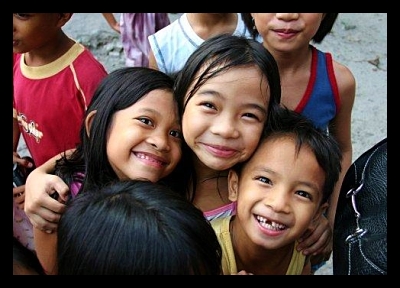
The National Statistics Coordination Board (NSCB) released its latest report on poverty in the Philippines on April 23, 2013. The results of the survey, which is taken every three years, showed that as of the first semester of 2012, 27.9 percent of Filipinos were living below the poverty line. This estimate is a concern to the Philippine government because it shows that despite the government’s targeted efforts, poverty rates have remained relatively unchanged from their 2009 levels.
According to the World Bank, the number of people living in extreme poverty has dropped in every other developing region in the world between 2005 and 2008, leaving many to ask why the Philippines has not seen the same decline.
In the NSCB’s 2006 survey, results showed that 28.8 percent of Filipinos were living on less than $1.25 per day. That number barely changed in 2009 when poverty levels were reported at 28.6 percent. With a decrease of only 0.7 percent over three years, poverty levels appear to have remained stagnant in the Philippines.
In order for a family of five to escape the label of “extremely poor” in 2006, they would have had to earn P1,681 ($39.09) a month. In 2009, they needed to bring home P2,042 ($47.49). By the 2012 survey, those income requirements more than doubled. The most recent NSCB report shows that families must earn P5,458 ($126.93) a month to put food on the table every day. If they want to meet non-food needs, such as clothing, they would have to earn P7,821 ($181.89).
Poverty in the Philippines
The report indicated that the Autonomous Region in Muslim Mindanao (ARMM) ranked as the worst national region with poverty levels in its provinces ranging from 42 percent to 47 percent. The region with the lowest incidences of poverty was the National Capital Region (NCR), averaging around 3.9 percent.
According to the NSCB, poverty rates are well above 40 percent in 15 provinces and one city (Catabato City is chartered and therefore not a part of a province).
The poorest province, Lanao del Sur, registered 68.9 percent poverty levels. The province with the lowest rate was the 2nd District of the NCR with 3.1 percent. The capital city of Manila, located in the 1st District of the NCR, had a 3.8 percent poverty rate.
In an attempt to combat the intergenerational transmission of poverty, the Philippine government began implementing a grant program for the country’s poorest in 2008.
Conditional Cash Transfers (CCT), funded by the World Bank, are intended to meet short term consumption needs. CCT is given to young children for attending school; to pregnant women to help them with pre-natal care and to families who get their health checked regularly. Despite meeting one goal of keeping children in school, many now believe that the CCT program is not doing enough.
Currently, the bottom 20 percent of the country’s earners make up six percent of the country’s total income. The top 20 percent bring in 50 percent of the total income. Based on the findings of the NSCB’s study, CCT has not been able to significantly improve this income inequality.
The CCT budget for the first semester of 2012 accounted for only a quarter of the amount needed to eradicate poverty in the Philippines. The NSCB estimates that P79.8 billion ($1.86 billion) was needed for the first half of 2012, but the budget for the whole year was only P39.4 billion ($92 million).
The government responded to the NSCB report by stating that it would begin monitoring poverty trends more closely through an annual survey instead of waiting every three years to do so.
It is not immediately known why extreme poverty in the Philippines has failed to show improvement. Regardless of the cause, it is evident that more has to be done to improve the lives of the country’s poorest.
Read more about poverty in Philippines
– Allana Welch
Source: The Inquirer, The Rappler, Philstar, World Bank
Photo: Pototour

Poverty in Morocco
Poverty in Morocco is a fact of life for many. The name Morocco does not immediately conjure images of destitution. The country has done well as branding itself as an exotic tourist destination, but the country is suffering a significant poverty problem, one that cannot be disguised even to foreigners.
A blogger wrote of her travels in Morocco:
The majority of poverty in Morocco is in rural areas –- according to the Rural Poverty Portal, of the 4 million people living under the poverty line in Morocco, 3 million of them are in rural areas. This may stem from the number of people depending on agriculture as a source of income in a geographically challenging region, as well as a lack of access to resources like water and financial credit and also a low level of training and education.
Morocco has seen vast improvement in its poverty levels in the last two decades, but is still far behind other countries at the same income level. Infant mortality is higher than most lower-middle income countries and total school enrollment and female enrollment are both lower. In rural areas, the vast majority still do not have access to clean water or electricity.
The Moroccan government is indeed working towards alleviating poverty in the country, though recommendations by the world bank have suggested they focus more on improving the agricultural sector as well as targeting services towards the poor and encouraging the better off to use private services.
– Farahnaz Mohammad
Source: UN Post, Rural Poverty Portal, World Bank
Photo: Sanatoy
Global Impact Appoints New President & CEO
Scott Jackson has been named as Global Impact’s new President and CEO. Global Impact is a Washington, D.C.-based international nongovernmental organization (NGO). Jackson is highly qualified for the position, and Global Impact expressed in a May press release that their new president & CEO will be capable of using his accomplishments and Global Impact’s mission to achieve success in helping the world’s most vulnerable populations.
Scott Jackson previously worked for PATH, a Seattle-based global health non-profit where he served as the Vice President for External Relations. His experience at PATH provided him with significant global development, marketing and fundraising experience.
Global Impact believes that Jackson’s twenty years of experience in international development will be highly valuable to Global Impact. Mr. Jackson’s new role as President & CEO will entail a variety of responsibilities. These responsibilities will include: leading Global Impact’s advisory services, fundraising campaigns, workplace giving, partnerships, and strategic alliances.
Jackson will be comfortable managing donor and fundraising campaigns. He gained experience in the field at PATH where he worked relentlessly to strengthen relationships with partners and donors while also maximizing the visibility of PATH’s work. His work there helped to increase their donor base and grow their organization. PATH issued a statement in which they said Jackson would be truly missed as both a colleague and a friend. They also stated that he contributed a great deal to PATH’s work and the global health field overall.
Global Impact raises funds to address critical humanitarian needs around the world. They are responsible for impressive fundraising campaigns for thousands of different organizations. They have raised over $1.5 billion for their partner organizations. Global Impact funds more than 70 U.S. based international charities. They provide unique solutions to meet the unique giving needs of both organizations and donors. Global Impact was founded in 1956 and has provided valuable services to help the world’s poor and most vulnerable populations.
– Caitlin Zusy
Sources: Global Impact, PATH
Photo: Washington Post
Latest Statistics on Philippine Poverty
The National Statistics Coordination Board (NSCB) released its latest report on poverty in the Philippines on April 23, 2013. The results of the survey, which is taken every three years, showed that as of the first semester of 2012, 27.9 percent of Filipinos were living below the poverty line. This estimate is a concern to the Philippine government because it shows that despite the government’s targeted efforts, poverty rates have remained relatively unchanged from their 2009 levels.
According to the World Bank, the number of people living in extreme poverty has dropped in every other developing region in the world between 2005 and 2008, leaving many to ask why the Philippines has not seen the same decline.
In the NSCB’s 2006 survey, results showed that 28.8 percent of Filipinos were living on less than $1.25 per day. That number barely changed in 2009 when poverty levels were reported at 28.6 percent. With a decrease of only 0.7 percent over three years, poverty levels appear to have remained stagnant in the Philippines.
In order for a family of five to escape the label of “extremely poor” in 2006, they would have had to earn P1,681 ($39.09) a month. In 2009, they needed to bring home P2,042 ($47.49). By the 2012 survey, those income requirements more than doubled. The most recent NSCB report shows that families must earn P5,458 ($126.93) a month to put food on the table every day. If they want to meet non-food needs, such as clothing, they would have to earn P7,821 ($181.89).
Poverty in the Philippines
The report indicated that the Autonomous Region in Muslim Mindanao (ARMM) ranked as the worst national region with poverty levels in its provinces ranging from 42 percent to 47 percent. The region with the lowest incidences of poverty was the National Capital Region (NCR), averaging around 3.9 percent.
According to the NSCB, poverty rates are well above 40 percent in 15 provinces and one city (Catabato City is chartered and therefore not a part of a province).
The poorest province, Lanao del Sur, registered 68.9 percent poverty levels. The province with the lowest rate was the 2nd District of the NCR with 3.1 percent. The capital city of Manila, located in the 1st District of the NCR, had a 3.8 percent poverty rate.
In an attempt to combat the intergenerational transmission of poverty, the Philippine government began implementing a grant program for the country’s poorest in 2008.
Conditional Cash Transfers (CCT), funded by the World Bank, are intended to meet short term consumption needs. CCT is given to young children for attending school; to pregnant women to help them with pre-natal care and to families who get their health checked regularly. Despite meeting one goal of keeping children in school, many now believe that the CCT program is not doing enough.
Currently, the bottom 20 percent of the country’s earners make up six percent of the country’s total income. The top 20 percent bring in 50 percent of the total income. Based on the findings of the NSCB’s study, CCT has not been able to significantly improve this income inequality.
The CCT budget for the first semester of 2012 accounted for only a quarter of the amount needed to eradicate poverty in the Philippines. The NSCB estimates that P79.8 billion ($1.86 billion) was needed for the first half of 2012, but the budget for the whole year was only P39.4 billion ($92 million).
The government responded to the NSCB report by stating that it would begin monitoring poverty trends more closely through an annual survey instead of waiting every three years to do so.
It is not immediately known why extreme poverty in the Philippines has failed to show improvement. Regardless of the cause, it is evident that more has to be done to improve the lives of the country’s poorest.
– Allana Welch
Source: The Inquirer, The Rappler, Philstar, World Bank
Photo: Pototour
Angola Remains in Poverty Despite Economic Growth
Though Angola is one of Africa’s leading exporters of oil, the country ranks 148 out of 187 countries on the United Nations Human Development Index. More than a decade has passed since a 27-year civil war displaced millions of Angolans and killed thousands more.
While the violent conflict involving three liberation movements and several foreign interventions has come to an end, many of Angola’s people continue to live in poverty.
Angola’s GDP has improved significantly since the war ended in 2002, growing 12 percent in 2012. Despite this progress, 67.4 percent of the country’s population lives on less than $2 a day, down from 70.2 percent in 2002. This reduction shows that poverty rates are decreasing, but the economy is growing at a much faster rate.
Foreign investors have provided funds for a national reconstruction program to rebuild the infrastructure destroyed during the civil war. The slums to which many fled during the war are being made over, and landmines are being cleared from formerly uninhabitable areas of the countryside.
While economic indicators seem to tout Angola’s transformation from a war-stricken wasteland to an up-and-coming African power, social indicators reveal that poverty remains an issue yet to be addressed.
President Jose Eduardo Dos Santos and the ruling MPLA party fiercely protect Angola’s image, controlling everything from the country’s economy to private media, but the peaceful image they project is far from the reality of most Angolan citizens.
While Angola’s investors and leaders enjoy immense material wealth, the country remains one of the most undeveloped states in the world. One in five children die before reaching the age of five, and almost 66 percent of people live in slums. Life expectancy hovers at around 51 years.
As Angola becomes an important part of the global economy, millions of its citizens continue to suffer from the long-lasting effects of a brutal civil war and a government focused more on abstract economic measures than true social change.
– Katie Bandera
Source: BBC, United Nations, Rural Poverty Portal
Photo: Reuters
Bruno Mars Sings for Poverty Relief
Bruno Mars isn’t just another handsome face singing catchy love songs. He — along with over 70 artists — is partnering with the Global Poverty Project to address poverty worldwide by using a fanbase to raise awareness and funds.
Global Citizen is a website managed by the Global Poverty Project that centralizes information about global poverty and opportunities to help. Its ultimate goal is to increase the number of citizens actively advocating for change. The site is comprised of actions related to education and advocacy campaigning, all of which address 13 key issues:
Participation in Global Citizen actions such as watching a video about extreme poverty, signing petitions, contacting representatives or volunteering time or money earn points for users, which can be redeemed for prizes.
14-time Grammy Award nominee Bruno Mars is one of over 70 artists who realize the importance of ending global poverty. As touring recording artists, they are exposed to areas of the world that suffer the effects of extreme poverty in outrageous percentages. Recognizing the power of their celebrity, they have stood up to support the movement. Mars joins a group of industry power-players like Jay-Z, Beyoncé, Bruce Springsteen, Pearl Jam, Kings of Leon, Kesha, Kanye West, John Mayer and more who have donated at least 2 tickets from each show scheduled in their current tour, resulting in over 20,000 tickets donated to Global Citizen. Once users reach enough points, they can enter a drawing for a chance to win concert tickets. Another option is simply redeeming a higher number of points for tickets, similar to the ‘Buy It Now’ feature on eBay.
Extreme poverty has been cut in half in the last 30 years, and the knowledge and resources necessary to end the crisis completely within a generation are available. It won’t happen overnight, but Global Citizen is breeding an army: an army with the power to end extreme poverty by making informed consumer decisions and advocating for change. Global Citizen and artists like Bruno Mars are helping people to see that every voice counts and every person is capable of changing lives around the world.
– Dana Johnson
Source: Global Citizen, New York Times
Photo: Smash Vault
South Korea Mentors Myanmar
South Korea’s Saemaul Undong, or New Community, movement of the 1970s is lauded as one of the most successful economic development programs in modern Asia. This week the South Korean government announced its plans to use the experience and knowledge gained through this initiative to help the new government of Myanmar spur development in the Southeast Asian country.
The announcement came as the finance ministers of the two countries met to discuss future expansion of bilateral economic cooperation between the countries. The South Korean model is a community-based rural development program credited with modernizing the country’s economy and greatly reducing domestic poverty. The approach could offer effective strategies and guidelines for the future development of Myanmar as the emphasis is on enacting measures appropriate to the given political, economic, and social contexts and is not about catch-all international theories.
As the largest country in mainland Southeast Asia and located in a prime position between the major global economies of India and China, Myanmar has great development potential. South Korea understands the unique opportunities that an investment in the economic expansion of Myanmar could potentially offer. In addition to an ad hoc advisory role at the policy level, South Korea is also pledging assistance to build a “Korea-Myanmar friendship bridge” over the Yangon River.
The bridge would allow more disconnected, rural communities new and expanded growth opportunities. South Korea also acknowledges that the assistance would have a public relations element, with the aid garnering the country a favorable opinion from the people of Myanmar. Such positive public opinion would definitely be helpful when South Korean companies begin to venture into Myanmar’s economy. Such an entrance will more than likely initially center around a planned industrial complex on the southern part of the Yangon River. The complex is set to involve South Korean investment.
Despite the promising investments from abroad, Myanmar faces significant challenges to its development. The country’s transition from an authoritarian regime with a tightly controlled economy to a democracy with free markets is certainly daunting. With over a quarter of its population living in poverty, Myanmar is one of the poorest countries in East Asia.
This poverty carries population challenges, like the high rate of 32% for children under the age of five suffering from malnutrition. While such a statistic holds concerns for the future and quality of social and economic development within Myanmar, other issues have more direct and immediate effects on development. Chief among these issues is the lack of modern infrastructure. Most notably, 75% of the population does not have access to electricity. With electricity consumption stuck at 20 times below the world average, the country faces huge barriers to entering the global market.
Fostering real, sustainable development in a country with such limited availability of basic, modern infrastructure capabilities will be a difficult challenge. These unique challenges, though, are potentially well-suited to the model of the South Korean Saemaul Undong. Through the empowerment of the rural communities and major investment, both domestic and foreign, in infrastructure, Myanmar could be well on its way to becoming the new Asian success story.
– Lauren Brown
Source: Asia-Pacific Development Journal, World Bank, Global Post
Photo: Donga News
Can China Overcome Its Counterfeiting Reputation?
China’s reputation as a producer and exporter of low-quality, counterfeit goods like shoes, clothing and jewelry make it a likely target for global medical experts looking to assign blame for the tremendous increase in counterfeit medications in Africa.
Doctors, pharmaceutical companies and NGOs with an eye on Africa rejoiced when China came out with a cure for malaria in the form of artemisinin a few years ago, believing this medical marvel would be instrumental in alleviating the woes of global poverty and high mortality rates in the developing world.
After the initial excitement died down, however, disparaged global medical experts began to realize the obstacles that still lay before them in the form of global drug counterfeiting. Maverick manufacturers around the world have begun to view the African malaria problem as a free-for-all chance to make some money by selling placebo pills labeled as artemisinin to suffering patients who are unable to tell the difference.
In Uganda and Tanzania, the two countries with the highest malaria death rates in the world, the widespread, faulty drug regulation and corrupted business practices have allowed an influx of counterfeit drugs to enter the market alongside the true, lifesaving doses of artemisinin. Oxford University’s Wellcome Trust, a group that researches and spreads awareness about the counterfeit malaria drug problem, estimates that one-third of malaria drugs in Uganda are fake or of poor quality.
This alarmingly high rate is cause for concern, especially since medical workers in Uganda and Tanzania are often aware that they may be selling counterfeit drugs but can “do little to tell which are real and which won’t work.” Fake pills can even bear the same inscriptions as the drugs they counterfeit but contain no real medication, thus duping even the local pharmacists that are dispensing them.
So, whose job is it to make sure those suffering from malaria in Africa are getting the drugs they need? Many are looking towards global aid organizations to step in and make sure that the billions of dollars they are putting into malaria pills are being spent on authentic drugs.
Others are looking to China itself to fix what it may have started, and to use this as a chance to redeem themselves in spite of their reputation as a global counterfeiting hub. Discovering the cure for malaria has been one of the country’s crowning medical achievements, and malaria-focused aid groups around the world lament that “the intriguing tale of the drug’s invention in China and its eventual emergence as a first-line treatment is getting lost in the deadly battle against fakes and counterfeits.”
Deciding to take action against the counterfeit market could be China’s chance to reverse its reputation and settle into a role as a key global player.
– Alexandra Bruschi
Sources: The Atlantic, The Guardian
Photo: Study in China
Poverty in the Democratic Republic of the Congo
A country two thirds the size of Europe, and rich in mineral and agricultural resources, the Democratic Republic of the Congo is also the site of the “deadliest conflict since World War II,” which has killed more than 5.4 million people. The country is recovering from this civil war, but its infrastructure has been nearly destroyed. As a result, poverty in the Democratic Republic of the Congo is widespread and severe, and it requires urgent attention.
Breakdown of Poverty in the Democratic Republic of the Congo
Effects of the War
Today, the effects of the conflict in the DRC are extremely apparent. Life expectancy is 49 years compared to the global average of 70 years, and 168 children born out of every 1,000 die before reaching the age of five. In 2011, more than a quarter of the population was sickened by malaria. More than 2.3 million citizens remain displaced from their homes within the country, and thousands more have fled to neighboring countries for refuge from the ongoing violence.
Present Challenges
Though these statistics have improved slightly since the peak of the civil war in the mid-1990s, 71 percent of the DRC’s population continues to live below the poverty line. Experts say that the country’s scale is a primary factor causing many to die from “easily preventable conditions” such as malnutrition, malaria, and pneumonia. Humanitarian and aid organizations struggle to serve the DRC’s large population as “renewed rebel activities” in eastern provinces continue to displace large segments of the population.
Addressing Poverty
The World Bank reopened in the DRC in 2001 after operations were suspended for almost ten years because of political instability and corruption in the country. The Bank has committed $3.1 billion to the DRC, aiming to rebuild the country’s infrastructure, decrease corruption in public and private sectors, and rehabilitate the country’s health and education systems.
The United Nations has also been instrumental in the DRC’s recovery. The Security Council established MONUSCO in 1999, supplying peacekeeping troops to the region. In addition to the UN’s peacekeeping efforts, USAID provides emergency assistance to the displaced and has established long-term programs to address food security, democracy, education, the environment, and global health in the DRC.
Results
Since late 2010, USAID has given a comprehensive malaria prevention package in 70 health zones in the DRC, greatly reducing the incidence of malaria in the country. USAID also provides health services to pregnant women with HIV/AIDs, preventing them from passing the virus on to their children. The DRC happens to be one of the five countries in the world that accounts for half of all child deaths, but USAID recently provided health services to more than 12 million people who previously lacked access to healthcare.
The situation in the DRC remains one of the most urgent humanitarian crises in the world, but efforts to relieve the widespread poverty are proving successful. In order to maintain this trajectory, though, continued funding for USAID will be critical.
– Katie Bandera
Sources: BBC, Global Issues, USAID, WHO
Photo: BBC
5 Interesting Facts About the Dalai Lama
The Dalai Lama is a holy figure within Tibetan Buddhism and an ardent advocate for Tibetan independence from China. Discussed below are interesting facts about the current Dalai Lama and his life.
Top 5 Facts About the Dalai Lama
– Caitlin Zusy
Sources: US News, CNN
Photo: Vagabond
Slavery’s Last Stronghold in Mauritania
For most of us, the concept of slavery is an abstract reference to a primitive and barbaric process, a blight on our nations’ histories and also, firmly in the past. A devastating report by CNN shows that in one country, the practice is still alive and well.
Mauritania is a poor Muslim country on the West coast of Africa. Largely ignored by the international community, it has also managed to uphold slavery, not officially abolishing it until 2007 – more than one hundred years after Abraham Lincoln freed the slaves of the United States. Even so, only one case of slave ownership has been successfully prosecuted in a country teeming with slave owners. Estimates of what percentage of the population is enslaved run as high as 18% – near 3.5 million people.
The term ‘slavery’ is not applied lightly. These people are made to work for one master, doing hard manual labour for no wages. They are often mistreated, denied healthcare, education, the right to own property, clothing, proper food or basic rights. A woman CNN interviewed, Moulkheir Mint Yarba, was repeatedly raped and one of her infant children left to die and be eaten by ants when she was working in the field. She was not allowed to give her baby a proper burial.
Slavery persists because of an ingrained caste system, in which family ancestry determines social standing. Historically in Mauritania, out of the four major ethnic groups (White Moors, Black Moors, Black Africans and Harantine), the Harantine are the traditional slave class. They are kept subordinate through systematic discrimination and told that Islam dictates they must be slaves. Denied an education, religion is the closest thing they have to knowledge, and this is a powerful weapon.
Foreigners have had difficulty infiltrating Mauritania because the nation seems set on preserving the status quo. CNN described the great lengths they had to go to even to write a report on the situation, much less intervene, inventing a fake investigation, dodging an official assigned to watch them, knowing they could be deported or tortured if discovered.
Currently, Anti-Slavery International is working with the local organization SOS Enclaves to work on freeing individual slaves, but are facing great odds. Not only the government of Mauritania, but the political instability that plagues the nation, threats to the anti-slave workers themselves and the indoctrination of the citizens of Mauritania.
Moulkheir herself was lucky – after enduring unimaginable circumstances, she and her daughter, with the help of SOS, managed to escape and form a new life for themselves. They live together in a one-room shack and are even attended a school for former slaves, funded by the SOS-Enclave.
However, most of the 3.5 million slaves in Mauritania are not so lucky. During the interview, CNN asked Free the Slaves worker Kevin Bales what could help Mauritania, to which he replied that global demand for change could make a difference. “It’s a destitute country. It needs a few friends in the world.”
– Farahnaz Mohammed
Source: CNN, AntiSlavery
Photo: Smithsonian Magazine