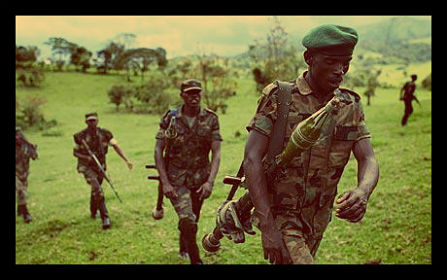
You might be surprised to find that the United States isn’t the richest country in the world. Actually, that crown goes to Qatar who has recently jumped ranks to take first place. But what about the other side of the spectrum, the parts of the world struggling with devastating poverty? Well, on that end the Democratic Republic of Congo comes in first – or last, to be more accurate – as the poorest country in the world, with the lowest GDP per capita than any other country.
The Poorest Country in the World: The Democratic Republic of Congo
Determining a country’s rank in wealth isn’t the easiest of tasks when you sit down and think about the data and economics involved. However, a good indicator of a nation’s standard of living is the assessment of its GDP (gross domestic product) per capita, which is defined as the total value of all domestic goods and services that country produces annually, times its PPP or purchasing power parity. GDP per capita (PPP) isn’t a perfect shot because its purpose isn’t to calculate that kind of economic rank but it’s measured frequently, widely and consistently, allowing trends to become visible.
In 2010, GNI (gross national income) per capita replaced GDP in the calculation, but the list is the same between the two. Qatar was still first with about $100,000 GDP per capita (PPP) in 2012 just as it was on the GNI list and the Democratic Republic of Congo came in last at around $370 GDP per capita (PPP). The gap is massive.
Of the 40 poorest countries in the world, a solid 33 are in Sub-Saharan Africa. They include Zimbabwe, Burundi, Liberia, and Niger. Other parts of the world notoriously infamous for high poverty rates include Afghanistan, Haiti, and Nepal. But none of these places takes it quite as harshly as the Democratic Republic of Congo (not to be confused with the Republic of Congo) whose turbulent past and bloody wars have eclipsed the nation’s potential to thrive.
Since its independence in 1960 and once the most industrialized country in Africa, Congo has bled onto the ground because of its lack of infrastructure and the brutal impact of civil war. Disputes between Congo’s prominent rival groups, the Hutu and Tutsi, erupted after the Rwandan Genocide in which 500,000 people, mostly Tutsi, were victims of mass slaughter by the Hulus in the East African state of Rwanda.
The result was an exodus of over 2 million Rwandans fleeing to neighboring countries like the Democratic Republic of Congo, known in that time as Zaire. Most of the refugees were Hulus attempting to escape the Tutsi who had climbed to dominance at the end of the genocide. The Hulu refugee camps in Zaire, however, became politicized and militarized and when Tutsi rebels invaded Zaire to repatriate the refugees, the conflict escalated into the First Congo War in 1996.
The situation only grew worse and by 1998, the Second Congo War, which was sometimes called the “African world war” because it involved a total of nine African countries and twenty armed groups, devastated Zaire and laid waste to her population and economy. The political turmoil continues today despite intervention and peace attempts and is one of the world’s deadliest conflicts with a death toll of 5.4 million people.
More than almost 90 percent of the conflict’s victims, however, died due a lack of access to shelter, water, food and medicine – all severely aggravated by displaced and overcrowded populations living in unsanitary conditions. Not to mention, 47 percent of deaths were children under 5 and some 45,000 children continue to die each month.
The nation also faces the problem of human rights and the countless crimes against humanity because while many have returned home, an estimated 1.5 million are still displaced. DR Congo is also infamous and heavily criticized for its treatment of women. The east of the country has been described as the “rape capital of the world” and rates of sexual violence has been described as the worst in the world.
It doesn’t help that DR Congo is consistently poisoned by corruption and greed. While mining growth has somewhat boosted the country’s economy, the elite are said to syphon off revenue for their own personal gain due to the nation’s lack of strong central government. Conflicts over basic resources, access and control over rich minerals and oil, and political agendas are some of the many complex causes behind the Democratic Republic of Congo’s inability to rise among the ranks and take the title of the poorest country in the world.
– Janki Kaswala
Sources: World Bank, Maps of World
Photo: The Telegraph

Poorest Country in the World: Democratic Republic of Congo
You might be surprised to find that the United States isn’t the richest country in the world. Actually, that crown goes to Qatar who has recently jumped ranks to take first place. But what about the other side of the spectrum, the parts of the world struggling with devastating poverty? Well, on that end the Democratic Republic of Congo comes in first – or last, to be more accurate – as the poorest country in the world, with the lowest GDP per capita than any other country.
The Poorest Country in the World: The Democratic Republic of Congo
Determining a country’s rank in wealth isn’t the easiest of tasks when you sit down and think about the data and economics involved. However, a good indicator of a nation’s standard of living is the assessment of its GDP (gross domestic product) per capita, which is defined as the total value of all domestic goods and services that country produces annually, times its PPP or purchasing power parity. GDP per capita (PPP) isn’t a perfect shot because its purpose isn’t to calculate that kind of economic rank but it’s measured frequently, widely and consistently, allowing trends to become visible.
In 2010, GNI (gross national income) per capita replaced GDP in the calculation, but the list is the same between the two. Qatar was still first with about $100,000 GDP per capita (PPP) in 2012 just as it was on the GNI list and the Democratic Republic of Congo came in last at around $370 GDP per capita (PPP). The gap is massive.
Of the 40 poorest countries in the world, a solid 33 are in Sub-Saharan Africa. They include Zimbabwe, Burundi, Liberia, and Niger. Other parts of the world notoriously infamous for high poverty rates include Afghanistan, Haiti, and Nepal. But none of these places takes it quite as harshly as the Democratic Republic of Congo (not to be confused with the Republic of Congo) whose turbulent past and bloody wars have eclipsed the nation’s potential to thrive.
Since its independence in 1960 and once the most industrialized country in Africa, Congo has bled onto the ground because of its lack of infrastructure and the brutal impact of civil war. Disputes between Congo’s prominent rival groups, the Hutu and Tutsi, erupted after the Rwandan Genocide in which 500,000 people, mostly Tutsi, were victims of mass slaughter by the Hulus in the East African state of Rwanda.
The result was an exodus of over 2 million Rwandans fleeing to neighboring countries like the Democratic Republic of Congo, known in that time as Zaire. Most of the refugees were Hulus attempting to escape the Tutsi who had climbed to dominance at the end of the genocide. The Hulu refugee camps in Zaire, however, became politicized and militarized and when Tutsi rebels invaded Zaire to repatriate the refugees, the conflict escalated into the First Congo War in 1996.
The situation only grew worse and by 1998, the Second Congo War, which was sometimes called the “African world war” because it involved a total of nine African countries and twenty armed groups, devastated Zaire and laid waste to her population and economy. The political turmoil continues today despite intervention and peace attempts and is one of the world’s deadliest conflicts with a death toll of 5.4 million people.
More than almost 90 percent of the conflict’s victims, however, died due a lack of access to shelter, water, food and medicine – all severely aggravated by displaced and overcrowded populations living in unsanitary conditions. Not to mention, 47 percent of deaths were children under 5 and some 45,000 children continue to die each month.
The nation also faces the problem of human rights and the countless crimes against humanity because while many have returned home, an estimated 1.5 million are still displaced. DR Congo is also infamous and heavily criticized for its treatment of women. The east of the country has been described as the “rape capital of the world” and rates of sexual violence has been described as the worst in the world.
It doesn’t help that DR Congo is consistently poisoned by corruption and greed. While mining growth has somewhat boosted the country’s economy, the elite are said to syphon off revenue for their own personal gain due to the nation’s lack of strong central government. Conflicts over basic resources, access and control over rich minerals and oil, and political agendas are some of the many complex causes behind the Democratic Republic of Congo’s inability to rise among the ranks and take the title of the poorest country in the world.
– Janki Kaswala
Sources: World Bank, Maps of World
Photo: The Telegraph
The Mechanic Who Is Lighting Up the World
In 2002, Brazilian mechanic Alfredo Moser figured out a way to illuminate his home without using electricity. His idea was simple— it involved clear plastic bottles filled with water and a small amount of bleach to protect the water from algae. After drilling a hole in his roof, Moser pushed the two-liter bottle up and through the hole, exposing it to sunlight. The water’s refraction of the sunlight created an illuminating effect equal to that of a 60-watt light bulb. Moser’s lamp is now being used to light up the world.
The MyShelter Foundation, an organization that brings sustainable building solutions to poorer regions of the Philippines, has used the Moser lamp to light up more than 140,000 homes. Use of the lamps has also spread to 15 other nations. MyShelter hopes to have one million lamps installed around the world by 2015. The organization also trains individuals to make and install the lamps, which helps them earn a small income. “Alfredo Moser has changed the lives of a tremendous number of people, I think forever,” said Illac Angelo Diaz, the executive director of MyShelter.
In fact, Moser’s lamp has the potential to change the lives of billions of people. The World Bank estimates that more than 1.2 billion people do not have access to electricity. That means 20 percent of the world’s population cannot turn on the lights. Though Moser’s lamp can only be used during the day, it is beneficial for people who live in shacks and huts that are often dark and windowless. According to the United Nations, the lamp refracts light 360 degrees and can reach all corners of a 40 square meter room.
In terms of cost, most of the bottles are upcycled and the cost of installation is less than a U.S. dollar. The United Nations estimates the monthly electricity savings are almost $6. It would be difficult to find illumination that is cheaper or more sustainable than the Moser lamp.
Though Moser has earned little from his invention, it has been a great source of pride. In an interview with the BBC, Moser said that he could never have imagined that his idea would have such an impact on people throughout the world. “It’s a divine light,” he said. “God gave the sun to everyone, and light is for everyone. Whoever wants it saves money. You can’t get an electric shock from it, and it doesn’t cost a penny.”
— Daniel Bonasso
Sources: BBC , Liter of Light , United Nations
Could GMO’s Help Prevent Food Shortages?
With the world population expected to double by 2050, food security will continue to be an increasingly complicated and important issue. More food will be needed to feed more people and, to preserve vital biodiversity sites, we’ll need to produce this additional food using land already devoted to agriculture. While there are many factors that could improve agricultural efficiency, genetically modified crops hold the most potential. Many scientists now believe that transgenic plants could help prevent or minimize future food shortages.
Transgenic plants are those that possess an inserted portion of DNA either from a different member of their own species or from an entirely different species. The inserted DNA serves some special purpose, such as allowing the plant to produce natural insecticides. Once the genes are transferred, they can be passed on to offspring through simple fertilization, allowing farmers to breed advantageous traits in their plants. Transgenic plants have proven extremely profitable in the developed world, accounting for a 5% to 10% increase in productivity, and reducing the cost of herbicides and insecticides.
Such methods could effectively increase productivity in the developing world, where a surge in food production is sorely needed. Developing countries, especially those in the tropics and subtropics, suffer severe crop losses due to pests, diseases, and poor soil conditions. In addition, a lack of financial capital often prevents farmers from investing in high quality seeds, insecticides, and fertilizers. Poor post-harvest conditions such as inadequate storage facilities and thriving fungi and insect populations also fuel crop loss. Currently, pests destroy over half the world’s crop production. Transgenic plants could provide an innovative solution.
Fortunately, bioengineering solutions can be easily adapted from one species to another, allowing one advancement in plant biotechnology to quickly produce many more. For example, insect-resistant strains of several important plant species have been produced using one specific endotoxin. Commercial production of insect-resistant maize, potato, and cotton has already begun. Plant bioengineers hope to use similar technology to create fruits that ripen more slowly, allowing for longer shelf lives and less post-harvest crop loss.
It is important to note that this technology has mostly been established with the developed world in mind. Therefore, adapting it for use in the developing world must be done carefully. For instance, many crops grown in the developing world are local varieties and have not been extensively tested thus far by plant bioengineers. Blindly replacing local crops with bioengineered varieties from the developed world could disturb deep social or religious traditions that are represented in the widely varied cultures in the developing world. Additionally, societies are more likely to embrace a familiar crop than a foreign one. Research and development in bioengineering must, therefore, adapt to include the crops of the developing world.
Although the globe produces enough food for everyone, people everywhere continue to die of starvation. With this unequal distribution in mind, it is imperative that, moving forward, small farmers in the developing world receive the same access to plant biotechnology given to large agribusinesses in the developed world. First-world corporations cannot be granted even more unfair advantages over small landholders in poorer nations, especially as global populations grow and food security becomes ever more scarce and important. As this technology is developed, it is up to us to share it with the developing world in order to minimize severe food shortages in the years to come.
– Katie Fullerton
Sources: Plant Physiology, Colorado State University
Photo: Tree Hugger
African Infrastructure Projects Boom
The 50 countries that make up the African Caucus recently released a statement requesting additional support for large-scale infrastructure projects on the continent. In their address to the World Bank and the International Monetary Fund (IMF), the officials requested funding for these projects, as well as assistance with debt relief.
Large-scale infrastructure projects in Africa have gained momentum in the past year, including U.S. President Barack Obama’s call for U.S. support for an energy grid for the continent. The meeting among World Bank and IMF governors resulted in a Single Infrastructure Project Preparation Facility that will help leverage support for these large-scale projects.
In addition to supporting these bi-lateral and multi-lateral projects, the African Caucus has asked the World Bank to assist with identifying private sources of capital that may help fund these projects. These large-scale infrastructure projects will include energy, water, transportation, and sanitation development efforts.
The World Bank recently approved financing for a USD $340 million hydroelectric project in Africa’s Great Lakes region. The Regional Rusumo Falls Hydroelectric Project will utilize the power from the Rusumo Falls and will eventually generate 80 megawatts of electricity.
The International Finance Corporation (IFC), a member of the World Bank Group, has also undertaken significant infrastructure projects on the continent. In 2012, IFC funding for these projects reached USD $1 billion. The IFC focuses its projects on renewable energy and sustainable infrastructure projects due to its increased concern for global climate change.
President Jacob Zuma of South Africa recently invited businesses from the BRIC (Brazil, Russia, India, and China) to invest in Africa’s infrastructure development. In his address at the BRIC Business Council, Zuma emphasized the commercial opportunities that would open, given improved infrastructure across the continent.
The China Development Bank (CDB) recently announced that their investment in African infrastructure projects has reached USD $2.4 billion. This funding has gone to support projects in mining development, energy, and agricultural and mechanical manufacturing.
During his June 2013 trip to Africa, Obama announced a USD $7 billion investment in energy infrastructure projects in the Sub-Saharan region of the continent. While there are critics of this energy plan, it seems to be one in a long line of infrastructure projects planned for the continent.
– Callie D. Coleman
Sources: Afrique, IFC, USA Today, South Africa Info, Ventures
Photo: IPS
Gender Equality and the Developing World
According to the World Bank, gender equality enhances economic development, improves prospects for future generations and strengthens political and social systems. Though women now comprise more than 40 percent of the world’s labor force, they still lag behind men in terms of earnings and productivity. Women also face greater obstacles when it comes to participation in social and political institutions. Particularly in developing nations, the gender gap hinders economic and social development and destabilizes the political environment.
In it’s 2012 World Development Report: Gender Equality and Development, the World Bank suggests four priority areas for improving gender equality. The first is reducing gender gaps in human capital, specifically female mortality and education. Second, improving female access to education and economic opportunities. Third, addressing women’s under-representation in communities and political systems. Finally, understanding how gender inequality applies across generations. These four priority areas help policymakers understand and address problems associated with the gender gap.
Many factors are helping alleviate the gender gap and promote gender equality in developing nations. Globalization and increased access to information are providing women with stronger connections to markets and economic opportunities. These factors also contribute to increasing knowledge about women’s roles in other cultures throughout the world. Perhaps most importantly, there seems to be a broad understanding and growing consensus about the importance of women’s economic, political, and social empowerment.
One area where gender equality seems particularly important is that of agricultural production and food security. The World Bank Report suggests that improving resource access for women could increase agricultural productivity by 4 percent in developing countries. For example, maize production increased by more than 15 percent in Malawi and Ghana when women farmers were provided with the same resources as men. And, according to the World Food Programme, the number of hungry people in the world could be reduced by as much as 150 million if women farmers had the same access to resources as men.
These reports and accompanying statistics suggest that improving gender equality in developing nations will enhance economic production and create stronger social and political systems. With these systems in place, nations and leaders will be better equipped to address the many issues that confront the developing world. Progress has certainly been made when it comes to gender equality. With more and more evidence confirming the importance of empowering women, policymakers would be well served to improve women’s access to healthcare, education, and economic opportunities as well as increasing female participation in social and political systems.
– Daniel Bonasso
Sources: Council on Foreign Relations, World Bank, World Food Program
Photo: Fincon
UN Investigates the Alleged Use of Chemical Weapons in Syria
Earlier this week, an attack utilizing chemical weapons in Syria may have left 130 people dead. According to opposition groups, Assad’s government launched rockets with chemical warheads into Damascus suburbs on Wednesday. The government sent further warheads into the suburb on Thursday. Photographic evidence from Wednesday’s attack shows the telltale symptoms of the use of some toxic chemical: difficulty breathing, vomiting, constricted pupils, skin rashes and loose bowels. Western experts believe that sarin gas, an organophosphate agent, was used in the attack.
Secretary Ban Ki-Moon has urged an investigation into the attack, saying that there would be ‘serious consequences’ for those responsible. Ban urged the government to cooperate with the international body, saying,“The time has clearly come for the parties to stop shooting, and start talking. I am determined to do everything I can to assist the victims and move towards a political solution. That is the only way this crisis will be resolved.” Currently, a UN team is in Syria spending up to two weeks investigating the alleged use of chemical weapons by the government. The mandate granted the UN team access to only 3 of 13 sites identified as suspicious before the attack on Wednesday. Angela Kane, the top UN official on disarmament, is expected to arrive in Damascus on Sunday. Kane will push to give UN inspectors access to the affected region.
The Syrian government has not responded to UN requests. Thus far, Syria has not granted UN inspectors access to sites supposedly affected by chemical weapon. Russia, Syria’s arms supplier, said that it was the rebels, not the government, who were preventing UN inspectors from investigating the region. In response, Syrian rebels pledged to guarantee the safety of UN inspectors. Thus far, the rebels have been compliant with these investigations, even sending tissue and blood samples for further inspection.
The international community is conflicted over how to respond to these claims, if they are indeed true. France said that, if the allegations against the government prove to be true, the international community needs to respond with force. Similarly, Turkish Foreign Minister Ahmet Davutoglu said that a ‘red line’ had been crossed in Syria. Although Washington previously said that chemical weapon use was its ‘red line’ in Syria, the Obama administration stated that it was appalled by the allegation and no further plans of retaliation have been put forth. European officials say that there are options, but that they become limited without US support. Furthermore, there is little the international community can do without the support of the Security Council. Russia, Syria’s greatest ally to the Security Council at the moment, went so far as to suggest that the opposition had staged the attack.
According to Ki-Moon, “Our challenge remains: achieving a complete cessation of hostilities, delivering humanitarian assistance and getting the Government and the opposition to the negotiating table in Geneva as soon as possible.” The Joint Special Representative of the UN and League of Arab States for Syria Lakhdar Brahimi said that planning for the second Geneva conference is underway, but that it should take place in September. The last conference in Geneva was held in June with the United States and Russia present. The conference in September would hope to bring a political solution to the conflict. According to Brahimi, a solution is necessary because Syria is “without a doubt, the biggest threat to peace and security in the world today.”
– Kelsey Ziomek
Sources: UN, Al Jazeera, Reuters, Washington Post
Photo: Urban Times
LifeSpring: Bringing Hope and Health to Indian Mothers and Newborns
Considering that the reduction of the child mortality rate is one of the Millennium Development Goals (MDGs), it seems that with recent awareness towards public health concerns in India growing, this goal may actually become a reality in the country. India boasts the highest child mortality rate in the world, as well as the highest rate of maternal deaths globally, with the latter standing at one death every 10 minutes. Because of this, Acumen Fund, a U.S. nonprofit organization, and Indian multi-product company HLL Lifecare Limited have teamed up to create LifeSpring, a network of maternity and child healthcare hospitals that provide maternal health services to lower-income Indian families at affordable prices. In April 2010, LifeSpring became the first chain of healthcare providers to join the Business Call to Action, a global leadership effort for companies with core business initiatives to commit to meeting the MDGs. LifeSpring specifically has committed to the fifth and least progressive MDG, which focuses on decreasing the maternal death rate by 75 percent. LifeSpring opened up their first hospital in 2005, just outside the southern Indian city of Hyderabad in Moula Ali, and since then has grown to become the largest chain of maternity hospitals in South India. The hospital chain boasts nine small hospitals throughout Hyderabad with plans to expand to 30 hospitals located in Delhi, Mumbai and Ahmedabad by 2017. Due to poor health, unsafe home births, and scarce access to quality healthcare, lower-income Indian women often face damaging risks during pregnancy. In fact, more than 100,000 pregnancy-related deaths occur annually in India. Most of these deaths are preventable if a sufficient and standardized level of care is given. However, finding quality healthcare in India can be difficult for poorer individuals. The free healthcare provided to pregnant women and newborns in public hospitals lacks efficiency, transparency, and quality services. For these reasons, many Indian women choose to deliver at private hospitals, but often have to take out loans to finance the delivery. LifeSpring has become a successful alternative to this double-edged sword that exists in the public health system in India. Using a market-based approach of keeping healthcare prices low by cutting costs on infrastructure and using midwives instead of doctors, LifeSpring has been able to provide quality and affordable services to expectant mothers and newborn babies in India. The small chain of hospitals actually offers lower-income mothers the same healthcare and delivery services found at private hospitals at rates 30 to 50 percent lower than market prices. In addition to caring for the mothers during their deliveries, LifeSpring also offers prenatal and postnatal healthcare services, along with offering free vaccinations to babies at its Moula Ali hospital. The organization also engages in community outreach programs in which outreach workers and nurses go door to door within LifeSpring communities and follow up with new mothers and their newborns. – Elisha-Kim Desmangles Sources: LifeSpring, UNDP, India Today, Acumen, Forbes India Photo: Acumen
Irrigation Infrastructure and Malaria, An Interesting Correlation
Irrigation, known for improving crops and overall increasing capabilities of life for centuries, may have one major drawback. With an increase in water abundance through irrigation, infrastructure such as irrigation canals are proving to be havens for mosquito growth.
Recent research shows that newly constructed irrigation infrastructure in malaria prone areas can increase the risk of malaria in the local community.
Research was conducted in the northwest region of India known as Gujarat. The research project found that when irrigation infrastructure was already established in sub-districts, such as Banaskantha and Patan, the monsoon rain influx had less of a malarial increase than sub-districts with early and transitional irrigation systems.
These transitional irrigation systems, known as “low irrigated,” were found to be the most susceptible to malaria that comes after the rainy monsoon season. In comparison, “mature irrigated” areas that had established wells and canals for over thirty years, were less affected by the mosquitoes and the disease they carry.
Led by University of Michigan graduate student, Andres Baeza, the team of researchers monitored the methods and results of a large irrigation project that was set to irrigate 47 million acres of farmland.
“In these dry, fragile ecosystems, where increase in water availability from rainfall is the limiting factor for malaria transmission, irrigation infrastructure can drastically alter mosquito population abundance to levels above the threshold needed to maintain malaria transmission” according to Baeza.
Although it has been known that malaria increases and new irrigation improvements are correlated, this new research shows that the improvements to land that eventually reduce malaria may take longer than expected for farmers in malaria prevalent regions.
This is not to persuade readers that irrigation is not worth it. On the contrary, with irrigation improvements come improved farm yields, food security, better incomes and increased access to finance and healthcare. With improved farmland, malaria is deterred and over the course of a few decades will be much lower as long as farming improvements are made accordingly.
– Michael Carney
Sources: Humanosphere, Proceedings of the National Academy of the Scienes (PNAS)
Photo: The Gef
Keita Becomes New Mali Leader
The traditionally conflict-ridden state, Mali, recently elected former Mali Prime Minister Ibrahim Boubacar Keita as president. Keita won in a landslide presidential run-off with 78 percent of the national vote. This election was designed to bring stability back to Mali after a recent coup and Islamist rebel takeover of northern Mali. This election also marks a transition back to democracy after 18 months of crisis.
46 percent of 6.8 million registered voters casted their ballots on August 11, 2013. Soumaila Cisse was one of Keita’s competitors and received only roughly 22 percent of the vote, coming second in the run-off election. With this victory, Keita has been awarded a strong mandate bringing peace to Mali. But in addition to trying to secure a lasting peace with the Tuareg separatist rebels in northern Mali, Keita also needs to address military reforms, widespread corruption, and the economic crisis.
This election holds major implications because it is designed to unlock billions in international aid that have been offered to Mali in good faith. Aid to this country by international donors had been blocked after both the 2012 coup and insurgency by radical Islamist forces sent Mali into turmoil. With this election and revival of democracy in Mali, Keita will have access to over 4 billion dollars in reconstruction aid. Additionally, the United Nations will be deploying 12,600 troops in peacekeeping missions as France withdraws their 3,000 troops. In January, France helped the Mali government fight and repel the Islamist insurgents in Timbuktu, Gao, and Kidal.
Although Keita and the return of democracy are welcomed by many, a significant number of Mali southerners are opposed to funding the northerners as they try to recover from Islamist rebel occupation because they blame the north for the country’s current crisis.
Another divisive problem that exists is the promotion of coup leader Captain Amadou Sanogo to the rank of lieutenant general. Sanogo and his forces have been linked to serious crimes such as attacks and torture of civilians. This promotion has been highly scrutinized by groups such as the Human Rights Watch. This scrutinization is the first step to investigations of Sanogo and his departure from the military.
Regardless of the problems and obstacles ahead, Keita is known to be tough and a blunt speaker, but he has affirmed his commitment to bring peace and security reunite the people of Mali. The hope is now that Keita remains true to the people and does not appoint his political backers as a way to repay favors and fill cabinet position with his cronies.
– Rahul Shah
Sources: Reuters, Zee News, BBC
Photo: la Croix
Child Labor in Europe Still Exists?
Many people today think that child labor in Europe must not exist anymore. For such a developed area of the world, dependency on children for work seems both outdated and absurd. However in reality, child labor still maintains a hold in Europe.
According to UNESCO, 29% of children from age 7 to 14 in the country Georgia are working. Similarly, in Albania, 19% of children of that age group work. Additionally, an estimated 1 million children are laborers in Russia. Even in Italy, 5.2% of children under the age of 16 are working. There are still millions of other unreported cases of child labor across the continent.
Many of these working children in Europe work highly dangerous jobs in agriculture, construction, or small factories. In Bulgaria, child labor is fairly common in the tobacco industry, some children working up to 10 hours a day. Reports from Moldova also reveal that school directors and agricultural farm cooperatives often sign contracts that require students to work for the harvest. Reports of long hours and hard work also come from children in Portugal and even the U.K.
Work in these industries often involves use of hazardous machinery and equipment, extremely heavy loads and dangerous chemicals. Moreover, like all working children across the world, such hard labor puts each of Europe’s working children in positions of abuse and exploitation. Particularly at risk are accompanied children of migrants from developing countries.
There is speculation that austerity policies in Europe have devastated living standards so much that child labor has returned in greater force. Countries badly affected by this economic downturn and austerity include Greece, Italy, and Portugal, amongst many others. A recent article in the French Newspaper Le Monde highlights the rise of child labor in Europe. The article uses an example of how thousands of children in the Italian region of Naples have quit school to find jobs in order to feed families. It cites reports from a local government that suggested that 54,000 children left education in the year between 2005 and 2009. Of these children, 38% were less than 13 years old.
The case of these Italian children leaving school points out the desperate plight of children affected by high rates of unemployment and economic difficulty. With austerity has come decreased access to welfare benefits for the poor. Thus children in poverty are required to work harder and at a younger age to support families. Moreover, child labor is not simply an Italian question. Child labor is a problem is that all of Europe must face in the advent of economic crises. Moreover, it is a cyclical problem.
The more children work at a younger age, the more unlikely that it is that they return to education systems, perpetuating the cycle of poverty. Child labor is real and it thrives even in the most unlikely places of Europe. Most importantly, it is an issue worth addressing by both governments and individuals alike.
– Grace Zhao
Sources: World Socialist Web Site, Human Rights Comment