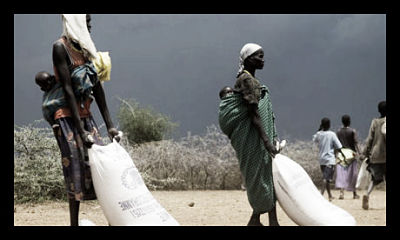
Here are 10 surprising facts about Africa that significantly influence aid and development within the continent. These facts about Africa are important to keep in mind when considering Africa within the larger international context. Moreover, these facts can illuminate both the challenges and prospects towards African development.
1. Africa is the second largest continent, both in size and population.
Making up 22% of the world’s total landmass and with 1.1 billion people, Africa is the second most populated continent on the planet. Moreover, Africa’s population is expected to double by 2050. Africa will become the fastest growing continent in the world, population-wise. However, this rapid population growth may not be such a bad thing. In Europe, there are 170 people living per square km; whereas in Africa, there are only 70. Hence, Africa has room to expand and accommodate the upcoming population growth. But in order to accommodate responsibly, much must be done to improve Africa’s infrastructure. Additionally, Africa’s population growth is not coming from an increase in birth rates, but from longer life expectancy. Furthermore, population growth and urbanization are correlated, just as urbanization and economic growth are. From 1990-2009, Africa’s urban population increased by 114%. During the same period, the world’s urban population increased by only 51%. Sustained population growth will drive urbanization, which will in turn inspire innovation and economic development.
2. Other than Ethiopia and Liberia, all African countries were once colonized by non-African countries.
Africa was divided up in 1884-1885 at the Berlin Conference, which was attended by the UK, France, Belgium, Spain, Italy, Portugal and Germany. National borders were determined without knowledge or concern for local boundaries. The main concern of the colonizers was to assume control over populations and gain access to their natural resources, which they would later extract for their own profit. When the nations of Africa became independent from the colonial leaders, many nations were fraught with intense ethnic conflicts as tribes fought for power. This struggle for power oftentimes led to racial or ethnic oppression. Post-colonial powers often used the oppressed for hard labor and seldom educated these subjugated populations. Moreover, these practices contributed to generations of lost human capital.
3. 61% of all Africans live in rural areas
Poverty occurs in both rural and urban areas, but poverty takes on a different characteristic in rural areas. In developing nations, which most of the nations in Africa are, rural populations partake in subsistence farming, only producing enough to feed their immediate family. Without a steady source of income, families cannot contribute to the larger community’s infrastructure development and the community as a whole suffers. This makes access to education, health and other public services difficult if not impossible.
4. There are an estimated 1,500 languages spoken in Africa and over 3000 distinct ethnic groups (tribes)
Of the 1,500 languages spoken in Africa, hundreds of them are at risk of becoming extinct. As urbanization and globalization increasingly become a reality in Africa, many of the distinct ethnic groups are likely to lose their cultural identity and traditions. If globalization were to encourage the preservation of African cultural identity, these cultures could be preserved in museums and archives. However, passing these traditions down by generation and truly preserving them as living entities may not be possible without considerable efforts by the tribes themselves.
5. There are fewer people with internet access in Africa than New York City alone.
The United Nations recently stated that internet access should be an international human right. Without access to the internet, a majority of the world’s citizens cannot learn, share, or spread ideas. The internet plays a key role in how we interact with one another; our impact is magnified by the modern PA system, which is the Internet. Moreover, most of Africa is without internet access. To provide such services would be to create a market where one has never existed. As Africa develops and technology services become more wide-spread, we can expect to empower a generation.
6. The average life expectancy in Africa is 52.5 years, compared to 69.2 in the rest of the world.
The average life expectancy in Africa varies from country to country. Some nations, like Sierra Leone, have a low life expectancy of 47. Whereas other African nations, like Seychelles, have a long lifespan of 74. Although the average African lifespan is below the average world life expectancy, there is hope. The life expectancy in Africa increased by 5% between 2000-2009, compared to merely 3% in the rest of the world.
7. The prevalence of HIV for people 15-49 in Sub-Saharan Africa is 7 times that of the world prevalence.
HIV/AIDs is the most common cause of death in the Sub-Saharan region. Possible reasons for why HIV/AIDs is so much more common include: high rates of poverty, rapid urbanization, genetics, or gender inequality.
8. 90% of all malaria cases occur in Africa. 3,000 children die each day in Africa from malaria.
People who have limited immunity to malaria, such as young children, women, and travelers from out of the area are more susceptible the disease. In addition, lack of access to health care in rural areas makes treatment for malaria more difficult.
9. Merely 42% of the urban population has access to improved sanitation, while only 24% of the rural population does.
In developed countries, like the US and the UK, 100% of the population has access to improved sanitation. In order to provide better access to proper waste disposal systems and clean water, a hefty investment is required by the governments of African nations, or else by the private sector, in the continent’s sanitation infrastructure. Low access to proper sanitation can be a health risk to exposed communities, which can lower one’s expected lifespan.
10. In 21% of Sub-Saharan African Countries, one or two products accounts for at least 75% of total exports.
In most developed nations, a huge strategy towards economic proficiency is to diversify exports. With few exports at their disposal, Sub-Saharan African nations set themselves up for poor economic growth and a potentially stagnant private sector. Diversity in exports can reduce income volatility for countries with large populations in poverty and reduces vulnerability to sharp declines in trade. Diversification increases the potential for generating spillovers. Traditionally, as a country’s average income rises, their exports become more diversified. But to increase average national income, many of these countries require investment in the private sector. Investment in Sub-Saharan African nations, be it through enhanced public education or career services or through corporate foreign direct investment, can raise national average income.
– Kelsey Ziomek
Sources: Facts, About, Traveling Myself, World Bank, World Bank, World Bank, Brookings
Photo: The Guardian

Why Do Slums Exist?
Put simply, the term “slum” refers to “a heavily populated urban area characterized by substandard housing and squalor.” But why do slums exist? In an effort to include quantifiable data in the definition, a group of UN experts suggested expanding it to refer to areas that combine inadequate access to safe water, sanitation and other infrastructure, structurally poor housing, overcrowding, and an unstable residential population.
Today, slums are becoming the most obvious materialization of urban poverty in developing world cities; in Nairobi, Kenya, 60% of the population lives in slums. That 60% is crowded onto only 5% of the land.
The existence of slums is caused and sustained by a number of forces, including rapid rural-to-urban migration, insecure tenure, and globalization.
Why Do Slums Exist? 4 Illuminating Facts
Rural-to-urban migration amplifies slum formation because city planning and management systems are unable to effectively manage the considerable population influx. For perspective, consider these facts:
Insecure tenure means tenants are not protected from unpredictable rent increases and eviction processes. Insecure tenure inhibits opportunities for residents to acquire credit, which limits tenants’ ability to improve upon their homes. A revolving door of tenants does little to inspire feelings of community or pride in one’s home.
Globalization also promotes slum living. Global economic booms and busts lead to uneven wealth distribution. Historically, global economic cycles have been responsible for creating many of major city slums in the developed world, and it is likely globalization will do the same to the developing world.
Addressing slums and their contributing factors are keys to sustaining progress toward the Millennium Development Goal to significantly improve the lives of at least 100 million slum dwellers by 2020. Although the percentage of people living in urban slums has decreased from 39% in 2000 to 33% in 2012, 863 million people are estimated to still be living in slums as of 2012.
– Dana Johnson
Sources: UN-HABITAT, Business Dictionary, UN
Photo: Portal OZK
3 Top Charities for Measurable Returns
When people choose to donate to one charity over another, they frequently do it guided by a strong conviction or emotion rather than pure rationale. Charity evaluators, however, are rapidly changing the way people think about giving back to society.
They argue that rather than giving to the cause that is closest to one’s heart, one should give to those charities that are the most effective, in measurable terms. One of the most trusted of these charity evaluators is GiveWell, a San Francisco-based group founded in 2007 by two hedge-fund staffers.
It recommends charities to donors according to four main criteria. First, the organization must provide strong evidence of positive impact on people’s lives. Second, it must be involved in highly cost-effective activities that provide a high, measurable return for every dollar invested. Third, the program must demonstrate that there is room for more funding and that it can productively put to good use additional donors’ dollars. Fourth, the charity must be transparent and accountable to donors.
Although GiveWell has been criticized for its results-based approach – leading it to favor health care interventions in the developing world, while ignoring others that cannot provide evidence of success due to the nature of their activities – its evaluations do carry weight in the world of philanthropy.
Its top three recommended charities are:
1. Against Malaria Foundation (AMF)
GiveWell believes that AMF effectively expands access to bed nets in sub-Saharan Africa, where over 1 million people – mostly children – die each year of malaria. Through providing insecticide-treated bed nets that cost only $5 each, AMF prevents deaths and many other non-fatal cases of malaria.
2. GiveDirectly
According to GiveWell, GiveDirectly effectively distributes cash to extremely low-income individuals in Kenya. By directly transferring money to the very poor, recipients are allowed to spend more on their basic needs – such as food – and other investments that have high returns.
3. Schistosomiasis Control Initiative (SCI)
GiveWell states that SCI effectively expands access to deworming treatments in sub-Saharan Africa. In this region, a large percentage of the population, especially children, are infected with parasite worms that cause short-term symptoms such as anemia, and long-term developmental problems. This condition is relatively easy to treat: around $5 can protect a child for 10 years.
All three charities work in Africa, which is not surprising given that money can go much further in the poorest regions of the world. Twenty-five dollars, for example, allows someone in the developing world to get an eye surgery, while in the United States, this is an insignificant amount. Although most people prefer giving back to causes that are close to home, sometimes those in greatest need are far off.
– Nayomi Chibana
Sources: GiveWell, The Guardian, The New York Times
Photo: Harpers
West Papua: A Conflict Falling on Deaf Ears
In 1962, the United Nations granted control of West Papua to the Indonesian government. Since then, more than 100,000 West Papuans have been killed or abducted by Indonesian forces with many others having been raped and tortured. The Indonesian military has also been responsible for destroying entire villages and village gardens. Though such atrocities have continued for more than 50 years, the United Nations has yet to intervene on behalf of the West Papuans.
On August 17, a group of activists, politicians and refugees set sail from Australia on what is being called the “West Papua Freedom Flotilla.” Speaking about the purpose of their voyage, activist Izzy Brown said, “West Papuans live in fear every day, in fear of the Indonesian military.” According to Brown, the participants’ aim is to raise awareness “about an issue that has for too long been ignored in the Australian and international media.”
After the fall of General Suharto in 1998, many democratic reforms were passed in Indonesia. But this did nothing to alleviate the brutal oppression of the people of West Papua. Murder and assassinations of political leaders have continued under the regime of current president, Susilo Bambang Yudhoyono. A government ban on journalists and human rights organizations make it difficult for the international community to monitor the situation in West Papua.
Under Indonesian rule, many West Papuans have been jailed or murdered for resisting the government, displaying separatist flags or speaking out in support of a free West Papua. For example, activist Philip Karma was arrested in 2004 while participating in a peaceful protest of the Indonesian government and raising a Morning Star Flag, which is a Papuan symbol. For his actions, Mr. Karma is currently serving a 15-year prison sentence.
At the end of this month, the Freedom Flotilla will land in Papua New Guinea and attempt to enter West Papua. The Indonesian government has said that it intends to intercept the flotilla and turn away the participants. Hopefully, this event will help bring awareness to a conflict that has not received much media attention in the West. But if the past is any indication, even the Freedom Flotilla may escape the attention of the international media.
In 1994, Bishop Desmond Tutu issued a statement calling on the United Nations to intervene on behalf of the West Papuans. In that statement, he said, “The people of West Papua have been denied their basic human rights, including their right to self-determination. Their cry for justice and freedom has fallen largely on deaf ears.” Almost ten years later, there are still too few listening to the cries of the West Papuans.
– Daniel Bonasso
Sources: Democracy Now!, The Guardian
Photo: West Papua Media
5 Ways to Make Your Workout Fight Poverty
We all know working out is good for us. It makes you feel good and improves your health. But what if your workout could fight poverty as well? Sound too good to be true? It’s not! Here are 5 ways that you can help end poverty with your workout:
1) Charity Miles: This free app will track how many miles you run, walk, or bike and sponsor your efforts. For every mile you run or walk, they’ll donate a quarter, while a mile biking translates to a dime for charity. When you’re done with your workout, you share your success on a social media site and they send the money to a charity of your choice!
2) Run For Charity: This website will help you find a charity to run for. Charity runners use their training and hard work to raise money for the charity of their choice. Charities are extremely supportive of their runners, providing help with registration, training, and fundraising. Some will even have race day events for their runners. This is a great opportunity for runners to put all those miles to good use.
3) Plus 3 Network: This network was created by four guys who wanted to encourage people to get out and ride their bikes more. It has since grown to include all forms of exercise, which you can log on their website. You earn money for charity by logging your activity, so you feel even better about that yoga class or walk around the block.
4) Eco-Friendly Workout Gear: You show yourself some love by working out and staying healthy. Show the earth some love, too, by purchasing eco-friendly workout gear. Be sure to buy your shoes, socks, and clothing from eco-friendly companies like Montrail (shoes), Teko (socks), or Patagonia (clothing). Using reusable water bottles will keep plastic ones out of landfills and save you money. You can also look for secondhand fitness supplies, like weights, treadmills, and exercise balls to cut down on waste.
5) Donate Your Old Workout Gear: That fitness equipment that you just don’t use anymore could help someone else lead a healthier life. You can donate old sports balls, shoes, cleats, and the like to Sports Gifts, which redistributes old workout gear to underprivileged kids. Old tennis balls can go to Rebounces, which restores them and resells them as practice balls, saving space in our landfills. Your old orthotics that helped you get back to the activities you love can be given to Rebounces’ philanthropic organization, Joni and Friends. The nonprofit will give the equipment to disabled or injured people in the developing world.
– Katie Fullerton
Sources: Charity Miles, Plus 3 Network, SparkPeople, Oprah
Photo: DX Foundation
Motorcycle Ambulance Saves Lives Through Effective Patient Transport
Motorcycles are often the vehicle of choice in the developing world because of their ability to zip over harsh terrain and their low maintenance costs. A motorcycle manufacturing company, eRanger, has taken this versatile vehicle and given it a new purpose as an ambulance. The eRanger company builds motorcycles with a sidecar that serves as a stretcher to transport patients from remote areas to the nearest health center or hospital.
Called the eRanger ambulance, this motorcycle offers the high-power capacity needed to cover diverse and often difficult terrain in rural and remote areas. The sidecar stretcher acts as a bed for the patient, allowing for quick and effective transport. The stretcher is designed to be simple but safe, rugged but reliable, with a cushioned pad for patient comfort and a roll cage for safety.
Loading a patient is made easy by simply pushing back the roll cage and strapping the patient into the stretcher. A rain cover can be attached to the roll cage, providing comfort and privacy in different weather conditions, and this innovative ambulance also offers room for emergency medical supplies underneath the stretcher.
The eRanger ambulance also provides additional comfort through its rugged suspension system, which absorbs shock so patients bounce less during transport. This vehicle provides the perfect alternative to the popular 4 by 4 all-terrain vehicles because of its enhanced suspension system, low cost, and simple maintenance. Motorcycle ambulances are also preferable to car ambulances, especially during the rainy season, because they are better able to navigate over developing nations’ diverse terrain.
These motorcycle ambulances are already stationed at health centers through Africa where health workers and community members can utilize them as needed. The eRanger method goes beyond just providing the vehicles, though. They provide training, maintenance instruction, and tools to keep the motorcycles in good condition.
Sustainability is key, says the eRanger company, so they provide a maintenance unit with all the necessary tools and equipment for the eRanger ambulance. This affordable, reliable, and sustainable ambulance also helps communities become more self-reliant by taking health care into their own hands.
For example, the eRanger ambulance makes it possible for a mother in labor to reach a health care clinic quickly, reducing maternal mortality rates in many African nations.
The eRanger model also allows its motorcycle to adapt to the needs of problems in the developing world, from emergency ambulance to mobile medical clinic. The company also manufactures an eRanger immunization clinic, which recreates the sidecar into a stainless steel mini clinic with refrigeration storage, weight scales, and clean water unit.
This versatile motorcycle promises dramatic impact to healthcare in developing nations. Backing that promise is an eRanger patron, Nelson Mandela, who helped eRanger South Africa launch in the Eastern Cape. Since the launch, eRanger has built a college for riders and operators in Eastern Cape, which includes basic control of the vehicle, road riding, off-road riding, and essential maintenance.
In just five hours, operators can reach a basic competency to operate and care for the motorcycle, but advanced training is always available, says eRanger. With just the right mix of affordability, sustainability, and reliability, eRanger is helping save lives in developing nations by providing safe, quick access to critical health care.
– Georganne Hassell
Sources: eRanger, UNICEF, Changemakers, The Guardian
Photo: Motorcycle
Counterpart International
There are thousands of non-profits that work in less developed countries with a responsibility to be ethical. Counterpart International is a nonprofit organization that stresses a commitment to integrity, transparency and respect in its work across the world.
The three main development sectors that Counterpart International focuses on are:
1) Food Security and Nutrition – Food security involves the obtainment of affordable, quality food in sufficient quantities.
2) Economic Development – Economic development involves creating opportunities for people to increase incomes and provide better for their families.
3) Effective Governance and Institutions – Addressing citizens’ needs by connecting civil groups within a country or region.
In January 2013, Counterpart International joined the United Nations Global Compact—an 8,000 plus member international initiative committed to corporate responsibility. The UN Global Compact has its volunteer members commit to 10 universally accepted principles in the areas of human rights, anti-corruption, labor, and the environment.
In Niger, extreme drought causes food shortages in which the marginalized populations suffer the most. Handicapped and blind children are often purposefully overlooked. Counterpart saw the need for these disabled people to get sufficient nutrition and created FAIR. FAIR, or Food Aid for Disabled Children Project, now provides over 300 children and 1,500 adults with hot meals or food rations. The children receive the hot meals at schools that are designed to teach the blind, deaf, or physically disabled.
Even more impactful work is being done in Mauritania, another drought-stricken country in Western Africa. Counterpart was hired by the United States Agency for International Development (USAID) to implement a Multi-Year Assistance Program titled the Community Action Nutrition and Livelihoods project. This particular project provides sustainable solutions to poverty for Mauritanians through micro-enterprise opportunities, community healthcare training and agriculture practices.
$250,000 in loans through Counterpart’s program helped approximately 3,500 Mauritanian entrepreneurs, most of which were women. Women empowerment is crucial in a region where women lack most of the UN’s Universally Declared Human Rights. In addition, nearly 600 healthcare workers were trained, providing local care to individuals who may be suffering from diseases and deficiencies that can easily be prevented and treated. Healthcare for farm animals was also implemented under the program in Mauritania. Training veterinary assistants not only provided jobs for the people, but prevented the loss of livestock.
Counterpart International is in charge of the Global Civil Society Strengthening Leader with Associates (GCSS LWA). This association teams up with the United States Agency for International Development and Global Civil Society Strengthening to encourage civic growth and participation. In addition to promoting better governance, GCSS LWA and its over 23,000 local and regional partners seek to empower independent media outlets.
This year, as Counterpart International celebrates its 48 year anniversary, nearly half a century of development work in over 65 countries, it continues to maintain transparency and uphold its responsibility to be ethical in all of its interactions.
– Aysha Rasool
Feature Writer
Sources: Counterpart International: News, Counterpart International: Blog, Global Civil Society Strengthening
Photo: Counterpart International
Africa Aid: 10 Key Facts And Why They Matter
Here are 10 surprising facts about Africa that significantly influence aid and development within the continent. These facts about Africa are important to keep in mind when considering Africa within the larger international context. Moreover, these facts can illuminate both the challenges and prospects towards African development.
1. Africa is the second largest continent, both in size and population.
Making up 22% of the world’s total landmass and with 1.1 billion people, Africa is the second most populated continent on the planet. Moreover, Africa’s population is expected to double by 2050. Africa will become the fastest growing continent in the world, population-wise. However, this rapid population growth may not be such a bad thing. In Europe, there are 170 people living per square km; whereas in Africa, there are only 70. Hence, Africa has room to expand and accommodate the upcoming population growth. But in order to accommodate responsibly, much must be done to improve Africa’s infrastructure. Additionally, Africa’s population growth is not coming from an increase in birth rates, but from longer life expectancy. Furthermore, population growth and urbanization are correlated, just as urbanization and economic growth are. From 1990-2009, Africa’s urban population increased by 114%. During the same period, the world’s urban population increased by only 51%. Sustained population growth will drive urbanization, which will in turn inspire innovation and economic development.
2. Other than Ethiopia and Liberia, all African countries were once colonized by non-African countries.
Africa was divided up in 1884-1885 at the Berlin Conference, which was attended by the UK, France, Belgium, Spain, Italy, Portugal and Germany. National borders were determined without knowledge or concern for local boundaries. The main concern of the colonizers was to assume control over populations and gain access to their natural resources, which they would later extract for their own profit. When the nations of Africa became independent from the colonial leaders, many nations were fraught with intense ethnic conflicts as tribes fought for power. This struggle for power oftentimes led to racial or ethnic oppression. Post-colonial powers often used the oppressed for hard labor and seldom educated these subjugated populations. Moreover, these practices contributed to generations of lost human capital.
3. 61% of all Africans live in rural areas
Poverty occurs in both rural and urban areas, but poverty takes on a different characteristic in rural areas. In developing nations, which most of the nations in Africa are, rural populations partake in subsistence farming, only producing enough to feed their immediate family. Without a steady source of income, families cannot contribute to the larger community’s infrastructure development and the community as a whole suffers. This makes access to education, health and other public services difficult if not impossible.
4. There are an estimated 1,500 languages spoken in Africa and over 3000 distinct ethnic groups (tribes)
Of the 1,500 languages spoken in Africa, hundreds of them are at risk of becoming extinct. As urbanization and globalization increasingly become a reality in Africa, many of the distinct ethnic groups are likely to lose their cultural identity and traditions. If globalization were to encourage the preservation of African cultural identity, these cultures could be preserved in museums and archives. However, passing these traditions down by generation and truly preserving them as living entities may not be possible without considerable efforts by the tribes themselves.
5. There are fewer people with internet access in Africa than New York City alone.
The United Nations recently stated that internet access should be an international human right. Without access to the internet, a majority of the world’s citizens cannot learn, share, or spread ideas. The internet plays a key role in how we interact with one another; our impact is magnified by the modern PA system, which is the Internet. Moreover, most of Africa is without internet access. To provide such services would be to create a market where one has never existed. As Africa develops and technology services become more wide-spread, we can expect to empower a generation.
6. The average life expectancy in Africa is 52.5 years, compared to 69.2 in the rest of the world.
The average life expectancy in Africa varies from country to country. Some nations, like Sierra Leone, have a low life expectancy of 47. Whereas other African nations, like Seychelles, have a long lifespan of 74. Although the average African lifespan is below the average world life expectancy, there is hope. The life expectancy in Africa increased by 5% between 2000-2009, compared to merely 3% in the rest of the world.
7. The prevalence of HIV for people 15-49 in Sub-Saharan Africa is 7 times that of the world prevalence.
HIV/AIDs is the most common cause of death in the Sub-Saharan region. Possible reasons for why HIV/AIDs is so much more common include: high rates of poverty, rapid urbanization, genetics, or gender inequality.
8. 90% of all malaria cases occur in Africa. 3,000 children die each day in Africa from malaria.
People who have limited immunity to malaria, such as young children, women, and travelers from out of the area are more susceptible the disease. In addition, lack of access to health care in rural areas makes treatment for malaria more difficult.
9. Merely 42% of the urban population has access to improved sanitation, while only 24% of the rural population does.
In developed countries, like the US and the UK, 100% of the population has access to improved sanitation. In order to provide better access to proper waste disposal systems and clean water, a hefty investment is required by the governments of African nations, or else by the private sector, in the continent’s sanitation infrastructure. Low access to proper sanitation can be a health risk to exposed communities, which can lower one’s expected lifespan.
10. In 21% of Sub-Saharan African Countries, one or two products accounts for at least 75% of total exports.
In most developed nations, a huge strategy towards economic proficiency is to diversify exports. With few exports at their disposal, Sub-Saharan African nations set themselves up for poor economic growth and a potentially stagnant private sector. Diversity in exports can reduce income volatility for countries with large populations in poverty and reduces vulnerability to sharp declines in trade. Diversification increases the potential for generating spillovers. Traditionally, as a country’s average income rises, their exports become more diversified. But to increase average national income, many of these countries require investment in the private sector. Investment in Sub-Saharan African nations, be it through enhanced public education or career services or through corporate foreign direct investment, can raise national average income.
– Kelsey Ziomek
Sources: Facts, About, Traveling Myself, World Bank, World Bank, World Bank, Brookings
Photo: The Guardian
Asian Americans Facing High Poverty Rates
It is often assumed that Asian Americans are one of the minority groups in the United States that is doing well economically. However, this statement too broadly categorizes all Asian subgroups. According to the official poverty rate from the U.S. Census in 2011, the Asian American poverty rate was actually 2.5% higher than that of Caucasians.
In fact, amongst poor Asian Americans, Southeast Asians face some of the highest poverty rates in the whole country. Researchers at the University of California, Los Angeles conducted a study on income sources, home foreclosures and housing burden. The study indicated that Southeast Asians in the United States have consistently relied on food stamps for many decades. Moreover, language barriers are still major roadblocks that prevent Southeast Asian Americans from entering new labor markets.
The poverty rate for Asian Americans is highest amongst Hmong, Cambodian, Laotian and Vietnamese. Hmong Americans have a startlingly high poverty rate at 37.8%, followed closely by Cambodian Americans at 29.3% and Laotian Americans at 18.5%.
According to a study by UCLA scholars on Asian Americans in eight different states, 23% of Hmong Americans in Fresno, California relied on cash public assistance for income. This is comparably higher than the 10% of Asian Americans that also did so. It is also significantly higher than the 3% of Caucasians who used public cash assistance. Hmong Americans were also amongst the least likely to receive social security benefits or retirement income.
Additionally, Southeast Asians have especially high rates of depression and suffer higher rates of post-traumatic stress disorder compared to the rest of the general Asian American population. These facts definitely counter the model minority stereotype that all Asian Americans belong to one monolithic group.
A study on social trends by Pew Research has found that with a population exceeding 18.2 million – or 6% of the U.S. population – Asian Americans have become one of the fastest growing minority groups in the U.S. Moreover, Asian Americans have become the nation’s best-educated and highest-paid racial or ethnic group. Yet these findings run the risk of perpetuating the stereotype of Asians as high achieving.
Additionally, such facts tend to hide the growing poverty amongst Southeast Asian Americans.
The National Council of Asian Pacific Americans has stated that the media has narrowed in on “one-dimensional narratives of exceptionalism,” of successful Asian American families, usually eastern Asians such as Chinese or Japanese.
Due to popular perception of Asian Americans in general, poverty amongst sub-groups is not well known. Thus in order to truly fight poverty in the United States a more inclusive examination of poverty trends is vital.
– Grace Zhao
Sources: LA Times, Diverse Education, White House, National Alliance in Mental Illness
Photo: Asia Foundation
India’s energy sector gets a $100 million boost from USAID
India, the fourth-largest consumer of energy worldwide, is showing the rest of the world how to eradicate energy poverty by looking skyward towards the sun.
A recent USAID announcement plans to invest $100 million towards renewable energy in India, which, coupled with the country’s National Action Plan on Climate Change, will make a solid dent in shrinking India’s energy gap.
The announcement came as U.S. Secretary of State, John Kerry, visited India for the first time. During a speech, Secretary Kerry urged Indian officials to cut greenhouse gas emissions while simultaneously maintaining its commitment to end poverty. Mr. Kerry stated, “The worst consequences of the climate crisis will confront people who are the least able to be able to cope with them.”
Energy poverty in India is a major concern–over 300 million people function off the grid and another 700 million rely on sporadic service. The blackout that occurred in northern India in July 2012, which darkened the country for two days and disrupted service for 620 million people (nine percent of the world’s population), underscored this reality. Policymakers took note.
As a result, the Indian government is intensely pursuing a diverse portfolio of sustainable energy options, with the primary focus on solar power.
The government’s primary solar initiative, known as “Solar India,” aims to commission 20,000 megawatts of grid-connected solar power projects by 2022. Considering the current installed capacity for solar energy in India is just below 1,700 megawatts, this is an ambitious plan.
The $100 million USAID investment marks the first time USAID is partnering with a private investment fund, Nereus Capital’s India Alternative Energy Fund, to facilitate an investment. One of the expressed goals of the investment is to make India more attractive to U.S. energy entrepreneurs by lowering the barriers to entry and building the infrastructure needed to get started.
The investment could create as much as 300-400 additional megawatts of new energy capacity. Three to four hundred additional megawatts might not sound like a lot considering that India’s carbon emissions are projected to increase 60 percent by 2030, but every little bit helps. Each new megawatt of sustainable energy generated represents a seismic shift towards an India where energy availability for all of its citizens is the rule, not the exception.
With pressure coming from the U.S. Department of State and the timely announcement of the USAID investment, the time for India’s energy sector to expand its use of clean energy is now.
– Aaron Faust
Sources: USAID, Center for Climate Energy Solutions, NY Times, Jawaharlal Nehru National Solar Mission, International Finance Corporation
Barefoot Lawyers Empower the Poor
In the developing world, where education is not guaranteed for all and literacy rates are low, billions of people are denied their legal rights simply because they have no access to information about their rights. Enter the barefoot lawyers, who teach people in their communities how to make the law work for them. BRAC (the one-time Bangladesh Rural Advancement Committee) is the world’s largest non-governmental provider of legal aid, whose Barefoot Lawyers share their expertise. After graduating from BRAC’s crash course in law, the all-female band of paralegals teach others in their community how to protect themselves from bribery or false arrest by asking the right questions and knowing what a real arrest warrant looks like. The key to a functioning democracy are laws that protect the citizenry from abuses of power, but if a population is unaware of these legal protections, the protections might as well be null and void. Basic knowledge of legal rights could help widows receive inheritances, settle arguments over dowries, or prevent unlawful detention and exploitation. Legal literacy could help a farmer keep his land and property, or help a community receive compensation after their land and water has been devastated by a mining project. Many go unprotected by the law simply because they do not know how to put it to use. For these reasons, and for the bigger picture of empowering marginalized people to lift themselves out of poverty, organizations like BRAC think legal empowerment is important enough that it should be one of the Millennium Development Goals. Spreading awareness of legal entitlements enables people to access financial programs which could break the cycle of extreme poverty for families who take advantage. As more people are empowered by the law, which is designed to be of service to all citizens regardless of their economic standing, the idea that all people deserve clean water, food, and shelter as a basic human right will grow. – Jennifer Bills Sources: BRAC Blog