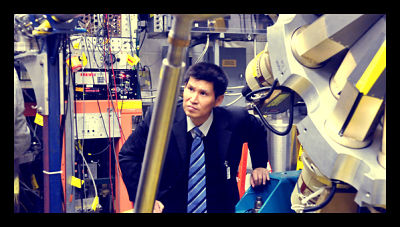
For a variety of reasons, China has become known for its “interactiveness” with the global south. This “interactiveness” has included construction projects, student scholarships, and sending doctors.
Recently, China began to fund five research centers in Africa and the global south in order to increase collaboration between Chinese and African scientists. The topics of focus for the scientists will include the climate, water, environmentally friendly technology, biotechnology, and space technology.
Using the Chinese Academy of Sciences (CAS), $6.5 million will be distributed to the research centers over the course of the next three years. These funds will work to improve China’s soft power in the global south by conducting joint research projects between the CAS and the research centers.
Currently, there is a CAS network known as The World Academy of Sciences (TWAS) that will also benefit from this Chinese outreach to the global south. Along with the research projects, the funding will also provide for an increase in workshops, training, and PhD programs.
According to Salim Abdool Karim, director of the Centre for the AIDS Programme of Research in South Africa and a TWAS member, “The five centers will play an important role in global scientific collaboration by increasing South-South training opportunities.”
This collaboration is expected to increase climate change research. Yongqiang Liu, a research meteorologist at the USDA Forest Service’s Center for Forest Disturbance Science sees it as a good way to “prepare future leaders to lead climate change research for developing countries.”
Action through research investment should improve China’s image in the world. Currently, China stands at 50% favorable and 36% unfavorable among populaces from around the world. Comparably, the US was seen as favorable by 63%, and unfavorable by 30%. More specifically, when people were asked if they thought China considered their country’s interests, 27% thought a great deal with 63% saying either not too much or not at all.
There is still a great deal of room for China to improve its international appeal. By working with developing nations to improve research in sustainable technology and other important sciences, China can build off the work of TWAS and foster support from citizens in these countries.
Once the three years comes to an end, the education and collaboration should improve the environmental technology sector, as well as build the capacity for a future scientific community with various projects and goals. If successful, this move may be beneficial in regards to China’s popularity as well.
– Michael Carney
Sources: SciDev.Net, Pew Global

Preventing Cancer in the Developing World
Many people in developing countries are lucky to have dinner tonight. While alleviating hunger is a main goal for many humanitarian organizations, the types of food that impoverished people have access to is becoming a concern for health experts. Cancer is an illness affecting people all over the world and developing countries are no exception. However, those living in the third world are especially at risk due to malnutrition, food insecurity, and lack of education.
Cancer is one of the most common causes of death in developing countries and affects more people than in the developed world. One of the main reasons for this is diet. Fruit, vegetables, whole grains and fish are all part of a healthy diet that helps to prevent cancer. On the other hand, fats and oils can increase a person’s chance of developing cancer. This becomes a complicated issue when there are no fresh foods in a community due to conflict or natural disaster, but a humanitarian organization sends processed foods. Rather than starve, the population will eat the unhealthy food.
Several other ways that people living in the third world are more at risk for cancer include exercise habits, smoking, alcohol consumption, sex at an early age and sex with multiple partners. Tobacco can lead to lung, mouth and neck cancer, and early and multiple partner sex is linked to cervix cancer as well as sexually transmitted diseases.
Another main contributor to high cancer rates in the developing world is the healthcare system. Cancer screening services and prevention treatments are out of reach for many impoverished people due to cost, location of healthcare facilities, and limited availability. A lack of vaccines is also a huge concern in the developing world. Vaccines like HPV and HBV are simply not available to a large portion of the population.
There are simple ways to decrease the rates of cancer in the developing world. These include improved food and agriculture aid, increased funding for healthcare, and more vaccines available at a low cost. While these solutions are simple, the implementation of these methods can often be complicated. It can be difficult to reach those living in rural communities and healthy food is difficult to transport long distances. However, increased foreign aid funding, agriculture program aid, and cancer education would be solid first steps towards cancer prevention.
– Mary Penn
Sources: All Africa, Med Scape
Photo: The Times
Homophobic Violence in Haiti
In Port-au-Prince, a British Red Cross employee and his Haitian partner were targeted in a series of homophobic attacks perpetrated by locals wielding petrol bombs and rocks. The attack, which unfolded at a celebration of the couple’s engagement, injured several people before the police arrived to dissolve the violence.
The attack unfolded at a pivotal time in the larger national conversation concerning gay marriage. Last month, over one thousand Haitians protested in the streets for legalized marriages, an unprecedented event in a country where homosexuality too often carries a deleterious social stigma.
On August 19th, the United Nations in Haiti addressed the rise in homophobic violence in the country, urging “…all Haitians to continue working together towards the construction of a state based on the respect for the rule of law; respect for others, tolerance, individual dignity and human rights.”
The UN statement also underscored that Article 19 of the Haitian Constitution grants the right “…to life, health, and respect of the human person for all citizens without distinction, in conformity with the Universal Declaration of the Human Rights”.
Tellingly, Haiti has entered the international human rights conversation revolving around LGBT issues, a tendentious discourse that has proven to be an ongoing struggle in both developed and developing nations alike.
– Anna Purcell
Sources: Daily Mail, UN, i95.5
Photo: i95.5fm
Low-Income Indian Families Get a Boost from World Bank
A $100 million credit agreement, signed by the World Bank and the Indian Government, will help low-income Indian families access a loan to purchase, build, or upgrade their dwellings.
The National Housing Bank (NHB) will implement the Low Income housing Finance Project, which will support the government’s agenda for financial inclusion on two counts. First, it will enable low-income households in urban areas to access housing finance, and second will strengthen the capacity of financial institutions that target these groups.
India faces a crippling housing shortage; as its urban population continues to rapidly expand, the urban housing shortage is estimated to be 19 million (as of 2012). Low-income families bear the brunt of the problem; they are faced with an estimated 90% of the shortage.
The housing sector is vulnerable to challenges because current land use policies and building norms restrict the availability of housing. Since the majority of the low-income population works in the informal sector, they lack documentation of income and therefore require customized lending products; as a result, developers are reluctant to enter the low-income market due to the perceived risks associated with these buyers.
As the Indian government strives to achieve financial inclusion for the whole population, the project will let the NHB innovate and provide financial solutions for improving low-income access to housing.
R.V. Verma, chairman and managing director of National Housing Bank said, “The program, which will explore sustainable housing finance models for low income households, has been conceived imaginatively and is consistent with the vision and charter of the NHB.”
Michael Haney, operations advisor at the World Bank, explained how the influx of 10 million Indians to towns and cities each year run into trouble finding loans to build or buy themselves houses. “They are forced to use unregulated, informal sources of finance at much higher rates of interest,” he explained.
The new initiative will help families move from informal sources of finance to longer-term, official sources for their housing needs; risk management, market infrastructure and new products will be implemented in order to achieve this goal.
Initially, the project will launch pilot programs to test the sustainability of these lending guidelines and products, and the long-term goal will be to preserve affordability for low-income families by finding alternative forms of collateral to reduce credit risk and keep interest rates at manageable levels.
– Chloe Isacke
Sources: World Bank, Economic Times
Photo: Kootation
Elephantiasis in Haiti Might Be Ending Soon
Lymphatic filariasis (LF), a condition known as “elephantiasis” that can lead to the severe and debilitating swelling of the arm or the leg, is considered one of the most disabling diseases for those affected. In Haiti, the condition is present in 118 of 135 communities, which leaves 88% of the country as a potential risk zone. It is classed as a “neglected tropical disease;” although it has long disappeared from industrialized countries, it remains a severe threat for those living in developing regions of the world.
Mass Drug Administration (MDA) was achieved on a national level in Haiti in 2012, with many of the endemic regions having taken part in the program for at least four years. The LF infection can be prevented and treated with a combination of medicines – a single dose of Albendazole and Diethylcarbamazine Citrate – that cost about 50 cents per person each year. The World Health Organization recommends that the drugs are taken for five years in order to stop transmission of the disease, but acknowledges that it is just as important to address the emotional effects of the infection, as it is the physical.
Haiti’s MDA program is now up for assessment; while the project has been successful in reducing transmission, applying the concept to Haiti has been challenging. Extreme poverty, periodic social unrest, and depleted health system infrastructure have persisted as roadblocks to the program. Now, a more holistic approach is being taken by the disability charity, CBM. In partnership with the University of Notre Dame and Hospital St. Croix, CBM is addressing the unmet need of those who already have LF; by setting up self-help groups, they are empowering patients through self-care education, and psychological and emotional support. These clubs meet twice a month and participants receive information about self-care, hygiene and basic limb care. All members receive a hygiene kit, which includes alcohol swabs and antiseptic soaps to clean their feet.
The CBM program combines global heath research and education and puts the two elements into practice; not only does it help prevent LF, but it provides care for those affected by it. Community programs, such as the one provided by CBM, addresses issues other than the physical disability, by promoting inclusion and tackling the stigma for people suffering from clinical manifestations of LF. This comprehensive partnership complements the MDA program and is a crucial mechanism in the fight to address, prevent, and eliminate elephantiasis in Haiti.
– Chloe Isacke
Sources: The Guardian, The Root
Photo: Management Sciences for Health
What Is a Foundation?
Nonprofits, charities, and foundations are often lumped into the general definition of “charity” when it comes to global poverty. That is to say, these three terms are used interchangeably in reference to altruistic organizations across the globe. Yet charities and foundations can be quite different from one another.
Nonprofits, or non-profit organizations, are organizations that operate on a not-for-profit business model. That is to say, nonprofits use whatever profit they may earn to reinvest in pursuit of the organization’s unique charitable interests. Within the category of nonprofits, however, charities and foundation take on very different challenges. We can most easily see the difference by studying these organizations side-by-side.
Whereas charities, such as homeless shelters, often bleed money and are constantly searching for new or continued sources of income to support their projects and programs, foundations are the organizations that supply those funds. In short, charities are nonprofits that either reinvest the profits they make or rely on outside sources of funding. Foundations, on the other hand, are the grantmakers that make such funding happen.
Foundations can be divided into two or three subcategories: private foundations, public charities, and private operating foundations. Private foundations and public charities make up the majority of foundations, while private operating foundations represent the remaining minority.
Private foundations are funded by individuals or families, often operated by the donor or family members of the donor themselves. Public charities, accounting for more than half of all 501(c)(3) organizations, derive their support from diverse sources, including individuals, corporations, other foundations, and even government agencies. Both kinds of foundations, however, as well the lesser-known private operating foundation, work to provide grants for unrelated charitable purposes, which is what very clearly distinguishes a foundation from a charity or the more general definition of non-profit organization.
– Herman Watson
Sources: Grant Space, Minnesota Council on Foundations, How Stuff Works
Photo: Henry Lim
40 Hour Famine at Hennessey Catholic College
Hennessey Catholic College Students have decided to experience what world hunger and poverty is truly like in their own, unique way. The school has formed the 40-hour famine team with the goal of raising both money and awareness for those suffering from extreme poverty and international conflicts in Malawi, Ethiopia, East Timor, Nepal, Tanzania and Ugandav. The students are given the opportunity to experience the tribulations of those living in developing areas, sacrificing basic human needs such as sleep and food to fully immerse themselves in the struggle of living on less than a dollar a day.
The conflicts in Malawi are worsening. Nearly two million people in southern Malawi are starving and almost half of Malawians live on less than a dollar a day. With a population of almost 16 million people, that means nearly eight million citizens live below the poverty line. For Hennessey students, these statistics are troubling.
Starting at eight PM on the 16th of August and ending at noon on the 18th, 35 students will make multiple sacrifices for the cause. Below are some of the sacrifices individuals are contributing to the 40-hour famine campaign.
The students plan to raise $1500 dollars for the cause in hopes of helping those in need. Hennessey teacher and 40-hour famine leader Leonie Green said she is impressed with the student’s dedication to raising awareness, all the while learning very valuable lessons.
“It’s good to get people educated and not taking for granted what we have so much of,” she said.
– William Norris
Sources: The Young Witness, World Bank
Photo: World Vision
China Funds Five Research Centers in the Global South
For a variety of reasons, China has become known for its “interactiveness” with the global south. This “interactiveness” has included construction projects, student scholarships, and sending doctors.
Recently, China began to fund five research centers in Africa and the global south in order to increase collaboration between Chinese and African scientists. The topics of focus for the scientists will include the climate, water, environmentally friendly technology, biotechnology, and space technology.
Using the Chinese Academy of Sciences (CAS), $6.5 million will be distributed to the research centers over the course of the next three years. These funds will work to improve China’s soft power in the global south by conducting joint research projects between the CAS and the research centers.
Currently, there is a CAS network known as The World Academy of Sciences (TWAS) that will also benefit from this Chinese outreach to the global south. Along with the research projects, the funding will also provide for an increase in workshops, training, and PhD programs.
According to Salim Abdool Karim, director of the Centre for the AIDS Programme of Research in South Africa and a TWAS member, “The five centers will play an important role in global scientific collaboration by increasing South-South training opportunities.”
This collaboration is expected to increase climate change research. Yongqiang Liu, a research meteorologist at the USDA Forest Service’s Center for Forest Disturbance Science sees it as a good way to “prepare future leaders to lead climate change research for developing countries.”
Action through research investment should improve China’s image in the world. Currently, China stands at 50% favorable and 36% unfavorable among populaces from around the world. Comparably, the US was seen as favorable by 63%, and unfavorable by 30%. More specifically, when people were asked if they thought China considered their country’s interests, 27% thought a great deal with 63% saying either not too much or not at all.
There is still a great deal of room for China to improve its international appeal. By working with developing nations to improve research in sustainable technology and other important sciences, China can build off the work of TWAS and foster support from citizens in these countries.
Once the three years comes to an end, the education and collaboration should improve the environmental technology sector, as well as build the capacity for a future scientific community with various projects and goals. If successful, this move may be beneficial in regards to China’s popularity as well.
– Michael Carney
Sources: SciDev.Net, Pew Global
4Afrika Changes Technology Around the World
Technological capabilities in developed countries continue to evolve, changing the way our economies operate. These new tools give citizens the power they need to innovate even further. What’s more, the ability to access and use new technology properly is more and more becoming a requirement in the workforce.
Developing countries in Africa have citizens who haven’t been able to receive the positive impacts that this technology has to offer. Just seven percent of the African population has consistent access to the Internet. It is an impact that can change their individual lives and the lives of those in their communities. The 4Afrika initiative, powered by Microsoft, hopes to get these citizens up to speed with modern day technology. 4Afrika works to empower African youth and set them up for the future through three focus areas.
1. World-Class Skills
The 4Afrika Initiative works to develop a competitive, academic environment that generates young entrepreneurs. The Afrika Academy, where technological capabilities flourish, can be accessed by those with strong academic merit. Research institutions and local African universities partner to fund this innovative project. The Academy will provide advanced training that will help citizens gain employment in the workforce, benefitting the communities they live in.
2. Access to Technology
The initiative plans to make smart devices, including Windows PCs, slates, and smartphones, affordable to African communities. Injecting these capabilities into the communities is an important step in empowering the citizens. Developing stronger Internet connections and access in local African communities is also important to the initiative.
3. Innovation
Innovation is something constantly occurring across the globe, and something that Africa desperately needs. Microsoft has recently been developing new Microsoft applications that will be beneficial to developing nations. The 4Afrika Initiative plans to give the technological capabilities and market support needed to allow African communities to flourish.
Click here for more information on this innovative campaign.
– William Norris
Sources: Microsoft, Internet World Statistics
Photo: Biztech
3 High Rated Charities With Low Paid CEOs
Some of the most successful charities in the world, charities that earn large amounts of revenue annually, happen to have some of the lowest paid CEOs. These CEOs truly give everything to their company, taking miniscule amounts of money to support themselves while dedicating the rest to the cause. Below are three of the lowest paid CEOs operating some of the highest rated charities. All ratings on Charity Navigator are out of 70.
1. Deborah Rickert – Operation Support Our Troops-America
Coming in at 64.45 on the Charity Navigator scale, this organization is dedicated to ensuring that US soldiers and families receive the resourceful comfort that they deserve. While this charity raises almost 1.5 million dollars a year for the cause, its president Deborah Rickert receives only 3.77% of expenses. With a base pay of $53,500, Rickert truly gives her everything to this important cause.
2. Tom Webster – Habitat For Humanity of Spartanburg
This Christian Ministry supports the citizens of Spartanburg by building affordable housing for those in need. It comes in at 63.34 on the Charity Navigator Scale, raising 1.36 million in 2012. The executive director of this cause Tom Webster receives just 3.83% of expenses, netting a base pay of 53,000 dollars.
3. Lisa Hopper – World Care
Serving to provide emergency relief within 24 hours of a natural disaster, World Care made in difference in 2012 with over 4 million in revenue. Of the expenses, Lisa Hopper receives only 1.1 percent. This equates to a salary of $45,000. Her dedication to the cause is reflected through this information.
It is easy to assume that CEOs of organizations take home a large piece of the pie, regardless of whether the organization is for or not for profit. The CEOs above have taken significantly lower annual earnings to help their charities succeed. As a result, these charities with low paid CEOs are some of the highest rated today.
– William Norris
Sources: Charity Navigator, OSOT America
Photo: Open
Algeria Food Security
Algeria has launched an agriculture development program designed to boost domestic production. Using its increased revenue from hydrocarbon exports, the country will tackle food security through a variety of programs working with farmers in rural and low-income areas.
Like most of North Africa, Algeria imports a substantial portion of its food. As a result, it is extremely vulnerable to shifts in commodity pricing. In 2011 riots broke out across Algeria due to the high price of sugar and cooking oil and were influenced by the Arab Spring in neighboring nations as well.
In response, the Algerian government reduced the import taxes on these two goods. While the riots may have died down the country remains vulnerable to similar price spikes. As a result Algeria heavily subsidizes key food items that are estimated to amount to 1.1% of gross domestic product (GDP) in 2013.
Algeria imports almost seventy percent of its wheat consumption. Egypt also imports a significant percentage of food and is the world’s largest importer of wheat. The Egyptian government also uses a system of subsidies in an attempt to alleviate the price burden. However, these governments recognize subsidies are not a sustainable way to ensure food security.
Algeria’s agriculture development program will focus on improving farm management practices, addressing regulations, and promoting modern technological practices in the industry. Previously the country’s food security programs have focused on putting more arable land into production. While useful, this is not a sustainable way to ensure the country’s food security.
More effective programs have focused on public-private partnerships that help introduce modern farming practices among rural growers. These practices have helped increase agricultural output by 23 percent in 2011 and an additional 32 percent in 2012.
The country wishes to increase its irrigated acres, adding 0.5 million hectares to the current 1.1 million currently irrigated by 2014. Algeria will also focus on developing its infrastructure. This will be a key component to affecting agricultural development in remote areas, which in a country of Algeria’s size are significant. This component will also include development efforts to reduce post-harvest losses through storage and transportation modifications.
The effect food prices have on the country’s stability will help motivate the government to introduce new and sustainable practices. This will be done not only in an effort to increase Algeria food security but also to ensure governmental stability.
– Callie D. Coleman
Sources: Global Arab Network, IFPRI
Photo: Flickr