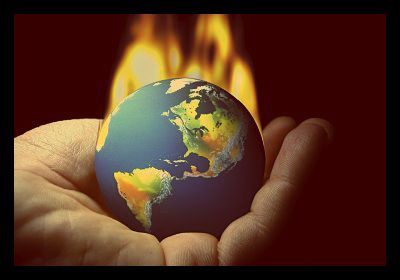
A growing movement is spreading throughout the international community in regards to addressing the prevalence of climate change. Accordingly, thousands of organizations on a global scale have mobilized to spread awareness, understand key issues and articulate solutions.
In the United States alone, there are a plethora of organizations that have been able to make strides in addressing the issue. Here is a list of 5 prominent environmental organizations that are fighting climate change and reaching success.
1. 350.org: The influential global movement headed by author Bill McKibben works across nearly 200 countries. Much of their work specifically targets carbon emissions as the number 350 itself refers to the amount of atmospheric carbon (in parts per million) needed for a stable climate.
Currently, the number is nearly at 400 parts per million, which is quite overwhelming. In order to reduce the number on an international scale, 350 works on campaigns widely ranging from stopping the Keystone XL pipeline in the United States to fighting the development of coal power plants in India.
2. Chesapeake Climate Action Network: Focusing specifically on the Atlantic coast of the United States, the Chesapeake Climate Action (CCAN) is the first organization to address climate change impacts in the Maryland/Virginia region. The area is highly vulnerable as it is home to dozens of defense facilities, while also being low-lying and densely populated.
CCAN works at the grassroots level to spread awareness, introduce the general public into the political process and influence environmental legislation. More recently, their work has been focusing on making use of Virginia’s vast renewable energy potential in offshore wind and solar energy.
3. Sierra Club: As one of the oldest, largest and influential environmental organizations in the United States, the Sierra Club has been focusing on various environmental issues for the past century. They now have 64 local chapters nationwide, a network of 2.1 million supporters and an extremely dedicated team of individuals.
In the past, The Sierra Club was influential in the implementation of the Clean Air Act, Clean Water Act and Endangered Species Act. Currently, they are focused on leading the world towards a clean energy economy and away from the heavy reliance on the fossil fuel industry.
4. Climate Reality Project: Both founded and chaired by Al Gore, the former Vice President and Nobel Laureate has led a growing global network of over 5 million individuals. The Climate Reality Project focuses heavily on spreading awareness by introducing the international scientific consensus on climate change to the general public.
Some of their promising initiatives are centered on revealing the truth behind the climate denial movement, providing information on the costs of carbon pollution and training climate reality leaders to have the skills to mobilize communities for action.
5. Energy Action Coalition: With student activism on the steep rise, organizations form and collaborate to be as effective as possible. The Energy Action Coalition is a group of 30 youth led organizations that address current environmental issues. With their level of diversity and broad organizational inclusion, the Energy Action Coalition is able to reach success in mobilizing campus communities.
The combined efforts of students across America have been successful in organizing national Power Shift Summits and campaigns to stop the development of the Keystone XL pipeline.
However, one of their prominent successes is embedded within their commitment to establishing carbon neutral college campuses. Ultimately, the Energy Action Coalition has been able to solidify almost 700 campus commitments to carbon neutrality up to 2012.
– Jugal Patel
Sources: 350.org, Chesapeake Climate Action Network, Sierra Club, The Climate Reality Project, Sierra Club, Energy Action Coalition
Photo: Scientific American

Call for Second Green Revolution
PUNJAB, India – A declining Indian economy and growing food insecurity has policy and environmental experts calling for a Second Green Revolution since one of the best solutions would be heightened research and investments in the agricultural sector to increase the production and yields of small farmers.
This new Revolution would focus on the next generation of agricultural modernization since the original movement in the 1960s. “Food security became a major cause for concern in the 1960s,” says The National, “when it caught the imagination of India’s policymakers and spawned the green revolution, an ambitious plan to transform the country’s agricultural land via high-yielding crops, increased use of fertilizers and a raft of land reforms.” That is to say, as a result of population growth, political upheaval and massive socio-economic shifts throughout the world, the world endeavored to overhaul the current agro-environmental systems.
The main goal of the first Green Revolution was to supply enough food for the growing populations as cost efficiently as possible. “Fearing global upheaval, the developed nations initiated a deliberate strategy to supply cheap, abundant food to prevent political unrest,” states Kenny Ausubel, author of Restoring the Earth. However, the plant seeds used to develop and economize food production were expensive, and the equipment needed to produce the seeds were costly as well. “While initially the “miracle high-yielding” seeds did produce bigger crops,” Ausubel notes, “this gain proved to be at the expense of the environment and small farmers.”
Moreover, the first Revolution privileged corporations and big agribusiness, leaving small, rural and hometown farmers in the dust. Experts from agriculture, economics and policy agree that a Second Green Revolution is needed “to improve the yield of crops grown in infertile soils by farmers with little access to fertilizer, who represent the majority of third-world farmers.” Small farmers are the key to food production in many countries around the world – not just India – and must be protected from being bought out by large agricultural corporations.
As such, research and development initiatives need to be undergone in order to generate more cost-effective and easily accessible resources for small farmers. Advancements in plant biology seem to be promising, as genetic modifications within crops could significantly yield larger harvests. As J.P. Lynch from the college of Agricultural Sciences states, “population growth, ongoing soil degradation and increasing costs of chemical fertilizer will make the Second Green Revolution a priority for plant biology in the 21st century.”
Food security is a necessary factor to global economic and development systems. Despite the advances made in the initial agricultural movement, more action is necessary in order to modernize and economize production for the world’s thousands of small farmers. “While the first Green Revolution was aimed at undertaking mass production,” declares Dr. N.G. Hedge of BAIF Development Research Foundation, “the second Green Revolution should be to promote production by the masses.
– Mallory Thayer
Sources: BAIF, The National, Penn State, Urban Habitat
Photo: Tree Hugger
3 Facts on Child Marriage from Tall as the Baobab Tree
One in three Senegalese girls are married before the age of 18, while the number worldwide nears 14 million. These girls are at a higher risk for abuse, health complications and dropping out of school. Tall as the Baobab Tree is being screened in villages in Senegal to promote dialogue and understanding between generations. This internationally acclaimed film is set in the Senegalese village Sinthiou Mbadane and follows two sisters who are the first from their family to attend school.
1. Respect for Elders vs. Dreams for the Future
In the film, the older sister, Coumba tries to save her younger sister, Debo, from being sold by their father into an arranged marriage. New and old worlds collide as the sisters struggle with whether respecting their elders has to mean betraying their own future. In countries like Senegal where education is becoming more accessible, it is important to engage in dialogues about the dangers associated with child marriage.
2. Dialogue can Positively Influence Attitude
The dialogues about child marriage have the potential to change the attitudes of village elders and leaders, who play an important role in determining the fate of children in the community. The film and the surrounding dialogues help girls in Senegal to realize that they are not alone in their struggle. The dialogues presented by the film are respectful towards girls and families, with the ultimate goal of bridging the generational misunderstanding.
“The main experience that this film focuses on is educating versus early marriage, which seems, in my experience, to be the single biggest challenge that this younger generation faces, coming from these traditionally conservative, rural villages,” said director Jeremy Teicher.
3. Grow Roots at Home to Strengthen Your Community
Because of poverty, a family may feel obligated to either send their children from a village to a large city to find work, or to marry off their daughters to older, wealthier men. With the help of Plan International (https://plan-international.
– Haley Sklut
Sources: The Guardian, Tall as the Baobab Tree, Voice of America
Photo: View of the Arts
Poverty and Happiness Coexisting In Panama
Panama is one of the poorest countries in the world. Why are people there so happy?
1. Positive Attitude
Latin American countries focus on positives such as friends, family and religion despite the difficulties they may face in their daily lives. With the economic boom, including more jobs, resulting from the success of the Panama Canal comes increased traffic and crime. However, Panamanians choose to focus on the positives. People in the happiest, yet poorest, Latin American countries find joy in moral satisfaction more than in material goods, a mentality that is often not found in citizens within developed countries.
“Overall, I’m happy because this is a country with many natural resources, a country that plays an important role in the world,” Carlos Martinez said. “We’re Caribbean people, we’re people who like to celebrate, to eat well and live as well as we can. There are a lot of possibilities here, you just have to sacrifice a little more.”
2. Health Care
State-of-the-art equipment, highly skilled doctors and reasonably-priced health insurance are just a few benefits of living in Panama. As a result of a good healthcare system, life expectancy is quite high in Panama – 74 years for men and 80 years for women.
3. Favorable Climate
The temperature remains at about 80 degrees Fahrenheit year-round. Furthermore, the country does not experience dry and rainy seasons. The weather, along with a developed pension system, draws retirees to the country. In 2005, Panama won first place in the global index of the most comfortable countries in the world. According to the American Association of Retired Persons and the organization “International Living,” the United States recognized Panama as one of the world’s four best countries to live in outside the United States.
– Haley Sklut
Sources: Live Science, Daily Mail, World Mathaba,
Photo: News
Clean Streets: Road to Entrepreneurship in Haiti
Throughout the developing world, infrastructure insufficiencies often create barriers for aspiring entrepreneurs. However, these shortcomings can also provide the platform for innovative and sustainable business opportunities.
Such is the case for entrepreneurs like Edouard Carrie, who started his company Environmental Cleaning Solutions S.A. (ECSSA) as a way to clean up Haiti’s streets and generate income. Founded in 2010, the company’s mission is simple yet profound: “to change a nation through recycling.” Via its material recovery facility in Port-au-Prince, ECSSA aims to collect over 80 tons of recyclable products per day.
Not only does it positively impact the environment, increased waste management also helps Haiti’s lowest income citizens.
For example, individuals can increase their income by collecting recyclable materials and thus afford schooling for their children, healthcare or other necessities. In addition, the various collection centers create jobs around the region.
The start-up has had great success in the three years since its conception. According to USAID, “ECSSA has grown to provide extra cash to over 6,000 Haitians who deposit bags of discarded bottles at 65 collection points throughout the Port-au-Prince region.” Furthermore, the company has shipped nearly 300 million plastic bottles to other countries for additional processing to create other products.
ECSSA’s growth would not have been possible without the support of both USAID and the Pan American Development Foundation (PADF).
PADF sponsors the Leveraging Effective Application of Direct Investments (LEAD) Business Plan Competition, a grant program that assists small and medium enterprises in finances, business development and access to capital. LEAD operates in Cap-Haitien, Saint-Marc and Port-au-Prince with a targeted focus on “industries and businesses with the greatest potential to create jobs, including construction, tourism, agribusiness and alternative energy.”
Outside assistance – such as that from LEAD and USAID – has allowed ECSSA to thrive and transform the landscape in Port-au-Prince.
“My company now has the capacity to increase its individual collectors from 6,000 people to up to 20,000,” Carrie said. “Additionally, the increase in collection points and processing capacity provide entrepreneurs the opportunity to grow their own businesses by serving as intermediary plastic collectors and suppliers for ECSSA.”
Not only cleaning the streets, ECSSA is clearing the way for sustainable environmental and business development throughout Haiti’s capital city.
– Mallory Thayer
Sources: USAID, Leveraging Effective Application of Direct Investments, Environmental Cleaning Solutions S.A.
Photo: United Nations Photo
2014 Sundance Film Festival and Global Poverty
The 2014 Sundance Film Festival encourages storytellers to share the strength of those living in poverty. The Sundance Institute aims to “harness the power of independent film,” and drive a global conversation on poverty.
Partnering with the Bill and Melinda Gates Foundation, the institute calls for short narrative or documentary films. In three to eight minutes, these films should celebrate the innovation and perseverance of those in poverty.
The Institute also partnered with Tongal.com to manage submissions. Filmmakers can submit projects through 1 July 2014 at no cost. Sundance awards winning films 10,000 dollars and the opportunity to premiere at the 2015 Film Festival. To apply, visit tongal.com/sundance.
The 2014 Sundance Film Festival featured the first five films on January 21. The Institute and Gates Foundation plan to release these films online throughout the year.
After My Garden Grows, directed by Megan Mylan
A young girl plants “seeds of independence and financial freedom” in a rural, male-dominated region of India.
Am I Going Too Fast?, directed by Hank Willis Thomas and Christopher Myers
This experimental documentary featured the intersecting lives of shopkeepers, craftspeople and ordinary citizens in Nairobi, Kenya. The sweeping transformation of technology, cell phone banking and micro-finance brought these men and women together.
Kombit, directed by Jeff Reichert and Farihah Zaman
In aftermath of the Haitian earthquake, men and women united to start a micro-garden.
The Masterchef, directed by Ritesh Batra
Akhil, a young shoeshiner, aspires to become a gourmet chef. One day, he has a “chance encounter” with the most popular Indian television chef.
Vezo, directed by Tod Lending
Narrated by a nine-year old girl, this documentary tells the tale of a village close to starvation until it adopts sustainable fishing practices.
The Faces of Global Poverty: 15 Must-See Short Films
Colours in the Dust
Blood Brother Trailer
Rural Poverty in Their Own Words: Ghana
In Your Hands
Syrian Girl Chooses School Before Marriage
The Thread
Pupils Speak Out About UK Child Poverty
Afghan Girl:Teacher? Engineer? Sheppard?
Hope on a Bicycle
The “Poster Girl for Starvation”
Stay: Migration and Poverty in Rural Mexico
Coal Boy
Four Men, 28 Days: Haiti After the Earthquake
Waste
Human Rights and Poverty in Ireland
– Ellery Spahr
Sources: Why Poverty
Photo: Flipkey
Are Developing Countries Now Overweight?
Statistics indicate that individuals who are obese or overweight in developing countries have tripled over the last 30 years. It seems that as countries begin to shift from low income towards middle income and onwards, people are able to purchase more food, most of which is unhealthy.
High-calories foods, usually quite tasty, are now easily accessible in practically every country but now those with more money are purchasing larger quantities.
In the 1980s, less than 23% of adults in the third world were overweight; currently, the amount of obese people in the developing world rival those of rich nations. Mexico is a prime example of this global problem. In 1980, under 40% of Mexican women were overweight but in 2008 it increased to 70% and there is speculation of a greater increase in recent years.
An official from the Overseas Development Institute in London, Steve Wiggins, reports that large varieties of high-calorie snacks such as chips, cookies and carbonated drinks are readily available in various Mexican stores, making it the “poster child” for the obesity problem.
Over 90% of men in some Pacific Island nations are also facing the overweight issue. Countries in the Middle East, such as Egypt, have a growing number of overweight women.
Health systems in developing nations already have significant issues with infectious diseases and now this burden of excessive consumption of high-calorie foods poses a risk for developing other diseases. Cardiovascular diseases, diabetes and various cancers can all be caused by large intake of fat, sugar and salt.
This global trend could potentially lead to increased health care expenses and decreased economic growth from a loss of productivity.
Despite these risky factors, reports suggest that a quick turn around is possible if new health campaigns for better diets are adopted. In the mean time, developing nations are not too interested in advocating for a fruit and vegetable substitute since several families are finally getting sufficient income for more food.
– Maybelline Martez
Sources: Centers for Disease Control and Prevention, NPR
Photo: Club House News
Social Media Affects 21st Century Political Instability
From a political standpoint, 2011 was a groundbreaking year that marked monumental transitions in political power on an international scale.
With the Arab Spring in the Middle East region, the authoritative regimes of Egypt, Libya, Tunisia and Yemen became toppled and replaced—the effects of which are still felt today. Currently, social unrest still persists on an international scale, while the causes are embedded primarily within the economy and international media.
The Global Financial Decline
Following the 2008 global recession, unemployment hit people hard across the world. As a result, people began to address some of the pressing social issues in politics and economics. And although much of the significant political shifts occurred in the Middle East, various nations in Europe had evidence of social unrest as well.
However, the global financial decline has already begun the process of slowing, which may seem to imply that political instability is on the decline as well.
On the contrary, there are still prevalent issues expected to become problems down the road. Youth unemployment is the greatest concern as, “in the EU, a record of 24.4% of people under 25 are unable to find work.”
This sort of unemployment is expected to continue as residual effects of global economic recession and has even resulted in disastrous cases such as Spain and Greece where youth unemployment for their “lost generation” is nearly 60%. In the same way that unemployment and financial decline were catalysts to Arab Spring movements, they may continue to do so in the future.
Media Impacts of Social Unrest
As a generation of the information era of technological innovation and various capabilities, the youth population has been instrumental in addressing prevalent social concerns. The internet in general has allowed for open networks of information that are widely accessible and transparency has been an influential byproduct.
Additionally, when social media capabilities are thrown into the equation, the potential for collective organizing is monumental.
During the Arab Spring alone, social media outlets such as Facebook and Twitter were bombarded with citizen journalism and ground level footage of political atrocities. Because the world has begun to lose its walls and become much less isolated, globalization has been on the rise.
So the world was able to watch the entire process of thousands of citizens in nations such as Egypt, Tunisia, Libya and Yemen rallying in protest to voice their grievances because of social media.
Therefore, with the capabilities presented before the youth population and social issues of unemployment presented before them, it is certain that political instability and social unrest may continue to endure with the youth population.
– Jugal Patel
Sources: CNN, The Guardian, University of Washington
Photo: MRGMI
10 Quotes from Business Executives on Poverty
Too often there is a disconnect between the business world and those around the globe suffering from poverty. These two worlds are perceived as either completely unrelated, or to a certain extent, antagonistic. However, funding global development and combating poverty are smart business choices.
When business promotes development in ailing communities, healthy and prosperous people create new markets. As stated by current Secretary of Defense Chuck Hagel, “We need to stop viewing it as aid. It’s an investment.”
Viewing global aid in that vein, it becomes much easier to see how the determination it takes to create a successful business is quite similar to the dedication necessary to fight global poverty.
Here, then, are ten quotes from business executives that you should apply in your daily fight to end poverty worldwide.
1. “When your values are clear to you, making decisions becomes easier.” – Roy Disney
2. “Education’s purpose is to replace an empty mind with an open one.” – Malcolm Forbes
3. “Think P.I.G. – that’s my motto. P stands for persistence, I stands for integrity, and G stands for guts. These are the ingredients for a successful business and a successful life.” – Linda Chandler
4. “We’re here to put a dent in the universe. Otherwise, why even be here?” – Steve Jobs
5. “Good business leaders create a vision, articulate the vision, passionately own the vision and relentlessly drive it to completion.” – Jack Welch
6. “Nothing so conclusively proves a man’s ability to lead others as what he does from day to day to lead himself.” – Thomas J. Watson, Sr.
7. “Apply yourself. Get all the education you can, but then, by God, do something. Don’t just stand there, make it happen.” – Lee Iacocca
8. “Someone is sitting in the shade today because someone planted a tree long before.” – Warren Buffet
9. “I believe if you show people the problems and you show people the solutions, they will be moved to act.” – Bill Gates
10. “Creativity often consists of merely turning up what is already there” – Bernice Fitz-Gibbon
– Taylor Diamond
Sources: ThinkExist, Thought Catalog, BrainyQuote
Photo: HEC
5 Groups in the U.S. Addressing Climate Change
A growing movement is spreading throughout the international community in regards to addressing the prevalence of climate change. Accordingly, thousands of organizations on a global scale have mobilized to spread awareness, understand key issues and articulate solutions.
In the United States alone, there are a plethora of organizations that have been able to make strides in addressing the issue. Here is a list of 5 prominent environmental organizations that are fighting climate change and reaching success.
1. 350.org: The influential global movement headed by author Bill McKibben works across nearly 200 countries. Much of their work specifically targets carbon emissions as the number 350 itself refers to the amount of atmospheric carbon (in parts per million) needed for a stable climate.
Currently, the number is nearly at 400 parts per million, which is quite overwhelming. In order to reduce the number on an international scale, 350 works on campaigns widely ranging from stopping the Keystone XL pipeline in the United States to fighting the development of coal power plants in India.
2. Chesapeake Climate Action Network: Focusing specifically on the Atlantic coast of the United States, the Chesapeake Climate Action (CCAN) is the first organization to address climate change impacts in the Maryland/Virginia region. The area is highly vulnerable as it is home to dozens of defense facilities, while also being low-lying and densely populated.
CCAN works at the grassroots level to spread awareness, introduce the general public into the political process and influence environmental legislation. More recently, their work has been focusing on making use of Virginia’s vast renewable energy potential in offshore wind and solar energy.
3. Sierra Club: As one of the oldest, largest and influential environmental organizations in the United States, the Sierra Club has been focusing on various environmental issues for the past century. They now have 64 local chapters nationwide, a network of 2.1 million supporters and an extremely dedicated team of individuals.
In the past, The Sierra Club was influential in the implementation of the Clean Air Act, Clean Water Act and Endangered Species Act. Currently, they are focused on leading the world towards a clean energy economy and away from the heavy reliance on the fossil fuel industry.
4. Climate Reality Project: Both founded and chaired by Al Gore, the former Vice President and Nobel Laureate has led a growing global network of over 5 million individuals. The Climate Reality Project focuses heavily on spreading awareness by introducing the international scientific consensus on climate change to the general public.
Some of their promising initiatives are centered on revealing the truth behind the climate denial movement, providing information on the costs of carbon pollution and training climate reality leaders to have the skills to mobilize communities for action.
5. Energy Action Coalition: With student activism on the steep rise, organizations form and collaborate to be as effective as possible. The Energy Action Coalition is a group of 30 youth led organizations that address current environmental issues. With their level of diversity and broad organizational inclusion, the Energy Action Coalition is able to reach success in mobilizing campus communities.
The combined efforts of students across America have been successful in organizing national Power Shift Summits and campaigns to stop the development of the Keystone XL pipeline.
However, one of their prominent successes is embedded within their commitment to establishing carbon neutral college campuses. Ultimately, the Energy Action Coalition has been able to solidify almost 700 campus commitments to carbon neutrality up to 2012.
– Jugal Patel
Sources: 350.org, Chesapeake Climate Action Network, Sierra Club, The Climate Reality Project, Sierra Club, Energy Action Coalition
Photo: Scientific American
5 Motivational Bill Gates Quotes
As one of the richest men on the planet, a philanthropist extraordinaire with his own multi-million dollar fund and a proponent for the human race, billionaire Bill Gates shouldn’t only be perceived as the father of Microsoft — he’s a prominent source of inspiration and hope.
Following are five advocative quotes by the legendary man, certain to motivate and incite toward action:
1. “I believe that if you show people the problems and you show them the solutions they will be moved to act.”
2. “I’m a great believer that any tool that enhances communication has profound effects in terms of how people can learn from each other, and how they can achieve the kind of freedoms that they’re interested in.”
3. “People always fear change. People feared electricity when it was invented, didn’t they? People feared coal, they feared gas-powered engines… There will always be ignorance, and ignorance leads to fear. But with time, people will come to accept their silicon masters.”
4. “At Microsoft there are lots of brilliant ideas but the image is that they all come from the top – I’m afraid that’s not quite right.”
5. “The general idea of the rich helping the poor, I think, is important.”
What’s truly important to keep in mind here is that Mr. Gates, no matter how successful, is only human—much like everyone else. Due to his accomplishments, there probably isn’t a single person unfamiliar with his name in the modern day world.
However, Bill Gates himself pays attention to those in need; he donates money and funds research that is helping to alleviate global poverty.
These hand-picked quotes are only a sample of the reflective thoughts he produces; the encouraging simple truths they present should function as incentives for hard work.
– Natalia Isaeva
Sources: BrainyQuote, The Gates Notes
Photo: CNN