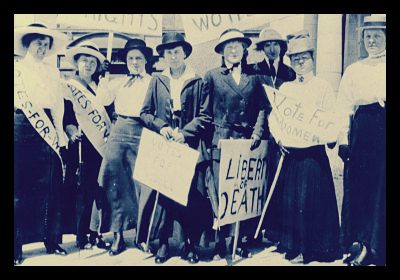
It has been nine years since Hillary Clinton proudly declared “women’s rights are human rights” at the United Nations Fourth World Conference on Women. Since then, world leaders have recognized that the key to economic, social and cultural development is rooted in the empowerment of women.
1. “More countries have understood that women’s equality is a prerequisite for development.”
— Kofi Annan, 7th Secretary-General of the United Nations, 2001 Nobel Peace Prize winner
2. “Everybody counts in applying democracy. And there will never be a true democracy until every responsible and law-abiding adult in it, without regard to race, sex, color or creed has his or her own inalienable and un-purchasable voice in government.”
— Carrie Chapman Catt, American women’s suffrage leader
3. “It is not gender which is destroying our culture…. it is our interpretations of culture which has destroyed gender equality.”
– A Cambodian civil society group
4. “This is no simple reform. It really is a revolution. Sex and race because they are easy and visible differences have been the primary ways of organizing human beings into superior and inferior groups and into the cheap labor in which this system still depends. We are talking about a society in which there will be no roles other than those chosen or those earned. We are really talking about humanism.”
— Gloria Steinem, American journalist
5. “Gender inequality, which remains pervasive worldwide, tends to lower the productivity of labor and the efficiency of labor allocation in households and the economy, intensifying the unequal distribution of resources. It also contributes to the non-monetary aspects of poverty – lack of security, opportunity and empowerment – that lower the quality of life for both men and women. While women and girls bear the largest and most direct costs of these inequalities, the costs cut broadly across society, ultimately hindering development and poverty reduction.”
– The Gender and Development Group -World Bank, from the report “Gender Equality and the Millennium Development Goals” (2003)
6. “The education and empowerment of women throughout the world cannot fail to result in a more caring, tolerant, just and peaceful life for all.”
— Aung San Suu Kyi, Daw Burmese-Myanmarese dissident and politician; Leader of National League for Democracy, Nobel Peace Prize Laureate
7. “No nation can ever be worthy of its existence that cannot take its women along with the men. No struggle can ever succeed without women participating side by side with men. There are two powers in the world; one is the sword and the other is the pen. There is a great competition and rivalry between the two. There is a third power stronger than both, that of the women.”
― Muhammad Ali Jinnah, founder of Pakistan
8. “Women will not simply be mainstreamed into the polluted stream. Women are changing the stream, making it clean and green and safe for all — every gender, race, creed, sexual orientation, age, and ability.”
— Bella Abzug, American politician, 1998 Defender of Democracy Award
9. “The connection between women’s human rights, gender equality, socioeconomic development and peace is increasingly apparent.”
— Mahnaz Afkhami, Iranian-American human rights activist
10. “Women’s chains have been forged by men, not by anatomy.”
–Estelle R. Ramey, American endocrinologist and psychologist
– Stephanie Lamm
Sources: Women’s Rights World, Better World Quotes, Goodreads
Photo: Politic365

South Sudan: A Tragic History & Future
A tragic return to form for South Sudan as a rebellion has sparked in the Capital of Juba, a sad reality after the nation won its independence from Sudan through a 2011 referendum. War and violence has retaken the newly formed nation, as ethnic and political divides have created a dire situation for the nation’s stability.
On December 15, 2013, political infighting began between elites in the government over executive and legislative power. Riek Machar, the former Vice President, was dismissed by President Salva Kiir, igniting sectarian violence.
The President and Vice President were from different ethnic groups, and the political nightmare has put a match to the inevitable break up of civil order.
Ethnic divides, once united under the common goal of gaining control of South Sudan from the Muslim-dominated northern Sudan, has become more visible. South Sudan’s two decade-long battle for autonomy from the north was a common cause for the mostly Christian and Animist southern peoples. The civil war, which ended in 2005, began in 1983 and left the once-united Sudan a contentious war zone. A 2011 referendum backed by the United States helped form the nation.
In any new nation, the political establishment is relatively incapable of dealing with ingrained ethnic power structures. Citizens hold allegiance to their respective ethnic groups, not an executive power, regardless if it is a democratically elected government.
Kiir is from the largest ethnic group in South Sudan, the Dinkas, whereas Machar was from the second-most populous ethnic group, Neuer. Both groups wanted to maintain hegemony over the newly formed nation, and the tense political alignment between these two leaders was overwhelmed by rivalry rather than co-operation.
The dismissal of Vice President Machar was responded with immediate violence in Juba. He was accused of attempting an overthrow, with the military splitting along ethnic lines.
When allegations were made, Kiir feared an eventual overthrow by Machar and allocated much of his resources to retain control of the nation. Power sharing was the only logistical way the nation could have progressed past years of war with its northern neighbor, Sudan. The necessity of powerful figures in each ethnic group to maintain peaceful discourse among their fellow leaders prevents events such as the oncoming civil war in South Sudan.
The notion of fear and distrust among political elites in the nation drives the civil war, which has already led to the deaths of many citizens. Refugees fleeing the nation have met with harsh conditions. 200 South Sudanese refugees perished in the White Nile while fleeing the violence. This is a hard price to pay for a nation whose future seem bright after finally gaining independence, coupled with its vast natural resources that includes oil, a valuable commodity.
The civil unrest poses considerable problems for the new nation, whose infrastructure was badly damaged by a two-decade war with its northern neighbor. Unless their leaders can find a common consensus about how to share power, the nation may never find long-lasting peace.
– Joseph Abay
Sources: New York Times, News Week, BBC, VOA News, Reuters, Sudan Tribune, Washington Post, Washington Post
Photo: DW
6 Reasons to Be Vegetarian or Vegan
Although many people used to eating meat, poultry and dairy products, it is becoming common to exclude animal products from one’s diet. People often mention health benefits, sympathy for the animals or sometimes even weight loss as their primary reasons for going vegetarian/vegan. However, as more and more natural disasters occur, it has become clear there are more pressing reasons for considering the lifestyle change:
1. According to the Worldwatch Institute, more than half of all global greenhouse gas emissions result from animal agriculture.
2. Raising animals for food is “one of the top two or three most significant contributors to the most serious environmental problems, at every scale from local to global,” says a representative from the United Nations.
3. According to a study conducted by the University of Chicago, going vegan has an insanely positive effect on carbon dioxide emissions into the atmosphere, For comparison, switching from a normal car to a Prius reduces said emissions by circa one ton, while going vegan prevents 1.5 tons from entering the atmosphere.
4. A study done in 2008 in Germany found a carnivore is responsible for seven times more greenhouse gas emissions than an herbivore.
5. Military “Meatless Mondays” – an entire army already pledged last year to eat vegetarian one day per week. Norway, belonging to the highly globally aware Scandinavia, is making serious efforts in reducing its carbon footprint. If an entire military can withhold from eating animal products for the sake of the environment – even for just one day – then everyone else should be able to, also.
6. As a bonus, one’s health improves together with the world’s. Numerous studies exist that show the long-term benefits of omitting animal products from one’s diet, including more energy, better skin and an overall stronger body.
Just a few decades ago, making the change would be considered a fuss: not enough resources were available to fully complement an animal-free diet. Today, numerous supplements and alternatives are sold worldwide, easily accessible and with a pleasant taste. Perhaps going vegan right away could be a bit difficult, but at least sampling vegetarianism might be a good start for those concerned with the health of the planet.
– Natalia Isaeva
Sources: PETA, Earth Save, Daily Caller
Photo: Vegan Soapbox
Harnessing Hydropower in Guyana
Guyana is currently developing a plan to harness Amaila Falls’ potent hydropower, power that is capable of producing electricity (165MW to be exact) for the whole of Guyana, reports The Economist.
The project is set to cost around $840 million and was initially headed by Sithe Global of the global investment and advisory firm, the Blackstone Group. In addition, investments from China Development Bank and the Inter-American Development Bank were to take part in harnessing the country’s torrents.
However, a lack of unanimous concession by the Guyanese legislative branch has resulted in Sithe Global’s withdrawal from the project. Primary criticisms by legislators were its lack of transparency—particularly the projects expenditures and the engineering plans.
The deals brokering between the Amaila Falls Hydro Inc. and its power players remained cloak and dagger, arousing skepticism from the project’s critics.
Despite the halt in the project, it was predicted to minimally affect the ecological community. Moreover, the site of the project, located at the intersection of the Amaila and Kuribrong Rivers is 30 km from the nearest community, supposedly to avoid disturbing any local villages in the region.
With the promise of hydroelectricity in 2017, Guyana could possibly reduce its reliance on imported oil although the cost of electricity will remain expensive.
Furthermore, with a shift to hydropower, green house gas emissions (GHG) were projected to decrease by 87%.
It’s realization would have cost the federally funded Guyana Power and Light (GPL) company to pay an estimated $100 million a year to the aforementioned investment groups and companies.
Despite the country’s massive potential for hydroelectricity, the project remains at a standstill. The secrecy of the project propelled its main investors, from remaining with the project. Yet, Guyana’s President Donald Ramotar recently stated that Sithe Global is still very much interested in the project, pending Parliament’s unanimous agreement.
Regardless of legislative decision, the go-ahead for the project remains largely with Sithe Global, who possesses the license to Amaila Falls’ development.
– Miles Abadilla
Sources: Amaila Hydropower, The Economist, Fox News, Kaieteur News
Photo: Wondermodo
Child Soldiers Released in Myanmar
With over 400,000 soldiers serving in the national army of Myanmar (known as Tatmadaw Kyi), it’s nearly impossible to estimate the number of child soldiers hidden among the hundreds of base camps all over the country – nor is it easy to track down the ones that have been reported. In 2011 the International Labour Organization (ILO) reported that it had received 236 complaints of child soldier recruits, and that in response to these complaints 57 underage soldiers had been released.
Children find their way into combat when they run out of other ways to feed themselves, when they are forced at gunpoint to accept a forged birth certificate and enlist, when they are dropped off by their families to be taught discipline, or when they volunteer for any number of nationalistic reasons. Regardless of how they get there, all are under violation of the UN’s Optional Protocol to the Convention on the Rights of the Child, which sets the minimum age of volunteering for armed combat at 18.
In June 2012, Myanmar’s Ministry of Defense signed a joint Action Plan with the UN that promised to work toward the release all of its soldiers and guards under 18, as well as prevent future underage recruits. The army also stated that they meant to assist the released children in attending school or finding civilian employment, as well as providing the necessities for their trip back home.
The plan was set to be implemented within the first 18 months of it being signed, and within that time, a total of 272 children, as well as adults who were recruited as children, have been released. Moreover, while the act is now due to be extended, representatives of the UN are planning to meet with armed groups across the country to discuss and encourage more releases.
As Human Rights Watch (HRW) representative Smith suggests, “The real test [of Myanmar’s dedication to eradicating underage soldiers] will be if the army is willing to give full access to the UN and hold soldiers and officers accountable for falsifying documents, and for other crimes related to the recruitment of child soldiers.”
Since the signing of the Action Plan on behalf of the Country Task Force on Monitoring and Reporting of grave violations of child rights in armed conflict (CTFMR), actions have been taken against 40 military officers and 229 military personnel for their role in the recruitment of underage soldiers.
While the UN praised this as a “historic step” toward ending the practice of using children in the military, Myanmar still employs more child soldiers than nearly any other country, and the work of eradicating all involvement of children in armed forces is far from over.
– Lydia Caswell
Sources: Australian Network News, Child Soldiers International, Eleven , GMA News , Irin News
Photo: AATOP
Malaria 101 and Key Facts
Malaria is caused by the parasite called Plasmodium and is transmitted through four different types of mosquitoes. It occurs in tropical and sub-tropical areas, though it is most common in the African Region. Malaria causes high fever, chills and other flu-like symptoms. Plus, if left untreated, this parasitic disease can cause death. Many global health and humanitarian aid organizations are focused on fighting malaria in developing countries while significant scientific research investigations into possible cures for this parasitic disease are also being done.
The World Health Organization (WHO) reports that in 2012, there were 217 million malaria cases and 627, 000 malaria related deaths, mostly in African children. In fact, one child dies every minute from this disease in the African continent.
Where is Malaria Found?
Malaria is found in tropical and sub-tropical regions where there are warm temperatures, high humidity and lots of rainfall. In order for malaria to occur, the climate must be one in which anopheles mosquitoes can survive and multiply. The Plasmodium parasite must also be able to complete their life cycle inside the mosquitoes.
For example, the most severe strain of malaria cannot be transmitted in temperatures under 68 degrees Fahrenheit because the parasites themselves cannot complete their life cycle inside the mosquitoes. The warmest climates close to the equator thus have the highest rates of malaria transmission. In effect, this parasitic disease occurs year-round in endemic levels within sub-Saharan Africa, New Guinea and South America.
How is Malaria Spread?
Malaria is typically spread through the female anopheles mosquitoes. This particular mosquito is a “dusk-to-dawn” mosquito, meaning it only comes out at night, which is why people in warm climates are encouraged to use sleeping nets. When the mosquito bites someone already infected with malaria and ingests their blood, the parasite is taken in as well, developing inside them and infecting their saliva. Once the parasite has completed a full life-cycle within the mosquito, the disease will be spread to the subsequent humans bitten by the mosquito.
What are the Symptoms of Malaria?
Symptoms can range from mild flu-like symptoms to severe disease and death. However, if this parasitic disease is caught and treated effectively and promptly, it is usually not severe. Malaria is split into two categories, complicated and uncomplicated. Symptoms of uncomplicated malaria include fever, chills, sweating, headaches, body aches, nausea and vomiting as well as fatigue. In countries where malaria is not common malaria is, in fact, often misdiagnosed as influenza.
Complicated malaria occurs when the organs, blood or the metabolic system are impaired. This can cause severe anemia, acute respiratory distress, low blood pressure, acute kidney failure or cerebral malaria which then causes abnormal behavior, seizures and loss of consciousness.
How is Malaria Treated?
The WHO recommends all suspected malaria cases be tested using parasite diagnostic testing. The most common treatment for malaria is the artemisinin-based combination therapy (ACT); however, resistance to antimalarial drugs is a recurring problem. Furthermore, access to testing and drugs often does not reach the poor communities where this parasitic disease is more prominent.
Who is Vulnerable?
People with delicate immune systems are the most vulnerable to malaria; this includes young children, pregnant women and people infected with HIV. International travelers traveling to warm climates are also particularly susceptible, as are the friends, family, neighbors and co-workers of people who immigrate from countries where malaria is endemic.
– Elizabeth Brown
Sources: CDC, Public Health Agency of Canada, World Health Organization
Photo: Global Biodefense
Film Synopsis: It’s a Girl
In many countries today, the worst words you can hear as a mother are “it’s a girl.” Due to gendercide, as many as 200 million girls have been killed, aborted or abandoned. Evan Grae Davis explores the many forms of gendercide common in China and India today due to cultural preferences and China’s one child policy.
The movie speaks to many women who have been forced to undergo sex-selective abortions or abandon their female babies out of financial necessity. These women insist they have nothing against girls, but the dowry system common in India and rural China means girls put a strain on the family income.
Boys will grow up to receive a wife with a dowry and take care of his parents, while a girl will leave the family to marry, taking much of the family’s wealth with them.
Though India has outlawed the dowry, it is hard to eliminate a cultural custom. In the film, a woman explains that the court system has ignored her case of abuse based on an unfit dowry. Another women said she has tried for years to prosecute her husband who left her because she had daughters but no sons. Though laws are put in place to prevent female infanticide, there is little evidence those laws are enforced.
In China, Davis explored the impact of the one child policy. If a family’s first child is a girl, they may try again for a boy. Families must apply for a birth permit, and if a woman is seen pregnant with a second child other villagers are encouraged to report her. Women who are pregnant with their second child must show proof the child is a boy.
Many women who are pregnant with a second girl are forced to get an abortion or else they must pay a fine up to 10 percent of the family’s income for 14 years. The second child will not have citizenship rights or attend school. There is no future in China for a second female child.
The film explores the implications of a male preference system. Child trafficking has gone up dramatically since the implementation of the one child policy. The shortage in girls, leads many parents with sons to steal female children. This ensures their child will have a wife in the competitive marriage market. China has the highest female suicide rate of any country. Human rights experts believe this is because they are left to question their worth and morality after they are forced to kill their baby girls.
Davis says the solution is much more complex than ending the one child policy or enforcing anti-dowry laws. If girls are to receive the same opportunities and rights as boys, the culture of male preference must be changed.
– Stephanie Lamm
Sources: It’s a Girl, IMDB
Photo: OHM
10 Quotes on Women’s Rights
It has been nine years since Hillary Clinton proudly declared “women’s rights are human rights” at the United Nations Fourth World Conference on Women. Since then, world leaders have recognized that the key to economic, social and cultural development is rooted in the empowerment of women.
1. “More countries have understood that women’s equality is a prerequisite for development.”
— Kofi Annan, 7th Secretary-General of the United Nations, 2001 Nobel Peace Prize winner
2. “Everybody counts in applying democracy. And there will never be a true democracy until every responsible and law-abiding adult in it, without regard to race, sex, color or creed has his or her own inalienable and un-purchasable voice in government.”
— Carrie Chapman Catt, American women’s suffrage leader
3. “It is not gender which is destroying our culture…. it is our interpretations of culture which has destroyed gender equality.”
– A Cambodian civil society group
4. “This is no simple reform. It really is a revolution. Sex and race because they are easy and visible differences have been the primary ways of organizing human beings into superior and inferior groups and into the cheap labor in which this system still depends. We are talking about a society in which there will be no roles other than those chosen or those earned. We are really talking about humanism.”
— Gloria Steinem, American journalist
5. “Gender inequality, which remains pervasive worldwide, tends to lower the productivity of labor and the efficiency of labor allocation in households and the economy, intensifying the unequal distribution of resources. It also contributes to the non-monetary aspects of poverty – lack of security, opportunity and empowerment – that lower the quality of life for both men and women. While women and girls bear the largest and most direct costs of these inequalities, the costs cut broadly across society, ultimately hindering development and poverty reduction.”
– The Gender and Development Group -World Bank, from the report “Gender Equality and the Millennium Development Goals” (2003)
6. “The education and empowerment of women throughout the world cannot fail to result in a more caring, tolerant, just and peaceful life for all.”
— Aung San Suu Kyi, Daw Burmese-Myanmarese dissident and politician; Leader of National League for Democracy, Nobel Peace Prize Laureate
7. “No nation can ever be worthy of its existence that cannot take its women along with the men. No struggle can ever succeed without women participating side by side with men. There are two powers in the world; one is the sword and the other is the pen. There is a great competition and rivalry between the two. There is a third power stronger than both, that of the women.”
― Muhammad Ali Jinnah, founder of Pakistan
8. “Women will not simply be mainstreamed into the polluted stream. Women are changing the stream, making it clean and green and safe for all — every gender, race, creed, sexual orientation, age, and ability.”
— Bella Abzug, American politician, 1998 Defender of Democracy Award
9. “The connection between women’s human rights, gender equality, socioeconomic development and peace is increasingly apparent.”
— Mahnaz Afkhami, Iranian-American human rights activist
10. “Women’s chains have been forged by men, not by anatomy.”
–Estelle R. Ramey, American endocrinologist and psychologist
– Stephanie Lamm
Sources: Women’s Rights World, Better World Quotes, Goodreads
Photo: Politic365
Sierra Leone: Freedom & War
Sierra Leone, home to over 6.1 million people, is a West African nation ravaged by a 11-year civil war. The country was prone to military coup de’tats, resulting is an ever-revolving door of presidents, dictators, military juntas and overall political chaos.
The political crises that have befallen the diamond resource rich nation is in stark contrast to its prominent past as a settlement for freed slaves, particularly its capital, Freetown. Sadly, the civil war, which was condemned for human rights violations such as the use of child soldiers, created a situation where poverty became rampant among the populace.
Sierra Leone now has one the lowest life expectancies in the world, with an average person expected to live to only 48. It ranks fairly low in the Human Development Index at 180th out of 187 countries. Particularly distressing is that over “60 percent of the population” lives on about “$1.25 per day.” Consequently, the nation boasts a high illiteracy rate, and deals with a increasingly volatile health crisis, with a majority of the population unable to attain proper medicine and health services.
Despite the problems, the country has made positive strives since the end of the civil war. Since 2002, positive changes have occurred. The central government has become stronger and democracy has flourished quite prominently in the wake of the civil war. The nation has also seen an uptick in economic development.
Unemployment and underemployment of the youth population are major reasons for the civil unrest within the nation. Around 70 percent are out of work or critically underpaid, resulting in strikes that are routinely suppressed by the government. Disillusionment with political elites and inequality of wealth in the country has led to a huge divide among political groups.
Current President Ernest Bai Koroma and his All People’s Party have been criticized for their actions, but at the same time praised for helping the nation “transition from a failed state” to a “fast-growing economy.” The economic growth of the nation is contrasted by the rampant poverty faced by a majority of the nation.
Sierra Leone has had an arduous history in regards to women’s rights. The country is home to many customary practices, such as “female genital mutilation” and forced marriages. Amnesty international reported that the Sexual Offences Act, though pushed through in 2013, was never truly enacted, and discriminatory policies against women were still heavily occurring in the nation.
Human rights violations are particularly evident in post-civil war Sierra Leone. Peaceful demonstrations are still violently suppressed, and opposition media are continually jailed for dispelling information against the ruling regime. An April demonstration against working conditions at a local mine resulted in police officers killing 12 workers. The Human Rights Commission of Sierra Leone found the police culpable for their actions, and pushed for an investigation into the matter. Sierra Leone has not indicted or prosecuted any of those involved in the killings.
Can Sierra Leone make a change? Unless the government makes a more proper investment in its population and respects human rights, civil unrest is a common possibility. The lack of oversight for respecting human rights and drastic poverty is an increasingly damaging problem for the nation that was once a safe-haven for those escaping slavery.
– Joseph Abay
Sources: Amnesty International, New York Times Blogs, BBC, BBC, UNDP
Photo: UWO
Small-Scale Solar Energy: 2 Women Light a Village
In a remote Cameroon village, two elderly women installed solar panels to shed light in a neglected region. The village, Muyengue Trouble, sits isolated behind Mount Cameroon and off the national electricity grid.
Without access to electricity, poor rural women suffer the most. These women must walk miles to gather fuel wood, yet nearly two million die annually from the indoor pollution this wood produces.
The people of Muyengue Trouble relied heavily on wood, kerosene, gas and fuel, reports Nelly Shella Yonga Tchaptchuet of the Rural Women Development Center (RUWDEC.)
Though functionally illiterate, these women developed a strong understanding of solar technology and helped light their village.
The RUWDEC offered Francesca Moki and Helen Ntuengue the opportunity to study solar electrification at the Barefoot College in India. The Global Environment Facility (GEF) partnered with the college to fund their training.
For six months, these women attended the college before returning to Cameroon. Today, Moki and Ntuengue assemble and mount solar panels in houses, as well as chargers, controllers and batteries. These woman have installed the panels free of cost for more than 500 people in 98 households.
Hydropower in Malawi: Affordable to All?
This success offers hope for expansion. Najat Rochdi, the United Nations Resident Representative in Cameroon, reports: “We are going to discuss with RUWDEC on how to move the project forward and possibly scale it to other regions.”
Joyce Banda, the Malawian president, recently declared: “Let there be light in every home.”
Today, only one percent of the rural population benefits from the national power grid. The power grid relies on hydroelectric power plants along the Shire River, but aquatic weeds and sedimentation limit the flow. As a result, those in rural Malawi use alternative sources of energy.
The use of alternative sources threatens agricultural sustainability in the region. Without access to electricity, locals must depend on wood and charcoal. This forces a damaging cycle of cause and effects: farmers rely on deforestation for more land, and soil erosion and increased run-off further degrades the land.
Yet these farmers cannot use modern technology to farm sustainably without electricity.
And if the government successfully generates hydropower, could the poorest Malawians afford it? Most rural Malawians cannot afford the fees to connect. As the director of solar energy firm contends, hydroelectric power in this region leaves rural homes in the dark.
Small-scale Energy Development
Depending on the government to allocate energy efficiently and fairly may fail; equipping locals with the tools to deliver it may not.
A nongovernmental organization recently installed solar-powered energy kiosks in Malawi. This allows local men and women to rent “battery boxes” at a low cost. In addition, a new company MEGA offers micro-hydropower to rural regions of the country.
Though ambitious, top-down solutions may not benefit the remote villages, small-scale interventions both empower women and offer a sustainable solution.
Access to electricity divides the rich and poor worldwide. To those in Cameroon and Malawi, electricity means light for children to read at night. Electricity means growth in local business. Electricity means equity.
– Ellery Spahr
Sources: Sci Dev Net Analysis Blog, Sci Dev Net, International Food Policy Research Institute
Photo: Sci Dev Net
Male Victims of Sexual Violence During Conflict
When most people think of sexual violence during armed conflict, they picture the rape of women and girls. While sexual violence against women is an enormous human rights issue, sexual violence against men frequently occurs but is not often talked about.
Men all around the world suffer from sexual violence during war and conflict. Victims can be military or rebel groups, and perpetrators can be men or women. While men are sometimes raped, they are also subject to an array of other horrific indecencies.
Castration, beating and mutilation of the genitals, undressing men and making them remain naked while in prison and even forcing men to rape their own family members have been documented.
The United Nation Commission of Inquiry reports that the extreme sexual violence against both men and women has occurred in detention centers during the current Syrian conflict. There have also been reports of sexual violence against men in the Democratic Republic of the Congo and the Central African Republic. An academic study found that that 23.6 percent of men in the eastern part of the Democratic Republic of the Congo had experienced sexual violence.
Another study by the Journal of the American Medical Association found that 32.6 percent of the males surveyed had been victims of sexual violence during the conflict in Liberia. While many people were aware of the rape of Bosnian women during the 1992 conflict in the former Yugoslavia, a report from the Peace Academy accounts that rape and sexual torture also happened to men during this war.
The extent of sexual violence in armed conflict varies significantly between regions and between armed groups. Some armed groups permit sexual violence in war and others do not. However, wartime sexual violence occurs across all geographic regions and ethnic groups. State forces are more likely to be named as perpetrators of sexual violence than rebel groups.
In addition, perpetrators of sexual violence are not always armed forces at all; often sexual violence is committed by civilians. Wartime rape and sexual violence is not often ordered or planned but rather tolerated by commanding officers.
Feminist and women’s rights groups have pushed for awareness, education and intervention around wartime sexual violence against women. Because of this there has been significant research and policy work into preventing sexual violence against women. There are also many organizations that exist to support and treat women who have been victims to sexual violence during armed conflict.
There has been little research on male victims of sexual violence in conflict, although it is increasing.
Few human rights groups openly speak about wartime sexual violence against men, this may be because of gender stereotypes and taboos such as the belief that “real men are unreadable.” It is important that researchers, practitioners and the public alike begin to realize that sexual violence is not gender-bias and that men and women can be both victims and perpetrators.
Is it urgent that organizations that support and aid female victims of sexual violence need to equally expand their services to include men.
– Elizabeth Brown
Sources: CNN, Peace Academy, United States Institute of Peace
Photo: Tumblr