To make positive change in the world, we don’t just need tons of money, popularity or political influence, we need the right tools.
By getting the right people together in one place, specifically one that fosters intellectual development and creativity, we can make great things happen.
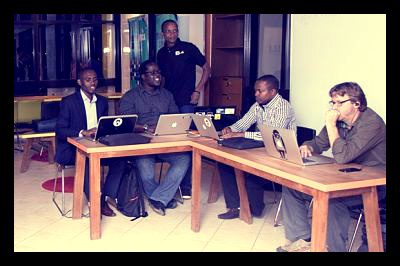
This is the belief of kLab, a tech hub in Rwanda where young people can bring their startup ideas and receive free Wi-Fi, workspace and mentorship from professors, business owners, and community leaders.
kLab – which stands for “knowledge lab” – has been operating for over a year and was officially launched in October 2013. The center is funded by the Rwanda private Sector Federation, the Rwanda Development Board and the Japan International Cooperation Agency.
“The knowledge lab is an innovation center where fresh and young graduates come to work on their projects, especially in the tech industry,” said Jovani Ntabgoba, kLab’s general manager, at the launch.
kLab currently offers the services of 21 different mentors to its over 80 tenants. The startups at the center range from online shopping websites to improved medical technology. The mentors offer these young people the ability to truly flesh out their ideas and turn them into much more.
“The culture is collaboration, but it’s not just collaboration; it’s positioning oneself at an age where you receive the best mentorship that you cannot find anywhere else in Rwanda,” Ntabgoba said. “At kLab we have all of the knowledge that is required for a tenant to develop their business.”
The power of this collaboration has led to the beginning of many bright futures for startups that focus on the vision of the country of Rwanda: to turn the nation into a knowledge-based economy. However, young Rwandans are challenged daily by a lack of skills due to the fact that the educational curriculum is not yet “innovation-oriented.”
One of the more recent kLab successes is GIRA ICT – a startup that combats a large roadblock to widespread internet usage in Africa: hardware prices. By partnering with big name manufacturers like Apple, Samsung, HP and Lenovo, GIRA ICT allows consumers to pay for their devices in monthly installments in order to increase hardware ownership across the country.
“We started as a group of five entrepreneurs, so we came into kLab and they gave us a free space to work in. We could enjoy internet… they provided us with mentors,” said project supervisor Alphonse Ruhigira.
GIRA ICT has also been collaborating with the government to supplement the One Laptop per Child program. Founded by Nadia Uwamahoro, this effort provides teachers with laptops that they can pay off over a span of four years. So far, this has helped about 100 teachers to attain laptops and the number is steadily increasing.
“It’s a brilliant innovation and she is doing brilliant business,” says Jean Philbert Nsengimana, Rwandan Minister for Youth and ICT of Uwamahoro. “She’s taken computers to places where they were seeing and touching them for the first time by lowering the affordability challenge.”
Through efforts such as GIRA ICT, kLab is pushing Rwanda towards its goal of becoming a middle-income country by the year 2020.
“I want you to understand the uniqueness of this kLab compared to many other iHubs in the region. The uniqueness of this one is that you are in this building and you are not alone in this building,” said Michael Bezy, associate director of Carnegie Mellon University in Rwanda, who works with kLab in order to provide mentorship to its tenants.
“You look at that and you say ‘I have entrepreneurs here, I have a world-class university, I have IT businesses and I have IT infrastructure.’ That looks to me like a mini Silicon Valley,” said Bezy.
– Samantha Davis
Sources: Wired, kLab, Wired
Photo: Wired

Davos’s Gender Problem
Helen Clark, the former prime minister of New Zealand, was interviewed during her preparations to attend the World Economic Forum in Davos, Switzerland. More than 2,600 people are currently attending the forum, which runs from January 22 to January 25.
Asked about women’s attendance at the conference, Clark said “It’s the same story every year, under 20% of the people going are women.” When informed that the actual figure is closer to 15%, the former prime minister just rolled her eyes.
And, understandably so. Despite comprising 50% of the global population, a mere 15% of attendees are women. Worse yet, this number is down from last year, where 17% of attendees were female. Statistically, this means a person is 66% less likely to encounter a woman at Davos than anywhere else in the world.
The World Economic Forum’s (WEF) organizers contend that the gender disparity at the conference merely mirrors the reality of today’s world. WEF’s managing director and head of communications Adrian Monck says: “We’re on the front line of reflecting the world as it is, not how we want it to be.”
Monck claims that the organization wishes its meetings were better attended by women but that the organization’s greater goal prevents it. WEF’s imperative? To bring together the world’s most powerful and influential people. Given that only 16.9% of Fortune 500 boards of directors are comprised of women and less than 5% of the Fortune 500 are actually led by women, it is a point that, unfortunately, makes sense.
However, according to Clark, who is currently ranked as the 21st most powerful woman in the world by Forbes, getting women to these events should not be an issue. “Often the response from people who organize these events is that they cannot find enough women. If you look you can find them, they exist,” she says.
At least one measure is in place to encourage more women to attend. Business members of WEF receive varying numbers of invitations to be distributed to their employees as they see fit. At the highest level of membership, members are offered four tickets, but if one of their designated tickets is given to a female employee, the company gets a fifth ticket to dole out.
But, as evidenced by the 15% female attendance rate at Davos this year, such a measure enjoys only limited success in drawing women to the conference. Thus, Davos’s reflection of the world’s gaping gender bias calls into question the efficacy of the conference.
The WEF defines itself as “an independent international organization committed to improving the state of the world by engaging in business, political, academic and other leaders of society to shape global, regional and industry agendas.” Yet, with only one out of every seven delegates a woman, how can you really tackle the issues that face today’s world?
Making such a question even more stark is WEF’s theme this year: “Reshaping the World.”
As put by Forbes’s Dina Medland, “what’s the point of meetings between elite male leaders to discuss a world that goes far beyond their boundaries?”
– Kelley Calkins
Sources: The Telegraph, Quartz, Huffington Post, Forbes
Photo: The Daily Beast
Tech Hub for Rwanda Startups
To make positive change in the world, we don’t just need tons of money, popularity or political influence, we need the right tools.
By getting the right people together in one place, specifically one that fosters intellectual development and creativity, we can make great things happen.
This is the belief of kLab, a tech hub in Rwanda where young people can bring their startup ideas and receive free Wi-Fi, workspace and mentorship from professors, business owners, and community leaders.
kLab – which stands for “knowledge lab” – has been operating for over a year and was officially launched in October 2013. The center is funded by the Rwanda private Sector Federation, the Rwanda Development Board and the Japan International Cooperation Agency.
“The knowledge lab is an innovation center where fresh and young graduates come to work on their projects, especially in the tech industry,” said Jovani Ntabgoba, kLab’s general manager, at the launch.
kLab currently offers the services of 21 different mentors to its over 80 tenants. The startups at the center range from online shopping websites to improved medical technology. The mentors offer these young people the ability to truly flesh out their ideas and turn them into much more.
“The culture is collaboration, but it’s not just collaboration; it’s positioning oneself at an age where you receive the best mentorship that you cannot find anywhere else in Rwanda,” Ntabgoba said. “At kLab we have all of the knowledge that is required for a tenant to develop their business.”
The power of this collaboration has led to the beginning of many bright futures for startups that focus on the vision of the country of Rwanda: to turn the nation into a knowledge-based economy. However, young Rwandans are challenged daily by a lack of skills due to the fact that the educational curriculum is not yet “innovation-oriented.”
One of the more recent kLab successes is GIRA ICT – a startup that combats a large roadblock to widespread internet usage in Africa: hardware prices. By partnering with big name manufacturers like Apple, Samsung, HP and Lenovo, GIRA ICT allows consumers to pay for their devices in monthly installments in order to increase hardware ownership across the country.
“We started as a group of five entrepreneurs, so we came into kLab and they gave us a free space to work in. We could enjoy internet… they provided us with mentors,” said project supervisor Alphonse Ruhigira.
GIRA ICT has also been collaborating with the government to supplement the One Laptop per Child program. Founded by Nadia Uwamahoro, this effort provides teachers with laptops that they can pay off over a span of four years. So far, this has helped about 100 teachers to attain laptops and the number is steadily increasing.
“It’s a brilliant innovation and she is doing brilliant business,” says Jean Philbert Nsengimana, Rwandan Minister for Youth and ICT of Uwamahoro. “She’s taken computers to places where they were seeing and touching them for the first time by lowering the affordability challenge.”
Through efforts such as GIRA ICT, kLab is pushing Rwanda towards its goal of becoming a middle-income country by the year 2020.
“I want you to understand the uniqueness of this kLab compared to many other iHubs in the region. The uniqueness of this one is that you are in this building and you are not alone in this building,” said Michael Bezy, associate director of Carnegie Mellon University in Rwanda, who works with kLab in order to provide mentorship to its tenants.
“You look at that and you say ‘I have entrepreneurs here, I have a world-class university, I have IT businesses and I have IT infrastructure.’ That looks to me like a mini Silicon Valley,” said Bezy.
– Samantha Davis
Sources: Wired, kLab, Wired
Photo: Wired
Syrian Civilians Need More Humanitarian Aid
Although countries offered more than $2.4 billion to help Syrian civilians who are struggling due to the civil conflict, United Nations Secretary General Ban Ki-moon said this amount is simply not enough.
According to Ki-moon, “$6.5 billion was needed to provide medical care, food, water and shelter for Syrian refugees and civilians inside the country this year.”
On behalf of the United States, Secretary of State John Kerry pledged $380 million in new assistance. It is true that other countries have offered more than what the U.S. is willing to give this time around. However, the U.S. has provided $1.7 billion since the conflict emerged, making it Syria’s top donor.
Even if enough assistance is generated, there are barriers that reduce or prevent the flow of aid offered to Syrian civilians from reaching their hands. According to Kerry, no aid would be enough in the first place until the Syrian president discontinues “using starvation as a weapon of war.”
Another problem is in the past, not all donor nations actually provided the amount they originally promised. In 2013, only 70 percent of the aid offered by nations actually made it to Syrians. The remaining amount was not given.
Despite the efforts of providing humanitarian aid to Syrian civilians, more money is being spent to destroy the chemical weapons of Syria. According to an article published in The Atlantic, “The U.S. Army’s Chemical Materials Agency oversaw the destruction of just over 28,364 tons of chemical weapons – nearly 90 percent of the U.S. stockpile – for an estimated cost of $28 billion”.
The authors argue this strategy is worth the money and it will eliminate the possibility that terrorists would acquire the chemical weapons of Syria.
All of this is to suggest that the case of Syria is undoubtedly complicated. On one hand, not funding the destruction of chemical weapons may haunt the U.S. in the long run; on the other hand, according to the New York Times article, “the situation in Syria is worsening so rapidly that the humanitarian needs seems to outpace the resources promised.” Moreover, the article claims that roughly 6.5 million Syrians have been displaced and over 2.3 million became refugees in other countries.
Dealing with the political situation in Syria requires careful planning by the U.S. due to the polarized nature of the state. Perhaps the only solution to this mess is if more donors are willing to pledge a generous amount of money for humanitarian aid. In the meantime, there is no way to tell when the civil war in Syria will end.
– Juan Campos
Sources: New York Times, The Atlantic
Photo: VOA News
Drug-Resistant TB in South Africa
Several are in shock about the tuberculosis situation in South Africa and no solution has been given. Patients who have drug-resistant tuberculosis are being sent home despite the high likelihood that they will transmit it to their family members. These findings have been released after a study was published in the medical journal, The Lancet.
According to the report, 107 patients were monitored while they were treated for tuberculosis. Out of these people, 78 died in spite of being treated with six drugs to 10 drugs. These South African patients who were diagnosed as untreatable but infectious were discharged due to insufficient beds in hospitals. Several doctors are advocating for funding so that patients can be treated away from the community. Tuberculosis is highly infectious and can just as easily spread like the flu, ultimately infecting the lungs and potentially causing death.
South Africa does not have advanced treatments for tuberculosis and according to the World Health Organization, 450,000 people have multi-drug resistant tuberculosis in Eastern Europe, Asia and South Africa. Research professors are in support of reintroducing old sanatoriums so that these patients will have comfort and long-term care while they struggle with the untreatable disease. According to The Lancet, 42 percent of patients being sent home have drug-resistant tuberculosis. In several cases they were being sent back to their one bedroom homes shared with children and other family members.
Keertan Dheda, a professor of medicine in Cape Town reports that new drugs are urgently needed. Most tuberculosis patients may live for more than a year and are risking the lives of others they come in contact with during that time. Those with virtually untreatable tuberculosis, XDR-TB, pose extreme danger to communities. In one case, one patient passed on the infection to his brother and both died.
Such cases have led to global strategies in the past with development of new forms of tuberculosis control. Due to the current lack of funding, the situation does not look promising. There is a large need for investments in drug development and diagnostics for global tuberculosis research.
-Maybelline Martez
Sources: The Guardian, Reuters
Photo: MSF
Global Health Corps, Creating Global Leaders
For individuals who are passionate about improving worldwide living conditions and gaining the skills necessary to further oneself in the field of global health, internships are fraught with worthwhile and unique opportunities to gain knowledge and hands-on experience. With the plethora of diverse internships, the Global Health Corps (GHC) initiative, established in 2009, has stood out as an enriching opportunity for passionate young individuals. The Global Health Corp was engendered by the belief that adequate health is not only a privilege, but also a right for every human across the globe.
GHC aligns interns with top-notch organizations so both parties are able to collaborate-mutually benefiting each other in order to improve global health. According to the GHC, many opportunities to improve global health are not available for individuals who have not already established themselves in the medical field. Thus, another goal of the Corp is to provide opportunities for young people, especially individuals from diverse roots, to achieve their potential and make an impact on worldwide healthcare.
The program offers summer internships at the GHC headquarters in New York City. Furthermore, fellows can also be placed in locales such as Burundi, Rwanda, Uganda and Zambia. The internship provides unique opportunities such as aiding the enhancement of the GHC program, raising money through fundraising, and improving communications support.
According to the Corp, there are a series of six steps taken throughout the internship project. First, fellows are chosen, then they are paired with a host organization and partnered with a participating organization. Additionally, fellows are able to develop their unique skill-sets, establish an educated community and continue to promote global health initiatives long after the internship expires.
The Corp also provides opportunities for interns to work for global change through three key goals. Interns will be able to help increase the impact of prominent organizations by working with such organizations. Additionally, the GHC provides excellent training for aspiring future leaders by engaging interns in a wide-range of developmental activities. Furthermore, interns are able to engage in constructing an international community for change that will continue to flourish even after the yearly internships have been brought to a successful end.
– Phoebe Pradhan
Sources: Global Health Corps, Huffington Post
Photo: Wize Hive
Australian Foreign Assistance Cuts
Australian Foreign Minister Julie Bishop recently announced Australia’s plans for its foreign assistant budget in 2014 to the tune of over AUD$5 billion, which will be implemented through foreign aid expenditures. Unfortunately, Australia will be making $107 million in cuts in comparison to last year’s budget, which will ultimately affect many ongoing programs, particularly in Africa.
It was also confirmed by the Department of Foreign Affairs and Trade (DFAT) that Australia’s share of the latest round of funding towards the International Development Association (IDA,) will be cut to AUD$735 million. Bishop spoke openly about the cuts in funding recently and defended them by saying it is an effort to move away from a “hand out culture” and improve Australian foreign assistance efficiency.
“In this way, we have an aid budget that the Australian people will be proud of. We believe that this refocus of our aid budget will deliver effective outcomes. Under Labor’s last budget, they were to receive 2.5 percent of overseas development assistance (ODA.) Under this revised budget they will receive 2.7 percent of ODA- [which] is four times what these non-government organizations received from 2007 and 2008,” said Bishop.
Other organizations also spoke about the cuts, but more critically. Archie Law, the executive director of ActionAid, which operates in 40 countries internationally, said, “But what it hasn’t done until now is given a little bit more detail of where those cuts are coming from. Particularly concerning is the fact that it looks like the Africa program will be cut in half. The region which has more people living in poverty per capita than anywhere else in the world will receive half the assistance from Australia when they receive pretty little in the first place.”
While there is valid support for both sides of the situation, what is universally agreed upon is that there needs to be a healthy level of accountability overseeing how Australian aid money is spent. Australia will continue to meet many of its prior obligations such as the Multilateral Debt Relief Initiative and will focus its efforts in the 2014 year specifically in the Indo-Pacific area.
– Jeffrey Scott Haley
Feature Writer
Sources: The Australian
Photo: The Guardian
Ukrainian Government and Opposition to Negotiate
Following new legislation that outlawed the right of protest in Ukraine, people have taken to the streets in a display of anger and violence. The situation seems to have gotten out of hand for Ukrainian police and officials, as they are unable to peacefully control the protests. Resorting to brute force to hinder the people, the international community is beginning to call the situation a human rights violation for the people of Ukraine.
International leaders such as United States Vice President Joe Biden are stepping in to urge Ukrainian Prime Minister Mykola Azarov to resolve the issue peacefully. Biden also went on to state that relations between Ukraine and the U.S. may be hurt as a result of the Ukrainian government’s treatment of the issue. Unfortunately for Azarov, the people are calling for the resignation of Azarov as well as other government leaders.
Opposition and government leaders have met multiple times to try to reach agreements on the issue, but no progress has been made as of yet. After meeting with Ukrainian President Viktor Yanukovych, opposition leader Vitaly Klitschko states that the President disagreed to the demands of resignation for both he and his cabinet members. Nevertheless, Yanukovych is determined to continue negotiation talks to reach a resolution.
Recently, news sources in Ukraine reported Yanukovych “has promised a government reshuffle, an amnesty to detained activists and other concessions, after protests against his rule engulfed Ukraine.” However, opposition forces have denied Yanukovych’s offers and seek to continue protesting.
In the city of Lviv, hundreds of protestors gained control of regional governor Oleh Salo’s office and forced him to sign off a resignation letter. Opposition movements in various cities across Ukraine have also sought to gain control of regional government offices but have not been as successful.
Although negotiation talks have stalled, what is certain is that opposition forces are not expected to give in quietly to Yanukovych’s offerings. The protesters are calling for early elections to replace their government and until then, protests are expected to continue.
– Jugal Patel
Sources: Voa News, CNN, FOX
Photo: Microsoft
Mass Killings in Bangui
In recent days the year-long struggle in the Central African Republic has been brought to the attention of the United Nations. On December 5, the UN Security Council voted unanimously for French and African forces to “take all necessary measures” in dealing with the conflict. On December 10, a UN spokesperson announced that “more than half a million” people had been “displaced within CAR since the crisis began in December 2012.”
Rebels in the Central African Republic began making assaults against the government in December 2012 before overthrowing former President Francois Bozize in March. Though there was hope that the new leader who was put in place could quell some of the violence in the area, in recent months the violence has escalated into near civil-war conditions.
As it happens, the violence in this region is felt most acutely by those living in the capital city, Bangui. It has been estimated by the UN High Commissioner for Refugees that over 100,000 people living in Bangui have been displaced in the last year. These refugees have been living in dirty camps that leave the people residing in them vulnerable to infections and disease.
On November 25, UN Deputy Secretary-General Jan Eliasson explained that an estimated 1 out of every 3 people from the population of 4.6 million are in need of food, protection, health care, water sanitation and shelter. The UN had previously put forward a $195 million appeal to help in the nation, but it has not even been half-funded as of that date.
Moreover, some of the worst violence in the region has occurred near the northern border with Chad, prompting worries that fighting will spill over into that country. The recent bouts between Christian and Muslims have also raised concerns, with French Foreign Minister Laurent Fabius saying that the country “was on the verge of genocide.”
Mass killings in Bangui have, furthermore, sparked these concerns with the various reports coming out this month. According to a United Nations report, 450 people were massacred within city in 3 days, while others fled for the refugee camps. Given the hatred that has been fostered in the country, it may be some time before the situation could be settled.
France hopes that it can have a positive impact on this nation it once colonized. French and African Union troops have entered the Central African Republic since the UN Security Council voted to take action within the nation. The troops are working to disarm the various militia groups, with the hope that a stable government could be established.
Though Africa, as a continent, looks to be on the upswing, there are still terrible conflicts happening in the Central African Republic. These conflicts need to be noticed, and with the work that the UN is doing, more people are learning about the situation. With luck, a new year could bring new hope for this beleaguered nation.
– Eric Gustafsson
Sources: United Nations, New York Times, PBS
Photo: AFP
Nonprofit Careers
For many people the nonprofit sector, also known as the “third sector,” can offer an exciting and rewarding career. With the exception of where the funding comes from, nonprofit organizations often are run very similarly to for-profit organizations. They also have to adhere to the same policies and may even hire similarly qualified people. This article will provide an overview of the types of jobs available in the nonprofit sector as well as some of the things to consider when looking for a non-profit job.
Development
The development department is one of the largest and highest paying job categories in the nonprofit sector. Development professionals work on gathering the resources that fund the programs and initiatives run by the organization. These jobs are needed in order for the organization to stay alive thus affording the position to pay well and stay in the position of not likely to be cut. Jobs in development also tend to be less competitive than jobs in other departments. Such jobs here can include:
– Director of Development
– Fundraiser
– Proposal Writer
– Communication Professional
Program
Being part of the program department is exciting and rewarding, especially since those who work in this department get to put their organization’s mission into action. These are the people who will be developing and implementing disaster relief plans in developing countries, or providing services to people with mental health challenges. Unfortunately program careers are very competitive and have a high burn out. These jobs include:
– Program Manager
– Program Assistant
– Policy Analyst
– Technical Advisor
Administrative
Just like private sector companies, nonprofit sectors also need an administrative team to help organizations keep on their feet and run smoothly. These jobs are also good stepping-stones into programs careers or management level jobs.
– Human Resources
– Office Manager
– Receptionist
Important Things to Consider About Careers in the Nonprofit Sector
1. You’ll have to wear many hats – Nonprofits don’t always have the funds to hire a large staff, this means you may have to be the graphic designer, the social media coordinator and the grant writer.
2. You need to be passionate about the cause – Employers aren’t just looking for talented qualified workers, they are also looking for people who are passionate about the cause and will work hard to achieve the organization’s goals.
3. You’ll probably make less money – Nonprofits have less resources, this means your office may be less plush and your salary smaller.
4. Volunteer first – It’s important to volunteer or intern at a nonprofit to see if you like the culture and are actually passionate about the job. This also proves your commitment to an employer and can open up job opportunities.
5. Nonprofits are run like any other business – Managing finances and being cost effective are just as important to nonprofits as they are to businesses.
– Elizabeth Brown
Sources: Miami University, US News, Forbes
Gif: Borgen Project
Poverty is Reality for Struggling Spain
The Great Recession brought economic progress to a virtual standstill in the Western World: property values plummeted, the stock market took a hit to the gut and unemployment rates spiked. In the United States, investors and employees are slowly getting back on their feet, but are still anxious due to the ping-pongish activity of the Dow Jones and mediocre new job numbers from the Department of Labor.
While Americans struggle to digest their nation’s 6.7 percent unemployment rate, some Europeans are choking on jobless numbers affecting upwards of 20 percent of the workforce, even over five years after the economy first took a nosedive.
The European Union’s austerity measures have yet to restore stability to pre-bailout levels and a recent Oxfam report revealed “only the richest 10 percent of Europeans…have seen their wealth rise” as a result of the well-intentioned policies. Macroeconomists measure the ongoing crisis in terms of government debt, budget deficits and income inequality, but the individuals and families affected in floundering nations like Spain feel the sting of poverty in an acute and personal way.
Spain, a pillar of culture and history on the European continent, hosts millions of tourists each year who yearn for a taste of Hispanic culture and a hint of the nation’s unique flavor. Few westerners would suppose that a historic power player overflowing with natural beauty is home to a poverty rate on par with former socialist nations Romania and Bulgaria.
Spain’s saga followed the same basic trajectory as that of the United States. In 2008, following a property boom, regional governments that had raked up pricey expenses found themselves with empty pockets and out-of-control debts. A shaky central government with debt of its own was unable to provide enough federal assistance to localities and the nation found itself in an economic tailspin.
E.U. interventions such as the aforementioned austerity measures have thus far been ineffective in creating jobs and a critical portion of the Spanish workforce has emigrated in search of opportunities suited for their skill set. Those remaining must clamor for dwindling, low-paying positions.
Many former middle class Spanish families have found themselves unexpectedly living under the poverty line.
A whopping 15 percent of Spaniards subsist on less than half of the national median income and nearly 10 percent have unfortunately arrived at “great poverty” status, indicating a household income below 40 percent of the national average. For Spaniards, these rates translate into monthly earnings of below 555 euros and 444 euros, respectively, for the two groups.
Women and young people are disproportionately affected by poverty in Spain. According to Eurostat, a full 1.2 percentage points (to the detriment of females) separate the number of impoverished men and women. Similarly, six percent more young people fewer than 25 years of age suffer in poverty than Spanish citizens in their late twenties and beyond.
Rising power bills, a frozen minimum wage and more expensive public transportation will add to the burden for a generation of Spaniards who, on an aggregate level, greet 2014 “a little poorer.”
Frustrated citizens, the backbone of 2011’s “los indignados” movement (a precursor to Occupy Wall Street,) will continue to push back against policy decisions negatively impacting an increasingly impoverished working class. Poverty will be synonymous with reality for over 20 percent of Spaniards until Spain’s anemic economy is jump-started back to life.
– Casey Ernstes
Sources: Eurostat, Forbes, Global Research Centre for Research on Globalization, Inequality Watch, Oxfam International, The Huffington Post, The Huffington Post WorldPost
Photo: Food Not Bombs