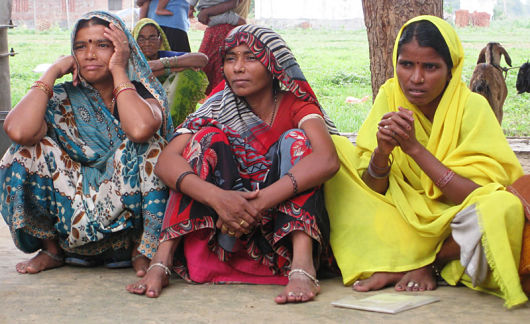
If you have paid attention to any type of news recently, you likely know that women’s rights and equality have been a hot topic in the United States. These issues that women face—violence, employment issues, malnutrition and more—only multiple in developing and impoverished areas around the globe.
Among the tribulations women face are violence, malnutrition, lack of education, unemployment, less access to healthcare and family stress. All of these come in different forms, but with more than 3 billion people in the world living in poverty and 60 percent of those being women according to The Hunger Project, these factors influence billions of women and children every day.
Like in most poverty-based situations, there are positive aspects occurring as well as unpleasant and disturbing news.
The Ugly: Violence.
Domestic abuse, sex trafficking, childhood marriage and sexual exploitation all fall into the category of violence but are not limited to those forms of violence. Violence is one of the ugliest problems women around the world face, especially impoverished women.
UN Women reported that female children who are poor are “2.5 times more likely to marry in childhood than those living the wealthiest quintile.” If married as a child, girls’ likelihood to experience some form of sexual exploitation increases due to sexual encounters too early in life that are often forced relations.
On top of early marriage, sex trafficking is a widespread problem around the entire world. Sex trafficking occurs in places from the Mid-West of the United States to Central Europe, to highly impoverished areas of Africa.
This disheartening yet growing epidemic targets impoverished women and children specifically. UN Women classified them as being much more vulnerable to become victims of sex trafficking.
For these women and families living in poverty, changing their abusive reality is rarely an option. “Due to their lack of resources and income,” abusive households can provide some forms of security.
The Bad: Though just as ugly, there are numerous additonal troubles that women face while in poverty.
Malnutrition and a lack of healthcare are two of the largest and most threatening problems that women face. The Hunger Project found that “50 percent of pregnant women in developing countries lack proper maternal care,” which results in at least 240,000 deaths annually from pregnancies and childbirth.
The Hunger Project also reported that “1 out of 6 infants are born with a low birth weight in developing countries,” which is due to malnutrition and uncared for health issues in women.
In developing and impoverished areas, healthcare is scarce enough at it is. When healthcare is provided, males are often treated first because of their presumed ability to work more and hold more worth.
This often leaves women and children sickly and untreated. In most situations, men perform agricultural work to sell while women grow food for the family and tend to the children. If unwell, providing for and taking care of the family can become near impossible for these women.
Being uncared for and underfeed trickles down through the families. Nearly 45 percent of deaths in children the age of 5 are due to poor nutrition. With more than 3 million child deaths each year, an average of 8,500 children are dying each day due to malnutrition and a lack of healthcare. Most of these children, according to the Food and Agriculture Organization of the United Nations, are under the age of 5.
The difficulties of finding work and education as a women, can be added stressors. Again, work and education are luxuries in most developing countries, which when provided, often go to male prospects before women.
With such a disadvantage at hand, women face more obstacles in becoming educated and able to find a superior job that will allow them to take better care of their families.
The Good: Finally, there is good news for women in developing and impoverished areas.
More and more people around the globe are becoming informed about poverty and its difficulties especially for women and children. Poverty for any gender is a constant struggle, but the added stress for women is becoming increasingly apparent.
Through news outlets and by word of mouth, talk about poverty and ways to end it is spreading. Because of the work of organizations like The Hunger Project, UN Women, The Borgen Project and countless more, support and assistance is being sent to the most impoverished corners of the world.
A UN Women-supported project has begun to train families and women on how to become entrepreneurs of their own businesses and the economic ins and outs of it. The program has provided training for “more than 5,000 families in Kyrgyzstan and Tajikistan” so far and is equipping them with needed resources.
This is one example of the many organizations and projects that are working to improve the livelihood of people around the world and for women in poverty. Continuing to raise awareness regarding the overwhelming and frightening facts of our world is the first step to ending poverty for all genders and all ages.
– Katherine Wyant
Sources: UN Women, FAO, The Hunger Project
Photo: Grameen Foundation

Artificial Trees Absorb a Thousand Times More CO2
Scientists have been arguing for a reduction in carbon emissions ever since the effects of global warming were recognized. Now, to further aid the fight against increased global warming, some of these scientists have found a way to suck carbon dioxide from the atmosphere. This technology will manifest in the form of “artificial trees” that absorb up to one ton of carbon dioxide in a day.
These artificial trees look and feel nothing like real trees. In fact, they resemble cars in size and shape. Not only will they hey absorb carbon dioxide from the air a thousand times faster than a normal tree would, but they will also not release carbon back into the atmosphere unlike real trees.
Previous inventions that removed carbon dioxide from the atmosphere necessitated the processing huge volumes of air, since carbon dioxide makes up just 0.04 percent of the air we breathe. Artificial trees, however, will simply absorb carbon from the air into their leaves, which are coated with sodium carbonate. When sodium carbonate comes into contact with the carbon dioxide, it shall form a harmless bicarbonate – baking soda.
Klaus Lackner and Alan Wright, the brains behind this new technology, understood that carbon dioxide emissions needed to be decreased within the next few decades to prevent the non-reversible effects of climate change. Even if humans stopped all carbon dioxide emissions today, the amount left in the atmosphere would keep temperatures increasing for the next hundred years.
Artificial trees have the potential to reverse this trend. Ten million artificial trees could absorb 3.6 billion tons of carbon dioxide a year. This would amount to 10% of all global emissions. A single tree would initially cost $20,000, around the price of a car in the U.S. However, as production of these trees increase, price would also fall, making this initiative cost less prohibitive.
The carbon dioxide collected by the artificial trees could also be used or stored in few ways. It could either be transformed into a liquid and buried underground. Alternatively, hydrogen could be added to it to create hydrocarbon fuel. As long as the process uses renewable energy, this fuel would not release any new carbon dioxide into the atmosphere. Furthermore, the gas could be injected into rocks such as peridotite, which can hold huge amounts of carbon dioxide.
The concept of artificial trees is a simple one, yet has immense appeal. The economy of energy would remain the same, enabling people to continue living existing lifestyles. Artificial trees would just allow us to maintain these lifestyles better. Noting that the U.S. will also be producing as much petroleum as Saudi Arabia by 2020, it is unrealistic to hope that alternative sources of energy would replace oil any time soon.
On the other hand, it is not economically sound for companies to invest in these artificial trees currently. Only when high penalty for companies that have huge emissions is put in place, will absorbing carbon dioxide be viewed as a solution equivalent to reducing emissions.
– Radhika Singh
Sources: BBC 1, BBC 2, National Geographic
Photo: Physics World
Major Poverty Measurements
Different organizations and governments measure poverty differently. This makes it difficult to establish an understanding of which people should be categorized as poor. Below are some measurements that have been developed to set worldwide standards for the poverty line.
Absolute Poverty Measurement
This measurement refers to the amount of resources a person needs to maintain a minimum standard of living. The absolute poverty line can remain the same regardless of how much the overall standard of living or income distribution changes in a society. The World Bank’s poverty line of $1.25 worldwide is an example of an absolute poverty measurement.
Advantages: It allows for easy comparison between different countries.
Disadvantages: It does not always accurately represent the different costs of subsistence from country to country. It is simplistic and does not reflect indebtedness, health, education, housing or access to public services. Measurements do not take into account the amount of consecutive years people live under the poverty line.
Relative Poverty Measurement
This measurement refers to the living standard of a person relative to the rest of society, and changes as the standard of living in society shifts. Peter Townsend, a pioneering figure in defining relative poverty standards, defined people living in relative poverty as unable to “play the roles, participate in the relationships, and follow the customary behavior which is expected of them by virtue of their membership in society.” The EU calculates poverty using relative poverty measurements. Usually this means that people who earn only 40 to 70 percent of the average household income are categorized as under the poverty line.
Advantages: Reflects conditions in society at a specific time.
Disadvantages: It can give a skewed understanding of who lives in poverty, as people can be categorized as poor even if they are well-off simply because they have much less income relative to the rest of the population. It is simplistic and does not reflect indebtedness, health, education, housing or access to public services. Measurements do not take into account the amount of consecutive years people live under the poverty line.
Multidimensional Poverty Index
This measurement was established in 2010 to replace the Human Poverty Index of the United Nations Development program. It aimed to ameliorate the downsides of the absolute and relative poverty measurements. It measures poverty through three indicators: health, education level and standard of living. Each indicator has multiple sub-indicators. People are categorized as poor if they are deprived of more than a third of each indicator, while those who are deprived of half or more are in extreme poverty.
Advantages: The MPI allows measurements that can be compared accurately across different regions, countries, ethnic groups and other community characteristics.
Disadvantages: Measurements do not usually take into account the amount of consecutive years people live under the poverty line.
– Radhika Singh
Sources: University of Pennsylvania, The European Anti-Poverty Network, Instituto Nacional De Estadistica, Oxford Poverty & Human Development, United Nations Development Program
Photo: United Nations Development Program
Breaking Down the Drug Trade in Colombia
Colombia is known to have one of the biggest illegal drug industries in the entire world, grossing around $10 billion every year. This huge sum is largely due to the existence of a rebel army called the Fuerzas Armadas Revolucionarias de Colombia (FARC), which is a guerilla group that has combated the government of Columbia for decades.
The FARC thrives off of the lower class, a group of individuals that have become enraged with the injustices being committed against them every day. While much of their money comes from ransoms, a large portion of it is also drawn from drug trade.
Since Columbia is a more tropical climate, farmers who are mostly lower class citizens, can easily grow cocaine between their crop rows without it being noticed by officials. This cocaine is then purified and packaged and sent through airports by drug mules who often do not get caught due to ingenious methods of hiding. But this is beginning to come apart.
Airport security is at an all-time high in Columbia, leading drug traffickers to become more ingenious with their methods. One example of this was using a mule posing as a hiker and filling his rope with liquid cocaine. Airport security is onto such tricks and has been able to cut down the amount of cocaine that is being trafficked. A shift in management is also called for as many officials could have connections with illegal groups such as the FARC. There has been a long standing war between the FARC and the government and it does not look like it will be ending anytime soon. However, there is a glimmer of hope in the blanket of darkness that envelops this country.
The long years of struggle between the FARC and the government has come to a standstill as government officials begin to accept their fates as prisoners in their own nation, but various NGOs have begun to step in to make a difference. NGOs have taken up the job of accounting for dead or lost individuals, monitoring violence, investigating links between the FARC and government officials, providing aid to individuals who have been displaces due to violence and providing education to those who search for it.
This education will eventually become key to decreasing the overall transactions of illegal drugs in Columbia. By providing education for the young children, NGOs are creating a brighter future for entire families. An educated individual can go on to travel overseas or to create innovation and business in their own hometowns. This education can also be spread through generations allowing entire families to rise in social standing.
When a family no longer relies on the production of drugs as their main source of income, the FARC may begin to lose supporters. It is a daring venture and one that will inevitably prove to be very dangerous, but for those bold few that seek out the education they deserve, it can make a world of a difference.
– Sumita Tellakat
Sources: Freedom House, Stratfor Global Intelligence,
Photo: Sekuritaci
The Voices of African Women in Agriculture
The African Women in Agricultural Research and Development program (AWARD) seeks to realize the untapped potential of women scientists in Africa. As a career development program, AWARD offers competitive fellowships to African women in agriculture.
These women have a common goal to eliminate hunger and poverty in Africa through agricultural research. Research areas are widespread, but have included plant pathology, water management and poultry science. Fellowships have been granted to women from a range of socioeconomic backgrounds.
So, why women? Why is it specifically important to support female agricultural scientists in Africa?
Most African smallholder farmers are women, but only one in four agricultural researchers is female. There are traditional and cultural barriers to women’s participation in agricultural science and to education in general. In this traditionally male-dominated field, women need support to develop leadership skills.
The AWARD program offers mentorship and development of science and leadership skills for women in agriculture. The goal is to provide women with a position where their voices can be heard in the field of agricultural science. 390 African women scientists have benefitted from this program.
Food security will require changes in field and laboratory work, and women have much to offer in this area of study. Dr. Jane Ambuko, supported by the AWARD program, started a project to introduce farmers to a cold-storage option for their food products. The CoolBot system is less expensive than traditional cooling systems and can preserve fruits and vegetables.
According to the Alliance for a Green Revolution in Africa, “four billion dollars’ worth of food is lost annually due to inefficiencies across the agricultural value chain after crops are harvested.”
The CoolBot system and the work of Jane Ambuko offer a solution to combat food waste and improve the economic livelihoods of families in Africa. This is one example of a research innovation, developed by a woman, that can help save lives by reducing hunger. The goal to end global poverty is more attainable with the inclusion of women.
– Iliana Lang
Sources: African Women in Agricultural Research and Development, Agricultural Science & Technology Indicators, AGRA, Feed the Future
Photo: FAO
5 Facts About Education in Armenia
In Armenia, schools are essential for cultural survival and are highly valued with 1,600 years of literary history. The government spends about 3 percent of its annual GDP on education and has passed new laws to help increase educational standards. Armenia has found some success improving education standards and is continuing to find solutions to other educational issues.
Here are five facts you may not know about education in Armenia:
In 2014, the World Bank announced that they will provide $30 million for the Education Improvement Project in Armenia. Reforms taking place include implementing new educational standards and a new national curriculum and extending the educational system to include grade 12; these steps are vital to building a successful and competitive educational system in Armenia. The project will also help 12,000 children living in poverty in rural areas and boost development for electronic content.
– Donald Gering
Sources: Internet World Stats, Social Progress Imperative, UNESCO, UNICEF, World Bank
Photo: Open Source Foundation
5 Famous YouTubers Who Give Back
YouTube has become one of the largest, most influential mediums in the world. According to the website, YouTube has more than one billion users in 75 countries, watching hundreds of millions of hours each day.
More than one million channels receive proceeds from their videos due to the YouTube Partner Program, and a small amount of these channel owners make six figures per year.
Elite YouTubers Zoella, Jack and Finn Harries, and Hank and John Green are a part of the select group who achieved super-stardom from their videos.
However, these YouTubers have more than just a high-paying salary in common. They all participate in numerous charities to give back to those who are struggling.
Zoe Sugg
With about eight and a half million viewers subscribed to her fashion and beauty blog, Zoe Sugg, also know as Zoella, donates some of her time to raising awareness for fatal diseases. Sugg starred in “The Comic Relief Bake Off” in February that funded vaccinations for babies in Uganda. Sugg has also worked with Trekstock, which gives support to young adults with cancer.
“Doing what I do, I get to meet a lot of young people that have been through the stresses and the traumas that go with [cancer],” Sugg said.
Along with this, Sugg is the first digital ambassador for Mind, a mental health charity and has participated in fundraising for the Stroke Association and Band Aid 30.
Jack and Finn Harries
Identical twins Jack and Finn Harries run the YouTube channel JacksGap that has more than 180 million views. The channel’s videos feature the brothers traveling the world, occasionally stopping to film a video for charity. In March of 2013, the twins posted a video about their time in South Africa visiting some Comic Relief projects. More than five million people live with HIV in Africa, according to the video.
“We were shocked to hear how serious the issue had become, but excited to see what was being done to help and meet the people behind the project,” Jack Harries said.
Jack and Finn Harries have helped raised awareness for this issue, because their video now has over two million views.
The twins have also helped The Rainbow Centre, Teenage Cancer Trust and Charity: Water.
Hank and John Green
Another set of philanthropic YouTube siblings with the channel name VlogBrothers hold an online presence of about two and a half million subscribers, and they use this power to promote their charity projects. Hank and John Green created Project for Awesome in 2007.
“During Project for Awesome, thousands of people post videos about and advocating for charities that decrease the overall level of world suck. As a community, we promote these videos and raise money for the charities,” Hank and John Green said.
The charity has taken place for seven years, and last year, the project raised over one million dollars.
Aside from this success, the brothers have also taken part in Partners in Health.
For more information about these YouTubers, visit youtube.com/zoella, youtube.com/jacksgap, and youtube.com/vlogbrothers.
– Fallon Lineberger
Sources: BBC, Boohoo, Charity Water, Mind, Prizeo 1, Prizeo 2, Project for Awesome, YouTube 1, YouTube 2, YouTube 3, YouTube 4, YouTube 5, YouTube 6, YouTube 7
Photo: Telegraph
Fetal Alcohol Syndrome: A Global Issue
In the United States, alcohol is required to have a warning label informing pregnant mothers that alcohol consumption can cause birth defects to their unborn children. Even so, children are still born with Fetal Alcohol Syndrome (FAS). Globally, FAS is also an issue, especially in areas where there is a lack in education and a strong cultural tie to alcohol consumption.
FAS is caused when a mother drinks alcohol during her pregnancy. The alcohol passes through the umbilical cord, acting as a solvent on the developing child’s brain. The Center for Disease Control and Prevention warns that “Drinking alcohol during pregnancy can cause miscarriage, stillbirth, and a range of lifelong physical, behavioral, and intellectual disabilities.” There is no amount of alcohol that is safe to drink while pregnant, nor is there an appropriate time frame to consume alcohol during a pregnancy.
There are several physical and cognitive conditions that a person with FAS can suffer from, including having a hard time with school and learning, poor judgment and reasoning, a lack of empathy, shorter height or lower body weight than average and hyperactivity, to name just a few.
FAS is one of the most prevalent cognitive conditions to affect children, yet it is also the easiest to prevent. Quite simply, a woman should not drink any alcohol if she is pregnant, trying to become pregnant, or not properly preventing pregnancy.
Moreover, FAS has no cure. Once a child is diagnosed, the only treatment is psychological and/or physical therapy to help the person live with the disability.
FAS does not discriminate — children can be born with FAS along every socioeconomic, racial and educational strata. The prevalence of drinking among the poor, usually as a cultural event or tradition, distinguishes FAS as a poverty-related issue.
South Africa is one nation that understands the urgent need for education about FAS. According to the World Health Organization (WHO), “Fetal alcohol spectrum disorder is the most common birth defect in South Africa, by far more common than Down syndrome and neural-tube defects combined.” While the issue is a national one, rural communities in South Africa have a cultural history of alcohol consumption, especially in the wine-making regions.
Nongovernmental organizations (NGOs) have made great strides in trying to eliminate FAS from affecting future generations in South Africa. NGOs such as FASfacts and the Foundation for Alcohol Related Research (FARR) have created educational training to help those most at risk in their country. This is especially important, since FARR estimates that up to “Twenty percent of the [South African] population [was] affected by alcohol exposure during pregnancy.”
Australia has undertaken a similar effort to help their aboriginal communities. Those involved in the movement remind readers that, “as in many disadvantaged communities around the world, alcohol abuse was common half a decade ago. The high consumption of alcohol resulted in high numbers of alcohol-related deaths and suicides, and widespread violence and crime” (WHO).
Alcohol abuse resulted in many children being born with FAS in the aboriginal communities. These children are at risk to continue with the same choices their parents made, with the greater disadvantage of having the lower judgment skills associated with FAS.
The Lililwan Project has been created to help the aboriginal community treat people with FAS and provide educational information regarding alcohol consumption.
In short, FAS does not have to be a chronic generational disorder. Thanks to various educational programs around the globe, more and more people are understanding the dangerous implications that are associated with alcohol consumption during pregnancy. Future generations do not need to be affected by a cognitive disorder that is completely preventable.
– Megan Ivy
Sources: CDC, FARR, FASfacts, WHO 1, WHO 2
Photo: Ruth Shafer Photography
5 NGOs Going Above and Beyond
There are many NGOs doing good for the world’s poor, but here are five that go above and beyond the rest.
1. The Garden of Hope Foundation
The Garden of Hope foundation was founded in Taiwan and acts to aid girls who were victims of the sex trade. This NGO provides psychiatric counseling and safe half-way houses for many girls while they recover from their abuse. The Garden of Hope foundation also works closely with the government to promote policymaking and discussions about the sex trade. Their main focus is to empower girls and women to stand up for themselves and realize that they, too, can have an impact on this world.
2. Save The Children
Save the Children gives children in the United States and around the world what every child deserves: A healthy start, the opportunity to learn and care when disaster strikes. Save the Children acts on all fronts of poverty, ranging from education needs throughout the world to health and humanitarian issues, such as helping children with HIV and AIDS. Save the Children can be found worldwide after any major disaster attempting to rebuild communities and make them stronger. This NGO is wholeheartedly dedicated to improving the lives of the next generation and is a huge part of the bright future that we have to look forward to.
3. Water.org
According to their website, Water.org provides innovative, market-based solutions that change lives every day through safe water and sanitation. This NGO is supporting countless projects that will hopefully provide sanitary water to everyone around the world. There is a basic human need for clean water, but this instead seems like a luxury for every 1 in 9 individuals worldwide. Water.org has become so well organized that for every $1 donated there is a $4 economic return; this comes from the countless lives that are bettered when clean drinking water is available. Water.org has been very successful in involving high-profile celebrities with its cause and has gained international recognition as one of the strongest players in sanitation.
4. Acumen Fund
Acumen raises charitable donations to invest in companies, leaders and ideas that are changing the way the world tackles poverty. This group seems to be searching out the best of the best and providing them with the funding they need to change the world for good. Acumen states that their main goal is “dignity” rather than the usual goal of profitability. They want to help people believe that dreams do come true and to provide them with an arena in which to do this. By funding leaders and innovators in developing communities, the Acumen Fund is able to build rural communities from the bottom up, allowing them to compete in the global market and, in turn, become more developed. This is one great idea that has clearly allowed people all over the world to realize that dreams really do come true.
5. The Borgen Project
The Borgen Project was founded by one man with one computer and one very big dream. Founder Clint Borgen and his team are seeking to make a mark on global poverty by going right to the source: the lawmakers. The Borgen Project seeks to educate individuals on worldwide poverty and what is being done to make an impact. They also communicate one-on-one with lawmakers to gain support for bills that will better the global community. The Borgen team has met with almost every member of Congress and the House and is continuing to inform lawmakers and the public about changes that could be made to make this world a better place to live in.
– Sumita Tellakat
Sources: The Global Journal, The Garden of Hope Foundation, Save the Children, Water.org, Acumen
Photo: Western University
The New Blackberry Makes its Way to Africa
In Nigeria and South Africa, Blackberry has launched its latest smartphone, the Blackberry Leap. According to the company, this smartphone offers more than a day’s battery life, even with heavy use.
This latest version of the phone has switched out its old keyboard to feature a new touchscreen, much like the Apple iPhone. The new touchscreen keyboard features error correction and multilingual support.
Many may question why a consumer would buy this phone when there are much more popular phones like iPhone, Android and Samsung.
The Blackberry, jokingly referred to as the “Crackberry,” was once the must-have device for executives. It was the first smartphone that allowed easy and constant access to email and the Internet. The easy-to-use QWERTY keyboard allowed executives to respond to emails without being tied to a computer.
But with the emergence of the Apple iPhone, it quickly lost its dominance as the number one smartphone in the market.
Would you buy an unpopular smartphone? The answer from consumers in Africa is… yes.
Over the past four years, the Blackberry Curve has been the most popular smartphone in South Africa. A recent survey conducted by Vodacom in South Africa found that Blackberries make up 23 percent of the smartphone market. In Nigeria, Blackberries make up 40 percent of the smartphone market.
But why have Blackberry phones become so popular in African countries?
The first reason is that Blackberries are a status symbol; they were once the phones used by top executives. People strive to achieve the same success associated with the phones.
Additionally, an attractive feature of this phone is its low-cost data bundles. In fact, Users can send messages for free using the Blackberry Messenger (BBM). This makes the phones well-suited for less capable mobile networks.
And lastly, Blackberries are able to stay updated without the purchase of a new smartphone. In developing countries, phones are upgraded less frequently. Before the introduction of the Blackberry Leap, the most up-to-date Blackberry in South Africa was 3 years old.
There is still room for growth for Blackberry in African countries. In a poll conducted by GeoPoll, 17 percent of people reported that they would buy a Blackberry as their next phone.
It is predicted to keep its number one spot in Africa as the most popular smartphone brand partly because of its popularity with students.
The Blackberry brand has transitioned from being known as the phone for high power executives to the most popular, affordable phone used in developing countries. Of course, affordability is an important aspect when purchasing a smartphone. Blackberry has allowed consumers in developing countries to afford a smartphone without sacrificing technology, mobile network service or various communication abilities.
– Kerri Szulak
Sources: Inside Blackberry, IT News Africa, The Conversation
Photo: TechLoy
Women in Poverty: The Good, Bad and Ugly
If you have paid attention to any type of news recently, you likely know that women’s rights and equality have been a hot topic in the United States. These issues that women face—violence, employment issues, malnutrition and more—only multiple in developing and impoverished areas around the globe.
Among the tribulations women face are violence, malnutrition, lack of education, unemployment, less access to healthcare and family stress. All of these come in different forms, but with more than 3 billion people in the world living in poverty and 60 percent of those being women according to The Hunger Project, these factors influence billions of women and children every day.
Like in most poverty-based situations, there are positive aspects occurring as well as unpleasant and disturbing news.
The Ugly: Violence.
Domestic abuse, sex trafficking, childhood marriage and sexual exploitation all fall into the category of violence but are not limited to those forms of violence. Violence is one of the ugliest problems women around the world face, especially impoverished women.
UN Women reported that female children who are poor are “2.5 times more likely to marry in childhood than those living the wealthiest quintile.” If married as a child, girls’ likelihood to experience some form of sexual exploitation increases due to sexual encounters too early in life that are often forced relations.
On top of early marriage, sex trafficking is a widespread problem around the entire world. Sex trafficking occurs in places from the Mid-West of the United States to Central Europe, to highly impoverished areas of Africa.
This disheartening yet growing epidemic targets impoverished women and children specifically. UN Women classified them as being much more vulnerable to become victims of sex trafficking.
For these women and families living in poverty, changing their abusive reality is rarely an option. “Due to their lack of resources and income,” abusive households can provide some forms of security.
The Bad: Though just as ugly, there are numerous additonal troubles that women face while in poverty.
Malnutrition and a lack of healthcare are two of the largest and most threatening problems that women face. The Hunger Project found that “50 percent of pregnant women in developing countries lack proper maternal care,” which results in at least 240,000 deaths annually from pregnancies and childbirth.
The Hunger Project also reported that “1 out of 6 infants are born with a low birth weight in developing countries,” which is due to malnutrition and uncared for health issues in women.
In developing and impoverished areas, healthcare is scarce enough at it is. When healthcare is provided, males are often treated first because of their presumed ability to work more and hold more worth.
This often leaves women and children sickly and untreated. In most situations, men perform agricultural work to sell while women grow food for the family and tend to the children. If unwell, providing for and taking care of the family can become near impossible for these women.
Being uncared for and underfeed trickles down through the families. Nearly 45 percent of deaths in children the age of 5 are due to poor nutrition. With more than 3 million child deaths each year, an average of 8,500 children are dying each day due to malnutrition and a lack of healthcare. Most of these children, according to the Food and Agriculture Organization of the United Nations, are under the age of 5.
The difficulties of finding work and education as a women, can be added stressors. Again, work and education are luxuries in most developing countries, which when provided, often go to male prospects before women.
With such a disadvantage at hand, women face more obstacles in becoming educated and able to find a superior job that will allow them to take better care of their families.
The Good: Finally, there is good news for women in developing and impoverished areas.
More and more people around the globe are becoming informed about poverty and its difficulties especially for women and children. Poverty for any gender is a constant struggle, but the added stress for women is becoming increasingly apparent.
Through news outlets and by word of mouth, talk about poverty and ways to end it is spreading. Because of the work of organizations like The Hunger Project, UN Women, The Borgen Project and countless more, support and assistance is being sent to the most impoverished corners of the world.
A UN Women-supported project has begun to train families and women on how to become entrepreneurs of their own businesses and the economic ins and outs of it. The program has provided training for “more than 5,000 families in Kyrgyzstan and Tajikistan” so far and is equipping them with needed resources.
This is one example of the many organizations and projects that are working to improve the livelihood of people around the world and for women in poverty. Continuing to raise awareness regarding the overwhelming and frightening facts of our world is the first step to ending poverty for all genders and all ages.
– Katherine Wyant
Sources: UN Women, FAO, The Hunger Project
Photo: Grameen Foundation