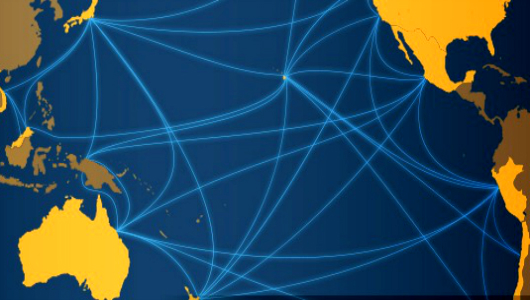
The Trans-Pacific Partnership (TPP) continues to face strong popular opposition, particularly among those who claim that the provisions aimed at establishing new standards for intellectual property are beneficial only to multinational corporations and associated industries. One of those is the pharmaceutical industry, which faces the prospects of increased drug prices and extended patent rights if the agreement becomes law. These revelations come from a WikiLeak’s leak of the Healthcare Annex, the TPP provision concerning access to healthcare and pharmaceutical products.
Among the provisions under scrutiny are proposals to extend patent terms on new pharmaceutical products, increased ability to enforce patent rights, increased risks and costs associated with registering generic drugs and further limits on exceptions to patent rights. The result is increased authority for multinational pharmaceutical companies, higher prices on basic goods and decreased access to basic medicine and healthcare for patients.
Dr. Deborah Gleeson, a professor of Public Health at Australia’s La Trobe University, says the Healthcare Annex does nothing to expand, or even guarantee, access to medicine for the world’s people.
“The purported aim of the [Healthcare] Annex is to facilitate ‘high-quality healthcare’ but the Annex does nothing to achieve this,” she said. “Nor does this do anything to promote ‘free trade’: rather, it tightly specifies the operation of countries’ schemes for subsidizing pharmaceuticals and medical devices with the aim of providing greater disclosure, more avenues for the pharmaceutical industry influence and greater opportunities for industry contestation of pharmaceutical decision making.”
The provision would also affect signatory countries’ control over their own healthcare programs, the result of a “consultation mechanism” that could be used to pressure countries into adopting health policies beneficial to U.S.-based pharmaceutical and medical device companies. According to Jane Kelsey, a professor of law at the University of Auckland and the second specialist consulted by WikiLeaks, this suggests that the ability of member states to subsidize medicine for their citizens will be diminished.
“That will mean fewer medicines are subsidized, or people will pay more as co-payments, or more of the health budget will go to pay for medicines instead of other activities, or the health budget will have to expand beyond the cap,” she said of New Zealand’s healthcare subsidy program.
Proponents of the Healthcare Annex argue that extended patent rights and high drug prices are necessary in order to fund pharmaceutical research and development. According to Kelsey, however, other options are available to governments worried about stimulating R&D. She notes that Pharmac, New Zealand’s medicine subsidy administrator, has been able to dramatically lower the price of drugs by subsidizing pharmaceutical companies that offer the cheapest shelf prices. Under New Zealand’s system, companies compete to provide customers the cheapest prices, and as a result of the subsidies realize increased sales for their efforts.
According to WikiLeaks, the TPP’s healthcare provision would restrict the ability of countries like New Zealand to implement such policies, and would “inhibit the adoption of similar policies in developing countries.”
The most immediate threat to medical care for the world’s poor comes in the form of decreased access to generic drugs, which often cost a fraction of the price of patented drugs. For example, generic drugs, which account for a large portion of the Mexican medicine market, have saved the poorest Mexicans $1.3 billion over the last four years. Farmacias Similares, a bargain pharmacy in downtown Mexico City, charges only $17 for a two-week supply of the generic drug bicalutamide. A patented version of the same medication under the brand name Casodex sells for $83, more than Guillermo Ocampo, a security guard with no health insurance, earns in a week.
“This medicine stops [my] cancer from growing and that keeps me alive,” said Ocampo in an interview with Global Post. “I simply couldn’t afford to pay for the patented version. I don’t know what I would do.”
The Trade Promotion Authority (TPA) passed in the House Thursday, and, if it proceeds to pass in the Senate, will strip Congress of the ability to debate or amend the version of the TPP proposed by President Obama, limiting it to an up or down vote. While the trade agreement has largely been negotiated behind closed doors, the leaked provisions indicate that access to affordable medicine among the world’s poor could be seriously threatened. “The TPP agreement is on track to become the most harmful trade pact ever for access in developing countries,” warned Doctors Without Borders in a statement in 2013. “[We urge] the U.S. government to withdraw – and all other TPP negotiating governments to reject – provisions that will harm access to medicines.”
– Zach VeShancey
Sources: The Hill, Doctors Without Borders, Telesur, Global Post, Wikileaks
Photo: Business and Human Rights Resource Center

Educating the World’s Disabled Children
When organizations reach out to provide children in developing countries with an education, one group of children is often overlooked — children with disabilities.
The issue of not reaching children with disabilities is diverse. For example, there are children who physically cannot make it to school, and those who need specialized equipment, curriculum and teachers in order to learn and participate in school.
There are estimated to be around 93 million children with a disability in the world, with 80 percent of them living in developing countries. As there are limited to no resources to help them, these children are unfortunately more likely to drop out of school.
Many children with severe disabilities are already left out of the community and discriminated against. By lacking an education, these children will be further overlooked.
Some of these disability issues can be addressed by providing healthcare access to young children. Identifying that someone needs glasses or a hearing aid, for example, can allow children to go back to school and continue learning. Fixing clubfoot or cleft smile can ensure that children can physically get to school and speak without significant impediment.
One activist for education for disabled children is Ashwini Aangadi from India. As a visually impaired person herself, she recognized the need for schools for disabled children, especially blind youth. The schools for which she advocates not only provide an education that is accessible to blind students, but also accommodates the students. This way, students do not have to worry about transportation and self-care.
Aangadi believes that education is a key to giving the visually impaired a self-reliant and dignified life. This extends beyond just visually impaired children, to all disabled children. With an education, these children can begin to live a healthier, safer life and make meaningful contributions to the community.
– Katherine Hewitt
Sources: DNA India, Global Partnership,
Photo: Sulekha
Cleaner Cookstove Technology Fails to Take Off
The Poverty Action Lab (PAL), a research organization from MIT, carried out a project that implemented new, environmentally friendly cookstoves for 2,600 households in Orissa, India. Each household contributed a small amount of money to pay for the building of the stove and was given training on its proper use and maintenance. Although the initial take up of the technology was high, families were only cooking 1.8 meals a week on the new stove three years after its implementation. Most had reverted to using their old cookstoves, commonly called chulas.
Indoor air pollution caused by chulas is the second largest health risk in developing countries, after unclean water. Over 70% of all households in India use them. Chulas burn cheap fuels such as firewood, coal or cow manure and create particle matter concentrations of 20,000 micrograms per cubic meter; the recommended limit is just 50. For the people who are around them — mainly women and young children — it is like smoking several packs of cigarettes a day. They cause 2 million deaths in India annually.
The new cookstoves were promoted as a cleaner alternative to traditional stoves that would save families from mental hardship and health expenditures. They would also make them more productive, as adults and children would miss fewer days of work and school. Finally, the stoves were advertised as being more cost-effective as they used less fuel and more time-effective because they decreased cooking times.
Medical checkups three years into the PAL study showed that because they were rarely used, introducing these stoves to poor households even at a very low cost did nothing to change health effects. High levels of blood pressure, a tendency to develop coughs and poor infant health remained the same. People showed the same risks of developing lung cancer, cardiovascular diseases and respiratory diseases.
In addition to causing health problems, chulas cause environmental damage. Worldwide, three billion people use them, or four out of every ten people. They collectively release 6 billion kilograms of CO2 into the atmosphere. That is triple the amount of the daily emissions from all private cars in the United States.
The main issue that seems to have stopped people from using their new stoves was that they required a lot more maintenance, and their unfamiliarity with the technology was an impediment to carrying out repairs. Households reported that they spent hours getting their stoves fixed and cleaning newly added chimneys. Their old way of cooking was easy to use and never broke. Moreover, it was familiar, so people were more inclined to revert back to it when their new stoves exhibited problems.
While the new cookstoves perform well in laboratories and have the potential to drastically decrease health and environmental effects, their effectiveness depends on them actually being used. India launched a National Biomass Cookstove Initiative (NCBI) in 2010 and plans to install 2.5 million cookstoves by 2017. Moreover, Hillary Clinton helped start the Global Alliance for Clean Cookstoves (GACC), which aims to install 100 million cookstoves by 2020. Both the NCBI and GACC would do well to conduct long-term studies before spending millions of dollars in initiatives that have little to no impact.
– Radhika Singh
Sources: National Geographic, The Washington Post, Poverty Action Lab 1, Poverty Action Lab 2, Boston Globe, Ministry of New and Renewable Energy, Global Alliance for Clean Cookstoves
Photo: The Washington Post
Green Technology
Go Green. Green is good. These are just a pair of expressions that represent society’s current attitude towards energy and environmental matters. In 2015, being environmentally conscience is progressive. People make more of an effort today than ever before to recycle and take care of resources. Another norm in our modern society is technology. Advances in technology occur more rapidly each year, constantly improving aspects of society. Pairing a positive environmental attitude with a rapid technological development gives us green energy, as a potential future power source.
The idea of green technology was born from Tokamak Energy, a start-up company that aims at pioneering fusion energy for the near future. An excerpt from Tokamak’s website explains the process by which this can be achieved. The website says, “Tokamak Energy aims to accelerate the development of fusion energy by combining two emerging technologies – spherical tokamaks and high-temperature superconductors. Tokamaks are the most advanced fusion concept in the world, but we take an innovative approach to develop fusion faster.” A tokamak is “a device using a magnetic field to confine a plasma in the shape of a torus.” By using advanced fusion technology, scientists are getting closer to creating a clean, renewable energy source for the future.
Fusion energy is gaining more and more momentum, garnering large investments for humanitarians and tech giants alike. No investment will likely be bigger than Bill Gates’ healthy contribution of two billion dollars. An article from Financial Times reported on the boom coming from green energy building around Tokamak Energy. Gates is the focal point of the piece as his commitment to green energy has started to garner public attention.
An excerpt from the article reads, “Gates is also calling for a tripling of public support for renewables research, to help fight climate change, from the present level of about $6 billion a year worldwide.” With Gates leading the charge, clean energy has a chance to become a reality in only a few years rather than in the previously anticipated decades.
– Diego Alejandro Catala
Sources: FT, Tokamak Energy
Flood Warning System Saves Lives in the Philippines
The Philippines is the most exposed large country in the world to tropical cyclones. The storms have shaped settlement patterns in the northern islands for centuries and have killed thousands of people, wreaking havoc on rural communities already mired in poverty. A simple yet effective new flood warning system is already saving lives.
In November 2012, the United States Agency for International Development (USAID), in partnership with the Philippine Partnership for Development of Human Resources in Rural Areas, launched the Agusan Marsh Climate Change Adaptation Project to help 61 villages, including La Flora, increase their resiliency to climate change.
The Agusan Marsh Wildlife Sanctuary is a protected area in the Philippines, roughly the size of metro Manila and home to approximately 120,000 people, 80 percent of which belong to the indigenous Manobo tribe. The tribe is dependent on the regions numerous large lakes, forests and rice paddies, which are all essential to the tribe’s way of life. The region’s features are necessary for fishing, farming and wood gathering, however, they also make the land extremely susceptible to flooding. Although its inhabitants are fully aware of the dangers, the rains have increased over the years and the storms that bring them have become more frequent.
Villagers settled along the marshes in stilted homes and floating communities are acutely aware of the flooding that occurs. However, as climate change is fiercely debated but not felt in the largest carbon producers of the world, the problem hits very close to home in the Philippines, with storms intensifying and recurrent flooding destroying lives.
According to USAID, the Agusan Marsh Climate Change Adaptation Project, in addition to educating villagers about adapting farming techniques to environmental changes, has also developed hazard maps using geographic information systems and flood early warning systems. Outreach campaigns taught families how to prepare for and respond to natural disasters.
In La Flora, USAID introduced a simple flood warning system consisting of color codes painted on houses designed to be easily understood by the whole population, spreading the message about flood severity and evacuation.
The system works using colors. The colors act as watermarks: yellow suggests monitoring weather, orange indicates pre-evacuation measures and red represents full evacuation.
In 2014, the warning system proved valuable when a tropical depression storm swept through the area devastating half a million people. In La Flora, residents adhered to the warning system and although water reached 24 feet almost submerging even the tallest buildings, the entire village of 1,120 survived.
As climate change intensifies and the flood waters rise, with the help of USAID and its partners, those affected most—the indigenous cultures of the low lying islands and marshes—will be more prepared and adaptive to the disasters that will inevitably come.
– Jason Zimmerman
Sources: USAID, United Nations Development Programme,
Photo: Telegraph
Increase US Aid to Darfur
While Darfur has been at the head of aid policy for a long time, aid may be more important to the region than it has been historically.
In 2003, war in Darfur erupted, partially due to the lack of resources and the diversity of groups living in the area.
Poverty and diversity working together to create conflict is not unique to Sudan, but rather is something that I have seen as well in Kenya. Africa was split into countries, not by groups who wanted to live together, but by European countries seeking land and resources. Now, the people of those countries, including Kenya, are impoverished and left with few resources.
It is easy for groups who did not ever mean to live together to fight over the remaining resources. In Kenya, the conflict is often in the form of cattle raids. In Darfur, there was a split between Arabs and non-Arabs that led to a war against the non-Arab population in Darfur, leaving thousands dead and many more as refugees.
The United States has been providing assistance to Sudan since before this conflict, starting in about the 1980s, but US aid to Darfur did not begin until much later. When the conflict began, USAID became a leader in the effort to stabilize Darfur.
USAID had made progress in transforming the Government of Southern Sudan into a stable government (although civil war has broken out once again). In addition, the organization has provided a million people with access to clean water, as well as increasing the number of children in school.
In May, USAID provided Sudan with emergency food assistance of 47,500 metric tons of grain.
This assistance is crucial at this point in time. Violence in Darfur is increasing and Sudanese people are being recruited into ISIS. Recently, a groups of Sudanese students fled to Syria in order to join the organization.
Areas undergoing political transition and violence are easy places for terrorist groups like ISIS to target as recruitment grounds and safe havens. Darfur is possibly more at-risk for this because of its conflict that began, in part, from Arabs in the region feeling discriminated against.
If Muslims in Darfur continue to feel as if there is no future in their country, because of conflict and poverty, and continue to feel discriminated against, even the United Nations is afraid that Darfur could be a “breeding ground” for extremist groups like ISIS.
Khartoum, the capital of Sudan, however, would like for the African Union and United Nation’s troops to pull out of Darfur. Yet, this is not the time.
In light of the conflict, and rise of ISIS, Darfur can use all of the aid that it can get. The United States should continue to be a role model in helping Darfur by increasing aid to the region. With increased aid, hopefully other leaders in world aid will follow suit and increase aid to the region.
The increased emergency food aid was a good first step, but perhaps increased structural aid should come next.
– Clare Holtzman
Sources: Aid Data, All Africa, WN, Brookings, National Bureau of Economic Research, Open Democracy, Poverties, Reuters, Slate, Time, Thomas Reuters Foundation, USAID
Photo: End Genocide
Rehabilitation for Child Soldiers in South Sudan
After decades of unrest and civil war, South Sudan gained its independence from the North in July 2011. This was heralded as a resolution that would hopefully put an end to the ethnic fighting that has claimed the lives of hundreds of thousands. Unfortunately, the hopeful optimism was short lived, as the South Sudanese government has once again found itself in a state of turmoil. This newest onset of fighting erupted in December of 2013, when President Salva Kiir accused former Vice President Riek Machar of attempting a coup. This has resulted in many rival militias and factions vying for control.
UNICEF estimates that there are approximately 750,000 children who have been displaced, separated or orphaned by the conflict. As over 60 percent of the country is under the age of 18, there has been an increase of recruitment for child soldiers. Despite both Kiir and Machar jointly signed a law prohibiting the use of child soldiers in 2008, all sides have been accused of abusing this rule. Based on UNICEF estimates, there are over 12,000 children fighting for government forces and various other rebel groups. Seeking belonging and protection, these children are often the most susceptible and are in the most danger. Militant groups target children and manipulate them to work in a variety of capacities such as soldiers, messengers and spies.
Much of UNICEF’s current efforts in South Sudan are focused on negotiating with the various factions toward the release of child soldiers. Since January, the Cobra Faction, a rebel militia, has agreed to free almost 2,000 children. It is estimated, however, that this group still holds around 3,000 child soldiers. However, the Cobra Faction is one of many of a multitude of groups, and while this is an instance of success, their reintegration into civilian life presents an entirely new challenge altogether.
The physical destruction and loss of life in South Sudan is substantial. However, a perhaps more discrete damage can also be inflicted, and is especially prevalent among children.
“When one thinks of health needs in a conflict situation – and this applies to children and adults – there is a tendency to think of war injuries… But it’s important to recognize the threat posed by psychosocial trauma,” says Dr Robin Nandy, a Senior Health Advisor for UNICEF.
UNICEF, in collaboration with other nongovernmental organizations, is working to develop reintegration programs. For example, World Vision is working in South Sudan to identify the needs of these children and determine how best to serve them. World Vision finds that there are five crucial aspects of reintegration: safety, skills training, education, basic needs such as shelter, food, and water, and healthcare. An additional component of reintegration is an emotional outlet where children can be heard and tell their story.
In 2014, World Vision conducted 11 discussion groups with 160 children in three different age groups. The age groups were 5-8, 9-13, and 14-18. While the sample size was small, common themes quickly emerged among the interviews. The responses consistently mentioned a return to school, to their families and to a state of normalcy, absent of fear or violence. After committing terrible atrocities, acceptance back into their families and society can be an obstacle.
“When talking about a whole person, you need to address everything a person needs. They need food, counseling, to be accepted back into their community, economic development…” insists World Vision’s Jackson Omona.
Omona is a peace building and protection expert stationed in South Sudan. Between 2003 to 2005, he oversaw the rehabilitation of 1,500 Ugandan children formerly involved with Joseph Kony’s Lord’s Resistance Army. In over two decades, Omona and his team have worked to rehabilitate over 15,000 African children. The combined efforts of UNICEF, World Vision and many other like-minded organizations can hopefully continue to make a similar impact in the volatile new country.
– The Borgen Project
Sources: Al Jazeera, World Vision 1, BBC, World Health Organization, World Vision 2,
Photo: New York Post
Kranti Organization: Educating Girls in Mumbai’s Red Light District
The Indian education system is steadily improving, thanks in part to the Right to Education Act passed in 2009. This granted free education for all children between the ages of 6 and 14. Now, 98 percent of children in India are enrolled in primary school. But this number does not tell the full story.
Many students in India still slip between the cracks — namely, female students. 62 percent of out-of-school children are female, as are two-thirds of illiterate citizens between the ages of 15 and 24. Furthermore, female students are much more likely to face harassment at school, which contributes to their increased dropout rates.
In 2010, Robin Chauraysia founded the Kranti organization, a nongovernmental organization (NGO) specifically working to educate and empower girls who were born in Kamathipura, Mumbai’s red light district. Established by the British in the 1700s, Kamathipura is one of the world’s oldest and largest red light districts. Here, over 10,000 women from all over India and nearby countries, such as Nepal and Bangladesh, work as prostitutes. Most have been trafficked, sold by relatives or trapped by men who promised them a better life in Mumbai. New arrivals to Kamathipura are often kept captive and blackmailed into staying. These women become stuck in the industry, as other employers discriminate against working and former prostitutes, and will not even hire them for simple jobs such as cleaning.
Chauraysia’s goal in starting the Kranti organization was to give these girls the same opportunities and education as more fortunate children and help them grow up to become leaders. Due to the extra support most students require, as well as the need to serve differing education levels, Kranti exists outside of the formal school system. However, the girls are encouraged to attend formal schooling when they feel ready. All girls receive therapy upon entering Kranti, which incorporates both cognitive-based methods and more creative practices, such as art or dance-movement therapy. They also work on improving their relationships with their mothers, who they are often taught to be ashamed of because of their profession.
Eventually, girls begin attending classes in a wide range of subjects. All students practice meditation and journal writing every day. They also learn math, reading, music, current events and creative thinking. At the center of the Kranti curriculum are multiple social justice units, covering topics such as caste, class, religion, the environment, gender, sexuality and women’s rights. The girls learn about the roots of India’s most pervasive social justice issues and where progress needs to be made. They work on projects around these units and offer creative solutions to the problems presented. They are also required to choose one physical extracurricular, such as karate or kickboxing, and one artistic extracurricular like photography or painting.
“Kranti” is the Hindi word for “revolution,” and the girls are traveling the world to spread the stories of their own personal revolutions. Kranti takes three to five trips each year, some around India and some abroad, in order to connect with other NGOs and lead workshops. The girls also wrote a play titled “Lal Batti Express,” or “Red Light Express,” about their stories of struggling and surviving. The play focuses on their experiences with discrimination and dealing with the stigma of their background. They are currently touring across the United States, performing at theaters and schools in New York and Los Angeles, a jail in Washington, D.C. and a domestic violence support group in Chicago. Kranti is also working with the Utah-based nonprofit Operation Underground Railroad, which helps rescue children from sex slavery.
When it comes to getting an education, women in India often face obstacles. But as the girls who were given a second chance with Kranti spread their message of revolution, they prove that it is possible for children of any background to succeed with the right support.
– Jane Harkness
Sources: GOOD Magazine, The Guardian 1, The Guardian 2, Kranti, KSL, NBC
Photo: The Guardian
5 Countries Committed to Ending Extreme Poverty
The end to extreme poverty will not occur solely as a result of charities, businesses or governments. Defeating extreme poverty entails changing the rules, systems and structures that are designed to keep people poor. Change must occur through a country’s specific policies and practices that contribute to keeping people in extreme poverty.
Countries should ensure that governments, businesses and individuals act to establish alignment in the vested interests of the world’s poor. If executed progressively and strategically, such systems, structures, policies and processes can make a change. Five countries have made a boisterous and public commitment to ending poverty – Brazil, Colombia, Malawi, the United Kingdom and the United States.
Brazil – The Bolsa Familia Program
Efforts to end extreme poverty in Brazil originated from Bolsa Familia. The program directly transfers cash to pre-designated households deemed impoverished. The decisions about allocation are based on assessments of the depth of poverty rather than household composition. Over 45 million people are currently enrolled in the program. As a direct result of Bolsa Familia, the number of those living in extreme poverty in Brazil has dropped from 20.4 million to 11.9 million.
Colombia – Oxford Poverty and Human Development Initiative
In 2010, Colombia created a poverty reduction plan and multidimensional solution to address poverty. Their national development plan has three pillars: employment, poverty reduction and security. Due to a lack of successful poverty reduction results by the original program, adoption of a new poverty reduction strategy called the GOC occurred. According to the Oxford Poverty and Human Development Initiative, the strategy outlines the poverty index designed to monitor and measure different indicators of multidimensional poverty. This initiative will reflect the multiple deprivations that people suffer by identifying disparities across health, education and living standards. It will indicate the number of people who are poor on a multidimensional level and assist in allocating funds and determining efforts to eliminate extreme poverty.
Malawi – Malawi Growth and Development Strategy and the Farm Input Subsidy Programme
In 2002, the Malawian government launched the Malawi Poverty Reduction Strategy (MPRS), which had the express purpose of achieving “sustainable poverty reduction through empowerment of the poor.” In 2005, the MPRS was reorganized as the Malawi Growth and Development Strategy (MGDS). Currently, the MGDS comprises the overarching policy framework for social and economic development to reduce extreme poverty. In 2005, the Farm Input Subsidy Programme was introduced as a measure to increase agricultural production. In an effort to ensure food security, the government provides subsidized agricultural inputs to farmers with smaller land holdings. This has matured into agricultural policy. An estimated 50 percent of the Ministry of Agriculture’s budget is spent on methods to reduce expenditures of research and extension. The subsidy program is now a firmly established pillar of Malawian agricultural policy.
The United Kingdom – The Department for International Development
In the United Kingdom, The Department for International Development (DFID) leads national efforts to end extreme poverty. Their primary areas of focus are creating jobs, empowering girls and women and saving lives. The DFID honors the international commitments and purpose to achieve the United Nations Millennium Development Goals. Their objectives are achieved through the effective improvement of governmental transparency, openness and value of money and policy development on economic growth and wealth creation.
The United States – USAID
In the United States, the USAID is the leading agency that works to end extreme global poverty. Their philosophy suggests an interconnected world in which instability anywhere around the world can impact us domestically. Thus, the focus is on military collaboration in active conflicts, efforts to stabilize countries and the building of responsive local governance. Essentially, the main objective is to utilize the transition period between conflict and long-term development by investing in agriculture, health systems and democratic institutions.
In order to end global extreme poverty, we must invest in common solutions. If all countries make the pledge commitment to end 0.7 percent of poverty, we can end extreme poverty by 2030.
– Erika Wright
Sources: Global Citizen, Global Humanitarian Assistance, Global Poverty Project, UK GOV Rural Poverty Portal, World Bank USAID
Photo: The Atlantic
TPP Threatens Access to Affordable Medicine for World’s Poor
The Trans-Pacific Partnership (TPP) continues to face strong popular opposition, particularly among those who claim that the provisions aimed at establishing new standards for intellectual property are beneficial only to multinational corporations and associated industries. One of those is the pharmaceutical industry, which faces the prospects of increased drug prices and extended patent rights if the agreement becomes law. These revelations come from a WikiLeak’s leak of the Healthcare Annex, the TPP provision concerning access to healthcare and pharmaceutical products.
Among the provisions under scrutiny are proposals to extend patent terms on new pharmaceutical products, increased ability to enforce patent rights, increased risks and costs associated with registering generic drugs and further limits on exceptions to patent rights. The result is increased authority for multinational pharmaceutical companies, higher prices on basic goods and decreased access to basic medicine and healthcare for patients.
Dr. Deborah Gleeson, a professor of Public Health at Australia’s La Trobe University, says the Healthcare Annex does nothing to expand, or even guarantee, access to medicine for the world’s people.
“The purported aim of the [Healthcare] Annex is to facilitate ‘high-quality healthcare’ but the Annex does nothing to achieve this,” she said. “Nor does this do anything to promote ‘free trade’: rather, it tightly specifies the operation of countries’ schemes for subsidizing pharmaceuticals and medical devices with the aim of providing greater disclosure, more avenues for the pharmaceutical industry influence and greater opportunities for industry contestation of pharmaceutical decision making.”
The provision would also affect signatory countries’ control over their own healthcare programs, the result of a “consultation mechanism” that could be used to pressure countries into adopting health policies beneficial to U.S.-based pharmaceutical and medical device companies. According to Jane Kelsey, a professor of law at the University of Auckland and the second specialist consulted by WikiLeaks, this suggests that the ability of member states to subsidize medicine for their citizens will be diminished.
“That will mean fewer medicines are subsidized, or people will pay more as co-payments, or more of the health budget will go to pay for medicines instead of other activities, or the health budget will have to expand beyond the cap,” she said of New Zealand’s healthcare subsidy program.
Proponents of the Healthcare Annex argue that extended patent rights and high drug prices are necessary in order to fund pharmaceutical research and development. According to Kelsey, however, other options are available to governments worried about stimulating R&D. She notes that Pharmac, New Zealand’s medicine subsidy administrator, has been able to dramatically lower the price of drugs by subsidizing pharmaceutical companies that offer the cheapest shelf prices. Under New Zealand’s system, companies compete to provide customers the cheapest prices, and as a result of the subsidies realize increased sales for their efforts.
According to WikiLeaks, the TPP’s healthcare provision would restrict the ability of countries like New Zealand to implement such policies, and would “inhibit the adoption of similar policies in developing countries.”
The most immediate threat to medical care for the world’s poor comes in the form of decreased access to generic drugs, which often cost a fraction of the price of patented drugs. For example, generic drugs, which account for a large portion of the Mexican medicine market, have saved the poorest Mexicans $1.3 billion over the last four years. Farmacias Similares, a bargain pharmacy in downtown Mexico City, charges only $17 for a two-week supply of the generic drug bicalutamide. A patented version of the same medication under the brand name Casodex sells for $83, more than Guillermo Ocampo, a security guard with no health insurance, earns in a week.
“This medicine stops [my] cancer from growing and that keeps me alive,” said Ocampo in an interview with Global Post. “I simply couldn’t afford to pay for the patented version. I don’t know what I would do.”
The Trade Promotion Authority (TPA) passed in the House Thursday, and, if it proceeds to pass in the Senate, will strip Congress of the ability to debate or amend the version of the TPP proposed by President Obama, limiting it to an up or down vote. While the trade agreement has largely been negotiated behind closed doors, the leaked provisions indicate that access to affordable medicine among the world’s poor could be seriously threatened. “The TPP agreement is on track to become the most harmful trade pact ever for access in developing countries,” warned Doctors Without Borders in a statement in 2013. “[We urge] the U.S. government to withdraw – and all other TPP negotiating governments to reject – provisions that will harm access to medicines.”
– Zach VeShancey
Sources: The Hill, Doctors Without Borders, Telesur, Global Post, Wikileaks
Photo: Business and Human Rights Resource Center
How Advocacy Groups Work
Advocacy takes on a broad range of meanings and connotations in our society. Advocacy and advocacy groups are terms that generally conjure up images of the 1960s Civil Rights Movement or the numerous groups today, which advocate for a whirlwind of causes like environmental protection, expanded access to healthcare or even poverty reduction. The Oxford English Dictionary defines an advocacy group as “a group of people who work together to achieve something, especially by putting pressure on the government…usually on behalf of people who are unable to speak for themselves.”
What the Oxford definition illuminates is the difference between an advocacy group and, say, a non-governmental organization (NGO). While advocacy groups and NGOs share several similarities and may even have the same objective, advocacy groups have a special emphasis on altering public policy, while an NGO or grassroots organization might try to work around or outside of the public sphere. Sometimes, organizations pursue advocacy as well as field work.
Advocacy groups have a variety of ways to affect public policy as well as public opinion. These ways include disseminating relevant information about the issue which they raise, engaging local communities to become involved in an issue and, perhaps most importantly, directly lobbying government leaders to create policies that will help address the issue.
In the case of the U.S. Civil Rights Movement, many demonstrations, local campaigns, publications and direct lobbying of U.S. leaders led to the Civil Rights Act of 1964. Outreach and education of the general public was, and is, highly important to any successful advocacy venture because the primary way that public policy is shaped is through the demands of the constituency and the pressure they put on their representatives to support or create legislation that reflects their interests.
One example of a well-known advocacy group is Oxfam International. Founded in 1995, their name derives from an early predecessor to their organization, the Oxford Committee for Famine Relief, a group which advocated for the delivery of emergency aid to people caught in the midst of World War II. Today, Oxfam supports a wide variety of poverty reduction and economic development ventures, pursuing issues which constitute a fulfillment of basic human rights.
Oxfam International is a combination advocacy group and grassroots non-governmental organization, working both on the policy level and directly coordinating and delivering services to people internationally. The organization has 17 chapters in different countries, as well as advocacy offices in high-impact government centers such as Brussels and Washington, D.C.
The Sierra Club is another famous, long-standing advocacy group, which was founded in the U.S. by conservationist John Muir in 1892. Originally, the group was formed to lobby for the conservation of vast tracts of U.S. land, which resulted in the establishment of Yosemite National Park and other wilderness areas.
The Sierra Club, because its mission is environmental conservation, is naturally more predisposed to pure advocacy; that is, lobbying U.S. leaders and organizing demonstrations. They have influenced the passage of several pieces of legislation including the Clean Air Act, Clean Water Act and Endangered Species Act.
The Borgen Project also operates as a classic advocacy group. This is because the greatest potential for poverty reduction comes through U.S. policies and institutions, rather than private or public donations funding fieldwork outside the policy sphere. The Borgen Project’s aim is to help people become aware of the need to fight poverty internationally, help them become civically engaged and, therefore, directly influence government leaders to adopt policies that strengthen poverty reduction efforts.
– Derek Marion
Sources: Oxfam, Sierra Club Oxford English Dictionary
Photo: Oxfam