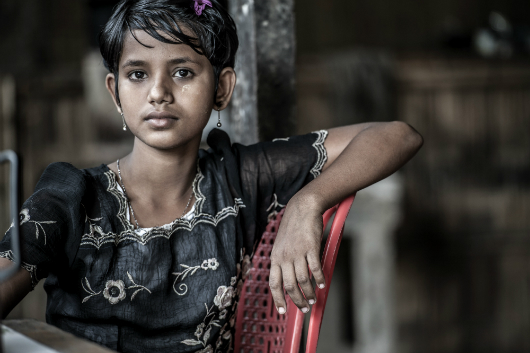
Democratization in Burma, now Myanmar, seems to have opened up a can of worms. Freeing political prisoners, allowing freedom of speech, granting access to social media and tolerating freedom of assembly has allowed many Burmese people to express what had long be suppressed, albeit incompetently at times – a deep-seated hatred for the Rohingya Muslim minority.
The Rohingya make up five percent of Buddhist-majority Myanmar and have been discriminated against for centuries. They are denied citizenship and many basic rights because they are not seen as Burmese, even though their families were brought over from what was then Bengal many generations ago. But while the military junta was in power, it jailed anyone who incited violence against the Rohingya in the interest of keeping peace.
In 2011, the regime finally started opening up and passed a series of political, economic and social reforms. Among other developments, Myanmar freed opposing politician Aung San Suu Kyi after placing her under house arrest for fifteen years. It also gave general amnesty to hundreds of political prisoners, one of which was a monk named Ashin Wirathu.
Wirathu had been jailed for twenty-five years for inciting anti-Muslim hatred. Now free to resume his activities, Wirathu helped instigate a wave of resentment toward the Rohingya that cumulated in the deadly 2012 Rakhine State riots and the 2013 nationwide anti-Muslim riots. He now heads the fanatic 969 movement, which has a large following among the Buddhist population.
The movement calls on all Buddhists to refuse to do business with the Rohingya and demarcate their homes and businesses using the “969” sticker. They are already pervasive on many shop windows, cars and motorbikes across Myanmar. The economic boycott against Muslims is only one of the four propositions of 969; the others are to restrict marriage between Buddhists and Muslims, forbid religious conversions and prohibit polygamy.
The general intent of these laws, according to Wirathu, is to prevent a much-feared Muslim “population explosion.” He calls Muslims “African carp” that “breed quickly and eat their own kind.” The Rohingya, he claims, are a threat to Buddhism and the Burmese national identity.
The movement has already succeeded in getting a “population control” bill signed into law. The bill gives the government the power to stop mothers from having another child for 36 months. Human rights groups are certain that this law will only victimize Rohingya women.
These racist attitudes are not marginal, according to Richard Horsey, a political analyst from Yangon. In fact, these extremist views are mainstream. Matt Smith, executive director of Fortify Rights, said that people often get together in community meetings similar to American town hall meetings to discuss how to get rid of the “Bengali problem.” In Karen State, host to Myanmar’s capital Hpa-an, fliers exhort people to stop Muslims from leasing homes and farms, and some threaten Buddhists who act as their middlemen.
Facebook, which had long been suppressed under the junta regime, is now also being used as a means to spread hatred. Users encourage their friends and family members to support the 969 movement. Groups such as the “Kalar Beheading Gang” (“Kalar” is a highly derogatory word given to Muslims) have popped up.
Attacking the Rohingya has therefore become good politics in Myanmar, Jonathan Head, the BBC correspondent for Southeast Asia, asserts, and rhetoric is heating up as elections approach in November. Fear mongering has allowed new and rising politicians to curry favor with the Buddhist majority. Aung San Suu Kyi, once seen as the symbol of human rights in the country, and now head of the National League for Democracy Party, has been conspicuously silent.
The Rohingya were also recently stripped of their right to vote. Just before the end of military rule in 2008, the junta had allowed them to vote and even put up candidates for election. But in 2013, when the government said it would maintain the Rohingya’s right to vote in a constitutional referendum, Buddhists staged massive protests. Hoping to appease the population, the government made the Rohingya turn in their identity cards.
Many international organizations have said that the recent events amount to genocide. More than 170,000 Rohingya live in internally displaced persons camps throughout the country after their houses and villages were burned to the ground in riots. They are circled by hostile Buddhist populations that do not allow them to leave the camp. The camps rarely have medical facilities and the Rohingya often have to sell their meager food rations to obtain medicines for their children. Jonathan Head calls the conditions “ghetto-like.” The government has actively refused to count casualty rates.
During a recent international conference in Norway that aimed to address the Rohingya crisis, George Soros, a business magnate turned philanthropist, said that “In 1944, as a Jew in Budapest, I, too, was a Rohingya…Much like the Jewish ghettos set up by the Nazis in eastern Europe during World War II, Aung Mingalar has become the involuntary home of thousands of families who once had access to healthcare, education and employment. Now they are forced to remain segregated in a state of abject deprivation. The parallels to the Nazi genocide are alarming.”
More than 150,000 Rohingya have fled Myanmar in overstuffed and rickety boats within the last three and a half years of democratic reforms. Smugglers promise to take them to Malaysia or Indonesia, Muslim majority countries. Jonathan Head voiced concern over the appalling conditions of the boats, which he said “were akin to the 18th century slave trade.” People cannot stand or sit properly, and are beaten if they try to stretch their legs. They are given a cup of rice, a single chili and two cups of water a day until the food runs out, as it often does.
Many boats never reach their destination and are instead handed over to traffickers, usually in Thailand, where people are then held ransom for up to $2,000. This often means that relatives in Myanmar have to sell their remaining land and homes to get them out. If they cannot, the traffickers simply leave them to starve. Recently, mass graves were uncovered in Thailand and Malaysia.
Myanmar refuses to admit responsibility for the crisis. Major Zaw Htay, director of the President’s Office, said that the country would “not accept allegations by some that Myanmar is the source of the problem.”
— Radhika Singh
Sources: Bangkok Post 1, Bangkok Post 2, Foreign Correspondants Club of Thailand, Bangkok Post 3, Al Jazeera, Asia Nikkei, Global Post 1, The Guardian, Global Post 2, BBC
Photo: Flickr

Redeeming Redemption Hospital
The hospital in Monrovia was unable to manage the flood of ill patients. It lacked adequate supplies and suffered a staff shortage after workers refused to come to work for fear of contracting the virus. In total, 12 workers at Redemption Hospital died from Ebola.
As a result, instead of quelling the outbreak, the hospital began to exacerbate it until Redemption was forced to close its doors.
Up until the Ebola disaster, the hospital was used to treating dire cases with very little resources. Liberia had just 51 doctors to treat the entire population of 4 million people. As a free hospital, the staff could not bring themselves to turn anyone away.
When Ebola hit, this did not change. Redemption had only 205 beds but they housed 400 patients, squeezing two—sometimes three—patients into a single bed. This was a lethal decision and one of the reasons that the Ebola outbreak that struck West Africa became the world’s biggest.
Ebola is known as the “caregiver’s disease” because it spreads when people take care of ill family members. Plus, often funerals in that part of the world require touching corpses still carrying the deadly virus. Because many people in West Africa do not know important aspects about the spread of contagion, many blunders were made.
With help from the USAID and the International Rescue Committee, a non-governmental organization, Redemption Hospital reopened its doors in January 2015. It has been equipped with proper supplies and staff members who are trained to adequately use them.
Each patient admitted into the hospital must undergo screening for any chance they could be sick with Ebola or other infectious illnesses. Anyone with suspicious symptoms are moved immediately to the hospital’s new isolation unit.
Staff have also been provided with proper training on how to prevent and control infectious diseases. The pediatric and emergency ward have each been renovated and new washing machines have been installed for effective disinfection. An industrial incinerator to rid of waste was added to the hospital as well.
Health care workers are hoping that Liberia is able to bounce back with similar improvements that the hospital has, with more people, more training and more preparation for a health crisis.
“This does provide an opportunity to take a big step forward,” explains Justin Pendarvis who specializes in public health with USAID.
Elizabeth Hamann was involved in the IRC’s initiate to reopen Redemption. “The same way that HIV changed the way you practice medicine in the U.S., Ebola should change the way we practice medicine here,” she says.
Liberia now has 4,000 health care workers equipped with special training and are able to work in Ebola treatment centers. Redemption Hospital now treats 1,000 people per week.
– Lillian Sickler
Sources: The Atlantic, USAID,
Photo: USAID
The Life of Women in Afghanistan
Afghanistan is well known for its cultural and religious mistreatment of women. During the height of the Islamic Emirate of Afghanistan, fundamentalists in accord with a strict interpretation of Islam implemented a wide array of behavioral laws against Afghan women.
According to the Revolutionary Association of Women of Afghanistan (RAWA), woman could be criminalized for working outside of the home, participating in any activity outside of the home (unless accompanied by a mahram, or a male relative), not wearing a burqa, wearing heels or makeup, laughing loudly, being photographed or filmed, playing sports, riding unaccompanied in a taxi, riding on a bicycle or motorcycle, looking at strangers, appearing on the balcony of her own home, receiving medical treatment from a male doctor and being educated, among others.
These regulations seriously constrain the personal freedoms of women in domestic and social realms of interaction. Women who violate or are even accused of violating these strict rules are subject to lashes, public stoning and other cruel policing tactics. Fear is used as a control mechanism to suppress women’s voices and actions on a daily basis. In Afghanistan, each woman must choose between expressing her free will and being violently punished for doing so.
Afghan women activists who try to rebel against this unfair treatment are often threatened with death in order to suppress their voices. Human Rights Watch reported in 2015, “Other setbacks for women’s rights in 2014 included a continuing series of attacks on, threats toward, and assassinations of, high-profile women, including police women and activists, to which the government failed to respond with meaningful measures to protect women at risk. The implementation by law enforcement officials of Afghanistan’s landmark 2009 Law on the Elimination of Violence Against Women remained poor, with many cases of violence against women ignored or resolved through ‘mediation’ that denied victims their day in court.”
Women for Women International is one of several organizations working to help women suffering from abuse, marginalization, poverty and lack of human rights due to war and conflict in Afghanistan.
They state on their website, “Decades of violence in Afghanistan have left millions of women and girls displaced or widowed. Common discriminatory practices, amplified by extremist groups, often make it dangerous for women to seek education, healthcare services, employment, or, in some cases, even to leave their homes.”
The Afghan Women’s Mission, founded in 2000, is another such organization created to support the humanitarian and political efforts of RAWA. Their website states, “Projects include many programs run by Afghan women including Malalai Clinic, schools, orphanages, agricultural programs, demonstrations and functions in support of women’s and human rights. We are an all-volunteer organization based in the United States.”
Despite the noble efforts of organizations like these, the situation remains virtually the same since the Taliban regime. Just earlier this year, the violent burning and murder of several women’s rights activists in Afghanistan shocked the world. If the situation for women is ever going to get better, meaningful reform needs to happen now.
– Hanna Darroll
Sources: Afghan Women Mission, Trust in Education, Scribd, Women for Women, Human Rights Watch,
Photo: RT
Pakistan’s Innovative Drinking Water ATMs
Drinking water ATMs? In recent years, severe water shortages have challenged an already energy-starved Pakistan. Now, Punjab province is installing solar-powered ATMs that can distribute clean water to residents.
The small, two-foot boxes function just like normal ATMs, with one notable difference. Instead of cash, the machines dispense clean drinking water, which in times of extreme water scarcity can be more valuable than money.
Punjab Saaf Pani (Clean Water) Company and the research center Innovations for Poverty Alleviation Lab (IPAL) created the drinking water ATMs to give residents in “rural and urban fringe areas” access to clean water. The ATMs provide water free of charge to beneficiary families, and communities will be responsible for pooling funds for the machinery’s maintenance charges.
To operate the machines, users scan a smart card to verify their identities, then push the machine’s red and green buttons to collect their daily share of water. The system will allow each family to collect up to 30 liters of water a day.
The project also aims to help the Pakistani government reduce water waste. To help the government track the exact amount of water dispensed in each location, a central server for the machines will virtually record water use in real-time.
Currently, Pakistan has few water conservation programs in place. One official noted, “There is a national habit of extravagance,” regarding resources like water, electricity and gas. The drinking water ATM system will help the government regulate the population’s consumption of water for home and agricultural use.
Because agriculture alone makes up 21 percent of Pakistan’s GDP, proper water management is key to the growth of the country’s economy. The Indus River stretches the length of Pakistan and feeds irrigation canals nationwide. Water shortages due to drought and mismanagement can affect major exports such as vegetables, wheat and cotton.
The Indus Basin aquifer, which provides fresh water to Pakistan and India, also faces a shortage crisis. There are few alternatives to excessive aquifer use in the densely populated region, and the underground water table is being depleted faster than it can recharge. As a result, the Indus Basin is now the second most stressed aquifer in the world.
To address this worsening water crisis, Punjab Saaf Pani Company and IPAL plan to install 20 initial ATMs at water filtration centers in Punjab, Pakistan’s most populous province. The project will start in three Punjabi districts with serious water contamination issues. According to the program manager at IPAL, this first round of installations will benefit over 17,500 families.
The Punjabi government has pledged the equivalent of almost $200 million to clean water efforts through 2017. It plans to expand its current programs to provide 35 million people with access to safe drinking water.
In February, Pakistan’s minister for water and energy warned that both climate change and government waste have taken a toll on the country’s water supply. “Under the present situation, in the next six to seven years, Pakistan can be a water-starved country,” he stated.
Nationwide, 35 percent of Pakistan’s population lacks access to clean drinking water. In rural areas of Punjab province, that number is as low as 13 percent.
The recent heatwave in Pakistan brought international attention to the government’s mismanagement of the water crisis. Over 1,200 people have died as a result of dehydration, heat stroke and other heat-related causes, though the government has denied accountability for the deaths.
Many experts consider ineffective governance at the national level the biggest obstacle to water security in Pakistan. Muhammad Farasat Iqbal, chief executive officer of Punjab Saaf Pani Company, says that while access to clean water has become a top priority of the provincial government, it will take the concerted effort of the national government to effect real change across Pakistan.
– Caitlin Harrison
Sources: Washington Post, Reuters, New York Times, Government of Pakistan Ministry of Finance, Time
Photo: Tribune
Maternal Mortality in Pakistan
In Pakistan, one in 89 women die because of pregnancy and childbirth-related complications, and Pakistan’s Maternal Mortality Rate (MMR) is 299 per 100,000 live births.
Twenty percent of the deaths of women of childbearing age are caused by maternal complications. The majority of these deaths are caused by postpartum hemorrhaging. Hemorrhages can be extremely problematic, especially if hospitals do not have enough blood for transfusions to replace the blood loss. Maternal mortality is also high due to puerperal sepsis and eclampsia. Sepsis is when infections during pregnancy, even those not directly related to the pregnancy, trigger the body’s inflammatory response to infection. Sepsis is also called blood poisoning, and it can only be cured with the prompt treatment of antibiotics.
Eclampsia, the third leading cause of maternal deaths in Pakistan, is convulsions in a pregnant woman resulting from high blood pressure. Eclampsia is often followed by a coma.
Rural women are less likely to have access to a hospital. The rate of maternal mortality is consequently higher in rural areas than urban areas—23 percent rather than 14 percent. Home births are extremely common in rural areas. A total of 74 percent of women in rural areas give birth at home, compared to 43 percent of women in urban areas.
If women have an education, they are more likely to seek out prenatal care. Ninety-six percent of women with education had prenatal care visits with a doctor, rather than 50 percent of women who were not educated. One-third of pregnant women in Pakistan do not get prenatal care at all, due to feeling it is unnecessary or that it costs too much money. Prenatal care can help prevent complications and decrease the maternal mortality rate. While prenatal care visits have increased, as of 2007, only 28 percent of Pakistani women went to the recommended four prenatal care visits.
Another reason why Pakistan has a high maternal mortality rate is due to the fact that contraceptive use has not increased much in recent years. In 1984, the Total Fertility Rate (TFR) was six children per woman in Pakistan. By 2008, this number declined to about four children per mother, with a rate of about three children per mother for women in urban areas. However, contraceptive use has remained steady, and only about 30 percent of married women of childbearing age use contraceptives. Contraceptive use is still stigmatized by religious members of the community, such as Mohammed Zakaria, the mufti of Jamia Islamia, an Islamic religious school. Zakaria argues that “family planning is wrong and un-Islamic if practiced routinely.” Educated mothers are more likely to use contraceptives, but many women in Pakistan are uneducated. NPR argues that an increase in education would lead to an increase in contraceptive use and a corresponding decrease in maternal mortality, citing Sri Lanka as an example. In Sri Lanka, the literacy rate is 91 percent (compared to 62 percent in Pakistan).
Maternal mortality is also a problem in Pakistan due to a shortage of doctors, nurses and beds at government hospitals. Many of the regular staff members are postgraduate trainees who are not able to handle pregnancy-related complications.
Pakistan currently only spends less than 1 percent of its GDP on healthcare. In order for maternal mortality rates to decrease, more money has to be devoted to improving hospital care and making hospitals more accessible. The stigma around contraceptive use also has to end, and an increase in education would also lead to a lower MMR.
– Ashrita Rau
Sources: NPR, UNICEF, NIH, The Express Tribune, USAID The DHS Program
Photo: Pakistan Today
Coal Burning: More or Less?
It’s black, it’s dirty, it’s smelly, and it’s often dangerous to obtain, yet it has the power to keep billions alive. Coal. An energy source for people on Earth for hundreds of years. Coal-burning can heat homes and provide power for massive electrical grids around the world. But the question being asked today is whether or not coal can cure poverty. Some believe it can while others maintain that other options must be explored.
First, the nonbelievers. On June 26, 2015, Huffington Post published an article, titled “No, Coal is NOT the Fix-All Solution to Energy Poverty,” that dove into analyzing how and why coal isn’t cutting it as a global fuel source. The article stemmed from Pope Francis’ encyclical “On the Care of Our Common Home,” a critique on the increasing global warming crisis as a direct result of human energy consumption. The pope’s message sent shockwaves throughout the world raising arguments for energy reform.
An excerpt from Huffington Post says, “Although fossil fuels and renewable energy are not mutually exclusive in aiding development efforts, the truth is that this claim is just another attempt by the industry to justify the continued use of fossil fuels.” The truth is, there are other more energy efficient ways out there to provide energy to the poor, but the powers that be don’t want the public to be aware.
One such energy source that is becoming more and more viable to the poor is solar panel technology. According to the Huffington Post article, solar panels are now less than half of what they cost in 2010. This technology is emerging as a legitimate rival for the coal industry, as well as developing into real hope for those in poverty across the globe. In addition to the growing industry of solar panels, global organizations such as the World Bank have stopped financing renewable resource projects worldwide with exceptions to rare situations.
As for the advocates of coal, the case is significantly weaker. An article by World Coal on June 24, 2015 makes the case for coal as the salvation to global poverty. An excerpt from this article reads, “On a global scale, coal fulfilled approximately half of the increase in energy consumption in the last decade. In the last century, the amount this source has produced is as much energy as nuclear, renewable, fuel oil and natural gas combined.” While this statistic appears impressive, it fails to acknowledge the crippling effects to our atmosphere. Coal is a good fuel source, but it comes at a great price. Billions of people on earth depend on coal to survive, but even more billions feel the effects of global warming because of it. So, do we need more or less to cure poverty?
– Diego Alejandro Catala
Sources: Huffington Post, World Coal.com
Photo: Total Health Care
Fighting Poverty in Morocco
On June 7, the UN’s Food and Agriculture Organization (FAO) held an official ceremony to recognize the successful efforts of fighting poverty in Morocco. Morocco received the FAO’s distinction for reaching the first Millennium Development Goal (MDG) of cutting extreme poverty and hunger two years ahead of schedule. 72 countries around the world have so far achieved the MDG target.
Many credit Morocco’s innovative agricultural and fishery programs with the successful poverty reductions. One program, the Green Morocco Plan, increased the country’s agricultural yield by training farmers in “direct seeding” technology. A Moroccan official explained, “These strategies have brought significant support to small farmers, forest operators and fishermen to improve their income and, consequently living standards and better manage their natural resources in a sustainable manner”
Morocco’s National Initiative of Human Development (INDH) has also contributed to the country’s declining poverty rate. Established in 2006 to help lift nearly 10 million Moroccans out of poverty, the program allocated $6 billion to anti-poverty projects. The INDH is widely regarded as a success. In 2010 UN Secretary-General Ban Ki-moon praised the program, saying that its “significant results” will benefit all Moroccan citizens, especially the poor.
The Kingdom of Morocco is not singularly focused on domestic poverty. In the 16 years since his enthronement, King Mohammed VI has shown a particular interest in sustainable development on the African continent. He has helped launch multiple joint development projects and has championed African causes at the United Nations.
The monarch’s latest trip to Africa took him to Gabon, Senegal, Guinea-Bissau and Ivory Coast, where he met with leaders and signed 35 different partnership agreements. These agreements focus on the improvement of the countries’ training, agriculture, water and energy sectors. They will help build roads, provide medicines and supply water and electricity to impoverished villages. Many hope that these measures will improve food security and encourage socioeconomic development in the countries while still respecting traditional African practices.
Some countries in the region have also expressed interest in following the lead of Morocco’s National Initiative of Human Development. Recently, Morocco partnered with Gabon to help guide the country’s new Gabonese Human Investment Strategy (SIHG).
Morocco’s support for African development programs has gained the country and its leaders widespread popularity in West and Central Africa. As shifting geopolitical and economic factors increasingly mark Africa as a major player on the world stage, Morocco’s influence in the region could force the United States and other global powers to recognize the importance of developmental assistance.
– Caitlin Harrison
Sources: North Africa Post, World Bank, Morocco World News, United Nations, Digital Journal
Photo: Green Prophet
Democratization in Myanmar Catastrophic for the Rohingya
Democratization in Burma, now Myanmar, seems to have opened up a can of worms. Freeing political prisoners, allowing freedom of speech, granting access to social media and tolerating freedom of assembly has allowed many Burmese people to express what had long be suppressed, albeit incompetently at times – a deep-seated hatred for the Rohingya Muslim minority.
The Rohingya make up five percent of Buddhist-majority Myanmar and have been discriminated against for centuries. They are denied citizenship and many basic rights because they are not seen as Burmese, even though their families were brought over from what was then Bengal many generations ago. But while the military junta was in power, it jailed anyone who incited violence against the Rohingya in the interest of keeping peace.
In 2011, the regime finally started opening up and passed a series of political, economic and social reforms. Among other developments, Myanmar freed opposing politician Aung San Suu Kyi after placing her under house arrest for fifteen years. It also gave general amnesty to hundreds of political prisoners, one of which was a monk named Ashin Wirathu.
Wirathu had been jailed for twenty-five years for inciting anti-Muslim hatred. Now free to resume his activities, Wirathu helped instigate a wave of resentment toward the Rohingya that cumulated in the deadly 2012 Rakhine State riots and the 2013 nationwide anti-Muslim riots. He now heads the fanatic 969 movement, which has a large following among the Buddhist population.
The movement calls on all Buddhists to refuse to do business with the Rohingya and demarcate their homes and businesses using the “969” sticker. They are already pervasive on many shop windows, cars and motorbikes across Myanmar. The economic boycott against Muslims is only one of the four propositions of 969; the others are to restrict marriage between Buddhists and Muslims, forbid religious conversions and prohibit polygamy.
The general intent of these laws, according to Wirathu, is to prevent a much-feared Muslim “population explosion.” He calls Muslims “African carp” that “breed quickly and eat their own kind.” The Rohingya, he claims, are a threat to Buddhism and the Burmese national identity.
The movement has already succeeded in getting a “population control” bill signed into law. The bill gives the government the power to stop mothers from having another child for 36 months. Human rights groups are certain that this law will only victimize Rohingya women.
These racist attitudes are not marginal, according to Richard Horsey, a political analyst from Yangon. In fact, these extremist views are mainstream. Matt Smith, executive director of Fortify Rights, said that people often get together in community meetings similar to American town hall meetings to discuss how to get rid of the “Bengali problem.” In Karen State, host to Myanmar’s capital Hpa-an, fliers exhort people to stop Muslims from leasing homes and farms, and some threaten Buddhists who act as their middlemen.
Facebook, which had long been suppressed under the junta regime, is now also being used as a means to spread hatred. Users encourage their friends and family members to support the 969 movement. Groups such as the “Kalar Beheading Gang” (“Kalar” is a highly derogatory word given to Muslims) have popped up.
Attacking the Rohingya has therefore become good politics in Myanmar, Jonathan Head, the BBC correspondent for Southeast Asia, asserts, and rhetoric is heating up as elections approach in November. Fear mongering has allowed new and rising politicians to curry favor with the Buddhist majority. Aung San Suu Kyi, once seen as the symbol of human rights in the country, and now head of the National League for Democracy Party, has been conspicuously silent.
The Rohingya were also recently stripped of their right to vote. Just before the end of military rule in 2008, the junta had allowed them to vote and even put up candidates for election. But in 2013, when the government said it would maintain the Rohingya’s right to vote in a constitutional referendum, Buddhists staged massive protests. Hoping to appease the population, the government made the Rohingya turn in their identity cards.
Many international organizations have said that the recent events amount to genocide. More than 170,000 Rohingya live in internally displaced persons camps throughout the country after their houses and villages were burned to the ground in riots. They are circled by hostile Buddhist populations that do not allow them to leave the camp. The camps rarely have medical facilities and the Rohingya often have to sell their meager food rations to obtain medicines for their children. Jonathan Head calls the conditions “ghetto-like.” The government has actively refused to count casualty rates.
During a recent international conference in Norway that aimed to address the Rohingya crisis, George Soros, a business magnate turned philanthropist, said that “In 1944, as a Jew in Budapest, I, too, was a Rohingya…Much like the Jewish ghettos set up by the Nazis in eastern Europe during World War II, Aung Mingalar has become the involuntary home of thousands of families who once had access to healthcare, education and employment. Now they are forced to remain segregated in a state of abject deprivation. The parallels to the Nazi genocide are alarming.”
More than 150,000 Rohingya have fled Myanmar in overstuffed and rickety boats within the last three and a half years of democratic reforms. Smugglers promise to take them to Malaysia or Indonesia, Muslim majority countries. Jonathan Head voiced concern over the appalling conditions of the boats, which he said “were akin to the 18th century slave trade.” People cannot stand or sit properly, and are beaten if they try to stretch their legs. They are given a cup of rice, a single chili and two cups of water a day until the food runs out, as it often does.
Many boats never reach their destination and are instead handed over to traffickers, usually in Thailand, where people are then held ransom for up to $2,000. This often means that relatives in Myanmar have to sell their remaining land and homes to get them out. If they cannot, the traffickers simply leave them to starve. Recently, mass graves were uncovered in Thailand and Malaysia.
Myanmar refuses to admit responsibility for the crisis. Major Zaw Htay, director of the President’s Office, said that the country would “not accept allegations by some that Myanmar is the source of the problem.”
— Radhika Singh
Sources: Bangkok Post 1, Bangkok Post 2, Foreign Correspondants Club of Thailand, Bangkok Post 3, Al Jazeera, Asia Nikkei, Global Post 1, The Guardian, Global Post 2, BBC
Photo: Flickr
Global Warming and Global Health
A new study published in The Lancet claims that climate change and global warming could erode as much as 50 years of global health advances. The study confirms what many health and climate change experts have been predicting for years but had unfortunately, for the most part, not been taken seriously.
As we have seen in recent months with intense heat waves in India and Pakistan, dramatic changes in climate have disastrous effects on public health. The heat waves bring storms, droughts and floods, which in turn brings about changes in water quality, pollution, land use and ecological differences. These changes translate to large swings in the social dynamics of a country. As the demographics rapidly change, so do health status, socioeconomic status and infrastructure. As a nations health is undermined, social capital declines, as do social and political institutions decline so drastically that years of work in development can be eroded. As the institutions that bind us are broken down, the opportunities for conflict rise, and opportunities for meaningful economic contribution decrease. The biggest calls for concern are the long-term effects that these problems cause that primarily stem from the heat waves, epidemics, storms, sea level rise and large-scale migration. Climate is often seen as an “X Factor” in globalization and development models because it is so unpredictable. Climate change makes the “X Factor” even more volatile but even more important in global leaders consideration and negotiation of major international moves.
Global warming has both direct and indirect effects on global health. Immediately, intense heat waves cause a significant amount of preventable deaths annually. Also, the types of natural disasters that we can expect to see in coming years are predicted to be even more chaotic and destructive. As these storms wipe out communities across the globe and force others to migrate elsewhere, demographic and population shifts will effect the general health and wellbeing of generations to come. These storms also contribute to the prevalence of mental illness, malnutrition, allergies, cardiovascular diseases, infectious diseases, injuries and respiratory diseases.
The most vulnerable countries are the countries that need to focus on immediate development rather than sustaining current development levels. Developed or industrialized countries have the means to make changes now to alleviate future complications by climate change. Developing countries often do not have the flexibility to up-haul current industrial practices or to enact nationwide preparedness protocols for natural disasters on the large scale that it is expected.
With climate change, much of the damage has been done, and immediate action is essential to maintaining the health of the world, let alone improving it. But on the bright side, nearly all of the ways that we can mitigate the risks that climate change creates also contribute to better individual and public health. Investing in reversing climate change is an investment in the environment, in the economy and in health.
– Emma Dowd
Sources: The Economist, PRI, Time, US News, Washington Post
Photo: India Water Portal
Poverty in Ghana
Once hailed as a rising star by the World Bank, Ghana has experienced significant macroeconomic challenges during the past five years that have severely undermined its social stability and resulted in fluctuating poverty levels. In 2022, the country’s inflation rate reached a record high of 54%, contributing to high public debt levels – nearly 90% of the GDP – and pushing millions into poverty. Although Ghana today has made strides in restoring stability and catalyzing growth, the pressure of high inflation has worsened poverty levels throughout the country, particularly in rural areas. State restructuring programs and humanitarian aid are both vital to providing poverty alleviation and ensuring a road of recovery for not only those suffering from poverty but for the country as a whole.
Rural Poverty: Smallholder Farmers and Women
As of 2023, around 2.99 million Ghanaians were living in extreme poverty. Out of this number, an overwhelming 2.3 million were located in rural regions, constituting a majority of the multidimensionally poor.
Led by an unsustainable agricultural sector, northern Ghana is disparately faced with the proliferating burden of hunger and malnutrition. According to the World Food Programme, northern Ghana had the highest prevalence of food insecurity in 2020 in comparison to the other regions. Today, chronic malnutrition and stunted growth among children under 5 affects approximately 33% to 40% of the North, despite the rest of the country reporting less than 20%. As high as 82% of North Ghanaian children are estimated to be anemic – despite the overall average being 60% across all of Ghana.
Despite state efforts to strengthen women’s opportunities in the labor market, Ghanaian women still face disadvantages in comparison to men. According to the World Bank, 77% of women in 2022 were reported as occupying vulnerable jobs as opposed to 58% of men. Women are typically self-employed in the agricultural sector to maintain childcare and other domestic roles, resulting in low wages and financial exclusion.
Women and girls in rural Ghana are also subject to period poverty and lack access to affordable menstrual products. A recent increase in the state tax on feminine hygiene products has made them largely unavailable to women, especially those of lower income. In 2023, BBC reported that 13.2% of the Ghanaian minimum wage was necessary to purchase two packs of cheap sanitary pads. Per this report, Ghana has the most expensive feminine hygiene products relative to monthly income.
Current Developments
Despite substantial economic shocks, Ghana is currently attempting to restabilize by implementing programs that target state restructuring and human development. As one of the largest gold producers in the world, Ghana has increased output from the Edikan, Chirano and Obuasi mines by an estimated 9.9% in 2023. Aiming to boost oil and gas production, the country has also sold more exploration rights to generate revenue to fund its energy transition and acquire valuable investors. The challenge is to make sure that the wealth generated from these industries trickles down to every Ghanaian, especially to those in rural areas.
Another important method of eradicating poverty in Ghana is adopting a broad-based human development strategy to keep Ghana on track for improving the quality and access of food across the country, for all age demographics. Organizations such as the World Food Programme (WFP) are currently working with the Ghanaian government to reduce malnutrition and improve existing food systems by adopting food and nutrition programs involving both public and private sectors. In 2023, a collaborative project between the WFP, the U.S. Agency for International Development (USAID) and the United Nations (UN) called the USAID Farmer Support Activity provided cash transfers and agricultural training valued at $7 million to 17,000 vulnerable smallholder farmers during the lean season in Ghana. In the Ashanti Region, the WFP provided 39 health workers and 44 School Health Education Programme (SHEP) teachers with basic training on malnutrition prevention, promoting balanced diets and increasing micronutrient access. Outside of organizations, state policies such as providing microcredits and financing to small businesses may serve to boost agricultural yields and improve food security for rural populations.
Looking Ahead
Over time, the development of the gold and oil industries should translate to better infrastructure and more jobs for the average Ghanaian, as well as those in rural areas. Furthermore, ongoing efforts to promote women’s empowerment and representation by groups such as UN Women Ghana should motivate more women to become leaders and entrepreneurs, championing female representation across the country. Despite these advancements, Ghana is in great need of addressing other motivators for poverty – including climate change, environmental protection, and sanitation management. Although many challenges may currently take precedence over human development, Ghana may only be able to resolve both external and internal disparities by tackling policies to eradicate extreme poverty in Ghana once and for all.
Photo: Flickr
UNICEF Targets Child Trafficking in Nepal
In the wake of the 7.3 magnitude earthquake that rocked Nepal on April 25, the world responded to help those buried in rubble, but as the region rebuilt itself, traffickers preyed from the shadows on families seeking a better life.
Even before the earthquake hit two months ago, human trafficking in Nepal plagued communities and victimized children. According to a 2001 International Labor Organization study, 12,000 Nepalese children were brought to India as a result of human trafficking every year.
After natural disasters such as earthquakes, children face a greater risk of being trafficked. Girls who are not forced into prostitution would be sold as domestic slaves in India or other countries, and boys are often subjected to harsh working conditions against their will.
Traffickers approach tragedy stricken families offering education, food and security for their children, when in reality, children are whisked away in to a life of monstrous exploitation and horrendous abuse.
Thankfully, multiple organizations have made efforts to deal with the aforementioned issues. UNICEF, a United Nations children’s organization is working closely with the police in Nepal and has already rescued 245 children since the earthquake, by intercepting and thus preventing them from slipping into a dark underworld of sex slavery and forced labor. UNICEF is also supporting the local police in the establishment of 84 checkpoints and police stations throughout the country.
Maiti Nepal, a national NGO, non-profit organization, with the help of UNICEF, is beefing up interception and screening stations along the India and Chinese borders. UNICEF is ensuring child accountability through the strengthening of information management and coordination systems.
The Nepalese government suspended international adoption since the earthquake and in early June, they banned children from traveling between districts without parents or approved guardians. The registration of new orphanages has also been suspended.
The Indian Ministry of Home Affairs, issued an advisory to increase vigilance at border controls and has advised the society in India to be aware of human trafficking. UNICEF has since spearheaded an awareness and public information campaign by radio reaching the population through 40,000 flyers on prevention of family separation.
25 airline companies operating in Nepal have also been made aware of the need to screen passengers, ensuring that children are accompanied by their legal care givers. Radio Nepal is concurrently airing messages, reaching an estimated 70 percent of the population bolstering awareness.
Lastly, UNICEF has supported the establishment of hundreds of child friendly spaces and temporary learning centers, providing children with education programs as part of a back to school campaign.
Another problem in Nepal, which often hides behind a cloak of good intentions is “Orphanage Voluntourism”. Families around the world with expressed interest to adopt children perceived or mistaken to be orphans, are left unaware about the fact that these children have been deliberately separated from their families to attract high fee paying adoptive families.
UNICEF and its partners have thereby been working to encourage orphanage volunteering programs to discontinue their practices as volunteers. Although for the most part well intentioned, these can be ignorant to deceptive practices. Moreover, backgrounds are usually not adequately checked.
Nepal, like much of the developing world has thus been diseased by human trafficking long before the earthquake in April. After the catastrophe, however, the practice has amplified as wolves in sheep’s clothing prey on the unsuspecting and desperate. Organizations such as UNICEF are therefore out to bring down those who would seek to unreasonably profit from innocence and disaster.
– Jason Zimmerman
Sources: Free for Life, UNICEF, American Himalayan Foundation, The Guardian
Photo: UN News Centre