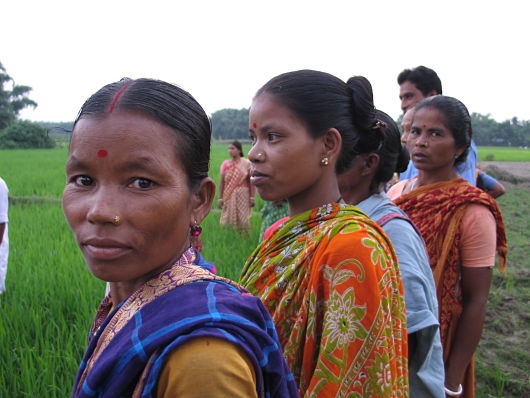
Bangladesh is a small South Asian country which borders India, Myanmar, and the Bay of Bengal. Since it gained independence in 1971, Bangladesh’s economy has been growing about 6% annually. However, while the economy in Bangladesh is becoming more progressive, socially, Bangladesh still has room for advancement. Patriarchal customs mean that many women in Bangladesh face threats of violence.
Some main acts of violence committed against women include dowry killings, rape, sexual harassment and stalking, acid attacks, physical and mental abuse and sex trafficking. Nearly two out of every three women in Bangladesh are victims of some form of violence.
Gender based violence is on the rise. In 2004, there were 2,981 cases of dowry related violence; women are beaten or killed because their parents fail to pay the dowry that her in-laws request. This number rose to 4,563 cases in 2012.
Gender discrimination also leads to women having less opportunities. The literacy rate for women in Bangladesh is only 43.2%, while 61.0% of Bangladeshi men are literate. The unemployment rate for women is 70.7%, much higher than the 12.4% unemployment rate for men. Even though many women help in the agricultural sector, 73% of those women contribute what is considered as unpaid ‘family labor’ and do not receive a salary. This is problematic because even if women work for their family, patriarchal values dictate that many of the women are not given control of the property or the family income, and therefore the women are not able to spend the money they earn as they see fit.
Many women in Bangladesh fail to report violence committed against them because there persists a stigma surrounding rape, abuse, and domestic violence in the country. The police are also likely to blame the victim and favor the side of the abuser. From 2010 to 2012, the Bangladeshi police received 109,621 complaints about violence against women. However, the police determined that only 6,875 of these complaints were ‘genuine’ and should be further investigated. The inspector-general of police, who is responsible for investigating crimes involving violence against women, told the Inter Press Service news agency that “On many occasions . . . the law was used to harass the accused. It does seem that not all complaints are genuine”.
The stigma surrounding violence against women means that many women do not get the justice they deserve. In 2011, there were 420 recorded cases of rape in Bangladesh, and only 286 reached the prosecution stage.
Luckily, there are laws and programs being implemented to help reduce the amount of gender based violence that is taking place in Bangladesh. A joint program with the UN has instituted a three-tier strategy to help reduce this violence. The first part of the UN’s program is designed to enhance the capacities of the government and to support NGO’s in order to help prevent violence against women and protect victims. The program also aims to protect survivors of violence and to change social attitudes, which lead to much gender based violence.
Some important achievements of the UN’s program have been increased access to healthcare for women, a decrease in the rate of child-marriages and dowry-killings and more awareness about the lesser-known forms of gender based violence, such as sexual harassment in the workplace.
There are also specific laws which have been instituted by the Bangladeshi government in an effort to prevent violence against women. Some of these laws include the 2010 Domestic Violence Act and the 2000 Suppression of Violence against Women and Children Act.
The 2010 Domestic Violence Act criminalizes domestic violence. This was a landmark act because many Bangladeshi women face cruelty by their husbands. A 2007 report stated that 53% of married women in Bangladesh were physically and/or sexually abused by their husbands. If the court deems that domestic violence is likely to occur, it can either relocate the victim to a shelter or evict the perpetrator of the violence.
The Suppression of Violence against Women and Children act was passed in 2000 and makes clear that there will be harsh punishment for those convicted for committing violent crimes. The law targets rape, trafficking, and kidnapping.
Though legislation is an important step toward ending violence against women in Bangladesh, in order for significant change to occur, societal attitudes must change in order to end the stigma and victim-blaming that women face when they report violence carried out against them.
– Ashrita Rau
Sources: MDG Achievement Fund, IPS News Odhikar, Department of Women’s Affairs, Bangladesh UN, CIA CIA World Factbook, OHCHR
Photo: Women Deliver

Violence against Women in Bangladesh
Bangladesh is a small South Asian country which borders India, Myanmar, and the Bay of Bengal. Since it gained independence in 1971, Bangladesh’s economy has been growing about 6% annually. However, while the economy in Bangladesh is becoming more progressive, socially, Bangladesh still has room for advancement. Patriarchal customs mean that many women in Bangladesh face threats of violence.
Some main acts of violence committed against women include dowry killings, rape, sexual harassment and stalking, acid attacks, physical and mental abuse and sex trafficking. Nearly two out of every three women in Bangladesh are victims of some form of violence.
Gender based violence is on the rise. In 2004, there were 2,981 cases of dowry related violence; women are beaten or killed because their parents fail to pay the dowry that her in-laws request. This number rose to 4,563 cases in 2012.
Gender discrimination also leads to women having less opportunities. The literacy rate for women in Bangladesh is only 43.2%, while 61.0% of Bangladeshi men are literate. The unemployment rate for women is 70.7%, much higher than the 12.4% unemployment rate for men. Even though many women help in the agricultural sector, 73% of those women contribute what is considered as unpaid ‘family labor’ and do not receive a salary. This is problematic because even if women work for their family, patriarchal values dictate that many of the women are not given control of the property or the family income, and therefore the women are not able to spend the money they earn as they see fit.
Many women in Bangladesh fail to report violence committed against them because there persists a stigma surrounding rape, abuse, and domestic violence in the country. The police are also likely to blame the victim and favor the side of the abuser. From 2010 to 2012, the Bangladeshi police received 109,621 complaints about violence against women. However, the police determined that only 6,875 of these complaints were ‘genuine’ and should be further investigated. The inspector-general of police, who is responsible for investigating crimes involving violence against women, told the Inter Press Service news agency that “On many occasions . . . the law was used to harass the accused. It does seem that not all complaints are genuine”.
The stigma surrounding violence against women means that many women do not get the justice they deserve. In 2011, there were 420 recorded cases of rape in Bangladesh, and only 286 reached the prosecution stage.
Luckily, there are laws and programs being implemented to help reduce the amount of gender based violence that is taking place in Bangladesh. A joint program with the UN has instituted a three-tier strategy to help reduce this violence. The first part of the UN’s program is designed to enhance the capacities of the government and to support NGO’s in order to help prevent violence against women and protect victims. The program also aims to protect survivors of violence and to change social attitudes, which lead to much gender based violence.
Some important achievements of the UN’s program have been increased access to healthcare for women, a decrease in the rate of child-marriages and dowry-killings and more awareness about the lesser-known forms of gender based violence, such as sexual harassment in the workplace.
There are also specific laws which have been instituted by the Bangladeshi government in an effort to prevent violence against women. Some of these laws include the 2010 Domestic Violence Act and the 2000 Suppression of Violence against Women and Children Act.
The 2010 Domestic Violence Act criminalizes domestic violence. This was a landmark act because many Bangladeshi women face cruelty by their husbands. A 2007 report stated that 53% of married women in Bangladesh were physically and/or sexually abused by their husbands. If the court deems that domestic violence is likely to occur, it can either relocate the victim to a shelter or evict the perpetrator of the violence.
The Suppression of Violence against Women and Children act was passed in 2000 and makes clear that there will be harsh punishment for those convicted for committing violent crimes. The law targets rape, trafficking, and kidnapping.
Though legislation is an important step toward ending violence against women in Bangladesh, in order for significant change to occur, societal attitudes must change in order to end the stigma and victim-blaming that women face when they report violence carried out against them.
– Ashrita Rau
Sources: MDG Achievement Fund, IPS News Odhikar, Department of Women’s Affairs, Bangladesh UN, CIA CIA World Factbook, OHCHR
Photo: Women Deliver
Organic Farming May Reduce Poverty in Latin America
Over the past few years organic products have grown in popularity in mainstream America. It is now hip and cool to go organic. In the United States, the organic food industry is valued at about 27 billion dollars.
With the demand to have organic foods, some entrepreneurs have taken organic farming overseas to poverty stricken areas to provide the U.S. with many of our agricultural products. One such area is Latin America. The most common products imported from there are coffee, bananas and other fruits.
The majority of those who live in poverty in Latin America are the indigenous people. They tend to be the ones who own small farms and work the farms that produce the crops. Culturally and historically, these people have a close connection with their land, crops and the surrounding environment. Going organic is a agricultural practice they are willing to embrace because it maintains traditional methods.
By returning to the natural way to grow agriculture products, farms no longer pollute the environment with harsh chemicals and release excess carbon dioxide. Organic farming utilizes renewable sources of energy rather than fossil fuel dependent resources, for example. There is the hope that organic farming can help mitigate climate change effects that could possibly push people into poverty in the long run.
There is some doubt about how successful shifting to organic growing will be in helping raise people out of poverty. There is approximately a three-year window after switching methods before prosperous results are seen. Many times small farmers have to take substantial loans to help pay. However, joining in on the organic campaign has proven to be very successful for Latin American organic farmers. One example is Mayorga Organics, which works with harvesting coffee beans.
Mayorga Organics works to develop opportunities for their farmers in this market. They give the resources needed to be successful, such as: education on organic markets, how to grow organic, advocacy for the protection of their farmers, as well as creating an environment of fair trade so that the farmers receive the full amount of money owed to them.
These organic corporations focus on the farmers and the their love of the land. They use sustainable and innovative methods that are increasing the yields of organic farming. With the help of these companies the small Latin American farmers can reach the organic markets. They have a source of income, one that they can live on without fear of slipping back into poverty.
– Katherine Hewitt
Sources: FAO, Mayorga Organics 1, Mayorga Organics 2, Rural Poverty Portal, World Bank,
Photo: Audley Travel
Poverty Rises in China’s Dongguan
In the early years of China’s political and economic reform, which began in 1978, more than 170 million people raised themselves out of poverty. However, 1990’s poverty reduction rates have since stagnated, leaving 260 million people living on less than $1 a day. This casts a contradictory shadow on the often portrayed status of China – a leading global exporter whose city dwellers have access to competitive education, clean cities, and Western movies and products. The majority of China’s “forgotten poor” lives in western regions of the country, far from the factories and ports that have contributed to its economic growth. Depending on agriculture for growth, these communities have little access to the education and health services that have bolstered the growth of China’s urban areas. In 2004, The World Bank and Chinese government developed and instituted the Southwest Poverty Reduction Project, a plan to improve primary education, medical care, and rural infrastructure through job mobility. This program helped organize 100,000 rural farmers and sent them to work in Dongguan, a coastal city near Hong Kong that grew through manufacturing communication devices such as cell phones, computers, and tablets. These laborers earned 10 times the wages they did in their hometowns and were able to send half of their incomes back home. They boosted the economy of their villages through such remittances while supporting Dongguan’s local growth through increasing demand for housing and basic consumer goods. The Southwest Poverty Reduction Project, through directly reducing poverty in rural areas through worker mobilization and remittances while improving the productivity of a manufacturing city and indirectly benefiting its local economy, serves as a model for rural revitalization in developing nations.
In recent years, however, Dongguan’s manufacturing industry has experienced stagnation. According to local officials, this is due to reduced foreign demand for communication products and the economic downturn. Since 2007, economic output in Dongguan has decreased from 18.1% to 6.1% and many factories and enterprises have left the city in search of new ventures and cheaper labor. In lieu of this, more than 1 million people have left the city in search of work, striking a heavy blow to small and medium-size companies who relied on the spending of local workers. Prostitution has grown as a result of widespread job loss and urban poverty. Hinterland regions have also suffered as migrant workers on the hunt for jobs can no longer send portions of their income back to their families and local schools and hospitals have become underfunded. The interconnectedness of the Southwest Poverty Reduction Project, once benefiting both urban and rural workers led to the decline of income and quality of life in both regions. As empty warehouses and polluted skies of the former industry giant reflect, economic and social gain resulting from foreign demands is fragile, the skyscrapers and elaborate wealth of rapidly growing cities often overshadows the blight of those left behind. Dongguan’s story of poverty is one echoed around China, a country whose dependence on foreign wealth and commerce leaves many of its people in a state of constant flux.
– Jenny Wheeler
Sources: World Bank, Nanfang, South China Morning Post
Photo: Cigi Online
World Bank Funding Lao PDR to Improve Women’s Health and Nutrition
In an effort to improve conditions for the Lao governments’ maternal and health services, The World Bank Funding has gone to Lao People’s Democratic Republic’s (PDR) Health Governance and Nutrition Development Project on June 23. The International Development Association gave $26.4 million to Lao PDR with the approval of the World Bank’s Board of Executive Directors. The World Bank expects the fund to affect 1 million women and children in the next 5 years.
Free maternal health was initiated in Lao PDR to open financial gateways. Around 60% of women are not inclined to have more children. Now, with the project’s increase in funding, the number of women receiving family planning, care visits, and birth attendants is likely to increase.
Women need to be educated and consult healthcare workers in order to protect their bodies from disease and diminish the probability of birth mortality or miscarriages. With Lao PDR’s Health Governance and Nutrition Development Project funded by World Bank, health care services will be made more available and survival rates are expected to excel.
A report by Lancet Commission on Women and Health has tracked the consequences of women’s low socioeconomic status. With the input of social science professionals, program managers, policy innovators and advocates, connections between the role of women in systems, homes and communities have been founded to be most beneficial when they are given value and proper compensation. Women create sustainable nations when they are inclined to contribute to the well-being of all.
Additionally, the development of nutritional strategies is underway. Almost half of the children in the country, under the age of 5, are underweight. The Health Governance and Nutrition Development Project is determined to utilize its funding in services to children under the age of 14 by providing adequate nutrition and target infant feeding practices to improve behaviors in regards to nutritional intake.
The country’s economy has experienced vast progress thanks to foreign aid. In addition to $26.4 million, $11.6 million was also implemented into Lao PDR’s Poverty Reduction Fund (PRF) on June 23.
In financing PRF, a program started by Lao PDR in 2002, about 200 particular plans are in place to enhance education and health. The additional funding approved by The Word Bank helps prolong nutritional pilot projects and governmental sanitation programs.
PRF’s overall goal is to improve mobility and the use of public services among poverty-stricken populations in Lao PDR. The further development of roads and water resources is also a focus.
The poverty rates for Lao PDR fell from 46% in 1992 to 27.6% in 2008. This is a drastic feat towards satisfying the millennium goal of halving poverty by 2015. Life expectancy has also increased by 19 years. Since October 2011, PRF has improved conditions for 450 thousand Lao PDR residents. PRF has also improved the use of healthcare and safe water systems.
Following the millennium goals according to the 8th draft of the National Socio-Economic Development Plan (NSEDP) will hopefully result in the improvement of the country’s status by 2020.
– Katie Groe
Sources: World Bank 1, World Bank 2 WHO, UNDP Impatient Optimist
Photo: Swiss Cooperation
How to Make a Difference With Clean Water
How to make a difference with clean water? Each year, over 840,000 lives are lost to water-related diseases. There are more than 748 million people living without water.
Water access is a particularly large problem in rural areas, where 82% of those who lack access to clean water live.
A lack of clean water is a problem for the developing world, but as difficult as things may seem, one organization is standing up and fighting for water access.
Since 2008, Generosity.org has funded 561 wells in 19 countries. Promoting water access in the developing world by making giving social, the website has become a major agent of social change in the developing world.
Generosity does this by making giving social. By encouraging individuals to pledge just $3.33 a day with a group of friends, Generosity is able to fund large scale water projects with smaller donations. Think of something similar to Kickstarter, only instead of funding a new movie or album, generous people can fund one of the 637 clean water projects generosity has supported in the developing world.
On the ground, Generosity’s work toward securing clean water in impoverished regions is based on cooperation with local governments and authorities. Prior to constructing a well, a water committee is formed, allowing the ground team to properly consider all variables in providing the community with water.
Furthermore, the 377,242 people reached by Generosity benefit from Generosity’s devotion to following through on its projects. Reports are filed 9 to 12 months after the completion of a project, and each report is available on Generosity.org’s website.
Generosity.org is one of many organizations using the social media model to make a difference. By taking the connectivity brought about by websites like Facebook and using it to provide developing-world communities with water, Generosity is making a huge difference in the lives of the world’s poor.
– Andrew Michaels
Sources: Generosity.org, Stand4 Magazine DoSomething.org
UNICEF Introduces Unicoin for Early Childhood Education
UNICEF and the H&M Conscious Foundation have launched the Unicoin campaign to honor children’s dreams, bolster their right to learn and garner support for early childhood education for those in the developing world. The partnership is supposed to contribute to ongoing support for early childhood education and every child’s right to education in general. The campaign is also working on gaining governmental support for early childhood education in countries where it is in need of desperate attention.
UNICEF said, “With this new innovative activity, the H&M Conscious Foundation supports UNICEF in raising public awareness about the importance of early childhood development and at the same time provides an opportunity for people to contribute.”
The recently launched Unicoin campaign is already making headway as an important project that will fuel the Sustainable Development Goals for the next decade. Hailed as the “first currency dedicated to good” by UNICEF Australia, the Unicoin is a simple exchange making a profound impact; to earn a coin, a child must upload a picture of what they want to be in the future. The only way to spend this coin is on a notebook and pencil, which UNICEF will provide for a child in the developing world who lacks access to education.
Research has shown that the beginning of a child’s life plays an important role in how they will live as an adult. The first 1,000 days of a child’s life are critical for brain development, motor skills, nutrition and learning. When a child is burdened by poverty or malnutrition, it is almost impossible for them to lead productive and full lives. Furthermore, the importance of early childhood education has not been recognized in some countries, which only contributes to the worldwide problem. According to UNICEF, the disparities in early childhood education in developing countries are causing over 200 million children to have poorly developed bodies and minds.
As Unicoin has said, “Few donors or governments prioritize funding Early Childhood Development, which is why the H&M Conscious Foundation wants to contribute to filling that gap by supporting UNICEF. The program will receive a total of USD 9.3 million over a three year period.”
What adults most often adore about children is their ability to dream and use their imaginations in some of the most difficult circumstances. Now, through Unicoin, a child’s creativity can make an impact on another child’s life. The term “Unicoin” itself demonstrates this creativity, with the prefix “uni” conjuring the most well-known creature of the imagination — the unicorn.
The Unicoin campaign began on June 11, 2015 with a short video that can be viewed on YouTube. To find out more about the Unicoin campaign, visit www.unicoins.org.
-Candice Hughes
Sources: News BTC, UNICEF 1, UNICEF 2, Unicoins,
Photo: UNICEF
US Congressman Calls for Cuts to United Nations Funding
Earlier this month, U.S. Representative Matt Salmon of Arizona introduced a bill to prohibit any government agency from contributing to the United Nations Population Fund (UNFPA) on the grounds that the organization isn’t in line with America’s policy agenda.
The bill, H.R. 2678, is the fourth bill introduced by Salmon as a part of his “Shrink Our Spending Initiative,” a budget plan to cut what Salmon has deemed “wasteful taxpayer-funded programs.” It is also the second bill of its kind to go before Congress in the last 5 years.
“Taxpayers shouldn’t be forced to fund activities that aren’t in line with our national priorities,” said Salmon, calling the UNFPA a “pro-abortion organization,” according to a SonoranNews.com report.
But according to the United Nations Population Fund FAQ page, the UNFPA does not promote abortion as a method of family planning. Rather, it works to promote family planning measures such as the use of condoms and female birth control. However, the organization does work to address the impact of abortions on women’s health, and to assure that in nations where abortions are legal, it is safe and accessible.
The UNFPA operates as a subsidiary of the United Nations General Assembly to address population and development issues. Started in 1969, the United Nations Population Fund now operates in 150 countries, and has been instrumental in reducing the complications of pregnancy and childbirth in developing nations.
Sexual and reproductive health problems are the leading cause of death and disability for women in developing nations, and according to the UNFPA, some 225 million women lack access to family planning measures.
The goal of the United Nations Population Fund is to assure that all women have access to safe and effective family planning measures and safe deliveries and to make sure that every pregnancy is wanted.
In 2013, the United States was among the top 10 core donors to the United Nations Population Fund, contributing nearly three percent of the UNFPA’s total contributions for the year. If H.R. 2678 passes, it will eliminate all government contributions to that total.
The bill regarding United Nations funding was first introduced on June 4, 2015, and has been referred to the House Committee on Foreign affairs. According to a Huffington Post report, the Committee has already approved a $150 million cut to family planning and reproductive health programs. Such program cuts may jeopardize the health of an estimated 225 million women in developing countries who lack access to safe family planning, according to the Huffington Post.
– Gina Lecher
Sources: UNFPA, Congress.gov, Sonoran News, Huffington Post
Photo: Hill Heat
Bill & Melinda Gates Foundation Helps Hungry in Ghana
The Bill & Melinda Gates Foundation highly anticipates the probability that Africa can eliminate hunger by 2030. Investments by the Foundation have had a profound impact on Ghanaian and Sub-Saharan African government-led programs since 2009. These programs implement useful nutritional habits and information within communities. Bill and Melinda Gates refers to the Home Grown School Feeding (HGSF) program as “the backbone of the African economy.”
Every seven out of 10 Sub-Saharan Africans are small farmers. Ghana School Feeding Programme (GSFP) is one branch of HGSF sustaining innovative ways to feed schoolchildren in the nation while benefiting farmers and their families. Partnership for Child Development (PCD) creates school meal planners designed for easy access and usage by each user.
The online tool available at GSFP’s website provides locally available ingredients for users to select and design their preferred plan. They can find farmers by diet and cost. It is especially useful to program managers. Daily recommended consumption of specific nutrients as conditioned by the World Health Organization (WHO) is illustrated on gingerbread-children graphics for basic educational purposes.
The planner is also available by other means than internet access. There are 400 community health leaders talking with the public while handing out thousands of health posters and distributing radio-jingles. These teach organizers and families practical hygienic practices to keep children safe and healthy.
According to WHO, 13.4 percent of children less than 5 years of age were underweight in 2011. The Bill & Melinda Gates Foundation gives substantial aid to the cause. The University of Michigan obtained a $3 million grant from the foundation in 2008.
The university long awaited the chance to enhance health and raise the capacity for governmental aptitude in Ghana. Their goal was to improve human resources by focusing on specific enhancement routes such as developing reliable data systems. They also sought to educate health workers.
In 2013, Gates met with PCD and GSFP representatives discussing concrete endeavors administered by HGSF. By meeting with local farmers, teachers and caterers, Gates learned how GSFP also helps the economic development as farmers get access to the market chain. Other prominent issues needing to be addressed aligned with beneficial crop storage services and how farmers and school caterers were communicating.
Since funding the University of Michigan’s global relief plan run by the Center for Global Health (CGH) and participating in groundwork surveillance, Bill and Melinda Gates have coordinated a list of necessities that will ensure a nourished future. To start with, farmers should have better outputs when seed and fertilizer are easily accessible.
They note also that fostering different foods will allow for an assortment of crops and a more diverse selection of sustenance. Embracing new technology, such as mobile phones, will provide quick access to useful farming information. Finally, when crop storage improves, harvests can market conveniently.
Among Bill and Melinda’s outline are also suggestions for modifying food production and delivery. They point out the GSFP as a successful program as caterers design nutritional meals for their school. Farmers can communicate with schools using the planner by knowing when food is needed and what the general outline is for each meal plan and budget. Free nutritional meals are given to 1.7 million children daily thanks to the GSFP.
The outline by Gates goes on to distinguish how other programs under HGSF have succeeded in improving African economy. Zanzibar’s HGSF trained farmers to grow orange fresh sweet potatoes that are rich in Vitamin C. The program in Kenya utilizes mobile phones to increase communication between farmers and schools. Osun State created over 3,000 jobs for caterers and factory workers.
According to Bill and Melinda Gates, if efforts to beat malnutrition continue, by 2030 Africa will be resilient when facing the issue of malnutrition. They predict that a focus on agriculture is the key to witnessing food security in Africa.
– Katie Groe
Sources: Impatient Optimists, Home Grown School Feeding, WHO
Photo: Vox
Protecting People with Albinism in Tanzania
Albinism, a rare congenital disorder that presents itself in the form of a partial or complete absence of melanin production, results in pigment-less eyes, hair and skin. An estimated 1 in every 17,000 to 20,000 people in North America and Europe live with albinism. However, cases of albinism in Tanzania and the African continent, with 1 in every 5,000 to 15,000 people, appear with more prevalence.
The majority of cases are seen in the East African country of Tanzania. Under the Same Sun (UTSS), an organization committed to assuring the rights of people with albinism, report a prevalence of 1 in 1,400 cases of albinism and 1 in 19 cases of carriers, meaning there are over 33,000 persons with albinism in Tanzania alone.
This population lives under constant threat, as people with albinism face slaughter and dismemberment. Their body parts, suspected to bring luck or riches, are used in witchcraft. A full “set” of body parts, four limbs, genitals, ears, tongue and nose, can bring the seller upwards of $75,000 in the black market.
There have been eight reported cases of mutilation in Tanzania since autumn 2015. More than 200 similar cases were reported to the United Nations from 2000 to 2013.
In a May 13, 2015 interview with The Guardian, Don Sawatzky, director of operations at UTSS, states that no one really knows the exact source of these killings. Since the documentation was not as historically prevalent in Africa. However, many still connect the rise in deaths to the 2015 elections, placing blame on politicians who allegedly seek out “seers” who use albino body parts to predict the future. Others point to the rise in food prices as the cause, leaving many desperate to make money with no regard for consequence.
Recent collaborative efforts between the Tanzanian government, civil society and nongovernmental organizations have proved beneficial. The community’s perception of people with albinism is slowly changing. Additionally, cases in which people with albinism were killed are now being taken seriously, and the government has begun to prosecute and convict those responsible.
At the community level, these changes will not come about easily, but with the international community’s backing and advocacy, this shift in perception has greater potential.
On June 13, 2013, the United Nations adopted the first resolution in its history on albinism, guaranteeing the rights and acknowledging the plight and discrimination of those who live with albinism. More recently, with the help of UTSS, the United Nations welcomed the observance of June 13 as International Albinism Awareness Day to be celebrated for the first time in 2015.
Many remain hopeful that violence against people with albinism will one day be nonexistent. Prince Zeid Ra’ad Al Hussein, the current United Nations High Commissioner for Human Rights, affirmed that “people with albinism are just as deserving of dignity as every other human being.” He adds, “They have the right to live free from discrimination, deprivation and fear.”
– Jaime Longoria
Sources: The Guardian, Washington Post
Photo: The Telegraph
Watsi Changes Healthcare Through Crowdfunding
What do a Kenyan mother of four, a Cambodian grandfather and an eight-year-old Tanzanian boy have in common?
Each is having their treatment funded, and their life changed, on Watsi.
Watsi describes itself as “a global crowdfunding platform that enables anyone to donate as little as $5 to directly fund life-changing healthcare for people around the world.” By using the crowdfunding model to fund healthcare for those in need, Watsi allows people around the world to change the lives of individuals.
The operations funded by Watsi tend to be one-time operations with relatively high rates of success. Procedures range from repairing 63-year-old Alice’s ankle fracture to treating four-year-old Veronica’s hydrocephalus. Each of these procedures brings crowdfunded healthcare to the developing world.
Along with supporters for individual patients, Watsi has attracted many major supporters toward its general goal. Rotten Tomatoes CEO Joe Greenstein, Kholsa Ventures co-founder Vinod Kholsa and many others have supported the goal of crowdfunding the healthcare of the global poor. Changing lives through funding health, it seems, is a goal that unites both large-scale funders and the various microfinancers who have decided to assist patients through funding.
In addition to providing a platform where people can change lives for as little as $5, Watsi is also devoted to transparency, distancing itself from the criticisms that other micro-lending platforms often face. In an interview with The New York Times, Watsi founder Chase Adam described transparency as benefiting both donors and the organization, claiming that “by being transparent, we’re actually crowdsourcing a lot of our work.” The organization describes itself as “radically transparent” and provides access to a Google document on its website, which displays financial data, details on individual patients and partners, and various other pieces of information that give crowdsourcers background on the platform. In the Internet age, where skepticism reigns supreme, this is an important step for nonprofits.
The power to crowdfund healthcare around the world is an amazing reality in the technological age. It creates a personal connection between charitable individuals and the poor and sick, and changes live for those without a voice on the global stage. Additionally, it puts a face to the many lives changed by global charity. By taking advantage of the crowdfunding model to promote healthcare, Watsi both innovates and changes lives, allowing the platform to become a new and powerful voice for the global poor.
– Haley Luce
Sources: Watsi 1, Watsi 2, Watsi 3, New York Times, Tech Crunch
Photo: CrunchBase