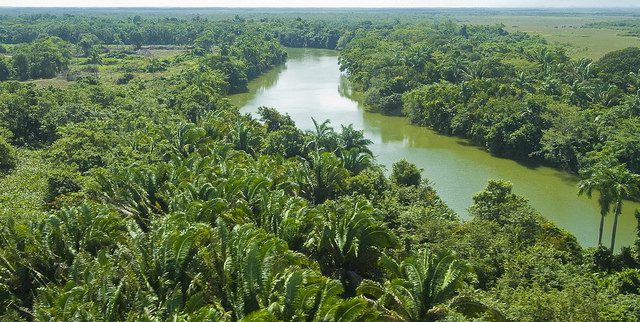
Belize is a country in Central America, which is located south of Mexico, bordering the Caribbean Sea. Being the last British colony in the Americas, Belize gained independence in 1981. Its 400,000 citizens rely on agriculture, oil production, and fishing as the main sectors in its economy. Unfortunately, poverty remains rampant throughout the country. On the positive side, there are numerous development projects in Belize which have sought and continue to seek sustainability and growth within the country. Here are five examples.
Youth and Community Transformation Project
Little more than a third of Belizeans advance to secondary school. The lack of education coupled with the stark number of children coming from single-parent families, nearly 25 percent, has contributed to poverty and high crime rates among youth in Belize. To combat this trend, Belize’s Ministry of Human Development has created the Youth and Community Transformation (YCT) project. The YCT project serves to bridge the gap between youth and much-needed social services. It seeks to improve literacy rates and teach vocational skills, as well as to provide access to other assistance programs throughout Belize.
United Nations Development Programme
Since 1982, the United Nations Development Programme has worked alongside the government of Belize. Its purpose is to provide support and resources to development programs maintained by Belize, including better access to water, access to sanitation and health services, as well as supporting the empowerment of local leaders in rural areas. This partnership has been very successful since its origin and recently celebrated 35 years of cooperation. More must still be done, however, and a recent 16 million dollar allocation will seek to fight poverty, address climate change and improve security by 2021.
Belize City Infrastructure Project
The 1990s saw a massive need for improvement to infrastructure in Belize City. To this end, The World Bank provided 20 million dollars. The project sought to improve drainage systems and most importantly, roads. The improved roads allowed for better networks for the delivery of goods and services and boosted Belize’s capacity for the booming tourism industry. This project set up Belize City for future success through improved systems and infrastructure management.
Primary Education Development Project
In congruence with the Belize City Infrastructure Project of the 1990s, The World Bank allocated seven million dollars to support Belize’s primary education development plans. The Primary Education Development Project focused on primary education to Belizean children. This included new teacher training systems, improved facilities, and strengthened management which helped improve the national system. Like the infrastructure project, the Primary Education Development Project created immediate fixes to the broken educational system and has impacted policies to build upon it for generations to come.
Growth and Sustainable Development Strategy
Each of the above development projects in Belize shares the common vision for sustainability and continuous improvement. Belize’s 2016 Growth and Sustainable Development Strategy (GSDS) serves the same purpose on a national scale. This plan, built upon the existing plan to create sustainable growth and development called Horizon 2030, focuses on a three-year window between 2016-2019. With it, Belize hopes to cut poverty and hunger, increase access to quality healthcare and education, and improve Belize’s environment, infrastructure and economy. While Belize is facing a tall order with this plan, it has been proven that it can be done through evidence of the country’s history of successful national projects.
Belize remains a developing country. Poverty, hunger, poor health, and poor education are immense problems throughout the Central American country. While these development projects in Belize are certainly making an impact, more must be done to ensure long-term sustainability and growth.
– Eric Paulsen
Photo: Flickr

An Insider Look: Why is Bahrain Poor?
This is the World Bank view of poverty: “Poverty has many faces, changing from place to place and across time … poverty is a call to change the world so that many more may have enough to eat, adequate shelter, access to education and health, protection from violence and a voice in what happens in their communities.”
In short, it doesn’t matter how rich a country may be if there are people living on the streets begging for money or food in order to provide for their children. In severe cases, poverty may impact certain demographic groups more than others.
Bahrain, which is situated on the Persian Gulf, is a kingdom presenting such a case. There are two major denominations of Islam — the Sunni and the Shi’a — and there is often a sharp division between the two politically.
Both follow the Prophet Muhammad but according to distinct readings. However, the Shi’a are shunned because of their contradictory interpretation of Prophet Muhammed. They glorify his family and relay their creed on mystical stories instead of what has been written. This mysticism is called Sufism and it uses figurative poetic language to convey the soul’s experience of the divine. As this belief is more fantastical than literal, it goes against the beliefs of the royal family, which means that the Shi’a are treated as inferior and this treatment answers the question: Why is Bahrain poor?
It is clear that the majority of the population is represented by the Shi’a religious sector, but they are treated as inferior because they don’t follow the royal family’s religion. As such, they suffer from “deprivation in housing, income, access to the professions and above all employment” according to business consultant Seth Kaplan. The preferential treatment given to the Sunni is so apparent that one can’t help but notice the huge gap between both religious groups. Poverty exists predominantly for the Shi’a due to the lack of opportunities granted. Many citizens are unfortunately forced to adapt to a street beggar lifestyle in order to survive.
A grand solution to this would be to follow the words of Indian ambassador to Bahrain Alok Kumar Sinha: “These programmes are aimed at skill development and employment creation. This means eliminating poverty by investing in the poor, by turning them from job seekers into job-providers and bringing a qualitative difference in the lives of the poor.” Sinha spoke these words at a seminar titled “Antyodaya – Alleviation of Poverty through the Economics of Empowerment” which was held at the Indian Embassy in Bahrain.
His central argument was about the programs that were working in India towards empowerment of those in poverty. The focus is shifting to those that live below standard living. These people are now able to provide for their families with the new skill sets they have achieved from these programs and their well-being has changed dramatically as a result. In order for Bahrain to resolve its poverty issue, it should work to close the gap between the Sunni and Shi’ and between Bahrain and the Arab world instead of continuing to enlarge it. By doing that, they will be able to provide a much more united front and eradicate the extreme poverty that exists there.
– Nicole Suárez
Photo: Flickr
Five Active Development Projects Assisting Jamaica
Launched in 2016, this project aims to increase Jamaica’s ability to handle natural disasters or dramatic climate events via a four-part plan. The first step is to increase the island’s technological infrastructure to allow for better tracking and predicting of weather events. The next component of this project is the improvement of physical infrastructure on the island to better resist and withstand natural disasters. The third step is to improve emergency services, so that in the event of a disaster, people can more rapidly be assisted. The fourth and final component, which ties all of the parts of this project together, is administrative oversight by the World Bank to ensure accountability. This project comes at an investment cost of $30 million from the World Bank, a worthy donation that will ensure Jamaica can withstand natural disasters to come.
The Early Child Development Project (ECD) sets out a three-tier strategy to ensure a better future for at-risk youth. The first goal of this project is to increase the regularity of developmental monitoring, health risk screenings and emergency intervention procedures for children. The second goal is to improve early childhood education facilities through both physical renovation and program development. Lastly, the ECD aims to strengthen and improve training for early childhood education groups, i.e. the adults responsible for providing care for children. The World Bank began this project in 2014, and has since pledged $14 million toward the cause.
Commencing in June of 2017, this project is the World Bank’s most recent development project in Jamaica, with $70 million in funding. The goal is to strengthen Jamaica’s economy and financial sector through a two-part strategy. First, the World Bank aims to support legislative reforms which will enhance the development of the Jamaican economy. Secondly, this plan aims to increase the availability of fiscal management for both businesses and private citizens. If all goes to plan, this project will help Jamaica become a developed country by the year 2030.
This project began in 2014 with the help of a $20 million loan from the World Bank, and aims to increase employment opportunities for Jamaican youth, specifically in the rapidly expanding digital and animation industries. The World Bank’s plan for this project puts funding into each step along the journey to working in these fields, from early childhood skills training, to investing in the digital animation industries themselves to stimulate growth and job availability. This project also provides funding toward individuals carrying out research, development and innovation in these fields.
The World Bank has pledged to provide $42 million from 2014 to 2020 in an effort to improve safety and infrastructure in communities across Jamaica. This project aims to improve roads, drainage, electrical, sewage and water systems and community organizations.
With the assistance of the World Bank, these development projects will encourage Jamaica’s social and economic growth as a nation. With hope and continued aid, Jamaica may be pulled out of poverty and into a bright future.
– Tyler Troped
Photo: Flickr
Helping the Poor in Latin America
Poverty in Latin America stands for complex, chronic, chaotic events with cumulated difficulties to handle. Considering a representative nation with a significantly reduced poverty rate such as Chile, the successful experience is at least owing to two points. For one thing, continuous economic growth brings about more opportunities for employment, providing a solid foundation for helping people to overcome poverty. For the other, the government pays relatively high concerns on poverty issues and carries out certain measures to solve concrete problems related to the poor. Organizations guided by political leaders and officers of each level are dedicated to eliminating poverty and the national annual budget used for social welfare, takes a large proportion of their total expenditure. Looking at Chile as an example, it seems to be that a combination of both economic and social progress is needed in order to help the poor.
What are some other effective ways of helping the poor in Latin America? Besides the mutual efforts of individuals and governments helping the poor, other factors such as natural disasters, political unrest, and financial crises could easily aggravate the alleviated poverty reduction. As voices of experience, Latin American countries should regulate and execute social policies to help the poor with orientations on their actual needs and viabilities. Those individuals who are categorized as extremely poor must be prioritized, and the existing mechanism of economy also needs to balance assisting the poor and preventing reoccurrences of unemployment or poverty. Providing freedom of necessity on immigration, insurance, trade, and shelters require common agreement.
Poverty comes hand in hand with discrimination and inequality towards women in Latin America. It is a topic related to poverty treatment that cannot be emphasized enough. Distribution of wealth between genders is also uneven. Hence, governments must consider increasing the hiring of female labors, as well as leverage better welfare to single mothers and any family with multiple kids.
In sum, quite a few national and regional programs on helping the poor in Latin America have released poverty issues at certain degrees, with the root of poverty being originated from some kind of unfair distribution. The unique solution towards poverty is by means of fair distribution on social wealth. While justice of distribution requires a long way to go for helping and saving the poor in Latin America, decreasing instances of poverty is not impossible, involving important aspects of both national and social systems.
– Xin Gao
Photo: Flickr
Poverty in Costa Rica
Poverty in Costa Rica remains an issue facing many people. The Republic of Costa Rica is a small country located between the Pacific Ocean and the Caribbean Sea. The country is greatly known for its tropical climate, which attracts millions of tourists every year. The sun, the sea and the nation’s wide variety of mountains and volcanoes have made the economy of Costa Rica mostly based on tourism.
Poverty in Costa Rica is not something that tourists often think about. Surrounded by the nation’s bountiful beauty, it is hard for many to believe that extreme poverty exists within what seems like paradise.
The unfortunate truth is that 1.1 million people currently live in poverty in Costa Rica. Most of the poor population in the country is situated within rural areas. The farther one goes from the metropolitan areas, the more poverty increases. Along with it, there is a lack of resources, fewer job opportunities and more.
The problem of poverty in such country does not end with the fact that over a million people suffer from it every day. The bigger concern is that such poverty has not been reduced for the past two decades.
In spite of this being the case, Costa Rica has the lowest poverty rate in Central America. Around 20 percent of the population live below the national poverty line of earning less than $155 per month. But, only two percent of the citizens in Costa Rica live below what is considered to be the international poverty line, living on less than one dollar per day.
Fortunately, initiatives have been taken in order to reduce poverty in Costa Rica. “Puente del Desarrollo,” or “Bridge of Development,” is a plan that took action throughout the years of 2015 and 2016, aiming to combine social programs into one bigger program. The program is still in action, and its goal is to help up to 54,600 families living below the Costa Rican poverty line by 2018.
– Paula Gibson
Photo: Flickr
Women’s Empowerment in Burundi Appears Optimistic
Fortunately, its recovery from war has not led women’s empowerment in Burundi astray. In fact, Burundi has a quota for the number of women in government. While it is not quite even with men, the country requires at least 30 percent of federal government positions be filled by women. Women also account for more than half of the workforce in Burundi and play a large role in agriculture.
Despite these factors, women still face discrimination when running for office. The 30 percent quota is not mandated for local government, and many citizens want more women in local positions. Women make up only 17 percent of local governments, much less than at the national level. At the local level, one is able to make a more direct impact on one’s community, leading many women to run for leadership positions within their communities. This movement toward more female leaders is a positive step toward overcoming gender discrimination and stereotypes.
The organization Search for Common Ground and the Dutch government have come together to help encourage women’s empowerment in Burundi, assisting in strengthening women’s participation in all levels of government. The women that they support must overcome the “practical challenges [that] make it difficult to attain true equality with their male counterparts, including balancing the demands of their position with responsibilities at home, a lack of funds to run a campaign, and simply overcoming a lack of experience in government in order to gain greater legitimacy and step into decision-making roles.”
The U.N. has also been working on this issue and has created programs to train women in how to participate in public affairs. Some of the topics covered include lobbying and negotiating, both skills that women need to be successful and make an impact when they are not equally represented. The U.N. also aims to make gender issues and gender policy the center of local and national conversations. This will not only empower women, but also empower their communities.
Because women are working harder to gain political power and there is more discussion about gender, the issues surrounding how women are viewed in society and culture will begin to be questioned more. Hopefully, as a result, Burundi will be able to see that women are more than just supporters of their husbands and children; they are also supporters of their country. For now, women’s empowerment in Burundi is growing and will continue to thrive until women have the same rights and representation as men.
– Emilia Beuger
Photo: Flickr
Improvements to Women’s Empowerment in Yemen
The country has a population of 27.5 million people, most of whom have been affected by the war, particularly Yemeni women. Many women in Yemen have expressed concerns about the war affecting their security, as well as the safety of their children. Despite these concerns, however, many women view the war as a contributor to women’s empowerment in Yemen because it has provided them with opportunities to assist in peace-building.
Since the outbreak of the war, women in Yemen have contributed in a plethora of ways, including providing aid to those who are wounded, aiding in the protection of children and providing psychosocial support to others. Some women have contributed in other ways, such as smuggling arms. Whichever end of the spectrum these women fall on, many of them regard their actions as an attempt to promote peace within the country.
Aside from providing aid and support to others during the war, Yemeni women are empowered through maintaining their own businesses and developing better leadership skills, which are two of the goals of Partners for Democratic Change. Though the country’s embassy emphasizes the importance of equality among the genders, there are still cultural attitudes and patriarchal structures that cause barriers for women in Yemen. Partners for Democratic Change has worked to tackle these barriers by changing people’s attitudes and by educating women. The organization has advanced women’s empowerment in Yemen by training 75 women in business and leadership so far.
Aside from Partners in Change, there are many other groups that have been established with the purpose of advancing women’s rights, such as the Supreme Council for Women and the National Commission for Women. Furthermore, the National Dialogue Conference (NDC), which took place from March of 2013 to January of 2014, occurred so as to begin a discussion about women in elected positions in Yemen.
The percent of women that made up the membership at this conference was 27 percent. During the NDC, those in attendance agreed upon the idea that, from then on, the number of women in elected council should be no less than 30 percent.
Though there is still progress to be made in regards to women’s empowerment in Yemen, the country has taken steps in the right direction through the various organizations and councils that it has established for advancing women in society. In addition, though the ongoing conflict in Yemen has been a source of turmoil for the country’s women, it has also caused them to feel empowered by providing them with opportunities to help others and contribute to rebuilding efforts.
– Haley Rogers
Photo: Flickr
A Rising Tide: Improvements to Infrastructure in Djibouti
Chinese investments promise to revitalize and expand shipping and transportation infrastructure in Djibouti, turning the small African nation of roughly a million people into a major trans-shipment hub on the Gulf of Aden. Chinese-backed projects include an electric train route to Ethiopia’s capital city and developing port facilities in the Port of Doraleh. Djibouti will also host China’s first overseas military base.
Despite these investments and the rapid growth of the nation’s economy over the past 20 years, some people are still left behind, citizens and refugees alike. Djibouti hosts more than 27,000 refugees from across the region, including those fleeing conflict in Ethiopia and Yemen. These refugees typically live in crowded camps with poor sanitation and little access to clean water.
Many citizens of Djibouti also lack reliable sanitation and access to water, particularly in rural areas. Nearly a quarter of the population still lives in extreme poverty, and 48 percent of working-age people are unemployed. The African Economic Outlook estimates that infrastructure development and economic changes driven by foreign investment may trickle down to impoverished citizens in the form of new jobs.
The international community beyond China has also taken an interest in infrastructure in Djibouti. While China’s interests chiefly lie in economic development, others are looking to more humanitarian issues such as education and food security. For example, the United Nations has been working through UNESCO on projects designed to bolster access to water, sanitation and education for both disadvantaged citizens and refugees. Their efforts have reached thousands, but thousands more continue to struggle every day.
The United States is on the ground in Djibouti as well, with the U.S. Agency for International Development (USAID) working with many partners on multiple projects. USAID is active in improving access to education and its quality. USAID is also working with private and governmental partners to address the transmission of diseases such as tuberculosis and HIV/AIDS along the developing Ethiopia/Djibouti transportation corridor.
However, as NPR reports, USAID funding is insecure under the current administration. The current budget proposal offered by President Trump’s administration would cut USAID and related programs by $2.2 billion. According to the New York Times, savings from these cuts will go to fund further investment in the military and domestic infrastructure. This move by the administration is unlikely to go unopposed. Doubts have already surfaced as to whether Congress will get on board with the administration’s proposals. Following a deal with Democrats, the administration’s budget isn’t likely to come up again for consideration until mid-December.
The government of Djibouti has its own ambitious plan to leverage infrastructure development in the mid- to long-term to raise the nation to “developing” status by 2035. In conjunction with humanitarian aid from abroad, this plan may see the fortunes of all Djiboutians rise like the expected ships at dock in the country’s expanding ports at high tide.
– Joel Dishman
Photo: Flickr
Development Projects Help Sustainability in Belize
Belize is a country in Central America, which is located south of Mexico, bordering the Caribbean Sea. Being the last British colony in the Americas, Belize gained independence in 1981. Its 400,000 citizens rely on agriculture, oil production, and fishing as the main sectors in its economy. Unfortunately, poverty remains rampant throughout the country. On the positive side, there are numerous development projects in Belize which have sought and continue to seek sustainability and growth within the country. Here are five examples.
Youth and Community Transformation Project
Little more than a third of Belizeans advance to secondary school. The lack of education coupled with the stark number of children coming from single-parent families, nearly 25 percent, has contributed to poverty and high crime rates among youth in Belize. To combat this trend, Belize’s Ministry of Human Development has created the Youth and Community Transformation (YCT) project. The YCT project serves to bridge the gap between youth and much-needed social services. It seeks to improve literacy rates and teach vocational skills, as well as to provide access to other assistance programs throughout Belize.
United Nations Development Programme
Since 1982, the United Nations Development Programme has worked alongside the government of Belize. Its purpose is to provide support and resources to development programs maintained by Belize, including better access to water, access to sanitation and health services, as well as supporting the empowerment of local leaders in rural areas. This partnership has been very successful since its origin and recently celebrated 35 years of cooperation. More must still be done, however, and a recent 16 million dollar allocation will seek to fight poverty, address climate change and improve security by 2021.
Belize City Infrastructure Project
The 1990s saw a massive need for improvement to infrastructure in Belize City. To this end, The World Bank provided 20 million dollars. The project sought to improve drainage systems and most importantly, roads. The improved roads allowed for better networks for the delivery of goods and services and boosted Belize’s capacity for the booming tourism industry. This project set up Belize City for future success through improved systems and infrastructure management.
Primary Education Development Project
In congruence with the Belize City Infrastructure Project of the 1990s, The World Bank allocated seven million dollars to support Belize’s primary education development plans. The Primary Education Development Project focused on primary education to Belizean children. This included new teacher training systems, improved facilities, and strengthened management which helped improve the national system. Like the infrastructure project, the Primary Education Development Project created immediate fixes to the broken educational system and has impacted policies to build upon it for generations to come.
Growth and Sustainable Development Strategy
Each of the above development projects in Belize shares the common vision for sustainability and continuous improvement. Belize’s 2016 Growth and Sustainable Development Strategy (GSDS) serves the same purpose on a national scale. This plan, built upon the existing plan to create sustainable growth and development called Horizon 2030, focuses on a three-year window between 2016-2019. With it, Belize hopes to cut poverty and hunger, increase access to quality healthcare and education, and improve Belize’s environment, infrastructure and economy. While Belize is facing a tall order with this plan, it has been proven that it can be done through evidence of the country’s history of successful national projects.
Belize remains a developing country. Poverty, hunger, poor health, and poor education are immense problems throughout the Central American country. While these development projects in Belize are certainly making an impact, more must be done to ensure long-term sustainability and growth.
– Eric Paulsen
Photo: Flickr
Infrastructure in Burkina Faso Shows Great Improvement
The government has made significant improvements to the infrastructure in Burkina Faso, particularly in the water sanitation and supply sector. The government is working hard to ensure that there is better access to safe drinking water, piped water into homes and improved health for the people living in the West African nation.
In past years, people in Burkina Faso went without sustainable water, even though the country is near the Volta River Basin and Niger River Delta. In fact, both of these rivers have proven to be unreliable to Burkina Faso, as they begin to dry out during certain seasons. In addition to the seasonal rivers, the country experiences common droughts throughout the year. With these geographic disadvantages, water became scarce for over 18 million citizens of the country, and water sanitation became an issue.
Fortunately, the infrastructure in Burkina Faso has improved drastically from the past. Over a span of twelve years, drinking water sustainability increased from 54 percent to 90 percent. For the Burkinabé living there, this improvement in drinking water sustainability means that the chances of having better living conditions and health are much higher.
The urban areas of Burkina Faso seem to be improving because of the technological resources that are being made available to the people living there. Yet, the same cannot be said for those who live in the poor rural areas of the country. More than half of the rural population still lives without usable water.
One of the main reasons why the infrastructure in Burkina Faso has issues with water sanitation and supply is because there is a lack of information provided to people living in rural areas. According to UNICEF, 50 percent of Burkinabé still practice open defecation, as they are not aware of the dangers of poor hygiene and see this practice as an everyday norm.
Another issue the country is having with improving water sanitation in rural areas is being able to increase access to technology while saving on funds. Without the proper budget, Burkina Faso must take into consideration the methods in which they plan to continue to help their citizens get better access to water supply and sanitation. This has changed with the assistance of the World Bank, which has mobilized $226 million over the past 20 years for Burkina Faso’s sanitation development. More than 440,000 people, including those in rural areas, have gained access to better water supply and sanitation, thus improving living conditions.
The people of Burkina Faso can hold their heads high knowing that their government is working hard with organizations such as the World Bank, UNICEF, and Wateraid to ensure that conditions continually improve over the next couple of years.
– Seriah Sargenton
Photo: Flickr
10 Important Facts about Poverty in Brazil
Brazil’s learning initiatives focus on ending poverty at both the national and international levels. However, the Brazilian economic boom of the last decade seems to have concluded with millions returning to poverty. The following 10 facts about poverty in Brazil provide insight on the country’s current poverty threshold, political state, budget cuts and programs created to combat poverty.
Facts about Poverty in Brazil
According to Fox News, the average American spends approximately $1,100 per year, more than double Brazil’s poverty threshold, on coffee. A simple conclusion can be reached from these 10 facts about poverty in Brazil: if every American cut their coffee budget in half, they could help eradicate poverty in Brazil.
– Carolyn Gibson
Photo: Flickr