For the last 50 years, world leaders have been flying across the world to take part in the World Economic Forum’s (WEF) facilitated conversations that might leave people wondering what is Davos, exactly? The small Swiss town, Davos, is home to the annual meeting held by WEF where invited elite address global issues and how to solve them.
In 2019, there were 3,000 people that joined together in the Swiss Alps to propose new initiatives for various issues, including how to help those in developing countries. The organization has been present in the creation of successful initiatives to provide vaccines and water to those in poverty as well as in the development of a project to prevent sickle cell disease in Ghana.
Gavi the Vaccine Alliance
Nearly two decades ago, Gavi the Vaccine Alliance launched at Davos, an organization that aims to provide vaccines and immunizations to children living in poverty. The Bill and Melinda Gates Foundation provided $750 million to get the organization running.
The World Health Organization (WHO) also founded Gavi and began partnering with the United Nations Children’s Fund (UNICEF) in 2008. UNICEF distributes vaccines and immunizations on behalf of Gavi, having spent $1 billion in 2014. In 2018, UNICEF distributed products to nearly 70 countries for Gavi, and plans on doing the same in 2019, according to its shipment plans.
Gavi’s goal is to immunize 300 million children between 2016 and 2020, already having provided 700 million children with immunizations. When people living in poverty receive vaccines to common diseases, it removes a financial burden and could eventually allow them to alleviate their poverty, according to a Harvard Health Policy Review article.
Water.org’s Clean Water Initiative
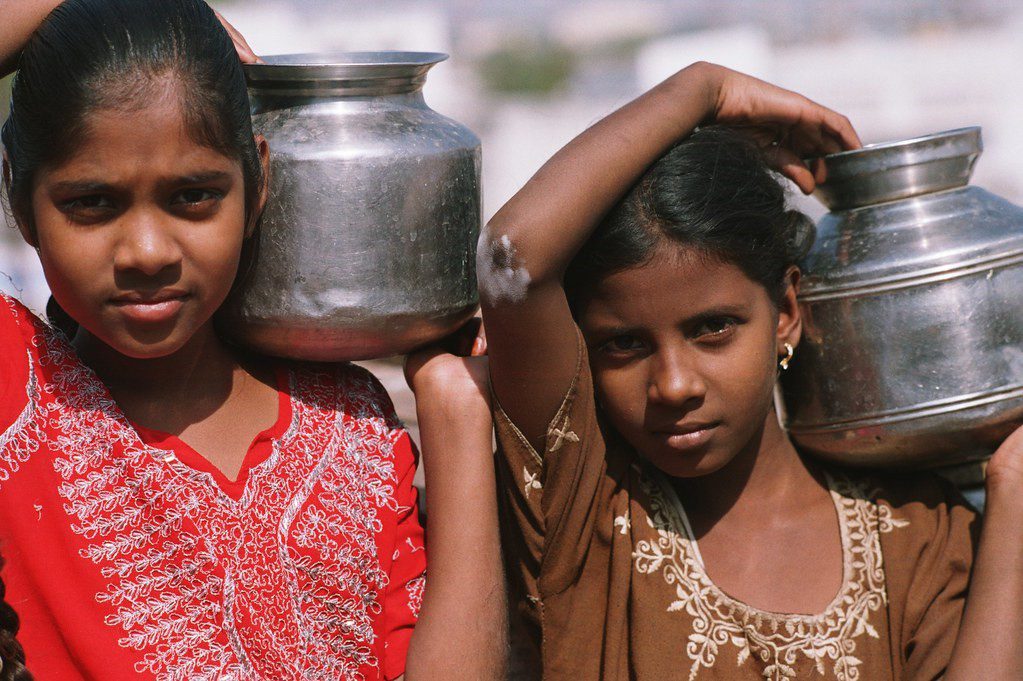
At the 2017 Davos meeting, Matt Damon and Gary White, founders of Water.org, announced the organization’s partnership with Stella Artois in providing water to 3.5 million people. According to WHO, 2.1 billion people lack access to clean, safe water in their home which can lead to the spread of diseases and death. To combat this phenomenon, Water.org is selling Stella Artois chalices and using a portion of the profits for WaterCredit, a system that allows local communities to take out loans to improve their water situation. This can mean different solutions for different communities allowing them a choice that best serves their needs, according to NPR. This partnership is just one of the initiatives in place by Water.org; Water.org and Stella Artois have been working together since 2015 and have helped over 1.7 million people gain access to clean water.
Sickle Cell Screening in Ghana
At the 2019 Davos meeting, the government of Ghana signed a five-year Memorandum of Understanding (MOU) with Novartis, a Swiss pharmaceutical company, to treat sickle cell disease within the country. Two percent of Ghanian newborns are born with sickle cell disease, according to a 2005 study of over 200,000 newborns. Director of Ghana Health Service, Dr. Anthony Nsiah-Asare, stated at Davos that he hopes that the MOU will allow for the placement of treatment centers in all regional hospitals and the screening of every newborn while also collecting and analyzing data on the disease.
As of March 2019, 5,600 doses of Hydroxyurea, a daily drug treatment for the disease, went to Ghana for sale at a reduced price, according to Ghana Business News. By September 2019, 40,000 more doses should enter the country.
In answering the question, “what is Davos?”, it is a small city where big leaders have been working towards making changes for more than 20 years, like the alleviation of poverty through acts such as providing vaccines, clean water services and disease screenings to countries in need. At varying levels of success, these initiatives have reached millions of people suffering from poverty and seem to be maintaining momentum.
– Makenna Hall
Photo: Flickr

What is Davos? Alleviating Poverty
For the last 50 years, world leaders have been flying across the world to take part in the World Economic Forum’s (WEF) facilitated conversations that might leave people wondering what is Davos, exactly? The small Swiss town, Davos, is home to the annual meeting held by WEF where invited elite address global issues and how to solve them.
In 2019, there were 3,000 people that joined together in the Swiss Alps to propose new initiatives for various issues, including how to help those in developing countries. The organization has been present in the creation of successful initiatives to provide vaccines and water to those in poverty as well as in the development of a project to prevent sickle cell disease in Ghana.
Gavi the Vaccine Alliance
Nearly two decades ago, Gavi the Vaccine Alliance launched at Davos, an organization that aims to provide vaccines and immunizations to children living in poverty. The Bill and Melinda Gates Foundation provided $750 million to get the organization running.
The World Health Organization (WHO) also founded Gavi and began partnering with the United Nations Children’s Fund (UNICEF) in 2008. UNICEF distributes vaccines and immunizations on behalf of Gavi, having spent $1 billion in 2014. In 2018, UNICEF distributed products to nearly 70 countries for Gavi, and plans on doing the same in 2019, according to its shipment plans.
Gavi’s goal is to immunize 300 million children between 2016 and 2020, already having provided 700 million children with immunizations. When people living in poverty receive vaccines to common diseases, it removes a financial burden and could eventually allow them to alleviate their poverty, according to a Harvard Health Policy Review article.
Water.org’s Clean Water Initiative
At the 2017 Davos meeting, Matt Damon and Gary White, founders of Water.org, announced the organization’s partnership with Stella Artois in providing water to 3.5 million people. According to WHO, 2.1 billion people lack access to clean, safe water in their home which can lead to the spread of diseases and death. To combat this phenomenon, Water.org is selling Stella Artois chalices and using a portion of the profits for WaterCredit, a system that allows local communities to take out loans to improve their water situation. This can mean different solutions for different communities allowing them a choice that best serves their needs, according to NPR. This partnership is just one of the initiatives in place by Water.org; Water.org and Stella Artois have been working together since 2015 and have helped over 1.7 million people gain access to clean water.
Sickle Cell Screening in Ghana
At the 2019 Davos meeting, the government of Ghana signed a five-year Memorandum of Understanding (MOU) with Novartis, a Swiss pharmaceutical company, to treat sickle cell disease within the country. Two percent of Ghanian newborns are born with sickle cell disease, according to a 2005 study of over 200,000 newborns. Director of Ghana Health Service, Dr. Anthony Nsiah-Asare, stated at Davos that he hopes that the MOU will allow for the placement of treatment centers in all regional hospitals and the screening of every newborn while also collecting and analyzing data on the disease.
As of March 2019, 5,600 doses of Hydroxyurea, a daily drug treatment for the disease, went to Ghana for sale at a reduced price, according to Ghana Business News. By September 2019, 40,000 more doses should enter the country.
In answering the question, “what is Davos?”, it is a small city where big leaders have been working towards making changes for more than 20 years, like the alleviation of poverty through acts such as providing vaccines, clean water services and disease screenings to countries in need. At varying levels of success, these initiatives have reached millions of people suffering from poverty and seem to be maintaining momentum.
– Makenna Hall
Photo: Flickr
Innovative Technology Enables Access to Electricity
“I cannot help but wonder how many medical catastrophes have occurred in public hospitals because of ‘no light,’ how much agricultural produce has gone to waste, how many students forced to study in stuffy, hot air have failed exams, how many small businesses have foundered,” writes Booker Prize-winning Nigerian novelist Chimamanda Ngozi Adichie. “What greatness have we lost, what brilliance stillborn?”
Post-Colonization and Lack of Electricity
Nigeria is not the only African nation to suffer from electricity shortages. In the last few months, Ethiopia, South Africa, and Zimbabwe have all rationed electricity due to shortages. Difficulties with providing access to electricity are common in post-colonial countries. Colonization made countries poorer in general, due to the exploitative relationships between colonized nations and their colonizers. For instance, on the eve of its independence from Britain in 1945, India’s GDP per capita was lower than it was in 1600. This theft of resources has made it more difficult for post-colonial nations to invest in electrification. And even when colonial powers did implement electric grids, they frequently only bothered to electrify areas populated by colonists and settlers, rather than the native population, according to a 2018 study by Ute Hasenöhrl, a professor of history at the University of Innsbruck.
Finding Solutions
Luckily, there are solutions to these problems. A study by a team of researchers, led by Dr. Samuel Ayokunle Olowosejeje, at University College Cork found that switching Nigeria’s electric grid to solar energy could make it significantly easier to distribute electricity by reducing costs. In particular, the study found that switching to solar could reduce costs by up to 132 percent.
Even if resources can’t be invested in traditional electric grids, new technology provides opportunities to electrify in new ways. Prof. Hasenöhrl gives the example of an initiative by the government of Bangladesh that has provided almost four million people in rural areas with home solar panel systems. These allow people to enjoy the benefits of electricity without requiring as much investment in infrastructure.
The initiative in Bangladesh, called Solar Home Systems (SHS), has had a big impact: 12 percent of the population – more than one out of every ten people in Bangladesh – have benefited from the plan, according to an evaluation of the program by the Centre for Public Impact. Before the beginning of SHS in 2003, a common method that some people in rural Bangladesh used to light their homes was kerosene lamps, which are expensive to power and produce relatively little light in comparison to electric lighting. The Centre for Public Impact report also highlighted how the program’s engagement with existing grassroots community organizations was key to providing legitimacy to the project. The organizations’ pedigree helped overcome initial skepticism on the part of many rural residents.
Harnessing the Sun
Dr. Olowosejeje also points to solar panels for individual households, in addition to more traditional grid-based solar energy, as a potentially beneficial move in Nigeria. “[S]olar-based power generation…is the most technically feasible and cost-effective solution to the challenge of extending electricity to 80 million people [in Nigeria] who are currently without access to energy,” he writes. In addition, solar panels could even be a source of income: “Renewable technologies could also help to develop an electricity market where those producing surplus energy can sell it to those who have a shortfall.”
The damage wrought by colonialism has made it difficult for many countries to create adequate electrical grids. The recent spate of electricity rationing in several African nations is just one example of this problem. However, the good news is that solutions exist. One of them is single-home solar electricity systems. These systems can provide access to electricity, overcome the limitations of traditional power grids, and even create an additional revenue stream to help struggling families by enabling them to sell electricity to others.
– Sean Ericson
Photo: Flickr
10 Facts About Child Labor in Sierra Leone
Child labor is defined as work that harms children mentally and physically and deprives them of their childhood. Child labor is illegal in many countries, but some countries have found loopholes in their legal frameworks which enables the use of children in some of the toughest work environments. Sierra Leone‘s minimum employment age is 18, but it lacks the ability to enforce its laws. Here are 10 facts about child labor in Sierra Leone.
10 Facts About Child Labor in Sierra Leone
Hope for Lives
Ending child labor in Sierra Leone will take more than just a village. Thomas Bobby Smith, a Sierra Leone native, founded Hope for Lives, a successful nonprofit. This organization delivered seven donated hematology and immunoassay machines to a local clinic and installed them. In 2013, it revealed the Hope for Lives Library at St. Anthony’s Primary School in Sierra Leone’s capital, Freetown. The library included 15-20 computers, open to 3,000 students upon fair rotation. It also offered constant computer lessons taught by a tech leader and computer and printing services for public use. Hope for Lives is doing all it can to give Sierra Leone’s children and youth options for success. Thomas Bobby Smith kept his momentum strict and faithful by sending another 50 computers to Sierra Leone’s remote areas in hope of creating successful computer labs.
The implementation of the National Child Rights Bill and work from Sierra Leone’s very own President, Julius Maada, are making strides to end child labor. Organizations like Hope for Lives should help revitalize the spirits of children and youth as well.
– Niesha Braggs
Photo: Flickr
Solving the Water Crisis in Iraq
Iraq faces a deepening water crisis due to the consequences of war, upstream damming and decreased rainfall. Both the Tigris and Euphrates rivers have dropped to precariously low levels, negatively affecting public health and agriculture productivity. The water crisis in Iraq requires international cooperation and innovative solutions.
The Problem
Iraq’s water supply has reached dangerous levels due to a myriad of reasons, perpetuating a cycle of constant crisis. The war in Iraq has resulted in the destruction of infrastructure necessary for potable water, such as dams and treatment plants.
Furthermore, dams in Syria and Turkey have decreased water levels in both major rivers, the Tigris and Euphrates. Iraq, historically reliant on these two rivers, has suffered greatly as a result of the upstream dams. Maintaining the crisis is the fact that average precipitation has decreased to among its lowest recorded levels.
The Consequences
The water crisis in Iraq produces several key consequences for the country. Among them are public health concerns, decreased agricultural productivity and political unrest.
If Iraqis have access to water, it is often unsafe for consumption. In Basra, 120,000 residents required hospital treatment in just one year due to contaminated water. Additionally, according to Human Rights Watch, the Iraqi government often fails to warn citizens about the dangers and presence of poor water quality.
Iraq’s agriculture sector places additional stress on the already limited water supply. In fact, the water crisis in Iraq prompted the government to suspend rice farming entirely. One in five Iraqis is employed in the farming industry. The water crisis has left many without an income and has forced others to find work elsewhere. This affects not only the farmers but the thousands of Iraqis who rely on the food they produce.
Many Iraqis are dissatisfied with the government due to the water crisis. They believe that Iraq’s government should have done more to protect water security such as by building dams of their own. In a country racked by instability and violence, protests over the government’s mishandling of water have left nine dead, hundreds injured and many more detained in prison according to the Human Rights Watch.
The Solution
No easy solution for the water crisis in Iraq exists. However, progress will require international cooperation. An international dialogue will need to address the Syrian and Turkish dams that starve Iraqi portions of the Tigris and Euphrates. Additionally, Iraq is in desperate need of aid to build its own water infrastructure.
In July 2019, Turkey published a detailed report regarding its plan to assist Iraq through the crisis. Turkey plans to take three critical steps in order to alleviate the strain placed on its southern neighbor. They will allow more water to flow into Iraq from the Tigris and the Euphrates. To help rebuild infrastructure, Turkey will provide financial aid. Finally, they promise to train Iraqi engineers and technical personnel on wastewater treatment and hydrology.
The United Nations, through UNESCO, hopes to provide training and financial aid to Iraq as well. The organization believes updated irrigation systems will deliver relief to Iraq’s struggling farmers. UNESCO plans to target aid in the two regions most affected by the water crisis, the northern and southern tips of Iraq.
The water crisis in Iraq stands in the way of further development. The country has, unfortunately, endured many hardships in recent history, but international cooperation remains its best hope for stability and prosperity.
– Kyle Linder
Photo: Pixabay
Efforts to Reduce Youth Unemployment in Jamaica
Jamaica has one of the highest rates of youth unemployment in Latin America and the Caribbean, with 21.8 percent of youths unemployed as of January 2019. However, this rate represents a significant improvement after reaching a high of 37.5 percent in 2013. The World Bank and the Government of Jamaica are working to continue this progress in reducing youth unemployment in Jamaica by creating and supporting programs designed to increase opportunities for young Jamaicans.
Trends in Unemployment
Recent research has revealed that there is an even greater disparity when comparing young women and young men. In January 2019, the unemployment rate was 17.9 percent for young men and 26.5 percent for young women. The recent progress in reducing youth unemployment in Jamaica is still remarkable and has been highlighted by many, including Kemesha Kelly, a youth advocate and lecturer at The University of the West Indies, Mona
Kelly has stated that “everyone must participate in the progress. Putting job creation at the heart of economic policymaking and development plans will not only generate decent work opportunities, but also more robust, inclusive and poverty-reducing growth. It is a virtuous circle that is as good for the economy as it is for the people, and one which will lead to sustainable development.”
The Government of Jamaica seems committed to the work Kelly described, as Jamaica’s Minister of Education has proudly noted the progress that has been made and expressed a determination to keep this momentum going and reduce the rate even further in the coming years.
Government Initiatives
As a part of this commitment, the Ministry of Education hosted a youth career week in 2018, highlighting career and skill-training opportunities for young Jamaicans. This included a youth forum, an expo with displays on career paths, and a National Skills Competition for students in secondary and primary schools. Beyond this, the government is also working to strengthen the apprenticeship program to increase opportunities for young people and decrease youth unemployment in Jamaica.
Jamaica is using the Australian system as a potential model, which requires youth to go through an apprenticeship program in order to enter the formal economy. While Jamaica’s government has not noted any plans to make apprenticeship mandatory, they want to increase its availability and popularity among youth, developing it within the Jamaican context.
In addition to apprenticeships, the Director-General of the Planning Institute of Jamaica, Wayne Henry, also stated the need to ensure the programs offered at educational institutions could directly lead to meaningful employment. Specifically, programs in emerging fields, including robotics, criminology, entrepreneurship, engineering and mechanics, should be more widely offered.
This focus on apprenticeship has been in the works since 2017 and may be one of the reasons for the improvements to youth unemployment rates. In February 2014, a forum was hosted to discuss the goal of increased apprenticeship and open a dialogue between the government and the private sector.
World Bank Program
In 2014, the World Bank began its Sustainable Youth Employment in Digital and Animation Industries Project for Jamaica. The project has been working to help youth become more employable and will remain active until January 2020. This is a growing industry that significantly benefits from having young tech entrepreneurs who can bring new, innovative ideas. The project focuses on helping youth develop the critical thinking skills needed for entrepreneurship in this field, connecting youth entrepreneurs to each other and to industry leaders.
Moving Forward
Jamaica is not alone in facing the struggle of high youth unemployment, as the Latin American and the Caribbean regions have the third-highest youth unemployment rate in the world. If these efforts to reduce youth unemployment in Jamaica continue to be successful, other countries in the Caribbean and Latin America may be able to model their own initiatives off of Jamaica’s, learning how to focus on increasing youth employment as a way to improve livelihoods and the overall economy.
– Sara Olk
Photo: Flickr
The Growing Importance of the Tourism Sector in Timor-Leste
and add jobs. USAID, Chemonics and private investors are seeing economic opportunity in the emerging tourism sector.
Benefits of Tourism Industry Investments
The benefits of developing the tourism sector in Timor-Leste include job creation and increased revenue. Poverty-reduction policies, health care and improved education are possible uses of much-needed revenue to the developing economy. The government’s goal is to attract 200,000 annual international tourists by 2030, which would generate $150 million and add 15,000 local jobs. For reference, total revenue for Timor-Leste was $300 million in 2017. Chemonics is currently working with the government and USAID’s Tourism for All Project to develop Timor-Leste’s tourism industry.
Since the tourism sector in Timor-Leste is new, one task stated by Peter Semone, chief of party for the USAID Tourism for All Project, is to explain the benefits of tourism to Timorese that might object to the rising tourism industry, especially in terms of its environmental impact. Marine tourism, particularly on Atauro Island, is expected to flourish once the tourism industry is further developed. One priority is convincing wary Timorese that the rising tourism industry means increased revenue to the government or directly through selling services and/or products.
Achievements by USAID’s Tourism for All Project
The USAID Tourism for All Project began in January 2018 and is slated to end in January 2021. Its goal is to expand and improve the Timorese tourism industry using a comprehensive and sustainable approach. The project costs $9 million and its focus is directed towards two main areas: ensuring laws, institutions and policies are in place to implement the national tourism policy that began in 2017, providing sustainable private sector tourism investments and participation by Timorese communities and replicating successful models for future use.
There are five major achievements of the USAID Tourism for All Project. One accomplishment of USAID’s coordination with the government of Timor-Leste is the registration for a Mt. Ramelau Tourism Partnership that is currently in progress. Mt. Ramelau is a sacred mountain and major tourist attraction. USAID also facilitated the process of Atauro Island residents creating a vision, mission and tourism action plan for the next three years and began registration for the Tourism Partnership of Atauro. Atauro Island is the most marine biodiverse location in the world. USAID and Timor-Leste anticipates a booming ecotourism industry on the island.
Grants programs were also launched under the project to encourage tourism entrepreneurs to invest in targeted areas. One final achievement is the establishment of a working group involving the Secretary of State for Arts and Culture, UNESCO and local non-governmental organizations for conservation and preservation of tais, a hand-woven textile used to make scarves and bags. Tais was proposed for UNESCO Intangible Cultural Heritage recognition.
Future Economy of Timor-Leste
Semone stated that “tourism is the base to improve the service industry and the culture of service in the country. It is also an excellent factor to foster the development of a private sector of SMEs but also a way to raise environmental consciousness for locals.” With the help of Chemonics, USAID and other organizations, Timor-Leste’s tourism sector shows promise in reaching the goal of attracting 150,000 international tourists and adding 15,000 by 2030.
– Lucas Schmidt
Photo: Flickr
10 Facts About Life Expectancy in Fiji
10 Facts About Life Expectancy in Fiji
These 10 facts about life expectancy in Fiji should not be a cause for concern, because, despite Fiji’s low life expectancy, it has improved over the years. Poverty was at 35 percent in 2009 and it is now at 28 percent. As long as the government continues to find ways to increase the stability of people in rural areas, Fiji’s life expectancy should continue to increase.
Photo: Flickr
8 Facts about Education in South Sudan
South Sudan, the world’s youngest country, faces a bevy of challenges. A long civil war within the previously integrated Sudan and an onslaught of recent conflicts in the newly independent country of South Sudan have resulted in years of instability, undermining education there. Geographical and gender-based issues also pose threats to learning, but the government and NGOs are working hard to create a better system. Here are eight facts about education in South Sudan.
8 Facts about Education in South Sudan
Conflict and complex political geography combine to undermine education in South Sudan, but the weight of both pressures is gradually lifting. This spells a promising future for South Sudan. Besides being instrumental for healthy living and economic prosperity, education is also a key to future peace. As the South Sudan government and NGOs continue to strengthen the education system, stability will hopefully follow.
– James Delegal
Photo: Flickr
Increased Vaccination Rates in Papua New Guinea
Across the globe, access to adequate healthcare appears to be of paramount concern for both governmental and non-governmental organizations. Not only does providing health services to underserved and under-represented populations increase general wellbeing and happiness, it has also proven to be beneficial for the economy, per the U.S. Chamber of Commerce.
Pushing for Vaccinations
In February, the southeast Asian nation of Papua New Guinea declared 2019 as “The Year of Immunization,” in an effort to stave off preventable diseases and promote healthier lifestyles. This push to increase vaccination rates in Papua New Guinea was further intensified following several polio outbreaks across the country in Summer and late 2018 as well as in early 2019, and outbreaks of measles in 2014 and 2015 with 2,000 total confirmed cases and over 350 deaths. This recent resurgence in the near-eradicated virus can be attributed to sub-optimal living conditions and lack of wide-spread, generalized immunization.
Furthermore, the efforts to increase vaccination rates in Papua New Guinea would hopefully spur the economy, lifting more citizens out of poverty (as of 2002, 37 percent of New Guinea’s population lived below the global poverty line – approximately 2.5 million people), though this economic boost would act primarily as an added bonus to preventing polio, rubella and measles.
Widescale immunization quickly became a top priority for the government and National Department of Health of Papua New Guinea. While initially a daunting task, the southeast Asian nation partnered with the World Health Organization (WHO), UNICEF and other non-profit organizations, such as the Bill & Melinda Gates Foundation, in order to better coordinate these immunization campaigns.
According to UNICEF, one of the polio campaigns sought to immunize over three million children up to the age of 15-years-old. As of late July 2019, these campaigns have been deemed as successful by the government, significantly increasing vaccination rates in Papua New Guinea. Since February, Papua New Guinea’s National Department of Health, along with the WHO, and UNICEF have led eight successful immunization campaigns, vaccinating approximately 1.28 million children under the age of five for polio, in addition to just over one million children of the same age for rubella and measles.
Cooperation Among Organizations
The success of these campaigns can be traced to swift action and cooperation between the primarily players. The WHO estimates that over 12,000 workers (from vaccination specialists, mobilizers and surveillance officers) helped to orchestrate these movements across the country – movements, which according to The Papua New Guinea National Department of Health, have had a 95 percent success rate.
While these increased vaccination rates in Papua New Guinea are positive signs for the future of the country’s health promotion and disease prevention, it is important to note that Papua New Guinea was declared as polio free in 2000 and went 18 years without a confirmed case of polio. It is essential that Papua New Guinea continue these immunization campaigns in order to guarantee healthier lifestyles for the rest of 2019 and into the future.
– Colin Petersdorf
Photo: Flickr
How Wealth Inequality and Poverty Connect
Wealth inequality is an issue that plagues many developing nations, causing a widening distance between the wealthy and the poor in those nations. When a country distributes income among its people in an unequal manner, even a country with a growing economy can advance slower. Impoverished people are often unable to improve their situation due to the number of barriers they face, and some people may even be more prone to falling below the poverty line when a country’s economy advances without them. Here are examples of how severe wealth inequality contributes to poverty and how these issues can be corrected.
The Challenges of Inequality
The country the United Nations Development Program (UNDP) lists as having the highest wealth inequality is South Africa, according to its GINI index of 63 percent (a measure of inequality, with zero percent representing perfect equality and 100 percent being maximum inequality). Though South Africa has a high GDP compared to the world average, it still has a large number of people below the poverty line. In 2014, 18.9 percent of the population was living on less than $1.90 per day. In many cases, the poorest workers in South Africa are living on wages of $50 per month. Many of these issues are due to the country’s history of apartheid, which entrenched economic differences between different groups of people. Though South Africa removed that system 25 years ago, its legacy still impacts the country today.
Brazil is another country where wealth inequality contributes to poverty in a significant capacity. Despite others earmarking the country as one quickly moving towards becoming a developed nation, 10 percent of the population still lives in extreme poverty. Though the country’s economic growth is significant, 61 percent of that growth from 2001 to 2015 has gone directly to the richest 10 percent of the country. This means that the majority of Brazil’s population has only seen 39 percent of all of its economic progress.
This inequality contributes significantly to the problem of poverty and prevents the poorest of the country from improving. Progress in Brazil on this issue with regards to specific groups of people is slow. By current projections, women in Brazil will not close the wage gap until 2047. As for black Brazilians, estimates determine that they will not earn as much as white Brazilians until 2089 by the current rate.
What Can Countries Do?
One should note that while wealth inequality contributes to poverty, the exact causes behind wealth inequality can vary greatly and come about as a result of many different social, political and economic factors. South Africa’s inequality as a result of historical institutions may be an issue more difficult to tackle. According to experts, however, a good start would be to offer more opportunities to those who those institutions have systematically excluded.
In Brazil, access to education remains seriously dependent on one’s family income. As a result, the majority of Brazilian adults have no secondary education. Expanding access to more education opportunities may be key to alleviating income inequality and poverty in Brazil.
Inequality is a serious issue in countries like South Africa and Brazil, and the issues that connect with it contribute to poverty’s continued existence and expansion. According to a study published by members of the U.N., there is a strong link between income inequality and poverty. In order to reduce poverty, it follows that countries must also correct inequality. With more legislation and NGOs assisting individuals severely disadvantaged by income inequality, ending poverty seems a lot more accomplishable.
– Jade Follette
Photo: Flickr