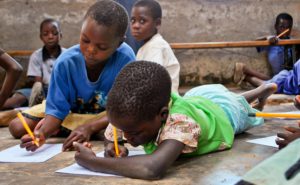
 “Not all superheroes wear capes; some carry school bags, walk 10km to class and still dream of changing the world,” says Jacqueline Nyakunu, founder of a small rural education nonprofit in Zimbabwe. Financial support through scholarships, government aid programs like the Basic Education Assistance Module (BEAM), NGO initiatives and community-based efforts is vital in improving the education system for vulnerable children in Zimbabwe. These interventions transform their futures and empower communities through increased educational opportunity.
The Challenge of Accessing Education in Zimbabwe
Zimbabwe’s education system experiences some strenuous challenges from systemic underfunding, rural disparities compared to urban areas and holistic inequalities. The government allocated 14% of the national budget to education in 2023, an improvement from 13.4% the previous year. However, it still falls short of the “20% threshold on budgets when it comes to the education sector” recommended by the Dakar Framework.
This constant underfunding has led to poor infrastructure in rural areas, where some schools operate in makeshift garages or abandoned buildings. This leaves students in remote regions, with limited resources and inadequate infrastructure, at a severe disadvantage compared to their urban counterparts. In 2021, an estimated 30,000 students failed to register for national exams due to financial barriers.
High dropout rates compound the problem. UNICEF reports that nearly 50% of children are out of school, specifically in the pre-primary (68%) and adolescent (47%) age groups. Girls face additional hurdles, including period poverty, which affects around 60% of rural girls and contributes to a school attendance rate of 20%, as well as a 21.2% child marriage rate among girls aged 15 to 18 years of age.
Technological inequality further limits learning opportunities, with most rural schools lacking electricity, internet access and digital resources. Most of these schools “do not have the necessary equipment like computers and computer labs needed for ICT studies and virtual learning.” Overall, in the modern world, not having access to the internet or technology while also lacking tangible resources makes it extremely difficult for students to flourish. With 72% of Zimbabwe’s population aged below 18 living in rural areas, these challenges point to a severe education crisis that disproportionately affects the country’s most vulnerable communities.
Government and Institutional Support
Beginning in 2009, Zimbabwe revitalized its BEAM via a partnership between the government and UNICEF to provide tuition, examination fees and rally support to needy students. The initiative targets children in school who are struggling to pay the expenses, dropouts due to financial burdens, those who never enrolled and other socially marginalized groups, such as orphans or children with disabilities. In 2009, BEAM served approximately 527,330 students across 5,055 schools. It achieved approximately 94% of its initial goal of 560,000 beneficiaries, with a gender equity of 50% of beneficiaries for girls.
Despite this early impact, funding challenges quickly developed. In 2011, BEAM received $10 million from donors for primary and special needs schools and $13 million from the government for secondary schools. This fell $7 million short of the $30 million needed to meet the program’s goals. BEAM complements efforts like the Education Transition Fund (ETF). The ETF is designed to supply teaching and learning materials and broader social protection objectives coordinated through district and national Child Protection Committees.
Community-Based Initiatives
The Borgen Project spoke with Nyakunu, a rising senior at Davidson College, who shared her personal journey and the inspiration behind her nonprofit work. She spent her early years in rural Bocha, Zimbabwe, where she and her brother walked close to 15km to reach Chapeyama Primary School, often crossing a river along the way. “Although I enjoyed learning, the long journey and lack of resources made school physically and mentally draining,” she recalled.
Her circumstances changed dramatically when her family moved to an urban area and she transferred to Sakubva Primary School. With access to textbooks, a library and transportation, Nyakunu began to thrive. She eventually graduated top of her class and earned a fully funded place at Davidson College in the U.S.
During the interview, Nyakunu spoke about Start-Up Rural Gen (SURG): the youth-led nonprofit she founded in high school. What began as a capstone project has become an organization that now expands educational access for rural students in Zimbabwe and Kenya.
SURG focuses on addressing both financial and material barriers for Zimbabwe’s education system through four core initiatives:
- Scholarships: Covering school fees for students whose families are unable to pay.
- Material Support: Providing essentials like textbooks, stationery, school uniforms and sanitary wear.
- Mentorship and Career Guidance: Offering workshops and personal mentoring to help students prepare for higher education.
- Community Engagement and Partnerships: Collaborating with schools, volunteers and donors for sustained impact.
Since 2021, SURG has supported more than 1,000 rural students. Nyakunu highlighted the example of Mt. Matedzi Secondary School, where overcrowded classrooms and limited textbooks make learning difficult. In one case, she described an 11-year-old boy from Mukwada who now receives full support through SURG and consistently ranks at the top of his class. What began with a $600 grant has grown steadily, now receiving funding from sources like Davidson College, AFS Intercultural Programs and even Nyakunu’s income!
Moving Forward
Financial support through government programs like BEAM, scholarships or philanthropic efforts like SURG is more than just assistance; it is a lifeline changing the trajectory of thousands of children in Zimbabwe. These initiatives are closing critical access, resources and opportunity gaps, especially for rural and marginalized communities.
However, continued investments from institutions, local governments, donors and individuals alike are necessary and urgent. This ongoing commitment will ensure education is not a privilege for the few but a fundamental right for every child in Zimbabwe.
– LaRaymee Lee
LaRaymee is based in Missouri City, TX, USA and focuses on Global Health for The Borgen Project.
Photo: Flickr

Rebuilding Syria Post-Assad Era
As a result, 16.5 million people across Syria require humanitarian aid, making it one of the biggest humanitarian crises in the world. Urgent action is needed to repair the damage and provide adequate food, water, shelter and medical care to the displaced in Syria. Fortunately, humanitarian organizations like UNICEF and World Vision, the United Nations (U.N.) and government organizations like the European Union (EU) have been supplying these needs, albeit with struggles.
Syria’s Current Crisis
Syria ranks among the most food-insecure countries globally, with 14.5 million people requiring food assistance. More than seven million people are internally displaced within Syria, of which two million live in refugee camps that fail to meet basic needs. More than half the population lacks stable access to water.
Children are among the most victimized by the ongoing crisis. More than seven million children require humanitarian assistance. Six million children need protection services from forced labor, human trafficking, child marriage and child recruitment in local militias. Thousands of schools within Syria have been destroyed and those still standing have turned into encampments or emergency medical centers. As a result, 2.4 million eligible children are out of school, leaving them at increased risk of child labor, recruitment and trafficking.
Additionally, fewer than 50% of hospitals and medical facilities in Syria are either half-functioning or non-functioning. The lack of medical care has led to an increase in cases of waterborne, respiratory and vaccine-preventable diseases such as cholera and pneumonia, especially among children.
Rebuilding Syria
When factoring in the cost of rebuilding infrastructure, providing humanitarian aid and military spending, it is estimated that the recovery of Syria could take $1.2 trillion. The international community is assuredly investing in crucial aid to Syria. The largest donor is the EU, which has provided more than $37 billion since the beginning of the war in 2011 and pledged to invest more in 2025. The United Kingdom (U.K.) announced it will spend more than $216 million on humanitarian aid in Syria.
UNICEF has been providing aid to Syria since 2011. Over the years, it has given 4.6 million people access to clean water and vaccinated millions of children. It has also delivered additional medical care to 2.2 million women and children. Since the escalation of violence in July, UNICEF has deployed 14 mobile health and nutrition teams, offering medical care to 4,000 children and women and safe drinking water and fuel for pumping stations that benefit more than 30,000 people.
Similarly, World Vision has managed to aid more than 1.2 million Syrians, providing them with food and natural disaster relief. After a devastating earthquake in 2023, World Vision provided shelter and medical care.
Final Remarks
Reaching the millions of Syrians in need will require significant effort to ensure aid is delivered effectively. Meeting these needs is crucial and imperative, demanding that humanitarian organizations continue investing time and resources in rebuilding Syria.
– Zoe Alatsas
Photo: Flickr
Transforming Education in Zimbabwe
The Challenge of Accessing Education in Zimbabwe
Zimbabwe’s education system experiences some strenuous challenges from systemic underfunding, rural disparities compared to urban areas and holistic inequalities. The government allocated 14% of the national budget to education in 2023, an improvement from 13.4% the previous year. However, it still falls short of the “20% threshold on budgets when it comes to the education sector” recommended by the Dakar Framework.
This constant underfunding has led to poor infrastructure in rural areas, where some schools operate in makeshift garages or abandoned buildings. This leaves students in remote regions, with limited resources and inadequate infrastructure, at a severe disadvantage compared to their urban counterparts. In 2021, an estimated 30,000 students failed to register for national exams due to financial barriers.
High dropout rates compound the problem. UNICEF reports that nearly 50% of children are out of school, specifically in the pre-primary (68%) and adolescent (47%) age groups. Girls face additional hurdles, including period poverty, which affects around 60% of rural girls and contributes to a school attendance rate of 20%, as well as a 21.2% child marriage rate among girls aged 15 to 18 years of age.
Technological inequality further limits learning opportunities, with most rural schools lacking electricity, internet access and digital resources. Most of these schools “do not have the necessary equipment like computers and computer labs needed for ICT studies and virtual learning.” Overall, in the modern world, not having access to the internet or technology while also lacking tangible resources makes it extremely difficult for students to flourish. With 72% of Zimbabwe’s population aged below 18 living in rural areas, these challenges point to a severe education crisis that disproportionately affects the country’s most vulnerable communities.
Government and Institutional Support
Beginning in 2009, Zimbabwe revitalized its BEAM via a partnership between the government and UNICEF to provide tuition, examination fees and rally support to needy students. The initiative targets children in school who are struggling to pay the expenses, dropouts due to financial burdens, those who never enrolled and other socially marginalized groups, such as orphans or children with disabilities. In 2009, BEAM served approximately 527,330 students across 5,055 schools. It achieved approximately 94% of its initial goal of 560,000 beneficiaries, with a gender equity of 50% of beneficiaries for girls.
Despite this early impact, funding challenges quickly developed. In 2011, BEAM received $10 million from donors for primary and special needs schools and $13 million from the government for secondary schools. This fell $7 million short of the $30 million needed to meet the program’s goals. BEAM complements efforts like the Education Transition Fund (ETF). The ETF is designed to supply teaching and learning materials and broader social protection objectives coordinated through district and national Child Protection Committees.
Community-Based Initiatives
The Borgen Project spoke with Nyakunu, a rising senior at Davidson College, who shared her personal journey and the inspiration behind her nonprofit work. She spent her early years in rural Bocha, Zimbabwe, where she and her brother walked close to 15km to reach Chapeyama Primary School, often crossing a river along the way. “Although I enjoyed learning, the long journey and lack of resources made school physically and mentally draining,” she recalled.
Her circumstances changed dramatically when her family moved to an urban area and she transferred to Sakubva Primary School. With access to textbooks, a library and transportation, Nyakunu began to thrive. She eventually graduated top of her class and earned a fully funded place at Davidson College in the U.S.
During the interview, Nyakunu spoke about Start-Up Rural Gen (SURG): the youth-led nonprofit she founded in high school. What began as a capstone project has become an organization that now expands educational access for rural students in Zimbabwe and Kenya.
SURG focuses on addressing both financial and material barriers for Zimbabwe’s education system through four core initiatives:
Since 2021, SURG has supported more than 1,000 rural students. Nyakunu highlighted the example of Mt. Matedzi Secondary School, where overcrowded classrooms and limited textbooks make learning difficult. In one case, she described an 11-year-old boy from Mukwada who now receives full support through SURG and consistently ranks at the top of his class. What began with a $600 grant has grown steadily, now receiving funding from sources like Davidson College, AFS Intercultural Programs and even Nyakunu’s income!
Moving Forward
Financial support through government programs like BEAM, scholarships or philanthropic efforts like SURG is more than just assistance; it is a lifeline changing the trajectory of thousands of children in Zimbabwe. These initiatives are closing critical access, resources and opportunity gaps, especially for rural and marginalized communities.
However, continued investments from institutions, local governments, donors and individuals alike are necessary and urgent. This ongoing commitment will ensure education is not a privilege for the few but a fundamental right for every child in Zimbabwe.
– LaRaymee Lee
Photo: Flickr
Mauritania’s Fisheries: From Ocean Wealth to Food Security
Mauritania’s Fisheries
The high demand of Mauritania’s fishing industry is being threatened by foreign vessels and climate instability, among other things. The fishing industry represents 10% of Mauritania’s GDP, contributes between 35% and 50% of the country’s exports and generates 29% of national budget revenue while supporting as many as 45,000 jobs directly and indirectly.
Safeguarding fishing resources for future generations requires careful monitoring of the country’s 200-mile exclusive economic zone and strict protection of designated conservation areas. Addressing these issues requires a balanced combination of policies, enforcement and community engagement.
Who Is Helping?
A German government-owned development bank, KfW, acting on behalf of the German Federal Government, has played a central role in supporting Mauritania’s efforts. It serves as a leading donor in this vital industry. Funding has been directed toward building a monitoring system integrating satellite technology with radar stations, patrol ships and surveillance vessels, strengthening the fight against illegal fishing.
Nouadhibou is one of two artisanal fishing ports undergoing significant upgrades. Improvements enhancing the oversight of local catches, raising hygiene standards and enabling safer processing all add greater value to the products.
Much of Mauritania’s catch is diverted to fishmeal and fish oil production, often because the quality is too low for direct consumption. However, the government aims to shift this trend by ensuring more of the harvest reaches people’s tables, strengthening food security domestically and across the region. To support this, KfW has introduced a line of credit for Mauritanian banks, enabling them to finance fishing businesses committed to boosting local processing and adding value within the country.
Along with KfW, Mauritania is striving to align economic growth with environmental responsibility through its Sustainable Fishery Partnership Agreement with the European Union (EU). Under this deal, the EU contributes more than $60 million yearly, allowing European fishing vessels to operate in Mauritanian waters, provided they harvest only surplus fish stocks.
Launched in 2022, the agreement features a science-driven management plan that defines catch limits, establishes protected no-fishing areas and enforces seasonal closures to support fish reproduction. Also, regulating fishmeal production and freezing methods. EU funding under the pact strengthens Mauritania’s infrastructure, enhancing ports, coast guard fleets, research facilities, nature reserves and fish markets.
Technical Measures
Over time, several technical measures have been implemented to safeguard marine populations. Starting in 1991, a seasonal pause in fishing was enforced during August and September to allow stock recovery, to which May was added in 2004.
Since 1998, restrictions on demersal fishing (fishing activities that target fish on or near the seabed) have included a cap on overall effort and a requirement that trawl nets use a minimum size. Shallow water trawling, particularly in areas below 20 meters deep, has been prohibited to protect spawning grounds and regulations now mandate minimum sizes for harvested fish.
Fishing activities are regulated through a permit system that considers vessel size, tonnage, number of fishing days, target species, operational zones and the type of gear employed. Most permits are valid for a year, though some are issued for shorter periods. Obtaining a permit requires payment of an access fee, typically determined by the vessel’s gross tonnage and the fishing method.
For pelagic species (fish typically in the midwater/upper layers of the ocean, often in large shoals), a total allowable catch (TAC) framework is in place. The scientific panels convened by the Mauritanian Institute of Oceanographic Research (IMROP) review quotas every five years.
These developments demonstrate a holistic strategy, connecting Mauritania’s fisheries policy with programs such as the Poverty Reduction and Growth Strategy. The approach promotes inclusive growth, economic diversification and social cohesion. It also enhances the coordinated management of the coastlines, ultimately strengthening the sustainability and livelihoods of those communities fishing for a living in Mauritania.
Final Remarks
Mauritania’s fisheries are vital to its economy and food security. With stronger policies, international support and sustainable practices, the country can protect its marine wealth while securing lasting livelihoods and growth.
– Gabriella Luneau
Photo: Wikimedia Commons
Clean Water Access in Nigeria: How Communities Solve the Crisis
Nigeria’s Water Sanitation and Hygiene National Outcome Routine Mapping (WASHNORM) 2021 assessment shows wide rural and wealth-based gaps in access, underscoring the need to invest where services lag the most.
Health and School Attendance
Unsafe water and poor sanitation drive diarrheal disease, cholera outbreaks and undernutrition, which in turn keep children out of class. Schools without toilets or handwashing stations see higher absenteeism and girls are more likely to miss lessons during menstruation when facilities are inadequate.
UNICEF reporting links improved school WASH to better attendance and fewer disease outbreaks, while global WASH-in-Schools data show that safe water, private toilets and soap at school are tied to learning and dignity, particularly for girls.
WaterAid Nigeria: Community WASH in Action
WaterAid Nigeria partners with state governments and communities to install and maintain water points, expand sanitation and promote everyday hygiene behaviors. Its 2023–2028 country strategy prioritizes systems strengthening so local authorities can finance, operate and sustain services beyond a single project cycle.
WaterAid is also part of technical groups that support behavior change, supply chains and accountability, helping rural districts build reliable access and keep services working.
Clean Nigeria: Use the Toilet
The federal government’s Clean Nigeria campaign aims to end open defecation by 2025 and move households toward safely managed sanitation. The campaign mobilizes states, local governments and households through community-led approaches, public awareness and certification of open defecation-free areas.
UNICEF supports the effort with technical assistance and outreach and recent updates highlight the urgency of accelerating progress so that gains are sustained across rural districts.
National Action Plan: A Path to 2030
Nigeria’s National Action Plan for the Revitalization of the WASH Sector sets a three-phase roadmap that includes an 18-month emergency plan, a five-year recovery program and a long-term strategy through 2030.
The plan outlines a renewed federal-state partnership, more precise service targets and stronger financing so rural communities can gain and sustain access. Civil society groups summarize how the plan links with the national sanitation campaign, aligning policy and implementation at the state and local levels.
Building Pathways Out of Poverty
Expanding rural access to clean, safe water and sanitation reduces disease, protects household income and keeps children in school in Nigeria. It also creates jobs in construction, operations and local supply chains. Indeed, the World Bank’s SURWASH program projects service gains in water and sanitation and upgrades in schools and health facilities, complementing Clean Nigeria and NGO partnerships.
Continued investment in these approaches could help Nigeria scale reliable services and unlock health and education gains that drive long-term poverty reduction.
– Joseph Hasty
Photo: Flickr
Pregnancy Crisis in Gaza
A lack of access to food, water, medical care and safety has brought on the pregnancy crisis in Gaza. Since October 7, 2023, thousands of women have been at risk in every stage, including during pregnancy, childbirth and the postpartum period. Hospitals along the Gaza Strip, including in its biggest cities like Rafah and Khan Younis, have been facing severe bombings and shortages of every kind, from fuel to food to trained medical staff. The ongoing pregnancy crisis in Gaza has made carrying a healthy pregnancy to term nearly impossible.
International humanitarian organizations such as Doctors Without Borders, the United Nations (U.N.), Project HOPE and many more have aided women in Gaza. However, they are currently facing difficulties due to a blockade. Without the necessary aid, thousands of pregnant women in Gaza are at risk of starvation, infection and complications.
Facts About the Pregnancy Crisis in Gaza
Conclusion
Due to the ongoing war, Gaza’s infrastructure has been destroyed, including the remaining hospitals in Rafah and Khan Younis, further worsening the current pregnancy crisis in Gaza. With support from UNFPA and Project HOPE, the current humanitarian crisis and its effects can be reversed.
– Zoe Alatsas
Photo: Pexels
Bright Future: Renewable Energy in North Macedonia
For many people struggling, energy bills can be a significant problem, as they risk getting disconnected from the grid due to non-payment, while others struggle with the polluted air from burning harmful substances for cheap heating. To reduce these bills, Macedonian households have started using other strategies such as minimizing the use of appliances, and while buying more efficient appliances is an option, this is often too expensive for low-income households.
As the country moves toward using more renewable energy, this is starting to improve, but there is still a long way to go. Switching to cleaner energy sources like solar and hydro power has helped make electricity more affordable and reliable, along with creating new job opportunities and helping with day-to-day life, particularly with farmers.
Renewable Energy in North Macedonia
Recently, North Macedonia has experienced a rise in their production of renewable energy by a significant 20.8%, compared to the previous year and the State Statistical Office reported that the renewable energy output for April had reached an impressive 119,821 MWh. The leading source of this green energy transition is hydropower, which accounts for nearly 82% of the total renewable energy generated. Wind power is also becoming significant as it generated 11,636 MWh in April 2025, which was a 5.4% increase from the year before. The Bogdanci farm is the first wind farm in Macedonia and is producing about 100 GWh, which is enough to fulfil the needs of 15,000 households. The construction of this wind farm has opened up a new chapter in energy strategy.
The country has also installed its first solar power plant within an irrigation system, with a 500 kW facility on the Streževo dam, which is the first of its kind in the Western Balkans. The project, supported by Spain through a EU Recovery and Resilience Facility grant, aims to boost sustainability in agriculture. These activities funded are divided into three phases of which the first one identifies locations for floating solar power plants. The second one develops a feasible project design and the third one oversees the preparation of project proposals. As a result, the agricultural sector becomes more independent and more sustainable.
Projects like solar-powered irrigation are cutting costs for farmers, helping them earn more and making it easier for people to stay in rural areas instead of moving to cities. Use of renewable energy in North Macedonia, particularly solar power, is paving the way for a sustainable future as it generated 8,062 MWh in April 2025, which was a 21.7% increase compared to the previous year.
Looking Ahead
Still, the transition has not been easy. Upfront costs for things like solar panels are still too high for many households. Up to 30% of people still struggle to heat their homes in the winter. And in some rural areas, the electricity grid is not strong enough to support solar and wind power. That is why better planning and more inclusive policies are needed to make sure no one is left out.
Renewable energy in North Macedonia is already transforming the country, with locals stepping up to help steer their country on a sustainable path for the future, such as seen through the Bogdanci wind farm and their efforts to generate electricity. There are efforts from the government and collaboration internationally to allow for a brighter future for the country of North Macedonia. Progress is happening and while there is still a lot of work ahead, every small step forward matters.
– Amaira Katyal
Photo: Flickr
Female Farmers in Bangladesh
Yet, amid these challenges, stories of resilience shine through. Women like Koruna and Asma lead climate-smart farming and sustainable honey production. They prove innovative, eco-friendly livelihoods can protect the environment, support families and strengthen communities against adverse climate.
Bangladesh’s Climate Crisis
The coast of Bangladesh is particularly vulnerable to the impacts of extreme weather events, such as rising sea levels, which pose a significant threat to the nation’s development. These risks are intensified by natural disasters like the recent widespread floods, which continue to disrupt livelihoods and infrastructure. As Bangladesh rapidly urbanizes rural areas and develops hundreds of economic zones, water, energy and transportation demand surge.
The country also aims to capitalize on the “blue economy” by harnessing ocean resources for growth. However, these ambitions place additional environmental and social pressure on coastal communities already facing loss and damage from rising temperatures. Managing these climate risks has become central to Bangladesh’s development strategy, especially as tropical cyclones alone cost the country an estimated $1 billion annually.
By 2050, climate variability could cause the loss of one-third of agricultural gross domestic product (GDP), a serious concern, given that agriculture employs nearly half of the workforce. Additionally, around 13.3 million people may be forced to migrate internally over the next 30 years due to climate-driven impacts, disproportionately affecting women. The country’s GDP could fall by up to 9% in extreme scenarios, such as severe flooding. As environmental degradation and disaster costs continue to rise, Bangladesh faces mounting challenges that require urgent, sustainable solutions.
Honey Farming
Koruna, Bangladesh’s only female honey farmer, has turned her passion into a profitable and honourable livelihood, earning recognition nationwide. After attending a three-day boot camp in Bagerhat, she gained valuable knowledge on green, environmentally friendly business practices. She learned to avoid harmful materials like plastic and to understand sustainable production’s environmental and economic benefits.
The training also equipped her with marketing and pricing skills and strategies for selling products at stalls. Today, honey farming has transformed Koruna’s life: she has built her own home and another for her husband entirely from her business earnings. Her daughter and son-in-law now work alongside her. For Koruna, this venture provides financial stability and meets her family’s needs and brings immense pride in her role as a pioneering, environmentally responsible entrepreneur.
Female Farmers in Bangladesh
In the climate-vulnerable district of Bagerhat in southern Bangladesh, 37-year-old Asma’s life transformed after joining Concern’s Collective Responsibility, Action and Accountability for Improved Nutrition (CRAIIN) project in 2020. Over two days of hands-on training, she gained the skills and resources to start climate-smart farming, along with half a kilogram of earthworms, two compost rings, a compost slab, saplings and four types of seeds.
Using vermicompost she now produces, Asma has grown a thriving garden, improving her family’s diet and income. “My life changed totally after starting with the farming compost. Now I can afford education for my children,” she says. The benefits extend beyond her household.
CRAIIN has boosted community agriculture, strengthened water, sanitation and hygiene practices and enhanced nutrition knowledge. Local households now trade vegetables and other products, fostering resilience and economic opportunity. As a lead farmer connected to 400 households, Asma trains others in vermicompost production and climate-resilient cultivation. She ensures the project’s impact ripples across the community and sees female farmers prosper in Bangladesh.
Final Remarks
Bangladesh’s fight against adverse weather is also a story of resilience and innovation. Through ventures like Koruna’s honey farming and Asma’s climate-smart agriculture, communities adapt, protect the environment and boost local economies as farmers prosper in Bangladesh. Their leadership shows real change comes from policy and empowering people to drive sustainable solutions.
– Phoebe Guildford
Photo: Pixabay
Higher Education in Namibia: Overcoming Development Hurdles
Problems Facing Namibia
Namibia has been rebuilding itself since gaining independence from South Africa in 1990. It has made progress in reducing poverty, yet strong challenges persist that continue to hinder development. Namibia has been rated one of the world’s most unequal countries, with its Gini coefficient coming in at 59.1 in 2015, second only to South Africa.
Its geographical disparities, in terms of access to services as well as wealth and economic opportunities, are significant. Much of the population, especially in rural regions, relies on the agricultural sector for their income. These incomes are unstable and unsustainable, given the nation’s susceptibility to droughts, extreme weather and food scarcity. This limits the earning potential of many Namibians.
The wealth inequality creates difficulties in accessing basic necessities, such as education. This creates a vicious cycle where opportunity is limited by a lack of skilled workers, creating high unemployment, hindering overall development and job creation. Therefore, education is crucial in breaking the nation’s poverty cycle and is identified as an optimistic solution to creating sustainable growth.
Looking Forward
Newly elected President Netumbo Nandi-Ndaitwah has begun her leadership by introducing a National Development Plan (NDP6). The plan outlines five key areas of focus, including modernizing industrial infrastructure and promoting new technologies, to improve employment opportunities amid an unemployment crisis among the nation’s younger, working-age population.
A major aspect of achieving the NDP6’s employment and opportunity objectives focuses on higher education in Namibia. In her State of the Nation speech to Parliament, Ndaitwah outlined that “tertiary education will become 100% subsidized by the government…commencing 2026.” Namibia already provides free public elementary and high school education; the new policy would remove tuition and registration fees at universities and colleges.
The NDP6 also aims to create 80,000 new manufacturing jobs by 2030. These jobs would create demand for skilled workers produced by higher-education initiatives, in sectors such as technology, energy, infrastructure and logistics. The increase in manufacturing employment would bolster opportunities and raise average wages in the industry from N$5,749 (approximately $327) to N$10,000 ($568).
The emphasis on manufacturing is projected to increase the sector’s share of the country’s GDP from 10.6% to 18%, while boosting its contribution to exports from 42% to 60%. This shifts the nation’s reliance away from the unpredictability of the agricultural sector. It creates a skilled workforce that can continue to generate opportunities, expand their companies and stimulate long-term economic growth.
The nation’s GDP growth would also enhance Namibia’s global competitiveness and trading relations. It points to an optimistic future for a nation that has shown steady improvements since independence, despite post-pandemic disruptions. Education offers a constructive path to change.
Organizations Aiding the Progress
The optimism is supported by the foundational work of nonprofit organizations that are improving access to higher education in Namibia. The University of Namibia Foundation (UNAM) has formed strategic partnerships with the University of Namibia, generating a N$15 million (about $855,000) seed fund to enhance educational research and innovation over the next three years.
UNAM also collaborated with Namibia Asset Management (NAM) to provide more than N$4.7 million ($273,600) in bursaries, with recipients advancing to professional roles across various developing sectors.
Conclusion
Higher education is emerging as Namibia’s key to breaking the cycle of poverty and inequality. With government-backed tuition subsidies, strategic investment in manufacturing and support from nonprofit organizations, the nation is building a skilled workforce. This workforce will be capable of driving sustainable economic growth and fostering long-term development.
– Mia Keen
Photo: Flickr
Reducing Poverty in Bangladesh via Women’s Empowerment
According to the 2025 National Multidimensional Poverty Index (NMPI) for Bangladesh, the country has made significant progress in reducing poverty. For instance, the poverty headcount ratio based on the upper poverty line fell from 31.5% to 18.7% between 2010 and 2022. Additionally, the nation has continuously outperformed its Least Developed Country (LDC) companions, achieving most of the Millennium Development Goals (MDGs) related to the health and education of children.
Within this realm, schools at the primary and secondary levels have observed significant improvements in gender parity in the context of school attendance and completion rates. Explaining how the global Multidimensional Poverty Index (MPI) is a measure of acute poverty, the NMPI’s (2025) data for Bangladesh found that “from 2014 to 2019, nearly 19 million people moved out of poverty, with the fastest progress being in Sylhet, the poorest region.” The report also suggested that Multidimensional poverty based on the gender of the household head was not significantly different between male and female-headed households.
Furthermore, other sources have reiterated the recent surge in progress in the country. A news source, Press Xpress, mentioned how the latest Household Income and Expenditure survey (HIES), 2022, showcased a decrease in poverty rates from 40% in 2005 to 18.7% in 2022. The report echoed similar findings to the previously described research, denoting that this decrease in poverty rates can be attributed to “overall improvement in people’s purchasing power, strengthening their ability to access basic items better.”
The article also noted improvements in women’s empowerment in the country. This is reflected in the growing participation of women in political discussions and arenas. It is also seen in visible advances in the health care sector, such as the recent community clinic initiative, which has contributed to a decline in maternal and child poverty rates in Bangladesh.
The Impact of Women’s Empowerment
A 2021 study centred on the impact of women’s empowerment on poverty reduction in the rural areas of Bangladesh added to the discussion. It signified that women and their spouses’ education was important in reducing income and multidimensional poverty in rural households. It gave women decision-making power regarding entering the labor market, reducing their economic dependence and holding down higher-paying jobs to support themselves.
Overall, the study found that women’s participation in income-generating activities and higher levels of education were essential factors in continuously eradicating gendered poverty. These factors also help strengthen the social standing of women in the community.
The SNAD Foundation Bangladesh
As a nation, Bangladesh has strived to achieve this dual purpose through various projects that have been implemented recently. One example is the SNAD Foundation Bangladesh (SNADF), a nonprofit organization based in Dhaka. SNADF is focused on “community welfare” and “prioritizing women and children, offering comprehensive education, training and skill development opportunities to empower them for a brighter future.” The NGO focuses on women’s economic empowerment through programs catered to skill-based workshops, vocational training courses and business development to help vulnerable women create dependable livelihoods.
The organization is focused on creating entrepreneurial and employment opportunities to enable women to be financially autonomous and stand on their own two feet. This mission aligns with SDG 5, which encourages the development of gender equality initiatives. Furthering the cause of women’s empowerment in Bangladesh, SNADF holds “awareness sessions” for families and community leaders. These sessions engage participants in discussions that question the gender status quo and encourage more open-mindedness.
Through regular monitoring, SNADF has empowered many women to start home-based tailoring businesses, gain stable employment and access microloans for growth. By linking program graduates with buyers and financial institutions the organization ensures a sustainable income for women.
The Naari Uddug Kendra Program
Another program is the Naari Uddug Kendra (NUK), a national nonprofit women’s organization established in 1991. The organization is “mandated to promote gender equality, human rights and foster personal and political empowerment of women and girls in Bangladesh.” Recognized as an advocate for gender equality, the NGO has received backing from individuals, governmental bodies and financial institutions.
An immediate goal of the establishment has been to make space for women’s representation in local government agencies, in the workplace and academic institutions.
Challenges Remain
Despite these developments in recent years and the considerable progress made in reducing poverty and gender equality in Bangladesh, much remains to be done. According to data collated by the World Bank, Bangladesh has experienced many setbacks since the interim government took office in 2025. In early 2025, the World Bank estimated that political upheaval would cause an economic slowdown in the nation, similar to 2020, the pandemic year, pushing extreme poverty to 9.3%.
This negatively impacted women, who are already an underrepresented and vulnerable population, facing unemployment rates and rising inactivity rates as high as 18% and 7.7%, respectively. While challenges persist, especially amid political instability and economic slowdown, Bangladesh’s story is one of resilience and hope. Significant advances made through initiatives like that of SNADF and NUK signal visible reductions in poverty rates and the gender gap in the country.
Through these initiatives and continuous governmental involvement, Bangladesh is creating opportunities for women to gain autonomy, education and move out of the cycle of multidimensional poverty that affects them daily. Though progress may be uneven and setbacks inevitable, Bangladesh is charting a path toward a more equitable future where gender equality is a reality.
– Vasudhaa Shakdher
Photo: Flickr
Sleeping Sickness in Kenya Eradicated
What Is Sleeping Sickness?
Human African trypanosomiasis (HAT), also known as the sleeping sickness, is a vector-borne parasitic disease. It is caused by protozoans of the genus Trypanosoma, transmitted to humans by bites of tsetse flies (Glossina), which have acquired the parasites from infected humans or animals.
HAT is considered a neglected tropical disease (NTD). NTD is a group of tropical infections that are common in low-income populations in developing regions of Africa, Asia and the Americas. This disease is one of 20 diseases and conditions currently classified by the World Health Organization (WHO).
These flies are very common in sub-Saharan Africa, though only certain species transmit the disease. Rural populations that rely on agriculture, fishing, animal handling or hunting are the most exposed. The disease can spread from single villages to entire regions and the incidence can vary from one village to the next.
Symptoms
Sleeping sickness can be divided into two main categories: West African sleeping sickness and East African sleeping sickness.
The East African sleeping sickness is characterized by a rapid succession of stages. Both stages take about a month and a half to show symptoms. The first stage begins immediately after the fly bites the victim. After a couple of weeks, the parasite starts to infect the brain and central nervous system.
The West African sleeping sickness takes longer to affect a person. Symptoms may be mild during the first few months after a tsetse fly bite introduces the parasite. During the first stage, an infected individual can experience fever, headache, enlarged lymph nodes, itching and joint pains.
In the second stage, once the parasite reaches the nervous system, it can cause behavioral changes, confusion, sensory disturbances and poor coordination. Sleep cycle disruption, which gives the disease its name, is a prominent feature. Without treatment, HAT is usually fatal, although rare cases of self-cure have been reported.
Kenya Eliminates HAT
Now, the disease is almost completely gone, thanks to coordinated efforts, new diagnostic tools, safer treatments and community-based surveillance. These measures help workers respond more quickly to outbreaks.
Kenya has strengthened HAT surveillance in 12 health facilities across six historically endemic counties, which act as sentinel sites. The country also actively monitors tsetse flies and animal trypanosomiasis, supported by the national veterinary health authorities and the Kenya Tsetse and Trypanosomiasis Eradication Council (KENTTEC).
The plan to eliminate this disease in Kenya is entering its final stages, but now it is crucial to ensure that the progress is sustained. WHO is working to prevent any potential resurgence that could lead to another devastating outbreak. WHO has set a goal of eliminating the threat of sleeping sickness across Africa by 2030.
Final Remarks
HAT is the second NTD to be eliminated in Kenya after the country was deemed free of Guinea worm disease in 2018. While there are still challenges involving the sickness, experts say that the trend with the disease is up-and-coming.
Kenya’s success follows similar announcements from nine other African nations: Côte d’Ivoire, Rwanda, Benin, Uganda, Chad, Equatorial Guinea, Ghana, Togo and Guinea.
– Avery Car
Photo: Flickr