Reducing Poverty in Bangladesh via Women’s Empowerment
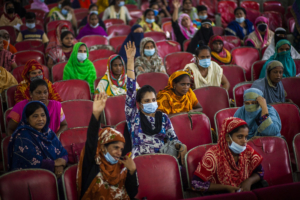 Since attaining its independence in 1971, Bangladesh has made significant strides in its policies and laws that have improved conditions for women in the nation. These changes can be attributed to the women’s movement in the country, which has helped strengthen women’s rights and empowerment across varied spheres. Though the nature of progress made by women is uneven and some inequalities remain persistent, significant changes have been observed.</span></p><h2>Reducing Poverty in Bangladesh
According to the 2025 National Multidimensional Poverty Index (NMPI) for Bangladesh, the country has made significant progress in reducing poverty. For instance, the poverty headcount ratio based on the upper poverty line fell from 31.5% to 18.7% between 2010 and 2022. Additionally, the nation has continuously outperformed its Least Developed Country (LDC) companions, achieving most of the Millennium Development Goals (MDGs) related to the health and education of children.
Within this realm, schools at the primary and secondary levels have observed significant improvements in gender parity in the context of school attendance and completion rates. Explaining how the global Multidimensional Poverty Index (MPI) is a measure of acute poverty, the NMPI’s (2025) data for Bangladesh found that “from 2014 to 2019, nearly 19 million people moved out of poverty, with the fastest progress being in Sylhet, the poorest region.” The report also suggested that Multidimensional poverty based on the gender of the household head was not significantly different between male and female-headed households.
Furthermore, other sources have reiterated the recent surge in progress in the country. A news source, Press Xpress, mentioned how the latest Household Income and Expenditure survey (HIES), 2022, showcased a decrease in poverty rates from 40% in 2005 to 18.7% in 2022. The report echoed similar findings to the previously described research, denoting that this decrease in poverty rates can be attributed to “overall improvement in people’s purchasing power, strengthening their ability to access basic items better.”
The article also noted improvements in women’s empowerment in the country. This is reflected in the growing participation of women in political discussions and arenas. It is also seen in visible advances in the health care sector, such as the recent community clinic initiative, which has contributed to a decline in maternal and child poverty rates in Bangladesh.
The Impact of Women’s Empowerment
A 2021 study centred on the impact of women’s empowerment on poverty reduction in the rural areas of Bangladesh added to the discussion. It signified that women and their spouses’ education was important in reducing income and multidimensional poverty in rural households. It gave women decision-making power regarding entering the labor market, reducing their economic dependence and holding down higher-paying jobs to support themselves.
Overall, the study found that women’s participation in income-generating activities and higher levels of education were essential factors in continuously eradicating gendered poverty. These factors also help strengthen the social standing of women in the community.
The SNAD Foundation Bangladesh
As a nation, Bangladesh has strived to achieve this dual purpose through various projects that have been implemented recently. One example is the SNAD Foundation Bangladesh (SNADF), a nonprofit organization based in Dhaka. SNADF is focused on “community welfare” and “prioritizing women and children, offering comprehensive education, training and skill development opportunities to empower them for a brighter future.” The NGO focuses on women’s economic empowerment through programs catered to skill-based workshops, vocational training courses and business development to help vulnerable women create dependable livelihoods.
The organization is focused on creating entrepreneurial and employment opportunities to enable women to be financially autonomous and stand on their own two feet. This mission aligns with SDG 5, which encourages the development of gender equality initiatives. Furthering the cause of women’s empowerment in Bangladesh, SNADF holds “awareness sessions” for families and community leaders. These sessions engage participants in discussions that question the gender status quo and encourage more open-mindedness.
Through regular monitoring, SNADF has empowered many women to start home-based tailoring businesses, gain stable employment and access microloans for growth. By linking program graduates with buyers and financial institutions the organization ensures a sustainable income for women.
The Naari Uddug Kendra Program
Another program is the Naari Uddug Kendra (NUK), a national nonprofit women’s organization established in 1991. The organization is “mandated to promote gender equality, human rights and foster personal and political empowerment of women and girls in Bangladesh.” Recognized as an advocate for gender equality, the NGO has received backing from individuals, governmental bodies and financial institutions.
An immediate goal of the establishment has been to make space for women’s representation in local government agencies, in the workplace and academic institutions.
Challenges Remain
Despite these developments in recent years and the considerable progress made in reducing poverty and gender equality in Bangladesh, much remains to be done. According to data collated by the World Bank, Bangladesh has experienced many setbacks since the interim government took office in 2025. In early 2025, the World Bank estimated that political upheaval would cause an economic slowdown in the nation, similar to 2020, the pandemic year, pushing extreme poverty to 9.3%.
This negatively impacted women, who are already an underrepresented and vulnerable population, facing unemployment rates and rising inactivity rates as high as 18% and 7.7%, respectively. While challenges persist, especially amid political instability and economic slowdown, Bangladesh’s story is one of resilience and hope. Significant advances made through initiatives like that of SNADF and NUK signal visible reductions in poverty rates and the gender gap in the country.
Through these initiatives and continuous governmental involvement, Bangladesh is creating opportunities for women to gain autonomy, education and move out of the cycle of multidimensional poverty that affects them daily. Though progress may be uneven and setbacks inevitable, Bangladesh is charting a path toward a more equitable future where gender equality is a reality.
– Vasudhaa Shakdher
Vasudhaa is based in Vancouver, Canada and focuses on Good News and Politics for The Borgen Project.
Photo: Flickr
