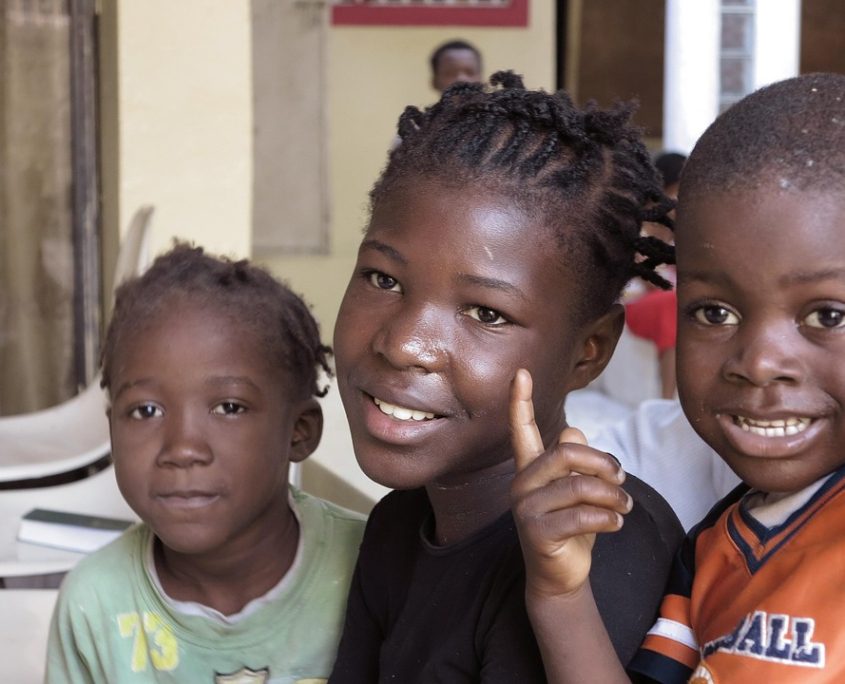
 Haiti is facing a worsening crisis as violence continues to displace more than a million Haitians into tent cities. Armed groups now control an estimated 85% of Port-au-Prince, driving a record 1.3 million people from their homes in just six months, a 24% increase since December 2024, per the International Organization for Migration (IOM). More than half of those displaced—approximately 700,000—are children. The United Nations International Children’s Emergency Fund (UNICEF) reports that the number of internally displaced children has jumped by nearly 50% since September 2024, equating to one in eight children nationwide.
The future of Haiti’s youth hangs in limbo as schools have become fragile lifelines; some have transformed into shelters, while others are completely rundown, cutting countless children from the classrooms they once knew. Amid the education crisis in Haiti, however, a wave of grassroots initiatives and community-led action is pushing back with hope.
A Crisis of Scale and Impact
The United Nations (U.N.) estimates that 5.4 million Haitians are facing crisis-level hunger, with 5,636 people already in catastrophic famine conditions. The World Food Programme (WFP) is urgently appealing for $46 million to sustain emergency operations targeting 2 million people, including half a million children relying on school meals—a critical lifeline now at risk. At the same time, the U.N.’s 2025 humanitarian appeal for Haiti remains underfunded, with only 9.2% of its $900 million goal met.
The State of Education
More than 1,600 schools have closed in Haiti, a 60% increase in just four months—disrupting learning for more than 243,000 children. In the West and Artibonite regions, nearly 1,000 schools have shut down, impacting 300,000 students. Meanwhile, in the Grand South, the arrival of 103,000 displaced school-aged children overwhelmed the education systems. Plan International reports that more than 90% of displaced children in the South and Southeast—where 260,000 people sought refuge—have lost access to education.
Henry Noel, a volunteer of buildOn, a nonprofit that partners with rural communities to build schools and promote literacy, spoke with The Borgen Project, saying, “Right now, the education crisis in Haiti is unlike anything we’ve seen in years. Violence in Port-au-Prince has forced millions of people from their homes and almost half a million of those are children. Many of them were already out of school and the violence has only made things worse. Entire schools have been attacked or destroyed—I think about 300 schools [in the capital] were shut down because of the violence.”
Rising to the Challenge in Rural Communities
By early 2025, an estimated one million Haitians had been displaced by escalating gang violence. Many of these families fled to rural towns—places they once considered safe havens. Yet this mass migration has overburdened local schools, with large waves of out-of-school children arriving all at once. Noel states, “For the families who fled, especially into rural areas, schools are overwhelmed. We see classrooms with twice as many students as they were built for. Children who missed one or two years of lessons are trying to catch up, often without books, without supplies, sometimes even without shoes to walk the long distance to class. It’s devastating.”
Amid the education crisis in Haiti, buildOn—a nonprofit dedicated to breaking the cycle of poverty through education—has stepped up its efforts to rebuild hope and access to learning. BuildOn is an international nongovernmental organization (NGO) that brings education to rural areas, supporting displaced families. In 2024, it built a new school in Journu, serving 285 students—150 of whom were previously out of school.
Enroll Program
Its Enroll program provides accelerated learning, supplies, meals and community engagement to restore educational access quickly. “Through Enroll, we go into the communities, identify children who are not in school and create a plan with their families and teachers to bring them back. We provide accelerated learning for those who fell behind, school supplies like notebooks and pencils and even meals in some cases.”
Speaking on how buildOn is responding to the crisis, Noel said, “buildOn’s work is focused on two main areas: building safe schools in rural communities and helping out-of-school children re-enter the education system. Last year, for example, we built a new school in Journu, a rural community that received many displaced families. That school now serves about 285 students, 150 of whom had dropped out because of violence or poverty. For us, it’s not just about the building—it’s about giving those children a safe place where they can be children again.”
Building Hope Brick by Brick
Against the backdrop of a collapsing state, scorched schools and displaced millions, there remains a lifeline in classrooms carried on shoulders, songs played on guitars and books passed hand to hand. “The resilience of Haitian children and families is truly beautiful to witness. Despite everything, when we open a new school, the joy is incredible. Parents show up to help lay bricks, students are eager to learn, teachers are determined to keep going even when conditions are hard,” Noel said.
Where schools continue to teach, poetry fills the air and hands learn to stitch or strum, hope—and Haiti’s next generation—endures. As Noel concluded, “Don’t forget the children of Haiti. Every child deserves the chance to learn, no matter the circumstances. And even in the hardest times, education is possible—if we come together to make it happen.”
– Meagan Beaver
Meagan is based in Zephyrhills, FL, USA and focuses on Good News for The Borgen Project.
Photo: Pixabay

Telemedicine in Yemen: Health Care Amid War
Rates of vaccination against communicable diseases hover between 40% and 50%, compared to more than 90% in Western countries. Only 50% of the country’s medical facilities are functional. It comes as no surprise, then, that 80% of Yemenis face “significant challenges” in accessing health care.
The problem is even more dire in rural areas. The scarcity of health care in Yemen has fueled major outbreaks of preventable diseases such as cholera, diphtheria and polio. These outbreaks have caused thousands of deaths and cost the Yemeni economy millions of dollars.
A Modern Solution
The enormous toll of treatable diseases in Yemen has given rise to a novel solution: telemedicine. Telemedicine is a form of low-cost health care in which physicians remotely diagnose and administer medical treatment to faraway patients. Physicians specifically utilize phone calls, text messages, online video-conferencing and other telecommunications technology to ensure their patients receive high-quality care.
Since its inception in the mid-1900s, telemedicine has proliferated—reaching millions of needy patients all over the world. In war-torn Yemen, several institutions have been using telemedicine since 1997. Leading the way are international companies, NGOs and medical associations. One example is SmartHealthTec, a Dubai-based medical equipment company that opened a branch in Yemen. The branch has recently inaugurated telemedicine platforms in the country to ensure the effective operation of its equipment “even in crisis conditions.”
Meanwhile, the international NGO Swinfen Charitable Trust has connected Yemeni doctors with medical consultants to address 85 complex cases across the country. This telemedicine approach enabled specialists to provide feedback to patients who otherwise had no access to such expertise. A 2020 study of a group of Yemeni patients and clinicians found general satisfaction with the Swinfen Charitable Trust’s telemedical consultations.
Similarly, the Eradication of Leishmaniasis [skin disease] from Yemen Project has successfully used telemedicine to reach vulnerable patients since 2013. Through WhatsApp and phone calls, Yemeni dermatologists have provided free medical recommendations to patients in different, often unreachable parts of the country. This has likely saved the lives of many patients who would have perished from skin-related conditions in a war-torn context without medical facilities.
Challenges Remain
Despite its success in reaching patients, telemedicine in Yemen still faces major limitations. Only 18% of Yemenis consistently use the Internet and just 55% have phone service. Reliable wi-fi infrastructure is also severely lacking. These barriers restrict who can access telemedicine in the first place.
Even with expanded Internet and wi-fi access, telemedicine will remain limited in scope. Severe medical conditions almost always require in-person treatment, such as surgery. Telemedicine cannot solve everything.
Telemedicine’s Potential
Regardless of its limitations, telemedicine can still strengthen health care in Yemen. Years of conflict have severely damaged the country’s physical health facilities. Yet international companies, NGOs and collaborative projects have successfully used telemedicine to reach patients in need. Its low-cost, remote nature, combined with advances in telecommunications, ensures that telemedicine will remain a vital part of Yemen’s health care system for decades to come.
– Pranav Kanmadikar
Photo: Freepik
Education Crisis in Haiti: Poverty and Violence Threaten Education
The future of Haiti’s youth hangs in limbo as schools have become fragile lifelines; some have transformed into shelters, while others are completely rundown, cutting countless children from the classrooms they once knew. Amid the education crisis in Haiti, however, a wave of grassroots initiatives and community-led action is pushing back with hope.
A Crisis of Scale and Impact
The United Nations (U.N.) estimates that 5.4 million Haitians are facing crisis-level hunger, with 5,636 people already in catastrophic famine conditions. The World Food Programme (WFP) is urgently appealing for $46 million to sustain emergency operations targeting 2 million people, including half a million children relying on school meals—a critical lifeline now at risk. At the same time, the U.N.’s 2025 humanitarian appeal for Haiti remains underfunded, with only 9.2% of its $900 million goal met.
The State of Education
More than 1,600 schools have closed in Haiti, a 60% increase in just four months—disrupting learning for more than 243,000 children. In the West and Artibonite regions, nearly 1,000 schools have shut down, impacting 300,000 students. Meanwhile, in the Grand South, the arrival of 103,000 displaced school-aged children overwhelmed the education systems. Plan International reports that more than 90% of displaced children in the South and Southeast—where 260,000 people sought refuge—have lost access to education.
Henry Noel, a volunteer of buildOn, a nonprofit that partners with rural communities to build schools and promote literacy, spoke with The Borgen Project, saying, “Right now, the education crisis in Haiti is unlike anything we’ve seen in years. Violence in Port-au-Prince has forced millions of people from their homes and almost half a million of those are children. Many of them were already out of school and the violence has only made things worse. Entire schools have been attacked or destroyed—I think about 300 schools [in the capital] were shut down because of the violence.”
Rising to the Challenge in Rural Communities
By early 2025, an estimated one million Haitians had been displaced by escalating gang violence. Many of these families fled to rural towns—places they once considered safe havens. Yet this mass migration has overburdened local schools, with large waves of out-of-school children arriving all at once. Noel states, “For the families who fled, especially into rural areas, schools are overwhelmed. We see classrooms with twice as many students as they were built for. Children who missed one or two years of lessons are trying to catch up, often without books, without supplies, sometimes even without shoes to walk the long distance to class. It’s devastating.”
Amid the education crisis in Haiti, buildOn—a nonprofit dedicated to breaking the cycle of poverty through education—has stepped up its efforts to rebuild hope and access to learning. BuildOn is an international nongovernmental organization (NGO) that brings education to rural areas, supporting displaced families. In 2024, it built a new school in Journu, serving 285 students—150 of whom were previously out of school.
Enroll Program
Its Enroll program provides accelerated learning, supplies, meals and community engagement to restore educational access quickly. “Through Enroll, we go into the communities, identify children who are not in school and create a plan with their families and teachers to bring them back. We provide accelerated learning for those who fell behind, school supplies like notebooks and pencils and even meals in some cases.”
Speaking on how buildOn is responding to the crisis, Noel said, “buildOn’s work is focused on two main areas: building safe schools in rural communities and helping out-of-school children re-enter the education system. Last year, for example, we built a new school in Journu, a rural community that received many displaced families. That school now serves about 285 students, 150 of whom had dropped out because of violence or poverty. For us, it’s not just about the building—it’s about giving those children a safe place where they can be children again.”
Building Hope Brick by Brick
Against the backdrop of a collapsing state, scorched schools and displaced millions, there remains a lifeline in classrooms carried on shoulders, songs played on guitars and books passed hand to hand. “The resilience of Haitian children and families is truly beautiful to witness. Despite everything, when we open a new school, the joy is incredible. Parents show up to help lay bricks, students are eager to learn, teachers are determined to keep going even when conditions are hard,” Noel said.
Where schools continue to teach, poetry fills the air and hands learn to stitch or strum, hope—and Haiti’s next generation—endures. As Noel concluded, “Don’t forget the children of Haiti. Every child deserves the chance to learn, no matter the circumstances. And even in the hardest times, education is possible—if we come together to make it happen.”
– Meagan Beaver
Photo: Pixabay
Higher Education in the DRC
Despite recent efforts to make education equally available, bridging this gap for rural populations, low-income families and disabled and female students remains largely on the back burner. Here’s a look at the complex factors influencing higher education as a goal for all Congolese students and the path forward to make this a reality.
The DRC’s Educational Landscape
Barriers to higher education can be traced back to the DRC’s colonial period, when education was distributed exclusively to the elite class. Today, this trend manifests as an educational gender gap. In 2020, for instance, only 8% of Congolese men enrolled in tertiary education, while this figure was a mere 5% for Congolese women. Meanwhile, the DRC has one of the youngest populations, with more than 60% of people younger than 25.
The country’s lack of educational resources poses the risks associated with an under-skilled workforce, such as high youth unemployment and economic instability. Still, from 2010 to 2024, the number of Congolese children enrolled in secondary education increased from 2.3 million to 7.5 million. With such demographics, demand for education in the DRC is predictably high, yet enrollment in higher education doesn’t reflect this.
While overall enrollment in schooling for Congolese children has shown progress, the marginal number of students able to afford higher education reveals a systematic disparity between educational demand and resource availability. As a result, future adults with less education will become vulnerable to the same financial instability that withheld them from pursuing higher education.
Factors Affecting Higher Education in the DRC
A significant correlation exists between the quality of health and the attained level of education. UNESCO considers the expected health and the attained schooling that Congolese children will receive in their lifetimes and currently estimates these children will only achieve 37% of their full potential. The DRC’s low yield in tertiary school enrollment is reflected in its low funding for educational resources, with only 2.3% of the country’s GDP invested in the education sector.
Additionally, as civil unrest displaces families, funds once set aside for higher education are instead diverted to cover food, shelter and other basic needs. Rural communities, already lacking infrastructure, remain cut off from adequate educational services, widening the resource gap between urban and rural students. In these same areas, violence often disrupts schooling, while the limited educational materials the Congolese government can distribute are stretched especially thin.
In 2019, the DRC attempted an educational reform to make free schooling equally accessible nationwide. However, many parents continued paying teacher salaries themselves. Particularly in large cities, families have struggled to sustain education through out-of-pocket payments. In contrast, higher education often remains under-resourced and staffed by undertrained teachers. Congolese teachers have gone unpaid, raising concerns that federal funds meant to improve educational quality are not reaching students as intended.
Who Is Without Access to Educational Opportunity?
While the DRC’s poor infrastructure affects all students, higher education remains disproportionately inaccessible for women because of deep-rooted cultural and social barriers. The gender gap in higher education enrollment is narrowing, yet high fertility rates and cultural pressure for early marriage compound disadvantages for women. For those who do not complete secondary school, the likelihood of marrying young and bearing children is nearly twice as high as that of their peers.
Driving Access to Higher Education
While solutions like free education can be achieved, a community-based approach is necessary to compensate for the gaps preventing Congolese youth from pursuing higher education. On a structural level, reforming the education system could produce a more relevant curriculum to better equip Congolese students for success in the workforce. Still, the need remains to eliminate social, financial and political barriers deterring students from higher education.
The DRC’s government institutions must also do their part to distribute educational resources equitably. In the meantime, the World Bank is one organization spearheading educational funding in the DRC. In 2024, the World Bank helped channel $67 million from the Global Partnership for Education to the DRC to stock classrooms, support disabled students and advance girls’ secondary education.
While external funding doesn’t promise a permanent solution for higher education in the DRC, it does set an agenda as the country continues to navigate systemic reform on behalf of its current and future students.
– Isla Hansen
Photo: Wikimedia Commons
Primark’s Cotton Project in India: What It Means for Women
Life for Women in India
Life for women in India has recently undergone a monumental change: women’s employment rate has doubled from 22% in 2017-18 to 40.3% in 2023-24, according to the Indian Press Information Bureau (PIB). The scale of this shift is even more striking given that it occurred in just seven years.
Female employment has risen by 96% in rural India and 43% in urban India. This progress can be attributed to multiple factors, one of which is Primark’s cotton project in India. The project is one of the ways equal opportunities are being created for women while also helping combat global poverty.
How the Cotton Project Helps
To understand why Primark’s cotton project in India is so effective, it’s important to look at where Indian women are employed. According to the Institute for Youth in Policy (YIP), more than 50% of India’s GDP comes from the informal sector, which makes up 85% of the country’s workforce. Within this, most women are concentrated in just four sectors:
According to Data for India, these sectors account for 78% of women in manufacturing. More than half of these women work in two activities: custom tailoring (apparel) and bidi production (tobacco). As of 2024, apparel remains women’s most popular manufacturing sector, employing 42.39% of them.
The Primark Cotton Project in India supports women by partnering with organizations that advocate for female workers, most notably, the Self-Employed Women’s Association (SEWA). Together with Primark, SEWA has helped train 300,000 farmers since the project’s launch in 2013, with support from CottonConnect.
The project is also beneficial because it:
From Primark’s perspective, the project has benefited many and serves as a way to empower women.
The Bigger Picture
According to CottonConnect, the Primark Cotton Project in India has been an even greater success. For example, the project is estimated to have reached 26,000 people in rural India. This reach is especially significant given that 32.5% of rural Indians live in poverty.
Another success has been the cultural shift toward women becoming authoritative figures who are well respected. This shift helps combat poverty by opening up higher-paying roles for women, positively impacting family support and education.
The Future
Going forward, Primark’s Cotton Project in India will remain one of the many ways women in India can feel empowered, support their families and improve their lifestyles. For Primark, this initiative also brings benefits as the company works toward a healthier environment while strengthening communities of Indian women.
The key takeaway is that big brands and recognizable names like Primark can drive change in multiple ways. All it takes is one voice; eventually, more will follow, leading to meaningful improvements for those in need or less fortunate.
– Ibrahim Sule
Photo: Wikimedia Commons
Hip-Hop Fights Poverty in Senegal Through Youth Empowerment
Hip-Hop and Civic Engagement
Politically engaged rap first gained ground in Senegal during the ’90s, amplifying the voices of underrepresented youth. “Hip-hop was born out of our desire for change,” said Matador, founder of the organization Africulturban and a pioneer of conscious rap in Senegal. He emphasized that the role of hip-hop is not to align with political parties, but to act as a watchdog. “We do not do politics with hip-hop, but we deal with politics.”
Africulturban, founded in 2006, provides vocational and creative training through its Hip Hop Akademy, offering programs in DJing, graphic design, photography and video production. Matador explained that these programs allow youth to build careers in the creative sector, noting, “These are real jobs. Some of our students now support their families with what they learned here.” He also highlighted that these programs have opened new opportunities for girls, especially in fields traditionally dominated by men, such as audiovisual production.
Providing News Through Rap in Senegal
Another initiative using hip-hop to drive civic engagement is Journal Rappé. Created in 2013 by a group of artists and journalists, the program delivers weekly rap videos both in French and Wolof, Senegal’s most widely spoken language. The videos present national and international news in a way that is accessible to young audiences. “We saw that many young people were not connecting with traditional news, so we created something they could relate to,” said Xuman, cofounder of Journal Rappé.
With more than 25 million views on YouTube, Journal Rappé has been recognized as a powerful example of music-based civic journalism. The initiative also conducts media education workshops in neighboring countries, promoting democratic participation through storytelling. “Democracy requires critical thinking and free expression,” the team member added. “And rap is a perfect vehicle for that—it is sharp, direct and resonates with youth.”
Empowering Senegalese Youth Through Hip-Hop Training
Impact Senegal Association, another youth-focused organization, aims to provide technical training to bridge the gap between education and employment, further reducing poverty in Senegal. The organization trains young people in sound engineering, lighting and stage production, offering a 1,600-hour program over two years. According to founder Amadou, more than 50% of trainees are women between the ages of 21 and 25.
“We believe that democracy is not just about voting. It is also about having the means to participate in society and that means having a job,” Amadou told The Borgen Project. He added that youth employment strengthens families and contributes to national development: “When a young person earns a living, they are not just escaping poverty, they are becoming an active citizen.”
Impact Senegal Association’s mission is also rooted in accessibility. Amadou emphasized the importance of creating a safe environment for women in male-dominated technical fields. “A democracy cannot ignore half of its population,” he said. “It is essential to welcome women with respect and provide the conditions for them to thrive.”
Challenges Remain
Despite these successes, organizations like Africulturban and Impact Senegal Association face persistent challenges. Many graduates of their training programs leave the country due to limited job opportunities at home. According to Matador, state support remains minimal. “Africa’s future is in our hands. No one will build it for us,” he said. “If we do not stay and fight, we are betraying our generation.”
Still, these organizations continue to mobilize young Senegalese around the belief that culture can drive economic and political change. Through music, training and public outreach, hip-hop is helping to shape a generation of informed, skilled and engaged citizens.
– Alexandra Diallo-Scholler
Photo: Flickr
The Hexavalent Vaccine Program in Senegal
The hexavalent vaccine program was officially introduced in Senegal in early July 2025. Centered on the Vaxelis vaccine, the initiative represents a major step toward ensuring healthier, more efficient lives for citizens by protecting children against multiple deadly diseases with a single shot.
Facts About the Hexavalent Program
The hexavalent program provides new, effective vaccines to combat six different diseases. The Vaxelis shot aims to prevent:
The hexavalent vaccine replaces the previous, separately administered vaccines. This six-in-one vaccine’s impact can be endless, as it is time and cost-effective. This three-round immunization works on a 14-week schedule for completion. With infancy, this can be a four-round immunization cycle to protect against Hepatitis B preemptively.
This program aims to improve efficiency by reducing costs and the number of injections needed. From 2024 to the present day, the price has ranged from $4.50 to $2.85 per dose. In developing and low-income countries, $2.85 per dose is the average for the three-dose vaccine.
This vaccine will impact and create financial markets that will draw investment efforts. The hexavalent program can promote a flourishing market, rather than destroying it.
Senegal’s Hexavalent Vaccine Rollout
Senegal is among the first low-income countries to adopt this innovation. This vaccine eases the burden on children and parents, strengthens polio defense and aligns with WHO’s optimized immunization schedules. Backed by Gavi (covering most costs) and the Senegalese government (20% contribution), the rollout is expected to prevent 2,300 hospitalizations annually by 2030.
The Minister of Health and Social Action, Dr. Ibrahima Sy, emphasized the importance of this program and how this reinforcing vaccine will offer a healthier future for Senegal: “For the past 18 months, our teams have been working tirelessly to prepare this transition. Hexavalent embodies our commitment to offering Senegalese children simplified and reinforced protection.”
This program signals a healthier future for fragile health care systems struggling with limited resources. Other countries are already studying Senegal’s model to adapt and strengthen their own immunization efforts.
Conclusion
With its strong commitment to universal health care coverage, Senegal is shifting its focus toward addressing the systemic barriers that continue to delay this mission. A critical review is being performed to study these weak points and how to implement successful foundations.
It marks a historic moment for Senegal, reflecting a turning point in its health sector and shaping the trajectory of future health care development across the nation.
– Emma Rowan
Photo: Flickr
Telemedicine in Mexico Broadens Health Care
Telemedicine, the remote diagnosis and treatment of patients, is helping fill in the gaps of Mexico’s health care system by making medical advice more accessible to poor and rural communities throughout the country.
Bringing Health Care to Rural Mexican Communities
Founded in 2014, 19Labs aims to make health care more accessible worldwide to people in rural communities. Its GALE platform is a “smart first-aid kit” that is affordable and accessible and it brings the full clinic experience to those unable to go to one in person. The organization has helped people in Guyana, the United States and Lebanon and now it’s expanding its reach in Mexico.
Earlier this year, 19Labs launched a new branch of its telemedicine program in Yucatán, Mexico, to bring health care services to the underserved rural communities in the area. 19Labs GALE eClinics have connected people who had previously faced distance barriers to services such as medical consultations, diagnostic tools and specialist advice and treatments. Using tools such as Zoom and EchoNous, people can now access effective health care treatment from the comfort of their own communities and without the burden of extensive travel.
In less than a year, the impact and benefits of the GALE eClinics have already been seen. In Comunidad Col, a child who was previously diagnosed with a heart murmur was assessed by the GALE eClinic and appropriately diagnosed with and treated for allergic rhinitis. A 6-month-old child in Noh Bec received an accurate diagnosis and treatment from a chronic dermatitis specialist, significantly improving the child’s condition and quality of life.
Maria Magdalena Chan Uluac, Director of the Noh Bec community clinic, credited the GALE eClinics for helping the lives of those in the Yucatán area: “We are at least three hours from Mérida, where the specialists are, so GALE has been a major financial and logistical relief for our patients. This has encouraged seeking medical treatment sooner instead of waiting until symptoms become critical.”
Telemedicine for Mexicans Abroad
MiSalud is a startup that connects Mexicans working abroad to health care. MiSalud’s mission is to provide services such as basic health care, preventative care, nutrition coaching, chronic condition management and mental health support via video, phone or SMS chat. The company also does not charge its users a co-pay and has extended hours for its virtual clinic.
MiSalud primarily works with agricultural, construction, hospitality and manufacturing companies where employees struggle to access health care because of language barriers or a lack of time to make it to a clinic or hospital. Employees of these companies receive MiSalud’s resources as an employer-sponsored benefit regardless of their insurance or full-time or part-time status. The coverage also extends to up to three family members.
Taylor Farms, a major global purveyor of packaged salads and cut vegetables, is one company that partners with MiSalud. Amy Taylor, the leader of Taylor Farms’ wellness initiative, reported that about 5,600 of the company’s 6,400 employees have signed up for MiSalud’s services. More than 2,000 of these employees have utilized the resource at least once.
MiSalud says that 40% of its users have said they would have ignored their health concerns or waited until they could travel back to Mexico to see a doctor without the platform. The company also reports that its users have seen a 56% improvement in depression scores and a one-level drop in diabetes, cholesterol and blood pressure risk. In addition, users experienced a 24% improvement in chronic condition management and an average weight loss of 16 pounds.
More Ways to Access Telemedicine in Mexico
MedicallHome is another company working to make health care in Mexico more affordable and accessible. It provides 24/7 telephone access to licensed doctors, costing just $2 to $5 a month. Beyond medical care, the company also offers life insurance and vision and dental coverage.
Medicall is staffed by more than 60 practitioners, nutritionists and psychologists, each with at least two years of clinical experience and required to practice outside the call center to maintain their skills. The center handles about 500,000 calls annually, resolving 62% of cases over the phone and referring the rest for in-person treatment. Customers also have access to a provider network that includes primary care and specialist clinics, laboratories, pharmacies and hospitals.
Conclusion
Telemedicine is a growing field in Mexico and with widespread smartphone adoption by Mexican citizens and improving internet access, it is expected to become more popular. As of 2024, 68% of Mexicans reported preferring video and telephone consultations due to convenience, reduced travel costs and fewer wait times than in-person clinics. Since only half of the population has consistent medical care, the growth of free and accessible telemedicine in Mexico is significant and a welcome change to the health care system.
– Hannah Fruehstorfer
Photo: Flickr
OneSky: Hong Kong’s Invisible Children
The consequences of a torn and neglected childhood are severe, impacting the ability to provide for oneself and family in the future. Invisible children and those in poverty lack education, have low self-esteem, and struggle with isolation from other children, according to The Hub. Because of instability, children in poverty are highly likely to transition families.
OneSky
Although numerous non-governmental organizations, such as Oxfa,m have worked in reducing poverty in Hong Kong, few groups focus on children’s welfare. OneSky is one of those nonprofits, aiming to empower children in marginalized communities through partnering with governments in Asia. Specifically, their Hong Kong Center seeks to care for invisible children, who are adolescents who were abandoned by their parents, as well as creating programs to educate parents and caretakers.
OneSky’s Hong Kong Center not only aims to provide and raise Hong Kong’s invisible children, but surrounding Chinese villages as well. Following a large wave of migration from rural Chinese villages to industry in Hong Kong, many children struggled with abandonment. As OneSky noted, the damages the invisible children suffered showed little difference from impoverished Chinese children in the late 1990s.
Family Village Program
As other nations in Asia continue to exponentially develop industry and economy, OneSky recognizes the risk young children incur. Drawing from previous work in Hong Kong and China, OneSky is building strategic government partnerships and model centers to guide proper parenting across Asia.
Notably, OnesSky, through the Family Village Program, played a critical role in determining the best course of action impacting invisible children’s welfare status in China. As a result, the initiative trained 36,146 caregivers and assisted over 74,297 children.
Since 2021, OneSky Hong Kong has planned more than 50 partnerships with local service organizations. Throughout the pandemic, OneSky has helped 437 children and families. Despite numerous difficulties in the past years, OneSky has remained true to its mission in looking out for Hong Kong’s invisible children, and will continue to do so.
The Future
OneSky’s work in Hong Kong clearly demonstrates that even in wealthy, industrious areas, poverty among the most vulnerable groups is invisible. Without the dedication and contributions of groups such as OneSky, individuals under the poverty line, especially children, are unable to advocate for their needs. As such, the hope is that the government and the private sector continue to partner and fund organizations that care for invisible children, to ensure that every child has the resources necessary to thrive.
– Owen Wu
Photo: Flickr
Water Politics and Poverty Reduction in Jordan
Water Access in Jordan
UNICEF estimates that water in Jordan is available weekly in urban areas and biweekly in more rural communities. Annually renewed water sources provide only about 90 cubic meters of water to each person every year; this is less than one-fifth of the severe water scarcity threshold as defined by the Falkenmark Water Stress Indicator. By 2040, these provisions are estimated to fall to 60 cubic meters per person yearly.
Limited frash water in the region, which the neighbouring territories of Israel and Palestine also change, including the rapid expansion of the population, are one of the main reasons for such extreme water scarcity.
Water as Politics
Access to clean water is a stabilizing force for nations. Without access to safe, clean water, Jordanians do not have means for hydration or basic hygiene, heightening vulnerability to disease and damaging the nation’s overall public health.
Without an increase in Jordanian water supply, the current growth of the agriculture, industry, and energy sectors could face disruption, restricting increases in GDP and employment rates.
Currently, only about 15.5% of Jordanian women participate in the workforce. This may be due to the fact that women and children bear the majority of water-collection responsibilities. If water were more readily available closer to home, women and children could spend less time traveling to collection sites. Consequently, more women could participate in the workforce and children could spend more time in school.
Public health, national employment levels and workforce availability, as well as education, are key components of a nation’s politics and among the main concerns of its governance. These elements, linked to water security, impact the stability of the nation and highlight the importance of water politics for poverty reduction in Jordan.
Innovative Solutions
In looking for solutions to water scarcity in Jordan, UNICEF found that the country loses around 52% of available water as non-revenue water, through leaks, theft and billing inefficiencies. In 2022, the Jordanian government announced a nationwide plan aimed at combating non-revenue water loss. With a 2040 deadline, the state aims to narrow non-revenue water to less than 25% nationally, according to the International Trade Administration (IDA).
One of the ongoing projects directed at waste reduction through systems upgrades, funded largely by USAID, involves the implementation of Smart Metering, Monitoring, and Controlling Systems, IDA reports. This change to the water network in Jordan could allow the government to resolve leaks more rapidly and prevent theft through unauthorized access. By reducing waste and ensuring fair distribution, these innovations support poverty reduction in Jordan by making reliable water access more equitable across communities.
Jordan has also found a solution for the lack of freshwater available in the region. Utilizing reverse osmosis technology, the nation is currently undergoing an ambitious international project: the Aqaba-Amman Desalinization and Conveyance Project, also known as the National Water Carrier Project.
The Jordanian Ministry of Water and Irrigation plans to use reverse osmosis to convert seawater from the Gulf of Aqaba into clean, safe freshwater. The proposed desalinization plant will be large enough to convert 300 million cubic meters of seawater yearly and will attach to a 450-kilometer (roughly 280-mile) transmission and distribution system that reaches Jordan’s capital, Amman.
Jordan’s Water, Everyone’s World
Saroj Kumar Jha, a Global Water Director for the World Bank, says that “Without water, economies falter, food production collapses, and public health deteriorates.” This statement can also go a step further: without water, nations are vulnerable to violence.
While discussed in terms of the United States’ own water supply, generalizations of the Center of Naval Analyses’ Military Advisory Board’s findings remain the same in Jordan: water scarcity can create civil unrest and localized violence, and the stress of water scarcity creates an environment more supportive of government agitators and violent extremist organizations.
For Jordan, water is more than survival– it is foundational to peace, economic progress and resilience in a volatile region. U.S. aid and innovative projects that expand water access are not simply engineering solutions; they are strategies of poverty reduction in Jordan that lift families out of cycles of deprivation and create pathways for health, education, and work.
Because most of Jordan’s limited freshwater resources are shared with Palestine and Israel, water scarcity easily spills over into regional tensions. Addressing water-focused poverty reduction in Jordan, therefore, reduces not only domestic vulnerability but also the risk of resource-driven instability across the Middle East.
– Alyse Rhee
Photo: Flickr
Earth05: Fighting the Global Water Crisis
Recognizing this potential, the Barcelona-based nonprofit Earth05 has begun applying AI to address the ongoing water crisis. According to the United Nations Children’s Fund (UNICEF), about 2.2 billion people lack access to safe drinking water. To address this challenge, Earth05 is working toward its goal of improving the lives of 500 million people by 2030.
Earth05
Earth05, launched in January 2024 at the World Economic Forum. Its mission is to increase water access to millions of people globally. The organization aims to achieve this by using AI to predict water shortages, detect leaks and contaminants, optimize irrigation and power smart delivery systems.
Earth05’s ultimate goal is to prevent rising poverty and support lower-middle-income economies and indigenous communities. It aims to equip these groups for immediate challenges and long-term shifts in the age of AI. Earth05 believes combining AI with water conservation can create powerful solutions for the planet and its people.
Earth05’s AI could help predict water fluctuation patterns in countries that need it most, which is becoming harder to do without the assistance of AI. Such progress would be vital for nations like Mexico, Brazil, India, China and other countries that obtain water by desalination.
Aside from improving water access, Earth05 is committed to contributing to the United Nations (U.N.) Sustainable Development Goals (SDGs). These include SDGs 2 (Zero Hunger), 7 (Affordable and Clean Energy) and many more.
The Solution
Earth05 is fighting to ensure the global water crisis does not worsen by integrating water, education and AI across all initiatives. New technology will allow the nonprofit to analyze future systems, from water consumption to the availability of water based on previous predicted weather reports. AI can make these predictions quickly and accurately, for the first time.
The charity’s goal has always been Return on Lives (ROL), the first metric to measure what truly matters in innovation. ROL tracks how investment dollars translate into real improvements in human lives, environmental health and future well-being. It directly shows how many people Earth05 has helped through its commitment to solving the global water crisis.
Final Remarks
Earth05 is using AI to create better weather reports and better irrigation systems. The research conducted by Earth05 will help find ways to access frozen water or water buried deep in the ground. AI can use its knowledge and large language models (LLMs) to help locate water for those in need and address the growing global water crisis.
– Avery Carl
Photo: Wikimedia Commons