Cultivating Growth in Bangladesh with Floating Gardens
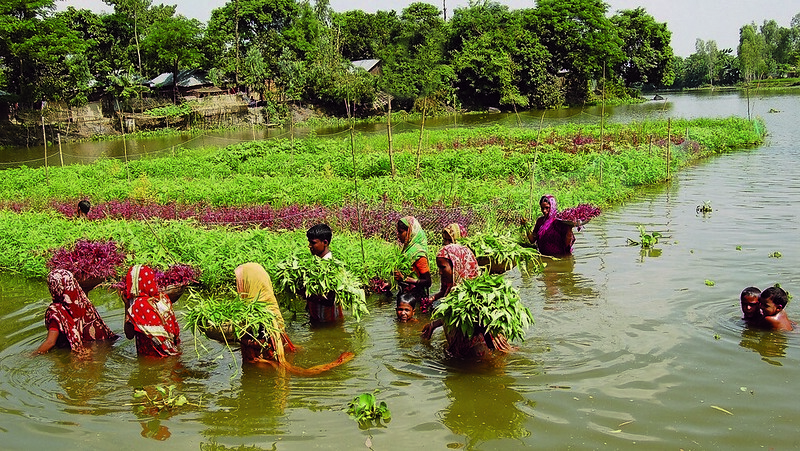 Heavy monsoon rains douse Bangladesh for eight months each year, submerging nearly one-third of the country. Severe flooding jeopardizes food security and threatens the livelihoods of almost half of the population directly employed by agriculture. Farmers are taking matters into their own hands, transforming waterlogged fields into hydroponic floating gardens. This method boosts crop yields and provides a more diverse, robust bounty.
The transition from predominantly growing rice to cultivating more nutrient-dense foods like pumpkins, tomatoes, papayas and beans will be instrumental in promoting health and well-being across Bangladesh, a country with one of the highest malnutrition rates. Development charities like Practical Action and humanitarian organizations like Care International have helped bring an ancient farming practice to the country’s most at-risk areas, namely rural and impoverished communities.
Agricultural Progress and Environmental Setbacks
In the past few decades, Bangladesh has made significant strides toward reducing poverty and averting famine with incremental improvements in farming technologies. According to the World Bank, productive agricultural strategies facilitated a tripling of food grain production between 1972 and 2014, helping meet the needs of a rapidly expanding population. Still, salt intrusion, drought and flood threaten to hamper progress, which demands continued adaptability and innovation in the agricultural sector.
Revival of Ancient Agricultural Practices
Farmers in south-central Bangladesh, are turning to a historical gardening practice: floating vegetable gardens. These gardens, constructed on artificial islands in swampy wetlands and rivers, provide a lifeline during monsoon seasons. They also serve as shelters for livestock and double as fishing spots. The simplicity of this method makes it a viable alternative to traditional farming during periods of intense flooding. Farmers tend to their plants by paddling across the water in rafts fashioned from natural materials like water hyacinth. As the floating gardens rise and fall with rain patterns, farmers reap the rewards of their labor and nourish local villages.
Hydroponic Innovations to Resource-Poor Regions
While hydroponic gardening has shown promise in some parts of Bangladesh, it’s crucial not to overlook the areas with fewer resources. These regions, often in urgent need of intervention, could greatly benefit from the tools and support to convert their fields into floating gardens. The work of groups like Practical Action, which have set up floating gardens in the northern part of the country, enables and empowers farmers to grow food year-round, regardless of weather conditions.
Looking Ahead
Bangladesh’s adaptation of hydroponic floating gardens promises a resilient agricultural future, especially for regions perennially affected by flooding. As more communities embrace this innovative farming technique, it could significantly enhance food security and reduce malnutrition nationwide. Continued support from development charities and local innovation will be key to expanding these ongoing sustainable practices to ensure all regions can thrive despite environmental challenges.
– Natalie Kaufman
Natalie is based in Orlando, FL, USA and focuses on Technology and Global Health for The Borgen Project.
Photo: Flickr
