Everything You Need To Know about Poverty in Bangladesh
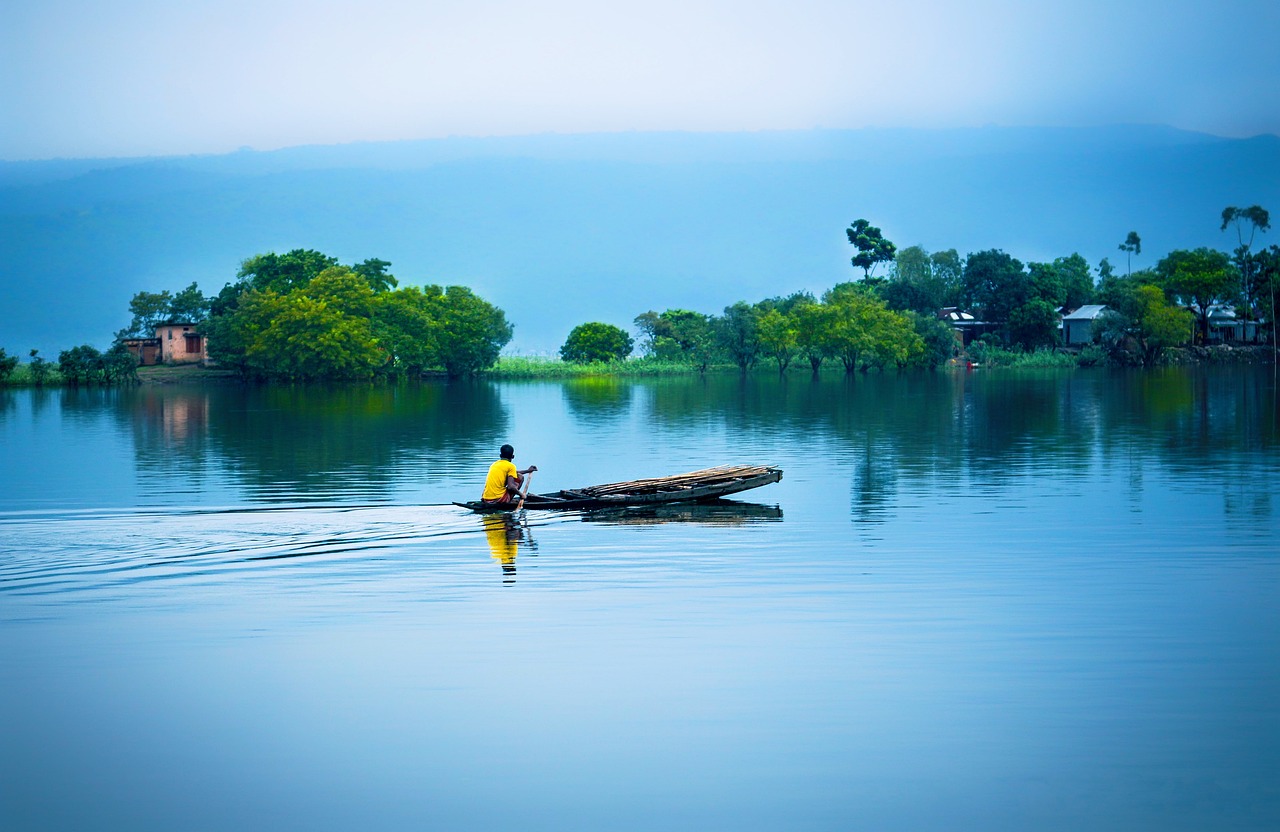 Bangladesh is a country in South Asia that neighbors India to the West, North and East and the Bay of Bengal to the South. Formerly known as East Pakistan, Bangladesh first received recognition in 1971 when the two parts of Pakistan split after a bitter war for independence. In 1975, Bangladesh entered the United Nations (U.N.) as a Less-Developed Country (LDC) under President Sheikh Mujibur Rahman.
In recent years, Bangladesh has reduced population growth, improved health care and education and is on track to transition into U.N. Developing Country status by 2026. Still, limited resources and a volatile political sphere have hindered progress. This is everything you need to know about poverty in Bangladesh.
Top 10 Facts About Poverty in Bangladesh
- Land is vulnerable to flooding and cyclones – The rivers overflow their banks each year and inundate the countryside from June to October. Known as Monsoon Season, slow drainage and continuous rainfall have caused the mean precipitation amount to be more than 1,700 millimeters during these months.
Severe floods damage crops, ruin villages and take a heavy toll on human and animal populations. In turn, this causes a strain on agricultural production and the supply of food. In August of 2023, 24% of households in Bangladesh suffered from food insecurity due to the rainfall and heat waves. - Public systems require additional global investment – The Intergovernmental Committee of Experts on Sustainable Development Financing (ICESDF) found that all countries will require additional global investments in the range of $5 trillion to $7 trillion per year till 2030 to meet the U.N.’s Sustainable Development Goals (SDGs). This will help countries like Bangladesh improve their basic infrastructure, power stations, water systems, sanitation and rural development.
- Intraregional religious tensions are rising – Bangladesh is a predominantly Muslim country but has held a tradition of tolerance with large pockets of religious minorities, such as Hindus and Christians, living among one another. However, from 2014 to 2017, Islamists carried out a campaign of violence against atheists and secular intellectuals. Tensions have receded in the years since, but the densely populated nature of Bangladesh makes it predisposed to intraregional conflict, increasing its vulnerability to poverty.
- Development goals are not involved in national planning – Development goals have not been properly integrated into the national planning process. Funding is not allocated toward developing public systems, which leads to continued pressure on resources. As of 2018, Bangladesh has at least 14 national plans and strategies, with 20% of the U.N.’s SDGs not included.
- There is a lot of neighboring conflict – Bangladesh shares its southeastern border with Myanmar and in recent decades, this border has been marked by an unprecedented humanitarian crisis. In August 2017, Myanmar’s military executed an ethnic cleansing of the Rohingya Muslims, sending hundreds of thousands of refugees into Bangladesh. Kutupalong, the world’s largest refugee settlement, holds more than 600,000 Rohingya Muslims in the Cox’s Bazar region of Bangladesh. In 2019, Bangladesh announced it would no longer accept refugees due to insufficient resources.
- The economy relies on the textile industry – The ready-made garment (RMG) industry accounted for more than 84% of Bangladesh’s total exports in 2021. Bangladesh is the second-largest garment-producing country in the world. Still, it has come at the expense of the labor conditions for the estimated four million workers in the RMG industry, the majority of whom are women.
- It is not expensive to live in Bangladesh – Even though the monthly salary in Bangladesh is on par with the average of other U.N. LDCs, the cost of living is low. Bangladesh ranks 192nd out of 197 countries in terms of cost of living. https://livingcost.org/cost/bangladesh But, to counter that, the monthly salary after tax is roughly $275 per month, which only accounts for the cost of living for 0.7 of a month.
- Bangladesh is ranked 129th according to the Human Development Index (HDI) – Bangladesh’s HDI of 0.661 is higher than the HDI regional value of South Asia. The index measures a country’s development based on factors such as life expectancy, the standard of living and education. Bangladesh is now in the medium development category. However, inequality poses a significant challenge and when adjusted to account for inequality, Bangladesh’s HDI value drops to 0.503, losing 23.9% of its original value.
- Infant Mortality Rate (IMR) has continued to decline – IMR is the number of infant deaths before his or her first birthday for every 1,000 live births. It is a key indicator for not only maternal and infant health but the overall health of society as well. Bangladesh’s IMR peaked in 1971 with a rate of more than 200 infant deaths, but it has continued to decline. In 2021, Bangladesh had a rate of 23 infant deaths. This is done with the help of Bangladesh NGO Unity Through Population Service (UTPS), which has celebrated 40 years of improving socioeconomic conditions through reproductive health assistance, education services and individual economic development.
- Bangladesh is experiencing one of the fastest reductions in poverty – Since its induction to the U.N. in 1975, Bangladesh has witnessed one of the fastest reductions in poverty worldwide due to its continued SDGs. In 2018, Bangladesh succeeded in reducing the proportion of its population below the national poverty line to 18.6%, three years ahead of projections through government programs, such as the Bangladesh Economic Zones Authority (BEZA). In 2010, BEZA began introducing 97 Economic Zones, opening new textiles and international trade industries.
The situation may look pessimistic based on some of these 10 facts about poverty in Bangladesh. However, despite its challenges, Bangladesh has vastly improved and continues to improve. The cultural environment is rich and diverse and citizens continue to work toward a better future for Bangladesh. Overall, everything you need to know about poverty in Bangladesh highlights that, while there is room for improvement, the country has great potential to continue developing into a prosperous member of the U.N. and international realm.
– Anjum Alam
Photo: Pixabay
