Sleeping Sickness in Kenya Eradicated
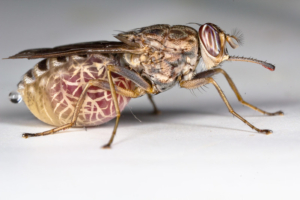 Sleeping sickness was first discovered in the early 20th century in Africa. It became the greatest threat to sub-Saharan Africa in the late ’90s. The region reported more than 40,000 cases every year, with the actual number thought to be much higher because of the remote communities suffering from underdiagnosis. By 2018, WHO statistics showed fewer than 1,000 cases across the entire continent—a historic milestone for Africa.
What Is Sleeping Sickness?
Human African trypanosomiasis (HAT), also known as the sleeping sickness, is a vector-borne parasitic disease. It is caused by protozoans of the genus Trypanosoma, transmitted to humans by bites of tsetse flies (Glossina), which have acquired the parasites from infected humans or animals.
HAT is considered a neglected tropical disease (NTD). NTD is a group of tropical infections that are common in low-income populations in developing regions of Africa, Asia and the Americas. This disease is one of 20 diseases and conditions currently classified by the World Health Organization (WHO).
These flies are very common in sub-Saharan Africa, though only certain species transmit the disease. Rural populations that rely on agriculture, fishing, animal handling or hunting are the most exposed. The disease can spread from single villages to entire regions and the incidence can vary from one village to the next.
Symptoms
Sleeping sickness can be divided into two main categories: West African sleeping sickness and East African sleeping sickness.
The East African sleeping sickness is characterized by a rapid succession of stages. Both stages take about a month and a half to show symptoms. The first stage begins immediately after the fly bites the victim. After a couple of weeks, the parasite starts to infect the brain and central nervous system.
The West African sleeping sickness takes longer to affect a person. Symptoms may be mild during the first few months after a tsetse fly bite introduces the parasite. During the first stage, an infected individual can experience fever, headache, enlarged lymph nodes, itching and joint pains.
In the second stage, once the parasite reaches the nervous system, it can cause behavioral changes, confusion, sensory disturbances and poor coordination. Sleep cycle disruption, which gives the disease its name, is a prominent feature. Without treatment, HAT is usually fatal, although rare cases of self-cure have been reported.
Kenya Eliminates HAT
Now, the disease is almost completely gone, thanks to coordinated efforts, new diagnostic tools, safer treatments and community-based surveillance. These measures help workers respond more quickly to outbreaks.
Kenya has strengthened HAT surveillance in 12 health facilities across six historically endemic counties, which act as sentinel sites. The country also actively monitors tsetse flies and animal trypanosomiasis, supported by the national veterinary health authorities and the Kenya Tsetse and Trypanosomiasis Eradication Council (KENTTEC).
The plan to eliminate this disease in Kenya is entering its final stages, but now it is crucial to ensure that the progress is sustained. WHO is working to prevent any potential resurgence that could lead to another devastating outbreak. WHO has set a goal of eliminating the threat of sleeping sickness across Africa by 2030.
Final Remarks
HAT is the second NTD to be eliminated in Kenya after the country was deemed free of Guinea worm disease in 2018. While there are still challenges involving the sickness, experts say that the trend with the disease is up-and-coming.
Kenya’s success follows similar announcements from nine other African nations: Côte d’Ivoire, Rwanda, Benin, Uganda, Chad, Equatorial Guinea, Ghana, Togo and Guinea.
– Avery Car
Avery is based in Norfolk, Nebraska, USA and focuses on Good News for The Borgen Project.
Photo: Flickr
