• Link to X
  • Link to Facebook
  • Link to Instagram
  • Link to TikTok
  • Link to Youtube
  • About
    • About Us
      • President
      • Board of Directors
      • Board of Advisors
      • Financials
      • Our Methodology
      • Success Tracker
      • Contact
  • Act Now
    • 30 Ways to Help
      • Email Congress
      • Call Congress
      • Volunteer
      • Courses & Certificates
      • Be a Donor
    • Internships
      • In-Office Internships
      • Remote Internships
    • Legislation
      • Politics 101
  • The Blog
  • The Podcast
  • Magazine
  • Donate
  • Click to open the search input field Click to open the search input field Search
  • Menu Menu

Tag Archive for: Slavery

Posts

Activism, Aid, Global Poverty, Human Trafficking, Slavery

OUR: Modern “Abolitionists”

Modern "Abolitionists"
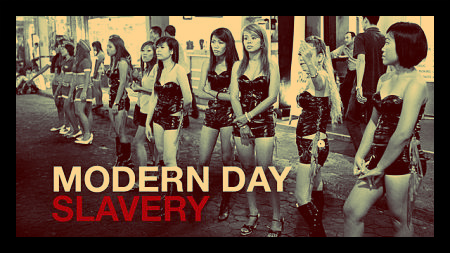
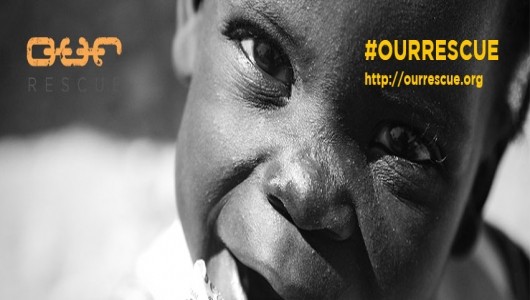
Tim Ballard, a former CIA Agent and Homeland Security operant from Utah, spent over a decade working to disrupt child trafficking both domestically and internationally. His passion for this work led him to form a new organization to combat the issue plaguing the world. Ballard formed the nonprofit organization Operation Underground Railroad (OUR).

OUR uses a network of former military officers, medics, nurses, cops and others to directly free children forced into the sex trade. The organization relies heavily on high-level connections for donations and for cooperation with governments and police forces abroad. Though OUR has faced the common criticisms that follow all raid based programs, Ballard and his team defend the mission, emphasizing that these children are in dire, forced circumstances and freeing them is ideal. Also, OUR uses local government and police agencies to make the actual arrests and then sets up the rescued children with some type of assistance, be it financial or through local programs.

The program has played off of the general publicity that comes with raid and rescue type intervention programs and spun it even further. The team itself is something to behold, with physically fit and mentally sharp experts in their field, they are entrancing to watch. Which is why the organization is on the verge of making a deal for a TV show accompaniment. In fact, a large part of donations come from wealthy individuals who in turn for their donations get direct access to view the raids from afar. The entertainment aspect of the program has been substantial for funding, to say the least.

The program has also gained popularity through its marketing as modern “abolitionists” and the website entices potential donors with the tag line “give a Lincoln, save a slave,” which urges donors to give a monthly five dollar membership due. By using terms that play on 1800s slavery emancipation, the organization further highlights the slavery element of the child sex trafficking world, emphasizing that this is a tremendous injustice.

Despite OUR’s success, the organization’s highly Mormon roots, entertainment element and raid styled approach have worried some experts. The strong religious association may cause further cultural resistance in certain areas and in certain groups, which could halt other efforts working to combat sex trafficking. The entertainment element and how the group is giving back to donors in the form of live raid video access brings up ethical questions. While thus far the approach has worked and brought attention to the problem of child sex trafficking, there is the risk of the organization becoming too entertainment-focused and the actual mission being overclouded. With the potential for a television show, the raids become cinematic and less real-life-nitty-gritty, making the very real problem seem far from home and even fictional.

The classic criticisms of raid style intervention programs persist with the OUR abolitionists. Common concerns are that they are doing little to help the child recover and succeed after freedom. Also, the program needs to address the fact that many members of the sex trade are not directly forced into it but arrive there because of a lack of opportunity and desperation. Also of those that are forced, as the program does try to target children, many children develop drug addictions while working that lead them back into the practice.

OUR is new and seems to have a good amount of leverage with high paying donors and political connections that could provide the means to address the problems or concerns now to develop an unstoppable force against sex traffickers. For now, the program is working on developing software that will flag computers containing child pornographic material, particularly belonging to tourists, in areas where the sex trade is prominent, to come at the problem from that angle also. Further strengthening of the current and new programs that help rescued children recover and stay away from the sex trade is essential in for OUR to make a long-term impact. The entertainment aspect of the program is an interesting new approach that seems to have short-term success but does hold some risk down the line. However the program does deserve credit for its efforts and with continued development, could become a major player in foreign assistance. OUR serves as a prime example of how small-scale efforts can transform into larger operations through raising awareness and how non-governmental and non-profit organizations can oftentimes avoid the restrictions that are unavoidable for their counterparts.

– Emma Dowd

Sources: Foreign Policy, Maxim, OUR
Photo: The Florida Villager
August 24, 2015
https://borgenproject.org/wp-content/uploads/borgen-project-logo.svg 0 0 Borgen Project https://borgenproject.org/wp-content/uploads/borgen-project-logo.svg Borgen Project2015-08-24 07:26:232024-05-27 09:26:24OUR: Modern “Abolitionists”
Child Soldiers, Children, Global Poverty, Slavery

Eight Child Labor Facts

child labor facts
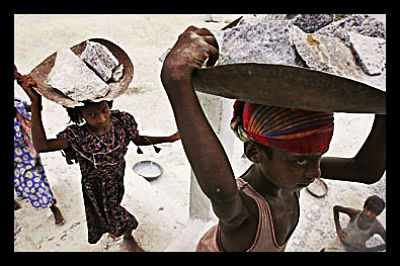
The act of using children for free or cheap labor has been around for centuries, and while it is not often brought up in conversation, this dirty little secret lives on in numerous countries, including the U.S.

Here are eight Child Labor facts from all over the world:

1.  Child labor is not just something that happens overseas
China, Asia and Africa are not the only nations that use children for cheap labor. Tobacco fields in the U.S. use young children to pick the plants. These children are exposed to dangerous pesticides and nicotine on a regular basis and sometimes get so sick they can hardly stand.

2. Child labor in tobacco fields is legal in the U.S.
The U.S. allows children as young as 11 to legally work in tobacco fields where they spray harmful chemicals so close to them they can hardly breathe. To put this in perspective: a child working in tobacco fields is illegal in countries like Russia and Kazakhstan, but is legal in the United States.

3.  Pakistan participates in selling children as slaves
Children in Pakistan can be sold by their parents or, more often, are abducted and sold into slavery to companies for profit. Companies that have utilized this backwards practice include Nike and the Punjub province, which is the largest seller of stitched rugs, musical instruments and sports equipment.

4.   Afghanistan gives away young girls to pay off debts
Another fact about child labor comes from Afghanistan where children make up roughly half of the population. Children often work in the textile industry, the poppy fields, cement and food processing. Parents may also sell their underage daughters into slavery in order to pay off a debt.

5.  Zimbabwe’s Learn as You Earn Program
The Learn as You Earn Program in Zimbabwe may not sound too bad at first glance, but it is another ploy to bring in children for cheap labor. The program brings children into the forestry and agricultural sectors so they can “learn” about those markets. Children often choose this in place of a formal education.

6.  Child Soldiers
Children who are displaced in war-torn countries like Afghanistan or Sudan are often put to work as child soldiers. These children are given guns and minor training and are told to defend their country. Some children may even be used as suicide bombers.

7.  Underage girls and sexual slavery
Young girls from all over the world who are either displaced by war, abducted while visiting foreign countries or even sold by their parents for money often find themselves in forced sexual slavery.  This problem is growing in Sudan, Somalia, Thailand, Japan, India and the United States.

8.  North Korea outlaws underage labor, continues to hire children
The government of North Korea officially outlawed child labor, but children still make up a large percentage of the people who work in factories. They also have labor camps where they send children to work in order to be re-educated for any type of political offenses.

These facts about child labor around the world can seem gruesome and a maybe a little far-fetched, but the point is that there are children who live these nightmares every single day.

– Cara Morgan

Sources: Business Insider, CNN, The Nation
Photo: Flickr

June 6, 2014
https://borgenproject.org/wp-content/uploads/borgen-project-logo.svg 0 0 Borgen Project https://borgenproject.org/wp-content/uploads/borgen-project-logo.svg Borgen Project2014-06-06 12:54:272019-08-21 10:51:12Eight Child Labor Facts
Global Poverty, Inequality, Slavery, Violence Against Women, Women and Female Empowerment

Women and Modern Day Slavery in Pakistan

Pakistan

According to The Nation, women in Pakistan are forced to make bricks in order to pay off the debt their families have incurred.

“Living without running water, and often trapped by their employers for the rest of their lives, these women are forced to work in brick kilns, agricultural fields and other hard labour industries to clear debts which overshadow their families’ lives,” said the Pakistani news agency.

There is no reliable statistic regarding the number of Pakistanis who are currently enslaved as bonded laborers. However, according to the National Coalition Against Bonded Labour, these individuals exist throughout the country not only in the brick industry, but also the agriculture and carpet industries.

Moreover, the Associated Press estimates that “tens of thousands” of poor Pakistanis work within these industries.

“Bonded labor is the most widely used method of enslaving people around the world,” The Nation said. “The person is then tricked or trapped into working for very little or no pay, often for seven days a week.”

In many instances, the amount of work that debt slaves put throughout their lives far exceeds the amount of money they initially borrowed. But instead of quitting, the victims continue to work because they are constantly threatened with physical violence.


Facts on Modern Slavery


The Pakistani government, along with the world community, prohibits the practice of debt slavery. However, it is highly inefficient when it comes to enforcing the laws and punishing the people who profit from slavery.

Developed countries and humanitarian organizations are highly critical of modern day slavery. Human Rights Watch (HRW) argues that bonded labor is more common in the southern Punjab and Sindh regions of Pakistan.

“Bondage in agrarian regions involves the purchase and sale of peasants among landlords, the maintenance of private jails to discipline and punish peasants, the forcible transference of teachers who train peasants to maintain proper financial accounts and a patter of rape of peasant women by landlords and the police,” said the organization.

HRW also ties this issue into poverty by explaining that bonded laborers either work in the agricultural industry or the “informal economy.”

This is a vicious circle in which the landless poor “are denied access to institutional forms of credit and must therefore rely on landlords, moneylenders and employers.”

To end debt slavery in Pakistan, the government can work harder to enforce the laws already banning the practice. With debt slavery, individuals are fooled into working in horrible conditions for the rest of their lives.

– Juan Campos

Sources: AP, The Nation, Human Rights Watch

March 20, 2014
https://borgenproject.org/wp-content/uploads/borgen-project-logo.svg 0 0 Borgen Project https://borgenproject.org/wp-content/uploads/borgen-project-logo.svg Borgen Project2014-03-20 04:00:022024-06-05 01:57:17Women and Modern Day Slavery in Pakistan
Global Poverty, Human Rights, Human Trafficking, Slavery

10 Statistics on Slavery Today

Slavery Today
“Elementary students across America are taught that slavery ended in the 19th Century. But, sadly, nearly 150 years later, the fight to end this global scourge is far from over.”

Hillary Clinton wrote these words in an op-ed she penned as Secretary of State. Her words were calling the world’s attention to the hideous prevalence of modern slavery. Slave owners often hide the practice behind words and phrases such as “bonded labor,” “human trafficking” and “forced labor,” yet nothing changes the fact that human beings are being enslaved.

Calling for people, organizations and governments to “redouble our efforts to fight modern slavery,” Secretary Clinton advocated for using “every available tool” to set the international community on a course toward the eradication of modern slavery.


Slavery Statistics


1. An estimated 29.8 million people live in modern slavery today

2. Slavery generates $32 billion for traffickers globally each year

3. Approximately 78% of victims are enslaved for labor, 22% of victims are enslaved for sex

4. 55% of slavery victims are women and girls

5. 26% of slaves today are children under the age of 18

6. An estimated 60,000 victims of slavery are enslaved in the United States.

  •  The 2013 Walk Free Global Slavery Index places U.S. at 134th out of 162 countries
  •  Rankings were determined based on three factors: a country’s estimated slavery prevalence by population, a measure of child marriage and a measure of human trafficking.

7. Iceland, Ireland and the United Kingdom tied for the ranking of 160 in the 2013 Global Slavery Index. However, even with the top ranking in the survey, these countries are not free from slavery. In the United Kingdom alone, there are an estimated 4,200 to 4,600 victims of slavery.

8. The country with the highest percentage of of its population in slavery is Mauritania with approximately 4% of the total population enslaved. This amounts to roughly 140,000 to 160,000 people enslaved — Mauritania’s total population is only a mere 3.8 million.

9. India has the largest number of slavery victims at a horrifying 14 million.

10. The top 10 per-capita slavery hot spots are:

Mauritania
Haiti
Pakistan
India
Nepal
Moldova
Benin
Cote d’Ivoire
Gambia
Gabon

– Kelley Calkins 

Sources: Free the Slaves, Walk Free Foundation, US State Department
Photo: Exposing the Truth

February 4, 2014
https://borgenproject.org/wp-content/uploads/borgen-project-logo.svg 0 0 Borgen Project https://borgenproject.org/wp-content/uploads/borgen-project-logo.svg Borgen Project2014-02-04 21:00:562024-12-13 17:49:5810 Statistics on Slavery Today
Global Poverty, Slavery, Women & Children

Walk Free Foundation Says Nearly 30 Million Trapped in Slavery

ghana_slavery
A report released by the Walk Free Foundation has revealed that approximately 29.6 million people are kept in various forms of slavery. Among these are sexual exploitation, debt bondage, and forced marriage.

China, India, and Pakistan are among the worst offenders, with an estimated 18 million slaves combined. Although there are fewer slaves, Mauritania and Haiti have the highest proportion of slaves, with approximately 3 and 2 percent of their respective populations being held in slavery.

“Today some people are still being born into hereditary slavery, a staggering but harsh reality, particularly in parts of West Africa and South Asia,” the report states.

“Other victims are captured or kidnapped before being sold or kept for exploitation, whether through ‘marriage,’ unpaid labor on fishing boats, or as domestic workers…Others are tricked and lured into situations they cannot escape, with false promises of a good job or an education.”


Facts on Modern Slavery


Many of the slaves in Haiti are children, which stems from the cultural practice called “restavek,” where poor families send their children to work for richer families in exchange for room and board. This arrangement often leads to abuse, as well as the children running away. These runaways can end up being trafficked into prostitution or forced begging.

Servile marriages make up a large portion of the problem in India. With an inefficient legal system, victims are discouraged from seeking help from law enforcement. Those without identification papers are especially vulnerable, with no means of proving their identity.

The report also shows that no country is free from slavery, with 59,000 people enslaved in the United States, 6,000 in Canada, and 4,500 in the United Kingdom. Iceland is at the bottom of the list in both absolute and per capita, with less than 100 slaves.

– David Smith

Sources: Al Jazeera, Global Slavery Index
Photo: The CNN Freedom Project

October 22, 2013
https://borgenproject.org/wp-content/uploads/borgen-project-logo.svg 0 0 Borgen Project https://borgenproject.org/wp-content/uploads/borgen-project-logo.svg Borgen Project2013-10-22 14:57:282024-06-04 01:17:32Walk Free Foundation Says Nearly 30 Million Trapped in Slavery
Human Trafficking, Slavery, Women & Children

Top 7 Facts about Modern Day Slavery

modern day slavery shocking facts
The facts about modern day slavery are shocking and remain largely unknown to much of society. Below are the top modern day slavery facts.


Top Modern Day Slavery Facts


1. When Americans think about slavery, what often comes to mind is the transatlantic slave trade, Africans displaced from their homeland and the Underground Railroad. Though slavery has officially been abolished, modern day slavery exists. Slavery is not simply a thing of the past. It is estimated that there are anywhere from 20 to 30 million people who are in slavery at this moment. This is a large increase from the 12.3 million slaves estimated in the 2005 study done by the International Labour Organization (ILO). The number is huge and leaves many wondering what can be done to help those who endure the cruelties of others who enslaved and stripped these individuals of their freedom.

2. Contemporary slavery is not restricted to just one area. Forced labor lies within the realms of sexual abuse and prostitution, state-enforced work and many others. According to the ILO, someone is enslaved if he or she is:

  • forced to work through mental or physical threat
  • owned or controlled by an “employer,” usually through mental or physical abuse or the threat of abuse
  • dehumanized, treated as a commodity or bought and sold as “property”
  • physically constrained or has restrictions placed on freedom of movement

3. As of 1981, slavery is not considered legal anywhere. That year, Mauritania became the last country in the world to abolish slavery. However, the act of owning slaves didn’t become a crime in Mauritania until 2007. That being said, many in the country defied the law regardless. In fact, only one slave-owner has been successfully prosecuted in Mauritania. Despite the fact that slavery is illegal, it continues to happen and the practice affects all ages, races and genders.

4. Slave-owners often use euphemisms instead of the term “slavery” in order to avoid getting caught. Such euphemisms include: debt bondage, bonded labor, attached labor, restavec (a French word that means “one who stays with”), forced labor and indentured servitude.

5. According to the U.S. Department of State’s 2007 Trafficking in Persons report, there are 800,000 people trafficked across international borders every year; 80 percent of those victims being female. Even more shocking is the fact that 50 percent of these people are children under the age of 18. These victims live within 161 different countries.

6. Slavery doesn’t just reach adults; children are a very large part of contemporary slavery, especially in prostitution. According to the U.S. Department of State, one million children are exploited by the global sex trade every year. The average age a teen enters the American sex trade is 12-14 years of age. These children are typically runaways who were abused sexually at an even younger age.

7. The average cost of a slave is about $90.

– Samantha Davis

Sources:  CNN: Freedom Project, Antislavery.org, CNN, AbolitionMedia.org
Photo: Lisa Kristine


October 14, 2013
https://borgenproject.org/wp-content/uploads/borgen-project-logo.svg 0 0 Borgen Project https://borgenproject.org/wp-content/uploads/borgen-project-logo.svg Borgen Project2013-10-14 22:18:152024-06-04 01:17:32Top 7 Facts about Modern Day Slavery
Slavery

Taiwan Takes Firm Stance Against Human Trafficking

taiwan_human_trafficking
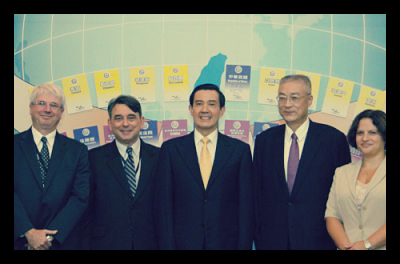
October 1, 2013 marked the opening ceremony of the International Workshop on Strategies for Combating Human Trafficking in Taipei City, Taiwan. The workshop serves to stimulate conversation and collaboration for human rights protection and is organized by the National Immigration Agency under the Ministry of the Interior. Around 200 policy experts and officials from Taiwan and abroad attended, including those from Brazil, Canada, Vietnam, the U.K. and 16 other countries.

Vice President of the Republic of China (ROC), otherwise known as Taiwan, Wu Den-yih, took a staunch stance against human trafficking at the opening ceremony. He stated that protecting human rights is a universal value that needs international attention. He also highlighted the firm commitment of the ROC government against human trafficking and violations of human rights.

In the days after the opening ceremony, the workshop hosted six discussion panels ranging from topics pertaining the protecting the youth from sex crimes to trying to prevent modern-day slavery and labor exploitation. Many guest speakers were featured at panels, including officials from the U.S. Department of Homeland Security.

This year was the fourth consecutive year that the U.S. State Department awarded Taiwan the Tier 1 status of the U.S. State Department Trafficking in Persons (TIP) Report, based on the government’s effort to fight human trafficking. While the Department of State places countries into one of three tiers, this ranking has no indication of the prevalence of human trafficking in the country, or lack thereof. The ranking simply acknowledges the effort a government has made to make human trafficking a pressing concern in the national political discourse and to attempt to address the problem.

Nevertheless, Taiwan’s ranking demonstrates its commitment of protecting human rights and ending human trafficking. In recent years, Taiwan has been improving law enforcement training, strengthening support services by building shelters and providing temporary work, and establishing policy strictly prosecuting traffickers, such as the Human Trafficking Prevention Act.

– Rahul Shah

Sources: UNPO, AIT, US State Department
Photo: American Institute in Taiwan

October 10, 2013
https://borgenproject.org/wp-content/uploads/borgen-project-logo.svg 0 0 Borgen Project https://borgenproject.org/wp-content/uploads/borgen-project-logo.svg Borgen Project2013-10-10 19:17:592024-05-25 00:24:37Taiwan Takes Firm Stance Against Human Trafficking
Children, Human Rights, Slavery

Child Labor 101

21st Century Child Labor Global
According to the International Labor Organization, approximately 211 million children are working around the world. These children range from ages five to 14, and most are working in order to provide support for their poor families. Nearly 128 products from 70 countries are made through child labor – many cases of which are forced child labor. While some children elect to start working at a young age to help support their families, many are forced into labor and treated as slaves in bondage.

In addition to poor treatment, the work environments children are forced to work in are often dangerous and harmful to their health. When children are sent to scour hazardous lakes filled with toxins in order to search for metals and jewels, the consequences are extremely damaging to their health. Much of the merchandise purchased by Americans is made in other countries, many of which are still developing and relying on labor from children. Children are often forced into labor by their government, or their government simply ignores the fact that companies and factories are forcing children to work for their own profit. Some of the products made by children include clothes, tobacco, metals, jewels, food items, pornography, holiday decorations, and electronic goods. This wide span of merchandise leaves little that child labor has not infiltrated.

In the worst cases of child labor, children are used much like slaves. In these cases, children are trafficked, often times forcing them to deal in illegal activities like drug trafficking, prostitution, and weapon conflict. Binding the children in debt is another method used by companies to ensure that the children will continue to work under their authority.

According to a report conducted by the Bureau of International Labor Affairs, India has the highest percentage of child workers. India is followed by China, which is then followed by smaller countries throughout sub-Saharan Africa. In 2008, as many as one in every four children in sub-Saharan Africa were forced into labor, and commonly sent to work in diamond mines and factories. In Ethiopia, an estimated 60 percent of children are forced into labor to help support their families, the child’s income usually amounting to a dollar a month.

In Afghanistan, an increasing number of underage girls are being sold in order to pay off debt, and more than 30 percent of children are working in major industries rather than attending school. Some of the worst forms of child labor occur in Somalia where 40 percent of children under the age of 15 are forced to engage in sex slavery and armed conflict.

Though the statistics concerning child labor may seem bleak, an increasing number of organizations and nations are rising up to help put an end to child labor. The International Labor Rights Forum (ILRF) is an advocacy organization that has been fighting for years to redesign working conditions across the world focusing on women in the workforce, sweatshops, and child labor. The U.S. Labor Department has also joined the stand against child labor: one of its recent reports says that Brazil is no longer relying on child labor for coal production, and that India and other countries have started anti-poverty programs to help end child labor.

– Chante Owens

Sources: Fox Business, International Labor Rights Forum, Business Insider
Photo: NYTimes

October 7, 2013
https://borgenproject.org/wp-content/uploads/borgen-project-logo.svg 0 0 Borgen Project https://borgenproject.org/wp-content/uploads/borgen-project-logo.svg Borgen Project2013-10-07 18:10:212018-02-26 10:35:30Child Labor 101
Developing Countries, Human Rights, Slavery

Slavery Slowly Wanes in Timbuktu, Mali

Modern_slavery_Mali
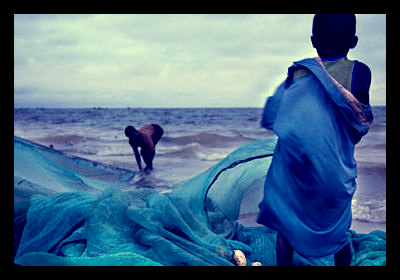
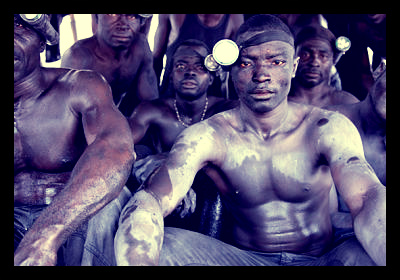
TIMBUKTU, Mali — Though slavery was formally abolished in the West African nation of Mali in 1960, roughly 200,000 people continue to live as modern-day slaves and hundreds more are only now experiencing freedom for the first time.

According to the advocacy group Anti-Slavery International, “descent-based slavery” has existed for generations in Mali but worsened in March 2012 when Islamist rebels gained control of northern Mali. The lighter-skinned Tuaregs and Arab Moors used the ethnic background they shared with jihadists to control darker-skinned ethnic groups.

Many Tuareg and Arab Moor families recaptured former slaves, and those enslaved reported that their treatment worsened during the Islamists’ ten-month reign, during which a highly conservative brand of Islamic sharia law was enforced. A French-led military intervention rid Mali’s northern towns of these Islamists in early 2013, and many Tuaregs and Arab Moors fled the region fearing reprisal for their actions have .

While many former slaveholders have fled the region, the impact of slavery has left a possibly irreparable gulf between Mali’s different ethnic groups. Tuaregs and Arab Moors formerly raided communities of darker-skinned populations in order to acquire slaves for a variety of unpaid roles, ranging from salt mining to sexual slavery. Darker-skinned ethnic groups also entered voluntarily into bondage systems to feed their families because, due to discrimination, they are unable to acquire a better source of income.

These groups have adopted the language and customs of the Tuaregs and Arab Moors, but they are still subjected to unfair treatment and poor working conditions. Those who have managed to escape slavery often come to Timbuktu in order to find employment, but they end up with jobs closely resembling their former experiences as slaves.

Though former slaves celebrate as their longtime captors leave Mali, a guerrilla war surges on. Many slaves have escaped from the families that held control over their bloodline for generations, but the impact of slavery is readily apparent. Today, Timbuktu is a wasteland offering virtually no economic opportunities, even though many of its citizens are finally free.

– Katie Bandera

Source: Antislavery, Washington Post
Photo: The Guardian

July 12, 2013
https://borgenproject.org/wp-content/uploads/borgen-project-logo.svg 0 0 Borgen Project https://borgenproject.org/wp-content/uploads/borgen-project-logo.svg Borgen Project2013-07-12 04:54:592024-06-04 02:43:55Slavery Slowly Wanes in Timbuktu, Mali
Human Rights, Slavery

Slavery’s Last Stronghold in Mauritania

Mauritania-slavery
For most of us, the concept of slavery is an abstract reference to a primitive and barbaric process, a blight on our nations’ histories and also, firmly in the past. A devastating report by CNN shows that in one country, the practice is still alive and well.

Mauritania is a poor Muslim country on the West coast of Africa. Largely ignored by the international community, it has also managed to uphold slavery, not officially abolishing it until 2007 – more than one hundred years after Abraham Lincoln freed the slaves of the United States. Even so, only one case of slave ownership has been successfully prosecuted in a country teeming with slave owners. Estimates of what percentage of the population is enslaved run as high as 18% – near 3.5 million people.

The term ‘slavery’ is not applied lightly. These people are made to work for one master, doing hard manual labour for no wages. They are often mistreated, denied healthcare, education, the right to own property, clothing, proper food or basic rights. A woman CNN interviewed, Moulkheir Mint Yarba, was repeatedly raped and one of her infant children left to die and be eaten by ants when she was working in the field. She was not allowed to give her baby a proper burial.

Slavery persists because of an ingrained caste system, in which family ancestry determines social standing. Historically in Mauritania, out of the four major ethnic groups (White Moors, Black Moors, Black Africans and Harantine), the Harantine are the traditional slave class. They are kept subordinate through systematic discrimination and told that Islam dictates they must be slaves. Denied an education, religion is the closest thing they have to knowledge, and this is a powerful weapon.

Foreigners have had difficulty infiltrating Mauritania because the nation seems set on preserving the status quo. CNN described the great lengths they had to go to even to write a report on the situation, much less intervene, inventing a fake investigation, dodging an official assigned to watch them, knowing they could be deported or tortured if discovered.

Currently, Anti-Slavery International is working with the local organization SOS Enclaves to work on freeing individual slaves, but are facing great odds. Not only the government of Mauritania, but the political instability that plagues the nation, threats to the anti-slave workers themselves and the indoctrination of the citizens of Mauritania.

Moulkheir herself was lucky – after enduring unimaginable circumstances, she and her daughter, with the help of SOS, managed to escape and form a new life for themselves. They live together in a one-room shack and are even attended a school for former slaves, funded by the SOS-Enclave.

However, most of the 3.5 million slaves in Mauritania are not so lucky. During the interview, CNN asked Free the Slaves worker Kevin Bales what could help Mauritania, to which he replied that global demand for change could make a difference. “It’s a destitute country. It needs a few friends in the world.”

– Farahnaz Mohammed

Source: CNN, AntiSlavery
Photo: Smithsonian Magazine

July 10, 2013
https://borgenproject.org/wp-content/uploads/borgen-project-logo.svg 0 0 Borgen Project https://borgenproject.org/wp-content/uploads/borgen-project-logo.svg Borgen Project2013-07-10 04:00:162017-11-30 11:09:44Slavery’s Last Stronghold in Mauritania
Page 2 of 3123

Get Smarter

  • Global Poverty 101
  • Global Poverty… The Good News
  • Global Poverty & U.S. Jobs
  • Global Poverty and National Security
  • Innovative Solutions to Poverty
  • Global Poverty & Aid FAQ’s
Search Search

Take Action

  • Call Congress
  • Email Congress
  • Donate
  • 30 Ways to Help
  • Volunteer Ops
  • Internships
  • Courses & Certificates
  • The Podcast
Borgen Project

“The Borgen Project is an incredible nonprofit organization that is addressing poverty and hunger and working towards ending them.”

-The Huffington Post

Inside The Borgen Project

  • Contact
  • About
  • Financials
  • President
  • Board of Directors
  • Board of Advisors

International Links

  • UK Email Parliament
  • UK Donate
  • Canada Email Parliament

Get Smarter

  • Global Poverty 101
  • Global Poverty… The Good News
  • Global Poverty & U.S. Jobs
  • Global Poverty and National Security
  • Innovative Solutions to Poverty
  • Global Poverty & Aid FAQ’s

Ways to Help

  • Call Congress
  • Email Congress
  • Donate
  • 30 Ways to Help
  • Volunteer Ops
  • Internships
  • Courses & Certificates
  • The Podcast
Scroll to top Scroll to top Scroll to top