• Link to X
  • Link to Facebook
  • Link to Instagram
  • Link to TikTok
  • Link to Youtube
  • About
    • About Us
      • President
      • Board of Directors
      • Board of Advisors
      • Financials
      • Our Methodology
      • Success Tracker
      • Contact
  • Act Now
    • 30 Ways to Help
      • Email Congress
      • Call Congress
      • Volunteer
      • Courses & Certificates
      • Be a Donor
    • Internships
      • In-Office Internships
      • Remote Internships
    • Legislation
      • Politics 101
  • The Blog
  • The Podcast
  • Magazine
  • Donate
  • Click to open the search input field Click to open the search input field Search
  • Menu Menu

Tag Archive for: Refugees

Posts

Global Poverty, Refugees

10 Facts About Refugees in Liberia

peope10 Facts About Refugees in Liberia
Bordering the Atlantic Ocean, Liberia is a country located on the continent of Africa and has a population roughly of 4 million people. Liberia is home to thousands of refugees, many of whom originate from Cote d’Ivoire (also known as the Ivory Coast), a country just east of Liberia. Here are 10 facts about refugees in Liberia.

10 Facts About Refugees in Liberia

  1. There are currently over 40,000 persons of concern in Liberia. From this total, 38,000 refugees originate from Cote d’Ivoire. This means that Ivorian refugees in Liberia make up 95 percent of the total refugee population.
  2. Ivorian refugees often flee to Liberia due to civil conflict in their country of origin. Populations in the Ivory Coast are constantly clashing with a rebellion which began shortly after the turn of the 21st century. Since then, there has been a great deal of unrest in the Ivory Coast, forcing many people out of the country. Liberia became a destination for many of the Ivorian asylum-seekers.
  3. A large majority of Ivorian refugees in Liberia live in refugee camps established by the United Nations High Commissioner for Refugees (UNHCR).
  4. With the sudden surge of persons of concern, Liberia has requested $34 million in foreign aid. Liberia has only been granted 28 percent of the requested funds.
  5. It is suspected that the reason Liberia is receiving less funding for its refugees is due to the Middle East’s own refugee crisis. People seeking refuge from the Middle East are more likely to gain the attention of nonprofits and global organizations than the Ivorian refugees in Liberia.
  6. In 2016, an Ebola outbreak occurred in Liberia which resulted in thousands of deaths. According to the UNHCR, refugees in Liberia were impacted the most by the outbreak.
  7. Even though it has been over a decade since the war in Cote d’Ivoire, many of the refugees in Liberia feel they cannot return to their country of origin. Instead, many people fleeing from their home countries choose to settle in refugee camps in Liberia.
  8. In 2016, Ivorian authorities, alongside the UNHCR, called for all Ivorian refugees to return home to Cote d’Ivoire. Mariatou Kone, the Ivorian Minister of Solidarity, Social Cohesion and Compensation, stated that Ivorians have conducted two elections without any problems since the election, pleading for the country’s citizens to return home.
  9. Refugee camps in Liberia were never intended or designed to be long-term settlements. As a result, food rations, educational opportunities and medical care are becoming difficult to obtain for people seeking refuge in Liberia.
  10. The majority of people seeking refuge in Liberia are women and children. As a result, UNICEF is working closely in order to ensure proper medical care and child protection for these refugees. For example, in 2012 UNICEF helped more than 20,200 Ivorian and Liberian children through child-friendly education and healthcare programs.


The refugee crisis is putting a lot of financial pressure on Liberia. It is absolutely crucial that conditions improve for refugees in Liberia in the near future.

– Morgan Leahy

Photo: Flickr

June 10, 2017
https://borgenproject.org/wp-content/uploads/borgen-project-logo.svg 0 0 Borgen Project https://borgenproject.org/wp-content/uploads/borgen-project-logo.svg Borgen Project2017-06-10 07:30:352024-05-28 00:00:2510 Facts About Refugees in Liberia
Global Poverty, Refugees, United Nations

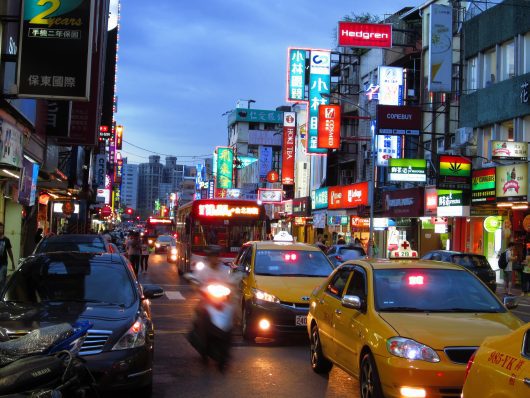
10 Facts About Refugees in Taiwan

Taiwan
Taiwan, officially known as the Republic of China (ROC), is not a United Nations member and therefore does have a United Nations High Commission for Refugees office. However, the country has made great strides to provide for refugees all over the world. Here are 10 facts about refugees in Taiwan.

10 Facts About Refugees in Taiwan

  1. Taiwan does not yet accept refugees into the country, but, in July 2016, draft legislation for a refugee law passed its first of three legislative committee reviews. This new law, if passed, would ease the asylum process into Taiwan and allow it to take in more refugees.
  2. However, in 1981, Taiwan was one of the only Asian countries to grant temporary asylum to refugees and offered permanent settlements to all who reach its shores. However, this stopped after several hijackings of planes by Chinese asylum seekers in the 1990s.
  3. In addition, in January 2009, the Legislative Yuan passed an amendment to the National Immigration Act to allow anyone who is persecuted in their country to apply for residency. This really only involved the neighboring those from Myanmar, Tibet, Chinese dissidents or others in a “refugee-like situation,” rather than actual refugees.
  4. Although Taiwan currently does not accept refugees, since 1963, approximately 150,000 illegal Chinese immigrants have entered the country seeking refuge from the communist government.
  5. As a result of this huge annual illegal immigration rate, Taiwan has cracked down on illegal Chinese immigrants since 2003. This crackdown includes the trend of “foreign brides” that has risen in the last two decades.
  6. To compensate for not accepting refugees, two Taiwanese organizations, The Rising People Foundation and a nonprofit organization established by William Hsieh, have launched “Casa di Love,” to build a refugee facility on the Italian island of Lampedusa. The organizations will spend $0.37 million over the next three years to build the facility that will give shelter to refugees all over the world.
  7. In addition, Taiwan donated 10 prefabricated houses to Caritas, an organization in Jordan, to provide housing for 41 Syrian refugees.
  8. In 2013, Taiwan donated 5,000 sets of solar-LED lights to the Azraq Refugee Camp. In 2015, Taiwan signed a $100,000 grant with the International Medical Corps Jordan Country Office to support Syrian and Iraqi refugees.
  9. With the recent movements trying to ban refugees in the United States, Taiwan is now trying to push its own refugee law through the legislative process to allow refugees to seek permanent settlements in the country. Taiwan hopes the acceptance of refugees will stimulate the economy and help the country to become a tech power and be able to further separate itself from China.
  10. Although Taiwan helps refugees all around the world, many of its own citizens have fled the country due to China’s hold on the territory. More than half of all Taiwan refugees reside in the United States, accounting for around 360,000 Taiwanese people.

These 10 facts about refugees in Taiwan show the evolution of Taiwan from a place of solitude to quite the opposite in the 1990s, to once again trying to reinstate the country as a “land of fortune” for both global refugees and its own citizens.

– Amira Wynn

June 10, 2017
https://borgenproject.org/wp-content/uploads/borgen-project-logo.svg 0 0 Borgen Project https://borgenproject.org/wp-content/uploads/borgen-project-logo.svg Borgen Project2017-06-10 01:30:172024-06-04 01:08:2010 Facts About Refugees in Taiwan
Global Poverty, Refugees and Displaced Persons

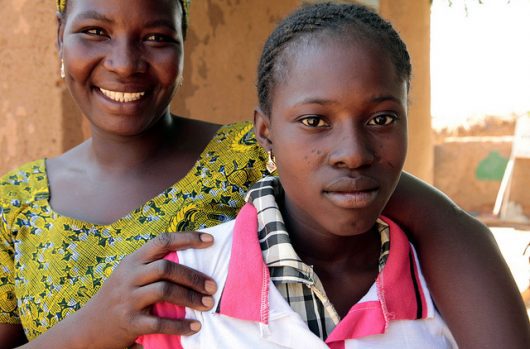
10 Facts About Refugees in Burkina Faso


Tens of thousands of Malians have made their way to Algeria, Togo, Niger, Côte d’Ivoire, Guinea, Mauritania and Burkina Faso to avoid oppression from armed conflicts between the Malian army, members of the Tuareg movement and other regional factions. In January 2012, a military coup exacerbated this exodus. Ever since this coup, violence in Mali has continued despite the Agreement for Peace and Reconciliation that was signed in June 2015. This has hampered the return of displaced and stateless Malians who are spread across the continent. Prejudice, persecution and ethnic stigmatization continue to hinder the development of peace in the region.

10 Facts About Refugees in Burkina Faso

  1. As of March 2017, there were 32,972 individual refugees and 8,787 families residing in the country, according to government statistics and sources from The Office of the United Nations High Commissioner for Refugees (UNHCR). Comparatively, in late December 2014, 32,097 refugees were in the country.
  2. Most refugees in Burkina Faso are women (51.6 percent), individuals between 18-59 years of age (40.5 percent) and children between the ages of 5 and 11 (26.28 percent).
  3. With respect to ethnicity, most refugees in Burkina Faso are Tuareg (75 percent). Over the last year, more than 2,000 refugees from northern Mali were registered. General regional insecurity, gender-based violence and food shortages are largely to blame.
  4. Fifty-seven percent of refugees do not have an occupation (8,801 males and 10,098 females). Most men are breeders (11.49 percent or 3,620) and most women are cleaners (12.17 percent or 3,964). In the capital, most refugee artisans, such as leather workers and blacksmiths, earn income from tourists and municipal needs. UNHCR provides financial assistance to artisans who organize themselves into groups.
  5. Refugees in Burkina Faso reside in two primary camps: Mentao and Goudoubou. As of March 31, 2017, Mentao holds 12,658 individuals and 3,534 families. Comparatively, Goudoubou has 10,131 refugees and 2,863 families.
  1. Every refugee within the Mentao and Goudoubou encampments has access to healthcare.
  2. A large percentage of refugees in Burkina Faso (80.33 percent) have a primary education – more than any other educational level. Roughly 46 percent of refugees are students (1,820 males and 1,300 females).
  3. According to the UNHCR April 2017 West Africa Funding Update, Burkina Faso has only received 16 percent of its needed funds – there is a gap of $17.8 million. Additionally, only 19 percent of the funding needed to support all West African refugees has been received. A total of $231.7 million is still needed.
  4. Based on March 2017 figures, a total of 776 individual refugees and 251 families live in the city of Bobo-Dioulasso, while in Ouagadougou, the capital of Burkina Faso, 607 refugees (mostly men) and 228 families have taken up residence. What distinguishes urban refugees from those in rural settings or encampments? The answer is twofold. Firstly, their skills are said to be more developed than those in traditional camps. Secondly, they have greater access to employment opportunities because of those skills. Together, these elements mean urban refugees have the means to support themselves, which reduces the need for humanitarian aid.
  5. In Burkina Faso, the National Commission for Refugees (CONAREF) and UNHCR provide financial, logistical and healthcare assistance to refugees and asylum-seekers (in addition to many other NGOs and government agencies). However, if refugees wish to return home, they can waive the protection and health care provided by these entities.

At present, the UNHCR plans to continue its registration of refugees in Burkina Faso. This includes identity cards, biometric CTVs and refugee certificates. This should enable the government to improve its data collection activities on refugees, stateless persons and those at risk of statelessness. Statistical accuracy will enable UNHCR, government agencies and non-governmental organizations to improve their quality of humanitarian assistance in the region.

– JG Federman

Photo: Flickr

June 9, 2017
https://borgenproject.org/wp-content/uploads/borgen-project-logo.svg 0 0 Borgen Project https://borgenproject.org/wp-content/uploads/borgen-project-logo.svg Borgen Project2017-06-09 07:30:082024-12-13 17:58:0010 Facts About Refugees in Burkina Faso
Global Poverty, Refugees

9 Facts About Belgium Refugees


With the recent conflict in Syria and other nations, Belgium has prepared for a huge influx of asylum applications. However, with the huge numbers pouring into neighboring countries, Belgium is somewhat “spooked.” Following are nine facts about Belgium refugees.

9 Facts About Belgium Refugees

  1. With the huge influx of migrants and refugees, the Director of a Belgian regional tourism office warned hotels in March 2016 that they would lose government help and funding if they housed asylum seekers for more than three months.
  2. Additionally, the Mayor of the port city of Zeebrugge called for a “camp like Guantanamo” to house Belgium refugees and told locals to not feed refugees to discourage a large number of refugees attempting to find asylum in Belgium.
  3. In the past year, Belgium police have arrested 363 refugees, and in January it increased to 950. This increase comes after the dismantling of the “Jungle” housing camp in Calais, France, which housed nearly 4,000 people, and the border reinforcement in Hungary.
  4. Refugees detained in Belgium are sent to the last European country before arriving in Belgium, or if they have no documentation given the opportunity to claim asylum and released. The Interior Minister has said those arrested would reach thousands as migrants struggle to find alternative routes to Britain.
  5. In the wake of several refugee shelters being dismantled due to violence, local families have volunteered to host Belgium refugees.
  6. In August 2015, there were approximately 5,600 Belgium refugee applications, with about 1,900 of those applications coming from Brussels.
  7. Most of the refugees seeking temporary asylum in Belgium are Syrian. In 2016, 452 refugees entered Belgium and 448 of those refugees were Syrian. In addition, in the last four years, Belgium has accepted 862 refugees, and more are expected in 2017, including about 550 Syrians planning to enter the country that couldn’t be resettled per the EU-Turkey agreement.
  8. In 2016, 12,197 asylum seekers were granted Belgium refugee status, a record that doubled from the previous year. The 3,281 refugees that did not qualify for refugee status were granted protection until they could be resettled or granted refugee status later.
  9. In 2017, and for the next two years, the Belgian population is predicted to increase about 85,000 people each year. Half of the influx is attributed to refugees entering the country, while the other half is attributed to “natural” additions.

With the impending increase of refugees over the next few years, the government continues to find ways to control the flow and provide resources to Belgium refugees.

– Amira Wynn

Photo: Flickr

June 7, 2017
https://borgenproject.org/wp-content/uploads/borgen-project-logo.svg 0 0 Borgen Project https://borgenproject.org/wp-content/uploads/borgen-project-logo.svg Borgen Project2017-06-07 07:30:382020-04-19 16:50:039 Facts About Belgium Refugees
Global Poverty, Refugees

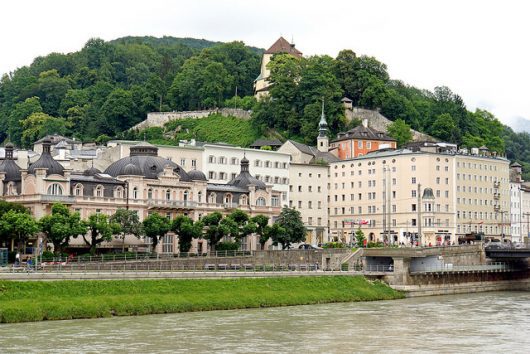
10 Interesting Facts About Austrian Refugees


Austria is a beautiful country nestled in the Alps with a rich cultural and musical history. When floods of immigrants, mostly from Syria, poured over its borders in 2015, Austria became a focal point for global forced displacement. Because of the sheer volume of immigrants passing through, Austrian refugees face difficulties earlier generations did not.

10 Facts About Austrian Refugees

  1. Austria has a long history of embracing refugees. Most of the 200,000 people who fled during the Hungarian Uprising of 1956 became refugees in Austria. The Prague Spring in 1968 and the Balkan Wars of 1995 also resulted in thousands of Austrian refugees
  2. Half of Vienna’s current 1.8 million residents are of immigrant origin, including Hungarians, Czechs, Poles, refugees from the Balkan Wars, Afghans and Turks.
  3. In the fall of 2015, 788,000 migrants traveled through Austria, many on their way to Germany and Scandinavia. Most fled from Syria, Afghanistan and Iraq — 300,000 came through Vienna in a matter of weeks.
  4. Unemployment in Austria during 2016 was 8.3 percent, the highest rate since the ’50s (higher than after the global financial crisis) and impacting competition for jobs for Austrian refugees seeking asylum.
  5. During the first days of the crisis, Vienna set up a Refugee Coordination Centre and erected 65 emergency shelters, which included 10,600 beds. The city’s police and social service groups worked with international nongovernmental organizations to help with immediate needs.
  6. An old army barracks outside Vienna called the Traiskirchen center housed 4,800. Originally set up to sleep 1,000, many refugees were forced to sleep outdoors. Amnesty International called attention to the deplorable living conditions.
  7. More than 90,000 Austrian refugees applied for asylum by the end of 2015. This is twice as many per capita as in Germany.
  8. One of the worst tragedies of the Syrian crisis occurred near the Austrian border in the town of Parndorf. A refrigerated truck carrying 71 refugees was found abandoned. All the occupants were dead.
  9. Austria has an education policy for the children of refugees. Every child is enrolled in a local school within two weeks of their arrival. They are also offered intensive German language classes and classes on life in Austria. Adult education is also offered.
  10. Some 21,600 refugees remain in Vienna, registered for basic welfare support. Half are in the asylum-seeking process.

The challenge ahead for Austrian refugees: assimilating into a new culture, learning a new language and finding suitable employment.

– Jene Cates

Photo: Flickr

June 4, 2017
https://borgenproject.org/wp-content/uploads/borgen-project-logo.svg 0 0 Borgen Project https://borgenproject.org/wp-content/uploads/borgen-project-logo.svg Borgen Project2017-06-04 01:30:422024-05-24 23:52:0610 Interesting Facts About Austrian Refugees
Global Poverty, Refugees

7 Facts About Albanian Refugees

10 Facts About Albanian RefugeesThe Albanian exodus has been the largest emigration movement in Europe since the population movements after World War II. It had been caused by the collapse of the communist regime in 1991 and the following economic crisis. Here are 10 facts about Albanian refugees.

7 Facts About Albanian Refugees

  1. The first wave of immigration occurred in 1991 when 20,000 Albanians squeezed shoulder-to-shoulder head to Italy on the cargo ship La Vlora.
  2. More Albanian refugees live outside of Albania than within. Countries like Kosovo, Macedonia, Montenegro, Greece, Turkey, Italy, Germany, Switzerland, Sweden and the United States all have Albanian diasporas.
  3. About $500 million was sent home by Albanian refugees in 1996 from these countries, supporting the survival of the people remaining in Albania and the development of the private sector.
  4. Albania’s population is approximately three million, and about 10 million Albanians are living outside of the country.
  5. Roughly 600,000 Albanian refugees work in Greece.
  6. About 480,000 ethnic Albanian refugees entered into Albania in 1999 because of the war in neighboring Kosovo. This influx strained the country’s resources.
  7. The unemployment rate is incredibly high in Albania, where a small and overcrowded job market doesn’t allow new businesses to emerge.

However, things are changing for the better in Albania, and the future is bright for the nation. While the country is still struggling with outcomes of the refugee crises of the early ’90s, the Albanian government considers tourism as a key strategic economic sector, touting its potential to act as a catalyst for the development of the rest of the country.

– Yana Emets

Photo: Flickr

June 3, 2017
https://borgenproject.org/wp-content/uploads/borgen-project-logo.svg 0 0 Borgen Project https://borgenproject.org/wp-content/uploads/borgen-project-logo.svg Borgen Project2017-06-03 07:30:052024-05-25 00:18:267 Facts About Albanian Refugees
Global Poverty, Refugees

10 Facts About Namibian Refugees


The country of Namibia has been plagued by recurrent droughts, which have left crop production in decline. With the prevalence of HIV/AIDS, the region is affected by a combination of factors such as the environment and lack of medical resources. Efforts by the government to quell the drought have led to improvement and the country has seen an influx of refugees from other nations.

  1. Every month in 2015, 30 new refugees entered Namibia; a lot of them fled from drought and famine in their own countries. Many are from the Great Lakes region.
  2. At the same time, Namibian refugees leave the country for opportunities in South Africa and Germany. Many students seek to find more lucrative jobs internationally rather than stay in the Namibia.
  3. The government of Namibia has asked many outside countries to help assist with the incoming population of refugees from various African regions. Many refugees in Namibia require nutritional support and various forms of humanitarian aid.
  4. There are many Namibian refugees that are re-entering the country after being away for an extended period of time. Some returnees came back from the region of Botswana. The government of Namibia is making sure resettlement efforts go smoothly.
  5. As reported, Namibian refugees were given incentives. Cash grants were given to those who relocated back into the country after being away.
  6. Many Namibian refugees are escaping the country because of the financial crisis, which has hit the country hard due to environmental conditions that reduce the crop production.
  7. Namibian refugees at Osire refugee camp are being registered in an electronic database and have been given identification cards. The purpose is to collect information on asylum seekers. Most refugees in the camp are from Angola.
  8. Refugees and asylum seekers in Namibia are guaranteed a piece of land by the government to ensure care. They are given security and protection that is enforced and mandated.
  9. Medical treatment is given to refugees in Namibia as if they were Namibian citizens. The government has made a point to present its support and prove that the refugee’s needs are crucial.
  10. Despite this commitment, Namibian refugees and others from sub-Saharan regions sometimes do not receive the proper care they need from countries that have accepted asylum seekers.

In many cases, refugees enter Namibia in hopes of escaping persecution as well as drought and famine in their respective countries. Namibian refugees seek to find a better opportunity in neighboring countries and the government hopes to successfully combat recurrent droughts.

– Nick Katsos

Photo: Flickr

June 2, 2017
https://borgenproject.org/wp-content/uploads/borgen-project-logo.svg 0 0 Borgen Project https://borgenproject.org/wp-content/uploads/borgen-project-logo.svg Borgen Project2017-06-02 01:30:552024-05-28 00:01:5810 Facts About Namibian Refugees
Global Poverty, Refugees

10 Important Facts to Know About Gambian Refugees


Outlined in House Resolution 89, Gambia is noted to have dealt with a leader who did not meet international standards of promoting human rights. Throughout his 22-year rule, President Yahya Jammeh consistently governed without regard for minority groups or those who opposed his regime. Refugees have left Gambia in search of a life that is not susceptible to Jammeh’s authority. Here are 10 facts about Gambian refugees.

  1. The majority of Gambian refugees are young males. Hundreds have fled for Europe. Stories of Gambian refugees arriving in Italy or Spain reached remote villages through Facebook and texting.
  2. Making the grueling exodus from Africa has become easier over time. Smuggling networks have expanded due of deterioration in Libya, allowing Gambian refugees to escape through unsecured channels. Many Gambian refugees are fleeing possible forced servitude and sexual slavery.
  3. The country has become a hub for the African trade network operating human trafficking throughout several parts of Africa, including Senegal. Gambian refugees and those from other sub-Saharan nations hope to reach North Africa in order to eventually reach Europe.
  4. Gambian citizens were greatly impoverished under the regime of President Jammeh; only those within his sphere were able to accumulate any wealth. Those who were not as fortunate ended up earning $100 dollars a month. Refugees lived under extreme poverty.
  5. The government of Gambia did not respect the freedom of the media. Through criminal prosecutions and physical intimidation, censorship of journalism was carried out. Journalists were susceptible to cruel and degrading treatment by the government. A percentage of those escaping  Gambia were journalists.
  6. Conditions along smuggling routes are very unsafe. Boats capsizing or smugglers abandoning people along desert routes are a reality for many Gambian refugees.
  7. A growing number of refugees are literate, but unable to find work matching their skill set. This is similar to China in the ’60s and is a primary reason many refugees leave Gambia.
  8. A percentage of refugees were a part of the LGBT community. Jammeh sought to cultivate what the Washington Post called a “bizarre mythology around himself as a man who could cure AIDS and threatened to personally slit the throats of gay men.”
  9. Many of Gambia’s refugees were held as political prisoners, including officials of parties in opposition to the president.
  10. In the recent election, Jammeh lost to Adam Barrow. However, some are concerned about the political tensions resulting from that decision, so many are sending their children as refugees to Senegal.

With Adama Barrow now president of Gambia, the country can look forward to positive change. The region has been known for corruption and scandals and has failed to effectively represent its people. Gambian refugees were escaping the regime of a leader who did not operate a democratic nation. Their new government represents change in a positive direction.

– Nick Katsos

Photo: Flickr

June 1, 2017
https://borgenproject.org/wp-content/uploads/borgen-project-logo.svg 0 0 Borgen Project https://borgenproject.org/wp-content/uploads/borgen-project-logo.svg Borgen Project2017-06-01 01:30:542024-06-11 23:17:1210 Important Facts to Know About Gambian Refugees
Aid, Global Poverty, Refugees

New Aid to Come to Nigerian Refugees


According to the Internal Displacement Monitoring Centre, there are almost 2,152,000 internally displaced Nigerian refugees as of Dec. 31, 2015. The displacement has been caused by Nigerian terrorist group Boko Haram.

Boko Haram is an Islamic terrorist group that has been trying to enforce Sharia law onto Nigeria and other Northern African countries. Despite its violent strategic nature, the military campaign led by the newly elected president of Nigeria, Muhammadu Buhari, has proven successful in recent efforts.

As reported by the International Crisis Group, Nigeria has been more successful in fending off Boko Haram and it has become less of a threat. Nigerian forces have been able to clear Boko Haram out of some occupied territory, thus opening up opportunities for citizens to return to their homes and humanitarian efforts to distribute much-needed aid.

The U.N. Refugee Agency (UNHCR) states that there are an estimated 8.5 million Nigerians refugees requiring humanitarian aid in 2017. Thankfully, the head Commissioner for Refugees, Filippo Grandi, has brought up a way for ensuring protection and solutions for the growing population Nigerians that are returning to their previously occupied homes. Working closely with the Nigerian government, Grandi presented a plan called “Directions on Protection, Access and Solutions for IDPs and Returnees in North-East Nigeria.”

The plan prioritizes voluntary returns and protection from gender-based violence to ensure the dignity and safety of those receiving aid. Access to both therapy and legal support, specifically to settle cases of unclaimed or claimed land, was also outlined in the plan. The main goal of UNHCR seems to be to establish social harmony among the tense community.  Goals of “empowerment,” “community reconciliation” and “gender equality” were also included.

With the U.N. raising more than $670 million in pledges that will help support aid for Nigerian refugees and their neighboring countries over the next two years, the victims of the widespread terrorism in North Africa will now have new found funding and resources to help them adjust back into their home lives.

– Vicente Vera

Photo: Flickr

May 31, 2017
https://borgenproject.org/wp-content/uploads/borgen-project-logo.svg 0 0 Borgen Project https://borgenproject.org/wp-content/uploads/borgen-project-logo.svg Borgen Project2017-05-31 01:30:512024-06-11 02:48:28New Aid to Come to Nigerian Refugees
Global Poverty, Refugees

10 Facts About Refugees in Gambia

Refugees in Gambia
The Gambia is a tiny nation, bounded by Senegal, on the west coast of Africa. The primary economic drivers in the country are tourism, agriculture and remittances from overseas. Between 2013 and 2016, it is estimated that real GDP per capita fell by 20 percent, suggesting an increase in poverty levels. The poor economy and recent political tensions are two main reasons why thousands of Gambians seek refuge elsewhere, hoping for a better life for themselves and their families.


Here are 10 facts about Gambian refugees:


  1. Around 45,000 people fled to neighboring Senegal after a contentious 2016 presidential election. Incumbent President Yahya Jammeh, who had led the country for 22 years following a military coup in 1994, was defeated by his opponent Adama Barrow. After initially accepting the outcome, Jammeh refused to step down and called for a new election. After Jammeh was exiled in January, many Gambians returned home from Senegal.
  2. Gambians currently account for more than seven percent of refugees making the deadly crossing over the Mediterranean to mainland Europe. Considering The Gambia has a population of fewer than two million, Gambians make up a disproportionate percentage of migrants arriving into Europe. According to the International Organization for Migration (IOM), 11,929 Gambians arrived in Greece and Italy in 2016.
  3. The method of attempting to get into Europe via the Mediterranean is colloquially known as the “Backway.” The flood of Gambians heading for Europe has become such a problem that the Gambian government has launched ad campaigns that attempt to dissuade would-be migrants with slogans such as, “Say No to the Backway.” In 2016, at least 5,000 migrants perished or went missing attempting to make the perilous crossing.
  4. Most Gambian refugees seeking asylum in Europe are between the ages of 14 and 34. According to Richard Danziger, IOM’s regional director for West and Central Africa, “The numbers are huge; I understand there are villages [in Gambia] with no young males left.”
  5. Most Gambian refugees are economic migrants. According to 2010 figures from the World Bank, the poverty rate in The Gambia was 48.4 percent. Over-reliance on tourism, agriculture and remittances have resulted in an undiversified economy that is vulnerable to external shocks and lacking opportunities for many Gambians.
  6. Instability in Libya has created an unguarded coastline in North Africa; smugglers are taking advantage and expanding their networks. Widespread violence and instability continue to plague Libya as the conflict continues after the ousting of Muammar Gaddafi in 2011.
  7. Gambian refugees in Libya are at risk of exploitation in modern-day “slave markets.” The IOM reports hundreds of migrants — including Gambians — being kidnapped, sold and either extorted for more money or forced into labor.
  8. According to the World Bank, 20 percent of Gambia’s Gross Domestic Product (GDP) comes from remittances. Relatives of those who make it to Europe are able to build new homes with the remittances they receive. Their success is alluring for many and provides a powerful incentive for people to risk their lives for the chance of a better life for themselves and their families back home.
  9. According to Eurostat, the EU statistics organization, there were 14,735 first-time asylum applications from The Gambia in 2016 to the following countries: Italy, 8,850 (56 percent), Germany, 5,655 (36 percent), Austria, 230 (one percent).
  10. The EU set up the Emergency Trust Fund for Africa in 2015 in an attempt to address the migrant crisis. The Trust Fund is worth more than €2.6 billion and focuses on projects that endeavor to address the root causes of irregular migration. The Gambia is one of the countries eligible to receive this assistance.

President Adama Barrow has promised to try and create jobs in an effort to stem the tide of Gambians leaving via the “Backway.” Barrow will serve only three years because he is not able to stand in the next election, but there are hopes that he can initiate urgently needed reforms and help lay the foundations for economic growth and prosperity.

– Michael Farquharson

Photo: Flickr

May 31, 2017
https://borgenproject.org/wp-content/uploads/borgen-project-logo.svg 0 0 Borgen Project https://borgenproject.org/wp-content/uploads/borgen-project-logo.svg Borgen Project2017-05-31 01:30:212024-05-28 00:02:0010 Facts About Refugees in Gambia
Page 19 of 32«‹1718192021›»

Get Smarter

  • Global Poverty 101
  • Global Poverty… The Good News
  • Global Poverty & U.S. Jobs
  • Global Poverty and National Security
  • Innovative Solutions to Poverty
  • Global Poverty & Aid FAQ’s
Search Search

Take Action

  • Call Congress
  • Email Congress
  • Donate
  • 30 Ways to Help
  • Volunteer Ops
  • Internships
  • Courses & Certificates
  • The Podcast
Borgen Project

“The Borgen Project is an incredible nonprofit organization that is addressing poverty and hunger and working towards ending them.”

-The Huffington Post

Inside The Borgen Project

  • Contact
  • About
  • Financials
  • President
  • Board of Directors
  • Board of Advisors

International Links

  • UK Email Parliament
  • UK Donate
  • Canada Email Parliament

Get Smarter

  • Global Poverty 101
  • Global Poverty… The Good News
  • Global Poverty & U.S. Jobs
  • Global Poverty and National Security
  • Innovative Solutions to Poverty
  • Global Poverty & Aid FAQ’s

Ways to Help

  • Call Congress
  • Email Congress
  • Donate
  • 30 Ways to Help
  • Volunteer Ops
  • Internships
  • Courses & Certificates
  • The Podcast
Scroll to top Scroll to top Scroll to top