• Link to X
  • Link to Facebook
  • Link to Instagram
  • Link to TikTok
  • Link to Youtube
  • About
    • About Us
      • President
      • Board of Directors
      • Board of Advisors
      • Financials
      • Our Methodology
      • Success Tracker
      • Contact
  • Act Now
    • 30 Ways to Help
      • Email Congress
      • Call Congress
      • Volunteer
      • Courses & Certificates
      • Be a Donor
    • Internships
      • In-Office Internships
      • Remote Internships
    • Legislation
      • Politics 101
  • The Blog
  • The Podcast
  • Magazine
  • Donate
  • Click to open the search input field Click to open the search input field Search
  • Menu Menu

Tag Archive for: Refugees

Posts

Global Poverty, Refugees

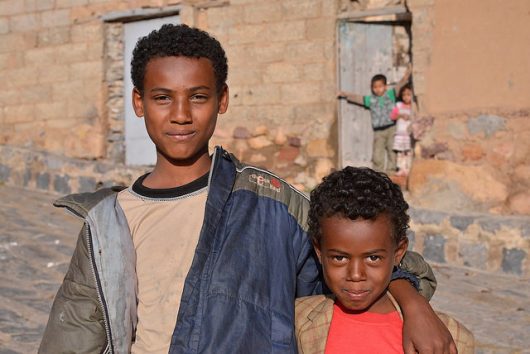
10 Important Facts About Guinea-Bissau Refugees


Guinea-Bissau is positioned on the west coast of Africa, south of Senegal. In recent years, the total number of asylum applicants from Guinea-Bissau has increased significantly. Among the 1,467 people fleeing persecution, 99 percent of applicants are being rejected from European asylum. To understand why these people are fleeing and why no one will take them in, here are 10 facts about Guinea-Bissau refugees.

10 Facts About Guinea-Bissau Refugees

  1. The country of Guinea-Bissau has been plagued with corruption and drug trafficking for decades. It is involved with the South American cartels, specifically those involving cocaine. Guinea-Bissau is vulnerable to trafficking. A number of the drugs coming into Guinea-Bissau are becoming more difficult to track because drugs are often brought in by sea and not by plane. The police do not have the capabilities to intercept boats.
  2. The total influx of refugees worldwide has made it difficult for wealthy European countries to take in any more people. There are simply not enough resources for every application for asylum to be granted. Applications are not being put through because the capacity has been reached in prominent European nations.
  3. The anti-immigrant sentiment that some European countries possess is directed mainly at those from Africa and Asia. Many applications are being rejected because of this prejudice, making it more difficult for African refugees to be accepted into their new country. Studies show that applicants with foreign-sounding names are less likely to get a job.
  4. Studies show that in recent years the number of recognized refugees from Guinea-Bissau has decreased dramatically. In contrast, the number of rejected refugees has increased substantially since 2010.
  5. There is little political stability in the country. Guinea-Bissau has a record of military coups (the most recent in 2012), making it difficult for one leader to meet a full term. There were four changes in the position of prime minister in just over a year.
  6. The probability of dying between ages 15 and 60 is 31 percent for males and 24 percent for females.
  7. Life expectancy for both men and women is well below the African average: 57 for males, 60 for females.
  8. Just over 20 percent of the population falls below the minimum level of dietary energy consumption.
  9. Improper sanitation and waste treatment are serious public health challenges. A large amount of the population is malnourished. Malaria is widespread and entails high mortality rates. A large number of health concerns stem from cholera, schistosomiasis, filariasis and leprosy.
  10. Guinea-Bissau is now one of the world’s poorest countries, ranking 178 out of 188 in the U.N.’s human development index. This is a measure of average achievement in valuable dimensions of human development: a long and healthy life, being knowledgeable and having a decent standard of living.

These 10 facts about Guinea-Bissau refugees show that there are many considerable issues surrounding the people of Guinea-Bissau, making their case for asylum compelling. However, many European countries are unable to integrate them into their culture. This refusal by affluent European countries leaves thousands of refugees with nowhere to go and their applications for asylum rejected. The lives of these refugees are valuable, yet they have not been treated as such. Many are stuck in their home country without adequate living conditions.

However, improvements have been made. Regarding health and sanitation, The World Health Organization has seen a drop in malnutrition since 2010 and a significant decrease in infant mortality in the last decade. Changes are being made, and, slowly but surely, the lives of people in Guinea-Bissau are improving. As long as affluent countries such as the United States keep giving, Guinea-Bissau will see less emigration and a higher ranking in the U.N.’s human development index.

– Lucy Voegeli

Photo: Flickr
June 30, 2017
https://borgenproject.org/wp-content/uploads/borgen-project-logo.svg 0 0 Borgen Project https://borgenproject.org/wp-content/uploads/borgen-project-logo.svg Borgen Project2017-06-30 07:30:082024-12-13 17:58:1610 Important Facts About Guinea-Bissau Refugees
Global Poverty, Refugees

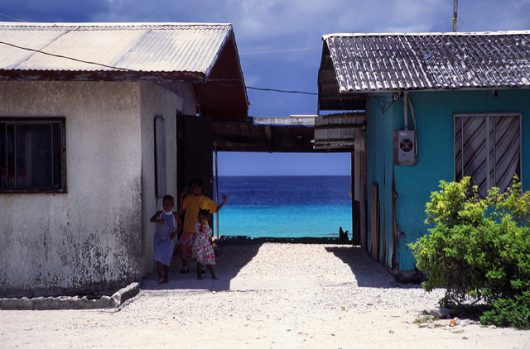
10 Facts About Marshall Islands Refugees


Springdale, Northwest Arkansas, is just a few thousand miles from the Marshall Islands. Springdale has become a prominent relocation center for Marshall Islands refugees. As the “poultry capital of the world,” Springdale has offered Marshallese refugees employment through Tyson, a frozen food company.

The Marshall Islands is a small coastal republic consisting of a few main islands and coral atolls. Rising sea levels, intense tropical storms and droughts have disrupted life in the Marshall Islands. Climate change is at the root of these issues. Here are 10 facts about Marshall Islands refugees.

10 Facts About Marshall Islands Refugees

  1. They are also known as “climate refugees”, which is not an internationally recognized term. The Geneva Convention in 1951 does not have guidelines for nations dealing with “climate refugees.”
  2. More than one-fifth of the Marshall Islands population relocated to northwest Arkansas. Springdale is currently home to more than 7,000 Marshall Islands refugees. Springdale contains Marshallese street signs, newspapers and radio stations promoting the native language.
  3. Marshallese youth are attending college with plans to eventually return home. Many of them received government grants to obtain a degree and return to the Marshall Islands if they work for environmental efforts for at least a year.
  4. The first female head of state of the Marshall Islands, Hilda Heine, was also the first to receive a PhD as a Marshallese refugee. Heine has become one of the pioneers of higher education amongst all Islanders in hopes that most, if not all, will return with a greater knowledge on ways to save the Marshall Islands.
  5. The Compact of Free Association has allowed for Marshall Islands refugees to migrate visa-free to the United States. It was created as a favor after Marshallese land was used as a site for nuclear testing.
  6. Rising sea levels could leave Marshall Islands refugees stateless. With their land being destroyed by climate change rapidly, the Marshallese are losing their claim to sovereignty. This will mean becoming dependent upon other nations and traces of their past being lost. The 1954 Convention Relating to the Status of Stateless Persons does not require any country to assist any Marshall Islands refugees if their land was engulfed by the Pacific.
  7. Marshall Islands refugees are the first Pacific Islanders to migrate to northwest Arkansas. Hawaii, California and Oregon are the only other places where Pacific Island refugees have relocated.
  8. Some Marshall Islands refugees require medical attention because of the effects of nuclear testing done by the United States on Bikini. The “Bravo Shot” that was tested in Bikini was “1,000 times more powerful than the bomb dropped on Hiroshima.”
  9. Not all Marshall Islands refugees care to return home. Places such as Springdale have provided stability for many Marshallese, which is a preferred alternative to the issues plaguing their homes back in the Marshall Islands.
  10. New eco-friendly business and inventions have been a part their activist efforts. The University of the South Pacific created a way to purify water through solar desalination, just one of the many new ideas created by Marshall Islands refugees.

Despite the disastrous effects of global warming, the Marshallese are making headway on slowing its path until they can find permanent solutions.

– Mackenzie Fielder

Photo: Flickr

June 29, 2017
https://borgenproject.org/wp-content/uploads/borgen-project-logo.svg 0 0 Borgen Project https://borgenproject.org/wp-content/uploads/borgen-project-logo.svg Borgen Project2017-06-29 07:30:502024-12-13 17:58:1210 Facts About Marshall Islands Refugees
Global Poverty, Refugees

10 Facts About Bulgaria Refugees

Connecting Turkey with continental Europe, Bulgaria has been a passageway for millions of refugees seeking to reach wealthier countries such as Germany and France. This increase in migrants has posed difficulties at the borders and for the people and economy of Bulgaria. Here are 10 facts about Bulgaria refugees.

10 Facts About Bulgaria Refugees

  1. In 2016, the Asylum Information Database reported that there were 19,418 refugees seeking asylum in Bulgaria. The majority of the refugees had come from Afghanistan, Syria and Iraq.
  2. Bulgaria is currently the poorest country in the EU (as measured by GDP per capita), which means the nation is less equipped for the large influx of refugees crossing its borders.
  3. Bulgarian vigilante groups have arisen on the Bulgarian border with Turkey. They claim to be protecting Bulgaria and the rest of Europe from the migrants.
  4. Bulgaria borders Turkey, Greece, Macedonia, Serbia and Romania, making it a favorable route for migrants as they are able to spread throughout Europe.
  5. Bulgaria’s economy ranks 47th in the world, with 78 percent of Bulgarian citizens saying that the increase in refugees has created a strain on the economy.
  6. Integration into Bulgarian life is another perceived challenge for refugees, with 49 percent of Bulgarians claiming that the state is too weak to provide conditions for the integration of refugees.
  7. Bulgaria has been criticized for its handling of the migrant crisis. U.N. human rights chief Zeid Ra’ad al-Hussein said in 2016, “One of the most serious problems is that virtually all people entering Bulgaria in an irregular manner are detained as a matter of course.”
  8. In 2016, 2,750 of the asylum-seekers in Bulgaria were unaccompanied minors. Of these unaccompanied minors, 95 percent were male with 17 percent being younger than the age of 14.
  9. Between January 2017 and May 2017, 1,007 migrants found to be residing in Bulgaria illegally were removed.
  10. After the construction of a 30-kilometer wall along the border with Turkey, the number of Bulgaria refugees seeking land passage decreased. This increased the number of migrants using the Mediterranean Sea, the deadliest migrant route to date. Migrants arriving in Bulgaria through Turkey decreased by 5,501 in the year following the creation of the wall.

The migrant situation in Bulgaria has had sensitive social implications with many Bulgarians unhappy about the influx of refugees. These factors have created tension and difficulty for refugees, as gaining entry to Bulgaria has become increasingly challenging.

– Sophie Casimes

Photo: Flickr

June 29, 2017
https://borgenproject.org/wp-content/uploads/borgen-project-logo.svg 0 0 Borgen Project https://borgenproject.org/wp-content/uploads/borgen-project-logo.svg Borgen Project2017-06-29 01:30:162024-12-13 17:58:1210 Facts About Bulgaria Refugees
Global Poverty, Refugees

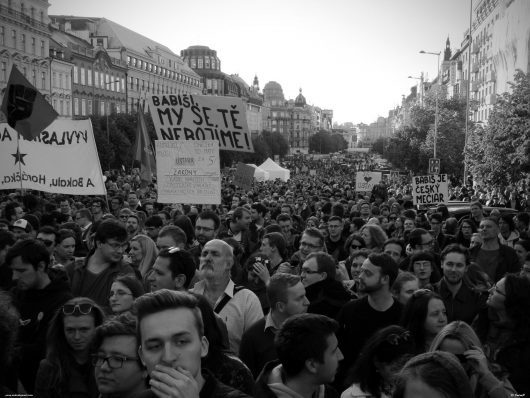
10 Facts About Refugees in the Czech Republic

10 Facts About Refugees in the Czech Republic
Although the current refugee crisis is the worst humanitarian crisis since WWII, the uptick of Syrian refugees coming into Europe in 2015 has been continuously met with hostility from post-communist Central European countries, such as the Czech Republic. Discussed below are the leading facts about refugees in the Czech Republic and their implications.

10 Key Facts about Refugees in the Czech Republic

  1. The Czech President, Miloš Zeman,  opposes the quota system (which is based on a country’s population and wealth) proposed by the EU but has not yet followed Slovakia and Hungary in challenging the courts. Rather than meeting the quota to take in about 2,600 refugees, Czech leaders are now discussing broader security steps.
  2. The Czech Republic, along with Hungary, Poland and Slovakia have the most opposition towards the quotas set by the EU.
  3. Before the Syrian refugee crisis, there was only one detention center located in Bělá-Jezová. There are now three; the center located in Bělá-Jezová has been dedicated to vulnerable migrants, such as families with women and children.
  4. Under the 2015 EU relocation quota, the Czech Republic has to accept around 4,300 people seeking asylum, which is about 410 refugees per one million of its population.
  5. In 2015, 3,644 people made up the population of refugees in the Czech Republic.
  6. In 2016, 1,475 people applied for internal protection. The government granted asylum to 148 applicants and subsidiary protection for 302 people.
  7. President Zeman has stated, “Our country simply cannot afford to risk terrorist attacks like what occurred in France and Germany. By accepting migrants we would create fertile ground for barbaric attacks,” according to his spokesman Jiri Ovcacek.
  8. The Czech Republic accepted 12 refugees and does not plan to take in anymore according to Interior Minister Milan Choyanec. The EU may take action against the Czech Republic in September if they continue to deny refugees.
  9. Since May 2016, there has been no offer of resettlement by the Czechs for any refugee within the EU program.
  10. President Zeman has stated that all refugees must prove that they are politically persecuted if they seek asylum and “the fact itself that they come from a country in which fighting is underway is no reason for being granted it.”

Although these facts are disheartening, the Czech Republic maintains its embassy in Damascus, Syria. The Czech Republic will also continue to provide humanitarian aid to Syria, as well as provide help for refugees in Syria, Lebanon and Turkey.

– Stefanie Podosek

Photo: Flickr

June 28, 2017
https://borgenproject.org/wp-content/uploads/borgen-project-logo.svg 0 0 Borgen Project https://borgenproject.org/wp-content/uploads/borgen-project-logo.svg Borgen Project2017-06-28 07:30:142024-12-13 17:58:1010 Facts About Refugees in the Czech Republic
Global Poverty, Refugees

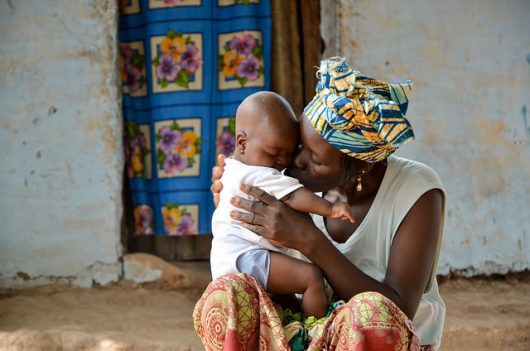
10 Facts About Refugees Living in the Gambia


The Gambia is a West African nation that shares most of its borders with Senegal. Despite some political instability during the past presidential election, the Gambia has remained relatively peaceful and houses a substantial number of refugees from surrounding regions. In fact, the Gambia plays a key role in alleviating the West African refugee crisis. The following are 10 facts about refugees living in the Gambia.

10 Facts About Refugees Living in the Gambia

  1. The Gambia is considered one of the most refugee-friendly countries in West Africa. This can be primarily attributed to the nation’s status as a member of the Economic Community of West African States (ECOWAS), which guarantees refugees of certain nationalities the right to work within the Gambia. Additionally, it has upheld the OAU convention held by the UN Refugee Agency in 1969, which outlined policies and protocols regarding the protection of West African refugees.
  2. According to the UNHCR, there are approximately 12,000 refugees living in the Gambia. However, the agency notes that other sources place the number between 10,000 and 30,000, as many are undocumented.
  3. The Gambia is an attractive option for English-speaking refugees, as the country maintains its colonial language as the official language.
  4. The Gambia was a major ally for Senegalese in the Casamance region of Senegal displaced by the civil war, which started in 1982 and only recently resolved in 2014. The Bambali refugee camp has accommodated hundreds of Senegalese during this period.
  5. During the 2015 Rohingya refugee crisis, the Gambia offered asylum to all Southeast Asian migrants, fulfilling the “sacred duty” to help fellow Muslims.
  6. The majority of refugees living in the Gambia come from Sierra Leone, fleeing the country’s recent civil conflict. In 2003, the Gambia initiated a voluntary repatriation program for Sierra Leoneans to return home, aiding the transition for thousands of refugees.
  7. Undocumented urban refugees make up the majority of those living in the Gambia. One estimate places 10,000 living in the capital of Banjul alone.
  8. Roughly four out of 10 Gambian refugees depend on remittances from relatives or family members abroad. Refugees require a residence permit to earn money in the Gambia. However, many refugees do not have one or are still in the application process.
  9. The Gambian Food and Nutrition Association (GFNA) donated money to Senegalese refugees in 2015 with the intention of “sustaining livelihood” and “supporting self-reliance at the household level.” The GFNA has also provided food in refugee camps.
  10. The UN Refugee Agency reported that Gambian host communities were generally very accepting of refugees seeking asylum. Due to the strong culture of hospitality, integration is a good option for refugees.

Though only 10,000 square kilometers in size, the Gambia’s open policy towards migrants has made a substantial impact in helping refugees. These 10 facts about refugees living in the Gambia indicate that the nation will continue to uphold their open policy towards West African refugees in the years to come.

– Kailey Dubinsky

Photo: Flickr

June 28, 2017
https://borgenproject.org/wp-content/uploads/borgen-project-logo.svg 0 0 Borgen Project https://borgenproject.org/wp-content/uploads/borgen-project-logo.svg Borgen Project2017-06-28 07:30:052020-05-09 19:35:5610 Facts About Refugees Living in the Gambia
Global Poverty, Refugees

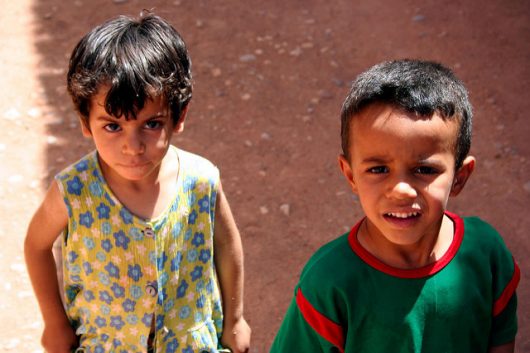
10 Facts About Refugees in Morocco


When many Americans hear “Morocco,” they likely conjure up the image of Ingrid Bergman and Humphrey Bogart standing on an airplane tarmac in Casablanca. Almost four decades after the release of the movie, the impact of refugees escaping Moroccan forces has become an ingrained issue among northwest African countries. The following 10 facts explain the fascinating history of refugees in Morocco, both those running away from the North African nation and those running to it.

10 Facts About Refugees in Morocco

  1. Morocco, long controlled by Spain, earned independence from France in 1956. In 1976, Morocco laid claim to the Western Sahara, an area south of Morocco, after Spain withdrew from the territory.
  2. This action incited a decades-long war between Morocco and the Polisario Front, Western Sahara’s liberation movement, that lasted until 1991 when the United Nations brokered a cease-fire.
  3. The suspension of hostilities left Morocco with de facto control over two-thirds of Western Sahara. As a result, thousands of refugees from Western Sahara fled to Tindouf, Algeria.
  4. 2016 data from the U.N. Refugee Agency estimates that 90,000 Western Saharan refugees remain in camps in Tindouf, Algeria. They have not returned to their native region because a referendum to vote on the independence of Western Sahara from Morocco — promised in the 1991 U.N. cease-fire — has yet to occur.
  5. While the situation seems desperate, many of the refugees remain hopeful that they will one day return to their homeland. They consider themselves to be a democratic movement and strive for gender equality. A U.N. program flies the refugees back to Western Sahara for short-term visits.
  6. Algeria, where the Western Saharan refugees now live, has a historically strained relationship with its neighbor, Morocco. Most recently, 41 Syrian refugees were stuck between the borders of the two countries for weeks until Algeria accepted them.
  7. The North African nation has received an influx of refugees since the start of the Syrian civil war, signaling a new chapter for refugees in Morocco. The Office of the U.N. High Commissioner for Refugees (UNHCR) estimates that more than half of the 6,000 refugees and asylum-seekers currently in Morocco are from Syria.
  8. The UNHCR works with public and private partners to provide assistance to these refugees. The Moroccan Ministry of Education, for instance, guarantees the right of all children to enroll in primary classes, regardless of legal status.
  9. Morocco currently extends protection from deportation to most refugees and migrants, even if they entered the country illegally.
  10. Most of these refugees attempt to use Morocco as a means to enter Europe, believing that it is the safest passage, though most end up waiting for months in cramped immigration centers. About 200 refugees make the crossing to Europe each week.

As the number of refugees continues to swell and the fear of terrorism increases, the status of refugees in Morocco will be questioned. Nonetheless, the Moroccan government and the global community remain committed to finding a long-term solution so that the rights of each refugee are recognized and that they have a place to call home. Refugees continue to impact northwestern Africa in numerous ways.

– Sean Newhouse

Photo: Flickr

June 28, 2017
https://borgenproject.org/wp-content/uploads/borgen-project-logo.svg 0 0 Borgen Project https://borgenproject.org/wp-content/uploads/borgen-project-logo.svg Borgen Project2017-06-28 01:30:242024-12-13 17:58:0910 Facts About Refugees in Morocco
Global Poverty, Refugees

10 Facts About Yemeni Refugees


Two years ago, the conflict in Yemen broke out and left millions of Yemenis internally and externally displaced. Even before the war, Yemen was one of the poorest countries in the Arab world, so this conflict has had a devastating effect on the people of Yemen. Here are 10 facts to know about Yemeni refugees.

10 Facts About Yemeni Refugees

  1. Eighty percent of the population requires some form of humanitarian protection or assistance. Almost 2.4 million Yemenis have been displaced by the war.
  2. Most refugees fled to Saudi Arabia, which, as of 2016, hosted 39,000 Yemeni refugees.
  3. Yemenis have no easy outlets to flee their country, which is mainly due to its geographical location. Saudi Arabia has set up a blockade that prevents food and supplies from being delivered and makes it difficult for Yemenis to escape.
  4. Yemen takes in many refugees from other countries. They now have around 280,000 refugees, mostly from Africa. However, because of the war in Yemen, those refugees have had to return to their home countries.
  5. Six million Yemeni refugees are severely food insecure, resorting to having to send their children out to the streets to beg for food and scavenge from restaurants.
  6. Yemen is facing a cholera outbreak, and more than 29,000 people are infected as well as malnourished.
  7. Yemen does not have enough donors for relief. Only three million out of seven million starving people were fed by aid in May of 2017.
  8. Among the externally displaced Yemenis, 75 percent stated that lack of food was their top reason for leaving Yemen.
  9. A Yemeni child under five dies every ten minutes, usually due to starvation.
  10. You can help by donating to the World Food Program that is aiming to provide food to seven million starving Yemenis.

For close to two years, Yemenis have been living in fear, insecurity and famine. They are not dangerous people–they simply need a place where they can have food and be safe from war. They need aid that they are not receiving. The plight of Yemeni refugees cannot be ended without increased aid.

– Kelsey Jackson

Photo: Flickr

June 28, 2017
https://borgenproject.org/wp-content/uploads/borgen-project-logo.svg 0 0 Borgen Project https://borgenproject.org/wp-content/uploads/borgen-project-logo.svg Borgen Project2017-06-28 01:30:082020-05-09 19:39:2310 Facts About Yemeni Refugees
Developing Countries, Global Poverty, Refugees

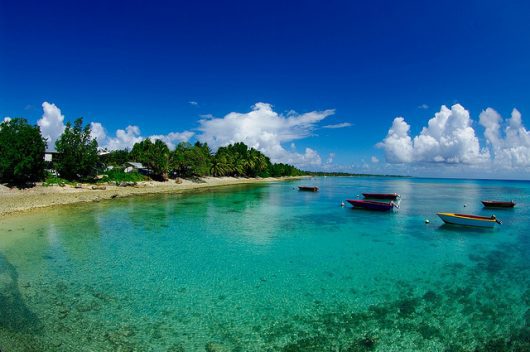
10 Facts About Tuvalu Refugees


Tuvalu refugees represent some of the first waves of climate refugees. Huge numbers of Tuvaluans have been displaced after watching their island home between Hawaii and Australia be eroded by rising sea levels, intensifying natural disasters and soil degradation from contaminated groundwater. With no official recognition of climate refugees, Tuvaluans are increasingly threatened by the loss of their homes and hung out to dry by wealthy neighboring countries unwilling to accept their refugee status. Here are ten facts about Tuvalu refugees.

10 Facts About Tuvalu Refugees

  1. The island nation of Tuvalu has its highest elevations at just 15 feet above sea level. Experts predict that if sea levels were to rise by just three feet, many of the most populated areas of Tuvalu would be severely damaged, if not completely destroyed.
  2. Funafuti, the most populous island of Tuvalu, has suffered from severe droughts, water shortages and contaminated groundwater due to rising sea levels in recent years. The effects of these conditions on agriculture have translated to widespread malnourishment and displacement.
  3. Climate change experts predict that Tuvalu might become completely submerged underwater between 30-50 years from now if current trends continue. There is a general consensus that Tuvalu and similar nations will no longer exist by the end of the century.
  4. Already, one-fifth of Tuvalu’s population of 12,000 have left their homes to relocate to larger islands, where croplands are still fertile, or to neighboring New Zealand. As a result, the Tuvaluan community in New Zealand has nearly tripled since 1996.
  5. Life is difficult for Tuvalu refugees who have legally immigrated to New Zealand, with just more than half of Tuvaluan adults employed. Those who have immigrated illegally face even more economic and social hardships. Tuvaluan immigrants also worry about losing their cultural identity, as their children are born in highly developed host countries.
  6. Reports on climate trends have predicted 200 million “environmental refugees” by 2050, essentially one out of every 34 people on earth. Other estimates of future climate change migrants range from tens of thousands to one billion in the next 50 years.
  7. Climate refugees are not yet considered refugees under the 1951 UN Refugee Convention. Consequently, there are “no current provisions for their protection and assistance” according to the U.N. Refugee Agency.
  8. A landmark 2014 ruling by New Zealand’s Refugee Court granted legal residency to Tuvaluan Sigeo Alesana and his family after they appealed for asylum, citing climate change and overpopulation among the reasons that made life “untenable” on their native island. The court acknowledged the presence of climate change as a factor in the case, other factors affecting the family, such as an elderly mother who needed care, would have been enough to grant them asylum regardless. As a result, this case won’t open the doors for other climate change refugees from island nations. New Zealand has allocated Tuvalu only 75 annual slots in its visa program for Pacific workers.
  9. As the intensity of natural disasters and storms in the region increase, experts worry that if a natural disaster similar to Hurricane Katrina were to hit Tuvalu, it would cause irreversible damage. Tuvalu has few exportable natural resources and a GDP that relies heavily on the sale of collectible stamps and its internet domain suffix, .tv, nothing that could help its rebuild after large-scale damage.
  10. The Tuvaluan government has considered using its $100 million in reserves to purchase a new homeland for the small population, but legal and political obstacles threaten this plan. Moving could affect Tuvalu’s right to sovereignty as a nation, its fishing rights and the government’s ability to continue providing public services after financing such a move.

Based on these 10 facts about Tuvalu refugees, there are many hurdles for Tuvalu to cross both short term and long term. In the short run, Tuvalu should continue investing their reserves heavily in renewable freshwater storage systems and ongoing soil rehabilitation and protection programs. They should enlist foreign aid to help build one-time purchases, such as stabilizing bulwarks that prevent coastal erosion.

In the long run, Tuvalu should look to neighboring nations such as Kiribati who have established forward-thinking programs, such as their “Migration With Dignity” program, which involves training citizens as highly skilled workers who will then be welcomed into other countries because of their human capital when they are eventually forced to relocate. Tuvalu would do well to begin such programs as soon as possible, as the threats of climate change are more pressing and real for them than foreign leaders care to believe.

– Saru Duckworth

Photo: Flickr

June 27, 2017
https://borgenproject.org/wp-content/uploads/borgen-project-logo.svg 0 0 Borgen Project https://borgenproject.org/wp-content/uploads/borgen-project-logo.svg Borgen Project2017-06-27 07:30:262024-12-13 17:58:1110 Facts About Tuvalu Refugees
Global Poverty, Refugees

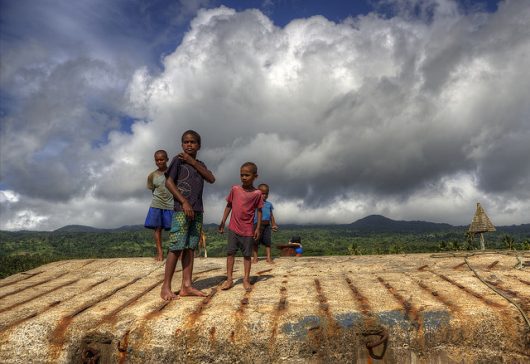
9 Facts About Refugees in Fiji


All around the world, there are more than 65 million people seeking refuge and relocation. With so much controversy surrounding the acceptance of refugees, the safety of those who are fleeing harm is at stake. Fiji is welcoming of refugees, and the United Nations refugee agency (UNHCR) works to ensure that refugees in Fiji will be acknowledged and their concerns heard. Here are nine facts about refugees in Fiji.

9 Facts About Refugees in Fiji

  1. As of June 2, 2017, there are 12 confirmed refugees in the country.
  2. These 12 are left from the original group of 40 that arrived in Fiji in 2006.
  3. People seeking refuge come to Fiji from various countries, including Pakistan and Congo.
  4. Fijian refugees are guaranteed confirmation thanks to something called “a claim for asylum,” which is filed when an individual indicates the want to be acknowledged by the country as a refugee.
  5. A lot of people seeking refuge in Fiji are “climate refugees,” meaning that they are experiencing a sudden change in environment and climate in their country of origin and flee to Fiji for refuge.
  6. Fiji has offered to give refuge to its neighboring citizens of Kiribati and Tuvalu in the event of a disaster.
  7. Fiji is at high risk for climate-induced natural disasters as well. So while Fijian refugees may find solace in their new homes, they may still be at risk of being affected by natural disasters.
  8. The UNHCR covers Fijian refugees by ensuring funding to help protect their refugees.
  9. People seeing refuge do not always permanently reside in the country, seeing as Fiji is typically a temporary holding ground for refugees rather than a permanent residence.

These nine facts about people seeking refuge in Fiji suggest that the country has struggled on its own, but its efforts to make refugees feel accepted and taken care of displays its ability to welcome those seeking shelter with open borders.

– Trisha Noel McDavid

Photo: Flickr

June 27, 2017
https://borgenproject.org/wp-content/uploads/borgen-project-logo.svg 0 0 Borgen Project https://borgenproject.org/wp-content/uploads/borgen-project-logo.svg Borgen Project2017-06-27 01:30:422024-05-28 00:02:249 Facts About Refugees in Fiji
Global Poverty, Refugees

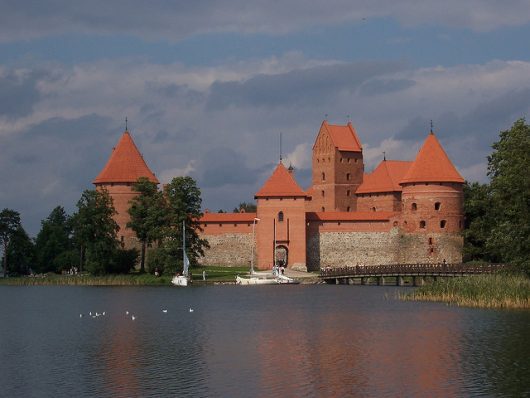
10 Facts About Refugees in Lithuania


Since August 2015, more than one million refugees have entered the EU, many of them fleeing conflicts in Syria, Afghanistan, and Iraq. Under block rules, refugees faced relocation to Lithuania, Latvia and Estonia. As these countries are among the poorest in the European Union, refugees relocated to Lithuania are fleeing elsewhere out of fear of starvation. Here are ten facts about refugees in Lithuania.

10 Facts About Refugees in Lithuania

  1. Through the EU relocation plan, refugees from Syria, Afghanistan, and Iraq have been sent to live in Lithuania, a small country on the Baltic Sea, north of Poland.
  2. While Lithuania is home to less than three million people, it has a quota of about 1,100 refugees to take in within two years. So far, there have been around 90 refugees sent there. Lithuania’s interior minister Tomas Zilinskas noted that even the small number of accepted refugees in Lithuania faced opposition by half of the country’s citizens.
  3. As benefits in Lithuania are already extremely limited, a refugee family of four receives €450 a month for half a year, after which the payment halves.
  4. A whopping 72 out of 90 of those granted refugee status in Lithuania have left. Many refugees claim living in a refugee center somewhere else is better than life in the Baltic States. As Mohamed Kamel Haj Ali, a refugee sent to Lithuania said: “The ones who left for Germany said they left Syria out of fear of death from bombs, but here they feared they would die from hunger.”
  5. EU rules dictate that refugees are to be forbidden from work or to claim refuge in other member states. Some destroy their identification documents before leaving Lithuania, hoping to claim asylum in richer countries amidst Western Europe.
  6. Refugees in Lithuania struggle to find work due to an insufficient amount of jobs available. As NPR’s Corey Flintoff states, “Lithuania cannot supply enough jobs for its own citizens. Hundreds of thousands of them have had to find work in other countries. Still, Lithuania’s current government considers it an obligation to do its part to help solve the migrant crisis among its fellow EU members.”
  7. After the discovery of a new route through Lithuania’s eastern border, a gateway into Western Europe allows refugees in to enter the country. Renatas Pozela, acting commander of the Lithuanian State Border Guard Service, states, “We are also seeing constant attempts to open new corridors [to Europe], mostly by Syrian and Iraqi refugees who are trying to reach Scandinavian countries.”
  8. While Lithuania joined the EU in 2004, its population has shrunk 12 percent to 2.9 million people over the past decade, as refugees and citizens alike flee in search of higher wages and better job availability.
  9. As Lithuania continues to depopulate, refugees help to sustain local businesses, such as a barber shop operated by Vilius Leveris.  Leveris finds most new staff for his barber shop in the refugee hostel. Since Leveris opened his business four years ago, he has taken on 12 employees from Turkey, Libya, Syria, Morocco and Colombia. Leveris states, “I couldn’t find anyone here. Even getting a wet shave is a completely new thing… Now, if a refugee who was a barber at home arrives in Lithuania, the refugee center calls me at once.”
  10. Ilmars Latkovskis, head of the Latvian parliament’s Citizenship, Migration, and Social Cohesion Committee, said to make staying in Lithuania feasible for refugees, it was necessary to have benefits increased “to a level which would be very unpleasant for our population, which is not that well-off.”

These were ten facts about refugees in Lithuania. It is evident from the significant number of refugees in Lithuania fleeing the country, as well as the other neighboring Baltic nations, many areas within the European Union need assistance in their efforts to aid refugees worldwide.

– Kendra Richardson

Photo: Flickr

June 26, 2017
https://borgenproject.org/wp-content/uploads/borgen-project-logo.svg 0 0 Borgen Project https://borgenproject.org/wp-content/uploads/borgen-project-logo.svg Borgen Project2017-06-26 07:30:352020-05-09 19:45:0110 Facts About Refugees in Lithuania
Page 17 of 32«‹1516171819›»

Get Smarter

  • Global Poverty 101
  • Global Poverty… The Good News
  • Global Poverty & U.S. Jobs
  • Global Poverty and National Security
  • Innovative Solutions to Poverty
  • Global Poverty & Aid FAQ’s
Search Search

Take Action

  • Call Congress
  • Email Congress
  • Donate
  • 30 Ways to Help
  • Volunteer Ops
  • Internships
  • Courses & Certificates
  • The Podcast
Borgen Project

“The Borgen Project is an incredible nonprofit organization that is addressing poverty and hunger and working towards ending them.”

-The Huffington Post

Inside The Borgen Project

  • Contact
  • About
  • Financials
  • President
  • Board of Directors
  • Board of Advisors

International Links

  • UK Email Parliament
  • UK Donate
  • Canada Email Parliament

Get Smarter

  • Global Poverty 101
  • Global Poverty… The Good News
  • Global Poverty & U.S. Jobs
  • Global Poverty and National Security
  • Innovative Solutions to Poverty
  • Global Poverty & Aid FAQ’s

Ways to Help

  • Call Congress
  • Email Congress
  • Donate
  • 30 Ways to Help
  • Volunteer Ops
  • Internships
  • Courses & Certificates
  • The Podcast
Scroll to top Scroll to top Scroll to top