• Link to X
  • Link to Facebook
  • Link to Instagram
  • Link to TikTok
  • Link to Youtube
  • About
    • About Us
      • President
      • Board of Directors
      • Board of Advisors
      • Financials
      • Our Methodology
      • Success Tracker
      • Contact
  • Act Now
    • 30 Ways to Help
      • Email Congress
      • Call Congress
      • Volunteer
      • Courses & Certificates
      • Be a Donor
    • Internships
      • In-Office Internships
      • Remote Internships
    • Legislation
      • Politics 101
  • The Blog
  • The Podcast
  • Magazine
  • Donate
  • Click to open the search input field Click to open the search input field Search
  • Menu Menu

Tag Archive for: Global Poverty

Inflammation and stories on global poverty

Posts

Global Poverty

What is Global Poverty?

what is global poverty?
What is global poverty? That thing called poverty – how exactly is it defined? What does it mean to lead an impoverished life? Poverty is much more than just statistics about economies, hunger, and homelessness. Poverty is a state of life, affecting all of humanity.

Poverty is most commonly defined by economic standards, based on income levels and access to basic human necessities, such as food, water, and shelter. Poverty is often described with a scale, ranging from extreme to moderate levels. The internationally agreed-upon measurement of extreme poverty currently lies at $1.25 a day, with the next lowest measure of poverty standing at $2 per day. The geographic breakdown of regions with the highest levels of poverty ranging from worst to best include: Sub-Saharan Africa, South Asia, Pacific East Asia, Latin America and the Caribbean, North Africa and the Middle East, and Europe and Central Asia.


Assessing the Impact: What is Global Poverty?


Poverty has many ties to physical health as well, as the world’s poorest countries consistently demonstrate the lowest life expectancies. The majority of these health problems can be traced back to unsafe drinking water and malnutrition, which causes an estimated 8 million people to die every year in addition to 30,000 children’s deaths per day.

Another problem with poverty is the acts of desperation it drives people to. When humans are deprived of basic life necessities, they are forced to take desperate measures in an effort to change their bleak future. Historically, poverty has proven to be the cause of much violence and conflict and continues to be so today. In many situations human trafficking, the use of child soldiers, and prostitution can all be linked to poverty.

In what is perhaps a testament to the subjective definition of poverty, there are mixed results in reducing poverty levels today. According to data from The Economist, nearly one billion people have been lifted out of chronic poverty over the last two decades. While this initially sounds very positive, one must also consider the huge levels of wealth disparity that have shot up in this same time period, as the poorest 20 percent of the world’s population uses a mere 1.3 percent of global resources in contrast to the richest 20% consuming an approximated 86 percent of the world’s resources.

Poverty can be a controversial subject in modern society, as individuals have different understandings of what it means to be poor and what appropriate solutions to poverty should look like. Skeptics criticize the economic definition of poverty because it fails to factor in quality of life. Rather than focusing on pure economic data, most agree that the definition of poverty must also include political and cultural factors and access to opportunities, education, and healthcare. If there’s one thing that can be agreed on, it would be that poverty is a real problem affecting millions of people around the world today, and poverty is a complex issue with multiple layers.

– Allison Meade

Sources: United Nations, World Health Organization, Global Issues, World Bank, ASCD

August 21, 2013
https://borgenproject.org/wp-content/uploads/borgen-project-logo.svg 0 0 Borgen Project https://borgenproject.org/wp-content/uploads/borgen-project-logo.svg Borgen Project2013-08-21 07:46:252024-05-25 00:09:54What is Global Poverty?
Children

What is Comic Relief?

Comic_Relief_UK
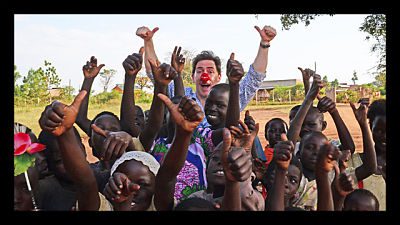
Laughter is fr universal language, and comedy is a much broader medium, than given credit for. Laughing is disarming, warm, enjoyable, and can help unite people. It isn’t a stretch to imagine that comedy can also connect and rally people to fight intractable problems. Humor can indeed be a powerful weapon against the scourge of something like global poverty and the absences of technology and education in communities. This is the very idea behind Comic Relief, an organization operating in the United Kingdom and abroad that stands up to poverty.

Existing officially as both a company and charity in the UK, Comic Relief began in 1985 during Christmas season at a Sudanese refugee camp. Renowned and well-meaning British comedians hoped to raise awareness of the Sudanese plight and the Ethiopian famine going on. The success of that first event spawned more live comedic appearances in Sudan and gave way to Red Nose Day in 1988, which brought much needed attention and money to the region that went directly to relief. Since that time, Comic Relief has grown in size and scope, spreading laughter and awareness of numerous other initiatives.

One of those other initiatives is Send My Friend to School (https://www.sendmyfriend.org/), a nonprofit movement in the UK working to make the Millennium Development Goal of education for all children a reality by 2015. A member of the Global Campaign for Education (GCE), the initiative boasts UK membership of over 10,000 schools and youth groups. Another initiative Comic Relief supports is the intrepid See Africa Differently (https://www.seeafricadifferently.com/) campaign, aimed at changing the world’s perception of the continent and sharing stories of real people there that aren’t covered in major news. For example, the London art scene has recently been enthralled with the works of West African artists.

A very personal and striking account of Comic Relief in action is the story of teen sisters Hazel and Hiayisani in Tembisa, South Africa. Orphaned after their mother’s sudden illness and death, older sister Hazel was now in the position of caring for herself and her sister. Poor and completely exposed to the worst of society, they were at risk of being split up by Social Services, falling into a life of crime or the world of sexual slavery. However, after finding the Bishop Simeon Trust, a Comic Relief partner in Tembisa, the girls were able to join other orphans. They now receive a stipend and care packages from the trust to live on, free education, and enjoy time at the Bishop Simeon facility with other teenagers.

Comic Relief is best known for its initial and ongoing fundraiser, Red Nose Day. Happening every few years, this international event is celebrated mainly in the UK and Africa. For those who participate, the objective is to put on a red nose and be ridiculous. Proceeds from the event go directly to initiatives like the ones mentioned above, aimed at education and the changing of negative international typecasts.

Comic Relief has shown that maybe laughter is the best medicine for social ails.

– David Smith
Sources: Comic Relief –History, Send My Friend –About, West African Art Pops Up in London, Comic Relief –Hazel and Hiayisani, Africa, Red Nose Day –What Is It?
Photo: BBC


August 18, 2013
https://borgenproject.org/wp-content/uploads/borgen-project-logo.svg 0 0 Borgen Project https://borgenproject.org/wp-content/uploads/borgen-project-logo.svg Borgen Project2013-08-18 05:02:242018-06-06 11:14:58What is Comic Relief?
Global Poverty, Poverty Reduction, United Nations

Make Poverty History

Make Poverty History Aims
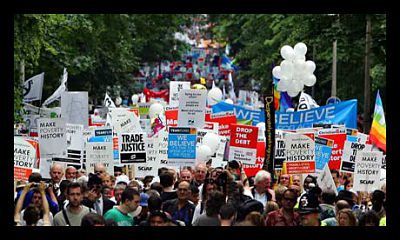
Make Poverty History (MPH) is staging a worldwide campaign. Its mission statement matches its name as it aims to raise awareness about global poverty and make concrete policy changes in various nations’ governments and in intergovernmental organizations.

The various national Make Poverty History campaigns are part of a larger international campaign called Global Call to Action Against Poverty, a worldwide alliance committed to making world leaders live up to their promises and ending global poverty.


The Admirable Aims of Make Poverty History


In comparison to other aid organizations that may struggle trying to apply single, cure-all strategies on a universal scale, MPH has experienced such widespread success because each participating country can focus its national campaign on different issues within the broader topic of alleviating global poverty.

Despite these slight variations, however, all countries generally focus on issues such as aid, trade, and justice that are relevant to the UN’s eight Millennium Development Goals. Besides alleviating global poverty, MPH also aims to reduce the corruption that plagues many developing countries’ governments and prevents foreign aid from reaching the poorest members of society.

For example, the British MPH campaign is a coalition of charities, religious organizations, trade unions, and celebrities whose campaign slogans include “trade justice,” “drop the debt,” and “more and better aid.”

The call for “trade justice” demands a global trade system that does not allow half of the world’s population to live on less than $2 USD per day. This aspect of the campaign seeks to prevent the wealthiest countries and individuals from reaping all of the trade benefits at the expense of the impoverished.

Meanwhile, the “drop the debt” aspect of the campaign suggests canceling unpayable debt of the world’s poorest countries without cutting these countries off to the prospect of future aid. This includes creating a fair and transparent international process to ensure that human needs take priority over debt repayments .

Finally, the “more and better aid” component notes that increasing the proportion of national budgets allocated to foreign development aid will not make much of a difference unless nations can also change the way in which they deliver their aid. MPH believes that targeting aid specifically to basic health care and education, rather than giving money to governments for further allocation, is the best way to avoid corruption and address the underserved people’s true needs.

Meanwhile, Australia’s MPH campaign focuses on increasing Australia’s effective foreign development aid to 0.7% of its gross national income, tackling global climate change issues, and addressing chronic hunger problems across the globe.

While both the MPG and its parent campaign were originally created as a one-time-only campaign in 2005, the dual campaigns’ continued success have spurred leaders to extend the campaigning alliance until at least 2015. MPH is now considered the biggest, most widespread anti-poverty movement in history.

The leaders of MPH acknowledge that, despite its many successes, the fight against poverty continues on. Through campaigning, fundraising, and fighting to make their voices heard by politicians and policy makers around the globe,  MPH can ensure that the fire it has ignited in the hearts of its followers never dies.

– Alexandra Bruschi

Sources: Make Poverty History, The Guardian, Oxfam Australia, Millennium Development Goals,
Photo: The Guardian

August 11, 2013
https://borgenproject.org/wp-content/uploads/borgen-project-logo.svg 0 0 Borgen Project https://borgenproject.org/wp-content/uploads/borgen-project-logo.svg Borgen Project2013-08-11 05:51:332018-02-01 13:38:01Make Poverty History
Global Poverty, Health, Sanitation

5 Ways to End Global Poverty

5 Ways to End Poverty
The end of global poverty is in sight. While this may seem like a difficult, if not impossible feat, in fact, the opposite is true. By adhering to these concepts, the United Nations states that poverty can be ended in the near future.

  1. Economic Growth: Training and education are key for economic growth in the developing world. Once these two necessities are met, more jobs can be created and people will earn more money to fuel the economy.
  2. Representative and Responsible Government: Corruption has been known to prevent foreign aid from reaching the most impoverished people. Open governments are less likely to be corrupt and more likely to provide social services to their citizens.
  3. ‘Green’ agriculture and development: Due to climate change and population increases, environmentally friendly policies are critical for ensuring sustainability and healthy lifestyles.
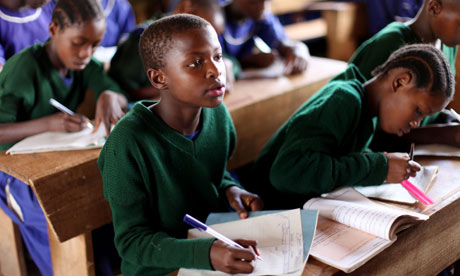
  4. Healthcare/Sanitation: Without access to proper healthcare, communities are affected by disease, illness and death, factors that contribute to lack of economic development and social progress. Access to clean water and sanitation will also improve health conditions. When children are healthy, they can go to school and grow up to have careers, thus ending their parents’ poverty cycle.
  5. Global Partnerships: No one country can end global poverty on its own. In order to reduce poverty, everyone must work together to ensure that these other factors are met. Foreign aid, improving trading relations or diplomacy are ways that countries can contribute to eliminating poverty.

Although this is a simplified list, these big ideas are vital for finally ending world poverty. Once poverty is reduced, hunger, war, and illicit operations common to developing countries will no longer be prevalent because people will no longer be imprisoned by extreme poverty. The U.N. is on track for meeting its Millennium Development Goals and hopes to see the end of world poverty by 2030.

– Mary Penn

Sources: Plan Canada, Government of the United Kingdom
Photo: The Guardian

August 6, 2013
https://borgenproject.org/wp-content/uploads/borgen-project-logo.svg 0 0 Borgen Project https://borgenproject.org/wp-content/uploads/borgen-project-logo.svg Borgen Project2013-08-06 11:04:582024-05-25 00:14:535 Ways to End Global Poverty
Development, Foreign Policy, Global Poverty, Poverty Reduction

5 Military Quotes About Global Poverty

Military_quotes_poverty
Though the United States devotes roughly $660 billion a year to the military to protect the U.S. from its enemies, influential military leaders have spoken out about the efficacy of foreign aid and diplomacy, rather than military action, for improving national security. Military action is unavoidable in some circumstances, but a rising number of high-ranking military officials are beginning to back an increased budget for foreign aid. Listed below are 5 quotes from military and intelligence officials about the power of aid in relieving global poverty.

  1. “In many respects, USAID’s efforts can do as much over the long term to prevent conflict as the deterrent effect of a carrier strike group or a marine expeditionary force.” – Lieutenant General John Allen, Commander of U.S. Forces in Afghanistan
  2. “Development is a lot cheaper than sending soldiers.” – Robert Gates, Former Secretary of Defense
  3. “To truly end the threat from al-Qaeda, military force aimed at killing our enemy alone will never be enough. The United States must stay involved and invested through diplomacy, through development, through education, through trade in those regions of the world where violent extremism has flourished.”- Leon Panetta, Former Secretary of Defense
  4. “Robust resourcing for the State Department’s mission is one of the best investments for reducing the need for military forces to be employed. Together, our military leaders and our diplomats not only represent a symbol of America’s enduring commitment to the region, but they also build trust through partnerships that have an important stabilizing effect when trouble looms.” – General James N. Mattis, Commander, U.S. Central Command
  5. “Our enemies today are not as cut and dry as they were in the Cold War. Conditions in the world such as grinding poverty, pandemic disease and severe food insecurity serve as seeds from which extremism and instability can grow. By addressing these issues, we diffuse many of today’s national security threats and keep our troops out of harm’s way.” – General Michael Hagee, Retired Commandant of U.S. Marine Corps and Admiral James Loy, Retired Commandant of U.S. Coast Guard

– Katie Bandera

Sources: USGLC, The Borgen Project, Politico
Photo: Free republic, Politico, Washington Independent, Algemeiner


Read Humanitarian Quotes.

August 6, 2013
https://borgenproject.org/wp-content/uploads/borgen-project-logo.svg 0 0 Borgen Project https://borgenproject.org/wp-content/uploads/borgen-project-logo.svg Borgen Project2013-08-06 05:43:172016-12-05 16:14:415 Military Quotes About Global Poverty
Global Poverty, Poverty Reduction

What Is International Poverty?

What Is Global Poverty
Global poverty, at least on first blush, seems to be a rather self-explanatory concept. To be poor, we understand as Americans, is being unable to afford certain necessities. But what it is to be poor, that is, what it is to be unable to afford certain necessities would surely depend on who you are asking. What you consider necessary, such that it would constitute a necessity, would most certainly change your definition of what it means to be poor. So, is global poverty subjective?

Extreme global poverty, as defined by today’s standards, is living on less than $1.25 USD per day. To be considered extremely poor, therefore, would require living on about $450 USD a year or less. Worldwide, there are 1.2 billion people who would “qualify” as living in extreme poverty. But is living on less than a certain amount of money a day all there is to poverty?

The World Bank suggests that poverty is a pronounced and multi-dimensional deprivation in well-being. Rather than placing a number at which one is considered poor or extremely poor, the World Bank definition operates on a holistic approach that takes multiple factors into consideration. For example, communities with inadequate access to health services or education may be considered to be facing the circumstances of poverty, though they live on an amount in excess of the global standard for poverty. Likewise, living with insufficient physical security or certain basic human rights, say freedom of speech, may constitute poverty.

Clearly, what is poverty is not limited to a financial over/under amount, such that it demands a more inclusive, and perhaps malleable, definition. Because understanding what poverty actually is is so fundamental to addressing poverty as an important global issue, however, the United Nations has dedicated both time and resources to better recognizing and defining the many facets of poverty. As a result, the world’s largest multi-governmental organization has developed several working definitions of poverty, including “absolute poverty” and “overall poverty,” while the official United Nations definition of “poverty” is as follows: “Fundamentally, poverty is a denial of choices and opportunities, a violation of human dignity. It means lack of basic capacity to participate effectively in society. It means not having enough to feed and cloth a family, not having a school or clinic to go to, not having the land on which to grow one’s food or a job to earn one’s living, not having access to credit. It means insecurity, powerlessness and exclusion of individuals, households and communities. It means susceptibility to violence, and it often implies living on marginal or fragile environments, without access to clean water or sanitation.”

– Herman Watson

Sources: United Nations, The Global Poverty Project, One Day’s Wages Brookings Institution
Photo: National Geographic

July 31, 2013
https://borgenproject.org/wp-content/uploads/borgen-project-logo.svg 0 0 Borgen Project https://borgenproject.org/wp-content/uploads/borgen-project-logo.svg Borgen Project2013-07-31 05:10:252024-05-25 00:12:58What Is International Poverty?
Extreme Poverty, Family Planning and Contraception, Global Poverty, Health, Women and Female Empowerment

Worst Countries in Which to Give Birth

worst-countries-to-give-birth-in-borgen-project-rural-poverty_opt
Many of us spent some time in May being thankful for our mothers. Something else that we may not think to be thankful for is the healthy and sanitary conditions mothers were able to give birth in. For women living in developing countries, this is a huge concern for pregnant women. One country, however, has proven to be the worst place to give birth: Chad.

This statistic was identified by the organization, Save the Children, in their annual Mother’s Index. The group uses an index that includes a woman’s risk of death during childbirth or pregnancy. Chad was deemed the worst place for a mother to give birth because 1 in 15 mothers are at high risk of dying while pregnant or in child labor.

A contributing factor to these startling statistics is that women get married and become pregnant at a young age. 50% of girls are mothers by the age of eighteen. These girls are at risk because their bodies are not fully developed enough to safely experience pregnancy and childbirth. Malnutrition is also a concern for mothers in Chad. High levels of poverty make healthy diets unattainable for many mothers.

The second worst country for women to give birth in is Somalia. This country is the highest ranking in not providing proper care during pregnancy, with 74% of women not receiving adequate care. Somalia also is barely behind Chad in terms of the risk of death during pregnancy and childbirth. In Somalia, one in sixteen women are at risk. The newborn child is also at danger when it is born in Somalia. About eighteen newborns die per 1,000 live births.

Other countries that are ranked in worst places to have a child are Niger, Sierra Leone, Liberia, Guinea-Bissau, Central African Republic, Mali, Nigeria and Guinea. In order to improve childbirth conditions in these developing countries, it is necessary to invest in health systems and the training of health employees, midwives and other who may assist in the birth process. With these improvements in healthcare, more women will survive and be able to celebrate Mother’s Day with their children.

– Mary Penn

Source: Devex, Save the Children
Photo: Global Giving

July 19, 2013
https://borgenproject.org/wp-content/uploads/borgen-project-logo.svg 0 0 Borgen Project https://borgenproject.org/wp-content/uploads/borgen-project-logo.svg Borgen Project2013-07-19 05:00:012024-12-13 17:49:20Worst Countries in Which to Give Birth
Developing Countries, Development, Foreign Aid, Global Poverty

Ethiopia No Longer Crippled in Poverty

Ethiopia No Longer Crippled in Poverty
Ethiopia has proven to be a country to model economic growth for other African nations. The World Economic Forum on Africa will be meeting soon to discuss, among other issues, how Ethiopia was able to bring itself out of high poverty levels and into a relatively flourishing state. As a country that has a history of civil, Ethiopia’s progress is an inspiration to all of Africa.

Ethiopia has made huge strides in its economic sector as well as healthcare and government accountability. In the past two decades, Ethiopia has decreased the child mortality rate by 60 percent and built more than 15,000 primary healthcare facilities in rural areas. The country is also well on its way to meet the Millennium Development Goals by 2015.

The government of Ethiopia has been adamant about implementing policies that will better the economy and all aspects of the country. Haddis Tadesse, a representative of the Bill and Melinda Gates Foundation in Addis Ababa, has described Ethiopia’s policymakers as shifting from the mentality of “we can’t” to “we can.” This philosophy has done wondrous things to inspire hope for everyone living in Ethiopia.

Politicians and government authorities are now developing strategies to end hunger and create food stability for all citizens, build a new, impressively large hydro electronic power plant, an electrified railway system and a light manufacturing industry. Once these projects are complete, Ethiopia’s economy will continue to boom.

By following the examples of India, Malaysia, China, Brazil and Turkey, Ethiopia has been able to mold itself into a prospering economy and society. As Haddis Tadesse says, “Ethiopia is well-positioned to escape the poverty trap. But it won’t be easy.” With further improvements in infrastructure, human rights and creating a stable market, the country is likely to become dependent on foreign assistance and begin to provide aid to other African countries.

– Mary Penn

Source: World Economic Forum
Photo: Celebrate Children

July 2, 2013
https://borgenproject.org/wp-content/uploads/borgen-project-logo.svg 0 0 Borgen Project https://borgenproject.org/wp-content/uploads/borgen-project-logo.svg Borgen Project2013-07-02 17:15:222024-06-05 01:53:29Ethiopia No Longer Crippled in Poverty
Extreme Poverty, Global Poverty

Israel Has the Highest Poverty Rate in the Developed World

Israel Has the Highest Poverty Rate in the Developed WorldA study by the Organization for Economic Cooperation and Development (OECD) reported that out of 34 developed countries, Israel has the highest poverty rate. The newspaper disclosed that 20.9% of Israeli citizens are currently living in poverty. In addition to staggeringly high numbers of impoverished people, Israel also has one of the largest inequality gaps in the developed world.

The OECD speculates that these struggling economic times have greatly contributed an increase in poverty rates as well as a greater gap between the rich and poor. The organization notes that the inequality gap grew more in the past three years than in the twelve years before then.

As expressed in OECD’s report, “With higher unemployment and lower returns from capital, the crisis not only weighted heavily on incomes from work and capital but also made their distribution more unequal.” There are only a few other countries that are rated higher than Israel in income inequality: Chile, Mexico, Turkey, and the United States.

Israeli Prime Minister Benjamin Netanyahu has recently been under scrutiny over his prodigal spending habits with taxpayer money. Among his expenses have been an 80% pay raise for himself and a $127,000 cabin for a trip to London. The struggling Israeli population heavily criticized his actions. The Prime Minister also plans to cut funding for benefits and child allowance, which is likely to put even more families below the poverty line.

Israel is among those developed countries that are particularly struggling with a massive inequality gap. The Israeli government must step in and create policies that will bring these people out of poverty and shorten the gap between the rich and poor.

– Mary Penn

Source: Huffington Post
Photo: Christoin

July 2, 2013
https://borgenproject.org/wp-content/uploads/borgen-project-logo.svg 0 0 Borgen Project https://borgenproject.org/wp-content/uploads/borgen-project-logo.svg Borgen Project2013-07-02 04:18:162020-08-21 10:52:13Israel Has the Highest Poverty Rate in the Developed World
Children, Development, Extreme Poverty, Health, Sanitation

Slums, Sanitation and Misery

Slums, Sanitation and Misery

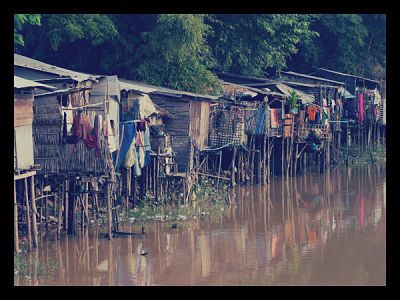
For the people living in the Korogocho slums in Nairobi, Kenya, life can be a constant struggle. The threat of disease and unclean drinking water looms in the minds of those who have no other options but to live in areas with broken sewage pipes and “flying toilets.” These unsanitary conditions put the people in Korogocho at risk for health problems and leave them vulnerable to exploitative water companies.

The typical day for someone living in the slums may involve the use of a flying toilet, a plastic bag used to dispose of human waste. While there are some pay-toilets, most people cannot afford the money to use one. As a result, these plastic bags can be found discarded in the streets of the slums among the broken sewer lines.

As the population in Nairobi grows, more slums are popping up. In Kenya, the number of people without access to toilets has risen to 20%. Access to piped water is even lower in urban areas, 38.4% (and 13.4% of the rural population). These numbers are likely to mimic the sanitation circumstances in Nairobi.

The health implications of unsanitary water systems are illnesses including malnutrition, diarrhea, cholera and typhoid fever. When water mixes with sewage, it creates a breeding ground for inimical viruses and germs. International health organizations and Kenya’s government are eager to improve sanitation in order to save lives. Currently, one in five African children dies from diarrhea before the age of five.

Simple ways to improve the sanitation system in Korogocho include mobile toilets, bucket removal, and dry composting toilets. However, even these solutions can result in human remains ending up in the Nairobi River. The Kenyan population is expected to increase by one million people every year, which will further exacerbate the struggling water and sanitation system. Until these problems are seriously addressed, Kenyans will continue to endure preventable illnesses.

– Mary Penn

Source: IRIN News
Photo: The Guardian

July 1, 2013
https://borgenproject.org/wp-content/uploads/borgen-project-logo.svg 0 0 Borgen Project https://borgenproject.org/wp-content/uploads/borgen-project-logo.svg Borgen Project2013-07-01 11:20:262020-07-12 20:50:34Slums, Sanitation and Misery
Page 33 of 40«‹3132333435›»

Get Smarter

  • Global Poverty 101
  • Global Poverty… The Good News
  • Global Poverty & U.S. Jobs
  • Global Poverty and National Security
  • Innovative Solutions to Poverty
  • Global Poverty & Aid FAQ’s
Search Search

Take Action

  • Call Congress
  • Email Congress
  • Donate
  • 30 Ways to Help
  • Volunteer Ops
  • Internships
  • Courses & Certificates
  • The Podcast
Borgen Project

“The Borgen Project is an incredible nonprofit organization that is addressing poverty and hunger and working towards ending them.”

-The Huffington Post

Inside The Borgen Project

  • Contact
  • About
  • Financials
  • President
  • Board of Directors
  • Board of Advisors

International Links

  • UK Email Parliament
  • UK Donate
  • Canada Email Parliament

Get Smarter

  • Global Poverty 101
  • Global Poverty… The Good News
  • Global Poverty & U.S. Jobs
  • Global Poverty and National Security
  • Innovative Solutions to Poverty
  • Global Poverty & Aid FAQ’s

Ways to Help

  • Call Congress
  • Email Congress
  • Donate
  • 30 Ways to Help
  • Volunteer Ops
  • Internships
  • Courses & Certificates
  • The Podcast
Scroll to top Scroll to top Scroll to top