March 15 will mark the 25th anniversary of the charity organization Comic Relief’s Biannual Red Nose Day. The event, which began in the UK in 1988, is an all-day affair that showcases British comedians performing telethon-style with the ultimate goal of raising money for poverty reduction in Africa. Since the first event, the organization has raised 660 million pounds for the cause.
What now appears to the public as a well-rehearsed and professional telethon was once a much more amateur affair with the most earnest of the organizers and performers of Red Nose Day holding it together. British talk show host and comedian Jonathan Ross recalls one mix-up from the early years when Welsh comedian Griff Rhys Jones began a comedic bit with his trademark enthusiasm only to realize that he was supposed to be presenting a tragic event. Despite moments of confusion, the event was a wild success and continues to be an important national event to this day.
The organization does not simply raise money to be passed on to indiscriminate sources. Walking through the halls of a Comic Relief-assisted school in Accra, Ross was impressed by the real-world impact that a little money collected from thousands of people can make. He recognized the importance of the school to the community in helping the children gain a solid education to escape poverty. When faced with the reality of the effect that the charity money makes, it is obvious that the school is more than just a place to collect impressive donation statistics or take riveting photos for a catalog. It is an institution that means a great deal to the community.
Ross admits that the idea of using comedy to highlight the tragedy, as in the staggering poverty in Africa, is a risky way to raise awareness. Regardless, the performers and the organization have built a large following in the early years that has only grown since then. At the least, Red Nose Day is a bright and cheery way to bring awareness to global poverty on the international stage.
– Sean Morales
Source: The Guardian

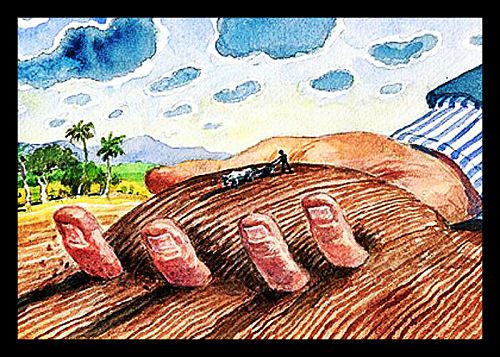 It is assumed that the already existing gap between developed and developing nations is large and apparent enough that wealthier nations would try and fill this gap and bring these opposite ends closer together. According to an ABC Environmental article, however, wealthy nations are instead competing over ‘land’ and ‘water grabbing’ to appease their growing populations and the “stressed” supply of basic necessities such as food and water. Investors in a foreign land, or better yet, the land-grabbers, are countries and investment firms from biofuel producers to large-scale farming operations (agricultural investors).