• Link to X
  • Link to Facebook
  • Link to Instagram
  • Link to TikTok
  • Link to Youtube
  • About
    • About Us
      • President
      • Board of Directors
      • Board of Advisors
      • Financials
      • Our Methodology
      • Success Tracker
      • Contact
  • Act Now
    • 30 Ways to Help
      • Email Congress
      • Call Congress
      • Volunteer
      • Courses & Certificates
      • Be a Donor
    • Internships
      • In-Office Internships
      • Remote Internships
    • Legislation
      • Politics 101
  • The Blog
  • The Podcast
  • Magazine
  • Donate
  • Click to open the search input field Click to open the search input field Search
  • Menu Menu

Tag Archive for: Global Poverty

Inflammation and stories on global poverty

Posts

Developing Countries, Development, Extreme Poverty, Global Poverty

Camel Milk: The Future of Nutrition in Ethiopia?

Camel_milk_USAID

USAID is partnering with Somalia groups to form the Camel Milk Value Chain Development project. This project is part of the U.S. President’s Feed the Future Initiative in Ethiopia. Feed the Future is a project started by the Obama Administration that focuses on helping countries become self-sustainable through agriculture reforms and improvements. The goal of the Camel Milk Development project is to improve the production of camel milk and to make it more marketable and competitive in Ethiopian communities.

The camel milk initiative is projected to benefit 50,000 “targeted households” in the country. Abdifatah Mohamud Hassan, Somali Regional State Vice President, said, “The Camel Milk Value Chain Development project is an innovative project that addresses cultural wealth of the pastoralists and contributes to the Ethiopia Agricultural Growth and Transformation Plan.”

Once the project is underway, local farmers will be educated on camel productivity, which includes breeding, better feed, and improvements to the camels’ health. The last aspect of this strategy to increase productivity will be a main focus as USAID trains more animal health care workers. Another goal of the organization is improved camel milk quality. This will happen through extensive trainings that teach workers about proper sanitation.

Finally, USAID hopes to create a better market for camel milk by connecting local milk markets with larger milk networks. This will generate a more stable market for farmers, negating some of the uncertainty and stress that goes along with the agriculture sector. Along with a stronger market, USAID will improve hygiene, food safety standards, and infrastructure.

Given Somalia’s unpredictable weather patterns that often include drought, camels could prove to be a vital source of nutrients for a majority of the country. The USAID Ethiopia Mission Director, Dennis Weller, has even called camels the “animal of the future.” As camel milk becomes more common, those living in Somalia will experience better food security as well as economic independence.

– Mary Penn

Source: USAID
Photo: Mercy Corps

July 1, 2013
https://borgenproject.org/wp-content/uploads/borgen-project-logo.svg 0 0 Borgen Project https://borgenproject.org/wp-content/uploads/borgen-project-logo.svg Borgen Project2013-07-01 10:25:082024-05-24 23:52:05Camel Milk: The Future of Nutrition in Ethiopia?
Global Poverty

Reasons to Make Clean Energy a Top Priority

Renewable-energy_clean_energy_international_aid_Global_poverty_optAccess to energy is critical to the development of a nation. It allows for increased productivity and standards of living. Although the cheapest sources of energy often come from nonrenewable sources, developing countries should look to clean energy sources to fulfill their energy needs. Here are the 5 reasons why access to clean energy should be a top priority in development.

  1. Clean energy is renewable. Although clean energy may be more expensive to develop initially, in the long run its development is worth the investment. For instance, while many developed nations originally used fossil fuels as their primary source of energy, many are now switching to greener sources because of the rising cost of the decreasingly abundant nonrenewable ones. These developed nations first bore the costs of establishing the infrastructure needed to support nonrenewable sources of energy, and are now using even more resources to create the infrastructure necessary to use green sources of energy. Developing countries can be most efficient in their development by choosing to invest in renewable energy sources in the beginning.
  2. Energy poverty still remains. While an increasing number of people in the world have access to electricity, 1.2 people in the world still do not. Investing in clean energy allows for more people to have access to power without creating greenhouse gas emissions, unlike generating energy from fossil fuels.
  3. Clean energy drives development. Clean energy produces the power needed for increased production of goods, the lighting needed for children to do their homework at night, and the power needed for mass transportation networks. Additionally, clean energy sources can create jobs in impoverished areas. In Africa, a solar-powered light called the Mwezi Light creates new jobs through its simple assembly design. Workers can easily assemble the lights and sell them for a profit. Clean energy helps drive development by allowing people to be more productive.
  4. Nonrenewable sources of energy hurt people. According to National Geographic, approximately 3.5 million people are killed each year due to respiratory complications caused by using wood and biomass cookstoves. Clean energy sources do not create smoke or gases, and would not create such consequences.
  5. Nonrenewable sources of energy hurt the environment. Although they are cheaper to use, the burning of fossil fuels causes the emission of greenhouse gasses into the environment, which have a warming effect in the atmosphere. This warming can create droughts and extreme weather patterns. Both of these negative effects on the environment could actually perpetuate extreme poverty by destroying crops and endangering people’s homes.

While there are many areas of development — including access to safe water and an adequate amount of food — access to clean energy should also be a priority in any nation’s development. Clean energy drives productivity and increases the standard of living in a country without perpetuating the negative consequences of nonrenewable energy sources.

– Jordan Kline

Source: National Geographic, Sustainablog

June 29, 2013
https://borgenproject.org/wp-content/uploads/borgen-project-logo.svg 0 0 Borgen Project https://borgenproject.org/wp-content/uploads/borgen-project-logo.svg Borgen Project2013-06-29 04:00:242020-08-21 12:06:46Reasons to Make Clean Energy a Top Priority
Development, Global Poverty

The World Wildlife Fund and Global Poverty

wwf_opt
The World Wildlife Fund is one of the most recognizable organizations in the world, working in over 80 countries with more than 5 million members and 2,500 staff. It has a long and illustrious history, involving members as powerful as Prince Phillip from the earliest days of its foundation. The World Wildlife Fund, or WWF as it is more commonly known, was created in 1961 in response to a dire shortage in funding towards conservation issues. At any given moment, the WWF is said to be running 1,300 projects, cooperating with other powerful agencies like the UN, USAID and the World Bank.

The organization’s current practice is focusing on the preservation of species that are important to humankind (e.g. elephants, tuna, whales, dolphins) as well as working to reducing countries’ ecological footprints. (This is a measure of an impact on the environment through commercial activities, like carbon emissions from factories, fishing, forestry and water treatment.)

They also maintain a significant level of outreach to the public by educating on endangered species, environmental degradation, pollution and the state of the planet by aggressively promoting and publishing articles and factsheets. They also offer individuals many opportunities to get involved, not only through donation but also through campaigns, pledges, tips for greener living and adopt-an-animal programs. They are a highly active and interactive organization, attempting to harness public power as well as directing their own considerable influence.

Organizations such as the WWF are integral in the alleviation of poverty. Though it is not a link that is immediately recognizable, sustaining a healthy environment is necessary to provide the world’s population food, shelter and water.

For many in the developed world, conservation is somewhat distanced from our everyday lives; living, as we do, in an urbanized environment, we get our food from supermarkets, we live in concrete houses, we work in the third sector and the weather is largely inconsequential to us. Yet for many, subsistence farming is their only source of food, droughts and floods are a matter of life and death and disturbances in the delicate balance of nature have an immediate and devastating impact on their daily lives.

– Farahnaz Mohammed

Sources: WWF, The Guardian
Photo: WWF

June 28, 2013
https://borgenproject.org/wp-content/uploads/borgen-project-logo.svg 0 0 Borgen Project https://borgenproject.org/wp-content/uploads/borgen-project-logo.svg Borgen Project2013-06-28 14:00:162020-08-28 15:29:51The World Wildlife Fund and Global Poverty
Global Poverty

What The Hunger Games Tells Us About Global Poverty

The Hunger Games Global Poverty
For a young adult series, Suzanne Collins’s The Hunger Games offers a surprisingly biting criticism of the status quo in the West. Her story is one of a privileged district in society that is altogether indifferent to the suffering going on outside its boundaries.  Although Collin disguises it with different names, she has not ventured far from our present reality of global poverty.

The Hunger Games is set in a dystopic future world, where citizens live in an area divided by districts. District One & Two are the wealthiest, and control the majority of the resources. As they spread further and further out, the regions become more impoverished. The heroine of the novel, Katniss Everdeen, is from the last, District 13, and relies on her wits, her will and a crude bow and arrow to support her family. Through its fantastical descriptions, outlandish characters and futuristic technology, Collins’ world manages to appear quite distinct from our own. Yet, in a thinly veiled criticism Collins has painted an unsettling portrait of ourselves and the world we live in.


The Hunger Games: A Lesson on Global Poverty


The parallel escapes many of the fans of the books, but those who live in District One are akin to the top percent in the world: they have enough to eat, access to clean water, safe homes and opportunities for betterment. For this percentage of the world, daily life is not a struggle: it is a thing to be enjoyed, to find happiness and meaning, to indulge in fads and fancies and fashion. Much like the District One in the books, the humans in District One seem bizarre and alien in comparison to those struggling on the fringes. They have none of the same concerns and seem largely unaware of the brutal reality that exists just beyond their borders.

The Hunger Games offers an uncomfortable mirror to our own world. In our daily lives, we often obsess about trivialities: we track celebrities, dedicate time to watching who wore what dress, aim to buy smartphones and cars while the vast majority of the world struggles to scrape a living out of the most dire circumstances.

As audiences, we automatically condemn District One; without even meeting them, we judge everyone in it and see the plot’s revolution as inevitable and cheer for Katniss. In reality, however, we are not quite as benevolent. We are quick to make excuses to preserve self-interest. Poverty and the state of the world do not often rank among our daily concerns, as much as what to wear and what people think of us. On the national scale, US foreign aid consists of less than 1% of the budget; this covers everything from healthcare to military aid to food assistance.

The Hunger Games has captivated a number of readers in the United States; and yet, for some, Collins has posed a very uncomfortable and very important question – what makes us so different from District One?

– Farahnaz Mohammed

Photo: Film.com

June 24, 2013
https://borgenproject.org/wp-content/uploads/borgen-project-logo.svg 0 0 Borgen Project https://borgenproject.org/wp-content/uploads/borgen-project-logo.svg Borgen Project2013-06-24 13:00:002021-06-25 11:41:51What The Hunger Games Tells Us About Global Poverty
Global Poverty

Global Poverty by the Numbers

global-poverty
Global poverty is not just about numbers. Statistics in income, wealth distribution, disease, and education never tell the whole story of individual lives in harsh conditions. Poverty affects health, life expectancy, maternal mortality, educational opportunity, environmental risk, and many other factors that contribute to individual and collective well-being. Nevertheless, numbers show a lot about the challenges of global poverty, and better data can inform better solutions to the problem of global poverty.

Reports on global poverty commonly use GDP to determine the relative wealth of countries. Such numbers allow researchers, governments, and relief organizations to determine areas of the world where poverty is most severe. Using 2012 figures from the IMF World Economic Outlook Database, the magazine Global Finance states that Sub-Saharan Africa is home to many of the poorest countries in the world. Indeed, according to those estimates, 19 of the 20 poorest countries in the world can be found in that region. Measured by per capita GDP, the five poorest countries in the world are:

  • Eritrea: $776.98
  • Burundi: $639.51
  • Zimbabwe: $516:47
  • Liberia: $490.41
  • Democratic Republic of Congo: $364.48

Life expectancy at birth in the poorest countries in the world is 2/3 that of some of the world’s wealthiest nations:

  • Eritrea: 61 years
  • Burundi: 54 years
  • Zimbabwe: 54 years
  • Liberia: 59 years
  • Democratic Republic of Congo: 49 years

Child mortality rates in these countries where poverty is the worst are also expectedly high. The probability of infant death per 1,000 births is as follows:

  1. Eritrea: 68
  2. Burundi: 139
  3. Zimbabwe: 67
  4. Liberia: 78
  5. Democratic Republic of Congo: 165

In comparison, the average life expectancy in the U.S. and the U.K. is 79 and 80 respectively. The infant mortality rate is 5 per 1,000 in U.K. and 8 per 1,000 in the US. Using the GDP metric, the U.S. ranks 7th on the list of wealthiest nations, with an estimated GDP of over $49,000; and the U.K. ranks 23rd, with an estimated GDP of almost $37,000. The richest nation in the world is the oil-rich microstate of Qatar, with a per capita GDP of over 100,000 dollars. Life expectancy in that country is 82 years. The probability of infant death is also 8 per 1,000 live births.

– Délice Williams

Source: Global Finance,WHO
Photo: Melange

June 24, 2013
https://borgenproject.org/wp-content/uploads/borgen-project-logo.svg 0 0 Borgen Project https://borgenproject.org/wp-content/uploads/borgen-project-logo.svg Borgen Project2013-06-24 08:44:542021-06-23 16:12:19Global Poverty by the Numbers
Aid Effectiveness & Reform, Development, Global Poverty

What is the Multi-Dimensional Poverty Index?

What is the Multi-Dimensional Poverty Index?
Measuring poverty can be tricky. Income is a good place to start, but it does not tell the whole story. A recent graduate can live comfortably on the same amount on which a family of four would struggle.

Researchers have begun to search for more comprehensive measures of poverty.  One such measure is the Multi-Dimensional Poverty Index (MPI), created by Sabina Alkire at the Oxford Poverty and Human Development Initiative. This index takes the answers to ten questions – two on education, two on health, and six on living standards – and combines them into a single index. Different questions are weighted differently. Whether your children are enrolled in primary education, for instance, counts three times more than whether you have electricity. Higher scores indicate higher levels of poverty. Households with composite scores over 33% are considered to be in poverty.

One problem with the MPI is that its weightings are arbitrary. Whether access to clean water or access to education matters more is up for debate. Yet despite its shortcomings, the Multi-Dimensional Poverty Index has drawn attention to specifics of poverty that income does not address.

– David Wilson

Source: The Economist
Photo: Inquirer Business

June 23, 2013
https://borgenproject.org/wp-content/uploads/borgen-project-logo.svg 0 0 Borgen Project https://borgenproject.org/wp-content/uploads/borgen-project-logo.svg Borgen Project2013-06-23 06:29:002020-07-03 00:33:05What is the Multi-Dimensional Poverty Index?
Food Security

The Role of Rice in the Fight Against Poverty

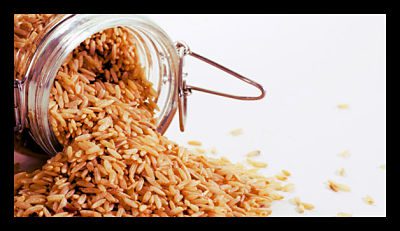
The Role of Rice in the Fight Against PovertyAs an energy source packed with vitamins and nutrients, rice serves as the main source of food and nutrition for a majority of the world’s population. Brown unmilled rice contains the most nutritional and mineral value, whereas white rice loses much of its nutritional value after being refined.
The USDA plans to address this by researching different strands and genes of rice in order to breed a new strand of white rice that would “hold high concentrations of 14 essential minerals (including zinc, iron and calcium) in the grains instead of in the husk”. Their research is focused on the use of “molecular marker data for use in quickly identifying the high-mineral plants without having to grow them to maturity.”

Up to 1,643 types of rice from around the world have been tested, and “127 gene locations in 40 chromosome regions that indicate high concentrations of minerals” have been identified. The first method for creating this new strain of rice that comes to mind would be genetic engineering. However, it is simpler and more accessible to farmers around the world if the rice is created through reproducing plants with the genes they find desirable.

Helping breeders grow this rice could decrease malnutrition around the world, and refraining from genetic modification would allow the rice to be distributed (exported or imported) without fear of rejection from those who are against GMO foods. This new strain of rice could solve all kinds of food-related issues surrounding poverty and hunger globally, as well as introduce a healthier option for those in Western countries.

– Sarah Rybak

Source: PopSci.com,DVice.com
Photo: Prevention

June 23, 2013
https://borgenproject.org/wp-content/uploads/borgen-project-logo.svg 0 0 Borgen Project https://borgenproject.org/wp-content/uploads/borgen-project-logo.svg Borgen Project2013-06-23 05:11:402020-07-03 00:34:15The Role of Rice in the Fight Against Poverty
Children, Education

Adopt an ECD

Adopt an ECD
Early childhood development (ECD) is an aspect of life that kids in Africa can’t afford to take for granted. Only 43% of children under five in South Africa have access to these crucial programs either at home or in a specialized center. Exposing children to ECD programs is an important factor in their ability to grow into intelligent adults, and also plays a crucial role in lifting them out of poverty.

To change the vicious cycle of poverty, the National Development Agency is launching the Adopt an ECD campaign to allow more kids the chance to participate in early childhood development programs. The most prevalent reason children do not have access to these programs is because their families simply cannot afford them. And without early childhood development programs, most kids will grow up without the education and skills necessary to raise themselves out of poverty, thus continuing the cycle.

The Adopt an ECD campaign allows individuals and organizations to donate money, supplies, or work hours to help create more accessible programs for kids. The donations will go toward building new schools and daycare centers, buying school supplies, or renovating buildings to be more child-friendly. When individuals and businesses help contribute to the campaign, they are not only helping educate children, they’re also helping end global poverty.

– Katie Brockman

Source: Mail & Guardian
Photo: World Vision

June 22, 2013
https://borgenproject.org/wp-content/uploads/borgen-project-logo.svg 0 0 Borgen Project https://borgenproject.org/wp-content/uploads/borgen-project-logo.svg Borgen Project2013-06-22 05:00:582024-05-24 23:56:05Adopt an ECD
Global Poverty

Musicians Protest Global Poverty

Musicians
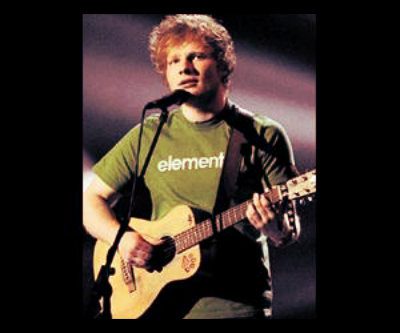
Several popular musicians protest global poverty by writing protest songs about the issue. Stars such as Ed Sheeran, Mumford & Sons, Macklemore & Ryan Lewis, Will.I.Am, Sting, Elvis Costello, and Green Day are among some of the artists who have joined the agit8 campaign to fight world hunger and poverty.

The agit8 campaign is an event that challenges leaders to stand up to fight poverty during the global G8 summit this year in Northern Ireland. The summit focuses on the world’s most pressing issues, and global leaders have a chance to speak up for issues they care about and feel should be addressed. The agit8 campaign is supported by the One Campaign, which was co-created by musician & activist Bono to help raise awareness about poverty and hunger problems around the world.

The One Campaign also works with filmmakers and actors to demonstrate through movies how protests have led to a major change in the world. Music is another way to lead change because it has the power to get many people involved. When fans learn about the causes their favorite artists support, they can instantly become more aware of global problems and learn how to take action. And with more people aware of the problems of the world, more people are supporting nonprofit organizations and charities to alleviate those problems.

– Katie Brockman

Source Evening Express

June 18, 2013
https://borgenproject.org/wp-content/uploads/borgen-project-logo.svg 0 0 Borgen Project https://borgenproject.org/wp-content/uploads/borgen-project-logo.svg Borgen Project2013-06-18 04:00:082021-06-21 17:22:49Musicians Protest Global Poverty
Global Poverty

Macklemore & Lewis Address Global Poverty

Macklemore & Lewis Address Global Poverty
Macklemore & Ryan Lewis are a fairly new artist/producer group that has quickly risen to fame through their popular song, “Thrift Shop.” Criticizing mainstream media, consumerism, and popular culture, this hip-hop group has a lot in common with the work being done at The Borgen Project. Raising these questions is essential to understanding not only the condition of the United States but also the state of the world.

Gaining considerable exposure within the music industry in the past year, Macklemore & Ryan Lewis have released their full-length album The Heist, hitting the number one spot on iTunes.

Macklemore & Ryan Lewis are proud to be from humble beginnings and proud to support the “alternative” lifestyle of anti-consumerism. Deciding not to sign with any record label, the group is completely independent and produces their own music with their own flare.

Thinking under the lens of global poverty, “Thrift Shop”  raises a number of ethical concerns. On one hand, Macklemore & Ryan Lewis are criticizing the United States culture of consumerism. A lyric from the song explains:

“They be like “Oh that Gucci, that’s hella tight”
I’m like “Yo, that’s fifty dollars for a t-shirt”
Limited edition, let’s do some simple addition
…I call that getting tricked by business”

Here, the group brings attention to the arbitrary nature of clothing, calling out branding as a mere print on some cloth, and propose, throughout the rest of the song, that spending 99 cents on an otherwise expensive jacket is a much better option.

Alternatively, we look that the main hook of the song with a somewhat critical eye in relation to global (rather than only domestic) poverty:

“I’m gonna pop some tags
only got 20 dollars in my pocket
I’m, I’m I’m runnin’, looking for a come up”

All humor aside, the group is bringing attention to the fact that $20 for clothes is considered insanely cheap in the United States. However, while American consumers think that they are being frugal, $20 is far more than most people in the world make in one year. That much money, in much of the world, could be used much more effectively to feed a family. However, while the monetary value is relative—what may be cheaper in the U.S. is expensive elsewhere—Macklemore & Ryan Lewis advocate for frugal living no matter what the exchange rate, leaving the quality of their beats far from impoverished.

– Kali Faulwetter

Sources: Rap Genius
Photo: MTV

June 16, 2013
https://borgenproject.org/wp-content/uploads/borgen-project-logo.svg 0 0 Borgen Project https://borgenproject.org/wp-content/uploads/borgen-project-logo.svg Borgen Project2013-06-16 06:03:082020-06-29 03:11:32Macklemore & Lewis Address Global Poverty
Page 34 of 40«‹3233343536›»

Get Smarter

  • Global Poverty 101
  • Global Poverty… The Good News
  • Global Poverty & U.S. Jobs
  • Global Poverty and National Security
  • Innovative Solutions to Poverty
  • Global Poverty & Aid FAQ’s
Search Search

Take Action

  • Call Congress
  • Email Congress
  • Donate
  • 30 Ways to Help
  • Volunteer Ops
  • Internships
  • Courses & Certificates
  • The Podcast
Borgen Project

“The Borgen Project is an incredible nonprofit organization that is addressing poverty and hunger and working towards ending them.”

-The Huffington Post

Inside The Borgen Project

  • Contact
  • About
  • Financials
  • President
  • Board of Directors
  • Board of Advisors

International Links

  • UK Email Parliament
  • UK Donate
  • Canada Email Parliament

Get Smarter

  • Global Poverty 101
  • Global Poverty… The Good News
  • Global Poverty & U.S. Jobs
  • Global Poverty and National Security
  • Innovative Solutions to Poverty
  • Global Poverty & Aid FAQ’s

Ways to Help

  • Call Congress
  • Email Congress
  • Donate
  • 30 Ways to Help
  • Volunteer Ops
  • Internships
  • Courses & Certificates
  • The Podcast
Scroll to top Scroll to top Scroll to top