• Link to X
  • Link to Facebook
  • Link to Instagram
  • Link to TikTok
  • Link to Youtube
  • About
    • About Us
      • President
      • Board of Directors
      • Board of Advisors
      • Financials
      • Our Methodology
      • Success Tracker
      • Contact
  • Act Now
    • 30 Ways to Help
      • Email Congress
      • Call Congress
      • Volunteer
      • Courses & Certificates
      • Be a Donor
    • Internships
      • In-Office Internships
      • Remote Internships
    • Legislation
      • Politics 101
  • The Blog
  • The Podcast
  • Magazine
  • Donate
  • Click to open the search input field Click to open the search input field Search
  • Menu Menu

Tag Archive for: Facts

Posts

Aid, Global Poverty

5 Facts About Living in Poverty With Disabilities

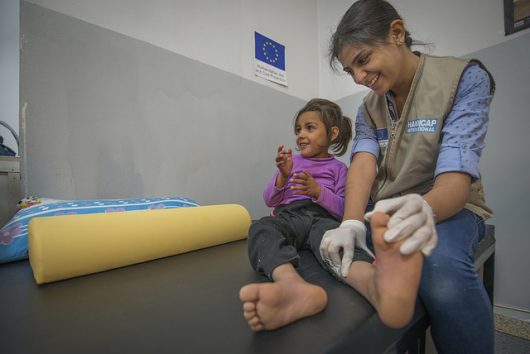
Living in Poverty With DisabilitiesIn the world today, more than one billion people live with some form of disability. Eighty percent of those people live in developing countries. In one study, in 15 developing countries worldwide, households with at least one disabled member were worse off financially than those without. The intersection between poverty and disabilities highlights one of the most critical forms of inequality plaguing the world. Ahead are five facts about living in poverty with disabilities:

  1. The world’s poor are disproportionately disabled. According to the World Bank, approximately 20 percent of the poorest people in the world are disabled. Much of this relates specifically to the financial costs of disability. In fact, in Tamil Nadu, India, a study found that the average cost of living with a disability amounted to two to three times the financial losses suffered due to lowered productivity caused by poor nutrition.
  2. Just as disability can lead to poverty, poverty can lead to disability. With poverty comes the potential increase of disability due to disease, malnutrition, dangerous work environments, poor housing and healthcare, lack of clean water  and violence. The stigma surrounding disabilities limits people’s access to education, employment, health services and community support. All of these induce further poverty.
  3. Organizations such as ADD International partner with disability activists in Africa and Asia to provide tools, resources and support for the disability rights movement. These organizations strive for improvements in employment, access to education and overall equality for individuals living in poverty with disabilities.
  4. In Cambodia, Caritas Australia’s Deaf Development Program (DDP) improves access to education and increases employment opportunities for those who are deaf or hearing impaired. Caritas Australia also partners with organizations in Laos, such as the Lao Disabled Persons Association. This organization helps parents and teachers understand the needs of children with mental disabilities. And in Vietnam, Caritas Australia’s Supporting Adults and Children with Disabilities program provides vocational training and social support.
  5. In 2006, the U.N. adopted the Convention on the Rights of Persons with Disabilities in order to transform the treatment of people with disabilities, turning them from “‘objects’ of charity” into autonomous “‘subjects’ with rights.” It was intended to clarify and qualify how all categories of rights apply to people with disabilities. It also adapts itself to become amenable to persons with disabilities and to ensure that they can exercise their rights fully.

Ultimately, it is incumbent upon the world’s community to put an end to both the stigmatization of disabilities and the overarching trend of poverty. Though this will take diligent work on both a social and economic level, it is necessary in order to create a society characterized by equality for all people.

– Emily Chazen

Photo: Flickr
August 23, 2017
https://borgenproject.org/wp-content/uploads/borgen-project-logo.svg 0 0 Borgen Project https://borgenproject.org/wp-content/uploads/borgen-project-logo.svg Borgen Project2017-08-23 01:30:342024-05-28 00:15:415 Facts About Living in Poverty With Disabilities
Education, Global Poverty, Women

10 Facts About Improving Women’s Education

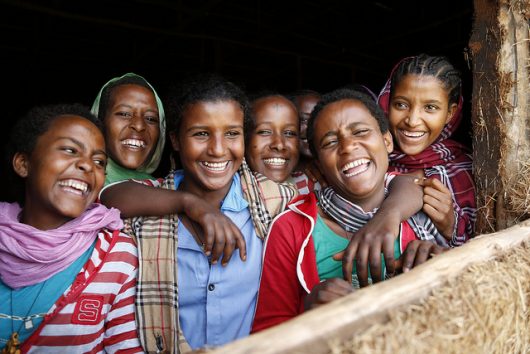
Improving Women's EducationIn January 2014, former U.S. President Barack Obama stated, “You can judge a nation, and how successful it will be, based on how it treats its women and its girls.” Indeed, educating women throughout the world has proven a pivotal locus for ensuring communities’ and countries’ social and economic success. In order to highlight some of the tremendous growth that women and girls’ education generates, here are 10 facts about improving women’s education.
  1. Emphasizing the need for ensuring the continual empowerment of women worldwide, the United Nations made equal access to education for girls a central focus of its Millennium Development Goals. The U.N. has made the elimination of gender disparities in primary and secondary education its third goal. Furthermore, it sought to reconcile the injustice that limited women’s opportunities for both education and, by extension, employment. Since the completion of the Millennium Development Goals, women have constituted 41 percent of paid workers in fields outside of agriculture. This is a tremendous increase from the 1990 rate of 35 percent.
  2. Educated women are likely to marry at later ages and consequently have fewer children. In fact, by simply providing girls with an extra year of schooling, nations can reduce a woman’s fertility rate by 5 to 10 percent. Limiting the number of individuals present will ensure improved accessibility to resources and better opportunities for all people, particularly in countries struggling with overpopulation, such as Nigeria and China.
  3. Girls who stay in school longer lower their probability of contracting HIV, thereby adding securing their health and wellbeing. In fact, the Girls Global Education Fund has reported that in Africa, children born to mothers who have not received education have a one in five chance of dying before age 5.
  4. Improving women’s education promotes continued education for whole families. In sending women to school, they are likely to encourage their children’s educations. This chain reaction illustrates the ways in which educating a girl improves an entire nation’s access to education.
  5. For each additional year that a girl spends in primary school, her wages increase by up to 20 percent. By continuing with her education through secondary school, her wages increase by 25 percent. Improving education for girls therefore ensures their socioeconomic stability and successes worldwide.
  6. By providing women and girls access to education, the probability of their involvement in the political process increases. Through education, women are more likely to participate in civic engagement and decision-making. Consequently, this promotes a more representative government. In fact, the average proportion of women in parliaments across the world has doubled over the past 20 years. This is a direct result of the success of the U.N. Millennium Development Goals in reducing the gender disparity in primary and secondary school education.
  7. In recent years, young women accounted for 59 percent of the total illiterate population. By providing women and girls with an education, illiteracy rates worldwide will inevitably increase, suggesting the overarching trend of global educational success.
  8. Educational depravation for women and girls has proven costly for the global economy. By refusing to give women and girls education, individual economies suffer as much as a $1 billion loss in revenue. Throughout the world, this constitutes a $92 billion loss each year. This suggests that investing in women’s education is a lucrative decision for all nations to make.
  9. Girls’ education has a tremendous impact on the environment. According to the Brookings Institution, secondary educational opportunities for women remain the most cost-effective investment against climate change.
  10. When girls are educated, communities maintain their stability at higher rates and can recover faster from conflict. By providing women and girls with secondary educational opportunities, nations also reduce their risk of war substantially and secure limitations on terrorism and extremism.

Ultimately, girls’ education holds significant implications for the global community. By improving women’s education, the world thrives both socially and economically. It is critical for nations to invest in women’s education in order to guarantee both individual and global success.

– Emily Chazen

Photo: Flickr

August 22, 2017
https://borgenproject.org/wp-content/uploads/borgen-project-logo.svg 0 0 Borgen Project https://borgenproject.org/wp-content/uploads/borgen-project-logo.svg Borgen Project2017-08-22 01:30:332024-06-05 04:10:4810 Facts About Improving Women’s Education
Global Poverty

10 Facts that Prove Voting is Important

10 Facts about why Voting is Important
The ability to vote allows citizens to say their opinion and choice on a variety of issues. In the American political system, voting allows registered citizens to cast their choice for the political leader that they believe can accurately make the choices that will better the country. However, there are thousands upon thousands of individuals who have the ability to vote, and yet do not. Discussed below are the key reasons why voting is important.


Top 10 Reasons Why Voting is Important:


1. The Millennial generation accounts for one-third of the electorate.

2. Less than 50 percent of eligible young voters ages 18 to 29 cast a vote in 2012.

3. 19 percent of all votes cast in 2012 came from young voters.

4. In 2012, 4 percent more young women voted than young men.

5. Young voters are more likely to support issues such as legalizing same-sex marriage, supporting a pathway to citizenship for immigrants and legalizing abortion than other age demographics.

6. 40 percent of millennials identify as non-white, making them the most diverse voting generation in history.

7. In most communities, the turnout for voting is less than 50 percent.

8. Every vote matters. There have been several cases in U.S. history where this has been seen. A New Hampshire Senate race was decided by two votes out of 223,363 in 1974. A Massachusetts gubernatorial election was decided by two votes out of 102,066 in 1839. And the Alaskan congressional race was decided by a single vote out of 10,035 cast in 2008.

9. Through voting you have the opportunity to influence the government.

10. In most state and national elections, you need to be registered to vote anywhere from 10-27 days before the actual election. That is why it’s important to regularly check if you are eligible to vote in your district.

In all, voting is a constitutional right and privilege that Americans have. It’s best to make use of that right instead of squandering it and disregarding what our Founders stood for.

–Alysha Biemolt

Sources: Do Something, Post Star, Huffington Post, Independent
Photo: The Wannabe Luxembourger

August 21, 2017
https://borgenproject.org/wp-content/uploads/borgen-project-logo.svg 0 0 Borgen Project https://borgenproject.org/wp-content/uploads/borgen-project-logo.svg Borgen Project2017-08-21 01:30:432024-12-13 18:04:4910 Facts that Prove Voting is Important
Global Poverty, Human Rights

10 Important Facts About Human Rights in Nigeria

Human rights in Nigeria are a mixed bag. The nation has some strong constitutional rights that it guarantees to its citizens. However, these rights are often undermined by a corrupt government, abuses of power from law enforcement and the latent threat of Islamist insurgency group Boko Haram. Here are 10 facts about human rights in Nigeria.

  1. Freedoms of speech, religion and the press are constitutionally protected human rights in Nigeria. However, freedom of the press is limited through anti-defamation laws with severe penalties. Journalists found to be in violation of these laws have been detained and arrested without trial.
  2. Freedom of assembly is also constitutionally guaranteed in Nigeria, but this freedom is still restricted. If the government deems an event as threatening to national security, it can ban the event from taking place. This power has been used to disrupt peaceful protests by political organizers.
  3. As of December 2016, Nigeria has not yet criminalized police and military use of torture. However, a measure to outlaw torture passed Nigeria’s House of Representatives in June of 2016.
  4. Nigerian security forces frequently engage in human rights abuses. Officers that commit unlawful killings routinely go unpunished. In 2015, Nigerian soldiers unlawfully killed more than 350 Islamic Movement of Nigeria protesters during a road blockade.
  5. Nigerian security forces have also had issues with racketeering. Amnesty International discovered that the Special Anti-Robbery Squad torturing suspected criminals and demanding bribes from their families in exchange for freedom. There have also been reported cases of Nigerian officers abducting people from their homes and arbitrarily arresting civilians. The government often fails to hold offending officers accountable.
  6. Nigeria has more than two million internally displaced persons (IDPs). IDPs are people who have fled from their homes but not their country. One-fifth of IDPs live in overcrowded camps where they do not receive proper amounts of food, water, medical care and sanitation. Thousands have died in these camps due to these conditions. There are also many recorded instances of guards bribing female IDPs for sex.
  7. Discrimination against women is rampant in Nigeria. Little more than 5 percent of Nigeria’s National Assembly seats are held by women. Many families send their sons to school while neglecting their daughters and the law denies women equal right to property. Crimes against women receive harsh penalties, but often go unreported. This past year, Nigeria codified gender based discrimination protections into law.
  8. In 2014, the Nigerian National Assembly enacted a law that criminalizes any expression of a same-sex relationship. Those who are found in violation can be imprisoned for 14 years. The law has enabled police abuses such as detaining suspected homosexuals indefinitely and raiding NGOs that teach HIV prevention. In parts of Nigeria, LGBT persons can be sentenced to death.
    Thousands of civilians have been forcibly evicted from their homes by the Nigerian government. There have been many occasions where these evictions occurred without proper compensation, resettlement and prior notification to homeowners.
  9. The Nigerian government is notoriously corrupt. According to the government, 55 public officials stole $9 billion from the government between 2006-2013. This amounts to roughly a quarter of the nation’s annual budget. Nigeria’s president Muhammadu Buhari has introduced a number of anti-corruption measures and has prosecuted several high profile officials for offenses. However, Buhari’s political opposition has claimed that these reforms are aimed at disproportionately impacting Buhari’s political opponents.
  10. The terrorist group Boko Haram remains as a threat to national security and human rights in Nigeria. Boko Haram’s goal is to overthrow the Nigerian government and install an Islamic caliphate. Its activities are largely responsible for Nigeria’s great number of IDPs and it has received international attention for abducting hundreds of schoolgirls and forcing them into sex slavery. In 2015, Boko Haram lost all of its territory, but many of the children abducted still remain missing. While the group is no longer as powerful as it once was, there is always a chance for resurgence.

Nigeria has quite a way to go before it can be considered a free country, but there is a clear path to improving the record of human rights in Nigeria. The nation as well as NGOs and the international community will have to continue to push anti-corruption reforms. An ethical government can better serve the needs of its citizens and can be better trusted to handle foreign aid responsibly.

Nigeria also needs to institute reforms that will hold members of the police and the military accountable for unlawful actions. Economic development is also crucial to improving human rights in Nigeria. A Nigeria that has prospered through trade and has greater ties to the international community may be more willing to institute social reforms that will create greater opportunities for women and decriminalize homosexuality.

– Carson Hughes
Photo: Flickr

August 21, 2017
https://borgenproject.org/wp-content/uploads/borgen-project-logo.svg 0 0 Borgen Project https://borgenproject.org/wp-content/uploads/borgen-project-logo.svg Borgen Project2017-08-21 01:30:342024-05-28 00:15:3610 Important Facts About Human Rights in Nigeria
Refugees

10 Facts About Comoros Refugees

10 Facts About Comoros Refugees
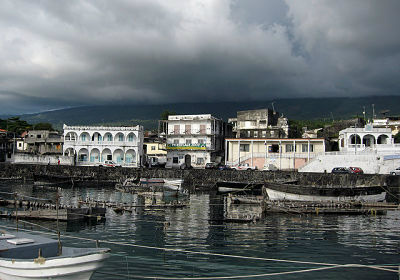
The Comoros is a small island north of Madagascar. It is one of the least populous countries in the world, with a total population of 826,009. The number of Comoros refugees has decreased tremendously since 2001. Here are 10 facts about Comoros refugees and why the number has diminished significantly.

  1. Eighty-three percent of asylum applications from Comoros refugees were rejected in 2016. The most successful were the refugees in France, because of the two countries’ close diplomatic relations.
  2. In 2016, zero Comoros refugees were accepted into other European countries, such as Italy, England, Greece and Germany.
  3. Approximately 294 people applied for asylum in 2016.
  4. In 2004, 13.5 percent of the population of Comoros lived on less than $1.90 per day. This has improved, impressively, with the help of a poverty reduction strategy created by the country’s president in 2012.
  5. Many of the human rights problems reported in 2001 had to do with meager prison conditions, restrictions on freedom, corruption, discrimination, child abuse and child labor. The reported restrictions on freedom encompassed religion, movement and the press.
  6. These reported human rights violations were valid reasons for seeking asylum. However, conditions in Comoros have improved in the last decade. In regards to freedom of the press, the Comoros’ press freedom index was at 24.33 in 2016, down from 24.52 the previous year (the lower the number, the more freedom, meaning freedom of the press has improved recently).
  7. The child mortality rate fell to 73.5 deaths per 1,000 live births. In 2004 it was 99.4, and in 2001 it was 100.8.
  8. Life expectancy in 2001 was 59.5 years, and a decade later it was 62.2. In 2015, life expectancy has increased to 63.6.
  9. The rate of literacy among adults in 2000 was 68 percent. By 2015, it rose to 78 percent.
  10. The overall prosperity score for Comoros is showing a steady increase. In 2007, the score was 43.12. In 2016, the value was at 47.71.

Using various measures of a country’s overall success, child mortality rate, life expectancy, literacy rate, and overall prosperity, we see improvements in life in Comoros. Citizens of Comoros are no longer fleeing persecution or meager conditions. These 10 facts about Comoros refugees display the progress made in the last decade and a half.

– Lucy Voegeli

Photo: Flickr

August 18, 2017
https://borgenproject.org/wp-content/uploads/borgen-project-logo.svg 0 0 Borgen Project https://borgenproject.org/wp-content/uploads/borgen-project-logo.svg Borgen Project2017-08-18 07:30:532019-12-17 13:18:2910 Facts About Comoros Refugees
Education, Global Poverty

The 10 Most Important Facts About Education in Malawi

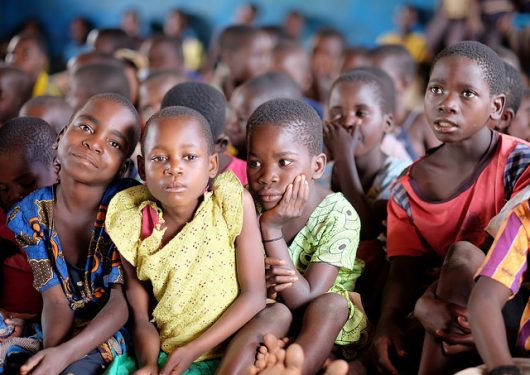
Education in MalawiMalawi has been ranked as one of the lowest-performing nations for literacy in sub-Saharan Africa. Malawi is one of the least developed countries in the world and education is proven as one of the critical pathways to improving living conditions in the country. Here are 10 facts regarding education in Malawi:

  1. Primary school in Malawi was made free in 1994. This policy boosted primary school enrollment from 1.6 million children to three million children. However, with such an influx in students, the educational quality has decreased due to weak infrastructure, poor hygiene and low teaching quality.
  2. Only 35 percent of children in Malawi complete primary school. Such a low ratio can be attributed to multiple factors.
    More than half of the country’s population lives below the poverty line. Many children enroll and drop out of school frequently due to employment responsibilities at home or illnesses. Especially for many young girls, dropping out is common due to young marriage, pregnancy, and contracting HIV/AIDS.
  3. In first grade, the teacher to student ratio is 1:130. While this ratio decreases as the grade level increases, Malawi faces one of the world’s worst teacher shortages.
    This fact is mostly due to the expense associated with hiring new teachers. To be able to attract qualified teachers, rural communities must provide housing, which is a significant cost. Many of the quality issues faced in Malawian schools are due to a lack of motivation by the teachers. They face poor working conditions, weak social amenities and lack health coverage.
    The overcrowding of classrooms is found to be another catalyst of high drop-out rates in Malawian schools. With students not receiving one-on-one feedback and lacking the resources to learn, many lose hope in the educational system.
    Therefore, in order to improve the quality of education in Malawi and reduce drop-out rates, the government must focus on improving teacher salaries and improve facilities around the nation. This policy change will incentivize staying in school and providing quality curricula.
  4. Eighty-three percent of first-grade students are unable to read a single syllable, and 92 percent of these students fail to read a single word. Malawi is ranked the weakest for its performance in English reading and second weakest for mathematics against other southern African countries.
    Such statistics are the result of children being denied the chance to learn under normal conditions. With the massive influx of students in recent years, education in Malawi has incurred a national shortage of classrooms, qualified teachers and basic teaching materials such as textbooks.
  5. Besides primary schooling, the government does not fully fund any other educational levels. For instance, the government encourages communities to introduce preschools into their societies but does not support these facilities financially. Therefore, most preschools are run on a voluntary basis and remain unregistered. Forty-four percent of preschoolers face undernourishment in Malawi and the majority of teachers work for free as they lack the necessary resources to teach the young children.
    Without proper preschool opportunities, children in Malawi are missing the opportunities that create a strong foundation for their future studies. The Global Partnership for Education declares that investing resources in the youngest children is one of the most cost-effective commitments a country can make. A study in 2011 found that, by having 50 percent of the world’s children enrolled in preschool, the global benefit is greater than $33 billion.
  6. With around 4.6 million students enrolled in schools throughout Malawi, only eight percent of them complete secondary school. A major contributor to this low completion is the lack of proper transportation links to the secondary facilities.
  7. Only 14.9 percent of adult females obtain at least a secondary education, compared to 24.2 percent of males. To try and reduce the gender gap in education in Malawi, Rihanna’s organization, the Clara Lionel Foundation, partnered with Ofo to create the 1 Km Action campaign. This program will provide scholarships to help girls across Malawi attend secondary school. For the children who qualify, the campaign will provide the students with bikes to ensure they can get to school.
  8. USAID also provides support to the education sector in Malawi by collaborating with the Ministry of Education, Science, and Technology. The United States’ efforts focus on increasing educational opportunities for females as well as boosting the capacity and quality of education in the country. USAID provides nine programs in Malawi to improve the educational standards of the country.
  9. Donors provide 40 percent of public education expenditure. However, in recent years donors have found that much of the money is not funneled into education but is rather stolen by the government sector. This theft has suspended much funding to the country.
  10. Over the past five years, the Malawian government has committed to allocate 18 percent of the national budget toward the education sector. With this commitment, Malawi will have one of the highest education expenditures in Africa. However, when comparing the educational quality with other countries, it can be noted that Malawi does not allocate its funds efficiently.

Experts believe that education is the driving force to alleviating poverty in Malawi and that it can help the country move toward development. With greater government involvement and international organizations supporting the nation, education in Malawi has the potential to improve in coming years.

– Tess Hinteregger

Photo: Flickr

August 18, 2017
https://borgenproject.org/wp-content/uploads/borgen-project-logo.svg 0 0 Borgen Project https://borgenproject.org/wp-content/uploads/borgen-project-logo.svg Borgen Project2017-08-18 01:30:232024-12-13 17:58:26The 10 Most Important Facts About Education in Malawi
Global Poverty, Refugees

10 Facts About Refugees in Gabon

Refugees in Gabon

Gabon is a Central African country with a population of about 1,763,000. President Ali Bongo Ondimba, son of the former President Omar Bongo, was elected in 2009 and has run the country since. The period immediately following his election was marked by violence, primarily due to claims that election fraud took place. According to Amnesty International, Gabon is home to many cases of human rights abuse. However, conflicts in surrounding countries gave rise to a population of people seeking refuge in Gabon. Here are 10 facts about refugees in Gabon:

1. In Gabon, there were 943 refugees in 2015, according to the World Bank. This places the country behind neighboring countries Cameroon (342,973 refugees) and the Republic of the Congo (44,955 refugees). Neighboring country Equatorial Guinea’s official refugee count is zero.

2. The peak population of refugees was in 2000 at 17,982 refugees. The refugees came to Gabon fleeing civil wars and political violence in surrounding countries during the 1990s.

3. Most of the refugees fleeing to Gabon are from the Republic of the Congo. In 1997, civil war broke out between paramilitaries loyal to former President Denis Sassou Nguesso and military forces loyal to liberalizing President Pascal Lissouba, driving tens of thousands of refugees into Gabon.

4. Refugees in Gabon have come from at least 25 different countries including Angola, Burundi, Chad, the Democratic Republic of the Congo, Equatorial Guinea, Rwanda, Sao Tome and Principe, and Togo.

5. Refugees do not live in refugee camps, but rather in Gabonese cities. About 80 percent of refugees in Gabon live in these urban areas, with many concentrated around the capital of Libreville.

6. Refugees have some freedoms in Gabon that are not always guaranteed in other African countries. They obtain special refugee ID cards and can move freely throughout Gabon. They are even allowed to choose where they seek residency. Furthermore, the Gabonese government has allowed UN entry into Gabon to provide humanitarian services for people seeking refuge. These include providing medical treatment, courses on integrating into Gabonese society and helping refugees voluntarily repatriate themselves.

7. Refugees face high unemployment rates and can have difficulty in finding work. The country’s businesses can prefer to hire other Gabonese people over refugees, and the Gabonese government even requires businesses to prove that there are no Gabonese available for a position before hiring a refugee.

8. Refugees in Gabon sometimes face harassment and detention by local police. Although the country has laws protecting them, refugees can be mistaken for illegal immigrants, or encounter police unfamiliar with the protection laws. The UN had to step in and secure the release of wrongfully detained refugees.

9. The Gabonese government – in partnership with the UNHCR, the UN’s agency responsible for refugees – gradually revoked the refugee status for refugees in Gabon. Refugees who wish to remain in the country must apply for permits to become migrant workers or apply for permanent residency somewhere in the country.

10. The population of refugees in Gabon has decreased every year since 2011 when the Gabonese government announced the end of refugee status in the country. Hundreds of refugees have voluntarily signed up for repatriation every year since that time, and, with help from the UN, have safely returned to their respective countries.

– David Mclellan

Photo: Flickr

August 17, 2017
https://borgenproject.org/wp-content/uploads/borgen-project-logo.svg 0 0 Borgen Project https://borgenproject.org/wp-content/uploads/borgen-project-logo.svg Borgen Project2017-08-17 01:30:502020-06-25 13:41:5710 Facts About Refugees in Gabon
Global Poverty, Refugees

10 Facts About Refugees in Turkmenistan

Refugees in TurkmenistanTurkmenistan is a landlocked state in Central Asia with a population of 5,439,000 people. Turkmenistan was a constituent republic within the Soviet Union until 1991 when it gained independence. The following year, Turkmenistan joined the United Nations. Like most nations, Turkmenistan hosts a refugee population. Here are 10 critical facts about refugees in Turkmenistan:

  1. According to the World Bank, 26 refugees officially registered in Turkmenistan in 2015. This puts the number of refugees in Turkmenistan substantially lower than neighboring countries such as Afghanistan (257,554), Iran (979,437), Kazakhstan (708) and Uzbekistan (107) when it comes to official accounts of stateless persons.
  2. For a number of reasons, no one really knows how many refugees in Turkmenistan there are. However, it is likely greater than the official count of 26. The U.N. once estimated that there are at least 40,000 Afghan and Tajik refugees in Turkmenistan.
  3. International organizations criticize Turkmenistan for its many human rights abuses, with the Human Rights Watch characterizing Turkmenistan as “among the world’s most repressive and closed countries, where the president and his associates have total control over all aspects of public life.” Reports of torture, suppressed speech and forcefully disappeared persons makes Turkmenistan an undesired destination for refugees. Still, war and political violence in countries like Afghanistan and Tajikistan render Turkmenistan preferable–albeit less than ideal.
  4. One such human rights abuse–and a barrier to estimating the number of refugees in Turkmenistan–is Turkmenistan’s policies regarding nongovernmental organizations and human rights organizations. Nongovernmental organizations are illegal in Turkmenistan, and organizations such as the Human Rights Watch and Amnesty International are not allowed entry.
  5. The government of Turkmenistan has strategically driven refugees in Turkmenistan from neighboring countries such as Uzbekistan and Kazakhstan back across borders. Many Russians have endured deportation as well.
  6. A pretext for deporting refugees in Turkmenistan is marriage; if a non-Turkmen refugee marries an ethnically Turkmen person, they will likely not receive citizenship in Turkmenistan and face deportation.
  7. Though refugees in Turkmenistan often can’t marry someone with Turkmen heritage, the nation still expects them to adopt a traditional Turkmen way of life. Ethnic Uzbeks, Tajiks, Kazakhs and others must speak the Turkmen language and dress in traditional Turkmen clothing. Even the children of refugees must abide by these standards or face punishment like expulsion from school.
  8. Despite being an ethnically diverse nation, ethnic Turkmen people receive favor and hold virtually all public offices in the country. The purging of non-Turkmen government employees, unofficial banning of inter-ethnic marriage and mandating that refugees in Turkmenistan adopt the Turkmen way of life are all part of Turkmenistan’s strategy of “Turkmenization,” a set of official government policies started by former President Saparmyrat Niyazov in 1992 to emphasize Turkmen heritage over that of other ethnic groups. All stateless people and refugees in Turkmenistan must conform to “Turkmenization” if they wish to remain in the country. This is to the point that Uzbeks in Turkmenistan sustain punishment for non-Turkmen religious practices.
  9. In 1995, Turkmenistan allowed the U.N. Refugee Agency to open an office in Ashgabat–an unusual move, considering Turkmenistan’s policies on nongovernmental human rights organizations. Since then, the U.N. has invested millions of dollars in improving conditions in refugee-hosting areas, giving the refugees access to medicine and even helping to register them as Turkmen citizens.
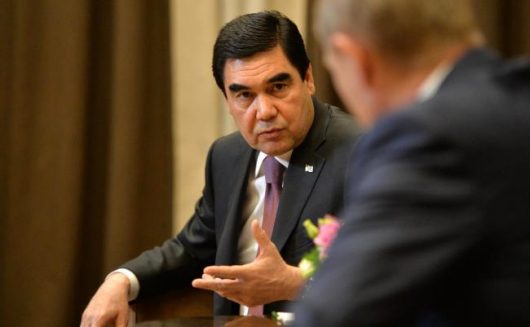
  10. The government has done some good when it comes to helping refugees in Turkmenistan. President Gurbanguly Berdimuhamedov, while upholding most of Niyazov’s “Turkmenization” policies, has granted more than 3,000 refugees Turkmen citizenship since 2007. Previously, President Niyazov granted about 10,000 refugees in Turkmen citizenship. However, the criteria for granting citizenship was suspected as ethnically based; refugees fleeing the Tajikistan civil war gained citizenship, but the government often denied citizenship to Afghan and Azerbaijani refugees. Now holding Turkmen citizenship, these former refugees in Turkmenistan can take part in civil society and vote. The U.N. protection officer in Ashgabat, Batyr Sapbiyev, called Berdimuhamedov’s decree an “outstanding humanitarian act.”

While Turkmenistan has long been an ethnically diverse country, it has been considerably hostile towards non-Turkmen people living in the country, including refugees. Proponents of “Turkmenization,” an ideological set of public practices and laws, claim that they are preserving Turkmenistan’s cultural heritage. The cost is the shunning of the Tajik, Uzbek and other cultures existing in close proximity to Turkmenistan. Refugees in Turkmenistan do have some reasons to be optimistic, as more and more are granted citizenship. They are expected, however, to conform to the Turkmen way of living if they expect to stay in Turkmenistan.

– David Mclellan

Photo: Google

August 15, 2017
https://borgenproject.org/wp-content/uploads/borgen-project-logo.svg 0 0 Borgen Project https://borgenproject.org/wp-content/uploads/borgen-project-logo.svg Borgen Project2017-08-15 07:30:062024-05-28 00:03:3410 Facts About Refugees in Turkmenistan
Global Poverty, Refugees

10 Facts About Suriname Refugees

Suriname RefugeesSuriname is small country on the northeast coast of South America. The following 10 facts about Suriname refugees only begin to touch upon the country’s history of refugees who fled the country for reasons of civil war, and of people from other countries who sought asylum in Suriname in recent years. Now, the country is adopting new practices to reach an international level of refugee acceptance and security.

  1. In 1991, 4,300 Surinamese found safety in refugee camps in the neighboring country of French Guiana, amid a raging four-year domestic civil war led by guerrilla commander Ronny Brunswijk.
  2. The French offered the refugees some financial aid, and planned to close the camps, sending those inside back to Suriname.
  3. Between 2007 and 2014, Suriname saw the number of refugees and stateless persons significantly decrease to the lowest the country had since the civil war.
  4. In 2014, there were a reported 17 outgoing refugees and people in refugee-like situations in Suriname. Only two cases of concern were documented as incoming asylum-seekers.
  5. In 2016, Suriname received 40 applications from Cuban refugees seeking security in the country.
  6. In the same year, 13 Surinamese applied for asylum in the Netherlands and Belgium, with the most successful acceptance rate in the Netherlands.
  7. Asylum-seekers and migrants found Suriname an attractive place of refuge because of its better wages in agricultural work, ease of border crossing, a perception of an accepting population and the prospect of a promising life working in Suriname’s gold mining industry.
  8. The U.N. Refugee Agency (UNHCR) recognized many positive developments in Suriname. In July 2014, the country passed the Draft Law on Nationality and Residency. The new law gives gender equality to both men and women regarding conferring their nationality, and it also protects people by preventing statelessness from loss of nationality.
  9. UNHCR and the International Organization for Migration (IOM) saw active participation from Suriname in 2013 during the Regional Conference on the Protection of Vulnerable Persons in Mixed Migration Flows: Promoting Cooperation and Identification of Good Practices.
  10. In 2014, the government of Suriname participated in the thirtieth anniversary of the 1984 Cartagena Declaration on Refugees, and the Caribbean Sub-Regional Consultation on Mixed Migration and the Protection of Refugees and Stateless Persons.

Suriname has come a long way since the thousands of refugees seeking shelter elsewhere as the civil war continued. These 10 facts about Suriname refugees show that the country has reduced reason to house stateless persons, and that positive developments and achievements in refugee situations has strengthened its people.

– Olivia Cyr

Photo: Pixabay

August 14, 2017
https://borgenproject.org/wp-content/uploads/borgen-project-logo.svg 0 0 Borgen Project https://borgenproject.org/wp-content/uploads/borgen-project-logo.svg Borgen Project2017-08-14 01:30:362020-06-11 08:17:1410 Facts About Suriname Refugees
Global Poverty, Politics

Facts and Figures of North Korea

Facts and Figures of North Korea

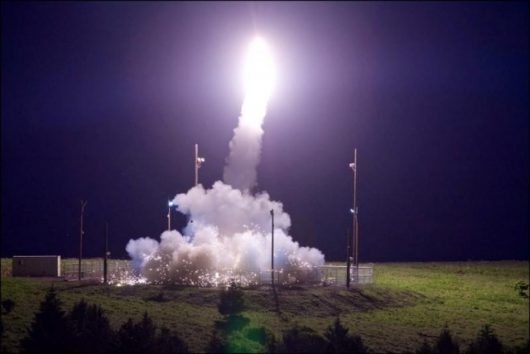
Hidden behind the tensions of military bluster between the U.S. and North Korea lies a sad and often overlooked reality: North Korea is an incredibly impoverished country.

The conflict on the Korean peninsula can be traced back to when Japan controlled Korea till 1910. After the Japanese lost in World War II, the peninsula was divided between a communist northern half and a democratic southern half.

Tensions between the north and south erupted into war in 1950. The U.S. led a United Nations coalition to support the south; China was the principal ally of the north. The war ended in a stalemate with the current division becoming a demilitarized zone. North Korea has languished since, relying heavily on outside aid.

Most of the developed world stopped sending monetary aid to North Korea in 2009. South Korea ended aid in 2010 due to conflicts with the incoming government of Kim Jong Un.

Much of North Korea’s poverty problem stems from government spending, or the lack thereof. Most of the country’s budget is allocated to military and defense spending. This means that most of North Korea’s budget is not invested in its people.

This lack of aid has impacted North Korea’s investment in education, health services and infrastructure.

The average education level for a North Korean is only 11 years. The average annual income is only $1300. These disparities stem from the government’s sole interest in military spending, and its lack of interest in its people. These facts and figures of North Korea illustrate that the impoverished Asian nations strongly needs foreign aid, as well as restructuring its own budget, to combat its extreme poverty.

In the interest of its citizens, North Korea could decrease spending on its military and defense program. This could increase international confidence in the country’s financial and political system, therefore increasing foreign aid that could be used for basic services for its populace.

Until the North Korean government focuses on its people instead of its military, and makes serious efforts to combat these disastrous poverty-related facts and figures of North Korea, it will continue to be an impoverished nation.

– Raymond Terry

Photo: Google

August 13, 2017
https://borgenproject.org/wp-content/uploads/borgen-project-logo.svg 0 0 Borgen Project https://borgenproject.org/wp-content/uploads/borgen-project-logo.svg Borgen Project2017-08-13 07:30:282024-05-27 23:53:56Facts and Figures of North Korea
Page 5 of 25«‹34567›»

Get Smarter

  • Global Poverty 101
  • Global Poverty… The Good News
  • Global Poverty & U.S. Jobs
  • Global Poverty and National Security
  • Innovative Solutions to Poverty
  • Global Poverty & Aid FAQ’s
Search Search

Take Action

  • Call Congress
  • Email Congress
  • Donate
  • 30 Ways to Help
  • Volunteer Ops
  • Internships
  • Courses & Certificates
  • The Podcast
Borgen Project

“The Borgen Project is an incredible nonprofit organization that is addressing poverty and hunger and working towards ending them.”

-The Huffington Post

Inside The Borgen Project

  • Contact
  • About
  • Financials
  • President
  • Board of Directors
  • Board of Advisors

International Links

  • UK Email Parliament
  • UK Donate
  • Canada Email Parliament

Get Smarter

  • Global Poverty 101
  • Global Poverty… The Good News
  • Global Poverty & U.S. Jobs
  • Global Poverty and National Security
  • Innovative Solutions to Poverty
  • Global Poverty & Aid FAQ’s

Ways to Help

  • Call Congress
  • Email Congress
  • Donate
  • 30 Ways to Help
  • Volunteer Ops
  • Internships
  • Courses & Certificates
  • The Podcast
Scroll to top Scroll to top Scroll to top