• Link to X
  • Link to Facebook
  • Link to Instagram
  • Link to TikTok
  • Link to Youtube
  • About
    • About Us
      • President
      • Board of Directors
      • Board of Advisors
      • Financials
      • Our Methodology
      • Success Tracker
      • Contact
  • Act Now
    • 30 Ways to Help
      • Email Congress
      • Call Congress
      • Volunteer
      • Courses & Certificates
      • Be a Donor
    • Internships
      • In-Office Internships
      • Remote Internships
    • Legislation
      • Politics 101
  • The Blog
  • The Podcast
  • Magazine
  • Donate
  • Click to open the search input field Click to open the search input field Search
  • Menu Menu

Tag Archive for: Facts

Posts

Developing Countries, Global Poverty

Six Things to Know About Poverty in Pakistan

Poverty in Pakistan
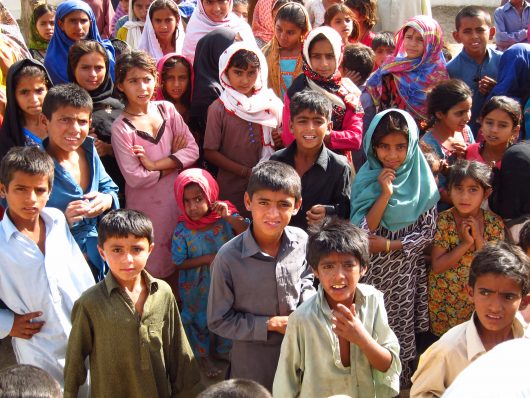
Poverty is a global affliction affecting numerous countries in the developing world. Pakistan, a country in South Asia, is home to millions of people who live in extreme poverty. Poverty in Pakistan is on track to decrease, but there is still work to be done.

With approximately 185 million citizens, Pakistan ranks 147th out of 188 countries in the Human Development Index (HDI). Reports on poverty in Pakistan show that as much as 40% of the population–roughly the size of the population of Florida, California and New York combined–live beneath the poverty line.

The Multidimensional Poverty Index (MPI) report by the Pakistan Ministry of Planning, Development and Reform in June 2016 shows that 39% of Pakistanis live in multidimensional poverty. The MPI methodology, developed by UNDP and the Oxford Poverty and Human Development Initiative in 2010, uses a broader concept of poverty by reflecting people’s deprivations related to health, education and standard of living in addition to income and wealth.


1.  Regional and Provincial Disparities in Poverty in Pakistan

The report states that national poverty rates in Pakistan fell from 55% to 39% from 2004 to 2015. This is a strong decline; however, development across different regions of the country is uneven. Poverty in urban areas is at 9.3% as compared to 54.6% in rural areas. Similarly, great disparities exist across provinces, with the highest rates of poverty in the Federally Administered Tribal Areas (FATA) and Balochistan. The MPI report states that “over two-thirds of people in FATA (73%) and Balochistan (71%) live in multidimensional poverty. Poverty in Khyber Pakhtunkhwa stands at 49%, Gilgit-Baltistan and Sindh at 43%, Punjab at 31% and Azad Jammu and Kashmir at 25%.”

Some districts such as Qilla Abdullah, Harnai and Barkhan in Balochistan have more than 90% poverty compared to Islamabad, Karachi and Lahore, in which less than 10% of residents live in multidimensional poverty. The report also found that the decrease in multidimensional poverty in Balochistan was the slowest while poverty levels had actually increased there and in Sindh province in the past decade.


2. Corruption in Pakistan

Despite being the second-largest economy in South Asia, development is limited by entrenched poverty in Pakistan, social inequality, lack of access to social services and extreme corruption. The 2016 Corruption Perceptions Index by Transparency International ranks Pakistan 116th globally. Corruption in Pakistan is not a new phenomenon. Recent Panama leaks involving the Pakistani Prime Minister Nawaz Sharif’s three children are just one example: they owned offshore companies and assets not shown on his family’s wealth statement. This and other cases of corruption by political and military elites have made it impossible to alleviate widespread poverty.


3. Population Boom

Burgeoning population growth is another major issue that weighs down Pakistan’s socio-economic development. According to some reports, in the past 10 to15 years, the population of Pakistan has grown by more than 40 million, making it the sixth most populous country in the world. Another report found that Pakistan’s population increases by 1.8% per year. By that rate, it is feared that, if the nightmarish growth goes unchecked, the country’s population will be 245 million by 2030.


4. Development and Conflict

Pakistan is caught between the United States’ War on Terrorism in Afghanistan and an increasingly unstable relationship with India. Tackling poverty is important because economic instability and a lack of development can only lead to conflict and violence, domestically and regionally. In the past two decades, Pakistan has seen increasing violence at the hands of militant jihadists and Baloch insurgents. Rather than bettering the lives of common people by introducing broad-based socio-economic reforms, the Pakistani state uses excessive military force to “resolve” issues in the country’s northern and southwestern regions. Unending conflicts are another reason why it is difficult for development to take place.


5. Disproportionate Defense Spending

Most importantly, instead of allocating sufficient funds to address both acute and long-standing poverty, the country spends the largest amount of national expenditures on defense. A May 2017 report showed that “Pakistan’s defense expenditure in the next financial year (2017-18) will be around seven percent higher than it was in the outgoing year to Rs920.2 billion (USD$8.65 billion).” It was Rs841 billion (USD$7.9 billion) for the year 2016-2017. In contrast, Pakistan spends only 2.6% of its GDP on education, which is the lowest in South Asia.


6. Consequences of Poverty in Pakistan

Grinding poverty and lack of development fuel child labor, illiteracy, religious extremism and endless conflicts on massive scales. The Gross National Income per capita is only $5,031. Life expectancy in Pakistanis at 66.4 years and the expected years of schooling is miserably low at 8.1 years. These figures are among the lowest in the world.

The good news is that poverty in Pakistan decreased by 15 percent in the past decade, but, given the grim lows overall, this figure is less than encouraging. In order to alleviate poverty, policymakers need to focus on achieving the U.N. Sustainable Development Goals (SDGs) by 2030. Although it is a big challenge for an underdeveloped country like Pakistan, meeting the SDGs is important since they provide the best possible integrated way for inclusive growth, peace and development.

Finally, policymakers should also focus on addressing the poverty of opportunity. The poverty of income is a result of the poverty of opportunity. Poverty in Pakistan is a multidimensional problem requiring multidimensional solutions.

– Aslam Kakar

Photo: Google
July 28, 2017
https://borgenproject.org/wp-content/uploads/borgen-project-logo.svg 0 0 Borgen Project https://borgenproject.org/wp-content/uploads/borgen-project-logo.svg Borgen Project2017-07-28 01:30:502024-12-13 17:58:25Six Things to Know About Poverty in Pakistan
Global Poverty, Refugees

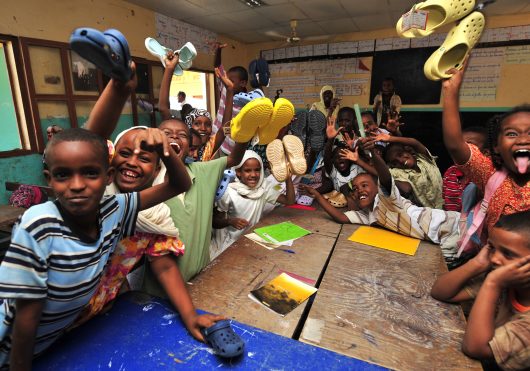
10 Important Facts About Refugees in Djibouti

Refugees in Djibouti
The plight of refugees is of interest currently both in political and humanitarian terms. Refugees suffer a great uprooting from their homes, from their lifestyles and often experience a cultural shock at refugee camps. At their most vulnerable point, refugees must depend on stop-gap solutions to see them through their temporary and difficult living situations.

Djibouti is temporary shelter to thousands of refugees, as they search for a home beyond Djibouti. A tiny country on the Eastern coast of Africa, Djibouti is at the point where three countries meet: Somalia, Ethiopia and Eritrea. A narrow part of the Red Sea separates Djibouti from Yemen. Here are ten facts about refugees in Djibouti:

  1. Annually, 100,000 people pass through Djibouti. Such a large number of refugees pass through Djibouti because of its location adjacent to three countries.
  2. The refugees predominantly arrive from several places: Yemen, Somalia, Eritrea and Ethiopia. Of these, 55 percent of those who arrive at Djibouti are Yemeni. Yemeni and Ethiopian refugees get usually placed in Markazi, a refugee camp located near Obock, a port in the northern part of Djibouti. Somalis and Eritreans get often put in Ali Addeh and Holl Holl, other refugee camps, in the south of Djibouti.
  3. Approximately 19,636 Yemeni refugees and 5,100 Ethiopian refugees have arrived or passed through Djibouti since 2015. Around 70 percent of the refugees, including Somalis and Eritreans, are women and children.
  4. Yemeni refugees are fleeing south because of war, while Ethiopian refugees are fleeing north because of drought. A militant group, Houthi Shia, overthrew the Yemeni government in 2015. Consequently, Saudi Arabia began a bombing campaign in Yemen. Ethiopians fleeing north towards Yemen are sometimes not aware of the conflict when they reach Djibouti and head towards Yemen.
  5. Refugees enter Djibouti via bus or boat as the most common mode of transport. Ethiopian refugees also travel to Djibouti on foot, though crossing the desert surrounding Djibouti is dangerous since temperatures may reach 130 degrees. After their journey on foot, Ethiopian refugees use smugglers’ boats to reach Djibouti.
  6. Djibouti has a population of about one million people. Around 400,000 permanent residents live in slums near the edge of the capital, Djibouti City, with little access to necessities such as food and water. The sudden influx of refugees has created difficulties in resource allocation between long-time residents and refugees.
  7. Approximately 5,963 children in the country are suffering from severe acute malnutrition (SAM).
  8. Refugees predominantly live in three camps: Ali Addeh, Holl Holl and Markazi. Markazi alone is a temporary home to over 1,400 refugees as of February 2017. The living conditions in the camps are arduous. For example, in Markazi, refugees live in tents and have thin sleeping mats. The camps are fenced in to protect the refugees from wild animals, but snakes and scorpions often enter the camps. Refugees in Markazi are also concerned about sandstorms: in the past, sandstorms have blown over their tents.
  9. Around 74 percent of the refugee population lives on less than $3 per day. Despite the poor living conditions, refugees still attempt to educate their children by sending them to temporary schools in the camps.
  10. The influx of refugees has helped expand business networks for permanent residents of Djibouti, boosting the local economy. The refugees and residents of Djibouti have developed strong, friendly connections. The government of Djibouti echoes the positive reception that refugees have received, calling the refugees “our brothers and sisters.”

These facts about the refugees in Djibouti show that they are suffering because of bloody conflicts and harsh environmental conditions, circumstances beyond their control. Fortunately, Djibouti’s welcoming of refugees underscores the importance of being open to those impoverished by their circumstances.

Through examining even 10 facts about the refugees in Djibouti, the realization of how refugees can positively contribute to business and social networks is emphasized. Ultimately, communities must fuse together to advocate for solutions to poverty.

– Smriti Krishnan

Photo: Google

July 27, 2017
https://borgenproject.org/wp-content/uploads/borgen-project-logo.svg 0 0 Borgen Project https://borgenproject.org/wp-content/uploads/borgen-project-logo.svg Borgen Project2017-07-27 07:30:182024-12-13 17:58:2410 Important Facts About Refugees in Djibouti
Global Poverty, Refugees

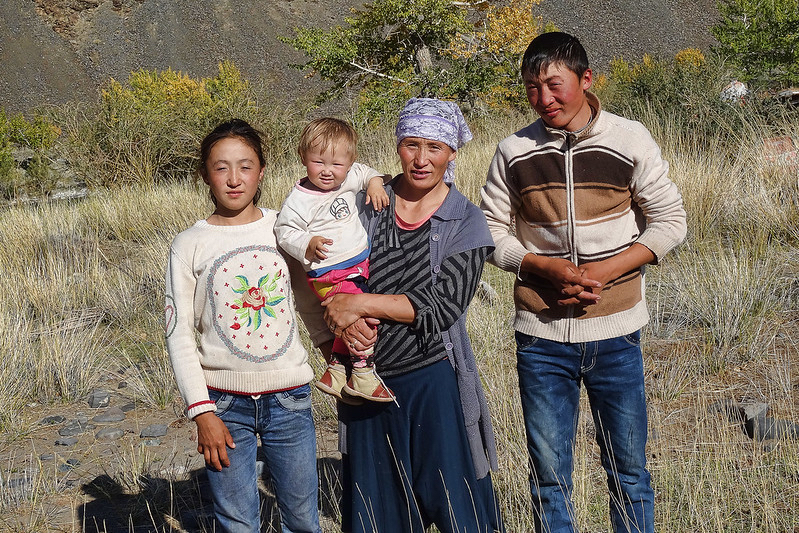
10 Facts About Refugees in Mongolia

Refugees in Mongolia

Mongolia is a landlocked country in Asia with a population of just over 3,000,000. This East Asian nation is home to a small, yet geopolitically significant refugee population. Here are 10 facts about those displaced refugees in Mongolia:

  1. The World Bank’s most current data shows that there were nine refugees in Mongolia in 2015. This obviously ranks Mongolia behind neighboring countries China and Russia, which both have around 300,000 documented refugees. However, this miniscule number does not reflect the reality of refugees in Mongolia.
  2. Refugees in Mongolia are mainly from North Korea. The North Korean defectors live there, often briefly, under a tenuous balance between Mongolia-U.S. diplomatic relations and Mongolia-North Korea diplomatic relations.
  3. Hundreds of North Korean refugees pass through Mongolia each month before being repatriated in South Korea. Refugees in Mongolia from North Korea choose one of two common paths to defect to South Korea. One option is to travel north from North Korea through China into Mongolia before flying to South Korea.  The other route they take is to go south through China and into Laos and Thailand before boarding a plane to South Korea. North Korea expert and head of the Institute of International Education’s Scholar Relief Fund Stephen Noerper once estimated that each month, 500 North Koreans pass through Mongolia.
  4. North Korean refugees must pass through China in secret before arriving in Mongolia. China’s alliance with North Korea means that North Korean defectors will be sent back to North Korea if caught in China. Defectors who are caught often face brutal treatment and forced labor in North Korean concentration camps.
  5. Their journey to Mongolia is treacherous. Besides having to sneak through China and past Chinese border patrol, refugees in Mongolia must pass through the Gobi Desert, a cold desert that stretches hundreds of miles.
  6. Mongolia has long said it will humanely treat North Korean refugees. Mongolian Prime Minister Nambaryn Enkhbayar has publicly sympathized with North Korean defectors.
  7. However, Mongolia’s position on North Korean defectors remains unclear. Mongolia has stepped up its border patrol in recent years and has several agreements with North Korea.  This includes accepting thousands of migrant workers from the one-party state.
  8. On the other hand, Mongolian border patrol agents have let North Koreans into the country, and Mongolia remains an ally of the U.S.
  9. Refugees in Mongolia from North Korea often make their way to the South Korean embassy. There, they are taken care of and able to book a flight from the Mongolian capital of Ulaanbaatar to the South Korean capital of Seoul.
  10. The number of refugees in Mongolia from North Korea is decreasing. According to the Korea Herald, stricter North Korean border patrol has caused the number of North Korean defectors to drop 21 percent already in 2017.

Though their numbers may seem small, Mongolia still plays a crucial role in aiding North Korean refugees and defectors. Mongolia’s situation reminds us that even helping a handful of individuals has an impact on both personal lives and international relations.

– David Mclellan

Photo: Flickr

July 27, 2017
https://borgenproject.org/wp-content/uploads/borgen-project-logo.svg 0 0 Borgen Project https://borgenproject.org/wp-content/uploads/borgen-project-logo.svg Borgen Project2017-07-27 01:30:522024-05-27 09:34:2010 Facts About Refugees in Mongolia
Global Poverty, Refugees

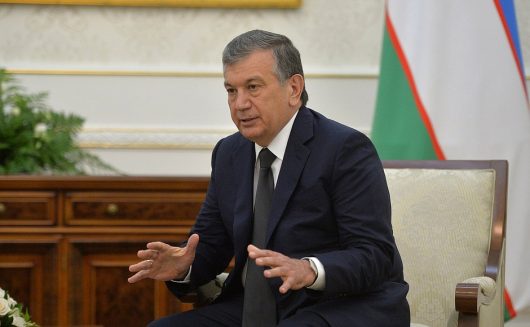
10 Facts About Uzbek Refugees

Uzbek Refugees
The Republic of Uzbekistan is a Central Asian country with a population of about 32 million. From 1924 to 1991, Uzbekistan was a constituent republic within the Soviet Union. Since gaining independence in 1991, the Uzbek people have been dominated by an authoritarian government. Here are 10 critical facts about Uzbek refugees from the former Soviet state:

  1. According to the World Bank’s most current released data, there were 4,205 Uzbek refugees spread out across the world in 2015. This fact makes Uzbekistan the largest source of refugees in Central Asia, ahead of Kazakhstan, Kyrgyzstan, Tajikistan and Turkmenistan.  These are all former Soviet republics as well.
  2. The number of Uzbek refugees is decreasing. Despite the world’s refugee population growing by millions annually since 2011, the Uzbek refugee population has declined each year in the same amount of time. The Uzbek refugee population is about a third of the size it was in 2011.
  3. Uzbek refugees often flee what the Human Rights Watch has described as an “abysmal” state of human rights in Uzbekistan. The country does not allow independent criticism and denies Uzbeks fundamental freedoms in regards to religion and expression.
    Torture is commonplace in the Uzbekistan justice system, and adults and children are subjected to forced labor. Collecting data on Uzbekistan, especially on its human rights violations is difficult.  This lack of information is due to Uzbekistan refusing to allow U.N. human rights experts access to the country since 2002.
  4. Some Uzbek refugees leave Uzbekistan because of their sexual orientation. Homosexual relations carry a maximum prison sentence of three years in Uzbekistan.
  5. Many Uzbek refugees left their country after the 2005 Andijan massacre. In June 2004, 23 businessmen from the city of Andijan were arrested on baseless charges of “religious extremism.” About 10,000 people eventually filled the streets in protest when the businessmen were subsequently found guilty. In a violent suppression of the protests, the Uzbekistan military opened fire on the crowd. Estimates of the number of people killed during the Andijan massacre start at 187. According to the Uzbekistan government’s official count, potentially nearly 2,000 people died.
  6. Some of the Uzbek refugees are whistleblowers and former government officials. For example, in 2008, Ikrom Yakubov sought asylum in London. Yakubov worked as a spy for ten years in the Uzbek National Security Service, including two years on the president’s National Security Council. When he arrived in London, he had already been hiding out in Europe for months, fearing for his life. Yakubov says that he no longer wanted to work for “the executioner,” and has accused the Uzbekistan government of routinely murdering its citizens for political reasons. His estimated death toll of the Andijan massacre is 1,500 people.
  7. The authorities often harass the families of Uzbek refugees who stay in Uzbekistan. If the refugees leave for political reasons, such as those that did following the Andijan massacre, their families are put under surveillance, interrogated and threatened with criminal charges. Children in these families even get publicly shamed at school.
  8. Uzbek refugees often find that their families will no longer talk to them after they leave Uzbekistan. Due to threats from the government, families are often too scared to receive phone calls or letters from their refugee relatives. The government threatens to take the families’ homes away or beat them. According to one Uzbek refugee, Nodir N., authorities detain his brother back in Uzbekistan for several days before each holiday to ensure he does not protest.
  9. Uzbekistan’s government does not acknowledge its refugees as such. Uzbek refugees are branded as “traitors,” “criminals” and, above all, “terrorists” after leaving their homeland.
  10. Uzbek refugees still struggle with the Uzbekistan government after fleeing the country. The Uzbekistan government has surveilled people in the country for a long time, but Amnesty International says they have received reports of Uzbek refugees being spied on outside of Uzbekistan, likely by government hackers.

Some Uzbek refugees have had to bounce from country to country until they feel safe from the Uzbekistan government. Furthermore, countries like neighboring Kyrgyzstan, close to Uzbekistan geographically and culturally, deport Uzbek refugees in compliance with the Uzbekistan government’s request. Kyrgyzstan has never granted the request of an Uzbek refugee.

President Islam Karimov ruled Uzbekistan from its independence from the Soviet Union until his death in September 2016. The current president, Shavkat Mirziyaev, has vowed to bring human rights reforms to Uzbekistan. However, organizations like the Human Rights Watch say that there has been little to no progress thus far.

– David Mclellan

Photo: Google

July 27, 2017
https://borgenproject.org/wp-content/uploads/borgen-project-logo.svg 0 0 Borgen Project https://borgenproject.org/wp-content/uploads/borgen-project-logo.svg Borgen Project2017-07-27 01:30:112024-12-13 17:58:2410 Facts About Uzbek Refugees
Global Poverty

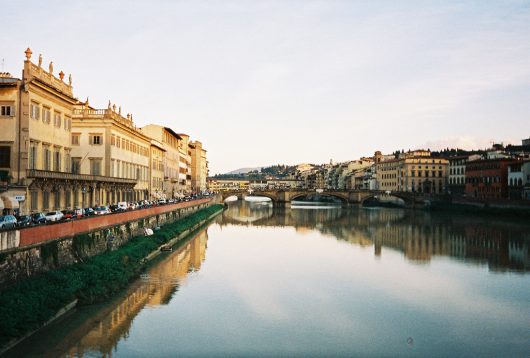
Facts and Figures About Migration to Italy

Nine Facts and Figures About Migration to Italy
Political instability is a strong driving force behind poverty and unemployment, and Italy has served as a gateway for a better quality of life for political refugees. Since the mid-twentieth century, Italy has been a hub for international migration, as the Italian peninsula bears proximity to the Middle East, Afric, and former USSR countries, and offers easy access to continental Europe. The following paragraphs include facts and figures about the history of migration to Italy, who has migrated to Italy and how the Italian government has handled immigration.

The first large refugee population in Italy came from Tunisia in the 1980s. Tunisians who had formerly migrated to France for labor opportunities began to flock to nearby Italy to work in its informal economy. Lampedusa and Sicily, both Italian islands (the former being only 70 miles from Tunisia) became the leading destinations for Tunisian refugees.

Following the Tunisians were female migrants from Catholic countries in South America and northern Africa who were employed in housework or as waitresses.

After the fall of the Berlin Wall in 1989, refugees began to come from Romania, Albania and Ukraine to escape political instability. Over time, this new wave of refugees changed the ethnic makeup of migrants to Italy. In 2003, eastern European refugees dominated half the regions in Italy while northern African refugees dominated the other half, separating the two migrant groups. By 2014, however, every area was dominated by either Romanian, Albanian or Ukrainian migrants.

In recent years, Italy has made attempts to discourage refugees from entering the country. In 2008, former Prime Minister Silvio Berlusconi and Moammar Gadhafi signed the “Treaty of Friendship” in which Itay promised to invest $5 billion in Libyan infrastructure projects in exchange for a drastic decrease in illegal immigration from Libya. The migration from Libya spiked again in 2011 after Gadhafi was overthrown. In 2012, Italy faced harsh criticism from the European Court of Human Rights for signing similar bilateral agreements with migrants’ countries of origins that allowed for the quick deportation of refugees.

In November 2013, however, the Italian Navy enacted a search-and-rescue program called Mare Nostrum, following a tragic boat accident one month prior that killed 349 asylum seekers. In one year, this program rescued more than 160,000 people. The program got abandoned in October 2014 after receiving criticism from the European Union for encouraging migration across the Mediterranean.

In 2015, Italy was second to Germany for the highest number of refugees seeking asylum, with 122,960 applicants.

The overwhelming majority of immigrants to Italy are men ages 18 to 34. In 2016, 85,570 men within this age range migrated to Italy, comprising 70% of migrants to Italy that year. This group of migrants largely included migrant workers who sent remittances to their families in their home countries.

In 2017, the Minister of the Interior, Marco Minniti, issued a decree that enforced stringent guidelines on the rights of asylum seekers in Italy. First, migrants who were denied asylum in Italy would lose their right to appeal the decision. Second, the process for seeking asylum was modified so that it would be a summary proceeding instead of a full chamber proceeding. In this case, the judge would no longer hear the asylum seeker’s interview before granting or denying asylum.

This information about migration to Italy demonstrates how a developed country may choose to respond to an ongoing refugee crisis. While the Italian government has made substantial efforts to repatriate migrants, projects such as Mare Nostrum have had a positive impact by saving thousands of asylum seekers in the Mediterranean Sea. Considering their proximity to northern Africa, the Middle East and Eastern Europe, the Italian government must decide whether it is their responsibility to assist refugees who are escaping the internal crisis.

– Christiana Lano

Photo: Flickr

July 25, 2017
https://borgenproject.org/wp-content/uploads/borgen-project-logo.svg 0 0 Borgen Project https://borgenproject.org/wp-content/uploads/borgen-project-logo.svg Borgen Project2017-07-25 07:30:232024-05-28 00:03:22Facts and Figures About Migration to Italy
Global Poverty, Refugees, War and Violence

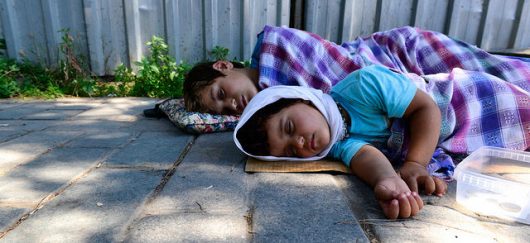
10 Facts About Syrian Refugees

10 Facts About Syrian Refugees
It has been six years since the outbreak of civil war in Syria that has resulted in a reported 470,000 Syrian deaths. The war began with anti-government demonstrations and escalated into armed opposition groups fighting the government after a violent crackdown on the protests. The ongoing threat of the civil war has caused 11 million Syrians to flee so far. Here are 10 facts about Syrian refugees:

  1. Of the 11 million people displaced by the conflict in Syria, five million Syrians are refugees. This means that the other 6.3 million are displaced within Syria.
  2. Four out of five Syrian refugees are children.
  3. In just over a year after the civil uprising began, 500,000 Syrian refugees had left their homes.
  4. Many Syrian refugees remain in the Middle East. They reside in countries such as Turkey, Lebanon, Jordan, Iraq and Egypt, although an estimated 10% have relocated to Europe.
  5. Many Syrians who fled into Northern Iraq are now trapped inside Iraq’s internal conflict. Because of the pre-existing conflict, Iraq struggles to meet the needs of the Syrian refugees.
  6. In order to flee, many Syrian refugees attempt to cross the Mediterranean Sea. Not all of them make it across alive.
  7. In January 2016, a reported 2,647 refugees fled to the United States, amounting to roughly 0.06% of the total refugee population.
  8. Around 40,000 Syrian refugees have fled to Canada.
  9. Nearly the entire population of Syria lives in poverty, with about 70% lacking access to clean drinking water.
  10. In 2016, the U.N. declared that $4.5 billion was required in order to meet the urgent needs of Syrians, yet only $2.9 billion was actually received.

These 10 facts about Syrian refugees illustrate the always-escalating nature of the crisis, showing that aid is needed more than ever before.

– Danyel Harrigan

Photo: Flickr

July 25, 2017
https://borgenproject.org/wp-content/uploads/borgen-project-logo.svg 0 0 Borgen Project https://borgenproject.org/wp-content/uploads/borgen-project-logo.svg Borgen Project2017-07-25 07:30:022024-12-13 17:58:2310 Facts About Syrian Refugees
Global Poverty, Refugees

10 Facts About Portugal Refugees

Portugal Refugees
Far from the refugee camps of Eastern Europe, Portugal is rarely associated with the term “refugee.” Its location presented an obstacle for refugees fleeing countries such as Syria. But the Portuguese prime minister is determined to change the idea that Portugal is not a country welcoming refugees. With the help of the European Union, Portugal is increasing refugee quotas and welcoming unprecedented numbers. These 10 facts about Portugal refugees show the newfound commitment of the Portuguese to refugees.

  1. The European Union unveiled a new plan to relocate refugees from Italy and Greece to Portugal. This made Portugal third on the list of countries for the number of refugees it will welcome under the plan.
  2. In 2015, Portugal received 872 requests for asylum. Of these requests, 19 were from Syria, five were from Iraq, and four were from Afghanistan.
  3. Portugal is undeniably prepared to handle the increase in refugees as it was ranked second, behind Sweden, for its accomplishments for assimilating refugees into society.
  4. The World Health Organization (WHO) introduced a five-day course for medical professionals to educate them on refugee health. Portugal has sent representatives to the course in order to become prepared for the increase of refugees to which it has committed. The course will cover how to assist refugees in finding healthcare, why it is economically important to focus on the health of migrants and applicable strategies that focus on refugee populations.
  5. World Refugee Day ushered in opportunities all over the world for refugees. Starbucks announced its plan to hire 2,500 refugees all over the world, including in Portugal.
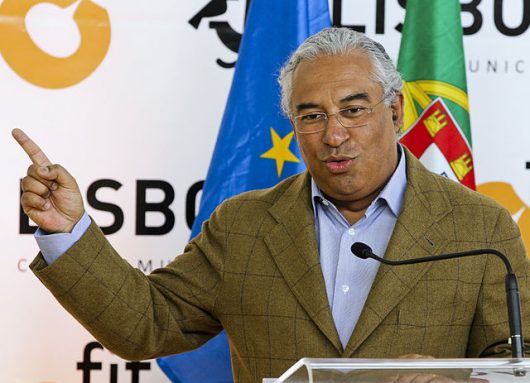
  6. Prime minister António Costa increased the number of refugees from 4,000 to 10,000 in an apparent effort to boost the economy. This has led to refugee relocation across Portugal in an attempt to increase job growth.
  7. Pão a Pão, a restaurant in Lisbon, gave refugees around the city a new start. The majority of its employees are refugees, cooking bread from their place of origin.
  8. Although Portugal became a rising star in terms of their commitment to refugees, some have criticized the move as simply a way to boost the population. The economic crisis sent many Portuguese citizens abroad in search of employment.
  9. Portugal is a widely Catholic country that listens intently to the words of the Pope, and thus takes his lead on various social issues. His recent interest in the refugee crisis contributed to Portugal’s willingness to accept more migrants.
  10. Portugal continually struggled to attract refugees as the location is distant from where they begin their journey. Many refugees aim for Central Europe because of the perceived wealth, with Portugal never appearing on their radar.

The experience of Portugal refugees shows that this Western European country could soon be center stage in terms of migrant numbers. Portugal is ramping up preparations to accept thousands of more immigrants and sees the refugee crisis as an opportunity to grow its population and economy. These facts about Portugal refugees prove that Portugal is a country refugees should be seeking.

– Sophie Casimes

Photo: Google

July 24, 2017
https://borgenproject.org/wp-content/uploads/borgen-project-logo.svg 0 0 Borgen Project https://borgenproject.org/wp-content/uploads/borgen-project-logo.svg Borgen Project2017-07-24 07:30:162020-06-18 08:37:5510 Facts About Portugal Refugees
Global Poverty, Refugees

10 Facts About Refugees in Paraguay

10 Facts About Paraguay Refugees
Refugees leave their countries in order to find safety, peace and other necessities not present in their homelands. In Paraguay, incoming refugees are guided through the process of adapting to the country’s practices, lifestyle and community. Here are 10 facts about refugees in Paraguay:

  1. In 2016, 49 refugees submitted asylum applications to Paraguay. Only 27 applications were approved, mostly for Syrians and Cubans. While this does not guarantee entry for all refugees, it shows that Paraguay is very welcoming to some.
  2. Some refugees use fake passports to enter Paraguay. The country’s criminal court convicted seven Syrian refugees of this crime in March 2015. One of the convicted refugees stated that Paraguay’s police “treated them with respect.” Paraguay’s criminal court granted the refugees freedom of movement at the first hearing.
  3. Many refugees seek lost family members. Some do not know if their parents are living outside of Paraguay or are even still alive. Two such refugees, Mahed Ibrahim and his younger brother, unnamed because he is a minor, fled to Paraguay in search of their parents.
  4. Paraguay’s government plans to build 4,000 homes for refugees of flood disasters. The refugees will also be given food supplies, housing materials and medical assistance. Paraguay’s government relief agency is also preparing for mosquito-borne diseases that may affect these refugees.
  5. Refugees in Paraguay are bound to a “resettlement policy.” This policy helps refugees become self-reliant and make positive contributions to their new country. The program provides refugees with housing, medical care and employment opportunities.
  6. When moving into their new homes, refugees in Paraguay are provided with basic amenities and have no rental expenses in their first year. After the first year, they can make arrangements to buy their homes by paying a specified quota for several years. Paraguay’s various programs and requirements determine the quota amount.
  7. Refugees in Paraguay can access free healthcare through the National Public Administration’s resources and services. In the first year, some medicines and expenses are not covered under the free plan. Once the first year passes, the restriction is lifted.
  8. Refugees in Paraguay have access to the same public education system as citizens. The Office of the United Nations High Commissioner for Refugees (UNHCR) pays for refugee children’s education expenses. The payments annually cover uniforms and materials in preschool, primary and secondary schools.
  9. Refugees are guided and educated on aspects of Paraguay’s labor market, helping them find employment almost immediately. Paraguay’s government gives refugees vocational training in baking, plumbing, computers and other work skills. The training sessions are free and relieve refugees of added expenses.
  10. From their arrival date, refugees in Paraguay are given a monthly stipend for one year. If managed properly, the stipend can cover utility, food and other expenses. The stipend also has a single allocation for clothing expenses.

These 10 facts about refugees in Paraguay reveal the country’s goal to help others but also the necessity for reform. Paraguay still declines some refugees depending on their country of origin, and changes will be needed in order to grant equality for all refugees. For refugees presently in Paraguay, a better quality of life may very well be in their future.

– Rhondjé Singh Tanwar

Photo: Flickr

July 24, 2017
https://borgenproject.org/wp-content/uploads/borgen-project-logo.svg 0 0 Borgen Project https://borgenproject.org/wp-content/uploads/borgen-project-logo.svg Borgen Project2017-07-24 01:30:572024-12-13 17:58:2310 Facts About Refugees in Paraguay
Global Poverty, Refugees and Displaced Persons

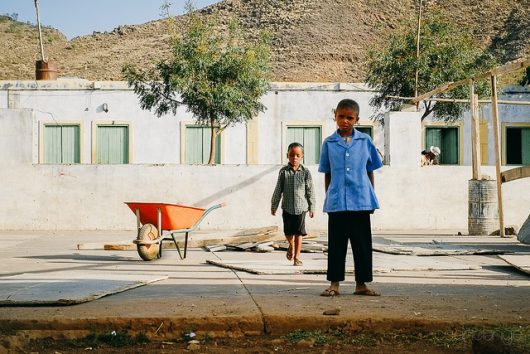
10 Facts About Cabo Verde Migrants

Cabo Verde Migrants
The Republic of Cabo Verde (or Cape Verde) consists of 10 islands and 5 islets off the west coast of Africa. Originally a colony of Portugal, Cabo Verde gained its independence in 1975. It currently runs under a multi-party system with both a prime minister and a president.

Despite the area’s lack of natural resources and droughts, the country found stability. Migration is a huge part of that. Men, in particular, emigrate to countries like the United States and Portugal in search of work so they can send money back home to their families.

Here are 10 facts about Cabo Verde migrants:

  1. There are more Cabo Verde migrants than there are residents in the Republic of Cabo Verde. The 20th century saw a huge fluctuation of emigration after droughts plagued the islands. Most migrated to the eastern coast of the United States or Portugal, but there are also Cabo Verdeans in Senegal, the Netherlands, France and Angola.
  2. Many Cabo Verde migrants are deported back home because of their involvement in drugs, crime and improper documentation. Males are most likely to return, and this caused an increase in important roles for women.
  3. Migrants that are deported back to Cabo Verde do not have access to a program to initiate them back into the society, which makes life at home difficult.
  4. Those returning from the United States have difficulty remembering the Creole language of Cabo Verde and struggle to find a job.
  5. The 2016 push for tighter immigration laws in the United States threatened to deport nearly 400 Cabo Verde migrants. Executive orders to speed up the deportation process in the United States only increased that threat.
  6. Migrating an important for many Cabo Verde people because it allows them to send money to their families. Working outside of the country brings in foreign currency that helps stabilize both family incomes and the nation’s economy.
  7. To help Cabo Verde migrants, an International Commission established the Ministry of Emigrated Communities. This institution worked to fund migration and make it easier for Cabo Verdeans to remain in countries outside of their own in order to work. The immigration policies of other countries have led to some conflict, but this representation is important for Cabo Verdeans.
  8. Some Cabo Verdean migrants want to pursue higher education. In 2009, the number of migrants from Cape Verde who had received a higher education was at 11%. At the same time, more than 54% of Cape Verde migrants held positions in health care.
  9. Most of the wealth in Cabo Verde comes from migrants who are working abroad and sending money home. This is visible on the islands by the large houses and expensive cars. It is crucial that migration remains an option for Cabo Verdeans.
  10. In 2010, the European Union worked with Cabo Verde on a project to “promote legal mobility between Cabo Verde and the EU by enhancing cooperation on migration and development issues while combating irregular migration.” The EU wanted to find a productive and agreeable use for the skills that Cabo Verde emigrants possessed when they returned home. They also wanted to find a successful way for Cabo Verdeans to continue migrating to new countries.

Migration isn’t currently popular in places like the United States. However, for those living in Cabo Verde, it is one of the best options for economic and social stability.

– Mackenzie Fielder

Photo: Flickr

July 23, 2017
https://borgenproject.org/wp-content/uploads/borgen-project-logo.svg 0 0 Borgen Project https://borgenproject.org/wp-content/uploads/borgen-project-logo.svg Borgen Project2017-07-23 07:30:362020-06-11 08:29:1010 Facts About Cabo Verde Migrants
Food & Hunger, Global Poverty, Hunger

10 Impacts on Food and Hunger in Iceland


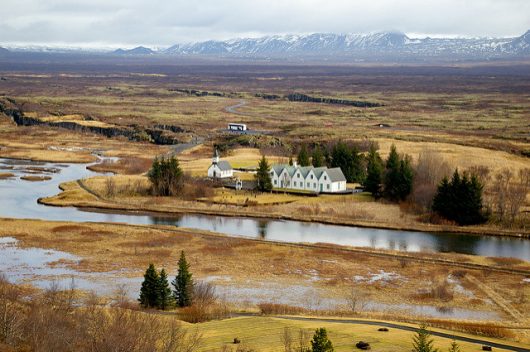
Iceland, a small island nation located in the North Atlantic northwest of the United Kingdom, went bankrupt in 2008 when global financial markets collapsed. Since then, the economy has recovered, but many factors affect its food-related economy. Here are 10 impacts on food and hunger in Iceland.

  1. Natural disasters have a tremendous impact on Iceland’s food security. As a result of the April 2010 eruption of the Eyjafjallajokull volcano, for instance, hundreds of acres of local farmland were coated in four inches of ash.
  2. Food poverty among Icelandic children, measured by the inability to afford a meal with meat, chicken, fish or a vegetable equivalent every second day, was 6% in 2012.
  3. The depth of hunger is measured by the energy deficit in undernourished people using kilocalories. In Somalia, for example, the deficit is 490 kilocalories a day. In Iceland, the deficit is 130 kilocalories a day.
  4. High global food prices and the devaluation of Iceland’s currency following its bankruptcy weakened food security.
  5. Fears that the European Union would negatively impact food security in Iceland is among the reasons it dropped its bid to join. Among those who lobbied hardest against joining the EU were Iceland’s farmers, who used “food security” terminology to accentuate the need for more local food production.
  6. Though fishing accounts for 40% of its exports, Iceland produces just half of its people’s nutritional needs and relies on imports.
  7. After declaring sovereign bankruptcy in 2008, Iceland turned to its fishing industry to help it recover. Unfortunately, the price of fish fell 40% in some markets due to the global recession.
  8. Most of Europe has over-fished local waters, but not Iceland. It has an abundant supply. Unfortunately, fishing companies that had invested in domestic banking are now heavily in debt. What’s worse, recession in important markets weakened demand.
  9. The success of Iceland’s economy is heavily dependent upon other economies. That, coupled with its relative isolation, means that food shortages could result from disruptions in importing or exporting.
  10. Icelandic households are unprepared for food shortages. A 2011 survey indicated that most have a supply that would last for just a week. The situation is not much better for food suppliers. Their stores would be depleted in less than a month.

As these impacts on food and hunger in Iceland indicate, food poverty is not only a problem in the developing world, and it continues to have a disproportionate impact on children. In addition, even countries with plenty of food to export can be dependent on food imports and what it takes to produce food. What may be more, when talking about impacts on food and hunger in Iceland, is the effect of natural disasters such as volcanic eruptions.

– Laurie Gold

Photo: Flickr

July 22, 2017
https://borgenproject.org/wp-content/uploads/borgen-project-logo.svg 0 0 Borgen Project https://borgenproject.org/wp-content/uploads/borgen-project-logo.svg Borgen Project2017-07-22 07:30:212020-06-16 10:49:1810 Impacts on Food and Hunger in Iceland
Page 7 of 25«‹56789›»

Get Smarter

  • Global Poverty 101
  • Global Poverty… The Good News
  • Global Poverty & U.S. Jobs
  • Global Poverty and National Security
  • Innovative Solutions to Poverty
  • Global Poverty & Aid FAQ’s
Search Search

Take Action

  • Call Congress
  • Email Congress
  • Donate
  • 30 Ways to Help
  • Volunteer Ops
  • Internships
  • Courses & Certificates
  • The Podcast
Borgen Project

“The Borgen Project is an incredible nonprofit organization that is addressing poverty and hunger and working towards ending them.”

-The Huffington Post

Inside The Borgen Project

  • Contact
  • About
  • Financials
  • President
  • Board of Directors
  • Board of Advisors

International Links

  • UK Email Parliament
  • UK Donate
  • Canada Email Parliament

Get Smarter

  • Global Poverty 101
  • Global Poverty… The Good News
  • Global Poverty & U.S. Jobs
  • Global Poverty and National Security
  • Innovative Solutions to Poverty
  • Global Poverty & Aid FAQ’s

Ways to Help

  • Call Congress
  • Email Congress
  • Donate
  • 30 Ways to Help
  • Volunteer Ops
  • Internships
  • Courses & Certificates
  • The Podcast
Scroll to top Scroll to top Scroll to top