• Link to X
  • Link to Facebook
  • Link to Instagram
  • Link to TikTok
  • Link to Youtube
  • About
    • About Us
      • President
      • Board of Directors
      • Board of Advisors
      • Financials
      • Our Methodology
      • Success Tracker
      • Contact
  • Act Now
    • 30 Ways to Help
      • Email Congress
      • Call Congress
      • Volunteer
      • Courses & Certificates
      • Be a Donor
    • Internships
      • In-Office Internships
      • Remote Internships
    • Legislation
      • Politics 101
  • The Blog
  • The Podcast
  • Magazine
  • Donate
  • Click to open the search input field Click to open the search input field Search
  • Menu Menu

Tag Archive for: Facts

Posts

Global Poverty, Human Rights

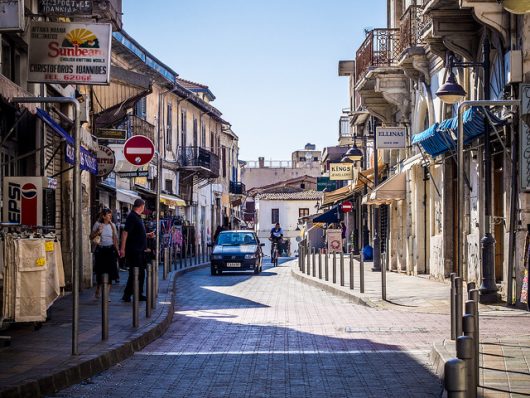
10 Facts About Human Rights in Cyprus

Human Rights in Cyprus
The Mediterranean island nation of Cyprus is a complex modern-day geopolitical concern with factional strife ongoing since the second half of the last century. Recently, human rights in Cyprus has become a more significant issue. Here are 10 facts that explain how the country evolved to its present situation and what is being done to combat its human rights issues today.

  1. Cyprus is one country with two de facto autonomous regions. The southern half of Cyprus is governed by the internationally recognized Cypriot government, and the northern half is governed by the Turkish-Cypriot community.
  2. A violent separation occurred in 1974. The United Nations currently has a peacekeeping force maintaining a buffer zone between the two regions.
  3. Peace talks between the two sides occurred as recently as July 2017 but failed to make any substantial progress. A main issue of contention is the presence of Turkish troops on the northern side of the island.
  4. While the presence of a foreign military is certainly a worry to the international human rights community, human rights issues are present in other areas of Cyprus. A State Department report found that Cypriot police were using physical abuse, particularly toward foreigners and migrants. There were also reports of the police blackmailing illegal migrants.
  5. The U.N. Committee on the Elimination of Racial Discrimination (CERD) expressed concern in a report about the recent rise of right-wing extremist groups in Cyprus. CERD also criticized the Cypriot government for ineffectively handling hate speech in the media.
  6. As migrant rights become more prevalent in discussions of human rights in Cyprus, CERD is urging Cyprus to ratify the Convention for the protection of the Rights of All Migrant Workers and Members of their Families.
  7. CERD further encouraged the Cypriot government to ensure human rights for domestic workers. Currently, migrant domestic workers cannot hold long-term residence status in Cyprus.
  8. Due to the increasing diversity in Cyprus, the nongovernmental organization Kisa was created in 1998. Kisa works to promote multiculturalism and end racism, xenophobia and discrimination in Cyprus.
  9. Kisa has had great success in promoting its vision through litigation and campaigns. However, a 2010 Kisa peace festival was disrupted by right-wing protestors who injured festival participants. The police arrested festival attendees.
  10. Current problems of human rights in Cyprus may be exacerbated by the recent finding that 244,000 Cypriots are at risk of poverty or social exclusion. That amounts to almost one-third of Cyprus’ population.

Human rights in Cyprus is a complicated issue. Nevertheless, the international community and groups in Cyprus remain committed to finding a peaceful solution to the issues that are present on the island.

– Sean Newhouse

Photo: Flickr

August 10, 2017
https://borgenproject.org/wp-content/uploads/borgen-project-logo.svg 0 0 Borgen Project https://borgenproject.org/wp-content/uploads/borgen-project-logo.svg Borgen Project2017-08-10 07:30:562024-05-28 00:15:2010 Facts About Human Rights in Cyprus
Global Poverty

Facts and Figures in Ethiopia

Facts and Figures in Ethiopia
With a population of more than 102 million people, Ethiopia is in the top 15 most populous countries in the world. Poverty is a key component to this large number. The people behind these digits have been associated with both suffering and fulfillment in four specific divisions. Outlined below are facts and figures in Ethiopia.

Agriculture
The central plateau of Ethiopia nurtures one of the largest areas of fertile land in east Africa. These highlands supply farmers with agricultural opportunities to grow many of their exported goods. Selling commodities range anywhere from vegetables to sesame seeds. In fact, reports state that coffee is the largest foreign exchange earner for Ethiopia. Despite Ethiopia’s dependence on agriculture sectors for much of its economic growth, only 5% of Ethiopia’s land gets irrigated. Organizations such as Farm Africa are working to help Ethiopian farmers transform this percentage. This form of aid is extremely effective in lifting many Ethiopians out of poverty. One of Farm Africa’s most recent success stories includes training farmers to grow ginger and pepper. These crops are grown in small plots and then sold for top dollar.

Climate
Throughout 2015 and 2016, Ethiopia suffered a change in normal weather patterns. The shift in climate resulted in the worst drought the country had experienced in 30 years. The shortage of rain left many Ethiopians jobless and lacking food security. The U.N. World Meteorological Organization predicts a 50-60% chance of an El Niño event forming in the middle to late 2017. If this warming trend repeats itself, Ethiopia will be faced with famine and deprivation once again. The World Bank is currently backing a project called Multi-sector Investment Planning for Climate Resilience to assist with environmental issues. The platform mobilizes for new and additional climate finance for resilient landscapes in priority sectors. The targets include funding for natural disaster management, climate change, land management and water resource management. This project will remain active until 2018.

Food Security and Nutrition
On top of the 7.8 million people in Ethiopia requiring relief from last year’s drought, an additional eight million rely on the government of Ethiopia’s Productive Safety Net Program to receive food. According to UNICEF, unstable access to food directly relates to the undernutrition and malnutrition taking place in Ethiopia. Over the past decade, the importance of tackling malnutrition has grown. In 2012 the World Health Assembly adopted the 2025 Global Targets for Maternal, Infant and Young Child Nutrition. In 2013 donors committed $23 billion to improve nutrition. With the recent naming of 2016-2025 as the United Nations Decade of Action on Nutrition, more people have begun to recognize the importance proper nutrition holds.

Healthcare
The World Health Organization (WHO) reports maternal mortality, malaria, tuberculosis and HIV/AIDS as significant contributors to Ethiopia’s health issues. Health institutions remain severely underfunded in Ethiopia and many are out of reach. Consequently, many of these health problems continue to exist. On the bright side, the country has seen progress in increasing vaccinations and reducing the number of new HIV cases. According to the 2016 Ethiopia Demographic and Health Survey, vaccination coverage among children has increased substantially. Now, 81% of children 12-23 months are vaccinated against polio. Another study concludes 58% of women and 77% of men age 15-49 acknowledge that the constant use of condoms is a reliable form of preventing the spread of HIV.

The above facts and figures in Ethiopia showcase the country’s share of failures and victories. Poverty can be identified as the backbone of each sector, ranging from agriculture to healthcare. Though the summarized hardships appear bleak, it’s the continuous improvements that count for Ethiopia.

– Emilee Wessel

Photo: Flickr

August 9, 2017
https://borgenproject.org/wp-content/uploads/borgen-project-logo.svg 0 0 Borgen Project https://borgenproject.org/wp-content/uploads/borgen-project-logo.svg Borgen Project2017-08-09 07:30:082024-05-28 00:03:22Facts and Figures in Ethiopia
Global Poverty, Refugees

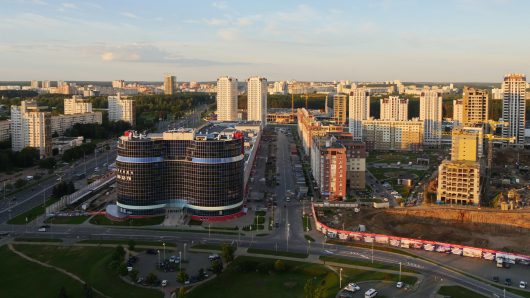
Nine Important Facts to Know About Belarusian Refugees

10 Facts About Belarussian Refugees
World War I was a massive turning point in the history of Belarus. Affecting the local economy, the war caused massive migration and displacement. Throughout the almost-century since then, the collapse of the Russian Empire, revolutions, various occupations and wars, Belarus has struggled to establish itself as an independent state. Belarus’s independence has been recognized globally since 1991.

Today, the country’s population is 84% Belarusian, 8.3% Russian, 3% Polish and 1.7% Ukrainian. Other ethnic groups in Belarus include Tatars, Jews and Roma. Over three million Belarusians live outside the country, most of them in Russia, Ukraine, Canada and the United States.

Here are 9 facts about Belarusian refugees:

  1. There were several waves of Belarusian refugees into the U.S. The first was before the Russian Revolution, then between 1919 and 1939 from West Belarus, then from the late 1940 to the early 1950s (after World War II), with the most recent wave of refugees coming after the collapse of the USSR in the 1990s.
  2. On March 28, 1928, 104 families moved to Birobidzhan from Belarus. The city in Siberia, near the Chinese border, became an administrative center of the Jewish Autonomous Oblast by a decision of the Communist Party.
  3. In the post-World War II period, from 1948 to the early 1950s, about 50,000 Belarusians fled to the U.S. Most of them left states all over Europe for political reasons.
  4. The largest concentrations of Belarusian Americans are in the metropolitan New York area, New Jersey, Cleveland, Los Angeles and Detroit.
  5. More than 340 Belarusian refugees resettled in Minnesota during the years 2003-2015.
  6. According to data made available to the Office of the United Nations High Commissioner for Refugees (UNHCR) by asylum countries, the number of Belarusian refugees seeking asylum in 29 of the most industrialized countries in the world has increased dramatically since 2000. The number of cases of Belarusian refugees and asylum-seekers has grown from 3,291 in 2000 to 6,480 in 2010, peaking in 2006 at 11,062.
  7. Volha Charnysh, a Ph.D. candidate in Government at Harvard University and executive editor of the Belarus Digest, found that more people from Belarus seek asylum elsewhere than people from Kyrgyzstan or Russia when taking differences in population size into account.
  8. In her article “Belarus Produces More Refugees Than It Saves” published in 2014, Charnish explained that many Belarusians obtain refugees status or seek asylum for political and social reasons, as political activists are often encouraged to go into exile.
  9. The Chernobyl disaster changed Belarusian migration patterns in the 1980s. Following the accident, where a majority of the nuclear fallout landed in Belarus, many Belarusian natives resettled internationally.

Belarusian refugees are resettling in the EU, the U.S., Australia, Canada and Russia. The latest wave of refugees consists mostly of professionals – software and other engineers, scientists, students and athletes.

– Yana Emets

Photo: Flickr

August 6, 2017
https://borgenproject.org/wp-content/uploads/borgen-project-logo.svg 0 0 Borgen Project https://borgenproject.org/wp-content/uploads/borgen-project-logo.svg Borgen Project2017-08-06 07:30:582024-06-05 04:37:55Nine Important Facts to Know About Belarusian Refugees
Global Poverty, Refugees

Eight Important Facts About Micronesian Refugees


The Federated States of Micronesia (FSM) consists of 607 islands spread over one million square miles in the Pacific Ocean. Here are eight facts about Micronesian refugees you should know:

  1. The U.S. occupied and administered the FSM from 1947 to 1979. During this time, the FSM’s population grew significantly due to the introduction of modern medicine. The U.S. also developed a wage economy in the FSM, encouraging Micronesians to migrate to population centers in search of work.
  2. When the FSM declared independence in 1979, the U.S. dramatically reduced the funds it contributed to the Micronesian economy, which shrunk the FSM and forced many Micronesians to return to their home islands. However, there remained on the islands a large population of skilled, educated and mobile individuals.
  3. The majority of Micronesian refugees today come to the U.S., specifically to Hawaii. This immigration pattern began in 1986 when the FSM signed a Compact of Free Association with the U.S. This gave Micronesians the right to freely migrate to the U.S. and to significant economic aid in exchange for the use of Micronesia’s extensive territory as military testing grounds.
  4. The U.S. tested nuclear weapons in Micronesia before signing the Compact without the FSM’s consent. In 1946, the U.S. informed the inhabitants of Bikini Atoll that they would have to relocate. Over 12 years the U.S. detonated bombs on the Marshall Islands, leaving behind radiation equal in scale to 7,000 Hiroshima-sized bombs. The residents of Bikini Atoll were never able to re-inhabit their home.
  5. Some of the aid and protections given to Micronesians under the Compact have rolled back. In 1996, President Bill Clinton signed a bill that cut off Micronesians’ access to Medicaid and food stamps.
  6. This rollback has hit Micronesians hard, as a disproportionate number of refugees living in Hawaii are homeless and unsheltered; Hawaii has the highest cost of living of any state in the U.S. Additionally, the FSM has the highest rate of diabetes in the world. The reason many refugees come to the U.S. in the first place is for access to more comprehensive health care.
  7. Despite the fact that Micronesian refugees pay taxes to the U.S. and volunteer for the military at twice the rate of American citizens, they cannot vote. As a result, many Micronesians feel the government treats them unfairly.
  8. Currently, most of the Marshall Islands (part of Micronesia) are less than six feet above sea level. Rising sea levels will likely spur waves of refugees to immigrate to Hawaii and the U.S. mainland in the near future, making it essential that the U.S. government address present and future living conditions of Micronesian refugees in the U.S.

It is important to keep these eight facts about Micronesian refugees in mind in the face of an administration that has so far proven itself unsympathetic to the plights of refugees from Mexico and Syria. Micronesian refugees have not received as much media attention as those of refugees from the aforementioned countries, but aid is still needed for those who flee Micronesia.

– Caroline Meyers

Photo: Flickr

August 6, 2017
https://borgenproject.org/wp-content/uploads/borgen-project-logo.svg 0 0 Borgen Project https://borgenproject.org/wp-content/uploads/borgen-project-logo.svg Borgen Project2017-08-06 07:30:502024-05-28 00:15:02Eight Important Facts About Micronesian Refugees
Global Poverty, Refugees

10 Facts About Refugees in Namibia

Refugees in Namibia
Namibia is a country in southern Africa with a population of about 2,514,000. The country was formerly a German colony, and then it became a part of South Africa before gaining independence in 1990. Here are 10 facts about refugees in Namibia:

  1. According to the World Bank, 1,737 refugees officially registered in Namibia in 2015. The official number of refugees in Namibia is lower than neighboring countries; Angola, for example, has 15,555, and Zambia has 26,447. However, according to the Namibian government, the World Bank’s count of the number of these refugees is incorrect. Many asylum seekers have moved from designated refugee camps to other parts of Namibia. The government estimates that there were actually more than 6,000 refugees in 2015.
  2. From 1998 to 2001, the number of documented refugees in Namibia skyrocketed from 3,820 to 30,885. The majority of these refugees came across Namibia’s northern border from Angola, where fighting between the Angolan government and rebel group UNITA was taking place.
  3. The official number of refugees peaked at 30,885 in 2001. Since that time, that number has decreased drastically. Namibia saw a slight uptick in the number of officially stateless people from 2007 to 2010, and again in 2013.
  4. Namibia’s Minister of Home Affairs and Immigration Pendukeni Iivula-Ithana described the current state of refugees in Namibia to New Era, a government-owned media outlet in Namibia. “Roughly 80% of these refugees are Congolese. A few are from Rwanda, Burundi, Zimbabwe and other countries, with about 30 asylum seekers arriving at Namibian borders every month,” she said.
  5. The Congolese refugees in Namibia have left behind a state of constant war. In 1996, Rwanda invaded the DRC in pursuit of the perpetrators of the Rwandan Genocide. This initial conflict destabilized the eastern DRC, and over the last two decades, multiple paramilitaries have warred with each other and the Congolese government for control of the region and its resources. This conflict, sometimes dubbed “Africa’s World War,” is the main source of refugees.
  6. After 23 years, the United Nations High Commission for Refugees ended its campaign to serve refugees in Namibia in 2015. Despite the government’s claim that there were more than 6,000 refugees, the U.N. contends that the number has dropped below 5,000. This, as well as Namibia’s upgrade to a middle-income nation at the time, were the U.N.’s justifications for its pull-out.
  7. Many of the refugees in Namibia live at the Osire camp—a specifically designated area for them. However, there have been mixed accounts of the quality of conditions at the camp. In 2009, a local human rights organization smuggled 41 people out of the camp after they had received death threats. The refugees were denied access at the border of Botswana and remained in “no man’s land” between Botswana and Namibia.
  8. Although the U.N. stopped direct refugee operations, the international union continues to support refugees in Namibia by lending resources from its regional office in Pretoria, South Africa.
  9. Namibia has begun resettling its refugees in other countries that will take them, known as “third countries.” In 2016, Namibia resettled more than 200 refugees to other countries, citing a lack of ability to provide for them.
  10. The U.N. conducted research on refugees at the Osire camp to test for HIV; the organization also provided the refugees with information on how to avoid contracting the virus. The program was a moderate success, as it successfully educated refugees at the camp about HIV/AIDS. However, the data also shows that the percentage of refugees at the Osire camp with HIV/AIDS exceeds the percentage of those from the surrounding areas (38.3% compared to 30.2%).

These facts about refugees in Namibia demonstrate that despite a lack of statistical clarity, the nation is still working to accommodate those in need.

– David Mclellan

Photo: Flickr

August 4, 2017
https://borgenproject.org/wp-content/uploads/borgen-project-logo.svg 0 0 Borgen Project https://borgenproject.org/wp-content/uploads/borgen-project-logo.svg Borgen Project2017-08-04 01:30:552020-07-13 09:48:1710 Facts About Refugees in Namibia
Global Poverty, Refugees

10 Important Facts to Know About Refugees in Swaziland

Swaziland Refugees
As attention turns to the world’s refugee population, it becomes evident that this is a problem area that needs help. Africa alone holds more than 15 million refugees and accounts for a fourth of the world’s displaced population. Swaziland is no different, as the country has seen its fair share of refugees over the past decade. Listed below are 10 facts about refugees in Swaziland:

  1. The Office of the United Nations High Commissioner for Refugees (UNHCR) established itself in Swaziland in 1978 to help with an influx of refugees who were fleeing apartheid in South Africa.
  2. In the 1980s, there were as many as 20,000 refugees in Swaziland. As many as 8,000 of these refugees were Mozambicans fleeing from their civil war.
  3. In 2005, the UNHCR handed over all of its refugee services to the Swaziland government, as the number of refugees had drastically decreased following the abolishment of apartheid. Refugees in Swaziland at the Malindza and Ndzevane refugee camps began to rely on the government for key services.
  4. The number of refugees in Swaziland decreased from 759 refugees in 2011 to 505 in 2012.  This change was perhaps due to a massive drought and food concerns in the region that began at that time.
  5. In 2015, a sample of data was collected by the UNHCR concerning refugees in Swaziland.  The data found that the number of refugees still had not reached pre-drought levels and was currently at 696 refugees.
  6. Refugees in Swaziland today come from surrounding countries which include Burundi, Angola, the Democratic Republic of the Congo, Rwanda and Somalia.
  7. New arrivals are held in the Malindza reception center and refugee camp that the UNHCR established. They are supplied with household items and blankets.
  8. Swaziland refugee children are enrolled in schools in order to integrate, and the Swaziland government applies to the UNHCR for funding in order for the children to attend for free.
  9. Malindza has health services for the refugees, including a primary care clinic that services the local community as well. The government understands that refugees come from difficult circumstances, so they also provide counseling services.
  10. In addition to providing household items, the opportunity to have gainful employment and medical assistance, Malindza and the Swaziland government have set up a food assistance program. This program was created to help new arrivals and the vulnerable which includes disabled persons and children. This program allows these people to receive food prepared in the communal kitchen.

Despite numerous hardships of their own, the people who call this small monarchy in Southern Africa home continue to provide their fellow people of Africa a safe place to escape from difficult circumstances. Although they no longer host thousands of refugees, the country still continues to treat those they do house with respect.

– Rachael Blandau

Photo: Flickr

August 3, 2017
https://borgenproject.org/wp-content/uploads/borgen-project-logo.svg 0 0 Borgen Project https://borgenproject.org/wp-content/uploads/borgen-project-logo.svg Borgen Project2017-08-03 01:30:412024-05-28 00:03:3410 Important Facts to Know About Refugees in Swaziland
Global Poverty, Refugees

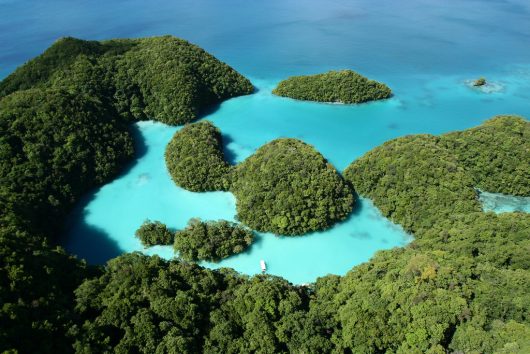
10 Important Facts to Know About the Progress of Palau Refugees

Palau Refugees
The Republic of Palau, a small island group in the Pacific, forms the far-western chain of the Caroline Islands in Micronesia. The country is doing surprisingly well in terms of its refugee population, which began decreasing rapidly in 2009. It is now at its lowest rate of refugees and asylum-seekers, according to the UNHCR. Here are 10 facts about Palau refugees and how the country handles those in need of sanctuary.

  1. Because of Palau’s small numbers of asylum-seekers, refugees, stateless persons, and internally displaced persons, Palau is not a participant of either the Status of Refugees 1951 Convention or the Status of Stateless Persons 1954 Convention. This means that Palau is not protected under this treaty.
  2. Despite not being a signatory of these conventions, Palau commendably took in 11 refugees from Myanmar, known as Uighurs, in 2009. These 10 men and 1 woman fled from Myanmar for fear of arrest after their political outcry. They moved from Malaysia to the Philippines, resting finally in Palau because of its openness and visa-free entry.
  3. While the refugees awaited their asylum acceptance, a local Roman Catholic church housed and fed them. During their stay, a spokeswoman for the refugees said that they finally felt free in Palau.
  4. Palau President Johnson Toribiong said upon the guests’ arrival, “It’s our age-old tradition to receive those in need whenever they somehow arrive on our shores.” The government and Palau locals selflessly gave the Uighurs hope of asylum and temporary relief from arrest.
  5. Palau made an official agreement with the U.S. in 2009 upon the arrival of the Uighurs that it would extend its small island to the refugees as home. A long-standing friendship with the U.S. aided President Toribiong’s acceptance of the Uighurs as part of both countries’ human rights system.
  6. Toribiong vehemently dismissed allegations upon the Uighurs’ arrival that the government of Palau accepted the 10 men and 1 woman as part of a reported pact between the U.S. and Palau, where the former would be paid $200 million. Toribiong claimed Palau’s goodwill was spurred only by its humanitarian nature.
  7. Palau’s reputation of accepting all displaced or endangered people is reflected in its population, which is comprised of 20,000 natives and some 6,000 foreign citizens, including 445 Bangladeshi Muslims.
  8. The UNHCR noted that Palau’s involvement with the Pacific Immigration Directors’ Conference will only increase the collective and national response to issues of refugee acceptance and protection.
  9. As a Pacific Island country, Palau remains under watch for its own displaced persons, due to climatic factors such as rising sea levels, frequent severe storms, and increased salinization. In the case of such an event, the population is protected by the IASC Pacific Humanitarian Protection Cluster, co-led by UNHCR and OHCHR to support the country in case of displacement.
  10. A recent 2016 Palau Human Rights Report states that Palau continues to respect the law of Freedom of Movement, Internally Displaced Persons, Protection of Refugees, and Stateless Persons. The law allows for internal movement, emigration, and foreign travel for all Palau residents.

It appears that Palau is doing well as it has low numbers of internal refugees, and welcomes others in need of assistance and asylum. The situation of Palau refugees shows that the country is progressing past the immigration turmoil of many other countries.

– Olivia Cyr
Photo: Flickr

August 1, 2017
https://borgenproject.org/wp-content/uploads/borgen-project-logo.svg 0 0 Borgen Project https://borgenproject.org/wp-content/uploads/borgen-project-logo.svg Borgen Project2017-08-01 01:30:492024-05-28 00:03:3110 Important Facts to Know About the Progress of Palau Refugees
Global Poverty, Human Rights

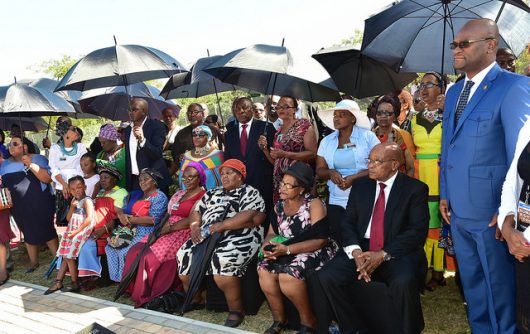
9 Important Facts About Human Rights in South Africa

Human Rights in South Africa
South Africa has been a leader in human rights in the African continent since the end of apartheid. The nation has many protections for civil liberties, but the status of human rights in South Africa has been threatened by government inaction and possible corruption, as well as a rising tide of xenophobic sentiments. Here are nine facts about human rights in South Africa.

Human Rights in South Africa: 

  1. Freedom of expression, religion, and the press are constitutionally protected human rights in South Africa. However, the freedom of media has been a concern after the South African Broadcasting Corporation (SABC) made moves that threatened the credibility of South Africa’s state-run media. ISABC chief operating officer Hlaudi Motsoeneng used the SABC to protect the reputation of South African President Jacob Zuma. Motsoeneng accomplished this by banning coverage of violent political protests, firing journalists who criticized the ban, refusing to air political advertisements and directing journalists to cover Zuma positively. Motsoeneng was ordered to step down by the South African judiciary, but he was later rehired in a different role only to once again be forced to step down by the courts two months later.
  2. A recently proposed hate crime bill could further threaten freedom of speech in South Africa. Critics have stated that it’s too broad in its criminalization of hate speech and could severely limit the ability of South Africans to express controversial opinions.
  3. Freedom to peacefully protest and assemble is also a constitutional right in South Africa. While protesters must notify the police ahead of time, they are rarely denied assembly. Recently, skirmishes between student protesters and the police have turned violent, and many have criticized the police for using unnecessary force.
  4. Deaths through police action have declined from previous years, but police violence still remains an issue in South Africa. From 2015-2016 there have been hundreds of reported cases of assault, torture and rape committed by police officers and deaths in police custody.
  5. Since the end of apartheid, South Africa has implemented many anti-discrimination protections. However, the effects are still felt today. Though white people are a minority in South Africa, they still own the majority of business assets and farmland in the region. Opportunities for non-whites remain comparatively restricted.
  6. South Africa has a highly progressive asylum policy for refugees. From 2006-2012, it accepted more refugees than any other nation in the world. Rather than being stuck in camps, refugees in South Africa live in cities and access the same public utilities that South Africans do. Unfortunately, strong anti-immigrant rhetoric and frustrations with South African governance have resulted in many violent attacks against foreigners.
  7. South Africa has failed to provide children with disabilities equal opportunities for education. Disabled children can be denied access to public schools and forced to attend special schools. South Africa has free public education, but parents are forced to pay fees if they have a disabled child in a special school. The UN has recommended that South Africa review its policies to make education more inclusive.
  8. South African law enforces gender equality and women currently make up 42% of National Assembly seats. However, women are often subject to discrimination, paid less than their male counterparts and occupy fewer roles of authority in business. In addition, domestic violence and rape are highly underreported crimes in South Africa. In 2006, President Jacob Zuma faced rape charges that he was later cleared of. The trial elicited concern from anti-rape activists due to the intense heckling of the alleged victim, the cross-examination of the alleged victim’s sexual history and Zuma’s own comments on their sexual encounter.
  9. Nearly 20% of adults and nearly one-third of pregnant women in South Africa live with HIV. The government has made moves to effectively treat its population by improving access to antiretroviral therapy. It also launched a She Conquers campaign that confronts the high rates of HIV in young women and aims to reduce teenage pregnancy.

Human rights in South Africa are pretty well protected. However, working towards an equitable society and holding the state accountable will be necessary for preserving these rights.

– Carson Hughes

Photo: Flickr

July 30, 2017
https://borgenproject.org/wp-content/uploads/borgen-project-logo.svg 0 0 Borgen Project https://borgenproject.org/wp-content/uploads/borgen-project-logo.svg Borgen Project2017-07-30 01:30:552024-05-28 00:03:289 Important Facts About Human Rights in South Africa
Global Poverty

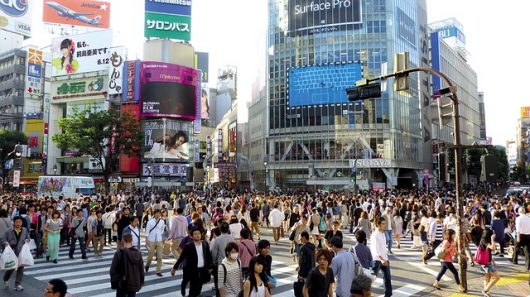
5 Facts on the Cost of Living in Japan

Living Cost in Japan
Located off the eastern coast of Asia, Japan is an island that lies in the Pacific Ocean. The natives of Japan pride themselves on their homogeneity that they have developed through centuries of tradition. Unorthodox to Western culture, Japan has thrived for a long time by hosting tea ceremonies, Buddhist- and Shinto-inspired gardens and the practice of calligraphy.

Japan is also known for its serene beauty, housing 60 active volcanoes, including Japan’s highest mountain top, Mount Fuji, which peaks at 12,388 feet in elevation. As it stands, Japan has proven to be quite successful as a country, boasting favorable statistics such as a 100% literacy rate for both men and women, a life expectancy rate of 86.6 years for women, and one of the lowest unemployment rates in the world at 2.8%.

This being said, Japan has also proven to be one of the most expensive countries to live in, ranked 17th in the world according to the Independent.

Here are 5 facts on the cost of living in Japan:

  1. Renting a one-person apartment in the center of Japan cities is estimated at 81,890 yen per month. The price of rent increases to 90,594 yen per month for a three-bedroom apartment. On top of the already high rent, the cost of living in Japan is further increased by 20,120 yen for basic utilities in a 915-square-foot apartment, such as electricity, water, heating and garbage.
  2. The cost of living in Japan varies in price compared to the United States. For example, consumer prices are 14.36% higher in Japan compared to the United States, and the prices of groceries in Japan are 17.77% higher than the price of groceries in the United States. However, the United States has a staggering 50.64% higher rent than Japan does, and restaurant prices in the United States are 44.77% higher than in Japan. According to the Independent, the United States slightly edges out Japan in terms of living expenses. The cost of living in Japan is ranked 17th in the world, while the United States is ranked 15th.
  3. Insurance prices in Japan total to roughly 422,604 yen yearly. Health insurance totals out to about 155,532 yen yearly, while pension insurance adds another $267,072 yen in yearly insurance costs. Insurance prices are considerably affordable considering the yearly base salary of Japan is three million yen, but with a yearly income tax of 63,240 yen, the average net salary for people in Japan comes out to 2,514,156 yen.
  4. Rent in Tokyo is noticeably more expensive than the average cost of living in Japan. Tokyo contains a population of 13.491 million people, roughly 11 percent of Japan’s total population. Monthly rent for housing in more expensive areas of Tokyo costs about 256,432 yen, and utilities for one month costs about 17,835 yen. Other luxuries to decorate one’s housing in Tokyo are also expensive, including 78,987 yen for a 40-inch flat screen television, 24,654 yen for an 800-watt microwave and 906 yen for laundry detergent.
  5. Due to the high cost of living in Japan, Japan maintains one of the highest suicide rates in the world at 41.7 per 100,000 people amongst men. The main reasons for the high suicide rate in Japan are attributed to adverse economic conditions and unemployment rates.

Overall, the cost of living in Japan is high, yet it is not inconceivable to imagine settling down in one of the many cities in Japan. Japan offers a chance at success with its high success rates in education and a strong labor force, thereby offering a steady income to afford the cost of living in Japan.

– Patrick Greeley

Photo: Pixabay

July 29, 2017
https://borgenproject.org/wp-content/uploads/borgen-project-logo.svg 0 0 Borgen Project https://borgenproject.org/wp-content/uploads/borgen-project-logo.svg Borgen Project2017-07-29 01:30:442020-07-01 11:11:455 Facts on the Cost of Living in Japan
Global Poverty, Human Rights

Nine Facts About Human Rights in Jordan

Human Rights in Jordan
Jordan may be experiencing a new era of political change. The nation is one where freedoms are very limited. However, the work of non-governmental organizations (NGOs) has opened pathways to human rights reform in Jordan. Below are nine facts about human rights in Jordan.


Facts about Human Rights in Jordan


  1. Freedom of speech is limited in Jordan, especially when it comes to criticism of authority. Journalists, academics and artists can be imprisoned for “defamation” of the king, the government, Islam and foreign nations. A proposed reform issued to the Jordanian Parliament in 2015 would offer alternative punishments, such as community service if implemented.
  2. Jordan recently loosened restrictions on public assembly through the 2011 Public Gatherings Law. This law allows for public demonstrations to be held without prior approval from the government.
  3. Women possess an equal right to participate in government, and 20 of Jordan’s 130 government representatives are women. Despite this, women in Jordan lack many of the civil liberties available to men. Marriages between Muslim women and non-Muslim men are unrecognized by Jordan’s government. Jordan’s nationality laws restrict women from passing their nationality down to their children and non-Jordanian spouses.
  4. Additionally, Jordan has one of the largest gender gaps in the world, according to the World Economic Forum (WEF). Jordan ranks at 134 of the 144 countries studied by the WEF. Though both men and women are comparatively well-educated in the region, women face several economic barriers that men do not. Women are given paid maternity leave and child care when entering the workforce but lack anti-discrimination protections, which encourages private businesses to hire men instead of women to avoid the cost. Many women also lack the right to inherit the wealth of their parents.
  5. Jordan also has a poor record of crimes against women. The law allows for perpetrators of “honor crimes” to be given reduced sentences. There are also penal code loopholes that allow rapists to escape prosecution if they have been married to their victim for three years. Recently, King Abdullah II endorsed a motion that would abolish these loopholes and it is expected to be ratified by Parliament.
  6. Jordan has been a leader in the Middle East for implementing regulations that protect migrant workers from forced labor and human trafficking. However, Jordanian law is set up in a way that still allows these abuses to happen. Migrant workers have limited freedom of movement and must get permission from an employer before leaving their houses; 50,000 migrant workers in Jordan are confined to their houses day and night. Employers are rarely prosecuted for violating migrant labor laws and Jordan lacks shelters for workers escaping abuse.
  7. According to the Human Rights Watch, local governors detained over 19,000 people without trial in 2015. Many of these people were imprisoned for a year or longer.
  8. Jordan has taken in over 650,000 Syrian refugees. Approximately 20 percent of them are living in refugee camps. The refugee crisis has put significant strain on Jordan’s public infrastructure. By November of 2016, Jordan received just 57% of the funding the country required from the international community to cope with the influx of refugees.
  9. In March 2016, King Abdullah II released a 10-year plan to improve human rights in Jordan. The plan was developed with input from NGOs and aims to allow suspects a right to a lawyer, restrict the scope of the death penalty, hold public trials to keep police accountable for brutality and torture, strengthen freedoms of speech and assembly, pursue equal rights among workers, provide legal protections for the disabled and provide equal rights and opportunities for women. We have yet to see if the Jordanian government will fully commit to these reforms.

Though human rights in Jordan may appear to be improving, there is still a long way to go. Continued support of NGOs is essential to continue the development of human rights in Jordan.

– Carson Hughes

Photo: Flickr

July 28, 2017
https://borgenproject.org/wp-content/uploads/borgen-project-logo.svg 0 0 Borgen Project https://borgenproject.org/wp-content/uploads/borgen-project-logo.svg Borgen Project2017-07-28 07:30:132024-05-28 00:03:26Nine Facts About Human Rights in Jordan
Page 6 of 25«‹45678›»

Get Smarter

  • Global Poverty 101
  • Global Poverty… The Good News
  • Global Poverty & U.S. Jobs
  • Global Poverty and National Security
  • Innovative Solutions to Poverty
  • Global Poverty & Aid FAQ’s
Search Search

Take Action

  • Call Congress
  • Email Congress
  • Donate
  • 30 Ways to Help
  • Volunteer Ops
  • Internships
  • Courses & Certificates
  • The Podcast
Borgen Project

“The Borgen Project is an incredible nonprofit organization that is addressing poverty and hunger and working towards ending them.”

-The Huffington Post

Inside The Borgen Project

  • Contact
  • About
  • Financials
  • President
  • Board of Directors
  • Board of Advisors

International Links

  • UK Email Parliament
  • UK Donate
  • Canada Email Parliament

Get Smarter

  • Global Poverty 101
  • Global Poverty… The Good News
  • Global Poverty & U.S. Jobs
  • Global Poverty and National Security
  • Innovative Solutions to Poverty
  • Global Poverty & Aid FAQ’s

Ways to Help

  • Call Congress
  • Email Congress
  • Donate
  • 30 Ways to Help
  • Volunteer Ops
  • Internships
  • Courses & Certificates
  • The Podcast
Scroll to top Scroll to top Scroll to top