• Link to X
  • Link to Facebook
  • Link to Instagram
  • Link to TikTok
  • Link to Youtube
  • About
    • About Us
      • President
      • Board of Directors
      • Board of Advisors
      • Financials
      • Our Methodology
      • Success Tracker
      • Contact
  • Act Now
    • 30 Ways to Help
      • Email Congress
      • Call Congress
      • Volunteer
      • Courses & Certificates
      • Be a Donor
    • Internships
      • In-Office Internships
      • Remote Internships
    • Legislation
      • Politics 101
  • The Blog
  • The Podcast
  • Magazine
  • Donate
  • Click to open the search input field Click to open the search input field Search
  • Menu Menu

Tag Archive for: Facts

Posts

Global Poverty, Refugees

10 Facts About Grenada Refugees

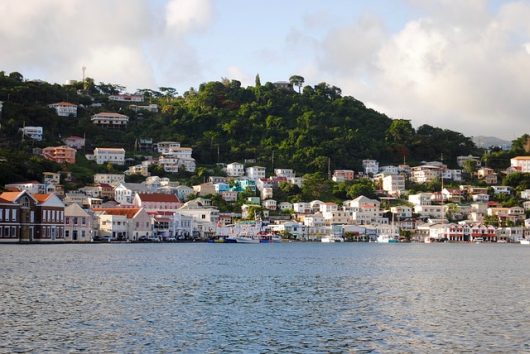
Grenada RefugeesGrenada is part of a small collection of islands in the Caribbean Sea near Venezuela. Due to the country’s small size, Grenada refugees do not face many formal regulations and protections. The following 10 facts about Grenada refugees explain how Grenada handles its refugees, the improvements the government is making for refugees and the future of refugees in Grenada.

  1. Grenada is not a party to the 1951 Refugee Convention. This convention served as the major legal framework for refugees as it defined the term refugee, outlined refugees’ rights and determined the legal obligations of states to protect refugees. The core principle is non-refoulement, which means that a refugee will not be returned to their country of origin if they are facing serious threats to their life or their freedom.
  2. The government of Grenada has no formal policy for recognizing refugees. There is an open policy towards migrants which allows them to remain in the country without attaining refugee status. Additionally, the Grenada constitution provides for freedom of movement within the country, foreign travel and emigration.
  3. Grenada is a popular point for migrants because it allows for easy access to its neighboring islands and to South America.
  4. Most refugees to Grenada come from other islands in the Caribbean. Grenada does not receive many asylum-seekers, and as a result of the lack of formal policy regarding refugees, most asylum seekers are not documented.
  5. The Office of the United Nations High Commissioner for Refugees (UNHCR) determined that the only durable solutions for refugees in Grenada were voluntary repatriation or resettlement in a third country.
  6. Grenada’s economy and conditions are not ideal for mass migration. Grenada was formerly an agriculture-dependent economy that, in the last 40 years, has become a service-oriented economy. Additionally, Grenada is very vulnerable to climate change and natural disasters, specifically hurricanes.
  7. Grenada has historically complied with refugees and has not violated the non-refoulement principle. In 2010 the government of Grenada agreed not to deport a family that was recognized by the UNHCR as refugees. This family was eventually resettled to a third country.
  8. Similarly in 2011, Grenada recognized a refugee family that was also resettled to a third country.
  9. In 2013 Grenada participated in a conference in conjunction with the UNHCR and other Caribbean countries called the “Regional Conference on the Protection of Vulnerable Persons in the Mixed Migration Flow.” This conference provided an open dialogue regarding migration in the Caribbean region.
  10. The UNHCR predicted in 2014 that Grenada will soon see a surge in the number of asylum-seekers.

Since Grenada is small, its migrant flow has not been overwhelming, which has allowed the Grenadian government to cooperate with migrants. As Grenada may soon expect an increase in asylum-seekers, it is imperative that the Grenadian government begins to address the rights of Grenada refugees and the country’s ability to host a refugee population.

– Christiana Lano

Photo: Pixabay
September 5, 2017
https://borgenproject.org/wp-content/uploads/borgen-project-logo.svg 0 0 Borgen Project https://borgenproject.org/wp-content/uploads/borgen-project-logo.svg Borgen Project2017-09-05 07:30:022020-07-02 11:00:1810 Facts About Grenada Refugees
Global Poverty, Refugees

10 Facts About Refugees from Sao Tome and Principe

10 Facts About Refugees from Sao Tome and Principe
A Brief History

The islands of Sao Tome and Principe are some of the most remote and beautiful islands in the Atlantic Ocean. The island has a reputation of having a tropical climate usually associated with islands located in the South Pacific.

In recent history, Sao Tome and Principe struggled with government corruption and attempts at a coup d’etat of the government. February 12, 2009 marked the first attempt of a coup d’etat of the government. Although the plotters of the coup were imprisoned, many citizens of the nation still fear the potential for another political uprising. This fact has led to an increase of residents leaving the country which increased the number of refugees from Sao Tome and Principe.

Below are ten facts about refugees from Sao Tome and Principe.

  1. Within refugee camps, women refugees from Sao Tome and Principe deal with daily struggles of misogyny. This misogyny has led to many women believing that they should have fewer rights than men. In fact, seven percent of women who are refugees from these countries think a husband is justified in beating his wife when she argues with him, and 6.4 percent believe men have the right to beat women when they burn food they are cooking.
  2. Women also deal with misogyny by refusing to accept health care without a male bringing them to the hospital. Women refugees from these two countries have a 51.8 percent chance of not accessing health care without having a man take them to the doctors.
  3. Sexual contact begins early for women who are refugees from Sao Tome and Principe. The median age for women aged between 25-49 for their first sexual contact was only 17.1 years old on average.
  4. Condom use is not common for refugees from Sao Tome and Principe, and women between the ages of 15-24 have a 24.3 chance of using a condom regularly.
  5. Lack of condom use has led to many children being born refugees from Sao Tome and Principe. The number of infant deaths has risen in these camps to an average of 219 deaths.
  6. For the children that make it past birth, they continue to have relatively short lives — last year, 297 refugee children from Sao Tome and Principe died due to numerous causes.
  7. Refugee camps are dangerous for refugees from Sao Tome and Principe and the rate of dying from an injury has increased to 10.5 percent.
  8. The dangers of living in a refugee camp may be immense, but refugee camp health centers have ensured that vaccinations are commonplace. Child refugees from these two countries have a vaccination rate for BCG, DPT and measles at 97.7 percent, 96 percent and 95.2 percent accordingly.
  9. Although refugees from Sao Tome and Principe receive vaccinations, many continue to die from disease. Last year 19 migrants died from malaria.
  10. On top of death from disease, refugees from these countries continue to die from tobacco and alcohol use. The smoking prevalence for women rests currently at 1.51 percent and 9.27 percent for males. The total alcohol consumption per capita (measured in liters) was measured last year to be 6.8 liters for migrants over the age of 15.

The Takeaway

Even though Sao Tome and Principe possess all the natural resources it could even need and the support from the United Nations and NGOs, the nation still suffers from its citizens leaving to become migrants. Refugees from these countries suffer from misogyny, death by injury, disease and substance abuse.

However, understanding these facts can allow groups focused on helping these people create solutions for the future. Although the present may be grim for refugees from Sao Tome and Principe, their future continues to look bright.

– Nick Beauchamp

Photo: Flickr

September 4, 2017
https://borgenproject.org/wp-content/uploads/borgen-project-logo.svg 0 0 Borgen Project https://borgenproject.org/wp-content/uploads/borgen-project-logo.svg Borgen Project2017-09-04 07:30:592020-07-03 13:49:4110 Facts About Refugees from Sao Tome and Principe
Global Poverty, Human Rights

Seven Facts About Human Rights in Poland

Human Rights in PolandPoland has been a liberal democracy ever since it transitioned from communism in 1989. It is a nation that enjoys free and fair elections and civil liberties protections; however, there is a strong partisan divide in Poland. The Law and Justice Party has become skeptical of the efficacy of liberal democracy; it has enacted a number of authoritarian reforms, enhancing the power of the party and undermining checks and balances enshrined in the Polish constitution. Here are seven facts about human rights in Poland:

  1. Speech is free in Poland, but there are some limitations. A person with a public platform can be fined and even jailed for promoting anti-government activity, amorality and disrespect for religion. However, these restrictions are rarely enforced.
  2. Freedom of the press is a constitutional human right in Poland, but recent laws enacted by Poland’s governing party have limited that freedom. Starting in 2017, journalists must be pre-approved in order to interview legislators in the halls of Parliament. The Law and Justice Party has also made moves to have more influence on public media. The party amended Polish law so that the treasurer has the power to choose the heads of public media, rather than an independent board. Polish public media officials were quickly replaced with Law and Justice party officials after the amendment was passed.
  3. Roma, LGBT and Muslim communities experience frequent discrimination in Poland. In 2016, violent hate crimes rose by 40 percent and most of these attacks targeted Muslims. Despite this, Poland has shut down its Council for the Prevention of Racial Discrimination, Xenophobia, and Related Intolerance.
  4. Women have equal rights in Poland, but domestic violence and sex trafficking are still significant issues. The Polish government recently defunded the Women’s Rights Center, which had played a major role in aiding female victims of domestic violence. Polish officials have claimed that they shut down the institution because it did nothing to help the male victims of domestic violence.
  5. Poland has been going through a constitutional crisis, as the Law and Justice Party has taken steps that increase the power of the party and reduce the power of the Constitutional Tribunal – the nation’s highest court. The crisis began when the Law and Justice Party refused to seat five judges appointed to the court by the previous ruling party, and instead nominated their own. The tribunal ruled this act unconstitutional, but the government refused to release the ruling, making it technically non-binding. The Polish government has passed several laws designed to make the tribunal run less efficiently, and has appointed party ally Julia Przyłębska to be president of the tribunal. These actions have raised concerns among the EU and the U.S. that the Polish government is eroding democratic checks and balances.
  6. In 2016, Poland passed a counter-terrorism law that gives the government far-reaching surveillance powers. The law allows for the government to wiretap and monitor the communications of people the government fears might be involved in terrorism-related activities. The government has the power to continue these activities for three months without oversight, as well as use illegally obtained evidence in court and detain suspects for up to two weeks.
  7. Polish prisons fail to meet the standards set by other European countries. The minimum legal size of a jail cell in Poland is 32 square feet, which falls below the internationally recognized standard. Many prisons are in need of renovations and lack adequate healthcare and accommodations for prisoners with disabilities.

Though the Polish ruling party is encroaching on the nation’s civil liberties, there are still actions that can be taken to protect human rights in Poland. Poland still has free and fair elections, and if that remains unchanged, the Polish people have the power to democratically reject these illiberal reforms by voting in candidates that promise to restore power to the Constitutional Tribunal. The EU also has the power to sanction Poland if it goes too far – something it threatened to do last month in the face of efforts to stack the Constitutional Tribunal with even more party allies. Both of these situations should bring hope to the people of Poland, as it makes the improvement of their human rights a very possible outcome of the future.

– Carson Hughes

September 4, 2017
https://borgenproject.org/wp-content/uploads/borgen-project-logo.svg 0 0 Borgen Project https://borgenproject.org/wp-content/uploads/borgen-project-logo.svg Borgen Project2017-09-04 01:30:332024-05-28 00:16:01Seven Facts About Human Rights in Poland
Disease, Global Poverty

Displacement Impact Common Diseases in Niger

Common Diseases in NigerReceiving its independence from France in 1960, Niger’s young history as a true nation state is riddled with political insecurity. A landlocked west-African country largely covered by the Sahara desert, it struggles routinely with various health issues directly related to both its government’s own instability and the general militaristic instability in the region.
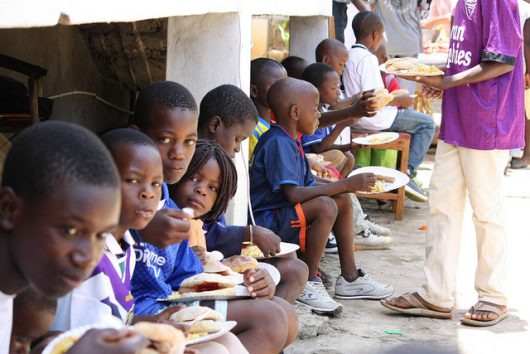
The latter has increased significantly with the rise of Boko Haram and an influx of refugees from Mali and northern Nigeria in particular. The most common diseases in Niger are shared by many of its regional neighbors; consequently, any disease outbreak is of immense concern due to its probable potential for growth not just within Niger, but the nations surrounding it.

The increasing threat of waterborne common diseases in Niger, such as cholera and diarrheal infections, is clearly tied to population shifts in the Lake Chad area. Such shifts are a result of regional instability as refugees and migrants flow across the borders, with some 150,000 living in makeshift and unsanitary conditions in the southeastern Diffa region of Niger.

Though UNICEF and partners are active in the region in an effort to educate about practical prevention, such as handwashing, and to provide sanitary services, such as clean water access, their funding is inadequate for the task; only 20 percent of their necessary funding has been met.

The Diffa region is also seeing Hepatitis E outbreaks as a result of its location in the Lake Chad crisis area. Porous borders due to refugee flow have increased the risk of Hepatitis E diffusion into other parts of the region, making the outbreak a severe concern, although its mortality rate has currently been contained to 9.7 percent. The WHO is actively working to educate about practical prevention techniques and is closely monitoring the situation in the hopes of inhibiting its diffusion into other parts of the Lake Chad crisis area.

With a mortality rate of 20 percent, Rift Valley Fever (RVF) is another of the most common diseases in Niger and a high-priority concern for the Nigerien people. A virus spread among people and livestock, more than 59 percent of those affected are stockbreeders, although it is also heavily affecting those simply living along livestock travel routes as well.

Its economic backlash is compounded by the dual loss of both citizens that would have engaged in the economic system and the livestock which would serve as income generators. Consequently, more research is being conducted as to how the virus affects animals in particular in an effort to mitigate the significant economic losses accompanied by human-animal deaths.

An outbreak of a virtually unprecedented strain of meningococcal meningitis, called serogroup C, has ravaged Niger in recent years, arising in 2015. Due to the strain’s historical rarity, vaccine supplies have been insufficient to meet the needs of the outbreak.

Nonetheless, vaccine campaigns targeting children have dropped fatality from 11 percent to 7 percent. The situation is concerning but seemingly contained, which is heartening as a major concern was its spread to other nations in Africa’s meningitis belt.

The vast majority of Niger’s topography is desert, with only the southern 20 percent being a savannah suitable for agriculture and living. As a result, malaria is largely confined to this southern portion of the nation. Fifty-three percent of the population lives in an area of high malarial transmission. Despite this, less than 1 percent of the more than two million reported cases result in death, thanks to internationally funded government programs which focus on both prevention via insecticides and treatment via antimalarials.

The most common diseases in Niger are of large concern due to their implications for the unstable region as a whole. Such diseases are either augmented by regional instability, or of even higher concern due to potential transmission to other nations as a result of regional instability. Essentially, then, Niger’s health problems are not confined to its borders and extend to its region on the whole, particularly the Lake Chad area. Consequently, the WHO and other health organizations have a strong interest in monitoring health fluctuations so as to protect the region altogether.

– Kailee Nardi

Photo: Flickr

August 31, 2017
https://borgenproject.org/wp-content/uploads/borgen-project-logo.svg 0 0 Borgen Project https://borgenproject.org/wp-content/uploads/borgen-project-logo.svg Borgen Project2017-08-31 07:30:552024-06-11 02:48:31Displacement Impact Common Diseases in Niger
Global Poverty

10 Facts About Poverty in Mozambique

Poverty in MozambiqueAlthough Mozambique has made considerable progress in reducing poverty, more than 80 percent of Mozambicans continue to live on less than two dollars per day. International humanitarian organizations continue to fight poverty in Mozambique by providing aid in the hopes of ending hunger, improving water and sanitation quality and advancing education and health care.

USAID, through their Feed the Future Program, provides resources to increase agricultural production as well as educate Mozambicans about nutrition and health. In addition, CARE continues to provide valuable funding and resources to secure clean water and sanitation. UNAIDS focuses solely on the early identification and treatment for Mozambicans with HIV, with the goal of ending the AIDS epidemic by 2030.


Top 10 Facts About Poverty in Mozambique


  1. As a result of the civil war in Mozambique from 1976 to 1992, infrastructure was destroyed, six million people were displaced and as many as one million deaths were reported.
  2. Extreme climate conditions, including floods and droughts, hinder the country’s development. Severe flooding and droughts threaten access to clean drinking water as well as the ability to grow and sustain food through agriculture. Between November 2023 and February 2024, despite being the rainy season in Mozambique, the southern and central regions experienced dry conditions and higher temperatures, leading to low harvests.
  3. Mozambique ranks 183 out of 187 countries in the most recent UNDP’s Human Development Index; 70 percent of the total population lives in poverty. The Human Development Index evaluates life expectancy, access to education and Gross National Income (GNI) to measure the progress of human development in a country.
  4. According to the World Bank, while 118% of girls in Mozambique were enrolled in primary school in 2022, only 69.52% completed it. As a result, Mozambique’s literacy rate is 39%, with a higher rate among women at 49.4%. As a result, women are more vulnerable to poverty than men.
  5. According to a recent study, malaria, tuberculosis, HIV/AIDS, lower respiratory infections and diarrhea are responsible for 53% of deaths among Mozambique’s children aged less than 5.
  6. According to UNAIDS, Mozambique has the eighth-highest prevalence of HIV in the world and ranks third in the world for children who have contracted the disease. As of 2018, approximately 2.2 million people have contracted the virus and 54,000 reported HIV-related deaths.
  7. UNICEF reports that one in every five children are severely deprived of education and 39 percent have no access to newspapers, radio or television. USAID states that, while the government has made considerable progress in ensuring children have access to education, the quality of this education continues to fall short: Among children who finish primary school, nearly two-thirds leave the system without basic reading, writing, and math skills.
  8. Almost one-third of the population suffers from malnutrition and one in every five children is severely nutritionally deprived. UNICEF estimates that 43 percent of children under five suffer from malnutrition and 45 percent of deaths in children under five are attributed to malnutrition.
  9. Over half of the population of Mozambique does not have access to clean water. In addition, 21.4 million people do not have access to proper sanitation. According to the World Bank, 17 percent of children under five die because of poor water and sanitation.
  10. As of 2021, life expectancy in Mozambique is only 59 years in comparison to 76 years in the U.S. Factors contributing to the short life expectancy include a high rate of poverty, communicable diseases and poor water quality and sanitary conditions.

Many issues contribute to poverty in Mozambique. While numerous organizations supply aid and bring awareness to the struggles that the country faces, continued efforts must persist. Programs are still needed to increase economic stability in the region as the World Bank reports that “the geographical distribution of poverty remains largely unchanged.” Furthermore, initiatives to increase teacher quality and efficacy are necessary to improve literacy and the quality of education. Finally, since women are more susceptible to poverty than men, empowerment projects are necessary for ensuring that poverty in Mozambique is eliminated.

– Deb Blessman

Photo: Flickr
Updated: May 27, 2024

August 30, 2017
https://borgenproject.org/wp-content/uploads/borgen-project-logo.svg 0 0 Borgen Project https://borgenproject.org/wp-content/uploads/borgen-project-logo.svg Borgen Project2017-08-30 07:30:372024-05-28 00:15:5810 Facts About Poverty in Mozambique
Developing Countries, Global Poverty

Uncovering the Truth: Five Poverty Myths vs Facts

Poverty Myths vs FactsDespite the increasing awareness about world poverty that has arisen from globalization and heightened media coverage, there are still many misconceptions about the true nature of poverty circulating in high-income nations. Millions of Americans continue to share beliefs that simply contradict evidence. The following are five poverty myths vs facts:

1. Myth: Low-income countries just don’t have natural resources.

Fact: Actually, most of the world’s developing countries have an abundant reserve of natural resources.

It was for that reason that the European nations who colonized in Africa and Latin America grew so wealthy from trading raw goods, such as tobacco or mined silver. The exploitation of these natural resources, which continues to happen to some degree today within the global economy, is why low-income countries have yet to benefit.

Even today, around 400 billion dollars in natural resources leaves the African continent each year.

2. Myth: There isn’t enough food to feed everyone.

Fact: It’s almost worse to think about, but we have enough food to feed everyone on the planet one and a half times over. Food just isn’t distributed fairly and efficiently. Rising food prices, national disasters and conflict all contribute to global hunger.

3. Myth: Impoverished people just need to have less kids.

Fact: The reason why people in low-income countries tend to have more kids is because they live in poverty. Prevention methods are often either culturally unacceptable or just unavailable. Studies have proven that educated, wealthier women have less kids— meaning that solving poverty could help with overpopulation.

4. Myth: Globalization is helping everyone. When the world economy booms, poverty will solve itself.

Fact: It’s a nice thought, but realistically most developing countries lag behind in economic growth. The recent improvements in global poverty reduction can mainly be attributed to China or India, who have experienced the most growth in recent years. However, for over half a billion people living in extreme poverty in unstable countries, the improvements have yet to manifest themselves— that number will grow without additional aid.

5. Myth: High-income nations are doing a lot to help low-income countries.

Fact: In regard to global poverty, this may be one of the most difficult realities for people to swallow. The average American believes that 25 percent of the budget goes to foreign aid, when in reality it’s less than one percent. Very few developed nations even meet their own standards for minimum foreign aid donations, much less give in full capacity.

Though these poverty myths vs facts may present a more sobering reality about the nature of global poverty, there is the hope that greater understanding is the key to developing greater solutions. As the final fact suggests, there is so much potential to do more and make an even bigger impact on those living in poverty today.

– Kailey Dubinsky

Photo: Pixabay

August 29, 2017
https://borgenproject.org/wp-content/uploads/borgen-project-logo.svg 0 0 Borgen Project https://borgenproject.org/wp-content/uploads/borgen-project-logo.svg Borgen Project2017-08-29 01:30:532020-06-25 10:02:05Uncovering the Truth: Five Poverty Myths vs Facts
Disease, Global Poverty

10 Important Facts to Know About Asian H7N9

Asian H7N9Mainland China is in the midst of yet another outbreak of the Asian Lineage Avian Influenza A Virus, or Asian H7N9, and both the Chinese national government and several international organizations are scrambling to take a hold of the situation.
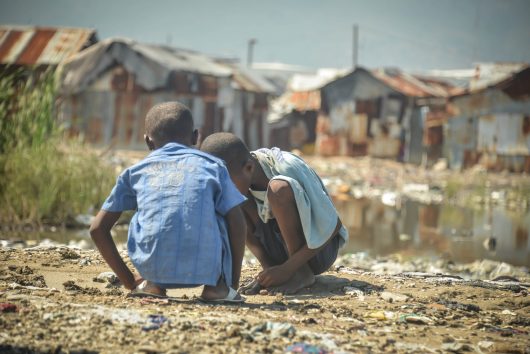
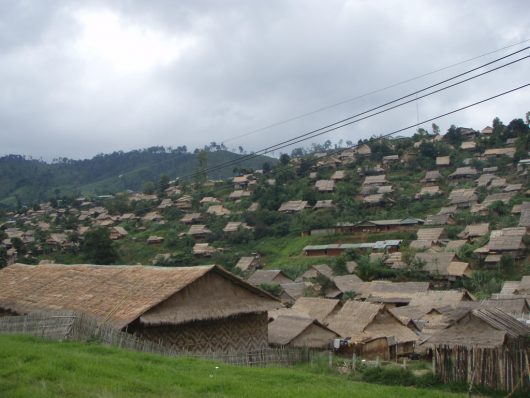
This is the fifth epidemic outbreak of Asian H7N9 since the first case of the virus was reported in March 2013. The present epidemic cycle is its largest epidemic to date: the World Health Organization (WHO) reveals that, as of July 19, 2017, 756 human infections from Asian H7N9 have been reported since the epidemic’s onset in March. The most recent report brings the total number of confirmed Asian H7N9 infections to 1,554, where at least 40 percent of afflicted persons died due to consequent health complications.

While both local and international health authorities refute the idea of an Asian H7N9 pandemic and cite that there is no strong evidence that would constitute a global outbreak, it is wise for citizens to be aware of the evolving situation regarding the virus. Here are ten things to know about the virus:

  1. Most human infections from avian influenza viruses (including Asian H7N9) have occurred after close contact with infected birds, whether alive or dead, and/or exposure to environments that have been contaminated by the virus (e.g. live poultry markets).
  2. A person can most commonly contract the virus from touching their eyes, nose or mouth after coming into contact with the feces or mucus of infected birds. Poultry infected with the H7N9 virus typically do not show nor experience any signs or symptoms that demonstrate illness.
  3. On the onset, symptoms of infection start with a high fever and cough. Within a matter of days, several health complications may start to surface. Most cases of death due to Asian H7N9 progressed to very serious illnesses such as severe pneumonia, acute respiratory distress syndrome (ARDS), septic shock and multi-organ failure, leading to death.
  4. To date, there is no strong evidence for person-to-person spread of the virus. Cases that were reported where the virus appeared to have been transferred from person to person occurred in small clusters (around seven percent of cases). Such cases were also classified as likely limited, non-sustained person-to-person infection, meaning that the virus was only passed down from the animal host to a caretaker and a close contact of that person.
  5. Victims of Asian H7N9 stretch from all age groups and genders, but most cases confirmed by the National Health and Family Planning Commission of China (NHFPC) involve middle-aged men from the ages of 45 to 50.
  6. Almost all infections occurred because of contact or exposure to the virus, with the exception of a 33-year-old female from Wenshan, Yunnan province in China, who local authorities said had no apparent exposure or had no close contact with infected poultry.
  7. Most cases were said to have transpired in Eastern China, but cases have also been reported in Northwestern China, as well as in other countries such as Taiwan, Malaysia and Canada. The majority of cases reported in countries outside of China occurred among people who had traveled to mainland China before becoming ill.
  8. At the moment, Asian H7N9 has not been detected in the United States. However, in March 2017, federal animal health officials confirmed that a highly pathogenic H7N9 avian flu outbreak struck two farms in Lincoln County, Tennessee. The outbreak occurred at two commercial breeder flocks within three kilometers away from each other, one of them containing around 55,000 birds. However, the H7N9 virus that afflicted this American livestock was not related to Asian H7N9, as all gene segments from genetic tests conducted related the former to North American wild bird lineages.
  9. The current risk to public health is low; however, the pandemic potential of the virus is alarming, according to the Centers for Disease Control and Prevention (CDC). Additionally, the Influenza Risk Assessment Tool (IRAT) rated Asian H7N9 as having the greatest potential to cause a pandemic and potentially posing the greatest risk to severely impact public health.
  10. There is currently no publicly available vaccine to protect against the H7N9 virus. However, there are medicines available to treat illnesses associated with the virus. The CDC recommends oral oseltamivir (Tamiflu), inhaled zanamivir (Relenza) and intravenous peramivir (Rapivab) for treatment of H7N9 virus infection.

The WHO advises travelers to countries with known outbreaks of avian influenza to avoid poultry farms, contact with animals in live poultry markets and to refrain from entering areas where poultry is slaughtered whenever possible. It also reminds tourists in these areas to constantly wash their hands with soap and water and to follow good food and hygiene practices.

– Bella Suansing

Photo: Google

August 28, 2017
https://borgenproject.org/wp-content/uploads/borgen-project-logo.svg 0 0 Borgen Project https://borgenproject.org/wp-content/uploads/borgen-project-logo.svg Borgen Project2017-08-28 01:30:262024-05-28 00:15:4110 Important Facts to Know About Asian H7N9
Global Poverty

Six Facts About Poverty in Haiti

Poverty in HaitiHaiti is a country that struggles with severe poverty, being thrown inevitable challenges such as damage from hurricanes and earthquakes, causing the mass destruction of buildings and supplies that are difficult to come by in the first place. Haitians are in a constant fight to survive, but the good news is that efforts can be made to make a difference. Discussed below are the leading facts about poverty in Haiti and their implications.


Top 6 Facts on Poverty in Haiti


  1. Due to natural disasters, Haiti has faced major financial losses. Since the latest disaster caused by Hurricane Matthew, predicted losses add up to over $1.9 billion. This amounts to 22 percent of Haiti’s gross domestic product. Haiti’s current economic growth rate is only one percent. With post-Matthew reconstruction, Haiti’s fiscal debt continues to grow.
  2. The World Bank has come up with a program called the Haiti Reconstruction Fund (HRF). The HRF has cleaned up 900,000 cubic meters of debris and supplied Haiti with a total of $411.4 million. Furthermore, the group has managed to support the repair and rebuilding of almost 2,600 houses and delivered food to 252 schools which provided 93,000 students with meals.
  3. Although two-fifths of Haitians depend on agricultural production to provide income, around 30 percent of Haiti still struggles to obtain food. International aid has helped provide many of these people with food and continues to work on supplying sustainable farming techniques.
  4. Ninety percent of farmers must depend on the weather for their crops to be sufficiently watered. In drier seasons or droughts, these farmers are likely to lose their crops, which are both a source of sustenance and income. This, again, puts an emphasis on the importance of environmental care in Haiti.
  5. The richest 10 percent of Haitians receive 70 percent of the country’s total income. This illustrates class inequality and the vast gap in income that many third-world countries struggle with. In Haiti, especially, it is important to advocate on behalf of the country’s poor.
  6. Haiti is still considered to be one of the poorest countries in the world, with 59 percent of Haitians living below the national poverty line. Haiti depends heavily on foreign aid and other forms of economic assistance.

These facts about poverty in Haiti may raise curiosity around the following question: how can people help fight poverty in Haiti? For those who are looking to help, there are several effective charities helping to bring relief to Haitians, including Konbit Mizik, Madre, The Lambi Fund of Haiti and many others.

– Noel Mcdavid

Photo: Flickr

August 27, 2017
https://borgenproject.org/wp-content/uploads/borgen-project-logo.svg 0 0 Borgen Project https://borgenproject.org/wp-content/uploads/borgen-project-logo.svg Borgen Project2017-08-27 01:30:432024-05-25 00:00:04Six Facts About Poverty in Haiti
Global Poverty, Refugees

10 Facts About Refugees in St Lucia

Refugees in St. LuciaA Brief History:
A refugee is often defined as a person seeking asylum in a country other than the one of their origin, either because they seek better economic prospects or due to political instability in their home nation.

The country of St Lucia is a Caribbean nation, which is home to numerous refugees. St Lucia has a gorgeous landscape, tropical weather and an incredible culture. These facts are one of the reasons why St Lucia has become a primary destination for many migrants. The purpose of this article is to explain 10 facts about refugees from St Lucia.

The 10 Facts:

  1. In 2014, St Lucia was home to over 922 refugees from countries all around the world. Migrants come to St Lucia because of its generous social welfare programs, stable political system and booming economy.
  2. The refugee camps in St Lucia have done significant work in increasing the immunization rate for many of the migrants living in the nation. The immunization rate for DPT and measles is 99 percent and 97 percent respectively.
  3. Having a child while in a St Lucia refugee camp is not a risky proposition for many migrants living in the nation. The lifetime risk of maternal death is .0912 percent for the refugees living in St Lucia. This statistic is due to 96.9 percent of pregnant female refugees receiving prenatal care.
  4. Although having a child while a refugee in St Lucia may not be risky, many women in these migrant camps are having children at a very young age. Around 53.42 out of every 1,000 female refugees under the age of 19 have had a child.
  5. About 92.2 percent of children born to refugees in St Lucia are registered at birth. This high rate of registration allows the camps to ensure these children get the proper care to maintain their health.
  6. Due to the large quantity of refugees’ children registered here, the children born in these regions are treated very well. Only 2.5 percent of children growing up in these refugee camps suffer from malnutrition. This low rate is due to the incredible social programs available for these migrants at the camps in St Lucia.
  7. The likelihood of a refugee in St Lucia being overweight is very small. Currently, the rate of being overweight as a migrant rests at 6.3 percent. Having a healthy body weight reduces the chance of prolonged illness and other diseases.
  8. The life expectancy for refugees in St Lucia is also very high. Men, on average, live until they are 72.54 years old and women are expected to live until they are 77.96 years old.
  9. Men who are refugees in St Lucia have a very high chance of living until the age of 65. Currently, this rate rests at 74.23 percent.
  10. The majority of the population of refugees in St Lucia tends to be young. Currently, only nine percent of these migrants are over the age of 65.

The Takeaway:
Although the migrant crisis continues all throughout the world, refugees in St Lucia often have a high quality of life. High immunization rates, intensive social programs and registration at birth allows for the nation to ensure its migrant populations have the best chance at a higher quality of life. The work that St Lucia has done in its refugee camps should be something all other nations housing migrants should attempt to emulate.

– Nick Beauchamp
Photo: Flickr

August 25, 2017
https://borgenproject.org/wp-content/uploads/borgen-project-logo.svg 0 0 Borgen Project https://borgenproject.org/wp-content/uploads/borgen-project-logo.svg Borgen Project2017-08-25 01:30:082020-06-19 08:24:0510 Facts About Refugees in St Lucia
Global Poverty, Human Rights

Nine Important Facts About Human Rights in Hungary

Human Rights in HungaryHungary is going through a drastic transformation. The nation was deeply shaken by the 2008 financial crisis. In 2010, the nation responded by electing the Fidesz party into power. With the support of the Christian Democratic People’s Party, Fidesz built a conservative coalition with the ability to draft a new constitution. This constitution was enacted in 2011 and has given Fidesz significant power. Recently, Prime Minister Viktor Orban announced plans to transform Hungary into an illiberal democracy. Here are nine important facts about human rights in Hungary during this time of dramatic change.

Hungary continues to hold free elections. However, constitutional changes have unfairly benefited Fidesz. These changes include reducing the number of legislators, gerrymandering districts and allowing Hungarian-speaking residents in neighboring territories to vote. These “Hungarians abroad” overwhelmingly voted in favor of Fidesz.

The Hungarian Constitution protects freedom of speech and the press, but recent changes have undermined the freedom of the press. Media outlets are required to register with the government for licenses that can be revoked if the outlet violates content policy through actions like inciting hatred or violating human dignity. Recently, a close ally of Prime Minister Orban bought out and disbanded Hungary’s leading political newspaper after it reported on senior government officials mishandling funds.

Hungary’s constitution protects religious freedom, but the government has attempted to limit this freedom. In 2012, the Hungarian National Assembly passed the Church Act, forcing religious institutions to apply to the National Assembly for tax benefits guaranteed to accepted churches. This was ruled unconstitutional by the Constitutional Court, but the National Assembly tried and failed to pass a revised version in 2015.

This April, the Hungarian government furthered Orban’s crusade against liberalism by targeting academic freedom. The National Assembly passed a law intended to shut down Central European University, which was founded by American billionaire George Soros. Human rights organizations believe this was done to stifle criticism of Fidesz-backed reforms.
The Hungarian government has become increasingly hostile to human rights organizations and has put stringent registration requirements on nongovernmental organizations (NGOs). Several NGOs that were critical of the government faced unlawful police raids that went unpunished. Many are worried that these actions exemplify a growing disregard for human rights in Hungary.

In 2016, Hungary passed a constitutional amendment that allows the government to declare a state of emergency in the event of a terror threat. The grounds for a terror threat are broad and poorly defined. In a state of emergency, the government has the power to restrict movement, freeze assets, ban public gatherings and fight terrorism without oversight from the National Assembly or the judiciary. After 15 days, the National Assembly can vote to increase the powers of the state.

Hungary has taken on a strong anti-immigration stance that breaks with European policy. Some notably harsh measures include detaining asylum-seekers for months in shipping containers, scaling back resources for refugees granted asylum and allowing the military to restrict the civil liberties of refugees and use “coercive weapons.” Refugees that are detained and hunted down by the military are often subjected to brutality.

The Roma are Hungary’s largest ethnic minority and are widely discriminated against. Though the government has attempted to aid the Romani people, Roma remain disproportionately impoverished and are often segregated from Hungarian schools and placed in schools for the mentally disabled.

Discrimination is becoming an even greater concern with the rise of Jobbik, Hungary’s growing right-nationalist party. Jobbik made large gains in the 2011 and 2014 elections and has a history of anti-Roma, anti-semitic and ethnic nationalist rhetoric. Some of this rhetoric has been disturbingly adopted by Orban to advance his anti-migrant agenda. Though party leaders of Jobbik claim to have toned down their rhetoric, the party’s advancement could lead to a further decline in human rights in Hungary.

Though Hungary is continuing to follow an anti-democratic trend, the situation is not hopeless. For a long time, the E.U. has turned a blind eye to Hungary’s illiberal reforms. Increased pressure from the multistate organization could motivate Hungarian leaders to follow the E.U.’s standards for human rights. In addition, NGOs are essential to protecting human rights in Hungary. Though they have become the target of government scrutiny, they retain partial freedoms to work within Hungary and encourage positive reform.

– Carson Hughes

Photo: Flickr

August 24, 2017
https://borgenproject.org/wp-content/uploads/borgen-project-logo.svg 0 0 Borgen Project https://borgenproject.org/wp-content/uploads/borgen-project-logo.svg Borgen Project2017-08-24 01:30:152024-05-28 00:15:41Nine Important Facts About Human Rights in Hungary
Page 4 of 25«‹23456›»

Get Smarter

  • Global Poverty 101
  • Global Poverty… The Good News
  • Global Poverty & U.S. Jobs
  • Global Poverty and National Security
  • Innovative Solutions to Poverty
  • Global Poverty & Aid FAQ’s
Search Search

Take Action

  • Call Congress
  • Email Congress
  • Donate
  • 30 Ways to Help
  • Volunteer Ops
  • Internships
  • Courses & Certificates
  • The Podcast
Borgen Project

“The Borgen Project is an incredible nonprofit organization that is addressing poverty and hunger and working towards ending them.”

-The Huffington Post

Inside The Borgen Project

  • Contact
  • About
  • Financials
  • President
  • Board of Directors
  • Board of Advisors

International Links

  • UK Email Parliament
  • UK Donate
  • Canada Email Parliament

Get Smarter

  • Global Poverty 101
  • Global Poverty… The Good News
  • Global Poverty & U.S. Jobs
  • Global Poverty and National Security
  • Innovative Solutions to Poverty
  • Global Poverty & Aid FAQ’s

Ways to Help

  • Call Congress
  • Email Congress
  • Donate
  • 30 Ways to Help
  • Volunteer Ops
  • Internships
  • Courses & Certificates
  • The Podcast
Scroll to top Scroll to top Scroll to top