• Link to X
  • Link to Facebook
  • Link to Instagram
  • Link to TikTok
  • Link to Youtube
  • About
    • About Us
      • President
      • Board of Directors
      • Board of Advisors
      • Financials
      • Our Methodology
      • Success Tracker
      • Contact
  • Act Now
    • 30 Ways to Help
      • Email Congress
      • Call Congress
      • Volunteer
      • Courses & Certificates
      • Be a Donor
    • Internships
      • In-Office Internships
      • Remote Internships
    • Legislation
      • Politics 101
  • The Blog
  • The Podcast
  • Magazine
  • Donate
  • Click to open the search input field Click to open the search input field Search
  • Menu Menu

Tag Archive for: Economics

Posts

Economy, Education, Global Poverty

Addressing the Curacao Poverty Rate

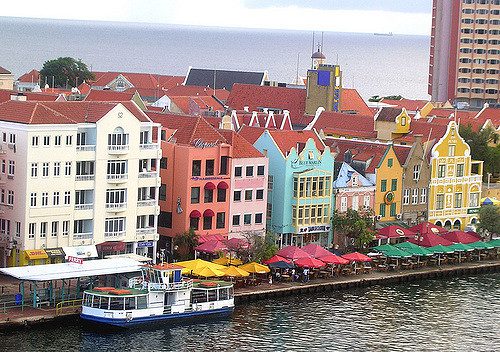
Curacao Poverty RateOn October 10, 2010, after centuries operating as a deep-water port for the Dutch, the small Caribbean island of Curacao gained autonomy as a state in the Kingdom of the Netherlands. 80 percent of the country’s debt was forgiven by the Dutch, and most government positions were undertaken by local citizens. For many who lived on the island, 10/10/10 marked the dawn of a new era of opportunity. “We were confident that we were going to have this perfect future,” said political analyst Michiel van der Veur.
Enthusiasm was short lived. Soon after gaining autonomy, the assassination of politician Helman Wiels plunged the island into turmoil. Between 2012 and 2013, Curacao had four prime ministers, greatly increasing the instability. As a country plagued with such unrest, it should be no wonder that the Curacao poverty rate is over 25 percent.

A small island country located in the Caribbean, much of the economy in Curacao is based around tourism and is thus highly sensitive to fluxes in the world market. Most of the country’s necessities are imported, leading to large trade deficits.

The Curacao poverty rate is likely increased by the country’s “brain drain” problem. Like many other developing island nations, citizens who are ambitious and educated often leave, moving to other countries with better opportunities for people with their skill sets.

However, Curacao has committed itself to addressing the country’s widespread poverty. With the support and assistance of the U.N. Development Program, Curacao has created a National Development Plan (NDP), which will focus on improving the economy through a series of steps from 2015 to 2030.

The NDP focuses on five themes to accomplish its goal: education, economy, sustainability, national identity and good governance. As diminishing the Curacao poverty rate is a priority, economy is one of the most important themes. In order to accomplish this, Curacao will focus on structural reform, government support, sectoral growth, supporting investments and broadening ownership of industry and land.

With the NDP, Curacao has taken a significant step towards strengthening the economy and the country as a whole. While there is much work to do, the country’s history as a long time trading center and large deep water port point to a high probability of success.

– Connor S. Keowen

Photo: Flickr

September 27, 2017
https://borgenproject.org/wp-content/uploads/borgen-project-logo.svg 0 0 Kim Thelwell https://borgenproject.org/wp-content/uploads/borgen-project-logo.svg Kim Thelwell2017-09-27 01:30:242024-05-29 22:26:53Addressing the Curacao Poverty Rate
Development, Global Poverty

Small Ways to Help Eradicate Poverty

Help Eradicate PovertyThe eradication of poverty is a controversial topic. Can poverty really be brought to an end? Is there anything that an ordinary citizen can do to help stop this terrible cycle? For those who want to end poverty, but feel like it is an impossible task, there are small but effective ways to help eradicate poverty.

Many organizations have a goal to eradicate poverty by the year 2030. According to Oxfam International Executive Director Winnie Byanyima, this is possible, but many changes must be made in order to achieve such a goal. Byanyima points out that being political is required in order to make real progress in eliminating poverty. Making those in power aware of their riches and showing them why it matters that they are receiving so much while others are struggling to survive is an important step in ending poverty that anyone can achieve.

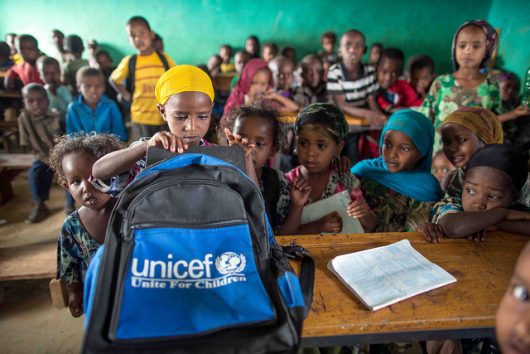
UNICEF works to eradicate poverty by helping young girls attend school, supporting good nutrition, assisting in water and sanitation improvement, creating a protective child environment and advocating for better awareness and policies.

Plan International suggests similar steps to eradicate poverty, including additional actions such as access to healthcare and providing economic security. Like UNICEF, people can assist them by donating.

It is important to ask the hard questions and focus on the root causes of poverty. This includes topics such as gender inequality and laws that prevent marginalized groups of people from having access to the tools that are needed for them to succeed.

Access to the digital world is also helpful in eradicating poverty. It is important that people are aware of the data that is affecting them. Giving people access to the numbers can cause more people to speak up and create a surge in local awareness.

Finally, one of the simplest ways to help eradicate poverty is to speak out against inequality and demand that action be taken both by citizens and governments alike. If world leaders commit to bringing about changes and citizens continue to push for those changes, there is hope that poverty will become an issue of the past and something to be prevented rather than eradicated.

– Noel Mcdavid

Photo: Flickr

September 27, 2017
https://borgenproject.org/wp-content/uploads/borgen-project-logo.svg 0 0 Borgen Project https://borgenproject.org/wp-content/uploads/borgen-project-logo.svg Borgen Project2017-09-27 01:30:152024-05-29 22:26:53Small Ways to Help Eradicate Poverty
Global Poverty

Reducing the Poverty Rate in the Solomon Islands

Poverty Rate in the Solomon IslandsIn 1568, Spanish explorer Álvaro de Mendaña became the first European to visit the 992-island archipelago known today as the Solomon Islands. He named the islands after the wealthy and wise biblical king of Israel, inspired, as legend goes, by a belief that their cerulean seas and white-sand shores guarded untold riches. That assumption was largely mistaken, as seen in the poverty rate in the Solomon Islands today.


Exploring the Poverty Rate in the Solomon Islands


Although modern tourism has added to the Islands’ economic portfolio, these profits are still few and far between and unevenly distributed. The vast majority of wealth is concentrated in the capital city, Honiara, in which 85 percent of the population is in the Islands’ highest wealth quintile.

According to the Asian Development Bank, in 2013, 12.7 percent of Solomon Islanders lived below the national poverty line. Nutrition-wise, they fared better: only 4.4 percent lived below the food poverty line. However, a mere 35.1 percent had access to electricity.

Technological developments and investment continue to play a vital role in reducing poverty in the Solomon Islands. In April 2017, the World Bank reported that the Green Climate Fund has approved $86 million toward the Tina River Hydropower Project, an effort to reduce reliance on imported fuel for electricity generation. This investment accompanies the $15 million provided by the International Renewable Energy Agency/Abu Dhabi Fund for Development (IRENA/ADFD).

The Solomon Islands’ electricity retail tariffs are currently among the highest in the world, at $0.65 per kilowatt-hour. Given that the Islands generate 97 percent of their electricity from diesel fuel and only 12 percent of homes are currently connected to grid power, this project stands to reduce the burden on working families and illuminate the islands like never before.

And, with electricity, the Islands should see an economic boost. The Asian Development Bank notes that tourism is a largely untapped market with great potential for development. Cheaper and more abundant energy is good for more than just powering residential areas: it can also lay groundwork for the sort of 24-hour “City of Light” that modern tourism creates and feeds on. With a stronger, cheaper energy grid in place, private investment will follow.

New technology and investments like these, guided by sound and prescient public policy, will be crucial to reducing the poverty rate in the Solomon Islands and materializing those mythical riches dreamed of since the days of de Mendaña.

– Chuck Hasenauer

Photo: Flickr

September 26, 2017
https://borgenproject.org/wp-content/uploads/borgen-project-logo.svg 0 0 Borgen Project https://borgenproject.org/wp-content/uploads/borgen-project-logo.svg Borgen Project2017-09-26 07:30:332024-05-29 22:26:50Reducing the Poverty Rate in the Solomon Islands
Global Poverty

Addressing the Causes of Poverty in Namibia

Causes of Poverty in NamibiaAs the thirty-fourth largest country in the world, Namibia is home just 2.4 million people. While there was an 11 percent decline in poverty from 2001 to 2011, almost 600,000 people were still living in poverty. According to data from 2015, about 26.9 percent of the total population lived in poverty and 16.9 percent had HIV/AIDS. While poverty is caused by a variety of factors, here are three of the causes of poverty in Namibia.

  1. Agricultural and environmental factors
    Seventy percent of the population depends on agriculture. The country has fourteen regions, with many rural, agricultural regions. The agricultural regions do not fare well and the people there have had to deal with severe droughts as it is very arid. At these times, people cannot grow the food that they need to sell and to eat. Hunger and poverty are connected in this specific instance, showing that other issues are byproducts of poverty.In 2008, SKILLSHARE International began working with local organizations to create the Sustainable Livelihoods Project for Rural Communities in Namibia. Reports show that in order to reduce poverty, the country must understand subsistence farming. Some experts see this as the key to finding a way to reduce poverty because it affects so many lives in urban and rural areas.
  2. Socioeconomic factors
    The gap between the rich and the poor is seen through the separation of the northern and southern regions of Namibia. Large amounts of wealth are concentrated in the hands of the few. The Gini coefficient for Namibia, which measures inequality, shows that inequality is still pretty high at 0.6 (perfect equality is 0).Seventy percent of personal income taxes come from the top 10 percent of the population. This small group at the top has a lot more opportunity than those at the bottom who struggle to farm the arid land. There is a divide between the rural and urban areas. A large amount of the population lives in rural areas, while the few in the urban areas have more opportunities for jobs and economic success.Another socioeconomic factor is that the poor have little access to public services, which is something on which the Namibian government is starting to focus more. With more access to education and sanitation, the poor will be better off.To fight the causes of poverty in Namibia, the government started to change its fiscal policies. According to the World Bank, the fiscal policies adopted by Namibia have been successful thus far in reducing poverty.The World Bank described the policy as “a progressive social benefits and tax system,” which basically means that it creates higher taxes for the rich in order to provide the poor with more social benefits. This money can be used for healthcare, education, and for transfers, which give the poor money to use for living. The next step for the fiscal policies is to promote job creation to help the poor find employment.
  3. Health factors
    Namibia’s maternal mortality is 200 deaths per 100,000 births, and its neonatal mortality is 19 deaths per 1,000 births. Nonprofit organizations like Synergy work on reducing maternal and infant mortality. They also want to increase youth employment and assist agricultural growth in Namibia.

Over the past twenty years, poverty is in decline in the country of Namibia. But, the situation is far from perfect and there remain many causes of poverty in Namibia. Through the continued work of the government and effective aid organizations, more of the vulnerable communities in Namibia will be able to find a path to prosperity.

– Emilia Beuger

Photo: Flickr

September 26, 2017
https://borgenproject.org/wp-content/uploads/borgen-project-logo.svg 0 0 Borgen Project https://borgenproject.org/wp-content/uploads/borgen-project-logo.svg Borgen Project2017-09-26 07:30:192020-07-16 21:04:38Addressing the Causes of Poverty in Namibia
Global Poverty

Causes of Poverty in Slovakia

Causes of Poverty in SlovakiaThe country of Slovakia was once known as Czechoslovakia until its peaceful dissolution in 1993, which in turn created the Czech Republic. Today, the country is home to more than five million citizens with a population that has been steadily growing over the past decade. According to The World Bank, Slovakia also has a poverty rate of 12.6 percent, which roughly equals just less than 700,000 people. The causes of poverty in Slovakia are varied and run deep through the country’s history.

One of the suggested causes of poverty in Slovakia is its prolonged dependence on factories. During its time as Czechoslovakia during World War II, the country served the Nazi regime by supporting the war machine with supplies and troops and by aiding its efforts to ethnically cleanse Europe.

After World War II, Czechoslovakia came under the control of the Soviet Union and focused on industries such as coal mining, producing steel and machinery. When the Cold War ended and the Soviet Union collapsed, the demand for these industries decreased, leaving many workers out of a job.

The industries of Slovakia are still focused on heavy machinery production, mostly the production of cars. This, combined with the fact that the industries of Slovakia lack any competition among one another, is one of the main causes of poverty in Slovakia. It should be noted that stronger product market competition could assist in alleviating this cause.

Furthermore, Slovakia ranks low on the list of European Union countries in terms of innovation. Within the European Union, Slovakia ranked next to last in knowledge-creation and ranked last for innovation and entrepreneurship. Slovakia also lacks investment in education and the application of information technology.

Ethnic poverty is very prevalent among the population of Slovakia, particularly within the Roma population. Roma are considered some of the poorest and most marginalized group in the entire country. The Roms became marginalized during WWII, and many who survived fled the country. Those currently living in Slovakia today live in shanty towns or ghettos.

Despite the hardships that Slovakia has endured, there is positive news about the economic situation in the country. According to The Slovak Spectator, “the labor market surpassed several milestones: 1) the number of jobs in the economy rose to an all-time high; 2) the number of jobless declined to pre-crisis levels; 3) the unemployment rate declined below the eurozone’s, for the first time ever.” Though there are sure to be challenges ahead, the country seems to be on the right path to solving the causes of poverty of Slovakia.

– Derrick Chariker

Photo: Flickr

September 25, 2017
https://borgenproject.org/wp-content/uploads/borgen-project-logo.svg 0 0 Borgen Project https://borgenproject.org/wp-content/uploads/borgen-project-logo.svg Borgen Project2017-09-25 07:30:502024-06-05 02:36:40Causes of Poverty in Slovakia
Global Poverty

Causes of Poverty in Bosnia and Herzegovina

Causes of Poverty in Bosnia and Herzegovina
Poverty in Bosnia remains a challenge. Bosnia and Herzegovina is a country with a population of 3.5 million located in southeast Europe and is best known for its 1992-95 war and genocide in Srebrenica. Yet, more than 20 years after the end of the war, Bosnia’s citizens are still suffering in poverty. Approximately 50 percent of the country is deemed vulnerable to becoming poor. The poverty rate is 19 percent in rural areas and 9 percent in urban areas.

In addition, 15 percent of Bosnian citizens cannot afford basic services, such as food, clean water, fuel or healthcare. Only about a third of all working-age citizens have a job, and only a quarter of those same citizens have a formal job. Poverty is higher in rural areas where 50 percent of the population depends on agriculture even though much of the land in Bosnia is not suited to agriculture. Farmers also lost 90 percent of their livestock in the war. Children face disproportionate levels of poverty and, according to UNICEF, 170,000 children in Bosnia are poor.


Causes of Poverty in Bosnia: War and the Economy

The causes of poverty in Bosnia and Herzegovina are more complex and tied to the country’s history and culture than they may first appear. The legacy of the war is the most salient cause of poverty in Bosnia and Herzegovina. Before the war, Bosnia was classified as a middle-income country. However, the conflict devastated the economy, down-grading Bosnia to a lower middle-income country. It has yet to bounce back to its pre-war level of economic prosperity.

Other economic repercussions of the war include a government that is expensive to run and corruption that runs rampant among politicians. Infrastructure is still under reconstruction and many Bosnians live outside of their homes and outside of the country, having been internally displaced or forced to flee.

The war is still felt in Bosnia in ways that are not just economic. Deep ethnic divides translate to political divides. This subjects at least half of the population to discrimination in the workforce and in society. These tensions affect the allocation of resources, further disadvantaging minority groups.


Gender Inequality and Cultural Attitudes

Gender inequality has become a cause of poverty in Bosnia and Herzegovina in a unique way. Working-age men faced the highest numbers of fatalities during the war, and as a result, one in four households are now headed by women. These households are the most vulnerable to tipping over the edge into poverty because women only make up 35 percent of the workforce and they are typically paid less.

Attitudes toward welfare are also a cause of poverty. Bosnia does receive foreign aid and it has its own welfare programs designed to provide help to poor and at-risk populations. However, 85 percent of people in Bosnia believe the elderly need more financial and government assistance, while only 60 percent of people believe the same of children.


The Good News

Despite the high levels of poverty and unemployment, Bosnia’s future is far from abysmal. Progress has been made in recent years. According to the UNDP, “Over the first decade of the millennium, BiH has achieved progress in a number of areas. The annual average GDP growth of 6 percent has led to a reduction in poverty of almost 4 percent.” The government reduced its dependence on foreign aid and remittances from Bosnian expatriates. And the society made strides toward gender equality, as shown by the relatively high parity in education, particularly at the university level.

By continuing to empower civil society, holding the government and its officials accountable and providing equal access to resources and services, Bosnia can continue to pull its people out of poverty and reduce the power of its wartime legacy.

– Olivia Bradley

Photo: Google

September 25, 2017
https://borgenproject.org/wp-content/uploads/borgen-project-logo.svg 0 0 Borgen Project https://borgenproject.org/wp-content/uploads/borgen-project-logo.svg Borgen Project2017-09-25 07:30:342024-05-29 22:26:50Causes of Poverty in Bosnia and Herzegovina
Global Poverty

Addressing the Causes of Poverty in the Bahamas

Causes of Poverty in the BahamasUpon mention of its name, this Caribbean nation evokes thoughts of picturesque sandy beaches with luxury resorts lining the coast. These images are not inaccurate, however they fail to capture the full scope of life in the Bahamas.

Consider that the Bahamian government has set the poverty line at $4,247 of yearly family income. This number places 13 percent of Bahamians in the category of “poor.” The reality of this situation is that even those who aren’t below the poverty line face harsh living conditions, as the cost of living continues to rise. Minimum wage in the Bahamas amounts to $210 per week, or $10,920 per year, which is still not enough for most Bahamians to support themselves and their families.

So, what are the causes of poverty in the Bahamas? What conditions in the Bahamas are preventing the growth of a strong working middle class?

One answer to these questions is tourism. Already, 49 percent of the country’s citizens are employed by the tourism industry. However, the critical flaw in this system is that a majority of the jobs available to young Bahamians within the tourism industry are unskilled labor. These jobs, for the most part, pay minimum wage and don’t provide young Bahamians with the opportunity to generate significant savings.

Lack of livable wages consequently results in many Bahamians facing household food shortages. As a response to this issue, in 2008, a group of Bahamian students joined together to create Hands for Hunger, a non-profit organization dedicated to ending hunger in the Bahamas. This group looks to communities within the Bahamas and asks them to contribute their efforts towards feeding the hungry. Hands for Hunger works with local restaurants, farms, hotels and anyone else capable of lending a helping hand by donating food or resources. To date, Hands for Hunger has facilitated the donation of one million pounds of fresh food to Bahamians in need.

Looking even deeper, poverty in the Bahamas is also affected by the educational system. Underfunded school systems perpetuate a system of education which lags greatly behind the rest of the developed world. The national exam system used to evaluate Bahamian secondary school students is known as the Bahamas General Certificate of Secondary Education (BGCSE). With students receiving a disappointing average grade of D on from the BGCSE’s introduction in 1993, the Bahamian education system is producing young adults who cannot become employed due to a system that has failed them. Access to proper education is a vital necessity for the growth of a strong generation of young leaders.

Due to multiple factors which can be seen as causes of poverty in the Bahamas,the island nation’s people are looking to the international community for support now more than ever.

– Tyler Troped

Photo: Flickr

September 25, 2017
https://borgenproject.org/wp-content/uploads/borgen-project-logo.svg 0 0 Borgen Project https://borgenproject.org/wp-content/uploads/borgen-project-logo.svg Borgen Project2017-09-25 07:30:172024-06-04 05:25:34Addressing the Causes of Poverty in the Bahamas
Global Poverty

Why is Togo Poor?

Why is Togo PoorTogo is a relatively small sub-Saharan nation that is situated along the Gulf of Guinea with a population of approximately 7.6 million people. A 2008 UNICEF report found that 81.2 percent of Togo’s rural population lived below the poverty line, making it one of the “world’s poorest countries.”

Why is Togo poor? And what is being done to combat poverty in Togo?

Here are six factors that can help begin to answer the question “why is Togo poor?”

  1. The Central Intelligence Agency (CIA) World Factbook stated that the adult literacy rate in Togo is 63.7 percent, which makes it difficult for Togo to participate in the rapidly evolving global economy. Furthermore, young girls are often not able to attend schools because they are wedded off at a young age—and many families often have to sacrifice education in order to allocate money to food.
  2. The United Nations reported that over 100,000 people live with HIV/AIDS and nearly 68,000 children are left without families as a result—yet absent a robust healthcare system (and the appropriate resources), Togo has a difficult time responding to and controlling disease outbreaks. Life expectancy in Togo is only 65 years.
  3. There is widespread water insecurity. Only 63 percent of the Togolese people have access to sanitary water available for consumption often leading to the spread of waterborne diseases.
  4. Poor governmental infrastructure that pervades Togo often hinders foreign investment in agriculture, which accounts for a large proportion of exports. Government corruption is also prevalent which often hinders meaningful policy action and prevents democracy.
  5. Child labor and sexual exploitation prevent Togo from fostering a generation of youth that is equipped to participate in the global economy. Forty-seven percent of children between the ages of 5 and 14 are forced to work in agriculture which prevents them from getting an education.
  6. A UNICEF study found that the rate of severe malnutrition among children under the age of five exceeds 10 percent and is thus higher than the critical level determined by the World Health Organization. The same study also reported that 108 out of 1,000 children will die before their fifth birthday because of malnourishment. Inability to produce a healthy generation only serves to further answer the question “why is Togo poor?”

Despite the widespread structural poverty that pervades Togo, international organizations and non-governmental organizations have mounted an effort to alleviate poverty.

The World Bank has launched several projects in Togo focused on “macroeconomic recovery and stability, health, agriculture, education and more.”  Notably, the group has built 325 primary school classrooms and provided $26.1 million for infrastructural development in impoverished communities.

The International Monetary Fund (IMF) declared Togo a beneficiary of the Heavily Indebted Poor Countries Initiative which provides debt relief as a poverty reduction strategy. In addition, the World Food Programme has provided assistance to groups affected by natural disasters and high food prices in an effort to reverse the political and economic turmoil that Togo has been confronted with.

As demonstrated by the World Bank, IMF and WFP, meaningful foreign aid and reform must be structural if it is to produce sustainable and long-lasting results.

– Hannah Ritner

Photo: Flickr

September 25, 2017
https://borgenproject.org/wp-content/uploads/borgen-project-logo.svg 0 0 Borgen Project https://borgenproject.org/wp-content/uploads/borgen-project-logo.svg Borgen Project2017-09-25 04:30:072024-05-29 22:26:47Why is Togo Poor?
Global Poverty

Causes of Poverty in Antigua and Barbuda

Causes of Poverty in Antigua and BarbudaBoasting gorgeous beaches and pale blue water, Antigua and Barbuda is a popular hub for tourism, making it one of the most economically successful nations in the Caribbean. According to the World Travel and Tourism Council, tourism comprises 60.4 percent of Antigua and Barbuda’s GDP. Despite the influx of tourism-related wealth, 22 percent of the islands’ occupants live below the poverty line, raising the question: what are the causes of poverty in Antigua and Barbuda?

While tourism has undoubtedly boosted Antigua and Barbuda‘s economy, generating 54.3 percent of the nation’s total employment, the unique temporality of the tourism industry has left some citizens in the lurch. People working in the tourism industry have a reliable income during the tourist season. However, these individuals find themselves unemployed during the off-season and unable to afford basic necessities for parts of the year.

Demographics also play a role in the poverty status of people living in Antigua and Barbuda. Women in Antigua and Barbuda are employed in private sector and tourism jobs even more than men, and are less likely to be poverty-afflicted compared with women in other developing nations. However, single mothers shouldering the unshared financial burdens of parenthood are still exceptionally vulnerable to life below the poverty line. Poor households typically have 5.2 children, while more affluent households average only 2.8 children. Over a third of Antigua and Barbuda’s population living in food poverty is under the age of 14.

Overcrowded living situations correlate with insufficient resources, such that poor families often cannot afford to send their children to school, making these children more vulnerable to poverty in adulthood. A primary school education reduces the probability of poverty by 91 percent.

While statistics reflecting the poverty status of young people in Antigua and Barbuda may seem disheartening, UNICEF is confident that the prevalence of poverty in the nation’s younger demographic may actually help effectively aim poverty prevention efforts. By targeting families with more children, UNICEF hopes to provide aid to those who need it most. Additionally, the organization has proposed school feeding programs to provide proper nutrition to children living in food poverty.

While the causes of poverty in Antigua and Barbuda function at personal levels like employment and family size, there are also larger factors such as flawed infrastructure, which makes public facilities and social services difficult for citizens to access. Infrastructural weaknesses are particularly threatening for nations like Antigua and Barbuda, which is vulnerable to environmental catastrophes such as hurricanes.

On September 5, Hurricane Irma devastated Antigua and Barbuda. Barbuda was left in shambles, and nearly all its inhabitants have lost their homes. Prime Minister Gaston Browne immediately implored the world for aid contributions, and the Red Cross has already provided over $120,000 to support disaster relief efforts throughout the Caribbean. However, much more aid is still needed to help those who have been affected regain and rebuild their lives. Many organizations have already rallied to assist the people in need.

– Mary Efird

Photo: Flickr

September 25, 2017
https://borgenproject.org/wp-content/uploads/borgen-project-logo.svg 0 0 Borgen Project https://borgenproject.org/wp-content/uploads/borgen-project-logo.svg Borgen Project2017-09-25 01:30:572024-05-29 22:26:47Causes of Poverty in Antigua and Barbuda
Global Poverty

FIVE CAUSES OF POVERTY IN MAURITIUS

Mauritius is a little paradise island that flourishes in its diverse culture and tradition. A closer look reveals a complex history of this archipelago — once colonized by the Dutch, French and finally, the British. Mauritius gained independence in 1968 and has since transformed itself from a low-income economy mostly dependent on agriculture and fishing to an economy thriving on industrial, financial and tourism growth. 

It is commendable that the country has achieved this in spite of many roadblocks, like its remoteness from the world market, racial inequality and high population growth. Notably, between 1977 and 2008, the Mauritius economy averaged a 4.6% gross domestic product (GDP) growth rate, thanks to the government’s sound and pragmatic development strategies.

Furthermore, less than 1% of its population lives on $2.15 a day or less, meaning extreme poverty is almost non-existent. However, several factors contribute to the persistent pockets of poverty that do exist. Here are five causes of poverty in Mauritius:

  1. The island of Rodrigues, a part of the Republic, has 40% of its population living below the poverty level. This is because the island does not form part of the tourist attractions or produce any resources to add to exports.
  2. Agriculture is a major industry in Mauritius, with about 40% of its land used for crop cultivation. However, as the focus of economic development has shifted to exports, industries and tourism, rural households that depend on agriculture as their source of income have become more vulnerable to poverty. In addition, “below‑average precipitation amounts in January and February 2021” led to reduced soil moisture, ultimately affecting production. Environmental deterioration is one of the biggest causes of low yields of agriculture.
  3. Women in rural areas are especially prone to poverty as they often have low levels of education and have not acquired professional skills. Families dependent on these women for their financial needs are at a higher risk.
  4. Modernization and industrialization boosted the economy but also led to greater income inequality. This has resulted in high indebtedness in poor households. According to the United Nations Development Programme (UNDP), the rising income inequality in Mauritius can be partly attributed to “skills shortages, high levels of youth unemployment and widening gender gaps in earnings.”
  5. The most significant cause of poverty in Mauritius is the “triple trade shock” experienced in 2005. This shock stemmed from the loss of trade preferences for textiles and sugar, alongside rising energy prices. Specifically, the end of the Multi-Fiber Agreement for textiles, reductions in the European Union’s sugar protocol prices and a sharp increase in petroleum and food prices led to a cumulative trade shock of nearly 25%. Although the government has implemented numerous reforms to address this crisis, overcoming its effects remains an ongoing process.

Solutions

In 2016, the government of Mauritius launched an ambitious reform plan called the Marshall Plan Against Poverty to eradicate poverty and exclusion. The plan sought to achieve this by collaborating with underprivileged communities and other marginalized groups to improve access to essential services such as healthcare and education, implementing social protection measures and introducing empowerment programs for women and youth. In addition, the government has established several social protection programs, such as the National Solidarity Fund, which provides financial assistance to vulnerable individuals.

– Tripti Sinha

Photo: Flickr
Updated: May 27, 2024

September 25, 2017
https://borgenproject.org/wp-content/uploads/borgen-project-logo.svg 0 0 Borgen Project https://borgenproject.org/wp-content/uploads/borgen-project-logo.svg Borgen Project2017-09-25 01:30:492024-06-11 00:12:47FIVE CAUSES OF POVERTY IN MAURITIUS
Page 6 of 18«‹45678›»

Get Smarter

  • Global Poverty 101
  • Global Poverty… The Good News
  • Global Poverty & U.S. Jobs
  • Global Poverty and National Security
  • Innovative Solutions to Poverty
  • Global Poverty & Aid FAQ’s
Search Search

Take Action

  • Call Congress
  • Email Congress
  • Donate
  • 30 Ways to Help
  • Volunteer Ops
  • Internships
  • Courses & Certificates
  • The Podcast
Borgen Project

“The Borgen Project is an incredible nonprofit organization that is addressing poverty and hunger and working towards ending them.”

-The Huffington Post

Inside The Borgen Project

  • Contact
  • About
  • Financials
  • President
  • Board of Directors
  • Board of Advisors

International Links

  • UK Email Parliament
  • UK Donate
  • Canada Email Parliament

Get Smarter

  • Global Poverty 101
  • Global Poverty… The Good News
  • Global Poverty & U.S. Jobs
  • Global Poverty and National Security
  • Innovative Solutions to Poverty
  • Global Poverty & Aid FAQ’s

Ways to Help

  • Call Congress
  • Email Congress
  • Donate
  • 30 Ways to Help
  • Volunteer Ops
  • Internships
  • Courses & Certificates
  • The Podcast
Scroll to top Scroll to top Scroll to top