• Link to X
  • Link to Facebook
  • Link to Instagram
  • Link to TikTok
  • Link to Youtube
  • About
    • About Us
      • President
      • Board of Directors
      • Board of Advisors
      • Financials
      • Our Methodology
      • Success Tracker
      • Contact
  • Act Now
    • 30 Ways to Help
      • Email Congress
      • Call Congress
      • Volunteer
      • Courses & Certificates
      • Be a Donor
    • Internships
      • In-Office Internships
      • Remote Internships
    • Legislation
      • Politics 101
  • The Blog
  • The Podcast
  • Magazine
  • Donate
  • Click to open the search input field Click to open the search input field Search
  • Menu Menu

Tag Archive for: Economics

Posts

Global Poverty

Poverty in Latin America

Poverty in Latin America
Hunger and poverty in Latin America, including Mexico, Central and South America, have decreased since the 1990s and early 2000s. However, hunger and malnourishment continue to be ongoing issues as a result of poverty.

In 2015, 28 percent of Latin Americans suffered from impoverished conditions, as compared to 44 percent in 2002. Although the numbers had improved since 2002, there was a stall in improvements in 2013.

As of 2017, studies show that 130 million people in South America are currently living in a state of poverty across various countries. These countries include Honduras, Venezuela, Guatemala, Nicaragua, Uruguay, Argentina, Bolivia and Chile.

Contributing Factors of Poverty

One major cause of the poverty and instability suffered among individuals living in these countries is the disparity between socioeconomic classes. According to the Huffington Post, some things that can be done to decrease the rate of poverty and increase the well-being of persons living in Latin America include “comprehensive poverty reduction programs” specifically directed at increasing labor incomes, improving social programs and configuring ways to “integrate early childhood development into the social development.”

Additionally, while Latin America was once a large producer of commodities, this changed after the recession in 2008. Countries such as Brazil, Argentina and Venezuela have faced greater economic losses over the past year. For example, Brazil faced severe economic hardship in 2016 due to failed policy-making strategies and an overall inadequate political environment, which led to higher inflation and a lower income for businesses and families.

The economy in Venezuela has also left much to be desired. Last year, the country faced a free fall in oil production, which led to heightened inflation and negative economic effects on the overall quality of life for Venezuelans.

Argentinian economist Raul Benitez-Manaut told Inter Press News Agency that the real problem surrounding hunger and poverty in Latin America is a “problem of access, not production.” Likewise, he has vocalized the importance of wealthier countries taking the initiative to reach out and help countries whose citizens are suffering from hunger and malnourishment.

Ideas for Improvements Moving Forward

In 2013, Harvard University conducted a study and offered some useful solutions that can help reduce poverty in Latin America. One solution offered by the university addressed the issue of low productivity in Latin countries and the need for the public and private sectors to work together to resolve this issue. For example, a project known as “Mundo Vex Tenda” was created in Brazil in 2010 and funded by the United States Inter-American Development Bank. The project focuses on providing individuals running small businesses in Brazil with the opportunity to learn effective business-related skills in areas such as financial literacy, marketing and food safety practices.

Additionally, Harvard researchers stated that “governments must root out violence and invest in specialized infrastructure; create transparent, accountable mechanisms that decentralize decision-making; and direct resources to reinvigorating the private sector, short of protecting it from competition.”

– Lael Pierce

Photo: Flickr

March 29, 2017
https://borgenproject.org/wp-content/uploads/borgen-project-logo.svg 0 0 Borgen Project https://borgenproject.org/wp-content/uploads/borgen-project-logo.svg Borgen Project2017-03-29 01:30:152024-12-13 17:57:38Poverty in Latin America
Global Poverty

How to End Poverty by Improving Economic Governance

How to End Poverty
How to end poverty? In Paul Collier’s thought-provoking TED talk presentation, he hypothesizes the best ways to improve the lives of the most economically deprived billion people of the world. A majority of these people live in commodity-rich countries in Africa.

He believes in mobilizing the international community by creating an alliance between compassion and enlightened self-interest. Hoping that one’s compassion for people gets you started and one’s enlightened self-interest helps you get serious about helping the world’s poor.

He talks about how foreign aid is being trumped right now by the recent influxes in commodity prices. This is bringing unprecedented wealth to countries that have never experienced such things. He states that the problem with short-term economic growth tied to one commodity is that it is often short-lived. And in most scenarios, the country is worse off once the price of that commodity declines to previous levels.

Collier is not the only one to identify this problem. Larry Diamond of Stanford University has said that “there are twenty-three countries in the world that derive 60 percent of their exports from oil and gas and not a single one is a real democracy.” He observes that there is a strong correlation between energy dependence and authoritarianism. Authoritarian governments will use their profits from commodities to enrich those close to power and not spread the wealth amongst the entire country.

Collier believes that the only way to sustain the gains of short term commodity-driven economic growth is by developing international standards of economic governance. By establishing procedures and requirements for governments to enact when they are experiencing a boom, they have a much better chance of improving the quality of life in their country.

One example he provides is establishing public auctions for drilling rights. Most commodity deals right now are agreed upon behind closed doors between a representative from a large private sector western firm and a local magistrate. More often than not the western firm gets a far better deal than that of the magistrate because the magistrate is not aware of the actual value of the commodity he is selling rights to. By creating public auctions, you are allowing market forces to drive up the price of the contract which allows the country in which the commodity resides to gain more wealth from the deal.

This is just one aspect of the international economic governance reforms he would be interested in enacting. But such a small tweak in the way business is currently done could pay huge dividends in the effort to end poverty.

The international norms he would establish would be adopted on a voluntary basis. The ultimate goal would be measured on two fronts.

One, to improve the lives of the indigenous people by establishing funding requirements with commodity profits for clean water, healthcare, and education. This would lay the foundation for non-commodity fueled sustained economic growth and answer the “how to end poverty” question.

Second, to remind the Western democracies of our enlightened self-interest. A potential billion more people in the marketplace will create an increase in global demand that will be realized amongst all economic sectors.

To the question of how to end poverty, Collier believes the countries that are home to the world’s poorest billion have all of the resources at their fingertips. They just need guidance from the international community on how to improve the economic conditions of their people.

– Brian Faust

Photo: Flickr

January 15, 2017
https://borgenproject.org/wp-content/uploads/borgen-project-logo.svg 0 0 Borgen Project https://borgenproject.org/wp-content/uploads/borgen-project-logo.svg Borgen Project2017-01-15 01:30:392020-05-25 07:35:38How to End Poverty by Improving Economic Governance
Global Poverty, Poverty Reduction

The Principles of Economics and Poverty

 Economics_PovertyContrary to popular belief, economists are not just concerned about money. In fact, much of the study of economics is concerned with how people behave and make choices. Since the days of Adam Smith, who is widely regarded as the father of this discipline, economists have adopted various views of poverty.  Exploring the link between economics and poverty is crucial if the world is to make positive progress.

What Causes Poverty?

Economics and poverty have a long history with thought camps that diverge in many directions. Nevertheless, many economists agree that some reasons for poverty are beyond the control of individuals.

According to the more classical view of economics, an individual’s social and private characteristics could lead to lower income and a lower probability of financial growth.

For example, a single parent without adequate support would find it harder to secure a full time job than someone who has no children. Meanwhile, someone born into an environment without easy access to education would find it harder to compete in the job market later on.

Poor health, discrimination and market failures are other examples of unavoidable inequalities that may contribute to poverty.

Other theories claim that since poor people are often excluded from the social circles of the rich, they are also excluded from certain opportunities.

Networking, or forming strategic relationships to gain entry to certain markets, is critical to financial success in a majority of career fields. Since the poor are unable to network with the rich, they are effectively barred from certain lucrative jobs, thus perpetuating poverty.

More modern strands of economics believe that poverty can be linked to failings of the government. If a country’s government fails to react to a significant decline in economic growth through financial or monetary policies, or if it does not adequately fund areas such as education, then the country’s population will suffer unemployment and a lack of financial mobility.

What Should We Do?

The natures of economics and poverty makes it difficult to address inefficiencies directly and successfully. For example, evidence has shown that raising minimum wages and enforcing caps on prices may actually hurt the poor. However, there are some things that governments can do to reduce poverty rates in their countries by using the relationship between economics and poverty.

One of the best things a government can do is focus on economic growth. A country’s GDP is linked to unemployment in a relationship defined by Okun’s Law, which states that an increase in a country’s output will inevitably cause unemployment to decrease. By pursuing policy that strives for growth, a government can create jobs for its citizens.

Shocks to GDP tend to have a disproportionately negative effect on the poor. For example, children from poor families in Latin America and Africa often drop out of school to help at home during economic crises. To counter this, governments can enact policies to curb inflation and promote stability.

Governments can also focus on creating opportunities for poor citizens to build their human capital through education, work training, loans and grants. These chances at building mastery in employable skills and traits allows poorer people to compete in the job market and ultimately equalize income across the population.

The availability of information, which economists largely consider a public good, is also incredibly important. Many people are unable to access programs of job opportunities simply because they are unaware.

If citizens are poorly informed, then policies targeting poverty become ineffective. Remedies to this problem include job agencies, well advertised websites and community centers in low income areas.

Unfortunately, not all governments have the means to accomplish these things and may require aid from foreign powers.

Will There Always Be Poverty?

There are two types of poverty in the world: relative and absolute.

People who are relatively poor make a certain percentage of the average per capita income and in many countries have adequate funds.

Those who are in absolute or extreme poverty live on less than $1.90 a day. These people do not have enough income to live comfortably and therefore suffer from poor health and living conditions.

In the year 2000, the members of the United Nations set a goal to halve the absolute poverty rate by 2015. By 2010, the ratio of people living in extreme poverty was reduced from 43 percent to 21 percent.

This astounding success has caused many economists to believe that it is indeed possible to erase extreme poverty completely through continued growth and creative social and economic programs.

– Emiliano Perez

Photo: Flickr

June 25, 2016
https://borgenproject.org/wp-content/uploads/borgen-project-logo.svg 0 0 Borgen Project https://borgenproject.org/wp-content/uploads/borgen-project-logo.svg Borgen Project2016-06-25 01:30:132024-12-13 17:54:35The Principles of Economics and Poverty
Global Poverty

What Plagues Poverty in Palestine?

For years, the conversation on Palestine and its territories has almost exclusively focused on the relationship between Palestine, Israel and Egypt. For the 1.1 million Palestinians that live in poverty as a result of high unemployment, lagging wages and harmful inflation rates, Israel’s recent military actions in the Gaza strip have hardly encapsulated the extent of Israel’s effect on Palestinians.

Official statistics from the Palestinian Central Bureau of Statistics reveal the poverty rates to be 25.8 percent in the Palestinian
Territory, 17.8 percent in the West Bank and a staggering 38.8 percent in the Gaza Strip for 2011, the last year for which statistics are available.

While these rates sound high, there’s more to the story than the statistics suggest.

In a sobering July 2013 report by the United Nations Conference on Trade and Development, it was reported that “the Palestinian Authority suffered its most serious fiscal crisis since 2006” because of less foreign aid and “Israel’s withholding of Palestinian revenue.” In 2012, Palestine’s growth was halved from the previous two years to just six percent due to structural barriers imposed by Israel and the international market.

Israeli restrictions on the movement of Palestinian goods, for example, meant less money returned to the pockets of Palestinians, severely reducing growth and worsening already high rates of poverty. Furthermore, the illegal expansion of Israeli settlements in the West Bank left Palestinians with fewer options to physically export their goods, and many were simply incapable of accessing the same productive resources because of aggressive Israeli settlement expansion.

In the Jordan Valley, Palestinian workers are forced to take longer roads and go through checkpoints. These actions imposed by Israeli officials increase costs and decrease Palestinian competitiveness in the international market, ultimately reducing employment opportunities and deepening levels of extreme poverty.

Of course, not all of Palestine’s economic woes can be ameliorated with less aggressive Israeli policies. Low labor productivity contributes to poor Palestinian economic performance and leaves less money in the coffers of government officials, who spend large portions of the government’s budget on social spending. Illegal smuggling of economic goods is also a major drain to the taxable actions of Palestinian officials.

Overall, those living in poverty in Palestine make up a significant portion of the population, which consists of about nine million citizens.

While no World Bank data exists to detail the number of individuals living on two dollars a day or less in Palestinian-controlled territories, the research conducted by the United Nations and the statistics compiled by the Palestinian government provide a distressing picture of the state of the poor in Palestine. These poor are large in number, and if international donors do not pledge aid to assist Palestinians or if Israel adopts less-aggressive economic policies in the West Bank, the number of impoverished living in Palestine will surely increase.

– Joseph McAdams

Sources: UNCTAD, PCBS, Reuters
Photo: GIJN

August 14, 2014
https://borgenproject.org/wp-content/uploads/borgen-project-logo.svg 0 0 Borgen Project https://borgenproject.org/wp-content/uploads/borgen-project-logo.svg Borgen Project2014-08-14 10:05:512024-06-04 03:22:14What Plagues Poverty in Palestine?
Global Poverty, Women and Female Empowerment

“Womenomics:” Japan Integrates Women to Boost GDP

On September 26, Japanese Prime Minister Shinzo Abe addressed the United Nations General Assembly, discussing his initiatives to create Japanese “womenomics,” an economic theory that posits the advancement and success of women in a society as directly correlated to the country’s larger growth rate.

The idea of utilizing Japan’s greatest resource—its women—is not entirely new. In 1999, Kathy Matsui, along with a variety of other employees at Goldman Sachs addressed a similar topic, suggesting that Japan could significantly increase its gross domestic product (GDP) by about 15 percent by better integrating its women.

In order to implement “womenomics,” the Japanese government will contribute over $3 billion by 2016 to increase female participation in society, aid in female healthcare costs, mitigate violence against women, and further empower women in a variety of other realms.

In a country with a rapidly shrinking population and a remarkably low birthrate, a successful implementation of “womenomics” is crucial. By introducing large numbers of women to the workforce, Japan will vastly benefit both economically and demographically. Clearly, women are the key to Japan’s future.

Of course, “womenomics” also exists as a crucial necessity in the rest of the world, particularly in developing regions like Africa. Fortunately, the Japanese government has recognized this and is now providing enormous support to Africa’s women.

Instead of working within the donor culture of international development, Japan is striving to help transform agriculture in Africa, a domain primarily characterized by female laborers. Japanese efforts have already proven successful, as many farmers’ incomes have doubled in regions of Kenya.

Tellingly, African and Japanese women—as well as their female counterparts everywhere—are the key to a thriving economy. Yet, without egalitarian access to governmental resources and support, they cannot be empowered economically. Thus, it is the responsibility of governments everywhere to support their female citizens, and thereby, support themselves.

– Anna Purcell

Sources: United Nations, Wall Street Journal
Sources: Japan Today

October 5, 2013
https://borgenproject.org/wp-content/uploads/borgen-project-logo.svg 0 0 Borgen Project https://borgenproject.org/wp-content/uploads/borgen-project-logo.svg Borgen Project2013-10-05 06:30:212024-06-11 01:54:33“Womenomics:” Japan Integrates Women to Boost GDP
Economy, Global Poverty

What is the G-20?

1hlpT
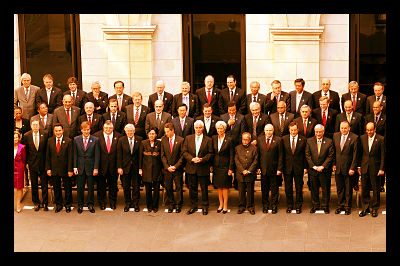
G-20 stands for “Group of 20 [nations]” that come together every year in a different place to discuss solutions to global issues, mainly economic issues. The 20 nations included in the G-20 summit are: Australia, Japan, South Africa, France, Turkey, the USA, Saudi Arabia, Russia, Mexico, Korea, China, Canada, Italy, Indonesia, India, the EU, Germany, the UK, Brazil, and Argentina.

At their summit once a year, these nations discuss various problems whose solutions can only be reached with international cooperation. The first G-20 session (conducted in Washington D.C., USA) dealt with the economic crisis of the time.  Ever since then, the G20 has taken the responsibility of preventing further economic meltdowns with international cooperative measures. The G20 summit is also a great place to address poverty. Helping stabilize the economy and encouraging growth will result in a better economy even in poorer nations. It would help improve infrastructure, and allow smaller nations to build their nation and economy.

This year, the G20 summit, hosted by Russia, will again tackle financial and economic problems. Russia has organized its main priorities for growth in three main categories: Regulation; Jobs and Investment; and Trust and Transparency. One of the main recommendations to ensure economic growth is to confront corruption. Corruption effectively holds back progress. Especially in smaller nations, or nations where aid is necessary to build infrastructure and economy, corruption prevents funds from reaching their destination. The G-20 committee will address the issue of corruption in October. In a solution to, and an active fight against, corruption, lies the future of the fight against global poverty.

Solving economic problems will directly impact poverty; fighting poverty will result in a stronger global economy. Attempting to address economic issues with this in mind will help the international economy, and the national ones as well. The G-20 summit, which meets mainly to address these economic issues, has the potential to greatly impact the fight against global poverty.

– Aalekhya Malladi

Sources: G20, U.S. Department of State
Photo: Radio Netherlands Worldwide

October 2, 2013
https://borgenproject.org/wp-content/uploads/borgen-project-logo.svg 0 0 Borgen Project https://borgenproject.org/wp-content/uploads/borgen-project-logo.svg Borgen Project2013-10-02 21:26:362024-05-25 00:21:54What is the G-20?
Advocacy, Aid Effectiveness & Reform, Children, Education, Foreign Aid

Child Sponsorship Works

 child-sponsorship-works-borgen-project-compassion-international_opt
When people ask how to help the poor, child sponsorship often is suggested. Indeed, for a small amount of money each month, organizations allow individuals to sponsor a child and help to provide education, food, and clothing for them. In return, the sponsors get a picture of the child and quarterly or annual updates from the organization regarding their child.  It has long seemed like an easy way to make an impact. The question many people ask, however, is does it really work? One development economist decided he was going to find out.

It seemed no one had ever been interested in finding the answer despite the fact that 9 million children are sponsored worldwide and more than $5 billion dollars per year is invested in child sponsorship programs. For organizations, obviously the stakes were high. If they allowed researchers to study the effectiveness of their programs, what would they do if they came back ineffective? After several years, one organization decided to allow themselves to be studied under one condition: anonymity.

The study initially looked at individuals in Uganda, studying 809 individuals including 188 who were sponsored as children. The results from the first study were any economist’s dream. The data clearly showed large and statistically significant impacts on the educational outcomes of sponsored children. It appeared the program was actually working! To solidify the results, the study was conducted in six other countries: Uganda, Guatemala, the Philippines, India, Kenya and Bolivia. Data was obtained on 10,144 individuals and the results were consistent with the first study. 27 to 40% more sponsored children complete secondary school and 50 to 80% more complete a college education. In addition to effects on education, the study found that sponsored children were also more likely to gain meaningful employment.

As a result of the study, the sponsorship organization removed the anonymity clause. Compassion International was the organization that allowed its program to be scrutinized; the results were clear that child sponsorship works. It helps lift kids and families out of poverty and provides them with hope. For more information about child sponsorship, visit Compassion International at www.compassion.com.

– Amanda Kloeppel
Sources: Christianity Today, Compassion International

July 13, 2013
https://borgenproject.org/wp-content/uploads/borgen-project-logo.svg 0 0 Borgen Project https://borgenproject.org/wp-content/uploads/borgen-project-logo.svg Borgen Project2013-07-13 06:00:172020-05-14 11:01:29Child Sponsorship Works
Global Poverty

Why We Should Fight Harder To End Global Poverty

End-Global-Poverty
Can we really end global poverty? Earlier this year, World Bank announced that we can virtually end extreme global poverty by 2030, meaning that the number of people in the world living on $1.25 per day or less would be reduced to 3%.

But while that would be a huge victory for the world, we should set our standards higher. Right now, extreme poverty is defined as living on $1.25 per day, and poverty is $2 per day. But even many of those with $2 to live each day don’t have access to other essentials such as drinking water and electricity. In rural areas of the poorest countries, 1 in 10 children die before their first birthday from easily preventable diseases, and $2 per day cannot afford these children the medication or vaccines they need.

Furthermore, the people who make more than $2 in poor countries (i.e. those not living in poverty) still have five times higher infant mortality rates than the poorest and most deprived areas of rich countries, which shows the gap between poverty in rich and poor nations.

Some economists suggest that the “global middle class” earns approximately $10 per day. But if we were to change the definition of “poverty” to living on less than $10, rather than $1.25 or $2 per day, we would find that 98% of people in sub-Saharan Africa would be living in poverty.

But is it really feasible to get everyone in the world living on more than $10 per day?

Economists crunched the numbers and say yes. By 2050, the population will be around 9 billion and global GDP will quadruple. They predict that the GDP related to getting everyone to the $10 per day mark would take less than 1/5 of the $300+ trillion output. In other words, it’s entirely possible if we raise our goals and fight harder to end global poverty. $1.25 will get most people the bare necessities they need to survive, but $10 will give them a much better standard of living.

– Katie Brockman

Source Businessweek

May 7, 2013
https://borgenproject.org/wp-content/uploads/borgen-project-logo.svg 0 0 Borgen Project https://borgenproject.org/wp-content/uploads/borgen-project-logo.svg Borgen Project2013-05-07 09:00:302020-05-26 08:48:49Why We Should Fight Harder To End Global Poverty
Global Poverty

Are U.S. Farmers Hurt by Food Aid Reform?


Are US farmers hurt by food aid reform? The short answer: No.

President Obama’s proposal to allow the food aid supplied by the United States to be purchased more locally has obvious benefits: less travel time and expense to feed those in the greatest danger, bolstering local economies, investing in local agriculture to create a sustainable supply, and the potential of feeding 2-4 million more people.

These are obvious benefits unless you are an American farmer, packer or shipper, the three main interested parties (other than the millions of hungry around the world). These minders are not without questions of their own.

For example, one might wonder how purchasing a larger percentage of the food aid from non-US farmers is reconciled with USAID’s mission of expanding external markets for US goods?

The food crises require immediate response. According to the World Food Program, hunger kills more people than AIDs, Malaria, and TB combined. Preventable deaths per year due to malnutrition are measured in the millions. A shipment from the United States can take many weeks — time the vulnerable simply do not have. Purchasing local produce reduces the time from farm to mouth by 11-14 weeks and feeds an extra 2-4 million people.

Preventing deaths by malnutrition and all the suffering, humiliation, and diseases that go along with it allows for medium and long-term development. Medium to long-term development expands peace and US markets of goods, services, travel and tourism.

How, one may also wonder, do American farmers benefit when their jobs are outsourced and market share displaced?

US farm exports are worth around $145 billion. The US government spends $1 billion on food aid programs—a “drop in the market” compared to the enormous figure of US farm exports. Even an economist from the American Farm Bureau Federation admits, “Our concern is less about decreasing an important revenue stream for U.S. agriculture. It’s more about the loss of a sense of pride.” Despite the minimal impact, the reform proposal includes $25 million to ease the transition of US farmers affected.

Are US farmers hurt by food aid reform? With no significant job losses and no significant market share loss, US farmers’ pride cannot justify denying food to 4 million hungry people deserving of the same dignity and opportunities as them.

– Katherine Zobre

Sources: USAID, The Economist, World Food Program, Reuters

May 5, 2013
https://borgenproject.org/wp-content/uploads/borgen-project-logo.svg 0 0 Borgen Project https://borgenproject.org/wp-content/uploads/borgen-project-logo.svg Borgen Project2013-05-05 20:39:512020-05-26 08:34:35Are U.S. Farmers Hurt by Food Aid Reform?
Page 18 of 18«‹161718

Get Smarter

  • Global Poverty 101
  • Global Poverty… The Good News
  • Global Poverty & U.S. Jobs
  • Global Poverty and National Security
  • Innovative Solutions to Poverty
  • Global Poverty & Aid FAQ’s
Search Search

Take Action

  • Call Congress
  • Email Congress
  • Donate
  • 30 Ways to Help
  • Volunteer Ops
  • Internships
  • Courses & Certificates
  • The Podcast
Borgen Project

“The Borgen Project is an incredible nonprofit organization that is addressing poverty and hunger and working towards ending them.”

-The Huffington Post

Inside The Borgen Project

  • Contact
  • About
  • Financials
  • President
  • Board of Directors
  • Board of Advisors

International Links

  • UK Email Parliament
  • UK Donate
  • Canada Email Parliament

Get Smarter

  • Global Poverty 101
  • Global Poverty… The Good News
  • Global Poverty & U.S. Jobs
  • Global Poverty and National Security
  • Innovative Solutions to Poverty
  • Global Poverty & Aid FAQ’s

Ways to Help

  • Call Congress
  • Email Congress
  • Donate
  • 30 Ways to Help
  • Volunteer Ops
  • Internships
  • Courses & Certificates
  • The Podcast
Scroll to top Scroll to top Scroll to top