• Link to X
  • Link to Facebook
  • Link to Instagram
  • Link to TikTok
  • Link to Youtube
  • About
    • About Us
      • President
      • Board of Directors
      • Board of Advisors
      • Financials
      • Our Methodology
      • Success Tracker
      • Contact
  • Act Now
    • 30 Ways to Help
      • Email Congress
      • Call Congress
      • Volunteer
      • Courses & Certificates
      • Be a Donor
    • Internships
      • In-Office Internships
      • Remote Internships
    • Legislation
      • Politics 101
  • The Blog
  • The Podcast
  • Magazine
  • Donate
  • Click to open the search input field Click to open the search input field Search
  • Menu Menu

Archive for category: USAID

Topics covering about USAID

Advocacy, Aid Effectiveness & Reform, USAID

Rice Farming Productivity in Ghana Increases

ricepaddy

Rice farming in Botanga, Ghana, has seen an increase in productivity due to an agricultural project funded by the USAID.  The Agricultural Development and Value Chain Enhancement (ADVANCE) program started two years ago to help farmers who use the lands of the Botanga Irrigation Scheme. The program was designed to increase productivity.

Marketing companies and produce buyers were brought into the project to help the rice farmers grow and cultivate improved rice varieties. Currently around 600 farmers are farming the land and many of them have benefited from the ADVANCE project. The rice cultivated is used mainly for cereal and vegetables. The project brought in combine harvesters that have improved rice harvesting and helped to lower some of the post-harvest losses in Botanga. Rice farmers were educated on better farming techniques. They were shown how to create nurseries and replant with adequate spacing to ensure better yields for future crops. The ADVANCE project also helped improve the business side of rice farming.  Farmers were offered support in selling crops and provided information and expert knowledge on controlling pests and disease.

Food insecurity is a major issue across all developing nations and Ghana is no exception. The USAID-ADVANCE project hoped to improve food security and increase the incomes of households of rice farmers in the Botanga region.  A value-chain method was developed to allow farmers access to all parts of the production process such as input dealers, seed suppliers, and produce buyers.  The method starts first with identifying a buyer and demand for the product to ensure crops can be sold. Premium Foods and AMSIG Resources were two buyers linked to the rice farmers. The buyers then developed contracts with the farmers that provide support, weed control, seeds, and an agreed upon price to buy the rice from the farmers.

Since the ADVANCE program began, 29,000 low income farmers are being supported. These farmers grow maize, rice, and soybeans. They are getting the help they need to grow successful crops and are being paid a fair market price for their produce. 269 demonstration sites have also been set up to show farmers new technology and how to best utilize it.  The introduction of infrastructure and technology have helped Botanga rice farmers improve their lifestyles. The project also falls in line with President Obama’s Feed the Future initiative.

– Amanda Kloeppel
Source: GhanaWeb

June 6, 2013
https://borgenproject.org/wp-content/uploads/borgen-project-logo.svg 0 0 Borgen Project https://borgenproject.org/wp-content/uploads/borgen-project-logo.svg Borgen Project2013-06-06 05:00:582024-06-04 01:17:30Rice Farming Productivity in Ghana Increases
Development, Foreign Policy, Global Poverty, Human Rights, Human Trafficking, Politics and Political Attention, Refugees and Displaced Persons, USAID, War and Violence

Afghan Child Refugees Flee to Europe

afghanistan-refugees
As citizens of the United States, we hear a lot about the war in Afghanistan. We hear about what the U.S. is doing, our withdrawal timeline, attacks and progress. What we don’t hear about is how the war has affected Afghan citizens, and what life has been like for them.

Right now in Afghanistan, there is a mass exodus of teenage boys who are fleeing Afghanistan. These Afghan child refugees are headed on a 10,000-mile journey towards Europe, where, if they are lucky enough to live and arrive in Europe, they may be able to seek asylum. Teens are forced to trust in smugglers who transport them in secret compartments in vans and truck, or take them on dangerous water crossings with low survival rates.  Many of the boys who take on this journey die in the process, with estimates as low as 35% of boys making it to Europe.

Additionally, Afghan boys are at risk for sex trafficking on their journey. Many of the boys are sexually abused, or turned into sex slaves by their smugglers. They are powerless to the smugglers, who control their livelihood and safety. Many children may also be diverted into menial jobs as they try to save money to pay smugglers for future legs of their jouney. Boys disappear often, and anonymously. They are incredibly vulnerable and very susceptible to kidnappers.

The deaths and disappearances of these boys are, in part, a result of their vulnerability and poverty. The poorer and less educated the boys, the bigger risk they may suffer. Additionally, some of the children may be experiencing post-traumatic stress from the war-related events that they may have witnessed in Afghanistan. The children are also subject to the constant threat of deportation, as most of them do not have legal status or documentation.

The lack of legal status can have many implications on the children. They could be exposed to organized crime, physical abuse, and child labor, as well as the previously mentioned sex trafficking. In several of the countries through which the boys travel, such as Greece, unaccompanied children are not guaranteed asylum or refugee status. Those children who are caught, deported, and sent back to Afghanistan may be at an even greater risk if returned. The plight of young Afghans is undoubtedly a serious human rights violation and one that should be more widely covered by mainstream media.

– Caitlin Zusy 

Sources: 60 Minutes, 60 Minutes, UNHRC
Photo: The National

June 5, 2013
https://borgenproject.org/wp-content/uploads/borgen-project-logo.svg 0 0 Borgen Project https://borgenproject.org/wp-content/uploads/borgen-project-logo.svg Borgen Project2013-06-05 04:11:062024-05-24 23:54:08Afghan Child Refugees Flee to Europe
Development, Food & Hunger, Food Security, USAID

Partnership to Develop Climate-Resilient Crops

three-nations-create-climate-resilient-crops
The United States, Australia, and India have come together to develop climate-resilient varieties of rice and wheat that make up two of the “big three” crops that are imperative to feeding people worldwide. The United States Agency for International Development (USAID) is supporting a new public-private research partnership between the Australian Centre for Plant Functional Genomics (ACPFG) and India’s Vibha Agrotech.

With ACPFG’s unique gene technologies that are already in use and Vibha’s field evaluation and rice transformation capabilities, farmers will acquire new rice and wheat varieties that will allow more stable crop production when facing sudden drought and evolving salt-water intrusion. The most successful varieties evaluated will eventually be transferred into the varieties that the farmers already grow.

While the research and crop growth will take place in Australia and India in the preliminary stages, the technologies will eventually be available to developing countries globally. The climate-resilient crops will be most useful in countries where climate change and subsequent stresses impact cereal yields and will help to ensure that farmers will have a good harvest despite these unpredictable climate changes.

The partnership is part of Feed the Future, the US Government’s global hunger and food security initiative. According to Dr. Julie Howard, USAID’s Chief Scientist in the Bureau for Food Security and Senior Advisor to the Administrator on Agricultural Research, Extension and Education, in order to ensure food security, global food production must increase by 60% by 2050. Unfortunately, climate change is already affecting yields globally. “That means we must use all the tools available to us to grow more food on less land and with less water,” she said.

– Kira Maixner

Source: Business Standard
Photo: Rising Pyramid

June 1, 2013
https://borgenproject.org/wp-content/uploads/borgen-project-logo.svg 0 0 Borgen Project https://borgenproject.org/wp-content/uploads/borgen-project-logo.svg Borgen Project2013-06-01 05:43:302024-12-13 17:49:22Partnership to Develop Climate-Resilient Crops
Advocacy, USAID

Jordanian Law Students Receive Human Rights Coursework

Jordanian Law Students
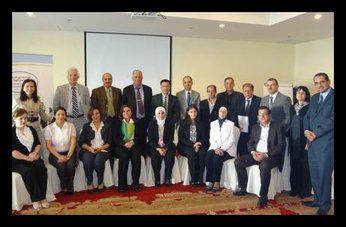
Jordanian law students will get human rights coursework thanks to the American Bar Association and USAID. The Human Rights Curriculum for Jordanian law students was launched on May 15th to Jordanian law faculties. This curriculum hopes to bring innovative, multimedia approaches to the law classrooms of Jordan and improve the quality of students’ legal education. Students have been dissatisfied with their education as it has failed to keep up with evolving technologies, and this program is one solution to the complaints.

The launch brought 19 human rights law professors together as well as several other faculty members to experience and use the curriculum. Demonstrations were done as well as hands-on simulations. The curriculum was created as part of the American Bar Association’s program “Enhancing Protection and Promotion of Human Rights in Jordan.” The program was designed by Jordanian and international professors and human rights experts to provide a complete picture of Jordanian law and human rights principles.

The coursework is designed to be interactive and deviates from the lecture model found in most legal classrooms. The material is conveyed through role play, case analysis, and video segments.  Each section includes history and theory regarding different aspects of human rights law.  The workshop done at the launch gave professors a glimpse into the curriculum. It gave professors the ability to learn how to implement the program and various outlets for additional resources and help.

The hope is that Jordanian law students will gain greater knowledge and skills through the more hands-on program and have a greater ability to apply the principles to real life law cases.  It will also give them a greater appreciation of the depth of human rights law and the many areas in which it applies.

-Amanda Kloeppel
Source: AME Info

May 27, 2013
https://borgenproject.org/wp-content/uploads/borgen-project-logo.svg 0 0 Borgen Project https://borgenproject.org/wp-content/uploads/borgen-project-logo.svg Borgen Project2013-05-27 04:00:252020-06-18 19:34:23Jordanian Law Students Receive Human Rights Coursework
Advocacy, Aid Effectiveness & Reform, Development, Technology, USAID

USAID and Qualcomm Expand Relationship

cell_phone
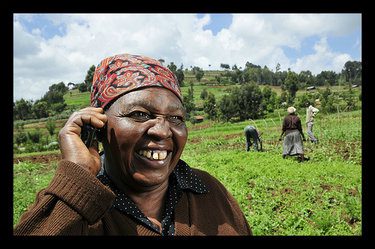
USAID and Qualcomm announced a formal agreement to work to expand global technology and increase collaborative efforts in development.  Qualcomm, a San-Diego based telecommunications company, has been working with USAID in recent years to improve access to technology in developing countries. The formal agreement will give Qualcomm’s Wireless Reach Division the ability to carry out projects.

Those that have already benefited from USAID and Qualcomm’s projects are fishermen in Brazil, police officers in El Salvador, and health workers in the Philippines.  In Brazil, the joint project provided small-scale fisherman with mobile devices and applications to connect with buyers, track sales, and get weather updates. Qualcomm was able to equip police in high-crime neighborhoods in El Salvador with smart phones that allowed them to connect to a database to work to reduce crime. Collaboration in the Philippines helped rural health clinics establish electronic records.

USAID commended Qualcomm for being an innovative, nimble, and strategic global technology leader.  USAID and Qualcomm share a vision of how to address the challenges in the developing world. Among the current goals of the formal agreement are to close the mobile phone gender gap, expand access to broadband, reduce the negative effects of climate change, and connect small farmers to market data.  Projects in Africa and Asia are the top priority and future consideration will be given to other areas including Latin America.

The future of technology in developing nations is changing quickly and this is just more step in the right direction.

– Amanda Kloeppel

Source: UT San Diego
Photo: CIAT News

May 26, 2013
https://borgenproject.org/wp-content/uploads/borgen-project-logo.svg 0 0 Borgen Project https://borgenproject.org/wp-content/uploads/borgen-project-logo.svg Borgen Project2013-05-26 07:33:012020-06-18 19:49:50USAID and Qualcomm Expand Relationship
Advocacy, Aid Effectiveness & Reform, USAID

UTSA Partners with Small Business in Tunisia

tunisia

The International Trade Center housed within the UTSA (University of Texas at San Antonio) institute of Economic Development is partnering with USAID to train small businesses in Tunisia.  UTSA will take their Small Business Development Center (SBDC) Counselor and Director Certificate Training program to Tunisia.  The goal of the training is to help Tunisia establish SBDCs to train and support small business owners and entrepreneurs. Many of these are women and young adults with little hope of a sustainable future.

UTSA’s training program is just one component of a larger initiative focused on strengthening Tunisia’s economic development. The initiative is funded and led by USAID.  UTSA and USAID will provide the SBDC training in Tunisia, as well as stay involved with providing technical support to owners and employees of small and medium-sized enterprises.  The program will work to provide a competitive  advantage to these small business owners and work to improve  their lifestyles.

North Africa’s smallest country, Tunisia, is working to rebuild its democracy after the 2011 revolution. It is bordered by Algeria, Libya, and the Mediterranean Sea. Tunisia is ready to promote economic growth and trade opportunities with a special focus on small and medium businesses.

The International Trade Center at UTSA has grown to be one of the largest trade assistance organizations in Texas. They have been  working with countries in Central and South America.  The trade center helps companies increase their global competiveness through technical trade consulting, market research, and innovative training. Follow them on Twitter (@TexasTrade) or find them on Facebook (facebook.com/texastrade).

– Amanda Kloeppel
Source: UTSA

May 23, 2013
https://borgenproject.org/wp-content/uploads/borgen-project-logo.svg 0 0 Borgen Project https://borgenproject.org/wp-content/uploads/borgen-project-logo.svg Borgen Project2013-05-23 05:00:132020-06-16 13:20:16UTSA Partners with Small Business in Tunisia
Development, USAID

The Search for Sustainable Materials

The Search for Sustainable Materials

What do NIKE, NASA, and USAID have in common? The search for sustainable materials to be used in the production of goods.  As members of LAUNCH, an initiative to raise awareness around the sustainable production of goods, NIKE, NASA, USAID, and the State Department recently gathered with 150 materials specialists, designers, manufacturers, entrepreneurs, and NGOs to ignite action around the issue.

The two-day LAUNCH 2020 Summit was opened by NIKE, INC. CEO Mark Parker. He stressed the importance of innovation and collaboration in the area of producing sustainable goods. The Summit also served to reveal the LAUNCH 2013 Challenge Statement. This is an open call for innovation in sustainable materials and good production. The challenge is to create innovation in the system of producing fabrics and is open to both individuals and teams. In August, the 10 strongest ideas will be selected and granted access to creativity, capital, and capacity.

The materials used to produce goods play a significant role in the environment. LAUNCH was created to address this growing issue and to seek innovations solutions to global issues.  Three years ago, LAUNCH was able to provide the needed capital to get Astronaut Ron Garan’s clean water innovation into production.  His project-Carbon for Water-used carbon credits and a filter system to clean dirty water. His filter has provided clean water for over 4.5 million Kenyans.  LAUNCH was also a key player in Gram Power, a program providing thousands of people in India affordable, renewable energy.

You can learn more about Launch at their website or sign up for the 2013 challenge here.

– Amanda Kloeppel

Source: NIKE, INC.
Video: Vimeo

May 3, 2013
https://borgenproject.org/wp-content/uploads/borgen-project-logo.svg 0 0 Borgen Project https://borgenproject.org/wp-content/uploads/borgen-project-logo.svg Borgen Project2013-05-03 09:00:492020-06-17 01:18:56The Search for Sustainable Materials
Aid Effectiveness & Reform, USAID

Why the US Should Invest in Africa?

Why the US Should Invest in Africa?
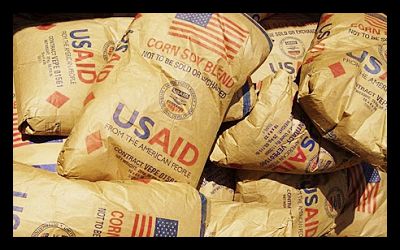
USAID in Africa creates many new advantages for the US beyond humanitarian aid, such as fostering strategic national security partners and increasing US economic prospects. George Ingram and Steven Rocker recommend four strategies to better utilize and direct foreign assistance to the region.

In June 2012, President Obama established his development priorities in the region with the White House’s U.S. Strategy toward Sub-Saharan Africa, focusing on economic growth, food security, public health, women and children, humanitarian response, and climate change.

From 2002 to 2012, the total USAID money in sub-Saharan Africa nearly quadrupled, from roughly $1.94 billion to $7.08 billion. The assistance money was largely focused on global health spending, specifically the President’s Emergency Plan for AIDS Relief (PEPFAR). But even beyond global health, the U.S. is the leading donor of humanitarian aid to sub-Saharan Africa, particularly in the area of emergency food aid. The Obama administration also provides assistance in agriculture development through its Feed the Future program, a global hunger and food security initiative. Overall, USAID operates 27 different regional missions in 47 African countries – the top five being Kenya, Nigeria, Ethiopia, Tanzania and South Africa.

U.S. development assistance brings government agencies, American organizations and businesses into collaboration with Africans who are trying to put their own communities and countries onto a more prosperous social, political, and economic plane. There are three critical reasons why the US should invest in Africa:

1. Humanitarian interests – Through moral obligation the U.S. has historically been the leading donor of humanitarian assistance in the region. It is part of the American ethos to continue to respond compassionately to people in their most desperate times of need.

2. National security interests – There are continued terrorist concerns in Somalia and Mali, with the potential new threats in Nigeria (the U.S.’s largest trading partner in sub-Saharan Africa). USAID must continue to be very active in these regions particularly to prevent any terrorist strongholds from cementing and to maintain stability.

3. Economic interests – From 2001 to 2010, six of the fastest-growing economies in the world were in Africa. In 2011, foreign investment to sub-Saharan Africa amounted to more than all the development assistance funding for the whole world. Many countries are recognizing and acting on increasing commercial opportunities in Africa.

Four ways to make U.S. aid to Africa more effective:

1. Sustainable health systems – The majority of health assistance to Africa is used to finance the delivery of health services, which is not sustainable. Greater focus needs to be directed to building health practices that Africans can carry out on their own.

2. Disaster preparedness – For all the humanitarian aid delivered, very little is allocated toward disaster prevention and preparedness. By focusing more resources and expertise toward these areas, the U.S. could reduce the need for large international disaster relief, and save lives.

3. Economic growth – The U.S. should leverage its assistance to stimulate economic growth. Congress and U.S. officials should engage the Export-Import Bank, Department of Commerce, Overseas Private Investment Corporation, U.S. Trade and Development Agency and the U.S. Trade Representative to ensure that a range of government policies and programs are encouraging equitable economic growth for all, and commercial opportunities for U.S. businesses.

4. Democratization and good governance – The U.S. needs to give greater attention and support toward governance policies and oversight; including improving the governmental collection of revenues, transparent budgeting, and building the capacity of civil society and legislative systems.

– Mary Purcell

Source: Brookings
Photo: ruaf.iwmi.org
April 19, 2013
https://borgenproject.org/wp-content/uploads/borgen-project-logo.svg 0 0 Borgen Project https://borgenproject.org/wp-content/uploads/borgen-project-logo.svg Borgen Project2013-04-19 08:43:442020-06-12 20:49:11Why the US Should Invest in Africa?
Advocacy, USAID

Foreign Aid and the Proposed Budget

foreignaid
President Obama revealed his proposed budget for 2014 and much to the surprise of many, there was a slight increase in foreign aid in the proposal. Requested funds for foreign aid equaled somewhere around $52 billion which is a slight bump over this year’s budget.  Increased funds for global health and development assistance were included as well as a decrease in military aid to foreign countries.  The proposed budget also called for a major overhaul of the US food-aid programme to save money and invest more wisely in food production and improvement rather than on shipping costs.

The International Affairs budget funds USAID and the State Department as well as the United States’ donations to the United Nations and other similar institutions.  It also provides funds for natural disaster emergencies and embassy support. The proposed budget will now be passed to the House and Senate where they will debate the proposed funds.  If an agreement cannot be reached again this year, major across-the-board spending cuts will go into effect again. One thing that did not change in the proposed budget was the proportion of the budget that goes towards foreign aid, which still amounts to only slightly more than 1% of overall spending. Compared to the defense budget, which is around $527 billion, there is still a large gap in appropriated government funds.

Advocates of foreign aid spending have long complained of the disconnect between aid and diplomacy, citing that without increased development, unstable countries will struggle to become stable. Leaders are working with Congress to call for the necessary funds to promote global development, innovation, and provide resources to those in poverty. The proposed budget caused non-profit and non-government leaders to breathe a slight sigh of relief as their funds were not initially proposed to be cut. While budget cuts must be made, foreign aid is an area where the funds are causing global change, reducing poverty, and increasing the safety of both US citizens and citizens of other countries.

The proposed budget is also the perfect time for advocacy.  As Senators and Representatives must make decisions about the final budget, calls advocating for foreign aid and funds focused towards reducing global poverty can make a real impact.

Find your senators and representative here and make a 30 second call to keep foreign aid fully funded.

– Amanda Kloeppel

Source: The International News Magazine
Photo: Council on Foreign Relations

April 14, 2013
https://borgenproject.org/wp-content/uploads/borgen-project-logo.svg 0 0 Borgen Project https://borgenproject.org/wp-content/uploads/borgen-project-logo.svg Borgen Project2013-04-14 13:37:402024-05-24 23:40:28Foreign Aid and the Proposed Budget
Children, Food Security, Foreign Policy, Health, USAID

Guatemala’s Zero Hunger Pact

Guatemala_USAID_Nutrition
The U.S. Department of State recently hosted a number of government officials in a conference on nutrition and hunger in Guatemala. Attendees included representatives from USAID, the Guatemalan Health Minister, officials of the Government of Guatemala, a panel of nutrition experts, and private sector leaders.

As part of the larger Zero Hunger Pact, started by the President of Guatemala in 2012, Guatemala’s goal is to lower chronic malnutrition in children throughout the country by 10 percent by 2015.

In addition to representatives from the United States and Guatemala, members from the World Bank, the World Food Program, and other high-profile organizations appeared at the event. Participants of the event gathered to discuss and strategize on Guatemala’s implementation of the Zero Hunger Pact, which included planning the necessary next steps for the country to take to reduce malnourishment.

Guatemala has one of the highest rates of child malnutrition in the world as nearly half of all children in the country under five years of age suffer from chronic malnourishment; the issue is particularly bad in the Western highlands of Guatemala. U.S. government officials praised the Guatemalan government’s efforts to tackle child nutrition at the conference and also praised their efforts for sustainable results in fighting hunger.

In addition to the Zero Hunger Pact, Guatemala is also a focus area for the United State’s global hunger and food security initiative called Feed the Future.

– Christina Kindlon

Source: State Department

April 14, 2013
https://borgenproject.org/wp-content/uploads/borgen-project-logo.svg 0 0 Borgen Project https://borgenproject.org/wp-content/uploads/borgen-project-logo.svg Borgen Project2013-04-14 11:00:452020-05-13 21:55:34Guatemala’s Zero Hunger Pact
Page 31 of 33«‹2930313233›»

Get Smarter

  • Global Poverty 101
  • Global Poverty… The Good News
  • Global Poverty & U.S. Jobs
  • Global Poverty and National Security
  • Innovative Solutions to Poverty
  • Global Poverty & Aid FAQ’s
Search Search

Take Action

  • Call Congress
  • Email Congress
  • Donate
  • 30 Ways to Help
  • Volunteer Ops
  • Internships
  • Courses & Certificates
  • The Podcast
Borgen Project

“The Borgen Project is an incredible nonprofit organization that is addressing poverty and hunger and working towards ending them.”

-The Huffington Post

Inside The Borgen Project

  • Contact
  • About
  • Financials
  • President
  • Board of Directors
  • Board of Advisors

International Links

  • UK Email Parliament
  • UK Donate
  • Canada Email Parliament

Get Smarter

  • Global Poverty 101
  • Global Poverty… The Good News
  • Global Poverty & U.S. Jobs
  • Global Poverty and National Security
  • Innovative Solutions to Poverty
  • Global Poverty & Aid FAQ’s

Ways to Help

  • Call Congress
  • Email Congress
  • Donate
  • 30 Ways to Help
  • Volunteer Ops
  • Internships
  • Courses & Certificates
  • The Podcast
Scroll to top Scroll to top Scroll to top