• Link to X
  • Link to Facebook
  • Link to Instagram
  • Link to TikTok
  • Link to Youtube
  • About
    • About Us
      • President
      • Board of Directors
      • Board of Advisors
      • Financials
      • Our Methodology
      • Success Tracker
      • Contact
  • Act Now
    • 30 Ways to Help
      • Email Congress
      • Call Congress
      • Volunteer
      • Courses & Certificates
      • Be a Donor
    • Internships
      • In-Office Internships
      • Remote Internships
    • Legislation
      • Politics 101
  • The Blog
  • The Podcast
  • Magazine
  • Donate
  • Click to open the search input field Click to open the search input field Search
  • Menu Menu

Archive for category: USAID

Topics covering about USAID

Foreign Aid, Global Poverty, USAID

5 Republican Foreign Aid Quotes

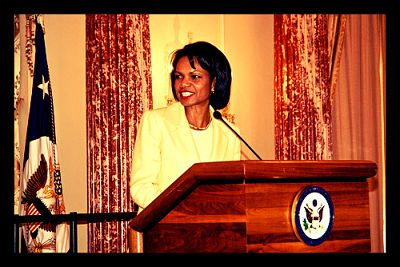
Top Five Republican Foreign Aid Quotes Condoleezza Rice Marco Rubio Mitt Romney Global Development
Not all Republicans are opposed to foreign aid, and even those who are, have much to say regarding its usage in the American budget. The following are five quotes from various Republican politicians regarding their views on foreign aid.

1. “It has been hard to muster the resources to support fledgling democracies–or to help the world’s most desperate… yet this assistance–together with the compassionate works of private charities–people of conscience and people of faith–has shown the soul of our country.” – Former Secretary of State Condoleeza Rice (2012 Republican Convention)

2. “But too often our passion for charity is tempered by our sense that our aid is not always effective. We see stories of cases where American aid has been diverted to corrupt governments. We wonder why years of aid and relief seem never to extinguish the hardship, why the suffering persists decade after decade. Perhaps some of our disappointments are due to our failure to recognize just how much the developing world has changed. Many of our foreign aid efforts were designed at a time when government development assistance accounted for roughly 70 percent of all resources flowing to developing nations. Today, 82 percent of the resources flowing into the developing world come from the private sector. If foreign aid can leverage this massive investment by private enterprise, it may exponentially expand the ability to not only care for those who suffer, but also to change lives.” – 2012 Presidential Candidate Mitt Romney (in an address to the Clinton Global Initiative, 2012)

3. “For development to play its full role in our national security structure, the U.S. Agency for International Development (USAID) must be a strong agency with the resources to accomplish the missions we give it. But during the last two decades, decision-makers have not made it easy for USAID to perform its vital function. Even as we have rediscovered the importance of foreign assistance, we find ourselves with a frail foundation to support a robust development strategy. I believe the starting point for any future design of our assistance programs and organization should not be the status quo, but rather the period in which we had a well functioning and well-resourced aid agency.” – Senator Dick Lugar (Statement on Foreign Assistance Revitalization and Accountability Act, 2009)

4. “Foreign aid is also an important part of America’s foreign policy leadership. While we certainly must be careful about spending money on foreign aid, the reality is that it is not the reason we have a growing debt problem.” – Senator Marco Rubio (Foreign Policy address at the Jesse Helms Center, 2011)

5. “But I would just tell my fellow citizens and people from South Carolina, I want to shape the world the best we can rather than just follow the world and if you don’t believe military force is the answer to every problem, which I don’t, then we need an engagement strategy, and sometimes investing in a country at the right time can pay dividends.” – Senator Lindsey Graham (in a hearing, 2008)

– Samantha Davis


Read global poverty quotes

Sources: Wall Street Journal, Vote Smart, USGLC
Photo: Flickr

October 2, 2013
https://borgenproject.org/wp-content/uploads/borgen-project-logo.svg 0 0 Borgen Project https://borgenproject.org/wp-content/uploads/borgen-project-logo.svg Borgen Project2013-10-02 09:42:122024-05-25 00:21:075 Republican Foreign Aid Quotes
USAID

Counterpart International

Counterpart_International
There are thousands of non-profits that work in less developed countries with a responsibility to be ethical. Counterpart International is a nonprofit organization that stresses a commitment to integrity, transparency and respect in its work across the world.

The three main development sectors that Counterpart International focuses on are:

1) Food Security and Nutrition – Food security involves the obtainment of affordable, quality food in sufficient quantities.

2) Economic Development – Economic development involves creating opportunities for people to increase incomes and provide better for their families.

3) Effective Governance and Institutions – Addressing citizens’ needs by connecting civil groups within a country or region.

In January 2013, Counterpart International joined the United Nations Global Compact—an 8,000 plus member international initiative committed to corporate responsibility. The UN Global Compact has its volunteer members commit to 10 universally accepted principles in the areas of human rights, anti-corruption, labor, and the environment.

In Niger, extreme drought causes food shortages in which the marginalized populations suffer the most. Handicapped and blind children are often purposefully overlooked. Counterpart saw the need for these disabled people to get sufficient nutrition and created FAIR. FAIR, or Food Aid for Disabled Children Project, now provides over 300 children and 1,500 adults with hot meals or food rations. The children receive the hot meals at schools that are designed to teach the blind, deaf, or physically disabled.

Even more impactful work is being done in Mauritania, another drought-stricken country in Western Africa. Counterpart was hired by the United States Agency for International Development (USAID) to implement a Multi-Year Assistance Program titled the Community Action Nutrition and Livelihoods project. This particular project provides sustainable solutions to poverty for Mauritanians through micro-enterprise opportunities, community healthcare training and agriculture practices.

$250,000 in loans through Counterpart’s program helped approximately 3,500 Mauritanian entrepreneurs, most of which were women. Women empowerment is crucial in a region where women lack most of the UN’s Universally Declared Human Rights. In addition, nearly 600 healthcare workers were trained, providing local care to individuals who may be suffering from diseases and deficiencies that can easily be prevented and treated. Healthcare for farm animals was also implemented under the program in Mauritania. Training veterinary assistants not only provided jobs for the people, but prevented the loss of livestock.
Counterpart International is in charge of the Global Civil Society Strengthening Leader with Associates (GCSS LWA). This association teams up with the United States Agency for International Development and Global Civil Society Strengthening to encourage civic growth and participation. In addition to promoting better governance, GCSS LWA and its over 23,000 local and regional partners seek to empower independent media outlets.

This year, as Counterpart International celebrates its 48 year anniversary, nearly half a century of development work in over 65 countries, it continues to maintain transparency and uphold its responsibility to be ethical in all of its interactions.

– Aysha Rasool
Feature Writer

Sources: Counterpart International: News, Counterpart International: Blog, Global Civil Society Strengthening
Photo: Counterpart International

August 26, 2013
https://borgenproject.org/wp-content/uploads/borgen-project-logo.svg 0 0 Borgen Project https://borgenproject.org/wp-content/uploads/borgen-project-logo.svg Borgen Project2013-08-26 14:48:162020-07-09 21:23:55Counterpart International
Developing Countries, Development, Food & Hunger, Food Aid, Foreign Aid, Global Poverty, Poverty Reduction, USAID

US Foreign Aid to Africa: What We Give and Why

us_foreign_aid

In 2012, the United States provided nearly $12 billion in official development assistance (“ODA”) to African nations. The ODA is allocated to education, health, infrastructure and economic development programs in recipient countries. Currently, the United States allocates foreign aid to 47 African nations and USAID operates 27 missions on the continent.

US Foreign aid to Africa began in the 1960s as many African nations gained independence and the United States sought strategic alliances to counter the influence of the Soviet Union. With the exception of disaster and famine relief, most foreign aid to Africa began to decrease with the collapse of the Soviet Union.

In the 2000s, President Bush more than tripled aid to Africa by establishing programs such as the Child Survival and Health Programs Fund as well as the Global HIV/AIDS Initiative.

Though foreign aid programs are designed to assist recipient nations with development, they also benefit the United States in a number of ways.

First, these programs help build strategic alliances and foster support for democratic transitions. It also stimulates Africa’s growth and development, which provides opportunities for increased trade and direct investment in the continent’s emerging markets.

But for all the benefits, foreign aid to Africa has no shortage of detractors. Many critics point out that much of the money allocated to Africa never reaches the people who most need the assistance. “Eighty percent of U.S. aid to Africa is spent right here in America — on American contractors, American suppliers, and so forth,” said George Ayittey, president of the Free Africa Foundation.

In more corrupt nations, politicians and civic leaders are often charged with misappropriating funds designated for the people. Others critics claim that foreign aid to Africa simply does not work—after 50 years of assistance, Africa still confronts the same issues.

But even critics would have to agree on one crucial point: foreign aid is an integral part of U.S. foreign policy. In Africa, aid programs support a large framework of social and economic assistance for developing nations.

Critics are correct that American companies and corrupt politicians siphon a large portion of foreign aid. But aid to Africa has also done much to improve infrastructure, bolster economic development and improve health care conditions for millions of people on the continent.

– Danial Bonasso
Sources: Foreign Policy Initiative, Washington Post, NPR, One.org
Photo: James Bovard

August 21, 2013
https://borgenproject.org/wp-content/uploads/borgen-project-logo.svg 0 0 Borgen Project https://borgenproject.org/wp-content/uploads/borgen-project-logo.svg Borgen Project2013-08-21 11:44:212024-12-13 17:49:39US Foreign Aid to Africa: What We Give and Why
Foreign Policy, Health, Sanitation, USAID, Water

Access to Clean Water and Sanitation, Water for the World

Congressmen Ted Poe (R-TX) and Earl Blumenauer (D-OR) recently introduced an important piece of legislation that may drastically improve the opportunity for every person in the developing world to access to clean water, toilets, and better hygiene practices.

The Water for the World Act of 2013, introduced by these two congressmen, is a bill that is trying to ensure that the world’s abject poor receive the attention they need from the United States in the attempt to seek improvements in clean water access and hygiene. It is important to note that this act does not seek to create new agencies or programs, but to improve the efficiency of existing programs. The emphasis is not on higher dollar amounts, but more strategic approaches in trying to improve the lives of the world’s poorest people.

Worldwide water sanitation holds important implications for those suffering in precarious conditions, as well as the global economy. The World Bank notes that water sanitation and hygiene programs are a great return on investment: For every $1 spent, $4 is returned in economic productivity, which contributes greatly to the world economy. If people do not have to worry about access to clean water, they can spend more time becoming educated, caring for their families, and contributing to both their economy and the worldwide economy. This would amount to over $220 billion being added to international trade each year.

Improvements in water sanitation, access, and hygiene that the Water for the World Act will try to effect will also significantly reduce transmissions of diseases such as pneumonia. Indirectly, rates of education will improve, as less people worldwide will suffer from malnutrition and diarrheal disease due to dirty water. As literacy rates increase, the rising middle class in developing countries will fight for more transparent and accountable governments. More responsible governance around the world is a key objective of U.S. foreign policy, but it cannot ever be realized if world populations are without access to clean water and sanitation.

Global water, sanitation, and hygiene programs currently constitute less than 1% of the budget of the United States Agency for International Development. Due to the bipartisan leadership of Poe and Blumenauer, their act will place a greater focus on enhancing the capacity of the U.S. government to provide for the world’s poorest, a much needed shift in policy which will stretch this 1% to help more people around the world.

– Rahul Shah

Sources: Huffington Post, WASH Advocates, USAid

August 20, 2013
https://borgenproject.org/wp-content/uploads/borgen-project-logo.svg 0 0 Borgen Project https://borgenproject.org/wp-content/uploads/borgen-project-logo.svg Borgen Project2013-08-20 05:53:292017-11-30 10:46:28Access to Clean Water and Sanitation, Water for the World
Developing Countries, Development, USAID

Leveraging the Private Sector

Brooksings
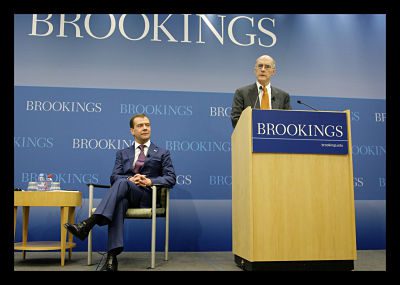
Last Sunday, the Brookings Institute held its 10th annual Blum Conference on global development. This year, the conference emphasized the increasingly significant role of the private sector in lifting the world out of poverty.

Currently, 1.2 billion people still languish in extreme poverty, which is defined as living on less than $1.25 a day. The head of the World Bank, Jim Yong Kim, recently made sweeping promises that by 2030, that number will have dwindled to less than 300 million. And, by all appearances, Kim’s claim has a solid basis: in the past decade, global extreme poverty rates have been cut in half.

The recent Brookings conference in Aspen, Colorado confirms that hope. And, more importantly, it lays out the path to achieve it: by engaging the private sector on a large scale. World leaders like Partners in Health co-founder Paul Farmer, UN Human Rights commissioner Mary Robinson, and former U.S. Secretary of State Condoleezza Rice used their voices on Sunday to reinforce this principle. Major development agencies have already been operating with this idea, including USAID which leveraged over $525 million in private investment last year alone.

The road forward, however, contains many obstacles. Homi Kharas, the author of Brookings’ policy brief, “Reimagining the Role of the Private Sector in Development,” lays out three major hurdles for partnerships between the private sector and the public, academic, and civil sectors.

The first is the massive project of adapting to private funding in development. As part of the process, Kharas recommends that development agencies project “leverage ratios” that link public dollars to private dollars. He applauds the Power Africa Act for using $7 billion in government spending to guarantee $9 billion in private investment pledges.

Secondly, innovation is the key to increasing agricultural productivity and improving access to necessities like water and medicine. Kharas argues that public subsidies for private-led innovation in these areas need to increase to harness the creative power of for-profit businesses.

Finally, Kharas suggests that perhaps the greatest obstacle to engagement is mistrust of private companies by public and civil actors. To build confidence and pave the way for future partnerships, companies need to make their footprints and supply chains more transparent.

“Every high-level development report and project now has private sector involvement,” wrote Kharas. “The time is ripe to systematize this approach and experiment with new forms of partnerships.”

– John Mahon

Sources: Devex, Brookings
Photo: Carnegie

August 19, 2013
https://borgenproject.org/wp-content/uploads/borgen-project-logo.svg 0 0 Borgen Project https://borgenproject.org/wp-content/uploads/borgen-project-logo.svg Borgen Project2013-08-19 05:38:012017-03-20 13:04:02Leveraging the Private Sector
USAID

USAID Helps Myanmar Become a Global Leader

mynamar_usaid_beach
Two years ago, Myanmar (also known as Burma) was the runt of Southeast Asia. For decades, it had suffered under autocratic military rule, entrenched human rights violations, and, at a 26% poverty rate, one of the region’s worst economies. But all that is starting to change.

In 2008, Cyclone Nargis devastated the seaside nation, prompting a flood of international aid. Despite skepticism about aid impact, the global attention kickstarted major national reform in Myanmar. Jim Della-Giacoma, the director of the International Crisis Group in Asia, recently applauded the nation for handling the abrupt largesse transparently and efficiently—tendencies not often reflected in emerging governments.

In 2011, the decades-long civil war between the government and the Kachin rebels in Myanmar came to a ceasefire. The unprecedented peace has opened the gates wide for fostering economic growth and forging new global connections. The sprawling country is making visible strides out of almost 30 years of internal conflict and isolation and has become a harbor for international development work.

Not only is the nation poised for amplified development efforts, however—Myanmar has launched itself to the head of its league. In 2014, it will assume chairmanship of the Association of Southeast Asian Nations, a bloc it joined in 1997. Its leadership will, among many things, be key to improved environmental policy in the region.

“I never thought I’d be talking about Myanmar’s influence in Southeast Asia,” said Carter Roberts, CEO of the World Wildlife Fund. “Sometimes there are moments when countries change governments and things happen, then shame on us if we don’t provide the right technical assistance at the right time.”

His words could almost be the roadmap for USAID, the US bilateral development agency that has been providing technical assistance in Myanmar since the country first opened international relations a few years ago. Under the “U.S.-Burma Partnership for Democracy, Peace and Prosperity” launched by President Obama last November, USAID is unfolding a three-pronged strategy to end health insecurity, boost the hi-tech industry, and encourage participatory governance in Myanmar.

The nation still faces serious human rights challenges, such as military persecution of its Muslim minority. Still, its ascent from hopeless destitution and obscurity to growing prosperity and leadership is staggering and offers hope to its many poor neighbors.

“There’s a real dialogue and engagement with government at a broad range of levels,” said Rajiv Shah, a USAID administrator in Myanmar. “There’s real progress.”

— John Mahon

Sources: Reuters, World Bank, Devex
Photo: Times Live

July 30, 2013
https://borgenproject.org/wp-content/uploads/borgen-project-logo.svg 0 0 Borgen Project https://borgenproject.org/wp-content/uploads/borgen-project-logo.svg Borgen Project2013-07-30 11:31:002017-03-20 13:05:52USAID Helps Myanmar Become a Global Leader
Development, Education, USAID

USAID Summer Start in Liberia to Educate 480 Students

liberia_opt
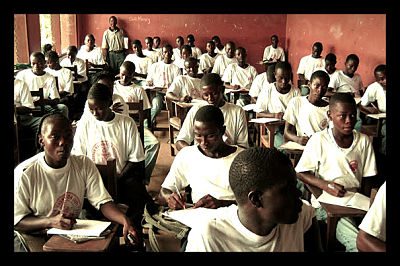
In Liberia, adults have received an average of only 2.5 years of schooling in their lifetime. According to the CIA World Factbook, approximately 85% of Liberian citizens are unemployed, and 80% live below the poverty line. In 2012, GDP per capita was only $700, making Liberia ranked 224 of 229 nations for GDP. But since the country held peaceful elections in 2005 the economic situation has been slowly improving with the help of private overseas investors in the mining and agriculture industries. More than ever, Liberia needs successful students who can run these industries to help pull the nation out of its extreme poverty. That’s why the USAID Excellence in Higher Education for Liberian Development Project (EHELD) was created in 2011.

The project aims specifically at helping faculty at Cuttington University and the University of Liberia to develop high quality agriculture and engineering programs for its students, attracting students to the programs, and working with local business leaders to create employer linkages for the students.

Currently the EHELD team is holding its yearly USAID Summer Start program for high school students that runs from July 15 – 26. The programs, which will focus on experiential learning, are being held at 6 different high schools, accommodating 80 students each. The programs, which will be taught by a team from the University of Michigan, Peace Corps Volunteers, and faculty of Cuttington University and the University of Liberia, will teach important life skills such as computer science and math, while also providing career counseling in agriculture and engineering.

In addition, the EHELD summer programs are partnering with the Cuttington University Upward Bound program to run at the same time under the same leadership. The Upward Bound program will specifically focus on educating 10th -12th graders, while the summer start program will focus on incoming engineering and agriculture students at Cuttington University and the University of Liberia and returning summer start students.

Superintendent of Bomi County (where the high schools are located) Samuel Browne spoke during the camps opening ceremonies, urging the students to appreciate the opportunity and take full advantage of it and telling them the “sky is the limit” when it comes to education.

USAID-EHELD is also currently providing scholarships for over 100 talented engineering and agriculture students at the two universities.

– Emma McKay

Sources: Nation Master, All Africa, Nation Master
Photo: Harvard News

July 30, 2013
https://borgenproject.org/wp-content/uploads/borgen-project-logo.svg 0 0 Borgen Project https://borgenproject.org/wp-content/uploads/borgen-project-logo.svg Borgen Project2013-07-30 06:23:352017-03-20 13:03:37USAID Summer Start in Liberia to Educate 480 Students
USAID, Women and Female Empowerment

USAID Seeks to Empower Afghan Women

Education_Afghan_Women_USAID
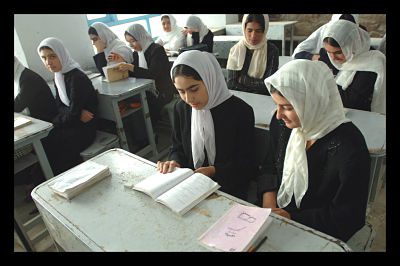
Despite the progress Afghanistan has made in regard to women’s rights since the end of the Taliban regime in 2001, the position of Afghan women in society is deplorable. Afghan women have won the vote and the opportunity for jobs and education, but there is much work to be done. Afghanistan is still a male-dominated culture, one that is rampant with forced marriages, cruelty, and violence against Afghan women.

Recently, the United States Agency for International Development (USAID) launched the “Promote” program to further the position of Afghan women in society. With “Promote,” the U.S. will fund a $200 million program to empower women between the ages of 18 and 30 in Afghanistan. With expressed interest in assistance from Australia, Britain, Japan, and the European Union, the funding for this program could double. In addition to furthering women’s position in society, this program also seeks to engage in economic development in Afghanistan.

This five-year program, the largest of its kind to date, intends to help at least 75,000 women overcome the restraints on their true potential and attain economic and educational security. Rajiv Shah, head of USAID in Afghanistan, states that this program seeks to create 3,500 small businesses by providing women entrepreneurs with credit and microfinance to promote economic growth. Training will also be provided to women who want an active role in the economy so that women will seek out government and policymaking positions in higher numbers.

USAID’s Women in Government Internship Program over the last three years has provided training and placed more than 440 interns in Afghan government agencies. This program seeks to increase female representation in government to 30%. Currently less than 20% of government officials in Afghanistan are women.

If women are successful, Afghanistan will be successful, which is why Shah demonstrates that there must be progress on women’s role in Afghan society. If the withdrawal of U.S. forces after the Afghan presidential elections scheduled for 2014 results in the resurgence of the Taliban, women will continue to be undermined, and all developments in women’s rights issues may be lost. Shah urges that the opportunities for women to be successful must increase because their role in society is vital for poverty reduction efforts and economic development. It is now more crucial than ever to empower women, because after foreign troops withdraw from Afghanistan, there will likely be a decrease in foreign assistance.

– Rahul Shah

Sources: Khaama, Washington Post, Al Arabiya, USAID
Photo: Women of Vision

July 29, 2013
https://borgenproject.org/wp-content/uploads/borgen-project-logo.svg 0 0 Borgen Project https://borgenproject.org/wp-content/uploads/borgen-project-logo.svg Borgen Project2013-07-29 04:23:292017-11-30 10:45:19USAID Seeks to Empower Afghan Women
USAID, Water

USAID to Improve Water Systems in Karachi

Karachi_Water_USAID
As a part of the US Agency for International Development’s (USAID) Power Distribution Program, the agency is currently helping Karachi Water and Sewage Board to improve water supply for the 21 million inhabitants of Karachi, Pakistan’s biggest city. The Power Distribution Program is a 5 year, $60 million project to improve electric power utilities across Pakistan.

Karachi currently uses a 20-year old system of pumping stations that pump water from filtration plants into the city, but are extremely energy inefficient. The pumps use huge amounts of electricity from the grid, creating expensive electricity bills for the city, and providing less water to its citizens. Some areas of the city are unable to access water several times a month, simply because the pumps are unable to provide enough for the entire city.

The new pumps installed by USAID will be modern, and highly efficient. 41 out of 75 new pumps have already been installed, and the rest are expected to be completed by the end of September. The electric efficiency rate before the new pumps was at an average of 29 percent, but the new pumps will boost that to 55-65 percent, decreasing the city’s energy cost by $1.15 million per annum. All residents of Karachi will now be able to access water on a regular basis. In addition to saving energy and providing more water, the new pumps will save time and money spent on daily maintenance for the pumps.

In addition to improving the water systems in Karachi, the Power Distribution Program is also working directly with Pakistan’s government owned power distribution companies to increase their efficiency by introducing new technologies, training in human resources management and customer service, and creating legal and political space for the companies to operate.

– Emma McKay

Sources: PDIP, Daily Times

July 29, 2013
https://borgenproject.org/wp-content/uploads/borgen-project-logo.svg 0 0 Borgen Project https://borgenproject.org/wp-content/uploads/borgen-project-logo.svg Borgen Project2013-07-29 04:22:342024-06-05 01:53:35USAID to Improve Water Systems in Karachi
USAID

USAID Worker Finalist for 2013 Sammies Medal

sammies_medal_USAID_opt
Every year the Samuel J. Heyman Service to America Medals (Sammies) pay tribute to the United State’s federal workers by recognizing those who have made significant contributions to the U.S. Medalists are honored based on their commitment, innovation, and the impact of their work on addressing the needs of the nation.

This year USAID worker and her team are one of the finalists for the 2013 National Security and International Affairs Medal, one of the eight Sammies medal categories. Cara Christie and USAID’s Horn Drought Emergency Response Team are among the finalists in this category for their tireless endeavors in leading the relief effort following the drought in Ethiopia, Somalia, and Kenya in the Horn of Africa. Christie coordinated the relief effort from her office in Washington D. C.,  providing immediate emergency relief to the affected countries and enacting methods to improve their agrarian economies after they had been decimated by three years of the worst drought that the Horn of Africa has ever seen.

Not only did Christie lead the relief efforts, but she is credited with recognizing the significance of the impending famine almost a year before it unfolded. Christie convinced her superiors in USAID of the need to be proactive by making advance preparations in the fall of 2010—a move that hastened aid to the region and saved lives. Christie used lessons learned from other drought response situations to come up with a program pairing health, nutrition, water, and sanitation program with food and voucher programs that helped repair the damaged economies in the Horn of Africa.

It may seem strange that an award given for service to the United States could be received by a team dedicated to giving relief to another country, but in reality Christie’s actions were crucial to U.S. national security interests. The Horn of Africa represents one of the regions of the world that most threatens U.S. national security because it houses some of the most conflict prone states in the world, including Somalia, Eritrea, and Ethiopia. It also is in close proximity to Yemen, a major center of U.S. counterterrorism action. The U.S. also houses the military base Camp Lemonnier in Djibouti on the Horn of Africa, which serves as the most important staging ground for U.S. counterterrorism efforts in Africa and the Arabian Peninsula.

Aid efforts in the region, along with in the rest of the world, contribute to stability and thereby hold radicalization at bay, furthering U.S. interests, and making the U.S. more secure.

– Martin Drake

Sources: Washington Post
Photo: USAID

July 27, 2013
https://borgenproject.org/wp-content/uploads/borgen-project-logo.svg 0 0 Borgen Project https://borgenproject.org/wp-content/uploads/borgen-project-logo.svg Borgen Project2013-07-27 07:24:332024-06-04 02:43:54USAID Worker Finalist for 2013 Sammies Medal
Page 29 of 33«‹2728293031›»

Get Smarter

  • Global Poverty 101
  • Global Poverty… The Good News
  • Global Poverty & U.S. Jobs
  • Global Poverty and National Security
  • Innovative Solutions to Poverty
  • Global Poverty & Aid FAQ’s
Search Search

Take Action

  • Call Congress
  • Email Congress
  • Donate
  • 30 Ways to Help
  • Volunteer Ops
  • Internships
  • Courses & Certificates
  • The Podcast
Borgen Project

“The Borgen Project is an incredible nonprofit organization that is addressing poverty and hunger and working towards ending them.”

-The Huffington Post

Inside The Borgen Project

  • Contact
  • About
  • Financials
  • President
  • Board of Directors
  • Board of Advisors

International Links

  • UK Email Parliament
  • UK Donate
  • Canada Email Parliament

Get Smarter

  • Global Poverty 101
  • Global Poverty… The Good News
  • Global Poverty & U.S. Jobs
  • Global Poverty and National Security
  • Innovative Solutions to Poverty
  • Global Poverty & Aid FAQ’s

Ways to Help

  • Call Congress
  • Email Congress
  • Donate
  • 30 Ways to Help
  • Volunteer Ops
  • Internships
  • Courses & Certificates
  • The Podcast
Scroll to top Scroll to top Scroll to top