• Link to X
  • Link to Facebook
  • Link to Instagram
  • Link to TikTok
  • Link to Youtube
  • About
    • About Us
      • President
      • Board of Directors
      • Board of Advisors
      • Financials
      • Our Methodology
      • Success Tracker
      • Contact
  • Act Now
    • 30 Ways to Help
      • Email Congress
      • Call Congress
      • Volunteer
      • Courses & Certificates
      • Be a Donor
    • Internships
      • In-Office Internships
      • Remote Internships
    • Legislation
      • Politics 101
  • The Blog
  • The Podcast
  • Magazine
  • Donate
  • Click to open the search input field Click to open the search input field Search
  • Menu Menu

Archive for category: USAID

Topics covering about USAID

Advocacy, Foreign Aid, USAID

Seven Questions to Ask About Foreign Aid

1. Why does the U.S. give foreign aid?

The U.S. gives aid for several reasons: economic interests, national security and American values. Economically, aid builds trading partners and supports the demand for U.S. goods. For national security, U.S. aid can sustain efforts to reduce injustice and poverty, which can contribute to instability and social tensions. Providing aid can also validate the kindness of the American people, advance democracy and human rights and build a better world.

2. What types of U.S. assistance does it include?

Foreign aid is a very comprehensive term. It incorporates several types of assistance, from the international affairs budget to poverty-focused assistance. The international affairs budget includes the resources to finance U.S. endeavors abroad. For example, it provides funds for USAID and the Department of State’s diplomatic costs and expenses that are sustained in protecting the interests of U.S. citizens and businesses abroad. In addition to helping people in poor countries, this aid provides money to allies for strategic purposes. Poverty-focused assistance concentrates on promoting economic growth and providing services like education and health care.

3. How much does the U.S. government spend on poverty-reducing foreign aid?

The U.S. government spends around $80 per taxpayer on foreign aid. To put that into perspective, compare that number to what Americans spend on other items: $204 per person on soft drinks, the $126 per person on lawn care and $101 per person on candy.

4. What is Americans’ understanding of how much the U.S. spends on this aid?

Americans think the U.S. spends more money on foreign aid than Medicare and Social Security – as much as 30 percent. However, only 0.7 percent of the U.S. federal budget is spent on poverty-focused foreign aid.

5. How can we ensure development aid is not wasted by corrupt governments?

Most poverty-reducing foreign aid is not actually provided directly to foreign governments. Around 85 percent goes through NGOs and U.S.-based government contractors. It may actually force governments to increase transparency and accountability.

6. What is the U.S. doing to make this kind of aid more effective?

The U.S. is doing many things to make foreign aid more efficient, such as defining aid’s purpose, modernizing USAID, developing new models of providing aid and making it more transparent. In 2010, President Obama put forth the first U.S. Global Development Policy which clarifies that the main purpose of U.S. development aid is to pursue global economic growth to fight global poverty. For modernizing USAID, USAID Forward is a new reform agenda that is working to make USAID more efficient, transparent and accountable. President Bush introduced the Millennium Challenge Corporation (MCC) during his presidency. MCC is a “United States foreign aid agency that is applying a new philosophy towards foreign aid.” The MCC model demands that countries to meet criteria in three areas: investments in people, economic freedom and good governance.

7. How can the U.S. improve it to better fight poverty?

There are a few ways. The United States could focus aid more on combating poverty worldwide, provide more transparent information about their foreign aid and give more aid to effective local leaders.

– Colleen Moore

Sources: Alliance for Peace Building, Oxfam America, The Borgen Project
Photo: The Spectator

July 18, 2014
https://borgenproject.org/wp-content/uploads/borgen-project-logo.svg 0 0 Borgen Project https://borgenproject.org/wp-content/uploads/borgen-project-logo.svg Borgen Project2014-07-18 04:00:442024-05-27 09:18:29Seven Questions to Ask About Foreign Aid
Activism, Children, United Nations, USAID

Global March Against Child Labor: Continued Progress

Global March Against Child Labor
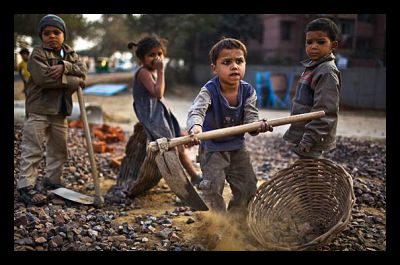
In 1998, a group of forward-thinking activists organized the Global March Against Child Labor. It took groups from over 100 countries to lead a march that crossed 103 countries and ended at the International Labour Organization (ILO) in June 1998, where activists from all over the world rallied to end child labor.

In response, the ILO began the World Day Against Child Labor in 2002. Every year on June 12, governments, citizens and civil societies gather to focus the world’s attention on child laborers and create campaigns to help them.

The movement has lofty ambitions but is still doing a great job of fulfilling them. Before the turn of the millennium, there were nearly 250 million children who were child slaves. The figure has now dropped almost 100 million and is estimated to be around 168 million.

Girls in particular have benefited from this as their numbers have dropped nearly 40 percent since then, while boys have dropped 25 percent. Despite this, some 88 million children still work in potentially fatal jobs.

Like many problems that need to be solved, one method employed in the reduction of child labor is simply raising awareness. The Global March Against Child Labor has proven to governments and civil societies around the world that this is something that needs to be stopped.

The U.S. Department of Labor has played a critical role in producing promotional documents and reports that have been quite successful in raising awareness of this terrible issue. Additionally, USAID acknowledged the power of video and strung together compelling footage in what eventually came to be a feature film about child labor, titled “Stolen Childhoods.”

USAID has played a big role as well in raising awareness. Through the Global Labor Program, USAID has helped workers in Liberia mobilize against employers and has ensured that any exploitative wage practices were discontinued. As children were typically employed in rubber plants in Liberia, USAID managed to ensure that children would not be separated from their parents if they worked, and also oversaw the building of a school on the plant. The employers agreed to pay the adults a living wage.

Another entity that is vital to ending child labor is business. Thanks to the Global March Against Child Labor and USAID’s awareness campaigns, a spotlight has been placed on businesses and their obligation to ensuring that children are not working.

The most prominent advocate of this is the program GoodWeave. This is a system by which companies in India can be certified to ensure that children are not used in the creation of rugs or carpets. Since its inception in 1995, GoodWeave has approved of over 11 million carpets. In that time, the number of children who work in carpet factories has dropped from 1 million to 250,000.

The Global March Against Child Labor was the beginning of a bold social movement, but now we must celebrate and continue its ongoing achievements.

– Andrew Rywak

Sources: USAID Blog, International Labour Organization, U.S. Department of Labor, Global March
Photo: List Top Tens

July 10, 2014
https://borgenproject.org/wp-content/uploads/borgen-project-logo.svg 0 0 Borgen Project https://borgenproject.org/wp-content/uploads/borgen-project-logo.svg Borgen Project2014-07-10 04:00:532024-12-13 17:50:24Global March Against Child Labor: Continued Progress
USAID

Global Cost of Violence Hits $9.8 Trillion

The Institute for Economics and Peace (IEP) released its 2014 estimates about the costs of wars and violence this June, and the numbers continue to disappoint. The think tank’s report, called the Global Peace Index (GPI,) found that the world spent $9.8 trillion on resolving violent conflicts. This number is up from the 2013 expenses of $9.46 trillion, and the GPI has reported rising costs since 2008.

$9.8 trillion, written as $9,800,000,000,000, is an enormous amount of money. To put this number in context, IEP founder Steve Killelea noted that “increases in the global economic impact of violence and its containment are equivalent to 19 percent of global economic growth from 2012 to 2013” and that the cost of violence for 2014 is “around $1,350 per person.” $9.8 trillion is 11.3 percent of the entire world’s GDP.

What is causing such large increases in violence and its economic impact? Internal strife and civil wars account for most of the problem. Furthermore, Europe, North America and most of Asia do not experience much conflict; violence seems to be localized in specific countries. According to the report, Syria, Afghanistan and South Sudan were the countries most affected by violence, while Iraq, Pakistan, Russia and North Korea also were ranked highly.

While countries with more violence are not centered in a specific region, they all have high rates of poverty. Of the 500 million people living in countries with high rates of conflict, 200 million live in extreme poverty, surviving on less than $2 per day. Poverty and conflict are closely linked, and strategies to reduce the global impact of war must also help the poor.

Despite the need to fight poverty as part of conflict resolution, the United States spends significantly more on its military than it does on international development. In 2014, USAID’s total budget was $47.8 billion. While this may seem large, the military’s budget request for 2014 was more than 10 times that amount, at $526.6 billion. The U.S. has the economic ability to fight poverty and reduce the amount it would need to spend on its military, but it prioritizes the military over foreign aid in international affairs.

The international development budget itself is not completely devoted to fighting poverty directly. USAID has allocated $8.6 billion to bolstering security forces abroad and has separate multi-billion dollar funds for funding the governments of Iraq, Afghanistan and Pakistan. However, the Feed the Future initiative, which works to eradicate hunger and root causes of extreme poverty, only gets $1.1 billion. The FAO estimates that the world must provide $30 billion per year to completely eliminate hunger; while this is affordable to the USAID even without redirecting military spending, it is not being done.

Although international conflict has greatly decreased in the last few decades, the rise of civil unrest has made violence more prevalent in certain countries and more costly to the whole world. Spending extra money to eliminate poverty may prove to be a strong long-term investment: as poverty decreases, expensive wars happen less often. The U.S. in particular can afford to shift some of its military budget to efforts to feed the hungry and fight poverty. In doing so, it can ultimately reduce both its military and foreign aid spending in the future.

 — Ted Rappleye

Sources: The Guardian, FAO, USAID, US Department of Defense
Photo: USAID

June 27, 2014
https://borgenproject.org/wp-content/uploads/borgen-project-logo.svg 0 0 Borgen Project https://borgenproject.org/wp-content/uploads/borgen-project-logo.svg Borgen Project2014-06-27 04:00:172024-05-26 23:50:52Global Cost of Violence Hits $9.8 Trillion
Development, Economy, USAID

USAID: Initiating Smart Investments in Kenya

In January of this year, USAID announced a new poverty reduction initiative in Kenya. In partnership with Kenya Commercial Bank (KCB) and General Electric (GE), USAID promotes investments in Kenya between the KCB and medical institutions that need financial assistance to offer appropriate medical care.

To provide this assistance, banks will grant loans to hospitals and other health centers. These investments in Kenya would have previously been considered unsafe and unlikely to be returned, but under the agreement with USAID, they are guaranteed reimbursement. If a full return cannot be made, USAID will pay back 50 percent of the loan.

The KCB, according to the deal, is obliged to divvy $1 million for medical equipment like MRIs, incubators and other standard-increasing machinery to be used in local health centers. GE has left $660,000 dollars for USAID to use as potential reimbursement funds, though only $500,000 (50 percent) should be used. In return, the Kenyan health services will purchase GE equipment, expanding GE’s global market.

There are some, however, such as Monica Onyango of Boston University, who are afraid this may lead to an overstated importance of imported goods, when in fact, locally manufactured equipment is better for local economic development.

Michael Metzler, director of Development Credit Authority (which is the tool used by USAID to promote loans, as in the initiative in Kenya,) reassures skeptics like Onyango that local business and manufacturing will still have the power Kenya needs it to have to grow. Quoted recently in a Global Post article, Metzler said that “we’d be very sensitive to a deal in which that was the case.”

Aside from the deal’s economic influence, clearer effects of the enhanced medical treatment new loans insure will be seen in public health. This expedites poverty reduction in Kenya by reducing the number of deaths caused by preventable diseases thriving in impoverished communities. These include diseases such as HIV, diarrhea, tuberculosis and malaria.

Illness and poverty go hand in hand, and until one is dealt with, the other is likely to expand. This new USAID initiative incorporates this idea and acts accordingly.

— Adam Kaminski

Sources: Health Poverty Action, Global Post, Federal News Radio
Photo: USAID

June 26, 2014
https://borgenproject.org/wp-content/uploads/borgen-project-logo.svg 0 0 Borgen Project https://borgenproject.org/wp-content/uploads/borgen-project-logo.svg Borgen Project2014-06-26 18:39:042024-05-26 23:57:43USAID: Initiating Smart Investments in Kenya
USAID

Somaliland’s First Wind Farm

Through the U.S. Agency for International Development (USAID,) the United States government has joined the self-declared Somaliland Administration in presenting a wind energy facility project to power the Hargeisa Egal International Airport.

Officiated by Somaliland President Ahmed Mohamed Mohamoud Silanyo, a ceremony was held on June 2 at the Hargeisa Egal International Airport. Other attendees included USAID’s Acting Somalia Office Director Hodan Hassan, various representatives from the private sector and civil society and the Ministers of Civil Aviation, Environment, Information, Interior, Planning and Water.

The Somaliland Ministry of Energy and Mineral Resources has been charged with the responsibility of controlling and overseeing the new wind energy facility project, which will also be managed by the government via a public-private partnership.

The facility is set up to serve as an alternative to expensive diesel fuel by powering some of the surrounding communities as well as the airport. Golis Energy, a local engineering company supported by USAID, has been credited for constructing the major wind farm.

At over $1.25 per kilowatt, the cost of electricity in Somaliland is one of the highest rates in the world. The high energy rates in Somaliland are a result of a disorganized network of independent providers that use different grids and unreliable equipment.

The state loses nearly 40 percent of its electricity due to various technical problems that arise from the dilapidated equipment. Minister of Energy Hussein Abdi Dualeh has stated that theft and illegal connections further cause power providers to barely break even. “We need a legal framework to govern the sector — we need an electricity law.”

Dualeh believes that renewable energy needed to be considered because Somaliland has more than 340 days of sun and “some of the fastest wind in the world.” Since 2011, USAID’s Partnership for Economic Growth program has been working with officials and the private sector in Somaliland to bring renewable energy to the area.

Additionally, Somaliland officials and USAID have ensured a competitive market for the new energy services and drafted a series of necessary laws and regulations to “regulate and standardize the sector.”

Since 2010, USAID has invested almost $50 million in Somaliland for a number of sectors, including community stabilization, governance, education, health and economic growth. An additional $14 million was allocated to fund USAID’s Partnership for Economic Growth program, which has financed efforts to develop renewable energy in Somaliland, invested in the livestock and agriculture sectors, and promoted economic stability through private sector development.

The issues with Somaliland’s energy sector have had an enormous impact on private business and investment climate. A 2011 assessment carried out by USAID’s Partnership for Economic Growth showed that most business owners cited electricity rates and services as a “constraint to growth.”

For small-scale and local industries especially, the high overhead costs equate to difficulties in competing with imports, resulting in fewer products being produced in Somaliland. Citing Somaliland’s “inefficient, unreliable and prohibitively expensive power supply,” Chief of Party Suleiman Mohamed asked, “how can you expect businesses that require a reliable electricity supply to succeed?”

 — Kristy Liao

Sources: DAI, The Guardian, Somalicurrent
Photo: Construction Week Online

June 20, 2014
https://borgenproject.org/wp-content/uploads/borgen-project-logo.svg 0 0 Borgen Project https://borgenproject.org/wp-content/uploads/borgen-project-logo.svg Borgen Project2014-06-20 04:00:422024-12-13 17:50:19Somaliland’s First Wind Farm
Education, Global Poverty, Nonprofit Organizations and NGOs, USAID

Child Labor in Afghanistan

Poverty forces children to work and sacrifice their chance at an education. Today, sadly, child labor in Afghanistan is a common occurrence. Estimates are difficult to come by but through various sources it can be stated that between 21 and 25 percent of Afghan children are part of the labor force. Children as young as 6 are often involved.


Cause and Effect: Child Labor in Afghanistan


Child labor is hard to overcome in Afghanistan because although it is illegal by law for anyone under the age of 14 to work, many families are so desperate that they need one of their children to work in order to survive. Employers are desperate for cheap labor as well. The government seems to be doing little to enforce this law.

A common job for Afghan children in Kabul is working in brick factories. They can work up to 12 hours for around $1.40 a day. Other potential jobs for these children are working in bakeries, weaving, selling toilet paper and shopping bags, mining, washing cars or farming. Some children even begin to beg.

It is important to look at the physiological affects of child labor. Childhood is a time when people are supposed to be able to play and avoid the stresses of life.  This crucial time period allows them to develop into healthy adults. Research shows that, “75 percent of brain development occurs after birth. Play helps with that development by stimulating the brain through the formation of connections between nerve cells.” It is essential for children to play with their parents and with other children.

If Afghan children are working, they are missing out on this crucial developmental step. It is possible that a work environment would replace play and stimulate a child’s brain but it is not certain if they are gaining the right type of knowledge that a child would otherwise gain from play. The stress children endure when having to work will also cause other stunted developmental issues.

The main reason children are sent off to work is so that they can feed their families. This is due to a loss of a parent or both parents. A child might have to go to work because their father dies and their mother is unable to find work because of her gender. Poverty and gender bias seems to be two of the causes of child labor in Afghanistan.

Poverty in Afghanistan is caused by many factors, one being the fact that it has been in a state of almost perpetual war since 1979 when the Soviet Union invaded, followed by Taliban rule and the post 9/11 American invasion coupled with Taliban guerrilla warfare. But regardless of the reasons as to why poverty exists in Afghanistan, it is essential to raise people out of poverty so that child labor will cease.

The task of raising the Afghan people out of poverty is certainly not an easy one. There are a range of problems arising from misallocation of USAID funds by the Afghan government, the inability of U.S. officials to better Afghan government institutions and just general distrust and confusion between the two countries.

A possible solution to this would be for the U.S. to give money to more grassroots NGOs and intergovernmental organizations who are currently working in Afghanistan. This would get the aid directly to the most vulnerable people in Afghanistan, specifically children. Organizations like the World Food Programme have operations already in place. Activities like school meals, food for training, Food-for-Work, nutrition programs and flour fortification are being carried out in Afghanistan today. They also support programs that try to close the gender gap.

Imagine if the U.S. gave more money to these programs instead of fighting with the Afghan government over misallocated funds?  These programs are already helping thousands of Afghan people, why not help even more? Child labor in Afghanistan is increasing, and with poverty as its main cause, the U.S. government should put more of its aid money toward proven, successful poverty alleviation programs.

– Eleni Marino

Sources: Global Post, Los Angeles Times, Montana State University, The New York Times, UN Data, WFP
Photo: CRI English

June 12, 2014
https://borgenproject.org/wp-content/uploads/borgen-project-logo.svg 0 0 Borgen Project https://borgenproject.org/wp-content/uploads/borgen-project-logo.svg Borgen Project2014-06-12 04:00:022024-05-26 23:42:55Child Labor in Afghanistan
Hunger, Malnourishment, USAID

Feed the Future Initiative Saves Millions

poverty in africa
A new report released by the United States Agency for International Development (USAID) claims the Feed the Future program has bettered the lives of millions of people who suffer from poverty and chronic hunger. In 2013, Feed the Future reached 7 million farmers, teaching them how to achieve a higher crop yield by using new technologies, and provided vital nutrition to 12.5 million malnourished children.

The program, which is the U.S. government’s global health and food security initiative, was established by the Obama Administration in 2010 and aims to reduce extreme poverty and starvation around the world. Feed the Future asserts hunger and poverty are inextricably linked and cyclical, and breaking this cycle will promote global prosperity and stability. Currently, the initiative focuses on 19 countries, which were selected based on level of need, opportunity for partnership, potential for agricultural growth, opportunity for regional synergy and resource availability. These countries are located in Africa, Asia, Latin America and the Caribbean.

Feed the Future is led by USAID, and works alongside other federal agencies, including such organizations as the Peace Corps, the Millennium Challenge Corporation and the U.S. African Development Foundation, to achieve its goal of reducing poverty and hunger by at least 20 percent in each area that the program is established.

In order to break the poverty cycle, the program establishes important relationships with impoverished countries to strengthen their agricultural growth, empower women, educate people on proper nutrition and eco-friendly farming and create partnerships between the private sector, civil society and research community. By working on the ground, Feed the Future has made real, tangible progress.

Countries where Feed the Future has achieved the most success are Senegal, Bangladesh and Honduras. In Senegal, dependence on food imports has fallen significantly, specifically in regard to rice. The country’s rice imports have fallen by more than 20 percent and the country has grown enough rice to feed 400,000 Senegalese for one year. In Bangladesh, rice crop yields increased by 20 percent, and in Honduras, horticulture sales increased by 125 percent, which enabled more than 4,300 families to move above the poverty line of $1.25 a day.

In addition to these advancements, Feed the Future has also brought in billions of dollars of fundraising. For agricultural progress in African countries alone, $7 billion in private sector funds were raised. The organization also holds events, such as symposiums and summit meetings, to educate audience members on different branches of the initiative, and meet with world leaders to discuss further advancements of Feed the Future.

According to USAID Administrator Rajiv Shah, Feed the Future is not only “pioneering a new model of development,” but “delivering results that are changing the face of poverty and hunger.” The full progress report released by USAID can be found here.

– Taylor Lovett

Sources: All Africa, Feed the Future, The New York Times

June 8, 2014
https://borgenproject.org/wp-content/uploads/borgen-project-logo.svg 0 0 Borgen Project https://borgenproject.org/wp-content/uploads/borgen-project-logo.svg Borgen Project2014-06-08 16:00:562024-12-13 17:50:17Feed the Future Initiative Saves Millions
Foreign Aid, Foreign Policy, Global Poverty, USAID

10 Facts about Foreign Aid From the United States

The United States Agency for International Development (USAID) was created on November 3, 1961 by President John F. Kennedy. Prior to the creation of USAID, there were many foreign assistance organizations that already existed. However, with the birth of USAID came the collaboration of all other foreign assistance programs under one common goal. This was the first time in history that a single agency was given the responsibility to cover of foreign economic development.

Here are 10 facts you may not have known about foreign aid from the United States:

1. U.S. foreign aid was shaped to serve two purposes. First, to improve lives in developing worlds by implementing ways to improve global health, further education, advance food security and much more. As stated by USAID.gov, “USAID carries out U.S. foreign policy by promoting broad-scale human progress at the same time it expands stable, free societies, creates markets and trade partners for the United States, and fosters good will abroad.”

2. In 2012, Afghanistan remained the top recipient of U.S. economic and military assistance for the fifth year in a row. Prior to that, Iraq held the top spot from 2003-2007.

3. Foreign aid from the United States is made up of a combination of obligations as well as disbursements. An obligation is a binding agreement that could have immediate results or some in the future. A disbursement is the actual amount paid by federal agencies by cash or cash equivalent during the fiscal year to meet the obligations set.

4. Though a country can rank in the list of top ten recipients based on obligations, there is no guarantee that they will receive the full disbursement. That was the case for Haiti and Columbia in 2011 that ranked in the top ten recipients by obligation but did not receive that amount in disbursements.

5. Less than one percent of the federal budget is spent on foreign assistance.

6. Foreign aid falls under discretionary spending of a whopping $1.258 trillion dollars in 2013.

7. The five primary agencies providing economic assistance include: the U.S. Department of State, USAID, the Department of the Treasury, U.S. Department of Agriculture, and the Department of Health and Human Services. These five agencies account for 93 percent of total economic assistance.

8. Sub-Saharan Africa received the largest share of economic assistance at 25 percent with twenty countries receiving over $100 million in economic assistance.

9. Almost half of U.S. foreign assistance goes to six countries that are Washington’s allies in the campaigns against terror and drug trafficking.

10. U.S. foundations amount to about $1.5 billion a year in international giving.

— Janelle Mills

Sources: USAID, USAID, Greenbook, Foreign Assistance, Reuters
Photo: Seattle Times

April 23, 2014
https://borgenproject.org/wp-content/uploads/borgen-project-logo.svg 0 0 Borgen Project https://borgenproject.org/wp-content/uploads/borgen-project-logo.svg Borgen Project2014-04-23 13:32:072024-05-26 23:28:1310 Facts about Foreign Aid From the United States
Aid Effectiveness & Reform, Global Poverty, USAID

USAID Official Questioned On Aid in Afghanistan

afghanistan_aid_USAID
The US Agency for International Development (USAID) has spent approximately $17 billion in Afghanistan since 2001. In a recent letter from the Special Inspector General for Afghanistan Reconstruction (SIGAR), the general counsel claims that USAID has not been diligent in monitoring the use of money to prevent contract aid from being used by groups linked to terrorist organizations.

The letter declares that USAID has purposely withheld information regarding these funds and the fact that the Afghan government did not exercise oversight regarding the appropriation of those funds. John Sopko, the inspector general for SIGAR, stated “USAID kept this information from Congress and the American people.”

Yet a spokesperson for USAID, Matthew Herrick, has denied any wrongdoing on behalf of the agency. Herrick claimed that USAID complied with all requests from members of Congress and their staff to show documents relating to the matter.

In order to ensure the money was not spent in a fraudulent manner, the House Subcommittee on National Security questioned the USAID Assistant Director for Afghanistan and Pakistan Donald L. Samper. Members on the subcommittee called into question the ability of Afghan ministries to oversee the allocation of USAID funds.

In a country notorious for its corruption, USAID conducted internal risk reviews of its dealings in the country. But Rep. John Tierney of Massachusetts stated that although USAID conducted risk reviews of seven of the thirteen Afghan ministries and made 333 recommendations on how to lessen the risk to USAID funds, the agency provided direct assistance to the seven ministries and only required 24 of the 333 recommendations to be implemented.

Sopko called for the Afghan government to take more concrete steps to increase its oversight of USAID-funded projects and decrease corruption before USAID doles out any more funding for development assistance. Overseeing the proper delegation of funding to Afghanistan has been emphasized recently. In 2012 the US government concluded that a contractor working there had links to networks that provided parts of improvised explosive devices to be used against US troops.

This latest revelation comes amidst another scandal in which the USAID spearheaded a so-called covert “Cuban Twitter” project codenamed ZunZuneo. As a result, the federal agency has been under increasingly strict scrutiny from Congress.

– Jeff Meyer

Sources: UPI, USA Today
Photo: The Guardian

April 18, 2014
https://borgenproject.org/wp-content/uploads/borgen-project-logo.svg 0 0 Borgen Project https://borgenproject.org/wp-content/uploads/borgen-project-logo.svg Borgen Project2014-04-18 04:00:392020-07-25 00:41:53USAID Official Questioned On Aid in Afghanistan
Development, Extreme Poverty, Global Poverty, USAID

USAID and Clinton Launch Global Development Lab

On April 3, the U.S. Agency for International Development and Hillary Clinton announced the launch of the U.S. Global Development Lab, with the goal to end extreme poverty by 2030.

Dr. Rajiv Shah, USAID Administrator, said at the launch that, “To solve our most intractable development challenges, USAID has established a new way of working, bringing on board the best and brightest staff and new partners, all working in concert to help end extreme poverty.”

In the new program, USAID is partnering with 31 universities, corporations, and foundations in the hope to use science and technology to help find methods of alleviating poverty. These partners are being called the Cornerstone Partners, as they come from a number of different fields.

The Cornerstone Partners include corporations like Cargill, Cisco, Coca-Cola, DuPont, GlaxoSmithKline, Intel, Johnson & Johnson, Microsoft, Nike, Syngenta and Walmart as well as foundations and organizations like CARE, Catholic Relief Services, Plan, Save the Children, World Vision, the Global Impact Investing Network, the Skoll Foundation, the National Academy of Sciences, the Smithsonian Foundation, and the Gates Foundation.

In addition, many universities have decided to be part of the Global Development Lab, including the University of California at Berkeley, Duke University, Johns Hopkins Univesrity, Massachusetts Institute of Technology, Michigan State University, Stanford University’s Freeman Spogli Institute, Texas A&M University, and the College of William and Mary. Sweden has also decided to donate to the creation of the lab.

Together all of these groups have contributed over $30 billion in investments and have also provided technology, experts on the subject, and the capabilities to conduct necessary research and development.

Shah went on to explain the lab by saying that, “The Lab will engage a global community of inventors, academics, researchers, entrepreneurs, investors, and corporate leaders in science and technology to invent, test, and scale the most promising and cost effective solutions to end extreme poverty.”

Shah believes that Americans can lead the effort to eliminate poverty, but admits that it will take time. He hopes that by forming these partnerships and creating the Global Development Lab, USAID will be able to help construct the best solutions to worldwide problems.

Prior to being the USAID administrator, Shah served as the undersecretary for the U.S. Department of Agriculture and has worked with Clinton before. One example of their work together was when Shah was applying scientific techniques to improve agriculture in conjunction with Clinton’s work on a global food initiative. Shah hoped to combine these efforts, and his operations in USAID work towards that goal.

The Global Development Lab will work on developing cost-effective products that incorporate the newest discoveries in science, but will also work on solving other problems, such as hunger, disease, and literacy. By bringing together the greatest minds from several different fields, the Global Development Lab will have all the necessary resources to reach its goals.

In light of the announcement, Lana Stoll of USAID said, “By tapping into things that really make America what it is, which is our entrepreneurial spirit, our scientific expertise, and our real commitment to help people, you have a real ability to accelerate our impact.”

– Julie Guacci

Sources: TIME, The Skoll Foundation
Photo: Still4Hill

April 11, 2014
https://borgenproject.org/wp-content/uploads/borgen-project-logo.svg 0 0 Borgen Project https://borgenproject.org/wp-content/uploads/borgen-project-logo.svg Borgen Project2014-04-11 04:00:142024-05-26 23:25:43USAID and Clinton Launch Global Development Lab
Page 27 of 33«‹2526272829›»

Get Smarter

  • Global Poverty 101
  • Global Poverty… The Good News
  • Global Poverty & U.S. Jobs
  • Global Poverty and National Security
  • Innovative Solutions to Poverty
  • Global Poverty & Aid FAQ’s
Search Search

Take Action

  • Call Congress
  • Email Congress
  • Donate
  • 30 Ways to Help
  • Volunteer Ops
  • Internships
  • Courses & Certificates
  • The Podcast
Borgen Project

“The Borgen Project is an incredible nonprofit organization that is addressing poverty and hunger and working towards ending them.”

-The Huffington Post

Inside The Borgen Project

  • Contact
  • About
  • Financials
  • President
  • Board of Directors
  • Board of Advisors

International Links

  • UK Email Parliament
  • UK Donate
  • Canada Email Parliament

Get Smarter

  • Global Poverty 101
  • Global Poverty… The Good News
  • Global Poverty & U.S. Jobs
  • Global Poverty and National Security
  • Innovative Solutions to Poverty
  • Global Poverty & Aid FAQ’s

Ways to Help

  • Call Congress
  • Email Congress
  • Donate
  • 30 Ways to Help
  • Volunteer Ops
  • Internships
  • Courses & Certificates
  • The Podcast
Scroll to top Scroll to top Scroll to top