• Link to X
  • Link to Facebook
  • Link to Instagram
  • Link to TikTok
  • Link to Youtube
  • About
    • About Us
      • President
      • Board of Directors
      • Board of Advisors
      • Financials
      • Our Methodology
      • Success Tracker
      • Contact
  • Act Now
    • 30 Ways to Help
      • Email Congress
      • Call Congress
      • Volunteer
      • Courses & Certificates
      • Be a Donor
    • Internships
      • In-Office Internships
      • Remote Internships
    • Legislation
      • Politics 101
  • The Blog
  • The Podcast
  • Magazine
  • Donate
  • Click to open the search input field Click to open the search input field Search
  • Menu Menu

Archive for category: USAID

Topics covering about USAID

Education, Foreign Aid, USAID

Education in Haiti: All Children Reading

education_haiti
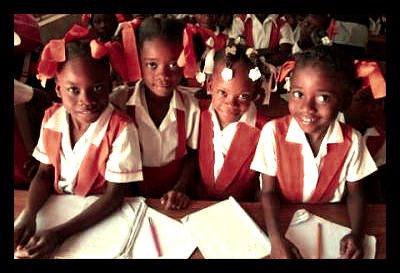
March 26 marked the grand opening of a brand new school for the Lekol S&H students in Caracol, Haiti. The students celebrated the inauguration alongside United States Ambassador Pamela White, U.S. Agency for International Development (USAID) Mission Director John Groarke and Haitian officials, according to USAID Haiti’s Facebook page.

The new facility is one of many schools that fall under USAID’s All Children Reading program in Haiti. Also known as Tout Timoun Ap Li (ToTAL,) All Children Reading is one of the programs supported by U.S. and Haitian government collaboration in Haiti. Starting in 2011, Haiti’s Ministry of National Education and Vocational Training unveiled a plan to get more than 1.5 million students in school by 2016, says USAID.

The ToTAL program focuses on developing reading skills for Haitian students in first grade through third grade in the Port-au-Prince, Saint Marc and Cap Haitien areas. All Children Reading will provide more nearly 30,000 children and 900 teachers with critical reading curriculums to meet international literacy standards, says USAID. “In developing countries,” says the All Children Reading experts, “literacy leads to improved health, better education, greater employment opportunities, and more stable governments.”

The All Children Reading program partners with USAID, World Vision and the Australian government to utilize competitive science, technology and education grants to improve the school systems and educational opportunities for students in developing countries.

Awards are disseminated in two rounds, each of which has a different development focus. Round 1 “focuses on creating teaching and learning materials and education data applications to promote accountability and transparency” and has been awarded to 32 projects in more than 20 nations, according to the All Children Reading website.

Round 2 looks more to implementation strategies and technology solutions to improve education in Haiti. The three areas of focus for this branch of the project include promoting mother tongue instruction and reading materials, enhancing family and community engagement and supporting children with disabilities. All Children Reading prioritizes reading in the early school levels in order to instill strong education practices and create better and wider opportunities for children as adults.

Through programs such as ToTAL, the U.S government has trained nearly 900 teachers in new curriculum in both Haitian Creole and French. In addition, USAID has supplied Haitian students with more than 46,000 textbooks and workbooks. The ToTAL program has been introduced in more than 300 schools nationwide, such as the one in Caracol. In the years to come USAID hopes to reach more than 1 million children throughout Haiti, especially “as other partners extend the use of the program’s reading curricula and training methods beyond the development corridors.”

– Mallory Thayer

Sources: USAID, All Children Reading, Facebook
Photo: Save the Children

April 5, 2014
https://borgenproject.org/wp-content/uploads/borgen-project-logo.svg 0 0 Borgen Project https://borgenproject.org/wp-content/uploads/borgen-project-logo.svg Borgen Project2014-04-05 04:00:552024-12-13 17:50:12Education in Haiti: All Children Reading
Global Poverty, USAID

U.S. Foreign Aid Facts


With all the attention in the United States focused on the economy and the government’s fiscal decisions, people are finally noticing the vast amount of pork barrel spending that occurs every year. Wasted government dollars are spent on projects of no significance while Congress still refuses to extend unemployment insurance benefits.  This intense scrutiny of U.S. spending usually finds its way over to the International Affairs Budget.

According to a poll by the Kaiser Family Foundation, Americans think 28% of the budget goes to foreign aid. Many are shocked to find that the real number is close to 1%! The same poll also found out that when people learn the truth, it changes their opinions.  When asked if the U.S. spends too much on foreign aid, 61% said “too much” while 13% said “too little.”  When asked the same question after learning the true proportion, just 30% said “too much” while 28% said “too little.”

Education must continue to dispel any myths about U.S. foreign aid and fight ignorance with facts.  Here are some facts about U.S. foreign aid that could help you in your crusade!

  • Nearly 3 billion people worldwide have received assistance from United States Agency for International Development (USAID)
  • U.S. foreign aid dictates future agriculture export totals; 43 of the top 50 consumers of American agriculture products are past recipients
  • Over 3 million lives are saved every year due to USAID health programs
  • Largely due to USAID programs, the world has observed a 10 percent reduction in infant mortality in just eight years
  • USAID family planning programs has seen the children per family average decrease from 6.1 to 4.2 in just 50 years in participating nations.
  • The number of democratic nations in the world grew from 58 to 115 between 1980 and 1995.  The U.S. provided assistance to 36 newly formed nations during this period.

U.S. foreign aid is a wonderful tool of diplomacy that promotes democracy and security throughout the world.  Investments are made in economic development, education and social services, health, humanitarian assistance, environment, governance, and security.  For further ammunition and a complete breakdown of U.S. foreign aid investments and their results, visit USAID’s results page.

– Sunny Bhatt

Sources: Washington Post, USAID, USAID
Photo: Ozy

March 31, 2014
https://borgenproject.org/wp-content/uploads/borgen-project-logo.svg 0 0 Borgen Project https://borgenproject.org/wp-content/uploads/borgen-project-logo.svg Borgen Project2014-03-31 20:19:272024-12-13 17:50:11U.S. Foreign Aid Facts
Education, USAID

Promoting Liberian Education System Essential

Liberian Education System
Liberia has a unique connection to the United States. African Americans immigrating from the U.S. to the West African Coast officially founded the nation in 1847. While the country has struggled to achieve prosperity and economic stability for its citizens, the Liberian education system has made considerable recent progress.

Liberia is still recovering from the civil wars that began in 1980 and lasted until 2003. As a result, Liberia ranks near the bottom of the United Nations Development Program Human Development Index at 174th out of 187. Correspondingly, nearly 36 percent of the Liberian population suffers from malnutrition.

During the years of civil car, educational systems were almost nonexistent. This leaves a massive gap in skilled workers entering the job market and by extension, extreme unemployment (close to 80 percent) and poverty. Liberia has a literacy rate of 60.8 percent, and an education system described as “a mess” by Liberian President Ellen Johnson Sirleaf.

Not all news about the Liberian education system is bleak, however. In 2011, President Sirleaf signed into law the Education Reform Act, which seeks to decentralize the education system and help create a new educational management structure more locally focused. The U.S. Agency for International Development (USAID) has also instituted the Liberia Teacher Training Program to help train, develop and recruit more teachers for the nation.

An additional component of USAID’s work in Liberia is encouraging participation in education by girls and women. The Girls’ Opportunities Access Learning Program hopes to increase school enrollment and retention for girls by identifying key policy issues with Liberia’s Ministry of Education.

According to the U.N. Educational, Scientific and Corporal Organization’s Education for All Initiative, at least 15 percent of a nation’s budget should be allocated for education. Currently, Liberia only spends around 3 percent of its national budget on education.  In order to fully jumpstart educational progress in Liberia, there is much more to be done.

– Taylor Diamond

Sources: The Guardian, USAID, WFP, Liberian Education Trust
Photo: International Book Bank

February 24, 2014
https://borgenproject.org/wp-content/uploads/borgen-project-logo.svg 0 0 Borgen Project https://borgenproject.org/wp-content/uploads/borgen-project-logo.svg Borgen Project2014-02-24 15:10:052024-12-13 17:50:05Promoting Liberian Education System Essential
Activism, Global Poverty, Philanthropy, Poverty Reduction, USAID

Clean Streets: Road to Entrepreneurship in Haiti

Throughout the developing world, infrastructure insufficiencies often create barriers for aspiring entrepreneurs. However, these shortcomings can also provide the platform for innovative and sustainable business opportunities.

Such is the case for entrepreneurs like Edouard Carrie, who started his company Environmental Cleaning Solutions S.A. (ECSSA) as a way to clean up Haiti’s streets and generate income. Founded in 2010, the company’s mission is simple yet profound: “to change a nation through recycling.” Via its material recovery facility in Port-au-Prince, ECSSA aims to collect over 80 tons of recyclable products per day.

Not only does it positively impact the environment, increased waste management also helps Haiti’s lowest income citizens.

For example, individuals can increase their income by collecting recyclable materials and thus afford schooling for their children, healthcare or other necessities. In addition, the various collection centers create jobs around the region.

The start-up has had great success in the three years since its conception. According to USAID, “ECSSA has grown to provide extra cash to over 6,000 Haitians who deposit bags of discarded bottles at 65 collection points throughout the Port-au-Prince region.” Furthermore, the company has shipped nearly 300 million plastic bottles to other countries for additional processing to create other products.

ECSSA’s growth would not have been possible without the support of both USAID and the Pan American Development Foundation (PADF).

PADF sponsors the Leveraging Effective Application of Direct Investments (LEAD) Business Plan Competition, a grant program that assists small and medium enterprises in finances, business development and access to capital. LEAD operates in Cap-Haitien, Saint-Marc and Port-au-Prince with a targeted focus on “industries and businesses with the greatest potential to create jobs, including construction, tourism, agribusiness and alternative energy.”

Outside assistance – such as that from LEAD and USAID – has allowed ECSSA to thrive and transform the landscape in Port-au-Prince.

“My company now has the capacity to increase its individual collectors from 6,000 people to up to 20,000,” Carrie said. “Additionally, the increase in collection points and processing capacity provide entrepreneurs the opportunity to grow their own businesses by serving as intermediary plastic collectors and suppliers for ECSSA.”

Not only cleaning the streets, ECSSA is clearing the way for sustainable environmental and business development throughout Haiti’s capital city.

– Mallory Thayer

Sources: USAID, Leveraging Effective Application of Direct Investments, Environmental Cleaning Solutions S.A.
Photo: United Nations Photo

January 31, 2014
https://borgenproject.org/wp-content/uploads/borgen-project-logo.svg 0 0 Borgen Project https://borgenproject.org/wp-content/uploads/borgen-project-logo.svg Borgen Project2014-01-31 04:00:332024-05-26 23:05:27Clean Streets: Road to Entrepreneurship in Haiti
Activism, Advocacy, Global Poverty, Migration, USAID

Importance of Citizenship in the Dominican Republic

citizenship_dominican_republic_protests
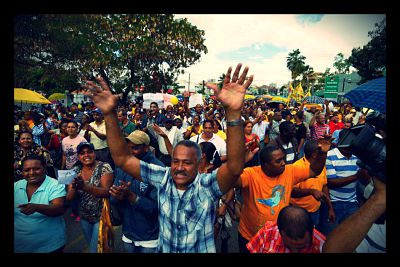
The Constitutional Court of the Dominican Republic has decided to strip thousands of Dominicans of Haitian descent of their citizenship, causing unruly behavior both inside and outside the country.

Latin American human rights groups are speaking out against the ruling and citing international and regional human rights models, believing the ruling to be fundamentally racist and inhuman, according to Al Jazeera.

Not only is the ruling causing issues in the Dominican Republic, but there have even been protests in New York City.  New Yorkers are, furthermore, not supportive of the annulment of citizenship of anyone born in the country to noncitizens after 1929. The New York Times reports that this decision is applicable to many as 200,000 people, mostly of Haitian decent.

Many have said that the ruling emphasized a history of racial prejudice in the country against not only Haitians, but their descendants as well.

Edward Paulino, assistant professor of history at John Jay College of Criminal Justice in Manhattan, who is Dominican-American, explains that, “Anything that’s seen as a criticism is seen as treasonous.”

Several years ago, two United Nations human rights experts described in a report a “profound and entrenched problem of racism and discrimination” against Haitians in particular, throughout the Dominican Republic.

The Dominican Republic has fought with criticism for its treatment of Haitian migrants and this ruling has brought shame upon people within the country as well as internationally. The residents are already struggling with poverty and social exclusion and it is not beneficial in any way for them to be denounced.

Throughout the ruling the United States has signed an agreement worth 184 million to improve citizen safety and promote economic growth according to Dominican Today. The agreement accompanies the new strategy by the U.S. Agency for International Development (USAID) that is working to provide assistance to support the growth of small Dominican business and get them out of extreme poverty.

The businesses are primarily in the rural sector and USAID assists them by identifying new market opportunities.  They are also providing training and technology transfers to help such businesses produce quality products and services.

Despite this assistance, people throughout the Dominican Republic are focused on the issue of citizenship. There are tens of thousands of lives hanging in the balance and inaction is no longer an option. They are working to get out of poverty and the issue surrounding citizenship is distracting from finding the correct solutions.

– Lindsey Lerner

Sources: Al Jazeera, New York Times, Dominican Today
Photo: Crowd Voice

January 26, 2014
https://borgenproject.org/wp-content/uploads/borgen-project-logo.svg 0 0 Borgen Project https://borgenproject.org/wp-content/uploads/borgen-project-logo.svg Borgen Project2014-01-26 04:00:592024-12-13 17:49:56Importance of Citizenship in the Dominican Republic
Foreign Aid, Global Poverty, USAID

For Agencies, Foreign Aid Transparency is Key

relief_aid_transparency
The Obama Administration released data on United States foreign aid earlier this week while Congress is pushing legislation that will make such transparency law. These efforts seek to make aid more effective and to create a more open government. This is by no means, a recent occurrence.

For the past decade, the U.S. has moved toward making foreign aid accountable and transparent, which was started in 2004 with the creation of the Millennium Challenge Corporation. Initiated during the Bush Administration, it sought to generate publicly available data on foreign aid and selected which countries to give aid grants to based on how well they do in areas such as rule of law, trade policy and civil liberties.

USAID is revamping a self-audit program that seeks, in addition to being extensive and impartial, for the evaluations to be a spring of learning that the agency can build from. In this vein, they have named their first major series of evaluations USAID Forward.

The benefits of this transparency are multifold, but one of the major boons is that citizens have the ability to become better informed on what the government is doing to combat global poverty. This could do untold good since the majority of Americans vastly overestimate the amount that the United States contributes to foreign aid. The general public believes the U.S. spends 25 percent of the Federal Budget on international aid, when, in actuality, expenditure is only a paltry 0.2 percent.

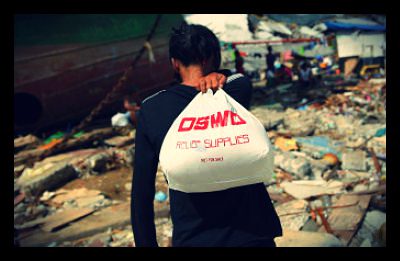
In the Philippines, the Department of Budget and Management launched the Foreign Aid Transparency Hub, anagrammed as FAiTH, which provides information on what is being done with the aid received in the aftermath of Typhoon Haiyan. This is likely in response to allegations of corruption scandals in relation to foreign aid.

The accountability of aid is a high priority, and Benigno Aquino III, President of the Philippines, says that this accountability stems from gratitude: “Ultimately, FAiTH is more than a hub of information: it is an expression of appreciation for the kindness of those who stand in solidarity with our countrymen.” The pair of accountability and appreciation seems a strong one in winning further donations.

With 3,976 people dead, 1,600 missing, and another 4 million displaced and in need of basic amenities, there is great need for aid. More than $270 million has been donated thus far, and FAiTH is helping ensure further aid does not diminish amid the graft. An oft-used excuse for not donating is that the money never makes its way to those in need. Transparency is an active foe to this pernicious way of thinking, and one that is dramatically making ground.

– Jordan Schunk 

Sources: Brookings, Ingram and Adams, Huffington Post, Inquirer News

January 15, 2014
https://borgenproject.org/wp-content/uploads/borgen-project-logo.svg 0 0 Borgen Project https://borgenproject.org/wp-content/uploads/borgen-project-logo.svg Borgen Project2014-01-15 16:54:212017-03-20 13:11:36For Agencies, Foreign Aid Transparency is Key
Activism, Advocacy, Foreign Aid, Foreign Policy, Global Poverty, USAID

An Overview of USAID

usaid_pakistan
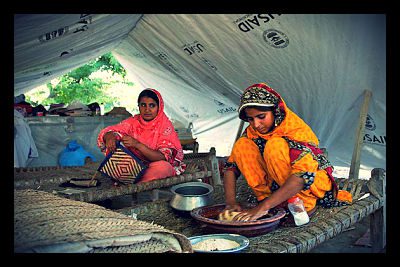
The United States Agency for International Development (USAID) was created in 1961 by The Foreign Assistance Act, which established a separate administration for non-military foreign aid. This consolidated the many separate foreign aid organizations within the US government at the time into one effective agency.

USAID advocates for making international aid the focus of foreign policy.  Under President Truman, foreign policy had two goals:  creating new markets for U.S. exports by relieving global poverty and helping countries prosper through capitalism. Later, in the 1970s, USAID shifted its focus to basic human needs: food security, health, education, jobs and resource management.

Today, USAID focuses on creating sustainable markets, transitioning countries into democracies and rebuilding former areas of conflict. USAID works mainly through non-governmental organizations (NGOs) and diversified aid packages.  Food security, economic growth, education, environmental protection, gender equality, health, innovation, sanitation and conflict management are at the forefront of US foreign policy.  All these factors go into creating sustainable trade partners and positive political relations.

USAID’s $20.4 billion funding comes directly from the U.S. government.  Of this, only about $1.35 billion is spent on operating costs.  The rest of the funding goes to “bilateral assistance” provided to countries and regions in need.  Afghanistan is the largest recipient of US economic assistance at $2.24 billion, followed by Pakistan with $970 million.

Past successes include family planning, immunization programs, improved farming techniques and booming energy sectors in developing countries.  Life expectancy in the developing world has increased by 33 percent, immunizations have eliminated smallpox, and infant and child death rates have decreased by 50 percent in the developing world.  HIV/AIDS education and prevention has been a major focus of USAID, with programs set up in 32 countries.  Meanwhile, 1.3 billion people have access to safe drinking water thanks to USAID-led UN Drinking Water Supply and Sanitation Decade.

– Stephanie Lamm

Sources: USAID History, USAID Sites
Photo: Business Week

October 23, 2013
https://borgenproject.org/wp-content/uploads/borgen-project-logo.svg 0 0 Borgen Project https://borgenproject.org/wp-content/uploads/borgen-project-logo.svg Borgen Project2013-10-23 15:14:362024-05-25 00:30:10An Overview of USAID
Children, Global Poverty, Health, Sanitation, USAID, Women & Children

Hand Washing Can Save Millions of Lives

A mother’s typical question to a child, “did you wash your hands?” may have seemed like a pesky reminder when growing up, but research shows that hand-washing is one of the most important and live-saving habits that can be instilled in a society. Hand-washing with soap has been shown to reduce the incidence of diarrhea by almost one half and of acute respiratory infections by roughly one third.

Since hand-washing is one of the most cost-effective ways to reduce deaths of children under five from diseases like diarrhea and pneumonia – possibly by up to 70% -, the global health soap brand Lifebuoy is teaming up with USAID to create a neonatal program designed to raise awareness of the link between newborn survival and hand washing with soap.

The program targets new mothers and birth attendants through antenatal clinics and health workers. The campaign also uses innovative videos to appeal to the mother’s maternal instinct by communicating the message “hand-washing helps your child survive.” Persuasive advocates such as the Indian actress Kajol also support the cause and help generate awareness of the importance of hand-washing, especially after having used the toilet or before preparing food.

Another initiative which aims to modify everyday behavior is the Global Scaling Up Hand-washing Project, supported by the World Bank in countries such as Peru, Senegal, Tanzania, and Vietnam. These interventions found that while will and motivation to change habits might be present, hand-washing is also dependent on the ease of access to both water and soap. In this way, the program has aimed to make changes in the way soap and water are accessed in households.

The initiative has also found that in countries such as Senegal, men can also play a critical part in the behavior-changing process. Since they are seen as the role-models or leaders of their households, future interventions will also incorporate campaigns that include or are aimed at men.

– Nayomi Chibana
Feature Writer 

Sources: USAID, World Bank
Photo: Old Picture of the Day

October 21, 2013
https://borgenproject.org/wp-content/uploads/borgen-project-logo.svg 0 0 Borgen Project https://borgenproject.org/wp-content/uploads/borgen-project-logo.svg Borgen Project2013-10-21 11:06:442024-05-25 00:29:42Hand Washing Can Save Millions of Lives
Food & Hunger, Food Security, Global Poverty, USAID

Haiti’s Hunger Crisis

Haiti Hunger Crisis Earthquake Reconstruction
Last June, when reports abounded of the chronic hunger and food insecurity crisis that was ravaging Haiti, the world learned that 1.5 million people were in need of food assistance in the struggling nation, while another 6.7 million people were failing to meet their food needs on a regular basis.

Soon, images of broomstick-thin children with distended stomachs crossed the globe, while international donors and NGOs pledged additional donor dollars to the nation that was devastated by an earthquake in 2010. Despite the international assistance, a staggering 67 percent of the population still has limited access to food, according to the government’s National Coordination of Food Security.

Much of the crisis stems from extreme weather conditions such as floods and droughts which destroyed key crops last year. Worse still, scientists predict that more natural disasters are on their way due to climate change.

Klaus Eberwein, general director of the government’s Economic and Social Assistance Fund believes that the current hunger crisis is due to “decades of bad political decisions,” last year’s storms and drought, and the fact that hunger is not new to Haiti.

The country’s food insecurity issues also have to do with the fact that 80 percent of Haiti’s rice and half of all its food is imported now. With so much depending on imports, meals are becoming harder to obtain on a minimum wage, which is about $4.54 a day.

To make matters worse, Haiti has lost almost all of its forest as poor Haitians continue to chop down trees to make charcoal. Consequently, the loss of trees does not help to contain heavy rainfall or to yield crop-producing soil.

One of the organizations that continues to help stem the widespread hunger is USAID, which has provided over $38 million for emergency and development food assistance in Haiti. This past month, the organization launched a four-year food security program to improve nutrition and access to locally produced foods for the most vulnerable households in Haiti. The project, the Kore Lavi Program, is part of the U.S. government’s global hunger and food security initiatives Feed the Future and Title II.

The program supports the Haitian government in establishing a voucher-based safety-net system to increase poor household’s access to food and prevent malnutrition in children under 2 years of age. It is expected to reach 250,000 households by providing food vouchers, improving maternal and child health and nutrition knowledge, strengthening links between households and health systems, and improving the quality of health and nutrition services. Additionally, it aims to develop a national database system within the Government of Haiti’s Ministry of Social Affairs and Labor to target vulnerable households.

The goal is to change the harsh reality of the statistic that two in three Haitians currently face hunger as the country’s woes continue to mount.

– Nayomi Chibana
Feature Writer

Sources: USAID AP
Photo: TIME

October 20, 2013
https://borgenproject.org/wp-content/uploads/borgen-project-logo.svg 0 0 Borgen Project https://borgenproject.org/wp-content/uploads/borgen-project-logo.svg Borgen Project2013-10-20 17:19:212024-06-05 01:53:40Haiti’s Hunger Crisis
Food & Hunger, Food Aid, Foreign Aid, Global Poverty, USAID, Water

Foreign Aid, Where Does It Go? A Look at USAID

American Foreign Aid USAID
The United States Agency for International Development (USAID) is a successful program engineered to combat poverty. USAID has focused on diminishing poverty in several aspects. Improving nutrition, assisting in food aid, and advancing water supplies are all important USAID goals. These three issues are connected on a deeper scale, as improving nutrition levels is conjoined with clean water supply and food aid assistance.

Proper nutrition is a basic necessity for every human. Malnutrition leads to approximately 2.6 million deaths per year, deaths that could be prevented if steps were taken to counteract malnutrition. USAID has partnered with Scale Up Nutrition (SUN) to help achieve basic nutritional improvement in impoverished areas throughout the world.

USAID and SUN have laid out a strategic approach to achieve their goal. They plan to prevent malnutrition through a package of maternal, infant, and young children programs. USAID and SUN will also combat malnutrition by targeting supplementation to vulnerable groups, managing malnutrition through community based projects, providing nutritional care for those living with HIV/AIDS, and improving the quality of food in the food assistance programs.

USAID is not only well prepared to handle global malnutrition levels; they are also prepared on the food assistance front. USAID works with the UN World Food Programme (WFP) to effectively deliver lifesaving aid to food-barren areas. USAID and WFP have developed a working protocol that efficiently delivers food supplies to shortages worldwide.

USAID and WFP are constantly upgrading their food science programs, allowing them to deliver greater amounts of healthy food to needy areas. USAID is using a supply-chain management system that allows food to be sent out more efficiently. The programs have also combined to implement an emergency food service, which allows USAID and WFP to purchase emergency food in disaster-stricken areas. In addition, USAID also funded the Famine Early Warning System (FEWS), which is highly regarded as one of the best early-warning systems in the world.

Food and nutrition are two basic necessities in life. These epidemics are two of the most common problems known worldwide, yet a third is often overlooked. Lack of clean water supplies is just as important, and it receives a similar amount of attention from USAID. USAID has a specifically laid out plan to implement clean water supplies in needy areas. USAID focuses on increasing access to a sustainable water supply for all communities, finding a way to sanitize the water supplies, and teaching the community key hygiene behaviors to keep the water sanitized.

Through the actions of USAID, positive results can be seen in all of the targeted areas. In 2011, 3.8 million people had better access to clean water. USAID and affiliated programs provided over 1.5 metric tons of food to communities in 2012. The nutrition programs have been equally effective, with predictions that malnutrition will decrease by 20 percent in the next two years in targeted countries. The progress can be easily seen; all of which were made possible by the foreign aid budget that often falls under much criticism.

– Zachary Wright

Sources: USAID, USAID: Food Aid, USAID: Nutrition
Photo: Flickr

October 7, 2013
https://borgenproject.org/wp-content/uploads/borgen-project-logo.svg 0 0 Borgen Project https://borgenproject.org/wp-content/uploads/borgen-project-logo.svg Borgen Project2013-10-07 18:15:212024-05-25 00:23:47Foreign Aid, Where Does It Go? A Look at USAID
Page 28 of 33«‹2627282930›»

Get Smarter

  • Global Poverty 101
  • Global Poverty… The Good News
  • Global Poverty & U.S. Jobs
  • Global Poverty and National Security
  • Innovative Solutions to Poverty
  • Global Poverty & Aid FAQ’s
Search Search

Take Action

  • Call Congress
  • Email Congress
  • Donate
  • 30 Ways to Help
  • Volunteer Ops
  • Internships
  • Courses & Certificates
  • The Podcast
Borgen Project

“The Borgen Project is an incredible nonprofit organization that is addressing poverty and hunger and working towards ending them.”

-The Huffington Post

Inside The Borgen Project

  • Contact
  • About
  • Financials
  • President
  • Board of Directors
  • Board of Advisors

International Links

  • UK Email Parliament
  • UK Donate
  • Canada Email Parliament

Get Smarter

  • Global Poverty 101
  • Global Poverty… The Good News
  • Global Poverty & U.S. Jobs
  • Global Poverty and National Security
  • Innovative Solutions to Poverty
  • Global Poverty & Aid FAQ’s

Ways to Help

  • Call Congress
  • Email Congress
  • Donate
  • 30 Ways to Help
  • Volunteer Ops
  • Internships
  • Courses & Certificates
  • The Podcast
Scroll to top Scroll to top Scroll to top