• Link to X
  • Link to Facebook
  • Link to Instagram
  • Link to TikTok
  • Link to Youtube
  • About
    • About Us
      • President
      • Board of Directors
      • Board of Advisors
      • Financials
      • Our Methodology
      • Success Tracker
      • Contact
  • Act Now
    • 30 Ways to Help
      • Email Congress
      • Call Congress
      • Volunteer
      • Courses & Certificates
      • Be a Donor
    • Internships
      • In-Office Internships
      • Remote Internships
    • Legislation
      • Politics 101
  • The Blog
  • The Podcast
  • Magazine
  • Donate
  • Click to open the search input field Click to open the search input field Search
  • Menu Menu

Archive for category: Poverty Reduction

Information and stories about poverty reduction.

Education, Global Poverty, Poverty Reduction

Reducing Poverty Through Education: A Look at 3 Major Initiatives

reducing poverty through education
Education is often widely viewed as one of the fundamental pillars used to eradicate global poverty. According to Global Citizen, “61 million school-age children are not in school today,” and many trends show that education is perhaps the strongest tool to reduce extremism and bring world peace. Fortunately, the United States Agency for International Development has made tremendous progress in the realm of education.

Utilizing less than one percent of the total federal budget, “literacy rates are up 33 percent worldwide in the last 25 years, and primary school enrollment has tripled in that period.” In order to tackle global poverty, there must be a collective effort from grassroots movements to provide the necessary resources that foster opportunities for those in need. Some governments have made tremendous improvements in this regard, providing sustainable initiatives towards reducing poverty through education.

Chad

In Chad, the Global Partnership for Education responded in a timely fashion by providing nearly $7 million to the Ministry of Education in 2016 as a response to the 2016 conflict. This grant was not only allocated towards assisting the humanitarian relief crisis at the time, but was also used to provide education for refugees and displaced returnees.

According to the United Nations Education Index, Chad ranks 184th in the world in terms of its educational levels; nearly one in five children lived in poverty in 2015. In Hong Kong, a recent study came out affirming that “children who grow up in low-income households tend to have less access to opportunities and therefore are more likely to remain poor in adulthood.”

Many parents are strong proponents of education as they would like to invest in their children’s future, especially if they come from a predominantly poor household. The kinds of benefits procured from education help youths to break out of the poverty cycle and potentially become primary contributors to their country’s economy.

Additionally, income level persists when a child is enrolled in formal education. Non-governmental organizations (NGOs) have reduced poverty through initiatives in education such as developing workshops and extended learning opportunities.

Ghana

A headmistress at a recent school conference in Ghana recently lauded the value of education in society, claiming it “is the only means through which one could bridge the poverty and knowledge gaps in society.” Mrs. Elizabeth Ama Asare also stressed the importance of education towards economic empowerment, asserting that without it, “you cannot dine with the rich” or “reason with the professors.”

Her remarks were made in light of the commencement of the Government’s Free Senior High School (SHS) policy, one of the many significant initiatives towards reducing poverty through education.

In Ghana, World Vision International (WVI) has played an integral role in improving the lives of children and levels of education in 10 basic schools in Kpikira. The WVI’s efforts include educating the youth on maintaining general hygiene, and fighting to end the practice of child-marriage that’s embedded in many communities.

According to the article, “ending child-marriage could help the district achieve at least eight of the seventeen Sustainable Development Goals, including health, education, and poverty.”

Israel

Additionally, the Haredi community in Israel is beginning to more strongly promote education. Characterized by traditional Jewish Law, the Haredi are marrying less and focusing more on their higher education. As seen in 2017, the number of Haredi enrolled in higher education spiked from 1,000 to 10,800. The Haredi community constitutes 16 percent of Israel’s population, and is set to increase monumentally to 40 percent by 2065.

If governments, international organizations and charities actively come together, then bridging the poverty gap can become an achievable task. Those living in destitute areas can benefit through the creation of institutions that enhance learning perspectives and opportunities. Such robust initiatives in reducing poverty through education are vital in paving the way for those who learn in a classroom environment to pursue a better life.

– Alexandre Dumouza
Photo: Flickr

January 12, 2018
https://borgenproject.org/wp-content/uploads/borgen-project-logo.svg 0 0 Borgen Project https://borgenproject.org/wp-content/uploads/borgen-project-logo.svg Borgen Project2018-01-12 08:55:362024-05-29 22:30:15Reducing Poverty Through Education: A Look at 3 Major Initiatives
Global Poverty, Poverty Reduction

15 Quotes About Poverty to Get People Thinking

quotes about povertyWhat is embodied in the word poverty? Based on the Economic and Social Inclusion Corporation’s definition, poverty is “about not having enough money to meet basic needs including food, clothing, and shelter.” However, the connotation of poverty carries a much heavier burden. Billions of people have experienced poverty in their lifetimes, and many don’t escape its grasp.
These 15 quotes about poverty will develop a powerful image of what poverty looks and feels like. These quotes about poverty are also designed to leave a sense of hope because the fight towards a better future is still going.

  1. “I believe that, as long as there is plenty, poverty is evil.” – Robert Kennedy
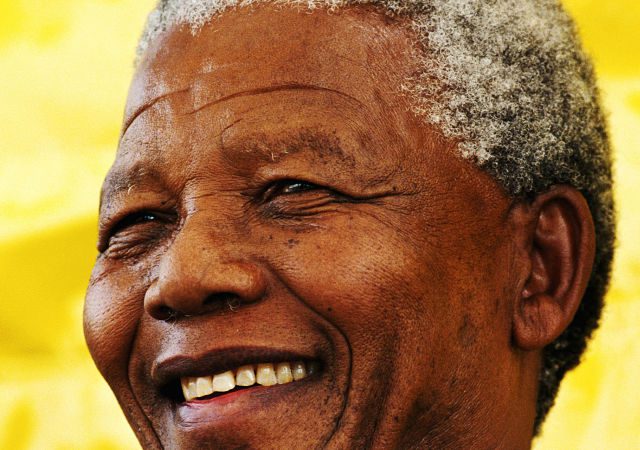
  1. “As long as poverty, injustice and gross inequality exist in the world, none of us can truly exist.” – Nelson Mandela
  1. “Extreme poverty anywhere is a threat to human security everywhere.” – Kofi Annan
  1. “Poverty is like punishment for a crime you didn’t commit.” – Eli Khamarov
  1. “Poverty is the parent of revolution and crime.” – Aristotle
  1. “These days there is a lot of poverty in the world, and that’s a scandal when we have so many riches and resources to give to everyone. We all have to think about how we can become a little poorer.” – Pope Francis
  1. “You can’t get rid of poverty by giving people money.” – J. O’Rourke
  1. “There are many reasons why vulnerable young people join militant groups, but among them are poverty and ignorance…” – Muhammadu Buhari
  1. “Wars of nations are fought to change maps. But wars of poverty are fought to map change.” – Muhammad Ali
  1. “We cannot afford to spend millions and millions over nuclear arms when there is poverty and unemployment all around us.” – Lal Bahadur Shastri
  1. “The world is very different now. For man holds in his mortal hands the power to abolish all forms of poverty, and all forms of human life.”– John F. Kennedy
  1. “A rich, robust, well-resourced public education is one of the best routes out of poverty and a pathway to prosperity.” – Randi Weingarten
  1. “The belief that the world is getting worse, that we can’t solve extreme poverty and disease, isn’t just mistaken. It is harmful.” – Bill Gates
  1. “Growing economies are critical; we will never be able to end poverty unless economies are growing. We also need to find ways of growing economies so that the growth creates good jobs, especially for young people, especially for women, especially for the poorest who have been excluded from the economic system.” – Jim Yong Kim
  1. “Poverty is a very complicated issue, but feeding a child isn’t.” – Jeff Bridges

A central point of these quotes about poverty is that poverty isn’t just a financial issue. It doesn’t just affect people who have no money. Poverty is a social problem that needs a social solution to be solved.

– Caysi Simpson

Photo: Flickr

January 5, 2018
https://borgenproject.org/wp-content/uploads/borgen-project-logo.svg 0 0 Borgen Project https://borgenproject.org/wp-content/uploads/borgen-project-logo.svg Borgen Project2018-01-05 01:30:532019-11-12 22:06:4915 Quotes About Poverty to Get People Thinking
Global Poverty, Poverty Reduction

Strategies to Address Poverty in Northwest China

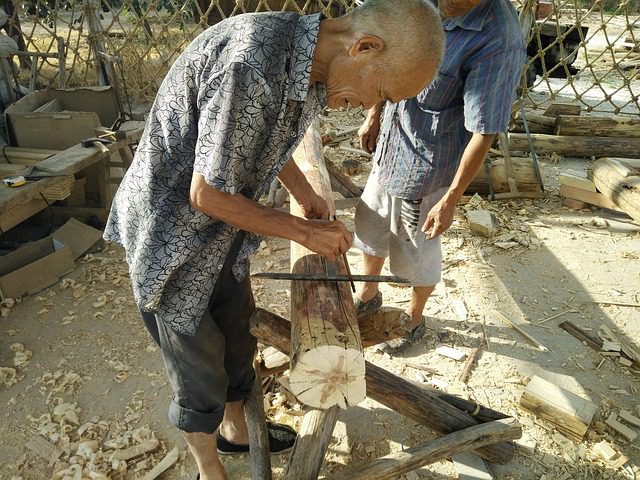
Poverty in Northwest ChinaNorthwest China is comprised of three provinces (Qinghai, Gansu and Shaanxi) and two autonomous regions (Xinjiang and Ningxia). The overall population of this region is about 100 million. The rates of poverty of all five of these administrative divisions rank among the top ten in mainland China. It was roughly estimated that by the end of 2016, 12 million people in this region were still living below the national poverty line of $348 in annual net income.
Major reasons for the high rate of poverty in northwest China include the harsh deserts, plateaus and mountains, dry climates and natural disasters. Many areas in this region lack resources and basic infrastructure. Many cities and counties are enduring insufficient power supply and inconvenient transportation. In addition, incomes remain low, and basic facilities for education, health and other public services are poor.

Recently, quite a few different measures have been implemented for alleviating poverty in northwest China. Officials in Xinjiang relocated about 26,100 persons living in poverty in 2016 and raised $627 million of relocation funds for poverty reduction in 2017. The government of Qinghai aims to further exploit the advantages of tourism on reducing poverty by pairing 10,000 villages with private companies within five years.

The All-China Women’s Federation offers direct assistance for poverty alleviation by training women to improve their working capabilities and handcraft skills. Projects in the Shaanxi and Ningxia regions were also proposed in China’s thirteenth five-year plan.

The poverty rate among most ethnic minorities is relatively high, which stems from factors such as attitudes toward girls’ education and dependence on government assistance. Hence, it is necessary to reinforce the importance of education and gender equality and to encourage local people to go out seeking better jobs.

An important issue is reforming the strategy of poverty alleviation, by gradually replacing the conventional aid model with the participatory anti-poverty model. Tim Harvey’s work in Ningxia emphasizes the rights of the poor to participate, respects their enthusiasm and motivations to get rid of poverty. This strategy aims to enhance their viability to survive and expand their legal rights to gain wealth.

Besides the measures mentioned above, the Chinese central government attaches great importance to the development of medical care and nutrition support in northwest regions with ethnic minorities. Meanwhile, protecting the local natural environment, reinforcing the guiding role of religious groups and implementing the strategy of sustainable development are all keynote strategies on reducing poverty in northwest China.

One typical example is the Yinchuan Minning Agriculture Project in Ningxia, from which 35,000 local villagers were benefited by relocation and opportunities for income growth.

Alleviating poverty in northwest China represents another long march at present. As a region with the highest rate of returning poverty, it requires intensive concerns on protecting the rights and opportunities for the poor. By gradually changing the methods of poverty reduction and allowing the vast majority of the poor to participate, greater achievements can be made in the long-term project.

– Xin Gao


December 18, 2017
https://borgenproject.org/wp-content/uploads/borgen-project-logo.svg 0 0 Borgen Project https://borgenproject.org/wp-content/uploads/borgen-project-logo.svg Borgen Project2017-12-18 07:30:502024-05-27 23:58:57Strategies to Address Poverty in Northwest China
Global Poverty, Poverty Reduction

Infrastructure Improvements Significantly Reducing Poverty in Tibet

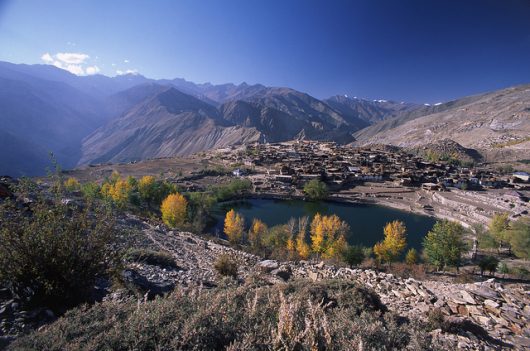
With the support of the Chinese government, progress continues to be made toward the alleviation of poverty in Tibet. Tibet has been controversially occupied by China since 1950, when the newly established communist regime launched an invasion of its sparsely populated neighbor with the goal of making it a permanent part of The People’s Republic of China. Today, international perspectives of China’s occupation of Tibet remain controversial, but many have become more receptive to China’s presence in the region due to Beijing’s insistence that the government has significantly reduced poverty in Tibet.
Part of China’s most recent Five Year Plan (2016-2020) are provisions to finish construction of the Sichuan-Tibet Railway, which will link the most remote and mountainous region of Tibet to the rest of the world. With an estimated cost of roughly $36 billion and a plan to build well over 1,000 miles of railway, this ambitious project will vastly improve economic access to the region, greatly .

Other provisions of the Five Year Plan include continued expansion of housing projects, which the central government reports have provided modern housing for over 236,000 Tibetans to date. Many of the people that benefit from this program were reportedly living without either running water or electricity previous to receiving government assistance. The Chinese government aims to eliminate these dire conditions by 2020.

Though many critics in the international political sphere have expressed concerns over the preservation of Tibetan culture while the region remains under Chinese control, the central government has sought to reassure the international community of its intentions to preserve Tibetan religious and historical sites. Western fascination with Tibetan Buddhism and history has caused an uptick in tourism in recent years, which has provided a boost to the Tibetan economy.

Many people continue to question the validity of the Chinese government’s statistics regarding poverty in Tibet. To this day, some see China’s occupation of Tibet as illegal, including exiled Tibetan political groups that advocate for its independence.

Though also living in exile in India, the foremost Tibetan religious leader, the Dalai Lama, has recently affirmed his pro-China stance, saying that Tibet’s inclusion in Chinese politics offers the invaluable opportunity for economic modernization and environmental protections. In a speech given at the Indian Chamber of Commerce in November 2017, the Dalai Lama urged the Chinese government to enhance its respect of Tibetan culture and heritage, but stressed that Tibet is not seeking independence from China. Rather, says the Dalai Lama, the development and alleviation of poverty in Tibet made possible by its dependence on the central Chinese government validates this arrangement.

– Savannah Bequeaith

Photo: Flickr

December 18, 2017
https://borgenproject.org/wp-content/uploads/borgen-project-logo.svg 0 0 Borgen Project https://borgenproject.org/wp-content/uploads/borgen-project-logo.svg Borgen Project2017-12-18 01:30:232024-05-29 22:29:51Infrastructure Improvements Significantly Reducing Poverty in Tibet
Poverty Reduction

The Organizations and Steps Used in Reducing Poverty in Niger

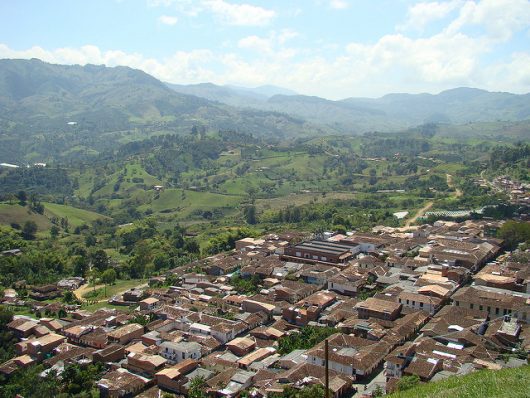
Niger is one of the poorest countries in the world, ranked last on UNDP’s 2015 Human Development Index — nearly 20 percent of Nigerien population cannot meet their food needs due to insufficient production. Less than 12 percent of the land in Niger is actually fertile, and there is an expected 33 percent decrease in agricultural activity in the next 50 years.

According to World Bank, the best way to help the situation is to grow drought resistant crops and come up with new ways to store water.

However, these efforts may be challenged by the conflicts spilling in from three of Niger’s neighboring countries. The conflict in northern Nigeria has relocated many chronically malnourished people into the Lake Chad area. Fighting has crossed over the border, worsening local food insecurity and endangering host communities, refugees and humanitarian workers.

Access to clean water is nearly nonexistent. Lack of food and water has caused malnutrition, disease, flooding and displacement — all of which contribute significantly to poverty in Niger. Many families are unable to provide the basic needs of food and clean water for their children. Save the Children is working to alleviate suffering among child refugees, returnees, internally displaced children and locals through health and nutrition programs, among others.

The World Food Programme has been working with Niger since 1968 to alleviate hunger and malnutrition.

The organisation has aligned its goals with the United Nations’ 2030 agenda, most notably with sustainable development goals 2 and 17: “End hunger, achieve food security and improved nutrition, and promote sustainable agriculture,” and “Strengthen the means of implementation and revitalize the global partnership for sustainable development.”

Oxfam has also assisted in reducing poverty in Niger for 25 years. They raise money to implement an education system and pastoral communities by means of lobbying and demanding accountability from the states.

Oxfam is using the media to promote a strong social society through political participation and reducing gender-based violence, women leadership and promoting sexual equality. They are installing a water system to provide clean drinking water for essential activities.

With a continued effort to reduce poverty in Niger, these organizations and other coordinated global forces will hopefully be able to make a lasting difference in the lives of these vulnerable people.

– Nicole Hentzell

Photo: Flickr

December 17, 2017
https://borgenproject.org/wp-content/uploads/borgen-project-logo.svg 0 0 Borgen Project https://borgenproject.org/wp-content/uploads/borgen-project-logo.svg Borgen Project2017-12-17 09:27:072019-12-06 13:48:20The Organizations and Steps Used in Reducing Poverty in Niger
Poverty Reduction

Crucial Steps Towards Alleviating Poverty in Saudi Arabia


In a country as resourceful as Saudi Arabia and where there is an abundance of wealth, oil and money, it is simply hard to believe that an area known for its riches faces economic disadvantages with millions of its residents.

Poverty

Poverty in Saudi Arabia is a hidden problem that many Saudis hesitate to recognize. The Saudi Arabian government rarely releases data about its poorest people, making it difficult for the nation (and globe) to address the problem.

With the overall population at just over 32 million, the media has reported that an estimate of about 2 to 4 million of the country’s residents live on less than $530 a month ($17 a day) — a figure that analysts consider below the poverty line. In order for the government to tackle these issues at the source, there must be extensive programs that are proposed, including increasing development aid.

Education

Education is the key to eradicating the underlying issues of poverty. Understanding and comprehending basic skills, such as reading and writing, improve the productivity of individuals in their daily lives which thereby bolsters industrialization.

This economic and social progression increases income distribution that has the potential to restore the people living in poverty in Saudi Arabia to their full potential livelihoods. In short, investment in education can result in big returns.

In 2013, Saudi Arabia’s King Abdullah approved a $21.33 billion (80 billion riyals) five-year education plan that is set to develop Saudi Arabia’s education sector. This plan includes: the construction of 1,500 nurseries, training for approximately 25,000 teachers, and the establishment of educational center and other projects related to the cause.

Influence of Education

Saudi has had difficulties producing employers in the science and engineering fields because of the education system’s concentration on religious and Arabic studies. In order to ease the influence of religion on education and expand the economy, King Abdullah has launched an excess of state schools and universities as a part of his education plan.

The reality for many families living in poverty in Saudi Arabia is a pattern that has impacted several generations — unstable surroundings that lead to poor academic preparation. Nonetheless, the situation can be improved if certain proposals, like the one implemented by King Abdullah, can continue to be enacted.

– Zainab Adebayo

Photo: Flickr

December 16, 2017
https://borgenproject.org/wp-content/uploads/borgen-project-logo.svg 0 0 Borgen Project https://borgenproject.org/wp-content/uploads/borgen-project-logo.svg Borgen Project2017-12-16 13:00:582024-06-05 02:12:17Crucial Steps Towards Alleviating Poverty in Saudi Arabia
Global Poverty, Poverty Reduction

How Much Does it Cost to End Poverty?

How much does it cost to end poverty?

Today the world produces enough food for everyone on the planet. So why are more than a billion people still dying of hunger? Why is life itself tenuous for so many families while the eight richest people in the world have as much wealth as the poorest 50 percent of people in the world?

The answer is poverty. But poverty can be stopped, and this raises the question, “how much does it cost to end poverty?”

Poverty can be categorized as moderate, relative or extreme. Here we will try to define the cost needed to end extreme poverty. But first, what is extreme poverty? It refers to the state of the poorest people in the world. They are barely able to meet their minimal needs for survival, as they live on less than $1.90 per day, according to the World Bank.

But poverty is more than just very low incomes. It is hunger, high mortality rates, conflicts, a lack of education or health services and a lack of a future for hundreds of thousands of women, men and children.

Broadly, poverty affects most of the people in the world. In 2005, 71 percent of the world’s population lived on an income below $10 a day. To eradicate poverty is possible, but at what cost?

In his book End of Poverty, Jeffrey Sachs, director of the Earth Institute at Columbia University, provides one answer to the question “how much does it cost to end poverty?”

He argues that poverty could be eliminated by the year 2025 thanks to “well-placed development aids”. Investment in local farms to boost capital and productivity, education for both children and adults, enhancing access to health services and leveraging renewable energy resources are the best ways to end poverty.

So, how much does it cost to end poverty?

Jeffrey Sachs, as one of the world’s leading experts on economic development and the fight against poverty, stated that the cost to end poverty is $175 billion per year for 20 years. This yearly amount is less than 1 percent of the combined income of the richest countries in the world, and only four times the United States’ military budget for one year.

Ending poverty is possible and at a low cost. Now we just need ordinary citizens as well as multinational corporations to start meeting their responsibilities to help the poor and the left behind.

– Léa Gorius

Photo: Flickr

December 16, 2017
https://borgenproject.org/wp-content/uploads/borgen-project-logo.svg 0 0 Borgen Project https://borgenproject.org/wp-content/uploads/borgen-project-logo.svg Borgen Project2017-12-16 07:30:112024-12-13 17:58:32How Much Does it Cost to End Poverty?
Global Poverty, Poverty Reduction

Reducing Poverty in Southwest China

Poverty in Southwest ChinaSouthwest China is comprised of the provinces of Sichuan, Yunnan and Guizhou, the Chongqing municipality and the Tibet Autonomous Region. While the Chinese government has been making great efforts to reduce poverty in southwest China, in 2016, about 20 million people remain below the poverty line. Tibet, Guizhou and Yunnan rank among the top six poverty rates in China.

Poverty in Southwest China results from several major factors: the development of transportation is relatively slow, communication and technology often fall behind and large areas of mountain and plateau restrict the growth of the economy and education in this region.

Conventional views are aimed at “treating poverty by education.” Hence, the government in impoverished areas tried to get rid of poverty with the aid of intellectual support provided by education. In spite of the severe hardships of financial budgeting, it still did their best to develop education and even at the cost of heavy debts. However, the data suggests that education levels in impoverished areas have not effectively changed the status of poverty even after a large amount of investment.

Nevertheless, there has been progress in the fight against poverty in Southwest China. The Tibet Poverty Alleviation Office announced that last year, 150,000 rural residents rose out of poverty in Tibet. In its thirteenth five-year plan, China aims to help Yunnan, Guizhou and Sichuan to release about one million people from poverty each year. The ultimate goal is to eradicate poverty in Southwest China by 2020.

It is well recognized that improving transportation is a prerequisite for gaining wealth. As part of the thirteenth five-year plan, the city of Chongqing will see the investment of $60 billion toward constructing the transport hub in southwest China. Besides dozens of new projects in other southwest provinces, local governments have also been installing new solar street lamps and water heaters, upgrading roads, houses and cultural activity rooms. Such measures create conditions for the acceleration of economic developments in rural, remote areas in Southwest China.

A further measure is reinforcing vocational education in poor counties and paying more attention to the economic growth and education of ethnic minorities. In the Yunnan province, a project was launched by the World Bank and provincial government in 2012, which was oriented to improve the quality and relevance of technical and vocational education and training, in order to produce skills matching the demand of labor markets.

Nine vocational schools were implemented, where 6,000 teachers and school managers were trained. As a result, more than 24,000 students benefited from training in crucial economic sectors, 80 percent of whom were from poor, rural areas and about 30 percent of whom belonged to ethnic minorities.

In order to achieve the comprehensive alleviation of poverty in Southwest China by 2020, governments and international organizations are working hard with specific, feasible and staged plans toward this goal.

– Xin Gao


December 16, 2017
https://borgenproject.org/wp-content/uploads/borgen-project-logo.svg 0 0 Borgen Project https://borgenproject.org/wp-content/uploads/borgen-project-logo.svg Borgen Project2017-12-16 01:30:132024-05-27 23:58:56Reducing Poverty in Southwest China
Poverty Reduction

Solar Power a Key Piece in the Fight Against Poverty

Solar Power in the Fight Against PovertyHunger, lack of education, conflict, disease, war; these human calamities have a common factor: poverty. One word to define a worldwide phenomenon which unfortunately hits 2.8 billion people on earth, or near half of the total entire population.

So, what are the solutions to fight this burden? Investment, innovation, technology and education are all viable options. But more and more multinational companies, associations and even simple citizens are now engaged in the fight against poverty, using a very special tool: solar power. As a source of renewable energy that is good for the environment, solar power can also help people get out of poverty by giving them access to electricity.

Today, most inhabitants of developing countries rely more on kerosene than on electricity for their basic needs such as household lighting. This is not only because the cost of electricity is extremely high, as the poorest people in the world pay 40 times more for the same energy services, but also because, most of the time, the nearest outlets are located miles away from where poverty is striking.

Because of this poor resource distribution, 15 percent of the global population still lives without access to electricity, and it is this inequality that solar power is attempting to balance by giving people easier access to electricity, information and education. For example, in Bangalore in India, families using solar panels can save $100 a year, money they tend to invest in their children’s education.

According to Simon Bransfield-Garth, Azuri’s CEO, a leading company in solar power in emerging markets in Africa, “a child spends an extra [two] hours per day doing homework if he has electricity.” But giving people access to electricity, and thus to information and education, is only one advantage this form of energy has to offer developing countries.

First, using solar power requires only one natural resource: the sun. This free, nonpolluting and unlimited
generator makes solar power one of the most environmentally friendly energies in the world. Furthermore, green energy is reliable and cheaper in the long run than kerosene or generators. It is also safer and easier to preserve in case of natural disasters, as solar panels are detachable and can be put indoors.

Helping in both the fight against poverty and climate change, solar power seems to be the perfect solution for those who still don’t have access to electricity. But there is much more at stake here: every year, more than four million people are killed by indoor air pollution, more than AIDS and malaria combined. Developing clean energy is, now, a matter of life or death.

As concluded Justin Guay, associate director of Sierra Club’s International Climate Program, “Just providing a few hours of solar lighting alone improves the human condition.”

– Léa Gorius

Photo: Flickr

December 7, 2017
https://borgenproject.org/wp-content/uploads/borgen-project-logo.svg 0 0 Borgen Project https://borgenproject.org/wp-content/uploads/borgen-project-logo.svg Borgen Project2017-12-07 12:50:342024-05-29 22:29:39Solar Power a Key Piece in the Fight Against Poverty
Global Poverty, Poverty Reduction

How Argentina Lowered its Poverty Rate in 2017

Argentina lowered its poverty rate

From the second half of 2016 to the first half of 2017, Argentina lowered its poverty rate by 1.7 percent. Though that number may seem small, it represents a significant step forward for a country who has over 30 percent of its citizens living in destitution. What steps did the nation take to reverse years of trends? How can other struggling parts of the globe learn from Argentina?

Market-Friendly Policies
One of Argentinian President Mauricio Macri’s goals was to attract foreign financing. From 2003 to 2016, Foreign Direct Investment (FDI) in Argentina averaged at $575 million. But in the second quarter of 2016, the FDI increased to $788 million. This amount represents the highest investment in the country since July 2014.

Steep Currency Devaluation
To combat record inflation, Macri took an unpopular measure. Currency devaluation in 2015 resulted in surging prices and a temporary increase in the country’s poor. Money was now worth less, though this was little comfort to those with little money to start.

All Macri’s program needed was time. Private sector investment and job creation rose in the past year, which led to more consumer spending. Not only has the poverty rate recovered from its drop, but the country now has a solid base of businesses and investments to continue its trends. A healthy economy tends to create lower poverty… though that truism doesn’t always hold.

Not Depending On Businesses Alone
Despite the advances made under Macri’s leadership, his government is riddled with issues. His critics claim that Macri’s attempts to court businesses only led to a widening gap between the rich and the poor. Reducing subsidies for electricity and gas led to a 40 percent rise in inflation in 2016.

But in a non-business sense, Macri’s initiatives represent a step forward. In 2013, former President Cristina Kirchner claimed that Argentina lowered its poverty rate to five percent, and refused to back that claim with evidence. The current state of Argentina challenges that dubious claim. More so than any business, the best move Argentina made for its impoverished was to admit it had a problem. For each positive gain spearheaded by Macri, government humility made them all possible.

Erasmo Mema, a political analyst from FTI Consulting, predicted that Argentina’s 2017 economic successes would make or break Macri’s legacy. As of November 2017, the Macri administration appears secure. But Mema warns Argentina that “…any foreign direct investment will have to be buttressed by the government’s commitment to transparency, [and] a sound economic policy…”

– Nick Edinger

Photo: Flickr

December 7, 2017
https://borgenproject.org/wp-content/uploads/borgen-project-logo.svg 0 0 Borgen Project https://borgenproject.org/wp-content/uploads/borgen-project-logo.svg Borgen Project2017-12-07 07:30:532019-10-24 12:10:33How Argentina Lowered its Poverty Rate in 2017
Page 45 of 63«‹4344454647›»

Get Smarter

  • Global Poverty 101
  • Global Poverty… The Good News
  • Global Poverty & U.S. Jobs
  • Global Poverty and National Security
  • Innovative Solutions to Poverty
  • Global Poverty & Aid FAQ’s
Search Search

Take Action

  • Call Congress
  • Email Congress
  • Donate
  • 30 Ways to Help
  • Volunteer Ops
  • Internships
  • Courses & Certificates
  • The Podcast
Borgen Project

“The Borgen Project is an incredible nonprofit organization that is addressing poverty and hunger and working towards ending them.”

-The Huffington Post

Inside The Borgen Project

  • Contact
  • About
  • Financials
  • President
  • Board of Directors
  • Board of Advisors

International Links

  • UK Email Parliament
  • UK Donate
  • Canada Email Parliament

Get Smarter

  • Global Poverty 101
  • Global Poverty… The Good News
  • Global Poverty & U.S. Jobs
  • Global Poverty and National Security
  • Innovative Solutions to Poverty
  • Global Poverty & Aid FAQ’s

Ways to Help

  • Call Congress
  • Email Congress
  • Donate
  • 30 Ways to Help
  • Volunteer Ops
  • Internships
  • Courses & Certificates
  • The Podcast
Scroll to top Scroll to top Scroll to top