• Link to X
  • Link to Facebook
  • Link to Instagram
  • Link to TikTok
  • Link to Youtube
  • About
    • About Us
      • President
      • Board of Directors
      • Board of Advisors
      • Financials
      • Our Methodology
      • Success Tracker
      • Contact
  • Act Now
    • 30 Ways to Help
      • Email Congress
      • Call Congress
      • Volunteer
      • Courses & Certificates
      • Be a Donor
    • Internships
      • In-Office Internships
      • Remote Internships
    • Legislation
      • Politics 101
  • The Blog
  • The Podcast
  • Magazine
  • Donate
  • Click to open the search input field Click to open the search input field Search
  • Menu Menu

Archive for category: Poverty Reduction

Information and stories about poverty reduction.

Global Poverty, Poverty Reduction

Creating Impact: Five Benefit Corporations Fighting Global Poverty

Five Benefit Corporations Fighting Global Poverty
There are many large enterprises committed to fighting global poverty as a part of corporate social responsibility or through donations. However, a new category of benefit-driven corporations characterized by creating a social and environmental impact has become increasingly popular with the rise of sustainable development and impact investment.

Many of these companies are commonly known as social enterprises, B corporations or fourth sector companies. The list below provides examples of corporations fighting global poverty around the world and how they are actively tackling numerous world issues through their impact.

1. AUARA

This social enterprise focuses on fighting global poverty through providing access to clean water in order to decrease risk of disease. The corporation sells environmentally friendly water bottles in Spain and 100 percent of the company’s dividends are invested in providing clean water to those living in poverty around the world; as a result of these efforts, Auara has both an environmental and social impact.

In addition, these projects aimed at providing clean water are mostly carried out in Africa.

2. BETTER WORLD BOOKS

This is one of many American corporations fighting global poverty, but Better World Books strives to break the poverty cycle by focusing on education. In 2002, the founders created a business model based on the online collection and sale of new and used books for economic profit. All profit gained from this is then used to fund literacy projects around the world.

Due to economic profit, social literacy impact and reselling of unwanted books, this organization is said to have a triple impact. Since the creation of the company, 21 million books have been donated to Books for Africa, Room to Read and the National Center for Families Learning. This company has also raised over $24 million for literacy initiatives.

3. EBY

Sofia Vergara and Renata Black co-founded EBY as an undergarment line in 2017. This company is one of many American corporations fighting global poverty through female empowerment and microfinance. The main goal is to provide small loans to women so that they have the means to start their own businesses and thus become self-sufficient and independent.

EBY accomplishes this by contributing 10 percent of net sales to the Seven Bar Foundation; so far, the financed loans have helped women in Colombia, Haiti and Nicaragua.

4. INCLUYEME

Incluyeme is a corporation fighting global poverty by providing jobs to those with disabilities. Disabled populations are more likely to be unemployed, which gives them a difficult position from which to overcome poverty. This company created an online platform to connect disabled people looking for work with inclusive employers that match their profiles.

The company began in Argentina, but has now spread to different parts of Latin America and Spain, and will continue to grow to increase impact. Any profits made are reinvested into social initiative projects so as to maximize social impact within communities served.

5. ALCAGÜETE

This Colombian corporation aims to fight global poverty by addressing the issue of hunger and fighting malnutrition and obesity. Founded in 2014, Alcagüete is a line of healthy snacks that for every snack sold, the company gives a snack to a child in the country who is in need. Since its founding, they have given away 437,895 snacks to hungry children.

With corporations like these five, the fight against global poverty is stronger than ever. Now the question is which company will be the next B-Corp or social enterprise?

– Luz Solano-Flórez
Photo: Flickr

May 6, 2018
https://borgenproject.org/wp-content/uploads/borgen-project-logo.svg 0 0 Borgen Project https://borgenproject.org/wp-content/uploads/borgen-project-logo.svg Borgen Project2018-05-06 01:30:292019-11-03 18:31:41Creating Impact: Five Benefit Corporations Fighting Global Poverty
Global Poverty, Poverty Reduction

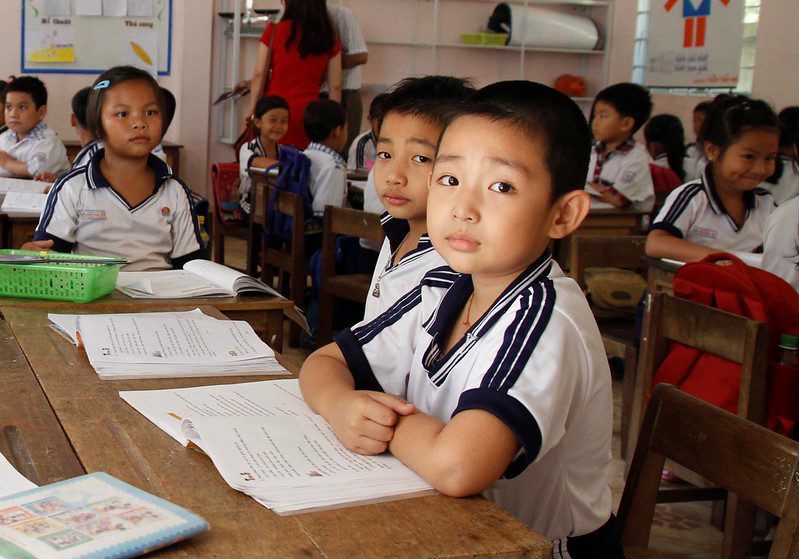
Vietnam Has Reduced Poverty but Progress Is Still to Be Made

Vietnam has reduced povertyNearly 30 years ago, Vietnam was among the poorest countries in the world. Today, Vietnam has reduced poverty and is estimated to be a developed nation by 2020 due to its fast-growing economic success. However, 9 million are still living below the poverty line in the one-party Communist state and progress can be made.

After the Vietnam War, which concluded when North and South Vietnam were reunited as one country in 1975, Vietnam faced war damages and an impoverished economy. From 1975 to 1985, Vietnam was a poor and self-reliant country facing a serious economic crisis. The country endured food shortages, damaged infrastructure and worsening living standards. About 70 percent of its population was living below the poverty line.

Doi Moi

In 1986 came the introduction of a political and economic renewal campaign called Doi Moi. It transformed the country into a globally-oriented market economy and resulted in major improvements in economic conditions and in human development. In 1993, the success of Doi Moi was represented as Vietnam’s poverty rate was reduced to 58 percent.

From 1995 to 2014, Vietnam restored diplomatic relations with the U.S., became a lower-middle income country and grew its per capita gross domestic product from $288 to $1,910. Over the past three decades, Vietnam has reduced poverty by economic development, causing the national poverty rate to drop from 70 percent to 11.3 percent.

The results of Vietnam’s poverty reduction have been extraordinary, and there have been several social and economic factors helping to reduce poverty and improve living standards for millions of people.

Levels of Education

Vietnam’s level of education has increased immensely. Figures estimate that enrollment rates in primary education have reached near universal levels, meaning more Vietnamese children are receiving an education now than ever before.

In 1990, Vietnam’s primary and secondary school enrollment rates were alarmingly low. People who have not completed primary education are more vulnerable to living in poverty. Today, the enrollments for primary and secondary school for the poor have reached more than 90 and 70 percent respectively. Additionally, the country’s literacy rate has reached more than 90 percent for men and women.

Investments in Agriculture and Infrastructure

Vietnam has reduced poverty through improved income by growing more profitable industrial crops in highland or mountainous regions. Targeting investment in agriculture and advancing restructuring in Vietnam has caused substantial increases in agricultural yields and poverty reduction in rural areas.

Enhanced infrastructure has also been a driver of Vietnam’s poverty reduction. Wide-reaching infrastructure investments throughout Vietnam have supported efficient economic reform policies, surged productivity and provided better economic opportunities for the poor.

Vietnam has Reduced Poverty

Over the past 30 years, Vietnam has reduced poverty and at least 14 million Vietnamese people have joined the middle class. Of the country’s 90 million people, however, 9 million still live in extreme poverty and most belong to ethnic minority groups.

From 1993 to 2006, extreme poverty rates decreased by 85 percent for the ethnic majority group. The ethnic minority group, however, only saw a decrease of 48 percent. These ethnic minorities, primarily the Tay, Thai and Hmong peoples of northwest Vietnam account for 73 percent of the poverty rate in the region. Ethnic minorities in Vietnam are more vulnerable to social and economic disadvantages due to a lack of education, clean water, sanitation, transportation, health care and other services.

Although the poverty rate among ethnic minorities decreased by 13 percent from 2014 to 2015, further efforts should be taken to alleviate poverty for the 9 million still in need. Vietnam’s focus should be on improved education and infrastructure in hard-to-reach areas comprised of mainly ethnic minorities who are more vulnerable to natural disasters, climate change and economic shocks. Although Vietnam has reduced poverty, progress is still to be made.

– Natalie Shaw
Photo: Flickr

May 3, 2018
https://borgenproject.org/wp-content/uploads/borgen-project-logo.svg 0 0 Borgen Project https://borgenproject.org/wp-content/uploads/borgen-project-logo.svg Borgen Project2018-05-03 17:10:452024-12-13 17:57:44Vietnam Has Reduced Poverty but Progress Is Still to Be Made
Global Poverty, Poverty Reduction

The Story of Poverty Decline in Kenya

The Story of Poverty Decline in KenyaA December 2017 report published by the World Bank indicates that the percentage of Kenyan people living below the international poverty line has dropped significantly over the last decade. In 2005-2006, 43.6 percent of Kenyans were living on less than $1.90 per day. In 2015-2016, that number sank to 35.6 percent, a dramatic improvement.

Despite these findings, researchers maintain that it is doubtful that poverty in Kenya will be eradicated by 2030. So what exactly is behind the poverty decline in Kenya, and why will it not be enough to completely solve the problem in the future?

Infrastructure Contributes to Poverty Decline in Kenya

Since 2013, the public sector’s contribution to GDP growth has jumped from just 1.1 percent to 2.5 percent. This is largely due to ambitious projects undertaken by the Kenyatta administration, including the construction of a $24.5 billion northern trade route, the expansion of the Mombasa-Nairobi Standard Gauge Railway, the creation of the Lamu Port and the modernization of major Kenyan airports. These developments have opened up new opportunities for trade throughout the region.

Beyond that, Kenya has made incredible strides in providing basic needs to its citizens over the past few years. In 2013, only 27 percent of Kenyan households had access to electricity. This number skyrocketed to 55 percent, or 5.7 million households, by the beginning of 2017. The number of Kenyan households with access to improved water sources has also climbed from just 60 percent in 2005 to nearly 72 percent in 2015. In addition, Kenya is leading the way in households with access to adequate sanitation facilities among countries with similar poverty rates. These improvements are crucial to promoting economic growth because they are the cornerstones of basic health and well-being.

Agricultural Growth Promising, But Unstable

Another factor leading to the poverty decline in Kenya is the agricultural sector. According to the report, agriculture accounted for the largest share of poverty reduction in the past decade. The agricultural sector remains the leading contributor to Kenya’s GDP, and provided a sizeable boost to the economy with an average growth of 4.1 percent between 2011 and 2015.

However, this is problematic because farming is an unreliable source of growth. The success of crops is completely controlled by weather conditions, and drought is extremely common in Africa. Kenya witnessed the devastating impacts of relying on agriculture last year when its economy took a hit due to decreased rainfall levels. This instability is one of the reasons why experts say that poverty will not be eradicated by 2030.

Private Sector Investment Needed to Continue Poverty Decline in Kenya

An additional obstacle to the poverty decline in Kenya is the deterioration of the private sector. In recent years, GDP growth from private investments has slid from 1.3 percent in 2013 to negative 0.7 percent in 2017. This is partially due to the political instability that surrounded the presidential election in 2017, which led many to see investments in Kenya as a risk because the government seemed fragile. Another claim made in the report is that the increase in government spending led to “crowding out,” the discouraging of private spending due to a rise in interest rates.

Although poverty may not be completely eradicated by 2030, it is projected to decrease at the rate of one percentage point per year if current trends continue. Though there are some major challenges to overcome in the future, the poverty decline in Kenya is a promising sign for the country’s welfare.

– Maddi Roy

Photo: Flickr

May 2, 2018
https://borgenproject.org/wp-content/uploads/borgen-project-logo.svg 0 0 Borgen Project https://borgenproject.org/wp-content/uploads/borgen-project-logo.svg Borgen Project2018-05-02 01:30:322019-11-05 13:39:53The Story of Poverty Decline in Kenya
Global Poverty, Poverty Reduction

Economic Growth in Nicaragua Has Helped Reduce Poverty

Economic Growth in Nicaragua Has Helped Reduce PovertyThe amount of economic growth in Nicaragua is an unusual and unprecedented phenomenon in the Central American peninsula. The International Monetary Fund (IMF) even decided to close its offices in the country in 2016 as it considered the issue well resolved. IMF first opened an office in Nicaragua in 1995 with the goal of economically stabilizing the country, which had been afflicted by years and years of high debt accumulation and revolutionary wars.

“Notwithstanding challenging external conditions, economic activity remains buoyant,” said Gerardo Peraza, head of the study that IMF led in 2016. The study also revealed how economic growth was projected at 4.7 percent that year. The main factors that contributed to such economic growth in Nicaragua were, according to the study, steady agricultural and commercial activity and an inflation rate that is projected to accommodate under four percent.

Where Did the Economic Growth Originate?

Experts argue that such improvements in economic growth in Nicaragua are largely attributable to the re-election of President Daniel Ortega. Many argue that his political identity and approach to crucial matters such as macroeconomy and anti-poverty measures have significantly shifted toward a more pro-business attitude.

Moreover, experts say that thanks to Ortega’s social programs, poverty fell by 30 percent between 2005 and 2014. Moreover, in 2011, Nicaragua was taken out of a debt relief program enacted by IMF in 2005, called Heavily Indebted Poor Countries Initiative.

The Benefits of Economic Growth in Nicaragua

A study issued by the World Bank has also found that in 2011, economic growth hit 5.1 percent, slowing to 4.7 and 4.5 in 2016 and 2017, respectively. For 2018, predictions see the Nicaraguan economy growing at 4.4 percent, making it the second largest among Central American countries in terms of growth. The country’s overall stability led decision makers to focus on long-term improvement and growth rather than just damage control, with the war on poverty the highest objective, particularly in rural areas.

Such economic improvement also restored the international community’s trust in Nicaragua. It is thanks to this renewed trust that, for instance, the USDA awarded a McGovern-Dole Food for Education grant to the organization Food For The Poor in Nicaragua. The grant was distributed as a three-year program, from the fall of 2011 to the fall of 2014.

During this period, more than 4,500 metric tons of food were delivered to the poorest communities of the Central American country. The majority of the recipients were children. Students of  774 schools, located primarily in Managua, Nueva Segovia and Madriz, greatly benefitted from the program.

Looking Toward the Future

The mission, however, is far from being fully accomplished. A statement issued by the U.S. Department of State reveals that Nicaragua still has the lowest level of GDP per capita in Central America and, most importantly, 40 percent of the population still lives in poverty. The situation gets even worse in rural areas, where the rate of poverty reaches nearly 60 percent.

The hope is that the path of economic growth and fiscal responsibility, paired with social programs and foreign aid initiatives, will keep Nicaragua on a path of prosperity and heavily reduced poverty.

– Luca Di Fabio

Photo: Flickr

April 30, 2018
https://borgenproject.org/wp-content/uploads/borgen-project-logo.svg 0 0 Borgen Project https://borgenproject.org/wp-content/uploads/borgen-project-logo.svg Borgen Project2018-04-30 01:30:112024-05-29 22:42:14Economic Growth in Nicaragua Has Helped Reduce Poverty
Global Poverty, Poverty Reduction, Women's Empowerment

Gogo Olive Changing the Lives of Zimbabwean Women

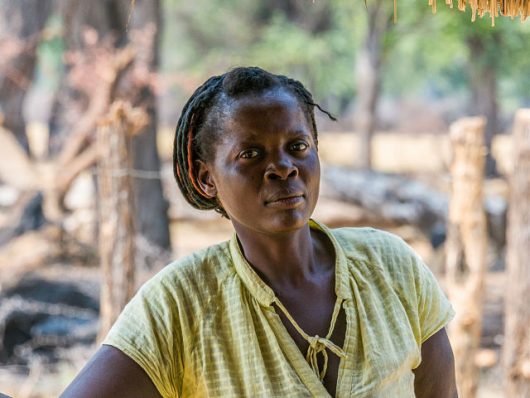
Gogo OliveSeventy-two percent of Zimbabweans live under the national poverty line, making it the 22nd poorest country in the world. Gogo Olive is a charity whose focus is to mitigate some of the problems faced by Zimbabweans, specifically women. Here is how one charity is changing the lives of Zimbabwean women.
The Problem: Difficulty Making a Living

One hardship faced by many women is HIV/AIDS, a disease that affected 1.3 million Zimbabweans in 2016. This results in many widowed parents who have to provide for their families by themselves. Providing for their households, however, is a difficult task when job opportunities are so limited. The unemployment rate in Zimbabwe is currently at 11.3 percent, and increases when excluding the large numbers of subsistence farmers and those working in the informal economy. This, however, is not the main problem for Zimbabweans.

The real problem, according to the International Labour Organization, is the poor quality of employment, characterized by low wages, no sick leave for employees and poor working conditions. In this way, the great need in Zimbabwe is decent jobs. Gogo Olive has met this need by employing women to knit goods, primarily in the form of knitted animals.

The Solution: Gogo Olive

Gogo Olive was founded by Julie Hagan as a way to create jobs for six women through knitting. Since its inception in 2008, the charity has grown to include about 80 knitters who produce hundreds of these knitted animals each month. According to the website, “Knitting was chosen as it only requires basic materials and can be done anywhere and at anytime, which suits the lifestyle of a Zimbabwean woman.”

The charity operates on two levels. Gogo Olive Knits creates jobs and generates income for women by selling their knitted products. Gogo Olive Cares focuses on meeting the other needs of the women. This includes establishing savings plans, running educational workshops, distributing care packages, and setting up an emergency fund to help with health costs and school fees. This is how one charity is changing the lives of Zimbabwean women: they not only provide an income, they also include additional benefits that have no doubt helped the poor greatly.

Gogo Olive Knits presents a flexible way to earn income. The knitters are paid monthly for each product they produce. According to Ruth Hagan, they can earn up to $250 monthly.

An additional benefit of working for Gogo Olive is the educational workshops. The majority of the knitters have had little education, a problem which keeps them in the poverty trap. Some of the topics covered are budgeting, HIV/AIDS awareness, healthcare, single parenting and farming techniques.

Beyond Income: Gogo Olive Cares

Gogo Olive Cares also provides an emergency fund for people in special circumstances. This includes school fees for their children and medical fees for medication or treatment that the women would otherwise be unable to afford. Ruth Hagan shared a story about one of the knitters who received a payment from the emergency fund. “In January, one of our knitters accessed the fund which allowed her to have a hip replacement following living in considerable pain for a number of years.” The knitter, Florence, is now back at work and able to walk with a crutch.

The benefits extend far beyond simply meeting physical needs. Ruth explains, “We love that we are able to teach a skill and offer employment to many ladies. Not only does this allow them to make enough money to feed their children and pay for school fees but it also gives them each a sense of value and worth as they have meaningful occupation.”

Ruth Hagan said of the experience, “It is great to be a part of positively impacting lives of so many in Zimbabwe.” Seeing how one charity is changing the lives of Zimbabwean women goes to show that any good deed, big or small, can have an immense impact.

– Olivia Booth
Photo: Flickr

April 29, 2018
https://borgenproject.org/wp-content/uploads/borgen-project-logo.svg 0 0 Borgen Project https://borgenproject.org/wp-content/uploads/borgen-project-logo.svg Borgen Project2018-04-29 01:30:252024-05-29 22:42:09Gogo Olive Changing the Lives of Zimbabwean Women
Global Poverty, Poverty Reduction

Five Positive Facts About Global Poverty

facts about global povertyGlobal poverty has been a worldwide concern for the last 200 years. At the close of 2016, global facts about poverty showed that 815 million out of 7.6 billion people were suffering from hunger, equal to one in nine people. However, statistics reported at the conclusion of 2017 bring new hope for 2018. The fight against poverty is working, as these five positive facts about global poverty demonstrate.

Five Positive Facts About Global Poverty

  1. Facts about global poverty in China—previously a country with one of the largest populations in extreme poverty—reveal that it is set to lift more than 10 million people out of poverty in 2018. This positive news adds to the constructive changes that have happened over the past five years in China. By 2017’s end, the poverty rate dropped to 3.1 percent from 10.2 percent, encouraging China to continue its drive to help the poor. Millions will be relocated to better living establishments this year as well.
  2. Poverty in Ethiopia continues to decline. Once one of the most challenged nations regarding poverty, Ethiopia’s strong improvement in agriculture has brought about a decrease in the number of people living with hunger. In an end of the year report for 2017, it was reported that Ethiopia’s poverty rate dropped from 44 percent in 2000 to 23.5 percent. The trend is expected to continue, marking more positive facts about global poverty.
  3. Indonesia continues on a positive economic course. Its poverty level, both relative and absolute, remains on a steady decline. Indonesians suffered terribly during the Asian Financial Crisis, leaving millions suffering in poverty, at a rate of 19.9 percent in 1998. Some 20 years later, Indonesia continues to slash its poverty rate. The poverty rate has declined to the country’s lowest ever at 10.2 percent, and plans are in place to drop that number to less than 10 percent through social assistance measures.
  4. Pakistan’s poverty rate once reached 64 percent. According to the World Bank, that rate has declined to 29.5 percent, making it the second lowest in South Asia. While challenges to Pakistan’s economy still remain, as well as many social concerns, the government is hopeful the poverty rate will continue to drop.
  5. Myanmar reduced its poverty rate from 32.1 percent to 19.4 percent in just under ten years. A report from the Myanmar government and the World Bank notes that the decrease in people living in poverty has to do with the improvement of the overall standard of living. Agricultural and rural developments have made this possible, setting one more positive trend concerning facts about global poverty.

Positive changes are happening, but society must never forget that one person being hungry is already too many. Together, the world can continue to move the needle in the right direction: the end of global poverty.

– Naomi C. Kellogg

Photo: Flickr

April 29, 2018
https://borgenproject.org/wp-content/uploads/borgen-project-logo.svg 0 0 Borgen Project https://borgenproject.org/wp-content/uploads/borgen-project-logo.svg Borgen Project2018-04-29 01:30:032024-05-29 22:42:08Five Positive Facts About Global Poverty
Global Poverty, Poverty Reduction

Economic Growth in India Helping to Fight Poverty

economic growth in India
India, one of the most populous countries on Earth (around 1.2 billion people), witnessed rapid 
growth of its GDP over the last two decades, experiencing a surge in economic growth. In fact, income per capita has doubled in 12 years and triggered a solid overall reduction of the poverty rate.

The Central Statistics Organization Findings

According to the Central Statistics Organization (CSO), India’s gross domestic product grew by 6.3 percent, for a yearly rate of 7.1 percent between July and September of 2017; however, corporate earnings are expected to grow by over 20 percent in the financial year of 2017-18.

However, in the prospects of India’s GDP growth, the CSO has also included a slight decrease in the annual rate, which will fall to 6.5 percent in 2017-18. This result is an overall improvement considering that the Indian economy experienced a three-year low rate of 5.7 percent probably due to the implementation of a goods and services tax (GST). 

Positive Outcomes

The general picture, nevertheless, yields incredibly positive outcomes: income tax returns rose 21 percent to 42.1 million in 2016-17, and India gained a position as the third largest startup base in the world with over 4,750 technology startups, 1,400 of which were founded in 2016.

Moreover, the tax collection figures between April-June 2017 show an increase in Net Indirect taxes by 30.8 percent and an increase in Net Direct Taxes by 24.79 percent year-to-year — indicators of steady economic growth in India.

Among the factors that have and continue to contribute to the country’s development, it’s worth noting a few crucial ones i.e. fast-growing population of working age, wage costs and the structure of the legal system.

The presence of 700 million Indians under the age of 35 and steadily growing demographics for the next twenty years demonstrates the increase of the working-age population from 58 percent to 64 percent over the last two decades. Furthermore, many of these people are English speakers which creates a strong legal system and facilitates the attraction of foreign investments, especially from companies specializing in IT outsourcing.

Past and Future Progress

Wage costs are also quite low and the productivity gap between India and other countries has been massively reduced over the last few years. As a result, India’s economy has successfully increased the presence of businesses in the field of technology, an upturn that has created Bangalore as a hub for global software businesses.

This economic growth in India has lent a massive hand towards the reduction of poverty in the country and to the development of living standards of its citizens. While there’s still ongoing debates on what living in poverty means and what threshold we employ to provide an accurate definition of poverty, the number of poor people did in fact drop from more than 400 million in 2005 to 270 million by 2012 — a wonderful omen for today and the future.

While the World Bank still counts many people below the line of global poverty, India’s poverty rate is the lowest among countries with large poor populationS. Overall, the future is bright for this South Asian country! 

– Luca Di Fabio

Photo: Unsplash

April 25, 2018
https://borgenproject.org/wp-content/uploads/borgen-project-logo.svg 0 0 Borgen Project https://borgenproject.org/wp-content/uploads/borgen-project-logo.svg Borgen Project2018-04-25 01:30:402024-05-29 22:42:04Economic Growth in India Helping to Fight Poverty
Global Poverty, Poverty Reduction

How to Solve Global Poverty

solve global povertyAccording to the World Bank, living in extreme poverty means living on less than $1.90 per day. Although the number of people living in such conditions has been cut in half since 1990, now at less than one billion people, strategies to solve global poverty are still needed. The World Bank and the World Trade Organization (WTO) think the answer can be found in trading.

A developing country’s increased participation in trade has a positive correlation with its decline in poverty. Developing countries now make up 48 percent of world trade, a rise from 33 percent in 2000. Trade has also shown to stimulate economic growth, improve productivity and increase the number and quality of jobs in developing nations.

The joint report provided by the World Bank and the WTO, called “The Role of Trade in Ending Poverty,” provides several examples of the increase in economic growth directly related to an increase in trade. It has also found five areas of focus to solve global poverty:

  1. Lower trade costs
  2. Improve the enabling environment
  3. Intensify integration policies
  4. Address risks faced by the poor
  5. Better understanding to inform policy

Lowering trade costs for deeper integration of markets would allow simpler means for deconstructing barriers restricting economic growth. With these barriers gone, growth and poverty reduction would surely follow.

The organizations assert improving the enabling environment. The environment can be strengthened through policies related to human and physical capital, access to finance, governance and institutions and macroeconomic stability. Solidifying the qualifying environment can be done through pioneering policy contexts that improve discussions with the poor, and target their needs more carefully.

Intensifying the poverty impact of integration policies would help bring greater focus on facing inaccessibility of markets. Reforms to challenge costs created by a lack of competition and other sources of domestic costs are another integral aspect of integration. There is also a key focus on the aspect of women’s challenges in smaller, poverty-driven communities as opposed to those faced by men.

The report tackles managing and mitigating risks faced by the poor. Those within global poverty are already at a higher disadvantage when trade risks arise than those of wealthier, developed countries. By addressing these issues, the report sets forth prioritizing resilience for the poor in order to strengthen the prospects of economic growth and make gains to solve global poverty.

Improving data and analysis to inform policy is requested in order to better understand and implement design and effective policies to maximize the poverty reduction gains from trade. The understanding of global poverty and the nature of the informal economy is essential to address trade-related restrictions.

Though all these assertions are quality actions, there is an overriding theme omitted. The World Health Organization (WHO) reports how global poverty creates environments of ill-health due to inadequate sanitation. For this reason, the WHO’s work includes global advocacy, regional initiatives and direct support to ministries of health in developing countries.

With all these actions put into motion to the fullest extent, the work to solve global poverty can have great success.

– Richard Zarrilli, Jr.

Photo: Pixabay

April 20, 2018
https://borgenproject.org/wp-content/uploads/borgen-project-logo.svg 0 0 Borgen Project https://borgenproject.org/wp-content/uploads/borgen-project-logo.svg Borgen Project2018-04-20 20:08:152024-12-13 17:58:42How to Solve Global Poverty
Advocacy, Global Poverty, Poverty Reduction

5 Effective Advocacy Examples that Fight Global Poverty

advocacy examples
These are five effective ways that people who want to help end global poverty can advocate for change. While some methods — such as contacting elected officials — are easier than others (going to another country), every single method is valuable, and everything that people do to advocate for change is important. The most important thing to remember is that it does not matter what is done to advocate for change just as long as people take some action that helps to achieve the change.

Example 1: Educate people at work or on campus about global poverty.

Of all the advocacy examples that people could choose from, education is one of the most important ways to advocate for change. Unless people are educated about a problem, there is no way to mobilize others to make a difference. An easy way to educate people about global poverty, then, is to direct them to the Borgen Project’s website.

Another way to educate people about poverty is to direct them to first-hand reports about the problems people who live in impoverished countries face on a day-to-day basis. This visual could be accomplished by showing people a documentary about poverty, for instance.

Example 2: Contact and encourage an elected official to fight global poverty.

While contacting local representatives is one of the most powerful ways to advocate for change, few people realize how profound of an impact either calling or writing to elected officials can have. Contacting a representative allows the elected official to know that an issue is important to their constituents, and that knowledge can then be translated into actionable change in regard to global poverty.

Elected officials do not have an abundance of time to deal with every issue that comes across their plate, so they generally will spend their time working on issues important to the people who live in their district. Representatives assume that the issues that people in their district contact them with are the most important matters to their districts.

Example 3: Volunteering to help fight global poverty locally and/or abroad.

One of the advocacy methods that first comes to mind with the topic of ‘fighting global poverty’ is volunteering. There are generally two types of volunteering:

  • Volunteering for a local group working to bring awareness to global poverty
  • Volunteering for a relief organization working in another country to address issues caused by global poverty

While both raising awareness about an issue and actively trying to address the issue are important, causing more people to be aware of an issue ensures that people will attempt some form of solution. Even though going to a foreign country is a rewarding experience, it is also just as helpful to raise awareness domestically to the problems caused by global poverty so that the roots of the problem can become fixed on the policy level.

Example 4: Educate the larger community about global poverty.

Let members of the community know about the problems caused by global poverty. An easy way to let people know about global poverty is to write a letter to the editor, creating a short show to air on the local community television station or posting flyers about poverty around the community.

Letting the whole community know about global poverty is even more important than educating people at work or at school because informing more people about a problem is more likely to lead to lasting change.

Example 5: Hold a rally about global poverty.

While this is more difficult than other advocacy examples, it is also one of the most effective ways to advocate for change. If a large group of people rally for an issue, more people will take notice of the problem. Contacting larger media outlets and having them cover the rally would bring the issue of global poverty to the attention of a larger group of people.

There’s significant opportunity at these rallies to inform people about the Borgen Project and other advocacy/awareness organizations, pass out information about how to fight global poverty, and if the rally is large enough, hold a press conference is shown around the nation.

The most important aspect of advocacy is getting other people to notice that some people care deeply about an issue. Specific actions people take when they advocate for change is yes, important, but getting more people aware of an issue, and getting more people to become an advocate for change, will bear incredibly impactful long-term results.

Every person who decides to become an advocate is a small, vastly important cog in the machine of change. As long as each person makes a small effort to advocate for an issue such as global poverty, it is possible to both raise awareness of a problem and create solutions.

– Michael Israel

Photo: Flickr

April 10, 2018
https://borgenproject.org/wp-content/uploads/borgen-project-logo.svg 0 0 Borgen Project https://borgenproject.org/wp-content/uploads/borgen-project-logo.svg Borgen Project2018-04-10 01:30:552024-05-29 22:40:075 Effective Advocacy Examples that Fight Global Poverty
Global Poverty, Poverty Reduction

How Agritourism Benefits People in Rural China


As China continues its efforts to lift its citizens out of poverty, initiatives have been established to help those living in rural communities. The government has created the twelfth Five Year Plan that aims to alleviate poverty and focuses on people in rural China, who are more susceptible to poverty than those who live in metropolitan parts of the country.

The plan states that China plans to “lift all of its poor out of poverty by 2020,” by mainly focusing on people living in the nation’s 128,000 poor villages and 832 counties. The plan further encourages the development of competitive industries in areas that include agriculture and tourism to help pursue the goal of alleviating poverty by 2020.

Beyond the government’s efforts to support citizens in rural communities, migrants from these communities, who previously moved to metropolitan cities for better opportunities, are moving back to their hometowns and villages to set up businesses to help progress these areas.

A cause for this shift is attributed to favorable policies implemented to help progress the lives of people in rural China. The Chinese government has created policies that focus on improving rural infrastructure, providing subsidies, streamlining registration procedures, improving financial services and setting up entrepreneurial parks.

In recent years, approximately seven million returnee migrants have established agriculture-based enterprises in their hometowns and villages. Estimates state that the number of returnee migrants is increasing by 10 percent each year. As a result, The Ministry of Agriculture states that at least eight new jobs on average have been created for people in rural China when businesses are set up by returnee migrants.

What is Agritourism?

One industry that has been proven effective in alleviating poverty in rural China is the agritourism industry, which has seen increased interest by both developing and developed countries with large agriculture industries. Agritourism can be defined as the act of tourists visiting a farm or ranch for leisure, recreation or educational purposes.

The increased interest in agritourism can be attributed to tourists’ increased understanding of environmental protection and a heightened interest in improving the quality of life for those who live in rural China. The urban economy in China has also contributed to this popularity with its growing economy and raised awareness of healthy living, which has increased the demand for organic products and rural tourism.

The Results of Agritourism

The past six years have brought success to the agritourism industry and have helped bridge the economic gap between the urban economy and rural economy in China.

In 2012, there were roughly 1.7 million leisure farming and agritourism businesses that were created and helped create employment for 6.9 percent of the total rural labor force. These enterprises brought in an annual revenue of over 240 billion yuan from the 800 million tourists who visited rural China.

In 2016, the number of tourists increased to 2.1 billion people, who brought in and estimated 570 billion yuan that helped 6.72 million households in rural China.

Needed Improvements to the Agritourism Business Model

Even though agritourism has proven successful for millions of citizens, there are still sectors in the agritourism industry that need improvement.

There have been numerous issues that have arisen concerning agritourism and how to sustain the industry, so it can become a more reliable avenue to help alleviate poverty in China. These issues include problems with sanitation practices, lack of program planning and lack of reliable research and monitoring systems.

Also, with rural residents offering tourists “rural-style themed” food and accommodations, these practices have hindered further development of the agritourism industry. Solutions proposed have been to encourage the government to “help logistically and practically by integrating education resources in vocational institutions and by providing tailored training services for the new farmers.”

With efforts underway to improve the livelihoods of China’s rural residents, and with agritourism having already been proven as a successful industry, only time will tell whether this industry can be enough to lift people in rural China out of poverty for good by 2020.

– Lois Charm

Photo: Flickr

April 5, 2018
https://borgenproject.org/wp-content/uploads/borgen-project-logo.svg 0 0 Borgen Project https://borgenproject.org/wp-content/uploads/borgen-project-logo.svg Borgen Project2018-04-05 01:30:272019-11-17 11:46:22How Agritourism Benefits People in Rural China
Page 43 of 63«‹4142434445›»

Get Smarter

  • Global Poverty 101
  • Global Poverty… The Good News
  • Global Poverty & U.S. Jobs
  • Global Poverty and National Security
  • Innovative Solutions to Poverty
  • Global Poverty & Aid FAQ’s
Search Search

Take Action

  • Call Congress
  • Email Congress
  • Donate
  • 30 Ways to Help
  • Volunteer Ops
  • Internships
  • Courses & Certificates
  • The Podcast
Borgen Project

“The Borgen Project is an incredible nonprofit organization that is addressing poverty and hunger and working towards ending them.”

-The Huffington Post

Inside The Borgen Project

  • Contact
  • About
  • Financials
  • President
  • Board of Directors
  • Board of Advisors

International Links

  • UK Email Parliament
  • UK Donate
  • Canada Email Parliament

Get Smarter

  • Global Poverty 101
  • Global Poverty… The Good News
  • Global Poverty & U.S. Jobs
  • Global Poverty and National Security
  • Innovative Solutions to Poverty
  • Global Poverty & Aid FAQ’s

Ways to Help

  • Call Congress
  • Email Congress
  • Donate
  • 30 Ways to Help
  • Volunteer Ops
  • Internships
  • Courses & Certificates
  • The Podcast
Scroll to top Scroll to top Scroll to top