• Link to X
  • Link to Facebook
  • Link to Instagram
  • Link to TikTok
  • Link to Youtube
  • About
    • About Us
      • President
      • Board of Directors
      • Board of Advisors
      • Financials
      • Our Methodology
      • Success Tracker
      • Contact
  • Act Now
    • 30 Ways to Help
      • Email Congress
      • Call Congress
      • Volunteer
      • Courses & Certificates
      • Be a Donor
    • Internships
      • In-Office Internships
      • Remote Internships
    • Legislation
      • Politics 101
  • The Blog
  • The Podcast
  • Magazine
  • Donate
  • Click to open the search input field Click to open the search input field Search
  • Menu Menu

Archive for category: Poverty Reduction

Information and stories about poverty reduction.

Global Poverty, Poverty Reduction, USAID

USAID Leads the National Fight on Global Poverty

Global Poverty
As of 2013, 767 million men and women worldwide live under the global poverty line. Nearly 11 percent of the world’s population still struggle to make ends meet with less than $1.90 per person per day. According to recent World Bank statistics, much of this community is densely populated in sub-Saharan Africa. This region touts over half of the global impoverished community.

The U.S. Agency for International Development is one of the many organizations looking to make strides with this epidemic. Launched by the Foreign Assistance Act of 1961, USAID aims to lead the U.S. national effort to abolish socioeconomic inequality.

This agency has instituted multiple initiatives geared towards combating widespread global poverty. Most notably, the U.S. Global Initiative Lab, instituted in 2014, works in conjunction with prominent businesses and academic institutions to address preeminent wealth disparity issues through a wide network of pooled resources.

These cornerstone partnerships offer advanced research and development capabilities which would otherwise be unavailable to one single entity. The U.S. Global Initiative Lab has also recently sought to implement technological advances in these poverty-stricken communities. The Lab has labored to effectively reallocate funds to provide the necessary groundwork for these actions to take place.

One USAID administrator, Rajiv Shah, expresses optimism when discussing these changes in a 2014 interview with Time Magazine. “[…] if we could get and invent new seeds, new mobile technology, and open new data centers to help farmers connect their crop prices and understand weather variability, we can do something transformational […].”

In 2016, USAID requested a budget of $50.1 billion to carry out development activities. This lump sum included a $35.2 billion base request to directly support people and global health programs while bolstering American U.N. leadership.

In its Congressional budget justification, USAID recognized the need for “accountability, efficiency, and effectiveness in the use of taxpayer dollars.” Additionally, the agency directly pointed out the need for budget allocation to African programs.

This request specifically outlines the need to secure policies concerning democracy, education and economic growth. USAID points to democratic gains in Nigeria as well as political transitions throughout the continent as vital measures towards infrastructural improvement.

These initiatives illustrate a refreshing sense of awareness on the part of USAID. Blindly throwing money at an issue yields ineffective and temporary solutions. Dire situations require resilience and thoughtful action.

USAID’s mission statement calls for “democratic societies to realize their potential.” The organization does not look for immediate solutions to complicated problems. More accurately, USAID works to promote a stable environment which can cultivate economic prosperity for years to come.

USAID believes actions like theirs may go to “define the majority of the history written about our era.” Time will show the scope of the impact USAID can have in the fight against global poverty.

– Brady Rippon

Photo: Flickr

November 30, 2016
https://borgenproject.org/wp-content/uploads/borgen-project-logo.svg 0 0 Borgen Project https://borgenproject.org/wp-content/uploads/borgen-project-logo.svg Borgen Project2016-11-30 01:30:452024-12-13 17:56:11USAID Leads the National Fight on Global Poverty
Economy, Poverty Reduction

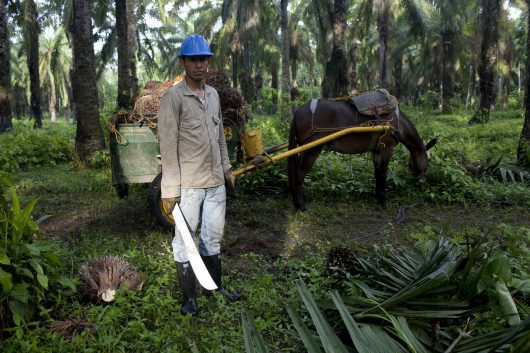
Palm Tree Oil Plantations in Gabon Create Rural Jobs

Palm Tree Oil Plantation
With notoriety for being one of six leading oil producing countries in Africa, Gabon embarked on a new project — developing palm tree oil plantations aimed at reducing the poverty gap and encouraging sustainable development.

Since 2013, Gabon has been facing a decline in its oil reserves. The government committed up to one million hectares of sustainable land to appeal to investors in agricultural development and spawn economic diversification.

Collaboration With Olam Palm Gabon

Olam Palm Gabon, Singapore’s Olam International Ltd and Gabonese government-owned company made an agreement with the government of the Republic of Gabon to utilize 50,000 hectares of land for palm plantation.

The development of palm tree oil plantations will enable the country to diversify its dependency on oil and instead invest in a more lucrative and long-term venture. Palm oil trees can produce fruit for more than 30 years with a plant yield far more advantageous than any major oilseed crop.

Sustained Economic Livelihood

Gabon has a population of 1.9 million, the highest urbanization quota in Africa with more than four in five Gabonese citizens residing in the metropolitan area. With an additional unemployment rate of 20%, partnership with Olam to build plantations will generate a revenue of $400 million and up to 5,000 new jobs.

Planting began in 2011; currently, 31,000 hectares exist. Upon complete production, the plantation is expected to yield 24 metric tons of fruit bunches per hectare and 5.2 metric tons of oil per hectare. The total estimated investment in phase one development of plantations, palm oil mills and related assets was $500 million.

Six thousand five hundred and two hectares have been sold and leased for $130 million. This proves Gabon’s ability to support innovative financial structures designed for the growth of the palm oil sector.

Job and Investment Opportunities

Experts believe that investment in the palm tree oil plantations in Gabon and the rest of Africa is thriving and will create local jobs and guarantee the stability of the local economy. Ali Bongo Ondimba, the head of State, commissioned on Sept. 16 the new production site of sustainable palm oil of Olam, in Kango, in the Estuaire province. Eight hundred jobs have been created in this location, with an inevitable 120 contracts planned. Social contracts signed by Olam ensure small farmers are key sellers in the project with a mutual benefit of electricity, road repair and water supplies.

Falling oil prices in Gabon have had the most severe effect on the country’s poor. The project also entails support of local community farming around Kango with the construction of 400 accommodations and social infrastructures.

“In Sub-Saharan Africa, many countries rely on extractive industries for revenues, but extractive industries don’t create a lot of jobs, and so countries are beginning to invest more in agriculture as a means of job creation,” said Gagan Gupta, chief executive at Olam Gabon Enterprise. “To succeed, however, agriculture projects must take into account, and invest in, local communities.”

Given the attention Gabon has received for their actions, it is hopeful that such efforts will continue to yield fruitful results encompassing economic growth.

– Shanique Wright

Photo: Flickr

November 7, 2016
https://borgenproject.org/wp-content/uploads/borgen-project-logo.svg 0 0 Borgen Project https://borgenproject.org/wp-content/uploads/borgen-project-logo.svg Borgen Project2016-11-07 01:30:222024-05-27 23:53:43Palm Tree Oil Plantations in Gabon Create Rural Jobs
Developing Countries, Development, Global Poverty, Poverty Reduction

African Development Bank: Youth and Women Support in Sahel

African Development Bank Embarks on Youth and Women Support in Sahel
The African Development Bank has been ardent in their commitment to support women’s empowerment and employment opportunities for youth in Sahel. Alberic Kacou, vice president for Corporate Services and Human Resources at the African Development Bank, noted that the prevailing global economic challenges were a harbinger for African countries to diversify their economies and reduce poverty during a recent speech.

Affirmative Finance Action for Women in Africa (AFAWA)

The African Development Bank launched the Affirmative Finance Action for Women in Africa (AFAWA). This program will invest $300 million in funded support for women. There is also an additional $3 billion to support African countries with women involved in business. Women will have an opportunity to empower themselves and create an independent path for other young African girls to pursue.

Jobs for Youth in Africa

In collaboration with the International Institute of Tropical Agriculture (IITA), the African Development Bank launched the Jobs for Youth in Africa program to put an end to youth unemployment by creating 8 million agribusiness jobs within a five-year span.

The program will stimulate the creation of 25 million jobs within the next ten years. A total of $3 billion will be used to fund young entrepreneurs in Africa and facilitate the enhancement of skills to better network youths with industrial development.

Program Offers Youth Training

The training centers and facilities provided by the African Development Bank and the IITA will assist African youths to tackle work in the agricultural sector. The initiative also seeks to encourage unemployed African youths to become involved in agriculture in order to make it a catalyst for development in Africa.

Second Strategy in Effect

Akinwumi Adesina presented five development priorities for the institution in September 2015. The “Feed Africa” initiative is aimed to amplify job creation and make the agriculture sector a lucrative industry. The African Development Bank plans to reduce Africa’s imported food dependency by 2025.

The Benefit of Farmers

Another solution to improve the agricultural sector in Africa is to support local farmers by forming partnerships in the production of goods and reduce the amount of food being imported. This will enable the country to “feed itself” and decrease the high levels of youth unemployment. The removal of regional trade barriers will help to maximize Africa’s agricultural potential in food production.

These dynamic programs created by the African Development Bank will prove influential towards the welfare and positive development of African communities for youth and women.

– Shanique Wright

Photo: Flickr

November 1, 2016
https://borgenproject.org/wp-content/uploads/borgen-project-logo.svg 0 0 Borgen Project https://borgenproject.org/wp-content/uploads/borgen-project-logo.svg Borgen Project2016-11-01 01:30:332024-12-13 17:55:52African Development Bank: Youth and Women Support in Sahel
Foreign Aid, Poverty Reduction

Five Lessons the Marshall Plan Taught About Poverty Relief

The Marshall Plan
The battles from World War II resulted in some of the worst devastation in history, as military and civilian areas alike were targeted in aerial bombardment, which left millions dead and entire cities reduced to rubble. Devastation and breakdown of social fiber were so prevalent in Europe that the basic building block of civilization — the trade between farmers and urban dwellers offering food for goods and services — began to break down.

George C. Marshall, serving as the newly appointed secretary of state in 1947, outlined a plan to aid Europe with funds for rebuilding key infrastructure and industry. Though it has been criticized for reforming European markets in the style of the U.S. economy, the Marshall Plan undoubtedly helped spur economic recovery in Europe devastated by one of the most destructive wars in history.

The U.S. spent over $13 billion for the economic recovery of Europe between 1948 and 1951. In 2016 dollars the equivalent would be almost $130 billion. By helping to rebuild Europe, the U.S. found a new market for its manufactured goods that helped the country from sliding back into depression following the war. Today, the plan still holds lessons for combating poverty in the 21st Century.

Economic Development is Critical

Any approach to aid that doesn’t take the economic situation into account is doomed to short term success. The Marshall Plan made a point of focusing on rebuilding the economies of Europe including “…promoting industrial and agricultural production with the object of becoming independent of outside assistance…include(ing) projects for increased production of coal, steel, transportation facilities, and food.”

Oversight is Essential

The provisions of the Marshall Plan created a new organization, the Economic Cooperation Administration, consisting of an administrator, a deputy and a staff composed of economists, accountants, lawyers and administrative workers. The Act empowered the administrator to create rules and regulations regarding the distribution of aid based on ground conditions. The administrator was on equal footing with the secretary of state, which the president of the U.S. set as the arbitrator in any disputes between them. Other rules outlined two advisory boards and a special “roving ambassador” to aid the administrator. The plan even established a congressional “watchdog committee” for additional governmental oversight. These clearly defined duties helped to ensure the aid outlined in the plan made it to refugees who needed it most.

Confidence Must Be Restored in Local Economies

The Marshall Plan took measures to restore vital infrastructure and public schooling, which helped to give ordinary citizens the semblance of order necessary to build consumer confidence in their economies. Provisions in the plan also provided for “taking necessary financial and monetary measures to stabilize currency and exchange and balance the governmental budget of the signatory country.” The end goal of the stabilizing effects was to create a favorable environment for American investment in Europe.

Aid Should Be Focused Regionally, Not on Single Countries

Experts believe one of the greatest reasons for the success of the Marshall Plan was that it focused on rehabilitating an entire region as an economic unit rather than singling out specific countries. Aid efforts crossed borders and gave a sense that the continent was in the fight together to return to previous levels of economic development. Under the Marshall Plan, assistance was available to countries in the Western Hemisphere. The agreement tasked the U.S. secretary of state with negotiating the free entry of supplies to countries participating in the plan. The administrator was still able to refuse aid in the interest of national security in case it had become clear supplies were supporting military forces. Under this provision, countries in Eastern Europe falling under the Soviet bloc did not receive aid.

Aid Should Be Coordinated Through the UN

Aid through the Marshall Plan filtered through U.N. organizations for distribution. Also, the rules of the plan required the administrator to send progress reports to the international organization. By coordinating efforts through the U.N., the U.S. increased the legitimacy of its aid programs and allowed some measure of input from U.N. officials.

Marshall himself outlined the reasoning behind the aid in a speech at Harvard University on June 5, 1947. In the address he stated, “It is logical that the U.S. should do whatever it is able to do to assist in the return of normal economic health in the world, without which there can be no political stability and no assured peace. Our policy is directed not against any country or doctrine but against hunger, poverty, desperation, and chaos.”

– Will Sweger

Photo: Flickr

October 29, 2016
https://borgenproject.org/wp-content/uploads/borgen-project-logo.svg 0 0 Borgen Project https://borgenproject.org/wp-content/uploads/borgen-project-logo.svg Borgen Project2016-10-29 01:30:492020-06-08 15:34:57Five Lessons the Marshall Plan Taught About Poverty Relief
Advocacy, Education, Global Poverty, Poverty Reduction

The King Scholar Program at Dartmouth College

King Scholar Program
The King Scholar Program is a full scholarship gifted to Dartmouth College students who are dedicated to alleviating poverty in their home countries. The program was funded by Dorothy and Robert King, who wanted to, “help address the problem of global poverty by funding exceptional students from developing nations in Latin America, Africa, and Asia at Dartmouth.”

Students who receive the King Scholarship have ongoing academic mentorship throughout their career at Dartmouth College and course development that encourages them to focus on leadership and international development.

The King Scholar Program encourages its participants to actively participate in ending global poverty. For example, during the students’ participation in the program, they must return to their homes for one summer to research and report how they would end poverty in their countries. After graduating, the students are encouraged to return to continue their work.

Additionally, during their freshman and sophomore years, King Scholars participate in King Leadership Week, which takes place in Washington, D.C. and New York. During this event, they have the opportunity to meet leaders in international development, gain context for work being done in the field and network for future employment.

There is no special application for the King Scholar Program, but the Dartmouth Admissions Office, “elects students for this special honor who embody the vision of the program, including a commitment to alleviating poverty, a record of academic excellence, and a passion for global issues.” The program’s current members hail from Jamaica, Zimbabwe, Kenya, Rwanda and Burkina Faso and all share a similar passion to making a difference in their countries.

By encouraging young students from developing countries to make a difference in alleviating global poverty, the King Scholar Program is creating influential leaders who are ready to make palpable changes in their home countries. This causes students to have a stronger connection to the work they are doing, and be inspired to make a change. This type of education is one that makes a lasting difference in terms of fighting global poverty.

– Julia Arredondo


October 22, 2016
https://borgenproject.org/wp-content/uploads/borgen-project-logo.svg 0 0 Borgen Project https://borgenproject.org/wp-content/uploads/borgen-project-logo.svg Borgen Project2016-10-22 07:01:172024-05-24 23:42:52The King Scholar Program at Dartmouth College
Advocacy, Global Poverty, Politics and Political Attention, Poverty Reduction

SUN Movement’s Campaign for Fighting Malnutrition

SUN Movement
Malnutrition accounts for nearly half of all deaths among children under five. While the majority of these deaths occur in Africa and Asia, the loss of human life due to hunger and malnutrition is a global burden. Malnourished children are more likely to get sick, suffer from abnormally severe symptoms of common illnesses and die from otherwise preventable illnesses. Thankfully, organizations such as the SUN Movement work to reduce this hunger-related child mortality rate.

Malnutrition and Infection

The link between malnutrition and infection can create a cycle wherein poorly nourished children have a weaker immune system, which in turn deteriorates their nutritional status. Malnutrition can also stunt a child’s growth, predisposing them to cognitive disabilities.

Hunger and malnutrition take a particularly severe toll on the developing world, where one out of six children (about 100 million) are underweight, one in three children are stunted and 66 million children go to school hungry.

The SUN Movement

Scaling Up Nutrition, or SUN Movement, is a worldwide campaign to alleviate hunger and malnutrition. SUN aims to unite governments, the United Nations, civil society, researchers, donors and business into a cohesive movement to improve global nutrition.

Focusing on the goals established at the 2012 World Health Assembly, SUN movement identifies four strategic processes as the major institutional changes needed for scaling up nutrition worldwide:

  1. Endorsement of National Nutrition Policies that Incorporate Best Practices. Newly enacted laws and policies should reflect proven interventions while paying special attention to women and their role in society.
  2. Sustained Political Commitment and Establishment of Functioning Multi-stakeholder Platforms. Improving nutrition requires a political environment grounded in multi-stakeholder platforms. The dialogue around hunger and nutrition should be open, for different groups to share the responsibility of scaling up nutrition throughout the entire world.
  3. Alignment of Actions Across Sectors and among Stakeholders. The country plans to improve nutrition should reflect frameworks of mutual responsibility and accountability among stakeholders.
  4. Increased Resources for Nutrition and Demonstration of Results. Multiple sectors and stakeholders should increase financial resources for the implementation of plans to improve nutrition.

Each participating country is required to meet state-specific goals and objectives for scaling up nutrition before they can partake in SUN Movement events, like the Annual Global Gathering. This event is where government leaders and multi-stakeholder groups meet to collaborate, share progress, learn from each other and offer new practices for improving nutrition.

SUN Movement has several mechanisms for maintaining oversight and staying on track to achieve its goals. The SUN Networks align resources and foster collaboration, the lead group provides strategic oversight and enforces accountability and the executive committee represents SUN Movement at the international political level. There is also a secretariat and multi-partnered trust fund.

SUN Movement acts like the United Nations for Hunger and Nutrition, with clear guiding principles to achieve goals through cooperation and collaboration. The multifaceted structure of SUN Movement accurately confronts the varied nature of hunger and malnutrition, making the organization an important player in the fight to improve nutrition worldwide.

– Jessica Levitan

Photo: Flickr

October 2, 2016
https://borgenproject.org/wp-content/uploads/borgen-project-logo.svg 0 0 Borgen Project https://borgenproject.org/wp-content/uploads/borgen-project-logo.svg Borgen Project2016-10-02 01:30:522024-05-27 23:53:00SUN Movement’s Campaign for Fighting Malnutrition
Development, Foreign Policy, Poverty Reduction

Stability: Focus of White House Summit on Global Development

Obama
President Obama spoke about the importance of advancing global development at the White House Summit on Global Development this past July. He focused his speech on development as a “key pillar” of his foreign policy and reassured that it would remain so for the next president.

The Obama Administration has funded global projects such as reducing poverty and encouraging global economic growth and stability. These programs add to former President George W. Bush’s efforts to focus on fighting global disease through the President’s Emergency Plan for AIDS Relief (PEPFAR).

According to the official White House website, Obama’s U.S. Global Development Policy that he issued in 2010 was the first time that “global development was elevated, on par with diplomacy and defense as a core pillar” of U. S. policy. Following Bush, Obama and his administration have continued to focus on solving global issues throughout his time in office.

The Washington Post cites the Obama Administration’s Feed the Future program as one of its successes. The agriculture-based program supported 9 million farmers and increased their sales by more than $800 million. The Global Food Security Act will systematize the program so that its impact extends long past the Obama Administration.

Susan Rice, the National Security Advisor, wrote in a Huffington Post article about why it is so important that Obama is dedicated to development. “Development is not a charity – it is a prudent investment in the security and prosperity of us all,” she wrote. Development is an investment that helps to stabilize global conditions and to create opportunities.

Rice wrote that Obama’s White House Summit on Global Development will help to support global economic growth, to improve food security and nutrition, to improve global health, and to invest in leadership. The programs already supporting these causes, like the United Nations’ Sustainable Development Goals and Feed the Future, will all help to eradicate poverty and secure a prosperous future through the continued support of global leaders and organizations.

Obama’s White House Summit on Global Development will hopefully mobilize already existing aid and development programs of all kinds. With goals to advance development in a variety of ways, the Summit will hopefully help to expedite poverty reduction efforts and stabilize global conditions.

– Addie Pazzynski

Photo: Flickr

September 21, 2016
https://borgenproject.org/wp-content/uploads/borgen-project-logo.svg 0 0 Borgen Project https://borgenproject.org/wp-content/uploads/borgen-project-logo.svg Borgen Project2016-09-21 01:30:302020-06-10 17:11:50Stability: Focus of White House Summit on Global Development
Global Poverty, Poverty Reduction

Reducing Poverty in Pakistan Through Government Aid

Poverty in Pakistan
In early April of this year, an important step was taken to reduce poverty in Pakistan. The Pakistani government made the decision to re-evaluate its poverty threshold or an individual’s estimated monthly income that would place them above or below the poverty line in that particular country.

The government ultimately decided to raise its poverty threshold, increasing the number of citizens eligible for government-sponsored aid and development policies.

Based on census data between 2013 and 2014, the Pakistani government raised the poverty threshold for working adults’ incomes to 3,030 rupees per month, or about $29.

The new criteria means that roughly 60 million total citizens are classified as falling below the poverty line as opposed to a much smaller number of citizens who fell under the old poverty line, which was based on 2001 data.

What consequences does this new, expanded recognition of impoverished citizens carry?

For starters, a higher poverty threshold typically means that there are fewer people living in poverty. The World Bank issued a report estimating that, if applied in 2001, the new data would qualify 64 percent of the population as impoverished, rather than the 34.5 percent of citizens classified as such under the old data.

Currently, the number of citizens living below the new poverty line rests at 29.5 percent, a sharp decrease from 2001. In simplified terms, this means that the overall rate of poverty in Pakistan has fallen by over one third in the past fifteen years.

It also shows that the government-sponsored aid programs and pro-poor development policies implemented over the past 15 years have worked and have the capacity to help even more citizens. The Benazir Income Support Program (BISP) in particular has been effective at providing economic assistance.

Provided with significant support by USAID, the World Bank, DFID, and the Asian Development Bank, BISP has taken the lead in establishing “cash transfer” programs, which provide the financial support families need to meet educational, health and livelihood requirements.

Tangible effects of this assistance can be found when examining such variables as the number of poor households with access to personal transportation (up to 18 percent compared to the two percent of 15 years ago) and the number of households with access to a toilet (up to 60 percent as compared to 30 percent in 2001).

The greater levels of income provided by BISP are improving the overall financial condition of Pakistan as well, allowing the country’s “formal banking sector to reach to the untapped market segment” of poverty in Pakistan.

The continued success that Pakistan has achieved by investing in its impoverished citizens has inspired programs similar to BISP in countries such as India, Ghana, Mongolia, Cambodia and Nepal.

– Will Clifft

Photo: Flickr

September 13, 2016
https://borgenproject.org/wp-content/uploads/borgen-project-logo.svg 0 0 Borgen Project https://borgenproject.org/wp-content/uploads/borgen-project-logo.svg Borgen Project2016-09-13 01:30:452020-06-06 09:35:48Reducing Poverty in Pakistan Through Government Aid
Global Poverty, Poverty Reduction

Nine African Poverty Facts You Probably Didn’t Know

African Poverty Facts
Despite various obstacles, the African continent is seeing major progress in poverty-related areas. Africa is more than its struggle with distressing circumstances, and today its global importance is quickly growing. Here are the latest African poverty facts that you should know:

  1. Out of Africa’s 54 countries, 28 are among the poorest on earth, making Africa the poorest continent in the world. However, six of the world’s 10 most rapidly developing markets are also located on the continent.
  2. Roughly 70 percent of Africa’s population lives in rural poverty, but Time Magazine reports that African urbanization has risen to 37 percent with a third of the population considered middle-class by the African Development Bank.
  3. More than 40 percent of African women do not have access to basic education, and upward of 80 percent of African subsistence farmers are female, putting women at a significant disadvantage.
  4.  Africa’s children still suffer considerably. 20 percent live with some type of disability, six million die from malnutrition before age five every year, and 3,000 succumb to malaria every day.
  5. In Sub-Saharan Africa, around 313 million people lack improved water sources and nearly 235 million go without clean sanitation facilities.
  6. Half of Sub-Saharan Africans live on less than $1 per day. Yet, the African Development Bank estimates that by 2060 nearly one billion Africans are expected to enter the middle class.
  7. One in every four people in Sub-Saharan Africa are food-insecure and 23 million African children go to school hungry.
  8. Without government intervention, the U.N. estimates the number of people living in urban slums in Sub-Saharan Africa will double to 400 million by the year 2020.
  9. Poverty rates are higher in countries that are repeatedly exposed to violence. According to the Council on Foreign Relations, major armed conflicts occurred in 18 African countries since 1990. However, this is juxtaposed with the 30+ violent conflicts that took place in the years before and during the Cold War.

These African poverty facts demonstrate the prevalence of both poverty and progress and prove that, although many improvements are still needed,  the future of Africa is not bleak. Africa’s prospects are encouraging and overall, with continued support, success is ultimately attainable.

– Kristina Evans

Photo: Prezi

September 10, 2016
https://borgenproject.org/wp-content/uploads/borgen-project-logo.svg 0 0 Borgen Project https://borgenproject.org/wp-content/uploads/borgen-project-logo.svg Borgen Project2016-09-10 01:30:472020-06-06 07:14:29Nine African Poverty Facts You Probably Didn’t Know
Global Poverty, Poverty Reduction, United Nations

Room for Improvement: Reducing Poverty in Malaysia

Malaysia_Poverty
The Southeast Asian nation of Malaysia is not a desperately poor country. Poverty in Malaysia is fairly low — the percentage of citizens at or below the national poverty line was 0.6 percent in 2014. Life expectancy and the infant mortality rate are about the same as in the U.S. and the GDP is growing.

Reducing poverty in Malaysia has come a long way since 1990 when the United Nations introduced the Millennium Development Goals. The first goal for the U.N. — to halve the number of people living on less than $1.25 a day by 2015 — was reached in Malaysia.

However, Malaysia has significant poverty and income inequality lurking just below the surface. While extreme poverty in Malaysia (income of less than $1.25 per day) is down to less than one percent, more than 25 percent of the population lives on less than $5 per day. Furthermore, about 60 percent of Malaysian families live on less than $1600 a month according to Al Jazeera.

About 20 million of the 30 million people in Malaysia live on the peninsula and approximately 72 percent of the population is urban.

The area in the need of the most support is the rural sector of Sabah on the island of Borneo. Borneo is a large island shared by Malaysia, Brunei and Indonesia so migration around the island is common.

The country is now home to about 2 million immigrants due to migration and recent political turmoil in neighboring Thailand. At this time there is no process for asylum seekers in Malaysia.

Both legal and illegal immigrants are known to be treated harshly and do not receive government support. It is imperative for the Malaysian government to address the needs of migrants as they make up over 10 percent of the population.

Malaysia also has relatively high levels of income inequality. The GINI index measures how much income levels deviate from totally equal distribution. Malaysia places higher than most countries, including all of its neighboring countries and the United States, with a GINI index of 46.2.

Malaysia stands out among its surroundings despite these problems. Nations like Laos, Myanmar and the Philippines all hover around a 25 percent poverty rate and an infant mortality rate that is between three and seven times higher than Malaysia.

Malaysia is also the only country among them with a functional and robust social welfare system. It is clear that further steps must be taken but remarkable progress has been made to reduce poverty in Malaysia in the past few decades.

– John English

Photo: Flickr

September 2, 2016
https://borgenproject.org/wp-content/uploads/borgen-project-logo.svg 0 0 Borgen Project https://borgenproject.org/wp-content/uploads/borgen-project-logo.svg Borgen Project2016-09-02 01:30:402024-05-27 09:21:01Room for Improvement: Reducing Poverty in Malaysia
Page 47 of 63«‹4546474849›»

Get Smarter

  • Global Poverty 101
  • Global Poverty… The Good News
  • Global Poverty & U.S. Jobs
  • Global Poverty and National Security
  • Innovative Solutions to Poverty
  • Global Poverty & Aid FAQ’s
Search Search

Take Action

  • Call Congress
  • Email Congress
  • Donate
  • 30 Ways to Help
  • Volunteer Ops
  • Internships
  • Courses & Certificates
  • The Podcast
Borgen Project

“The Borgen Project is an incredible nonprofit organization that is addressing poverty and hunger and working towards ending them.”

-The Huffington Post

Inside The Borgen Project

  • Contact
  • About
  • Financials
  • President
  • Board of Directors
  • Board of Advisors

International Links

  • UK Email Parliament
  • UK Donate
  • Canada Email Parliament

Get Smarter

  • Global Poverty 101
  • Global Poverty… The Good News
  • Global Poverty & U.S. Jobs
  • Global Poverty and National Security
  • Innovative Solutions to Poverty
  • Global Poverty & Aid FAQ’s

Ways to Help

  • Call Congress
  • Email Congress
  • Donate
  • 30 Ways to Help
  • Volunteer Ops
  • Internships
  • Courses & Certificates
  • The Podcast
Scroll to top Scroll to top Scroll to top