• Link to X
  • Link to Facebook
  • Link to Instagram
  • Link to TikTok
  • Link to Youtube
  • About
    • About Us
      • President
      • Board of Directors
      • Board of Advisors
      • Financials
      • Our Methodology
      • Success Tracker
      • Contact
  • Act Now
    • 30 Ways to Help
      • Email Congress
      • Call Congress
      • Volunteer
      • Courses & Certificates
      • Be a Donor
    • Internships
      • In-Office Internships
      • Remote Internships
    • Legislation
      • Politics 101
  • The Blog
  • The Podcast
  • Magazine
  • Donate
  • Click to open the search input field Click to open the search input field Search
  • Menu Menu

Archive for category: Poverty Reduction

Information and stories about poverty reduction.

Global Poverty, Poverty Reduction

Thailand’s Poverty Rate Declining Rapidly

Thailand is a country in Southeast Asia with a population of about 69,000 people and a history of underdevelopment and impoverishment. The good news is that Thailand’s poverty rate is declining rapidly due to incredible progress in development. The country has moved from a lower-income country to an upper-income country in less than a generation. Thailand is the success story of Southeast Asia.

Thailand’s economic growth started in the 1960s and continued until 1996 at a rate of about 7.5 percent per year. After the Asian financial crisis that lasted from 1995 to 2005, Thailand still saw remarkable growth at an annual rate of five percent. Millions of people were pulled out of poverty due to the many jobs that were created at this time.Thailand has made a great deal of progress in meeting the Millennium Development Goals (MDGs) and has created its own MDG-plus targets. The country has a firm commitment to the MDGs and to the U.N.’s Office for South-South Cooperation making Thailand an increasingly active global partner in development.

Some contributing factors to the decline of Thailand’s poverty rate are that a growing number of children are getting more years of schooling, almost every citizen is covered by health insurance and other forms of social security have expanded. HIV rates decreased in the 1990s from about 125,000 infections to fewer than 20,000 in 2003.

Thailand’s poverty rate has been declining considerably over the last four decades from 67 percent in 1986 to 10.5 percent in 2017. Thailand has the third-lowest poverty rate in Southeast Asia after Malaysia and Vietnam. Thailand has a 20-Year National Strategy that will last from 2017 until 2036 with the purpose to attain developed country status through reforms. These reforms will address economic stability, human capital, equal economic opportunities, environmental sustainability, competitiveness and effective government bureaucracies. Previous reforms included large multi-year infrastructure projects, improving state-owned enterprise governance, the approval of progressive inheritance and taxes and the beginning of the National Savings Fund.

There are still many issues facing Thailand but the good news is that there are many goals and deadlines being made by the Thai government to ensure that Thailand’s poverty rate keeps dropping. The country consistently meets target dates for development goals and gets one step ahead by creating newer objectives in order to reach the UNDP’s Sustainable Development Goal to end global poverty in all forms by 2030.

– Lorial Roballo

Photo: Flickr

December 3, 2017
https://borgenproject.org/wp-content/uploads/borgen-project-logo.svg 0 0 Borgen Project https://borgenproject.org/wp-content/uploads/borgen-project-logo.svg Borgen Project2017-12-03 23:32:122024-06-07 05:07:51Thailand’s Poverty Rate Declining Rapidly
Education, Global Poverty, Poverty Reduction, Women and Female Empowerment, Women's Empowerment

4 Reasons Why Women’s Education Leads To Less Poverty

4 Reasons Why Women's Education Leads To Less PovertyDr. Martin Luther King Jr. once said, “Injustice anywhere is a threat to justice everywhere.” But the inverse can also be true. When a socially marginalized group gains access to rights and opportunities, it can benefit everyone around them. This statement holds true for women’s rights. History has proven that easy access to women’s education leads to less poverty. Here are four examples that support this claim.

Women’s education results in better family planning

Niger is not only one of the world’s poorest countries, but it boasts one of the world’s highest birth rates. Women from Niger each give birth to an average of 7.6 children. The country sees large families as a sign of power and wealth. But “it’s impossible to feed, educate and care for all these children in the short term,” according to the nation’s family planning division.

Niger developed Project Sawki to teach women about birth control, family planning and forced marriages. Their goal is to encourage smaller family sizes. Aid workers created this project to let women speak freely about their marriages and future. “Husband schools” also exist in Niger to teach men the benefits of family planning through educated women.

The BBC, reporting on Niger, concludes that, “Education appears to be the key to reducing the number of babies born.”

Countries that invest in schooling become richer and healthier

Women’s education leads to less poverty, but also to several other benefits. UNICEF studied how countries in Southeast Asia and Latin America changed by investing in women’s advancement. The investing countries found an increase in economic development, income per family and health. Human trafficking and child mortality rates for those same nations declined. By contrast, the countries in the study who did not invest in educating women were met with reduced income and slowed growth.

Female empowerment comes from female choices

The ultimate obstacle to women’s empowerment, according to The Guardian, is the culture they live in. Women not only contribute 70 percent of the world’s working hours, they also make up 70 percent of the world’s poor. The most limiting factor to a girl’s future can be the people closest to her. These limitations take the form of a neighbor shaming a school-attending girl, or a parent arranging a girl’s marriage. If women’s economic choices are tied to their families then they will have few tools in escaping poverty.

The World Bank supports gender equality in addition to poverty elimination. It does so by providing resources to impoverished women while promoting gender equality in the household. The result is large development payoffs in society.

Education, in general, leads to less poverty

The American Prospect (TAP) looks into the complications of integrating education into an anti-poverty initiative. It is certain that both men and women’s education leads to less poverty. However, TAP notes how education only fights poverty in places where economic returns are viable and achievable for those with higher learning. Workers require a context wherein they can be rewarded for their skills and can see the benefits of the growth they help create.

Job training improves the quality of workers for a global market, which allows poorer nations to benefit from their wealthy peers. Supporting women’s education will create the context where girls can improve their lives and improve the world at the same time.

In 2017, Congress introduced the Protecting Girls’ Access to Education in Vulnerable Settings act. Through providing women’s education, the United States can bring about the positive changes recorded, and predicted, by the BBC, UNICEF, The Guardian and The American Prospect. If you are an American citizen, you can support this bill at The Borgen Project’s website.

– Nick Edinger

Photo: Flickr

December 3, 2017
https://borgenproject.org/wp-content/uploads/borgen-project-logo.svg 0 0 Borgen Project https://borgenproject.org/wp-content/uploads/borgen-project-logo.svg Borgen Project2017-12-03 01:30:132024-05-29 22:29:344 Reasons Why Women’s Education Leads To Less Poverty
Education, Global Poverty, Poverty Reduction

Six Ways Global Education Would Reduce Global Poverty

global educationTwo of the biggest myths about global poverty are that countries are doomed to stay poor no matter how much aid they receive and that global poverty is too big to fix. There is progress in the fight to end global poverty every day. Several of the largest importers of American goods and services, including countries such as South Korea, Taiwan and Singapore, have graduated from U.S. foreign aid programs to economic independence, and global poverty has been cut in half since 1990.

Foreign aid helps contribute to the downsizing of global poverty, but there are other ways to help as well. If total global education were achieved, it would have a significant impact on the reduction of poverty.

Here are six ways global education can reduce global poverty.

  1. Education can reduce economic inequalities. If everyone had the same amount of education, disparity in working poverty would shrink by 39 percent.
  2. Education promotes economic growth. According to the Global Partnership for Education (GPE), “In 2050, GDP per capita in low-income countries would be almost 70 percent higher if all children were learning.”
  3. Education can increase earnings. According to UNESCO, one extra year of schooling increases an individual’s earnings by up to 10 percent. According to the GPE, for each additional dollar invested in an extra year of schooling, earnings increase by $5 in low-income countries and $2.5 in lower-middle-income countries.
  4. Education can lead to gender equality. Women have been proven to reap higher returns from schooling, and some countries that fail to educate their girls properly lose out on an estimated $92 billion in economic growth.
  5. Education can lead to access to clean water. In rural areas, girls spend 15 hours a day collecting water for their families. If everyone, girls included, were educated properly about their health and water sanitation, local water sanitation would increase. This could potentially lead to a decline in the amount of time needed to fetch water.
  6. Education can lead to peace and justice. The world’s most dangerous countries are also the poorest. Educated people tend to participate in the democratic process and exercise their civil rights, according to UNESCO. They also tend to be more tolerant of people different than they are.

It would take only $16 billion a year in aid to send all children to school in low-income countries, according to UNESCO. For comparison, the U.S alone spends $601 billion on its military. Global education is attainable, and it can change and save lives.

–Dezanii Lewis

Photo: Flickr

November 13, 2017
https://borgenproject.org/wp-content/uploads/borgen-project-logo.svg 0 0 Borgen Project https://borgenproject.org/wp-content/uploads/borgen-project-logo.svg Borgen Project2017-11-13 07:30:312024-05-29 22:29:01Six Ways Global Education Would Reduce Global Poverty
Global Poverty, Poverty Reduction

Tackling Poverty Together: Canada’s Poverty Reduction Strategy

Tackling Poverty Together: Canada’s Poverty Reduction StrategyThe government of Canada is showing its commitment to fighting poverty by developing and implementing Canada’s Poverty Reduction Strategy. Canada’s focus on a modern approach to the problem of poverty should be an example to many other countries.

Overview of Canada’s Poverty Reduction Strategy

Approximately five million Canadians currently live in poverty, and poverty costs Canada between $72 and $84 billion each year. Canada has an opportunity to improve the quality of life of its citizens and also stimulate its economy through the Poverty Reduction Strategy. Canada’s Poverty Reduction Strategy included three initial steps:

  1. Consulting with Canadians in every area of the country on the issue of poverty
  2. Creating a Ministerial Advisory Committee on Poverty that includes a combination of experts as well as people who have experienced poverty themselves.
  3. Conducting the Tackling Poverty Together project— a research project that will look at six different communities across Canada.

Consulting Canadians on Poverty

The first step in Canada’s Poverty Reduction Strategy was to consult people from all areas of the country and all walks of life. This phase included a combination of meetings with local governments as well as online forums and town halls so that all Canadian citizens were given an opportunity to be heard. The use of online tools to engage more people in the conversation is a great example of leveraging modern technology to help find solutions for complex problems like poverty.

Establishing an Advisory Committee

Canada’s Poverty Reduction Strategy includes an advisory board of 17 leaders from academia, business and beyond. The advisory group also includes members that have experienced poverty themselves. This is an important reminder that any decision-making body should include those who have lived experience with the topic being considered. The advisory board will discuss issues pertaining to poverty and give advice to the Canadian government.

Conducting Research

The Canadian government has also conducted a case-study in six different communities across Canada to look at what can be done to lift people out of poverty. The final report made key conclusions about what Canada’s Poverty Reduction Strategy needs to focus on moving forward. Many other countries can learn from Canada’s findings. The conclusions were as follows:

  1. There is a strong and ongoing need for federal government support to help Canadians get out of poverty.
  2. The Canada Child Benefit and Guaranteed Income Supplement are making a big difference.
  3. The federal government offers other important programs that could be helping, but very few people are aware of them.
  4. Many people cannot access the support they need because of how some programs are designed and delivered.
  5. Canadians were unanimous that there is a need for more support in different areas, and by different levels of government, to help people overcome poverty.

An Innovative Way Forward In the Fight Against Poverty

Canada’s Poverty Reduction Strategy should be an example to the world on how to create a cohesive, modern and organized strategy for fighting poverty. However, poverty is a complex issue and there is no one-size-fits-all solution.

Powerful governments like that of the United States and organizations like the United Nations have the opportunity to aid the reduction of global poverty. One way they can do this is by making sure developing countries have the resources they need to implement their own poverty reduction strategies.

– Aaron Childree

Photo: Flickr

November 11, 2017
https://borgenproject.org/wp-content/uploads/borgen-project-logo.svg 0 0 Borgen Project https://borgenproject.org/wp-content/uploads/borgen-project-logo.svg Borgen Project2017-11-11 01:30:042024-05-29 22:27:52Tackling Poverty Together: Canada’s Poverty Reduction Strategy
Global Poverty, Health, Poverty Reduction

BRAC: Eliminating Extreme Poverty Through Innovation

Eliminating Extreme Poverty Through InnovationThe Bangladesh Rehabilitation Assistance Committee (BRAC) was formed in 1972 by Sir Fazle Hasan Abed. BRAC, the world’s largest NGO, is an excellent example of a nonprofit bringing transformation through strong business practices.
Today, BRAC reaches around 138 million poor spread over nine countries in Asia and Africa, and employs 125,000 people, primarily women. And yet, BRAC has remained quite unknown in the West. BRAC U.S. and BRAC U.K. were launched to spread awareness about its approach and mobilize its resources as well as raise funds for its fight to eliminate extreme poverty through innovation. It has created self-employment opportunity for 8.5 million people, educated over 3.8 million children from 66,000 of its schools, and given microloans to six million borrowers. Its approach is, “small is beautiful but big is necessary.”

What They Do

The following goals are listed on the official BRAC website:

  1. Improve well-being and resilience through disaster management and climate change, health, nutrition, water, sanitation and hygiene.
  2. Assist economic development and social protection – agriculture and food security, microfinance, enterprises and investment, targeting the ultra-poor.
  3. Expand horizons of education, migration and skills development.
  4. Empower communities, women and disadvantaged, human rights and legal aid, with urban development.
  5. Support programs for governance, management and capacity building.

Social Innovation Lab (SIL)

BRAC believes in eliminating extreme poverty through innovation. SIL was formed to explore the best practices and ways of creating impact at scale and incubating new ideas. It began in the 1980s, when diarrhea was the biggest killer of children under the age of five. BRAC successfully made the most illiterate population in the world adopt oral rehydration therapy, teaching poor households to prepare homemade saline. Now, they continue to work toward bringing family planning to people despite social opposition.

BRAC has accomplished quite a lot through frugal innovation, making Bangladesh the fastest-growing mobile money market with 13 million users, and creating large-scale financial inclusion.

Current Efforts

Hundreds of Rohingya children are living in Cox’s Bazaar on the border of Bangladesh. BRAC has made initiatives to ensure prevention of widespread diseases, by providing 167,000 individuals with oral cholera vaccinations. 153,000 health services through 60 mobile health camps and 10 fixed camps have been provided to treat fever, pneumonia and diarrhea. BRAC is providing access to safe water, sanitation, child-friendly spaces and critical supplies.

The “poverty graduation” scheme offers a way of eliminating extreme poverty through innovation by tackling poverty as well as providing social confidence. Women are given an asset, usually livestock. In return, they must look after the animal, their children must be sent to school and they must save a small amount of income, along with a tiny stipend to cover their food needs. A BRAC member visits them regularly to assess improvements for two years, after which they are expected to “graduate,” or break the chain of ultra-poverty.

In the next five years, BRAC plans to empower 20 million people to gain access to resources. They are working toward completely eliminating extreme poverty through innovation by 2020 with integrated efforts.

– Tripti Sinha

Photo: Flickr

November 5, 2017
https://borgenproject.org/wp-content/uploads/borgen-project-logo.svg 0 0 Kim Thelwell https://borgenproject.org/wp-content/uploads/borgen-project-logo.svg Kim Thelwell2017-11-05 01:30:122024-06-04 01:08:26BRAC: Eliminating Extreme Poverty Through Innovation
Global Health, Global Poverty, Poverty Reduction

Rihanna Raises Five Million Dollars at Annual Diamond Ball

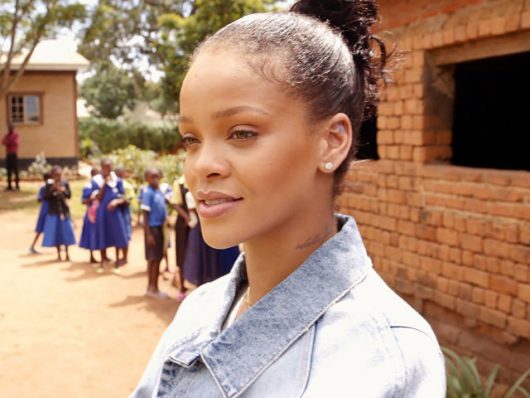
RihannaRobyn Fenty, popularly known as Rihanna, hosted the Diamond Ball with the help of Dave Chappelle on September 14th, 2017. The event occurred at Cipriani Wall Street, and this was her first time hosting the ball in New York City. The charity event raised over five million dollars for the health and education initiatives of the Clara Lionel Foundation (CLF) for the Caribbean Islands and Malawi. The CLF promotes innovative education, health and emergency response programs around the world.

The CLF actively participates in global advocacy with the goal of improving the quality of life for young people everywhere. The CLF’s current agendas are involved with the Clara Lionel Foundation Global Scholarship Program, the Clara Braithwaite Center for Oncology and Nuclear Medicine at the Queen Elizabeth Hospital in Barbados and the Barbados Micro Grants Program.

The director of the Clara Lionel Foundation, Justine Lucas, mentioned at the event that they were one of the first few organizations to aid Hurricane Harvey victims. They are also planning to invest in Irma recovery.

While the charity event was by invitation only, Rihanna’s family and many notable celebrities attended in support of the pop singer’s philanthropic efforts. Young Thug, Beyoncé, Leonardo DiCaprio and Jamie Foxx supported Rihanna’s cause. Even President Barack Obama sent in a video message where he thanked Rihanna for her work with her foundation. “You’ve become a powerful force in helping people find hope and dignity,” said a delighted Obama.

Through Dave Chappelle’s charisma and Rihanna’s ploy to get her guests influenced by alcohol (and their own compassion), the Diamond Ball raised over $5 million for health and education initiatives. “I hope that as you hear about what we are doing and what we plan to do, you too will be inspired to join our mission. The more you drink, the more inspired you’ll be to donate money … and help kids around the world,” Rihanna slyly encouraged her guests.

– Jalil Perry

Photo: Flickr

October 16, 2017
https://borgenproject.org/wp-content/uploads/borgen-project-logo.svg 0 0 Borgen Project https://borgenproject.org/wp-content/uploads/borgen-project-logo.svg Borgen Project2017-10-16 07:30:132018-07-31 11:44:43Rihanna Raises Five Million Dollars at Annual Diamond Ball
Poverty Reduction

The Role of the Private Sector in Poverty Alleviation

The Role of the Private Sector in Poverty AlleviationThe responsibility of providing solutions for global poverty has traditionally fallen to governments and international aid agencies. Increasingly, however, the private sector is being singled out as another important player in achieving this task. Given that development is already a key interest of private sector organizations, it seems reasonable to assume that the attention being given to the private sector is justified. Going forward, then, it is important to understand exactly what the role of the private sector in poverty alleviation should be.

The ways in which the private sector can benefit the lives of the poor have been well documented. From creating jobs and enhancing education to producing the goods and services used by those in poverty, it is clear that the private sector is a part of many, if not all, areas of development. As such, governments should be seeking to foster a business environment through which the benefits of the private sector can be harvested.

The main problem with this, however, is that across much of the developing world, such conditions do not exist. Often, new market entrants find the environment to be hostile and difficult to navigate, which can lead to proposed initiatives collapsing or being withdrawn. As such, the role of the private sector in poverty alleviation is contingent on external conditions. In such cases, it is the role of government to attempt to make these more favorable, or at least competitive; otherwise, no progress will be made.

Government action should not stop at this point. With increased private sector activity comes increased growth, which allows for further opportunities for more traditional methods of combatting poverty. As such, it is perhaps easier to look at the public, private and charity sectors as three heads of one entity when it comes to alleviating poverty. Through collaboration, rather than separation, it is far more likely that the goal of poverty reduction can be achieved.

– Gavin Callander
Photo: Flickr

October 16, 2017
https://borgenproject.org/wp-content/uploads/borgen-project-logo.svg 0 0 Borgen Project https://borgenproject.org/wp-content/uploads/borgen-project-logo.svg Borgen Project2017-10-16 01:30:452024-06-05 23:47:17The Role of the Private Sector in Poverty Alleviation
Global Poverty, Nonprofit Organizations and NGOs, Poverty Reduction

How to Help People in Mexico: Four Influential Organizations

Help People in MexicoIn 2014, the Mexican government reported that poverty within the country rose to 46.2 percent —  nearly half the population living below the poverty line. For the country with a population of just over 123 million, the startling percentage is equivalent to over 55 million people living in poverty. These people are defined as living on less than 2,542 pesos or $157.70 per month.

Despite nearly 80 percent of the population living in urban areas, mainly in or around the capital Mexico City, four percent of the population has unimproved drinking water and 15 percent has unimproved sanitation facilities.

Here are four nonprofits advocating, fundraising and working on the ground to help people in Mexico.

1. Children International

Working in ten countries around the world including Mexico, Children International is a nonprofit focused on helping kids living in poverty. With over 70 community centers and over 9,000 volunteers worldwide, Children International provides children living in poverty with assistance in health, education and employment through empowering programs and resources.

The long-term impacts aim to help break the cycle of poverty. Their website offers a number of ways to get involved including sponsoring a child by donating $32 a month, making a single donation or volunteering at one of their community centers.

2. Feed the Hungry

Relying on almost entirely private donations, Feed the Hungry delivers meals and nutrition education to children throughout San Miguel, Mexico. Through school meals, family education programs and community events, the nonprofit aims to alleviate poverty in the poorest communities. Feed the Hungry operates kitchens partnered with schools in 33 communities.

Most recently in 2017, they opened new kitchens in Moral de Puerto de Nieto, Los González, Puerto de Sosa and Nuevo Pantoja, feeding more than 400 additional children every day. You can help people in Mexico with Feed the Children by sponsoring a school kitchen, advocating throughout your community or volunteering on the ground.

3. PEACE

PEACE (Protection and Education: Animals, Culture, and Environment) is a nonprofit working in the Bay of Banderas, Mexico, to increase educational and economic opportunities in developing areas. To support improved quality of life, the nonprofit runs programs consisting of topics ranging from community education to Mexican culture preservation to environmental protection.

You can get involved by donating to the organization or volunteering for the company remotely or on the ground.

4. PVAngels

Focused on uplifting the communities in Puerto Vallarta, PVAngels combines activity-driven events with fundraising to create community awareness. The money raised goes to charities focusing on a variety of issues including environmental issues, health care, education, family assistance and recreation services.

You can help people in Mexico by donating to any one of PVAngels’ charities or volunteering as a “partner for change” assisting directly the communities in Puerto Vallarta.

By utilizing nonprofits as well as individual volunteers to help people in Mexico, Mexico’s future will hopefully be a flourishing one.

– Riley Bunch

Photo: Flickr

September 3, 2017
https://borgenproject.org/wp-content/uploads/borgen-project-logo.svg 0 0 Kim Thelwell https://borgenproject.org/wp-content/uploads/borgen-project-logo.svg Kim Thelwell2017-09-03 01:30:082024-05-28 00:16:19How to Help People in Mexico: Four Influential Organizations
Global Poverty, Poverty Reduction

US House of Reps Passes Digital GAP Act

US House of Reps Passes Digital GAP Act
The U.S. House of Representatives passed the Digital Global Access Policy Act or the Digital GAP Act (H.R. 600) on January 24, just a day after the bill was reintroduced by House Foreign Affairs Chairman Ed Royce (R-CA-39). The legislation is aimed at promoting internet access in developing countries to spur economic growth and job creation, reduce poverty and improve health while advancing U.S. interests.

In today’s technology-driven world, internet access is a major driver of economic and social improvement. However, 4.2 billion people remain offline — about 60 percent of the world’s population, most of whom are in developing countries. In these areas, internet access is hindered by inadequate infrastructure and a poor regulatory environment, stifling the potential for sustainable growth and development.

The Digital Global Access Policy (GAP) Act seeks to promote first-time access to mobile or broadband internet for at least 1.5 billion people in both urban and rural areas of developing countries by 2020. It aims to do this is a variety of ways, including:
  • Removing tax and regulatory barriers to internet access.
  • Promoting internet deployment and related coordination, capacity building, and build-once policies and approaches in developing countries.
  • Promoting the use of the internet to increase economic growth and trade, along with democracy, government accountability, transparency and human rights.
  • Promoting inclusive internet policymaking for women, people with disabilities, minorities, low-income and marginalized groups and underserved populations.

On the House floor prior to the vote, Chairman Royce noted that women and girls are disproportionately affected by this digital gap. He said that “bringing 500 million women online could contribute up to $18 billion in GDP growth across 144 countries. That is how you reduce poverty; that is how you advance U.S. interests.”

In addition to Rep. Royce, Representatives Cathy McMorris Rogers (R-WA-5), Grace Meng (D-NY-6) and Eliot Engel (D-NY-16) were also listed as original cosponsors of the bill.

The Borgen Project commends the House for making this legislation a priority in the new year and urges the Senate to move swiftly to get this bill to the President’s desk.

– Kim Thelwell

January 25, 2017
https://borgenproject.org/wp-content/uploads/borgen-project-logo.svg 0 0 Borgen Project https://borgenproject.org/wp-content/uploads/borgen-project-logo.svg Borgen Project2017-01-25 22:01:532020-05-28 09:04:34US House of Reps Passes Digital GAP Act
Global Poverty, Poverty Reduction

Poverty in Vanuatu

Free stock photo of alaska, background, bahamas Stock Photo

Vanuatu is a country in the southwestern Pacific Ocean that consists of 13 main islands and many smaller ones. With a total population of 318,007, Vanuatu is one of the smallest nations in the world. Despite aggregate economic growth, of those living in this country, approximately 16% lived below the international poverty line, while 4% faced unemployment in 2020. Furthermore, 75% of the population lives in rural areas with limited access to health care and other social amenities.

Causes of Poverty in Vanuatu

Geography plays a key role in understanding poverty in Vanuatu. The country consists of more than 80 islands and is characterized by rugged terrain, volcanic activity and dense tropical forests. The dispersed nature of its islands makes infrastructure development challenging, limiting access to basic services such as health care, education and transportation, particularly in rural areas where the majority of the population resides.

Additionally, the susceptibility to natural disasters, including cyclones and earthquakes, further exacerbates poverty by disrupting livelihoods and infrastructure. Limited arable land (1.8% of the total land) and reliance on subsistence agriculture also contribute to economic vulnerability. These geographic factors collectively contribute to Vanuatu’s high poverty rate.

Even in a relatively small island nation, the plight of people experiencing poverty in urban and rural areas is not easily delineated. Indeed, different areas experience varied iterations of development. For example, from 2006 to 2010, the rate of poverty declined from approximately 20% to 18% in Port Vila, the capital city. However, it increased from approximately 12% to 24% in Luganville during the same period. These discrepancies emerge largely because of geographic location, which determines principal economic activities such as fishing and tourism.

Access to basic foodstuffs also depends on weather patterns and agricultural production, which are especially interdependent on small, shallow islands. These coastal communities are threatened by rising sea levels and increasingly frequent tropical storms, such as Cyclone Pam, which swept through the Pacific in 2015 and destroyed up to 96% of food crops on some of Vanuatu’s southernmost islands.

Solution

Although Vanuatu is susceptible to extreme weather, traditionally sound building practices offer light but flexible protection and help minimize fatalities in emergencies. An increase in telecommunication infrastructure also proved to be life-saving. When Cyclone Pam hit, SMS text alerts notified island residents. In many cases, it was the only effective warning system that allowed citizens to prepare accordingly. This access to modern technology can help growing populations confront increasingly frequent extreme weather movements.

Despite these obstacles, the ADB reports that Vanuatu’s overall poverty rate is low relative to other small nations in the Pacific. Recently, increases in tourism, agricultural production, foreign aid and investment have been reflected in Vanuatu’s positive economic growth. Furthermore, the United States Agency for International Development (USAID) recognizes the delicate geographic circumstances of Pacific islands such as Vanuatu, as nearly 50% of the Pacific Islander population lives within a mile of a coastline. Therefore, USAID is committed to alleviating poverty in Vanuatu by building infrastructure that will withstand pressures from both climate change and extreme weather.

By understanding the unique circumstances of island nations such as Vanuatu, the U.S. and other global economic powerhouses can allocate aid in ways that are both culturally and geographically appropriate, helping to lift these vulnerable populations out of poverty.

– Laurel Klafehn
Photo: Flickr
Updated: May 27, 2024

December 5, 2016
https://borgenproject.org/wp-content/uploads/borgen-project-logo.svg 0 0 Borgen Project https://borgenproject.org/wp-content/uploads/borgen-project-logo.svg Borgen Project2016-12-05 01:30:192024-05-27 14:14:21Poverty in Vanuatu
Page 46 of 63«‹4445464748›»

Get Smarter

  • Global Poverty 101
  • Global Poverty… The Good News
  • Global Poverty & U.S. Jobs
  • Global Poverty and National Security
  • Innovative Solutions to Poverty
  • Global Poverty & Aid FAQ’s
Search Search

Take Action

  • Call Congress
  • Email Congress
  • Donate
  • 30 Ways to Help
  • Volunteer Ops
  • Internships
  • Courses & Certificates
  • The Podcast
Borgen Project

“The Borgen Project is an incredible nonprofit organization that is addressing poverty and hunger and working towards ending them.”

-The Huffington Post

Inside The Borgen Project

  • Contact
  • About
  • Financials
  • President
  • Board of Directors
  • Board of Advisors

International Links

  • UK Email Parliament
  • UK Donate
  • Canada Email Parliament

Get Smarter

  • Global Poverty 101
  • Global Poverty… The Good News
  • Global Poverty & U.S. Jobs
  • Global Poverty and National Security
  • Innovative Solutions to Poverty
  • Global Poverty & Aid FAQ’s

Ways to Help

  • Call Congress
  • Email Congress
  • Donate
  • 30 Ways to Help
  • Volunteer Ops
  • Internships
  • Courses & Certificates
  • The Podcast
Scroll to top Scroll to top Scroll to top