• Link to X
  • Link to Facebook
  • Link to Instagram
  • Link to TikTok
  • Link to Youtube
  • About
    • About Us
      • President
      • Board of Directors
      • Board of Advisors
      • Financials
      • Our Methodology
      • Success Tracker
      • Contact
  • Act Now
    • 30 Ways to Help
      • Email Congress
      • Call Congress
      • Volunteer
      • Courses & Certificates
      • Be a Donor
    • Internships
      • In-Office Internships
      • Remote Internships
    • Legislation
      • Politics 101
  • The Blog
  • The Podcast
  • Magazine
  • Donate
  • Click to open the search input field Click to open the search input field Search
  • Menu Menu

Archive for category: Poverty Reduction

Information and stories about poverty reduction.

Global Poverty, Hunger, Poverty Reduction

How to Eradicate Extreme Poverty and Hunger

how to eradicate extreme poverty and hunger
Poverty is like a cancer for society — it is debilitating and does not have a cure-all solution. People in extreme poverty live on less than $1.90 a day and face poverty traps due to factors such as geographic location, malnutrition, effort required to meet daily needs, lack of education and poor governance. With so many ways for people to become poor, it’s not surprising that different regions need to focus on different issues when determining how to eradicate extreme poverty and hunger.

Poverty Eradication Across the Globe

According to the 2017 World Bank Annual Report, Europe and Central Asia focused 41 percent of the $5.3 billion they borrowed from the International Bank for Reconstruction and Development as well as the International Development Association on energy and extractives but only two percent on education.

In contrast, South Asia concentrated 14 percent of the $6.1 billion they borrowed on energy and extractives, and 12 percent on education. Despite such disparities between these two countries’ prioritization of their energy and education sectors, both areas took action to build resilience to climate change, invest in human capital and improve infrastructure.

Benefits of Migration

For poor households trapped by low-productivity and in oftentimes remote, rural locations, migration could be a viable solution to increasing their standard of living. Such families may not be willing to migrate because it would put their sources of subsistence at risk. However, there are large potential gains from migrating to a highly productive country like the U.S.

According to a study by Clemens, Montenegro and Pritchett in 2016, the annual gain from working in a high-productivity environment is more than four times the total lifetime value of the most successful anti-poverty program.

Cash Transfer Solutions

On the policy side, well-targeted and structured cash transfers have been an increasingly popular tool for alleviating poverty in low-income countries. Cash transfers not only provide safety nets by raising the incomes of the poor, but they also help them escape from ‘psychological poverty traps.’

Contrary to the common concern that welfare programs can discourage work, a study done by Banerjee et al. in 2016 found no systematic evidence that cash transfer programs affect the overall number of hours worked nor the propensity to work among the men and women in the seven programs carried out in the Honduras, Indonesia, Morocco, Mexico (which had two programs), Nicaragua and the Philippines.

There are also solutions that require the consideration of measuring poverty based on other factors besides income and consumption. One example would be the offshoring of low-skilled jobs. While these jobs do provide a steady source of income, they are often also unpleasant, risky and may lead to adverse health effects. So, although these jobs can provide a short-term safety net, they are not a long-term solution to poverty.

Small Changes, Big Outcomes

Specific strategy government programs that have lasting effects countering poverty involve multifaceted household-level interventions. In one study by Banerjee et al., implementation of an anti-poverty program at the household level in India, Ethiopia and Pakistan (as well as both the village and household level in Ghana, Honduras and Peru) led to at least a year’s worth of lasting impact after the short-term intervention of the program.

Statistically significant impacts were made in the areas of consumption, food security, productive and household assets, financial inclusion, time use, income and revenues, physical health, mental health, political involvement and women’s empowerment. The intervention consisted of six elements: a productive asset grant, temporary cash consumption support, technical skills training, high frequency home visits, a savings program and health education and services.

Pros and Cons of Policy Change

On the other hand, governments also need to be careful when deciding on policies that involve low-income countries. Bill Clinton admitted in 2010 that his policy to dump American tariff-free rice in Haiti was a mistake. By forcing Haiti to drop tariffs on imported subsidized U.S. rice, the damage done to rice farming severely hindered Haiti’s ability to be self-sufficient.

In response to the incident, Oxfam recommended that food aid should be bought in local markets inside the country receiving aid.

Oxfam also said the Haitian government should decentralise services away from the capital, make sure farmers have credit access and improve their land tenure system where farmers could be cheated by judges able to transfer land into the hands of ‘whoever offers the biggest bribe.’

Eradicating Extreme Poverty and Hunger

The same goes for humanitarian organizations in deciding what kinds of resources and assistance to provide. To answer the question of how to eradicate extreme poverty and hunger, these organizations need to first determine what consequences their intervention would lead to. By looking for methods to complement local capacities to combat poverty, humanitarians can prevent their efforts from displacing local businesses.

A great example is The Hunger Project — a global nonprofit organization dedicated to ending world hunger. With programs throughout Africa, South Asia and Latin America, this organization empowers women and men in rural villages to sustainably overcome hunger and poverty. Members of the community accomplish this feat by mobilizing and fostering effective partnerships to engage local government.

In conclusion, there are many factors to consider in different parts of the world when looking at how to eradicate extreme poverty and hunger. Auspicious solutions to poverty traps include migration, conditional cash transfers and multifaceted household-level programs. On the side of humanitarian organizations and the government, much deliberation is essential to providing goods, services and policies that complement and protect rather than displace local needs and markets.

– Connie Loo
Photo: Flickr

June 5, 2018
https://borgenproject.org/wp-content/uploads/borgen-project-logo.svg 0 0 Borgen Project https://borgenproject.org/wp-content/uploads/borgen-project-logo.svg Borgen Project2018-06-05 01:30:112019-10-19 17:27:01How to Eradicate Extreme Poverty and Hunger
Global Poverty, Poverty Reduction

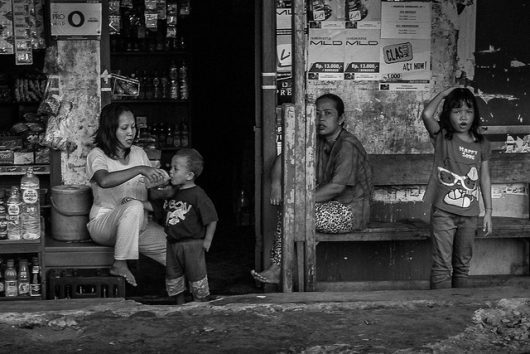
Top 10 Facts About Poverty in Jakarta

Top 10 Facts About Poverty in Jakarta
While Jakarta has one of the lowest poverty rates in Indonesia, the nation as a whole has had fairly stagnant poverty levels for a few years now. The nation has seen much economic growth lately; however, this growth has not aided all citizens equally. These 10 facts about poverty in Jakarta illustrate the differences and similarities between the nation and its capital city.

Facts About Poverty in Jakarta

  1. Jakarta had a population of almost 11 million people in 2016.
  2. The poverty rate in Indonesia fell from 24 percent to 11.4 percent between 1999 and 2013, paralleling the poverty rate in the city of Jakarta. This is a reduction of more than 50 percent, demonstrating the Indonesian government’s ability to combat poverty effectively.
  3. However, in 2017 the poverty rate in Indonesia was 10.64 percent. In 2016, the poverty rate was 10.7 percent of the population. There has been very little change in poverty levels in Jakarta and Indonesia as a whole in the past few years, indicating the need for new policies and practices.
  4. The Gini ratio is an income inequality measurement tool, where zero represents total inequality and one represents total equality. In March 2017, the Gini ratio in Indonesia was 0.393, and the ratio has been unchanged since the previous September. Such inequality is even more prevalent in large urban areas like Jakarta.
  5. The Indonesia Central Bureau of Statistics (BPS) conducts poverty surveys twice a year, indicating an interest in the issue. They conduct research on the national and local levels. Additionally, these statistics are publicly available, showing good levels of transparency.
  6. Jakarta has been facing a widening income disparity, and the Jakarta BPS attributes it primarily to inflation. Inflation in the nation has also prevented development in labor-heavy industries, worsening poverty levels.
  7. Basuki “Ahok” Tjahaja Purnama, the governor of Jakarta, hopes to reduce the poverty rate in Jakarta to 1 percent between 2016 and the end of 2021. He plans to do this through a profit-sharing program, in which Jakarta’s poor will be able to start businesses and retain 80 percent of the revenue. The other 20 percent would go to the government.
  8. Indonesian President Joko Widodo indicated that, through a number of poverty alleviation programs, he believes the poverty rate will drop to the single digits. At a national meeting of regional legislative assemblies, he expressed that this is a major target for the government. These programs will be implemented in many cities, including Jakarta.
  9. One such program is the Family Hope Program, which is a social aid program that currently supports 10 million families. With this plan and others like it, the president hopes to significantly reduce poverty in the nation.
  10. President Widodo also pointed to “Kartu Indonesia Sehat,” which are cards that give people access to free healthcare at special service centers. Currently, 93 million people in Jakarta, and other towns and cities, are able to use the cards at a variety of centers.

These are the top 10 facts about poverty in Jakarta. Ultimately, there is still a lot of room for improvement in Jakarta and Indonesia as a whole. Poverty levels have been stagnant and action needs to be taken to move more people and families above the poverty line. However, the government seems to be putting in place far-reaching programs and setting goals for poverty reduction in the nation, which are very important steps. If these efforts continue and improve, Indonesia may well be on its way to eradicating poverty.

– Liyanga de Silva
Photo: Flickr

June 4, 2018
https://borgenproject.org/wp-content/uploads/borgen-project-logo.svg 0 0 Borgen Project https://borgenproject.org/wp-content/uploads/borgen-project-logo.svg Borgen Project2018-06-04 01:30:352024-06-05 02:36:43Top 10 Facts About Poverty in Jakarta
Global Poverty, Poverty Reduction

Jim Yong Kim and the World Bank’s Goal to End Poverty

Jim Yong Kim and the World Bank's Goal to End Poverty
Since 2012 (and now in his second term), physician and anthropologist Jim Yong Kim has served as the president of the World Bank Group. After assuming leadership of the World Bank, he took up two goals: “to end extreme poverty by 2030; and to boost shared prosperity, focusing on the bottom 40 percent of the population in developing countries.” 
His career has revolved around health, education and improving the lives of the poor.

Milken Institute and Global Poverty

On May 19, Jim Yong Kim spoke at the Milken Institute Global Conference which focuses on “advancing collaborative solutions that widen access to capital, create jobs and improve health.” 

The Milken Institute hosts its Global Conference from April 29 to May 2 in Los Angeles, California, and possesses various centers focused on topics such as the Center for Financial Markets, Center for the Future of Aging, and Center for Jobs and Human Capital. One of the organization’s foci is children — 150 million children around the world are affected by poor nutrition, undersized growth, and cognitive impairment, and live primarily in South Asia and African countries.

According to VOA, if leaders don’t focus on investing in their people, then “many, many, many people will find themselves undereducated and without the skills to be able to compete in the economy of the future and so many countries are going to go down the path of fragility, conflict, violence, and then of course, extremism and migration.”

Business, Health and Development

In the talk, Jim Yong Kim stated there should be a business-like mindset when talking about health and development of individual; in fact, Kim has made it his mission to make this world a better place by working towards a common goal of reducing poverty.

According to Forbes, Kim wants to “reduce extreme poverty levels to below 3 percent of global people, and grow the incomes of the bottom 40 percent of each country.” His organization also lends out cash — almost $59 billion a year.

Before Kim assumed his position as president of the World Bank, he was president at Dartmouth College and “from 2003 to 2005, as director of the World Health Organization’s HIV/AIDS department, he led the “3 by 5” initiative, the first-ever global goal for AIDS treatment, which greatly to expand access to antiretroviral medication in developing countries.” 

From A Ted Talk to Today

In a Ted Talk in April of 2017, Kim spoke about going to Haiti when everyone told him that the best thing to do was to focus on vaccination and possibly a feeding program. Since Kim’s parents had emigrated from Korea to flee the Korean war, though, Kim had a different perspective — what he saw in Haiti was what he saw in parents: to give their children the opportunity that they didn’t have.

In the Ted Talk, he goes on to say, “the Haitians wanted a hospital. They wanted schools. They wanted to provide their children with the opportunities that they’d been hearing about from others, relatives, for example, who had gone to the United States. They wanted the same kinds of opportunities as my parents did.”

In conclusion, Jim Yong Kim is a accredited president of the World Bank Group, and a charitable person who traveled to Haiti to help build hospitals and schools, and give children increased opportunities. All in all, if more people follow Kim’s example, the world will be a stronger and more sustainable place. 

– Valeria Flores
Photo: Flickr

June 4, 2018
https://borgenproject.org/wp-content/uploads/borgen-project-logo.svg 0 0 Borgen Project https://borgenproject.org/wp-content/uploads/borgen-project-logo.svg Borgen Project2018-06-04 01:30:212019-10-19 17:29:49Jim Yong Kim and the World Bank’s Goal to End Poverty
Global Poverty, Poverty Reduction, Women's Rights

Top 10 Facts About Poverty in Riyadh

Top 10 Facts about Poverty in Riyadh
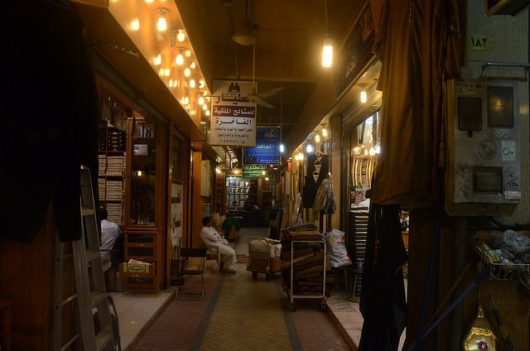
Riyadh is an expansive metropolis located in Saudi Arabia and is also its capital city. It is home to about seven million of the country’s 32.5 million people. Despite there being a plethora of information on the country’s steadily growing economy, updated statistics and data on the poverty rates in Saudi Arabia and Riyadh are lacking, as the Saudi government seems to keep such information under wraps. Nevertheless, these 10 facts about poverty in Riyadh and Saudi Arabia can shed some light on the situation.

Facts About Poverty in Riyadh

  1. Saudi Arabia has one of the world’s most powerful economies, yet social welfare programs and job growth seemingly cannot keep up with such rapid population growth. The population of Saudi Arabia was just six million in 1970 and has been expanding quickly ever since.
  2. The Saudi family is the richest royal family in the world, with a net worth of around $1.4 trillion due to plentiful oil reserves, yet the country itself can be considered poor, with an estimated 20 percent of its people living in poverty.
  3. In 2011, three young men were arrested and jailed after uploading video footage to YouTube showing poor citizens in Riyadh. The video was a report on an impoverished area of the city which contained personal interviews and a call to action for the Saudi Arabian government to do more to address the issue of poverty. Thousands of people showed support and distaste for the arrests via social media.
  4. The government under King Abdullah has spent $37 billion on housing, unemployment and other programs as of 2012 in an attempt to assist the increasing number of poor people, despite the fact that the programs seem to be ineffective.
  5. The country controls about 22 percent of the world’s oil and relies on that source of income for approximately half of its GDP. Through Saudi Vision 2030, the action plan to privatize more industries and lower the unemployment rate from 11 to 7 percent, government officials hope to reduce the economy’s dependence on oil. The plan even lists specific goals related to the health of Saudi citizens, including building facilities dedicated to sports and physical activity.
  6. As the poverty rate increases, so do youth unemployment rates. Close to 75 percent of all unemployed citizens are in their 20s.
  7. High-status, image-conscious Saudis have downplayed the existence of poverty in Saudi Arabia and the topic was avoided in Saudi Arabian media. It was considered a taboo subject by the Saudi media until 2002, when King Abdullah visited a slum in Riyadh, providing an opportunity for proper news coverage of a Riyadh slum.
  8. The Saudi government provides free education, healthcare and burials to its citizens, although it does not offer food stamps or a welfare system. It also provides pensions and payments for food and utility bills for the poor and disenfranchised. It has been stated that many families still rely on donations from private citizens in spite of these efforts.
  9. Because Saudi Arabia is a largely Muslim nation, citizens observe the religious requirement of zakat that says people and businesses should donate 2.5 percent of their wealth to charity. That money is collected by the government and distributed among the poor.
  10. Women who are widowed or unmarried often struggle financially, as Islamic law and Saudi culture indicate that men should be the main breadwinners. Some establishments require women to have written permission from a guardian before being hired. Fifty-six percent of unemployed youth age 15 to 25 are women as of 2015.

Saudi and American analysts report that, regardless of the efforts to alleviate poverty, large quantities of money are acquired by the royal family through corrupt tactics and schemes. Perhaps through the actions of Saudi Vision 2030 and the charitable and religious nature of the country, a long-term solution may be implemented in the future.

– Camille Wilson
Photo: Flickr

June 3, 2018
https://borgenproject.org/wp-content/uploads/borgen-project-logo.svg 0 0 Borgen Project https://borgenproject.org/wp-content/uploads/borgen-project-logo.svg Borgen Project2018-06-03 07:30:192024-05-29 22:42:36Top 10 Facts About Poverty in Riyadh
Poverty Reduction, Slums

Life in the Slums of Nairobi: How Childaid is Helping

Slums of Nairobi
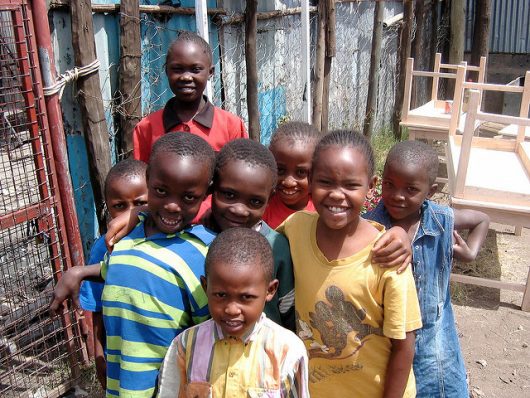
Interestingly, 21 out of 25 of the world’s poorest countries are located in Africa. As a result, many families in these nations are forced to live in slums, which are residential areas characterized by insubstantial shelters and unsanitary conditions.

One of the major slums in Africa is the Mukuru Slum in Nairobi, Kenya. Dermot Higgins, a director of the charitable organization, Childaid, spoke to The Borgen Project about his organization and how they are changing lives in this slum, among others.

Poverty in Africa

As home to the world’s poorest nations, poverty in Africa is widespread.

  • Amount Spent Per Day: 47 percent of the African population lived on less than $1.90 per day in 2012.
  • Malnutrition: The Save the Children foundation estimates that two in five African children have stunted growth due to malnutrition.
  • Expected Population Growth: Business Insider approximated that more than half of the population growth that will occur between now and 2050 will take place in Africa, likely resulting in increased poverty and hunger.

The Mukuru Slum

Higgins explained that Childaid is helping to fight poverty in Africa by supporting projects in many different areas, but their main efforts are focused in the Mukuru Slum. According to the Ruben Centre, another organization based in Mukuru, the community was established about 35 years ago by people who worked in the factories nearby. It now holds over 600,000 inhabitants.

  • Physical Conditions: The physical conditions of the slum are rough. Higgins described the environment: “Most families survive in tiny one roomed corrugated iron shacks which measure 3 x 3 meters and have no toilets, electricity or running water. There are few communal toilets and water taps and open sewers run past many of the shacks.”
  • Safety and Health Concerns: Other hardships faced by the slum’s inhabitants are safety and health concerns, Higgins noted. “Diseases are rife in the slums and security is a major concern especially after dark when it is not safe to go out.” The Ruben Center listed malaria, typhoid, dysentery, tuberculosis and AIDS as some of the most common diseases in the slum.
  • Education: The Ruben Center noted that 44 percent of children in the slum drop out of school to work. Even the children that are fortunate enough to attend school have subpar education due to limited funds and materials.

How Childaid Helps

According to their website, “Childaid is a charity that supports child orientated projects which will help them get out of the harsh and brutal conditions of slum life. We strive to improve the welfare of disadvantaged children through education, health and residential care projects.”

  • Building Schools and Sponsoring Students: To improve the quality of education, Childaid is helping by building better schools. “The Kwa Njena primary school, rebuilt and developed by Childaid,” Higgins noted, “is like an oasis in the slum for over 2,000 children who receive education in a safe environment.” The organization also prevents students from dropping out by sponsoring them; Higgins spoke of one of their former students: “One of the past pupils of the schools, who was sponsored by a Childaid volunteer in secondary school and university, recently wrote to thank us. He was qualifying as a pharmacist and planning to buy a house and bring his parents out of the slum.”
  • Providing Food: Childaid is helping to eliminate malnutrition by feeding students in school. Higgins spoke of the charity’s accomplishments: “As a result of Childaid’s work, over 2,000 children are getting educated and fed every day.”
  • Funding and Supporting Institutions: According to Higgins, Childaid is helping by raising money to fund institutions, such as a maternity ward, orphanage, HIV program and skills training center.

Childaid strives to not only help those in Mukuru, but to fight general poverty in Africa. The organization’s impact has been considerable given its new schools, support of other institutions and positive influence on a population of poor children across the continent. Higgins concluded, “It’s very satisfying to see the children getting food, education, love and security in school.”

– Olivia Booth
Photo: Flickr

May 30, 2018
https://borgenproject.org/wp-content/uploads/borgen-project-logo.svg 0 0 Borgen Project https://borgenproject.org/wp-content/uploads/borgen-project-logo.svg Borgen Project2018-05-30 01:30:522024-05-29 22:42:30Life in the Slums of Nairobi: How Childaid is Helping
Global Poverty, Poverty Reduction

A Comprehensive 75-Year History of the World Bank

history of the World Bank
The history of the World Bank is one of change. As the world’s leading development finance institution, the World Bank has established a unique global role over its 75-year existence leading to its modern goal of poverty alleviation. Its longevity and evolution have fostered a bevy of admirers and critics, and its efficacy in achieving its goals has been a cause célèbre for members of the international development community.

How the History of the World Bank Began

The World Bank was formed in 1944 during and because of the ruin caused by World War II. Its original purpose was as a source of financing for the reconstruction of Western Europe, as countries such as France, the beneficiary of the bank’s first loan in 1947, were so devastated that no commercial lender would risk their own capital. As Europe gained its footing and could once again access capital markets, the bank shifted to a global focus including Latin America, Asia and Africa.

However, the history of the World Bank is one of not just an expanding geographical focus but of expanding policy focus. The bank’s initial projects in the 1950s-60s focused on infrastructure and reconstruction, but over the decades this mission has evolved.

The World Bank’s Growing Purpose

The creation of the bank’s International Development Association (IDA) in 1960, with a mission to provide concessional loans and grants to the world’s poorest countries, presaged a shift toward supporting the world’s least developed economies. Bank president Robert McNamara’s pivotal 1973 speech in Nairobi was considered a turning point toward what is thought to be the most important of its many modern mandates: poverty eradication. In 2013, current President Jim Yong Kim described the institution’s twin goals as eliminating extreme poverty by 2030 and promoting income growth among the poorest 40 percent of the world’s population.

To this end, the World Bank has continued to represent a formidable source of financing. Its 2017 annual report totaled commitments of $61.8 billion in loans, grants, equity investments and guarantees to partner countries. For perspective, this is 57 percent greater than the 2019 President Budget for the State Department and USAID of $39.3 billion. The annual report also highlights the diversity of its initiatives, with projects ranging from support of Syrian refugees to cash transfers and nutrition services in

.

Pushback Against the World Bank

However, for an institution committed to a goal as noble as poverty eradication, the World Bank has attracted its fair share of critics. This stems from both the consequences of the Bank’s projects and questions surrounding the relevance of its strategy.

High profile projects have come under fire for decades for their unintended environmental consequences, such as the displacement of more than 60,000 Brazilians after the construction of the Bank-financed Sobradinho Dam in the late 1970s. Bank defenders would acknowledge these failures, but also cite the many safeguards implemented over the years to manage such unintended risks.

Other critics question the Bank’s relevance: in a world where private investors willingly commit over $1 trillion a year to emerging markets, is the multilateral really needed as a backstop? In stark contrast to the 1940s, financing is abundant and capital moves freely in many parts of the world. However, defenders might argue that the World Bank continues to fill financing gaps, as certain arms of the institution, such as the IDA, offer grants and concessional loans to low-income areas that cannot attract private investors seeking a profit.

Criticisms are likely to continue, but among multilateral institutions the size and clout of the World Bank in financing poverty alleviation projects are unmatched. Given its shareholders’ recent approval of a capital increase, the Bank’s financial footprint looks set to continue growing in the near future. The history of the World Bank is one of evolution, and supporters of international development hope its positive influence will continue to shape the poverty eradication landscape.

– Mark Fitzpatrick
Photo: Google

May 29, 2018
https://borgenproject.org/wp-content/uploads/borgen-project-logo.svg 0 0 Borgen Project https://borgenproject.org/wp-content/uploads/borgen-project-logo.svg Borgen Project2018-05-29 01:30:252024-05-29 22:42:29A Comprehensive 75-Year History of the World Bank
Global Poverty, Poverty Reduction

Economic Development in Brazil Key to Keeping Poverty Rate Low

Economic Development in Brazil Key to Keeping Poverty Rate Low
According to a 
report issued by the World Bank, economic development in Brazil has lifted some 29 million people out of poverty between 2003 and 2014. The level of inequality declined significantly, with the Gini coefficient (the statistical measure of distribution often used to chart wealth inequality) falling by 6.6 percentage points in the same period, from 58.1 down to 51.5.

Moreover, the poorest 40 percent of the population experienced a massive rise (an average of 7.1 percent between 2003 and 2014) in income while the whole population enjoyed a 4.4 percent income growth.

A Variety of Programs Focus on Economic Development in Brazil

Most of the credit for such economic development in Brazil goes to a massive initiative, namely a global center for poverty reduction called Mundo Sem Pobreza (World Without Poverty), which has effectively become a place where ideas and anti-poverty programs are translated into reality for the benefit of the most disadvantaged citizens.

One of the most prominent of such programs is called Bolsa Familia. In its decade of implementation, this program, which consists of a conditional cash transfer program through which parents receive a fixed monthly stipend of about $30 in exchange for sending their children to school and complying with different health checkups, has managed to reduce poverty by half in Brazil (from 9.7 percent to 4.3 percent), aiding some 50 million low-income Brazilians.

According to a study led by Paul Glewwe of the University of Minnesota and Ana Lucia Kassouf of the University of Sao Paulo in 2012, Bolsa Familia did in fact improve children’s school enrollment rates.

This program has been paired with others, such as Brasil Sem Miseria, which was designed to help millions of Brazilians escape extreme poverty, while the Brazilian government has taken very seriously cogent issues such as expanded access to education and reducing income inequality.

Brazilian Government Both a Help and a Hindrance

However, what has really lent a helping hand to the overall betterment of Brazil’s social and economic conditions was a combination of public policy (expansion of access to education and government transfers to the poor) and favorable market factors (rising wages for low-skilled workers), both of which have led to substantial declines in inequality in Brazil.

Despite the laudable results achieved through social programs and economic development in Brazil, the rate of reduction of poverty and inequality appears to have stagnated since 2015. Political instability and a problematic recession have kept Brazil in an economic stalemate.

Moreover, while President Dilma Rousseff’s successor Michel Temer promise a rigid fiscal policy, major adjustments are undermined by budget rigidities and a difficult political environment.

Indeed, less than 15 percent of expenditures in Brazil are at the discretion of the political realm. Most public spending is rigidly determined by constitutional regulations and cannot legally be reduced.

Statistics Show Recent Progress

The overall situation is not beyond repair. In fact, 2017 saw a rise in household spending by 1 percent compared to a 4.3 percent decrease in 2016. Exports rose 5.2 percent compared to 1.9 percent in 2016. Imports grew by 5 percent (they dropped by 10.2 percent in 2016), marking the first increase in four years.

Thus, constant attention to keeping the markets open and efficient alongside a careful administration of public finances are key to getting Brazil back on track towards economic development and poverty reduction.

– Luca Di Fabio
Photo: Flickr

May 25, 2018
https://borgenproject.org/wp-content/uploads/borgen-project-logo.svg 0 0 Borgen Project https://borgenproject.org/wp-content/uploads/borgen-project-logo.svg Borgen Project2018-05-25 07:30:212019-10-27 18:54:18Economic Development in Brazil Key to Keeping Poverty Rate Low
Global Poverty, Poverty Reduction

The 10 Most Important Facts About Poverty in Bangkok

Facts About Poverty in BangkokBangkok, the capital of Thailand, has long been one of the fastest developing cities in Asia. Thailand has made major developments in its economy, environment and infrastructure in recent years. However, neither the city of Bangkok nor the nation of Thailand is free from poverty. The following are 10 important facts about poverty in Bangkok.

Facts About Poverty in Bangkok

  1. As of 2014, 10.5 percent of Bangkok’s population lives below the national poverty line. 
  2. Over the last 30 years, poverty in Thailand has reduced from 67 percent to 7.2 percent in 2015. The World Bank calls Thailand a great developmental success. 
  3. Poverty reduction since 1988 has been most effective in Bangkok and the surrounding regions. While this is fantastic, it means poverty has become more concentrated in the Northeast region of the nation.
  4. 3.8 million people living in the Northeast are in poverty, compared to 2.3 million in the rest of the nation. The Thai government has been creating poverty reduction policies that span the entire country, but focusing on areas of higher concentration may be more necessary. 
  5. Thailand has achieved gender equality in primary schools and women outnumber men in secondary and tertiary schools. This is a major accomplishment, as it enables women to earn higher incomes in the long term and ultimately reduces poverty.
  6. The Eleventh National Economic and Social Development Plan, which ran from 2012 to 2016, aimed to reduce the number of people living below the poverty line through a variety of strategies, such as restructuring the tax system to improve income distribution in the country.
  7. Between 2013 and 2016, the Asian Development Bank (ADB) partnered with the Thai government to increase the effectiveness of the Eleventh Development Plan. The ADB committed to creating higher and more inclusive growth in Thailand. 
  8. Bangkok is expected to become one of the world’s “megacities” and is likely to have a population of over 10 million people soon.
  9. In 2016, Thailand joined the World Bank Group’s Partnership for Market Readiness, which is an alliance of over 30 nations aiming to reduce the production of greenhouse gases and energy consumption in developing nations. 
  10. Bangkok houses only 10 percent of Thailand’s population, but it contributes more than 50 percent of the national GDP.

As these facts about poverty in Bangkok show, severe poverty remains a problem in Bangkok. The Thai government has been quite proactive in partnering with organizations like the World Bank and the Asian Development Bank and seems to be committed to reducing poverty levels in the country. This is a great sign, and with more projects and increased funding from other countries and organizations, Thailand may be able to eradicate poverty before long, making these facts about poverty in Bangkok a thing of the past.

– Liyanga de Silva

Photo: Flickr

May 11, 2018
https://borgenproject.org/wp-content/uploads/borgen-project-logo.svg 0 0 Borgen Project https://borgenproject.org/wp-content/uploads/borgen-project-logo.svg Borgen Project2018-05-11 01:30:152019-11-28 15:03:39The 10 Most Important Facts About Poverty in Bangkok
Global Poverty, Poverty Reduction

Poverty Decline in Pakistan Is a Positive Step Forward

Poverty Decline in PakistanIt was recently revealed in the 2017-2018 Economic Survey of Pakistan that the percentage of the Pakistani population living below the poverty line (on $1.90 per day or less) has dropped to 24.3 percent. This indicates that the poverty rate has been effectively cut in half over just the past ten years, a remarkable feat for the developing nation. These numbers are not just the result of a few years of good luck. The International Monetary Fund says that Pakistan’s fiscal outlook is “broadly favorable” and that economic growth is likely to continue into the coming years.

How Politics Help the Poverty Decline in Paksitan

The report suggests a variety of reasons for the poverty decline in Pakistan, but one of the primary factors is a more stable political environment. Beginning in 1999, Pakistan was under the rule of Pervez Musharraf. Musharraf assumed the roles of both president and head of the army and imposed harsh military rule over the country. Pakistan fell into political turmoil as Musharraf continued to grant himself more power over the years, repeatedly suspending the constitution and dissolving parliament in order to get his way.

In 2008 the Pakistani People’s Party (PPP) finally forced Musharraf out of power and replaced him with Asif Ali Zardari, a civilian president who put an end military rule. It was at this point that Freedom House changed Pakistan’s ranking from “Not Free” to “Partly Free.” In 2013, there was a peaceful transition of power between two democratic governments for the first time in Pakistani history and the country has maintained its “Partly Free” status to this day.

The power shift in the government has contributed to the poverty decline in Pakistan because when a country is politically stable, investors are more likely to make deals there because there is a decreased risk of the laws changing and of their contracts being altered or nullified. With this in mind, it is easy to see how Pakistan’s democratic process has led to a higher level of confidence in the private sector.

Government Programs for Economic Improvement

Another contributor to the poverty decline in Pakistan has been the implementation of the Social Safety Net Programme (SSNP). This is an umbrella program which encompasses many different welfare initiatives in Pakistan, all of which have the aim of providing financial assistance to those living in poverty and helping them out of the crisis. The largest of these is the Benazir Income Support Programme (BISP). The BISP serves 5.29 million beneficiaries and has reduced the poverty rate by seven percent on its own.

An additional reason for the poverty decline in Pakistan is the government’s shift in attitude toward the agriculture sector. Agriculture is crucial to the Pakistani economy as it makes up for 18.9 percent of the GDP and 42.3 percent of the workforce. In recent years, the government has implemented policies that focus more on supporting smaller farms, such as increasing agricultural credit disbursements and providing crop insurance to farmers. The government is also investing in new technologies to help modernize the industry, like new irrigation systems and drought-resistant seeds.

Looking Toward the Future

Clearly, the poverty decline in Pakistan is no accident. It took years of hard work and policy reformation by the Pakistani government to improve the welfare of its people. But Pakistan’s incredible achievement over the past decade is a sign of great optimism for developing countries around the world, a sign that real change is possible in even the direst of situations.

– Maddi Roy
Photo: Google

May 9, 2018
https://borgenproject.org/wp-content/uploads/borgen-project-logo.svg 0 0 Borgen Project https://borgenproject.org/wp-content/uploads/borgen-project-logo.svg Borgen Project2018-05-09 16:46:532024-05-29 22:42:19Poverty Decline in Pakistan Is a Positive Step Forward
Education, Gender Equality, Poverty Reduction

How to Stop Poverty: Seven Effective Actions

How to Stop Poverty
Even in the 21st century, nearly half of the world’s population, or three billion people, lives on $2.50 a day, and 80 percent of the world’s population lives on less than $10 a day. Focusing on how to stop poverty is very important, both in the ways that an individual can have an impact and on the wider changes that need to be made to bring an end to poverty.

How to Stop Poverty

  1. Create Awareness
    Social media has become an integral part of daily life, and now is the time to use it as a voice of social good. Sharing links on Facebook, Twitter and other platforms will allow people to learn more about global poverty and will increase the general consciousness of the issue.
  2. Take Action on Your Own
    There are a few simple ways we can help as individuals, such as funding a poor child’s education or by sponsoring a poor family and influencing others to do so. Raising money and donating it to a nonprofit can help as well.
  3. Donate
    Donations can help in so many ways. They do not always have to take the form of money. This can include donating books to a poor child or buying groceries for a poor family for a week to help fight hunger. Donating old clothes, furniture and toiletries can also help improve the well-being of the poor.
  4. Eliminate Gender Inequality
    With two-thirds of the world’s illiterate being female, the ratio of boys and girls should be made equal in primary, secondary and tertiary education. Girls that attend school are less likely to get married before age 18, thus decreasing child marriage rates by 64 percent worldwide. Similarly, literate women are less likely to spread diseases like HIV/AIDS due to a better knowledge of disease transmission, which helps to accelerate poverty reduction in the long run.
  5. Create Jobs Worldwide
    According to the International Labour Organization, 197 million people are without work worldwide. More employment options in a country mean more ways of how to stop poverty. To increase employment, non-literate people can be taught a few skills to make them employable.
  6. Increase Access to Proper Sanitation and Clean Water
    Access to clean water and sanitation directly affects health and education. Currently, 800 million people live without access to safe water and 2.5 billion live without adequate sanitation. Dirty bathrooms keep girls from attending schools, thus stopping them from receiving an education. Lack of clean water spreads diseases like diarrhea and cholera, which take the lives of more than one million children each year.
  7. Educate Everyone
    Education helps increase individual earnings for every member of a family. UNESCO points out that basic reading skills can lift 171 million people out of extreme poverty, ultimately reducing the world’s total poverty by 12 percent. UNESCO also mentions there are currently about one billion illiterate adults in the world.

Above are a few solutions about how to stop poverty, but first, it is important to understand the roots of the problems that cause poverty. Since different countries have different reasons for poverty, there will never be a single solution for all. However, these seven actions can do a lot to alleviate poverty anywhere.

– Shweta Roy

Photo: Flickr

May 8, 2018
https://borgenproject.org/wp-content/uploads/borgen-project-logo.svg 0 0 Borgen Project https://borgenproject.org/wp-content/uploads/borgen-project-logo.svg Borgen Project2018-05-08 07:30:542019-11-22 08:47:40How to Stop Poverty: Seven Effective Actions
Page 42 of 63«‹4041424344›»

Get Smarter

  • Global Poverty 101
  • Global Poverty… The Good News
  • Global Poverty & U.S. Jobs
  • Global Poverty and National Security
  • Innovative Solutions to Poverty
  • Global Poverty & Aid FAQ’s
Search Search

Take Action

  • Call Congress
  • Email Congress
  • Donate
  • 30 Ways to Help
  • Volunteer Ops
  • Internships
  • Courses & Certificates
  • The Podcast
Borgen Project

“The Borgen Project is an incredible nonprofit organization that is addressing poverty and hunger and working towards ending them.”

-The Huffington Post

Inside The Borgen Project

  • Contact
  • About
  • Financials
  • President
  • Board of Directors
  • Board of Advisors

International Links

  • UK Email Parliament
  • UK Donate
  • Canada Email Parliament

Get Smarter

  • Global Poverty 101
  • Global Poverty… The Good News
  • Global Poverty & U.S. Jobs
  • Global Poverty and National Security
  • Innovative Solutions to Poverty
  • Global Poverty & Aid FAQ’s

Ways to Help

  • Call Congress
  • Email Congress
  • Donate
  • 30 Ways to Help
  • Volunteer Ops
  • Internships
  • Courses & Certificates
  • The Podcast
Scroll to top Scroll to top Scroll to top